ESPN, Tiger Woods, a Caddie, and Media Framing
On Monday morning’s SportsCenter, ESPN anchor Steve Levy said something very interesting regarding the substantially irrelevant ongoing saga of Tiger Woods and his ex-caddie Steve Williams:
“Try to prioritize the biggest story here. The guy who lost by a lot, the guy who won, or the caddie of the guy that won who used to caddie for the guy who lost by a lot. Fans were chanting Stevie Williams’ name as Adam Scott walked towards the 18th green. Right or wrong, Tiger has been turned into somewhat of a villain for firing Williams, who is being portrayed as the victim here. And while they disagree whether Woods fired him over the phone or face to face, all of this takes away from what should be Scott’s finest moment, since he won The Players’ [Championship] seven years ago.”
TOP NEWS
Bron Dismisses Embiid Rumor 🧢
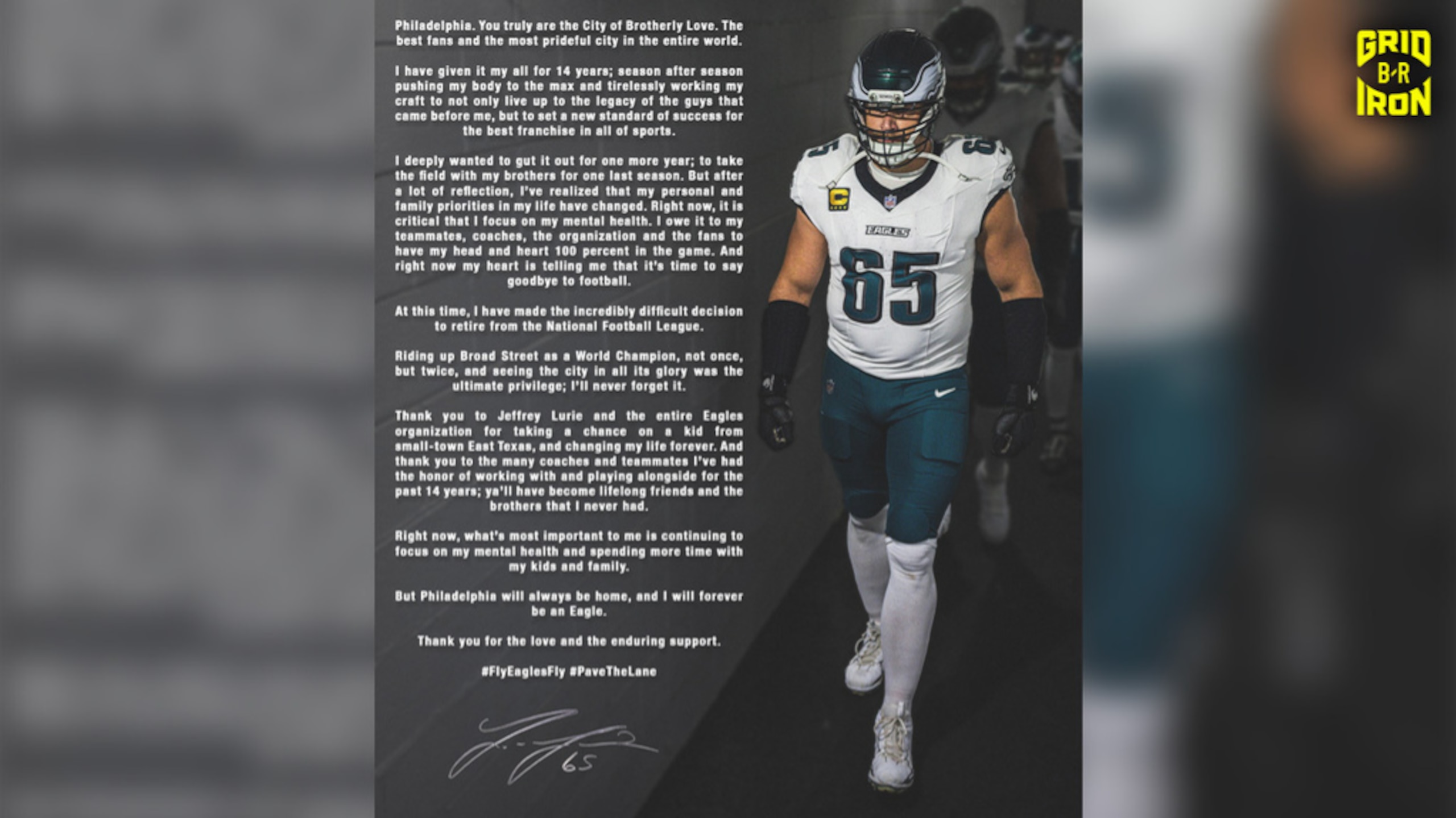
Lane Johnson Retirement Post🦅
Michigan TE owns up to leaked texts
Now, I know you can’t (or don’t want to) imagine me in the midst of my morning routine. But I heard Levy say that and literally stopped my routine to hit rewind and hear it twice more, only to then record the audio of it onto my iPhone.
Why?
Because that passage is sports journalism brilliance.
Not only is it entirely accurate, but also it is well written and genuine. It additionally airs very valid frustration over how ridiculous the Tiger Woods situation has gotten.
Still, at this moment, I actually can’t believe that Steve Levy said that. But it’s not just because Steve Levy is so right about the situation.
It’s because Steve Levy must have forgotten where he works.
While Levy was expressing his apparent disappointment in the way golf fans have reacted this past weekend, ESPN.com was running five different op-eds about Steve Williams and Tiger Woods off the main page of their website.
This included a video column by Rick Reilly (his second in as many weeks about Woods and his former caddie) and a column by Gene Wolclechowski, two of ESPN’s most featured columnists. It also featured an additional print column and two audio posts.
If you were wondering how many articles were devoted to Adam Scott winning at Firestone, the answer is one.
And it was titled “Williams Helps Scott Take Firestone.”
After reading and listening to all of this, I have decided that one of two things has happened to Steve Levy. Either a) Levy is frustrated with ESPN’s media framing practices and is on his way out, or b) Levy has become so completely desensitized to what his company does that he is actually disappointed in media audiences for taking the bait.
And since I don’t think Steve Levy leaves his job even if Barry Melrose made him cry on national television, I’ll go with “b”.
Steve Williams is a caddie. He has gotten paid millions of dollars to hold golf clubs and give golfers advice.
Now, I’m not saying this to downplay his role; I’m sure he has a tremendous knowledge of the game. But I would bet my bottom dollar that no one in the world could name me five other caddies in pro golf right now. I don’t even think I can name one, and I watch golf almost as much as I watch baseball.
Steve Williams is a name because ESPN made him a name.
But they made Tiger Woods a name first.
In 2008, ESPN gathered a panel of radio hosts, television personalities, and pop-culture columnists for a segment they called “Who’s Now.”
"Who’s Now" was an NCAA-tournament, bracket-style competition to determine who the cast and crew at ESPN thought was the most captivating figure in sports.
Tiger Woods won the competition in a landslide due to three things: his charisma and intensity on the course, the fact that he won everything, and the fact that no one knew anything about him off the course.
In 2008, it was simply a sports network following the protocol: dominance in the sport + mystique away from it = ratings.
But in 2011, we can view the "Who’s Now" segments for what they really were: incredible foreshadowing.
While we didn’t have the context to interpret it then, we know now that through "Who’s Now," ESPN in a very public setting allowed us to see how television programming is created.
Groups of people sit in a room and determine whom they think will make good television. Then they put that person on television, hoping that other people will watch that person on television and talk about that person, so that advertisers can then say, “Hey look at how many people are watching this. Let’s advertise there.”
That is the business of television. But what we didn’t know at that time was that "Who’s Now" was also an indication of which athlete would be most talked about should he or she get into some trouble off the field.
ESPN is a company that has flourished due to its ability to make the unimportant important and the irrelevant relevant.
Don’t forget that long before ESPN had all the credibility of modern ESPN, they had to manufacture their own events.
Before the X Games were featuring renowned alternative sports and potential Olympians, they featured speed rock climbing, downhill shovel racing, and a guy named Biker Sherlock riding a skateboard on his back down a slalom street course. (Interestingly enough, this was the event that made the SOBE beverage company famous as they, for whatever reason, saw street luging as an opportunity for advertising alternative beverages. Why the hell do I remember this much about Biker Sherlock?)
So, why did I think about all of this due simply to a 34-second sound byte by a guy that’s been at ESPN forever?
Because whether it was conscious or subconscious, Levy’s passage was indicative of a chink in the armor of ESPN.
There is a real sense in the newsroom that the absurd side stories, once manufactured to kill time between sporting events, have now become bigger than the sporting events themselves. And no matter who Levy was targeting with the sound byte, there was an indication that one person in that office thought that fans weren’t getting the right message.
And that makes two of us.

.jpg?w=2560 "Terrell Owens Being Sued for Defamation")

.jpg?w=2560 "CJGJ Shares Cryptic Post 🤔")