
6 Rule Changes the NHL Needs To Consider
Entering the seventh NHL season after the lockout, rule changes have been few and minor ever since the overhaul of the NHL rulebook prior to the 2005-06 season. Aside from redefining the "headshot" rule, everything else has remained status quo, for better or for worse.
As a long-time hockey fan, and one who had no problem with pre-lockout mucking-and-grinding hockey, I will admit the transition to the free-flowing game has helped the sport as a whole, but there is plenty of room for improvement.
August 17th and 18th, the NHL will be reviewing their own list of possible rule changes at their research and development camp, using two teams of junior players. Some of the proposed rule changes include referee headsets, allowed offensive zone hand passes, removal of the trapezoid and re-institution of the red line, clarification on the bear hug rule, as well as some tweaking with line change rules and faceoff procedure.
I've put together a list of rule changes that, in my opinion would improve the game, and make the whole 82-game season more exciting.
Go Back to the One-Referee System
1 of 7For the 2000-01 NHL season, a two-referee system was adopted, bringing the total number of on-ice officials to four, at any one time. Originally thought to cut down on infractions behind the play, the result has been the opposite, especially with the new obstruction rules creating discrepancy regarding what is and isn't a hook or a hold. One ref calling ticky-tack obstruction penalties one after another would be bad enough, but two makes for a nearly unwatchable penalty-box parade, and a game dominated by special teams.
Additionally, it's difficult for players to get a feel for how the game will be called with two refs calling it two separate ways. One may let more rough play go, while the other calls everything very tightly. This leaves players unsure about what they can do on the ice, leaving the fans to watch very passive aggressive style, with guys skating on eggshells worried more about taking a bad penalty than playing the game.
Unfortunately, the AHL has begun to adopt the two-ref system for a select number of their games, bringing more inexperienced refs into AAA pro hockey, creating more bad calls and, on occasion, double-digit power-play opportunities. So it looks like this disaster will continue, bringing games to a grinding halt and putting the outcome of games on the shoulders of power players and penalty killers.
Eliminate the "Puck over the Glass" Rule
2 of 7Seven years and this rule is still in place: A puck shot out of play by a defensive player results in a two-minute "delay of game penalty." This penalty is completely pointless, and does nothing but penalize a team for what is in most cases a mistake by a player just trying to make a smart hockey play, by shooting the puck off the glass and out of the zone.
The simple solution is to implement the same rules as an icing—the team responsible for putting the puck over the glass cannot change on that whistle, keeping them trapped in their own end while the offensive team gets fresh legs on the ice. Too many times have teams gone down a man in a crucial situation, or seen a five-on-four become a five-on-three just because a clearing attempt went inches too high.
This change is enough to make players want to keep the puck in play if tired, but the punishment much more adequately fits the crime.
Eliminate the Trapezoid
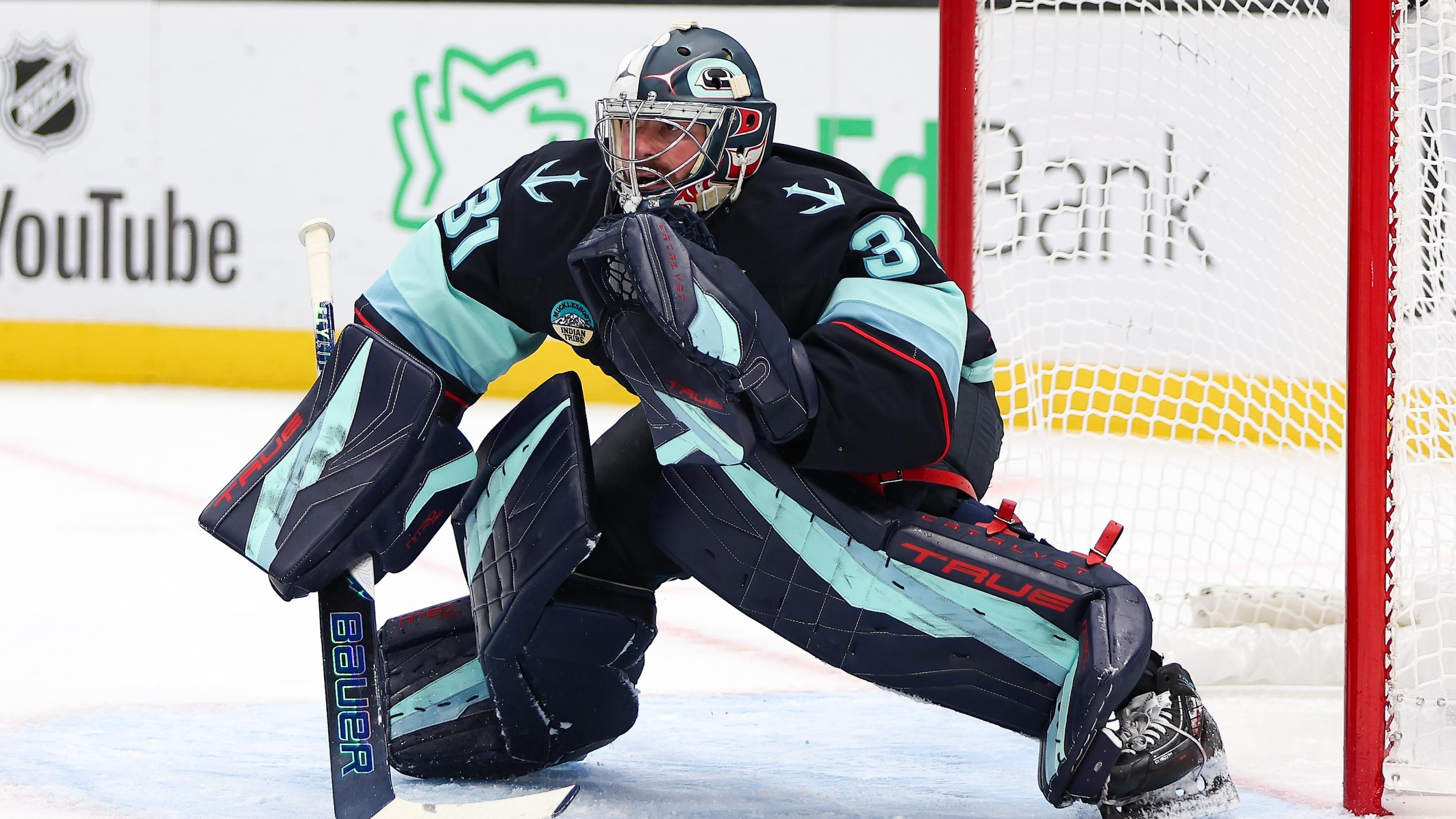
3 of 7Put in place following the lockout, the trapezoid restricts only the goaltenders to the area marked off behind their own net, and anywhere in front of the goal line. Just don't go deep in the corners, or you'll get a two-minute "delay of game" penalty. Sounds ridiculous, right? It is, and for some reason it's still in play.
Especially after the touch-up icing debate and teams wary of their players rushing full speed to get a loose puck, removal of this rule would allow goaltenders to play pucks on non-icings, avoiding those dangerous foot races. Additionally, they would have more freedom to turn the puck back up ice on dump-ins, potentially catching teams in a line change, and springing hanging forwards for breakaways, which nobody finds exciting.
The solution is as simple as a can of white paint.

.jpg?w=2560 "Golden Knights Blues Hockey")
Get Rid of the Instigator, Redefine Aggressor Penalties
4 of 7Every year the instigator penalty, which adds two penalty minutes and a 10-minute misconduct to a player who aggressively starts a fight, comes up for review and each year nothing changes. Despite what Gary Bettman thinks, removing the instigator penalty will not turn every game into a free-for-all, but better allows players to police the game themselves, responding to dangerous hits—whether clean, violent or malicious in nature—without fear of putting their team short-handed.
The aggressor penalty is currently to penalize players who attempt to continue an altercation once the refs have stepped in. To please all parties, it should be amended to penalize a player who flat out "jumps" an unsuspecting player, eliminating the possibility of an enforcer randomly going after a star player to "send a message."
The aggressor penalty should be strict, five minutes for fighting, a 10-minute misconduct and a game misconduct, putting the offender's team on a five-minute PK. Additionally, suspensions for accumulated aggressor penalties could be put in place: one game for the second offense, three games for the third and so on.
Referees who feel one player went a little overboard in pursuing a fight could slap on an extra two minutes for roughing, if the violation was physical, or a 10-minute misconduct if the violation was more taunting or unsportsmanlike in nature.
All in all, the modified rules would allow players to police the game more freely, while penalizing players that want to turn the game into a complete gong show. The perfect balance in my opinion.
Allow for Re-Institution of the "Bear Hug"
5 of 7Since the across the board crackdown on obstruction, any kind of impediment caused by a free hand or arm has been called holding. In recent seasons, we've seen more players fall awkwardly head- and shoulders-first into the end boards as pursuing players nudge them or ride them into the boards to try and get them off balance and take the puck.
The simple solution is to allow the old "bear hug" method, where the defensive player can wrap a free arm around the offensive player and pin them against the boards before battling it out for the loose puck. This cushioned, slower approach into the boards keeps players upright, and they can better absorb the impact.
Don Cherry and Brian Burke have been lobbying for this for a while, and more leeway in the corners and along the boards with holding, clutching and grabbing certainly would not be a bad thing, especially when it improves the safety level of play.
De-Mic the Refs
6 of 7This isn't so much a rule as it is something that drives myself and a lot of other hockey purists nuts. The pointless NFL-esque ref skating to center ice and announcing—usually with broken or terrible sound quality—the penalty call, while making the hand motion.
It's a waste of time and half the proposed rule changes every year deal with reducing stoppage time in between faceoffs, yet they keep this in. If you don't know the hand signals, learn them.
Leave the Rest the Same
7 of 7In conclusion, don't mess with anything else. I personally can't stand shootouts, Rbk Edge jerseys, five-minute interference majors for any big open-ice hits, phantom hooking calls, limited national TV coverage and teams based in Arizona and Florida. But none of those things are going anywhere, but hopefully the rest of the list is seriously reviewed in the near future by the league.
A more exciting game from October to March would do the league wonders, and any changes regarding player safety should seriously be considered, especially ones like these that don't alter the fabric of the game.
Agree or disagree? Leave your thoughts in the comments section.

.jpg?w=2560 "WWE Raw Live Grades 🔠")
.jpg?w=2560 "Chiefs, Steelers Eye WR Trades")
.jpg?w=2560 "Multiple NFL Trades Predicted")
.jpg?w=2560 "🚨Jay-Z Headlining Super Bowl")

.jpg?w=2560 "JT's Projected Trade Cost")