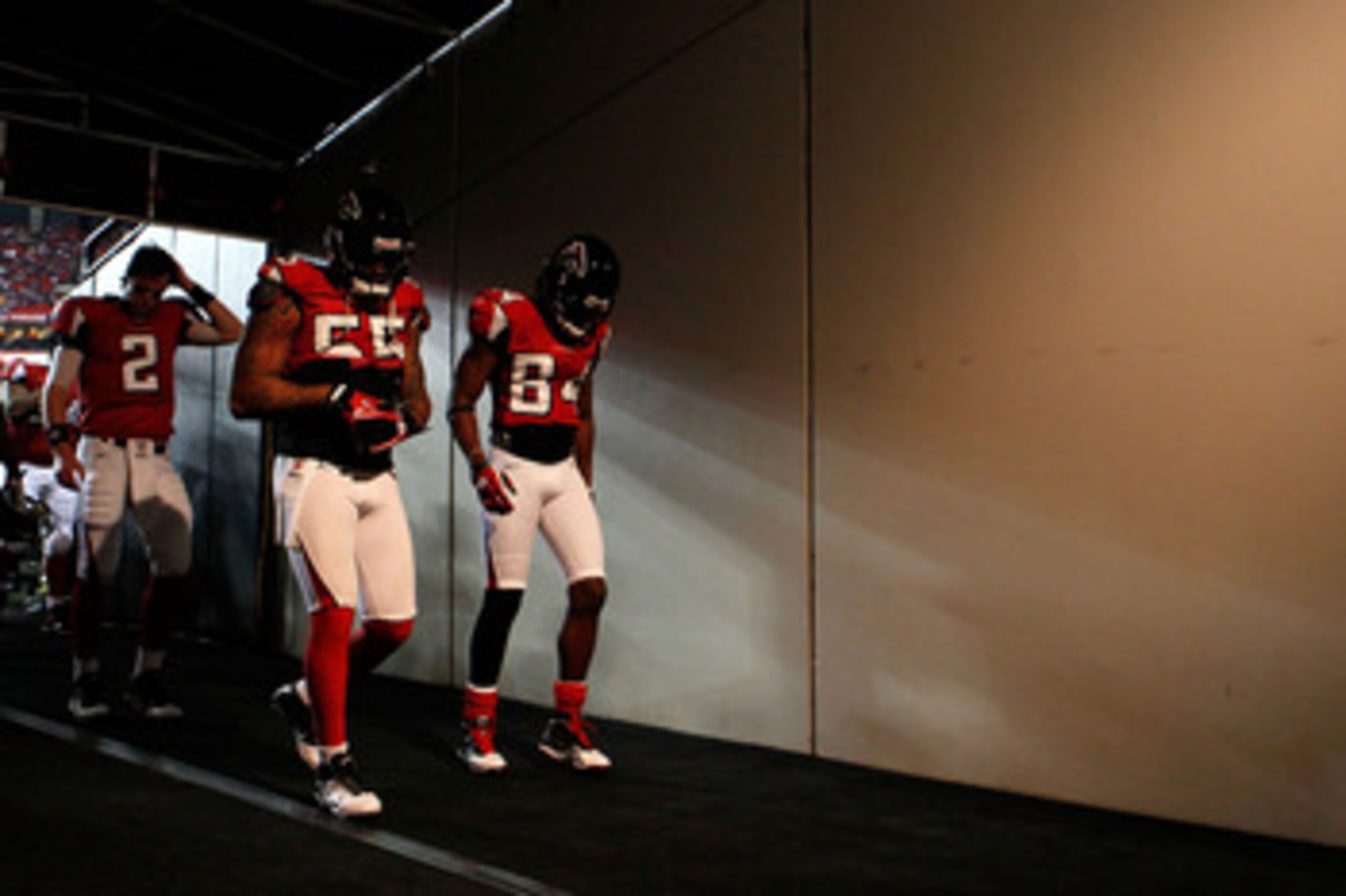

2011 Atlanta Falcons: Bold Draft Moves To Bring Even Bolder Results
You would think that after having a 13-3 conference winning season, an offense that has a triple threat in quarterback, running back and wide receiver and a defense in the top half of best in the league, the Atlanta Falcons wouldn’t worry about moving up in the draft come selection day.
Perhaps, the early, embarrassing exit from the playoffs to the Green Bay Packers made the front office feel like they needed to make a bold move and go all out for one of the big names in the draft.
So, the Falcons did just that. A bold move but it comes from an organization that has been acting boldly since the drafting of Matt Ryan back in 2008. The only thing that threw me and many other people for a loop watching on selection day was that we took an offensive player.
The Falcons general manager Thomas Dimitroff, head coach Mike Smith and owner Arthur Blank put together six weeks of research, much like their dedication and efforts in selecting Matt Ryan in ’08 and decided the Alabama Crimson Tide’s superb wide receiver Julio Jones is worth five future draft picks.
It seems that the Falcons front office is doing everything they can to bring a Super Bowl title to Atlanta. With Jones, Matt Ryan now has two deep, big-play wide receivers on both sidelines, giving Atlanta a quadruple threat on offense.
This move certainly has the potential to bolster up the Falcons offense, but any championship team is built on the backbone of a solid defense, something Atlanta could improve upon and could have done so in this draft.
Overall, the Falcons defense is in the top half of the league, but it is not a premiere NFL defense. In the first 15 picks, seven were defensive players, including Von Miller (LB), Marcell Dareus (DT), Patrick Peterson (CB) and Aldon Smith (DE); all were top 10 picks. Considering what the Falcons were willing to give up, they could have made a strong play to go after Nick Fairley (DT) or Robert Quinn (DE).
Fairley was taken by the Detroit Lions at 13th and Quinn, who I thought the Falcons would try to move up to draft, went next at 14 to the St. Louis Rams.
Going into the draft, it seemed the Falcons' most important need would be to draft an end (Robert Quinn) to play opposite and eventually replace John Abraham. After the need for a defensive end, the next spot to fill via the draft, you guessed it, a wide receiver to give Ryan another target.
The wide receiver crop was decent this year, and it would have made sense to keep their pick and select a receiver. Considering the gamble, the Falcons decided to take with Jones; they still could have gotten an end in Clemson’s Da’Quan Bowers, who plummeted after knee injury concerns.
Though, injury concerns don’t seem to bother Atlanta considering Jones recently had to repair and is still recovering from a fractured foot. Despite the injury, Jones ran a 4.39 40 at the combine.
After going bold, the Falcons front office did a good job of making sure they used the rest of the draft to address team needs and get good, quality picks.
Julio Jones (WR Alabama) - Round 1, Pick 6 (6)
1 of 6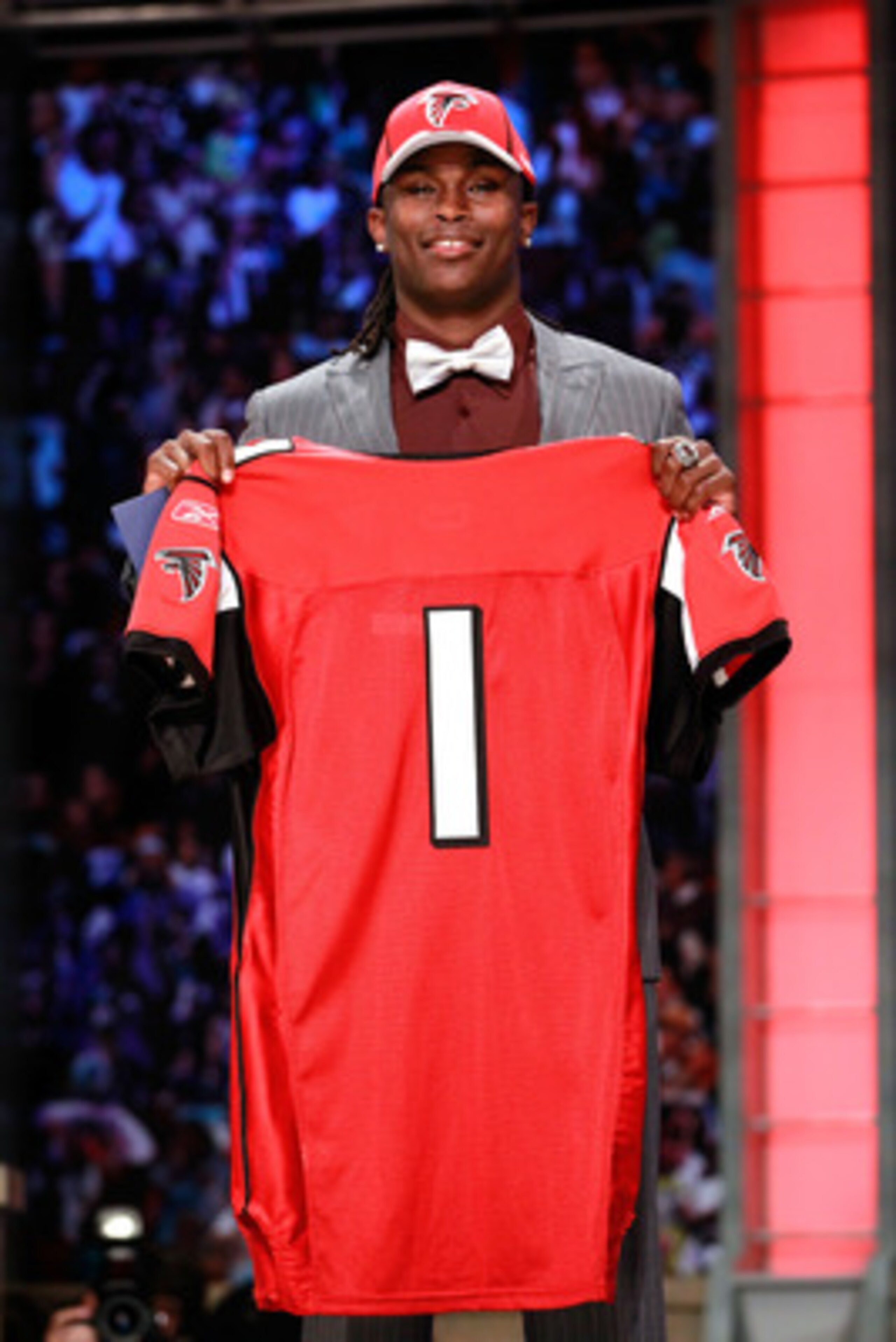
When describing Jones the term “freak” is a good place to start. At 6'3" and 220 pounds, he reminds me of the Predator. He has the speed, size and strength to get down the field and can also bull over defensive backs with ease.
What I love about Jones is that he looks like he gets as much enjoyment out of catching a touchdown as he does knocking a DB on his butt, freeing up the running back to go all the way.
This is why the Falcons moved and gave up five picks to get their guy. Let’s compare him with the draft’s other potential future star receiver, A.J. Green.
Green has the height advantage but only by an inch. Jones weighs 10 more pounds, but both have the same strength in terms of number of bench presses. However, Jones is a much better blocker.
What really separates these two and puts Jones ahead of Green are athletic ability, speed and the vertical. Jones’ vertical is four inches better than Green’s, and it is even a contest in the broad jump with Jones covering almost a foot more than Green.
Just like the broad jump, speed is no contest. Had Jones not had one of his feet fractured, he probably would have had the fastest time at the combine.
There are questions and concerns about his hands and route running, but with his work ethic and having played in a pro system under one of the best college coaches, the Falcons got their guy.
Akeem Dent (LB Georgia) – Round 3, Pick 27 (91)
2 of 6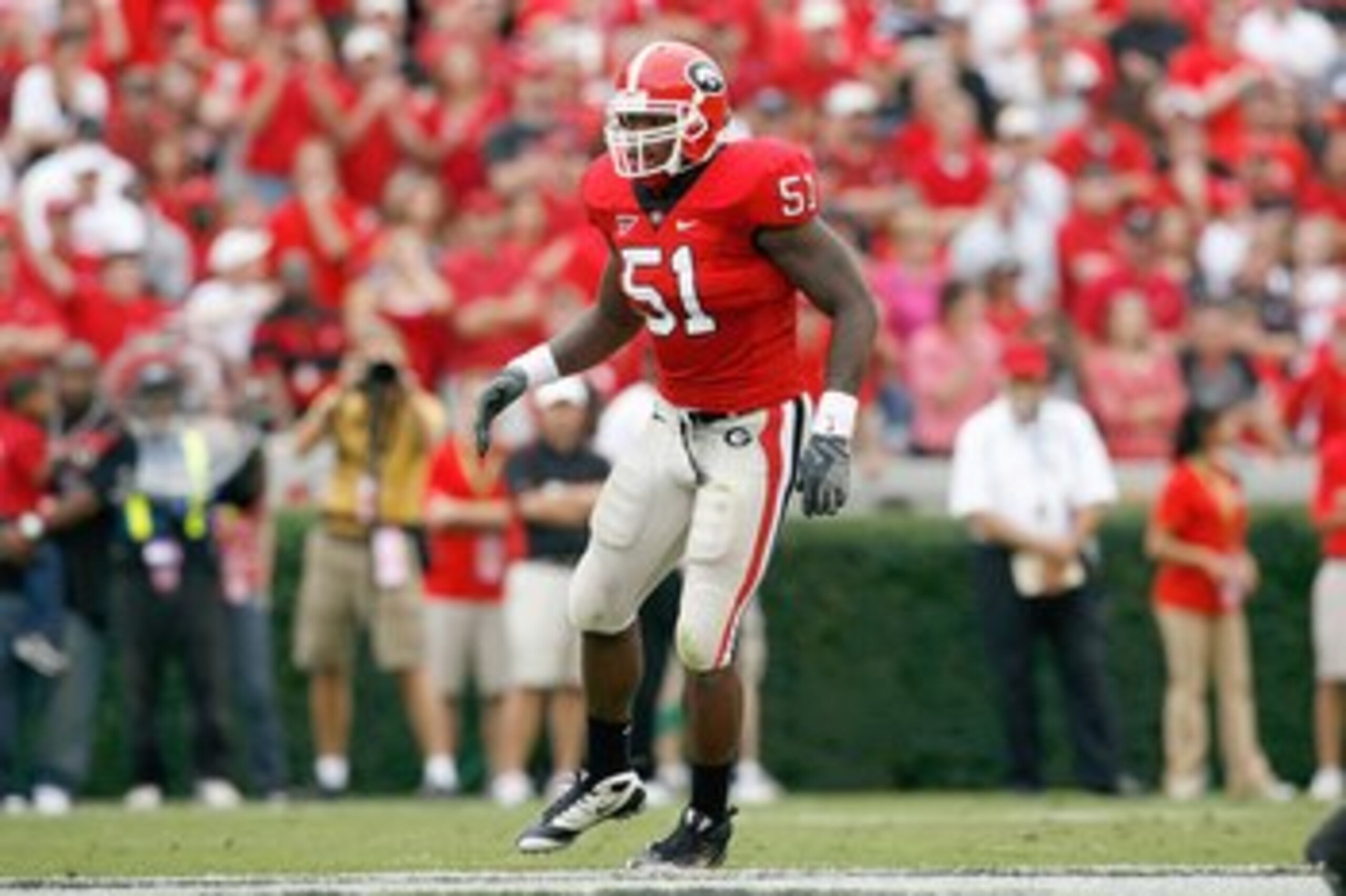
Akeem Dent has the potential to be a productive player for the Atlanta Falcons. He is a bit undersized and needs to add strength in order to compete in the box. He won’t start, however, he will be able to compete for a backup role as middle linebacker and will enjoy running into some people up on special teams coverage.
Jacquizz Rodgers (RB Oregon State) -Round 5, Pick 14 (145)
3 of 6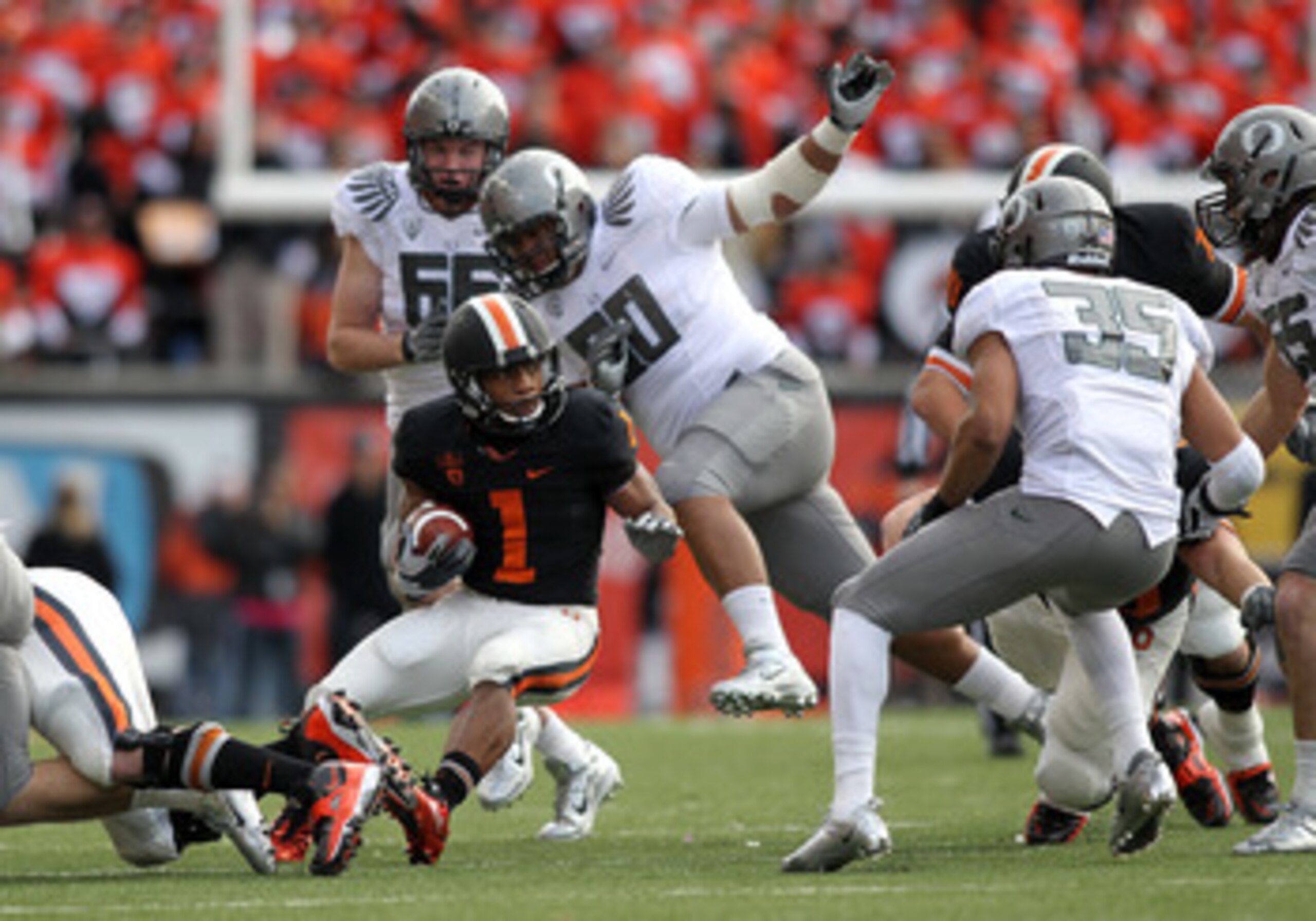
It’s obvious that Jacquizz Rodgers’ size is the biggest concern. That is a question he has had to answer since his days in the Pac-10 with the Beavers.
What is great is Rodgers does not care about his size and won’t start now. He has no reservations in running between the tackles or picking up a few extra yards after contact. He gives the Falcons an elusive third-down option with big-play ability.
He also has great hands as a receiver. With his size, he could easily hide behind the defensive line and turn a dump down pass into first-down yardage.

.jpg?w=2560 "Rams Eagles Football")
.jpg?w=2560 "Falcons Saints Football")
Matt Bosher (K Miami) – Round 6, Pick 27 (192)
4 of 6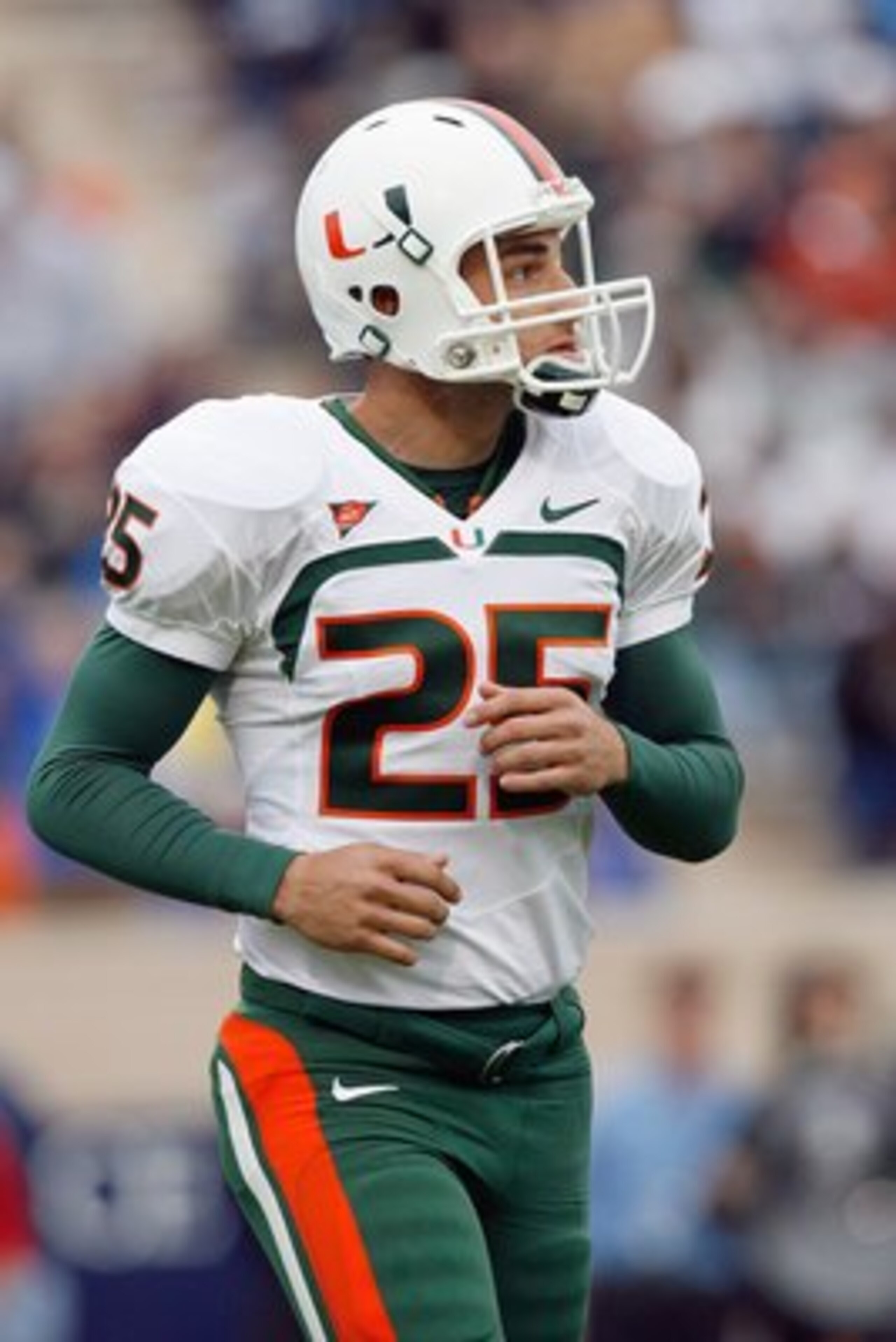
Matt Bosher will be groomed for placekicking duties with the Atlanta Falcons. Bosher is too slow when punting and has the strength to make long field goals. Playing in a dome is a benefit for Bosher who needs to improve his accuracy as the distance increases. He kept himself healthy in college and is a pretty decent athlete.
Andrew Jackson (OL Fresno St.) – Round 7, Pick 7 (210)
5 of 6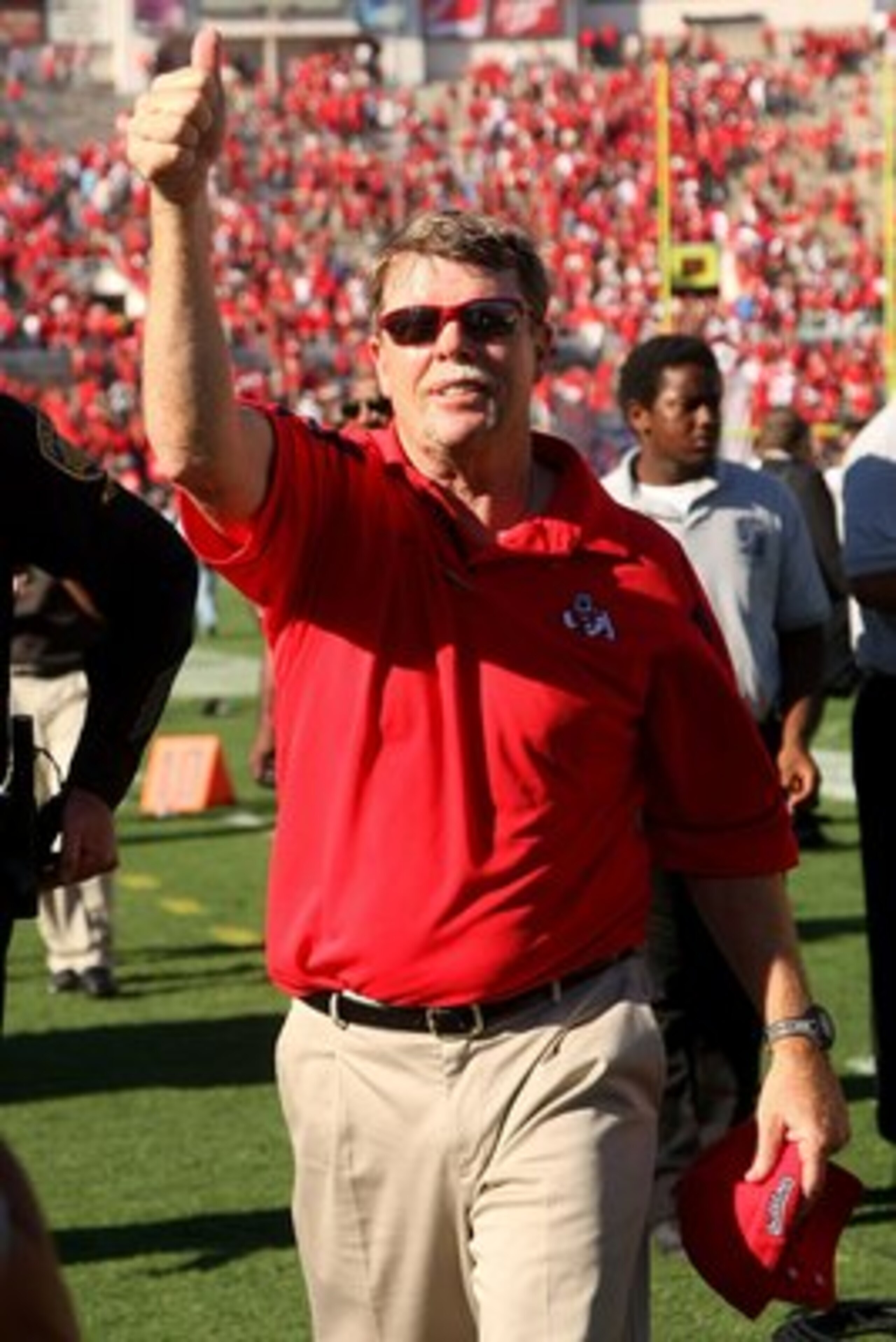
Jackson would be backup in the NFL for most teams but especially in Atlanta. That does not mean he is not good enough but needs to add some bulk and strength before becoming the everyday guard. However, should the starter in Atlanta go down, Jackson is capable of being a starter.
His weakness is defending the bull rush, but he has the quickness to get in position while blocking, leaving upside in becoming a pull and lead and get to the second level.
Cliff Matthews (DL South Carolina) – Round 7, Pick 27 (230)
6 of 6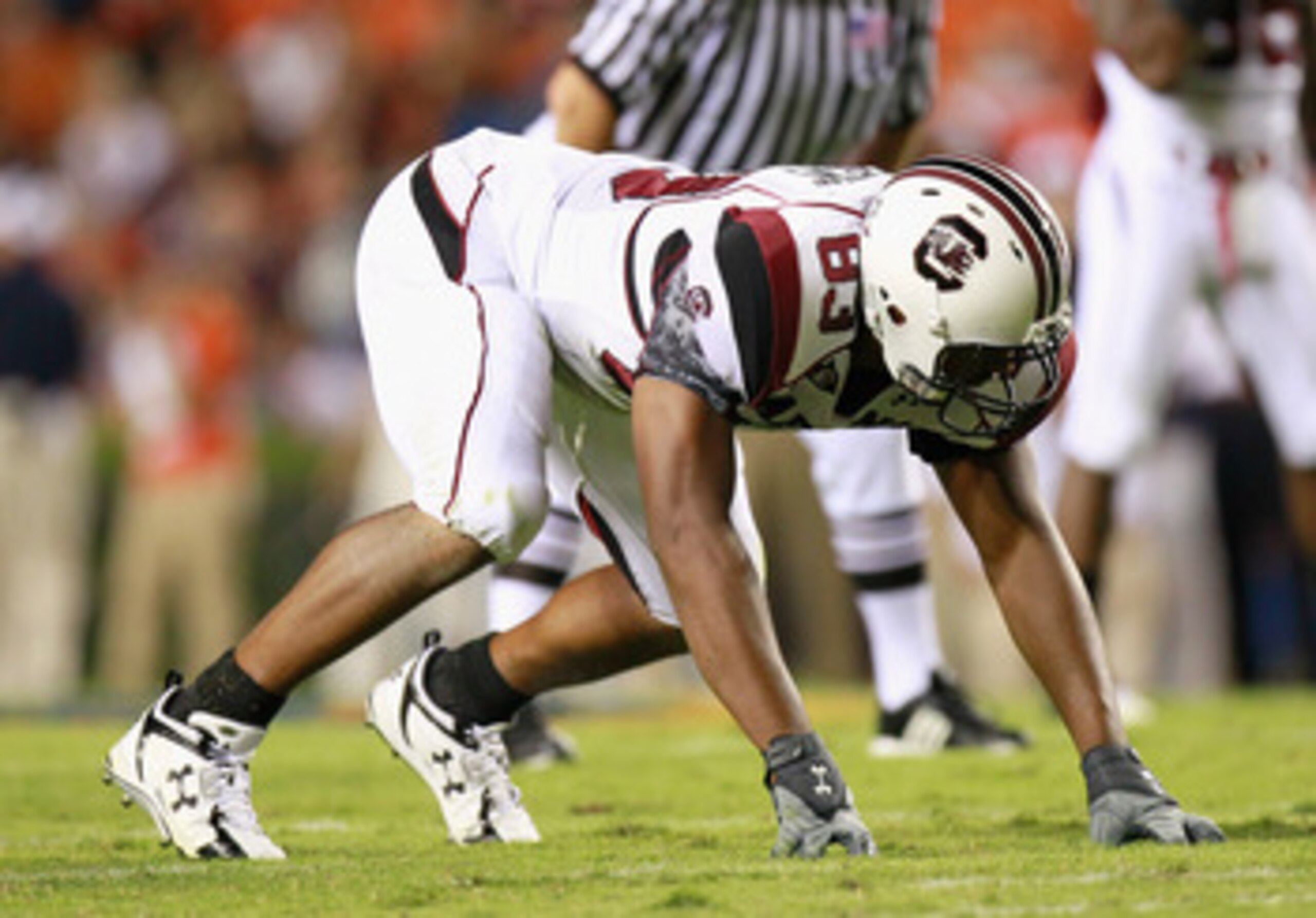
The upside on Matthews is his motor; it runs and runs and the Falcons will get all they can out of it. He is best suited in the 4-3 strongside defensive end. He has exceptional hands against the run and pass with a nice swim move to counter blockers. He needs to improve on having a feel for the game in coverage and out in space.

.jpg?w=2560 "Texans-Mixon Released Football")
.jpg?w=2560 "Grading WWE Raw 🔠")


.jpg?w=2560 "2 NFL Officials Suspended")
