

Seattle Mariners: Reasons to Keep or Remove Brandon League from Closer's Role
When it was revealed that closer David Aardsma would miss as much as the first month of the season, the initial reaction from many fans was one of apathy.
It wasn't apathy for Aardsma's health, or apathy for what Aardsma offers the team on the field and in the trade market. Fans just seemed to write it off a bit, because no one assumed the Mariners would have more than a handful of save opportunities to give Brandon League, Aardsma's replacement in the interim.
Aardsma is going to get his closer job back when he returns. That's already been stated by club officials. However, for the sake of argument, what reasons would there be to keep or remove League from the role based on his work thus far?
Reason to Stay: Saves
1 of 6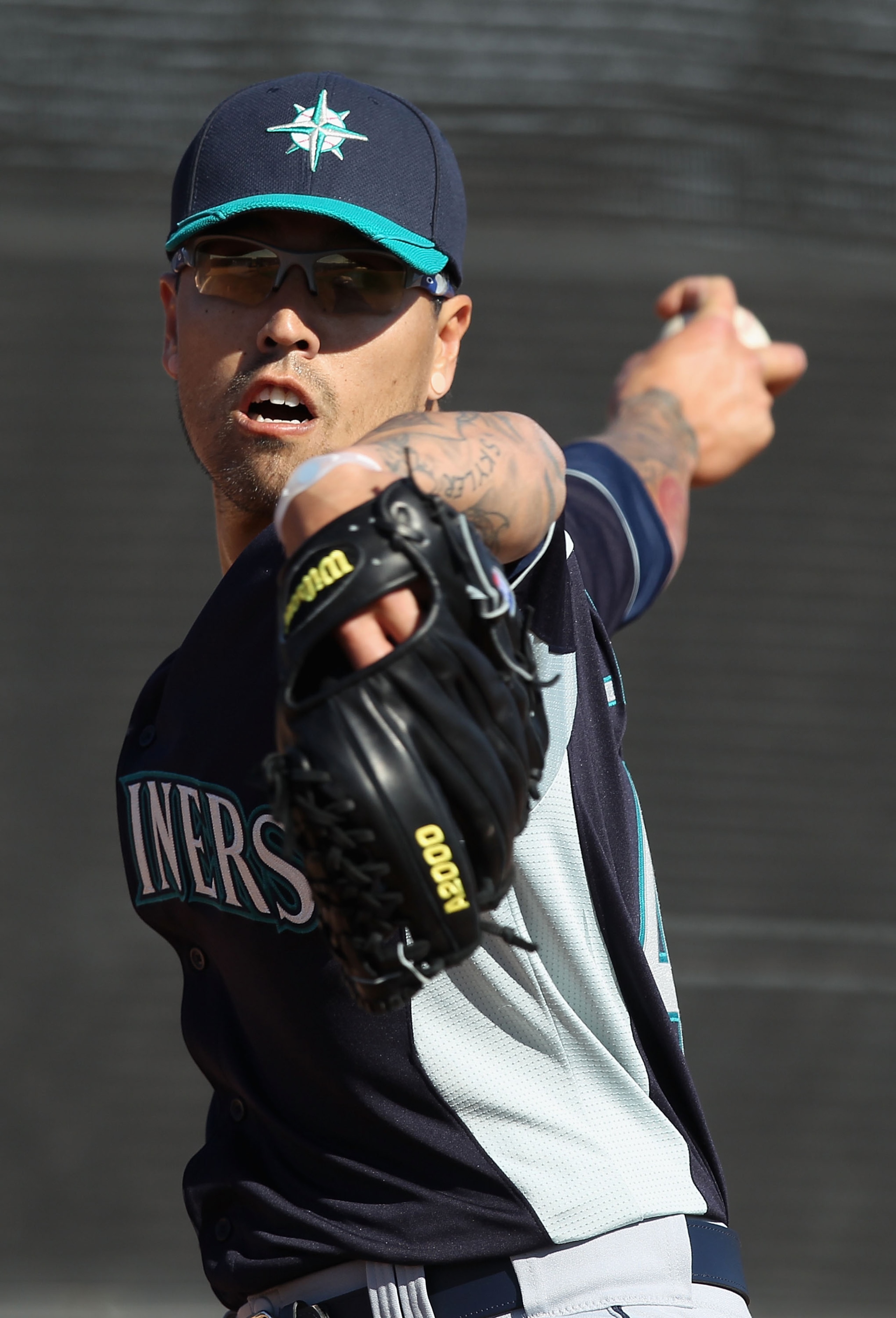
To date, League has had five save opportunities and he's converted them all.
Not only that, but League's five saves are only two off the pace of Huston Street and Mariano Rivera, who lead the league with seven saves each.
The Mariners' offense isn't capable of scoring a lot of runs. So when they enter the ninth inning with a lead, it's generally going to be of the three-runs-or-less variety. When they've done this, League has come on and slammed the door.
Reason to Go: Saves (Smoke and Mirrors)
2 of 6
Let's not let the number of saves alone tell us what to think. It's a counting stat based on extremely small samples of work.
League isn't Mariano Rivera and he hasn't been nearly as good as Street this season, either.
While League has shown relief-ace offerings during his career, the last year-plus of play has shown his tendency to rely too heavily on his fastball instead of his great swing-and-miss cutter in certain situations.
Also, against left-handed batters, League's fastball isn't very good. The splitter is just fine against batters from either side, but with League also pumping the fastball.
We'll get more into the pitch selection later, but the point is that, with his skill set and current pitch selection, his success may be unsustainable.
Reason to Stay: Stuff
3 of 6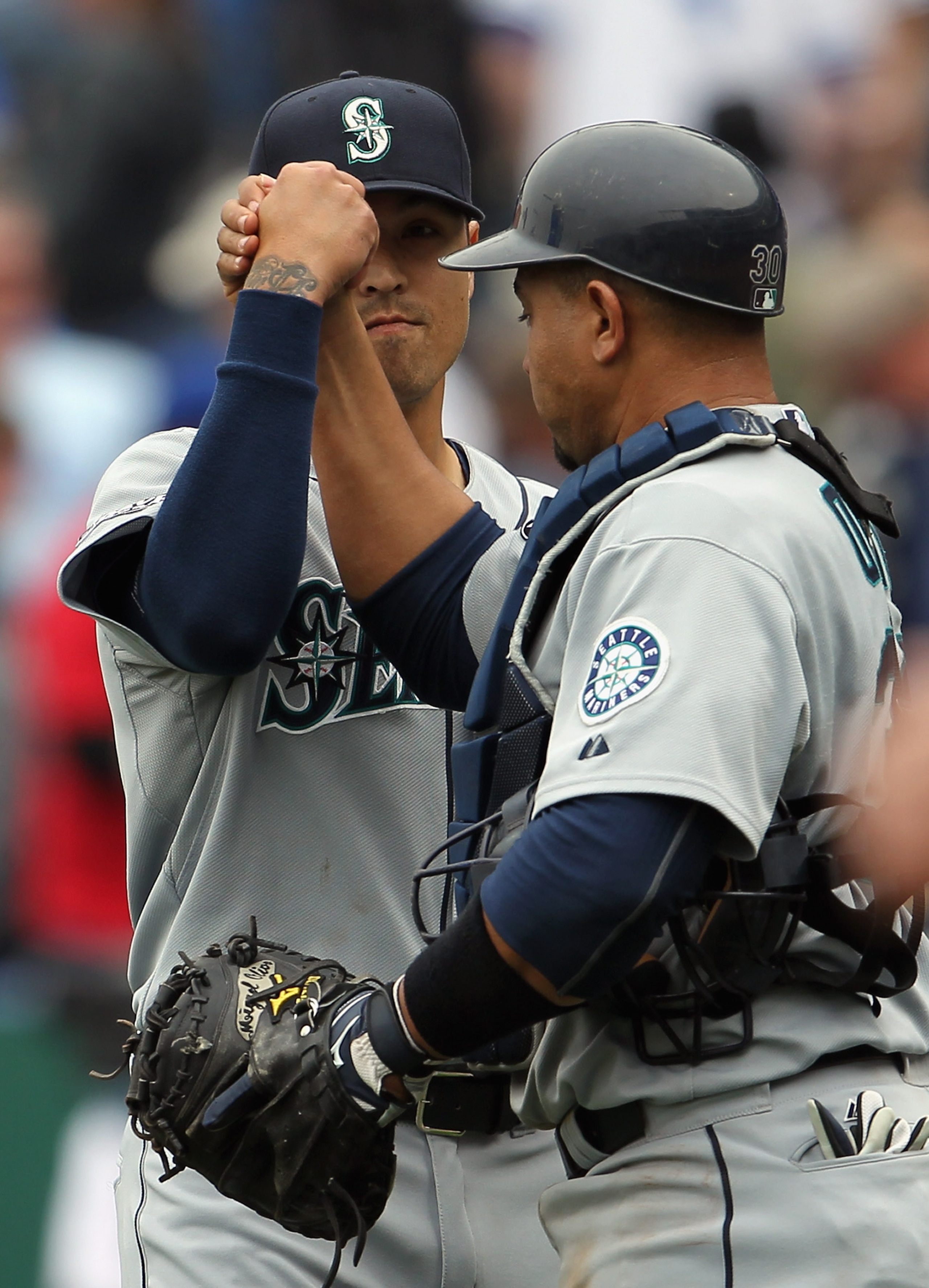
Let's give credit where it's due: Brandon League has good stuff.
His fastball has solid movement and velocity. Hovering at an average of 95.5 so far this season, the two-seamer is a plus pitch against righties.
His split is solid against batters of either handedness. In 2009, this was the most swung-at-and-missed pitch in the game. He doesn't use it as frequently now, relying more on the fastball, but this is a real knockout pitch when he needs it.


Reason to Go: Pitch Selection
4 of 6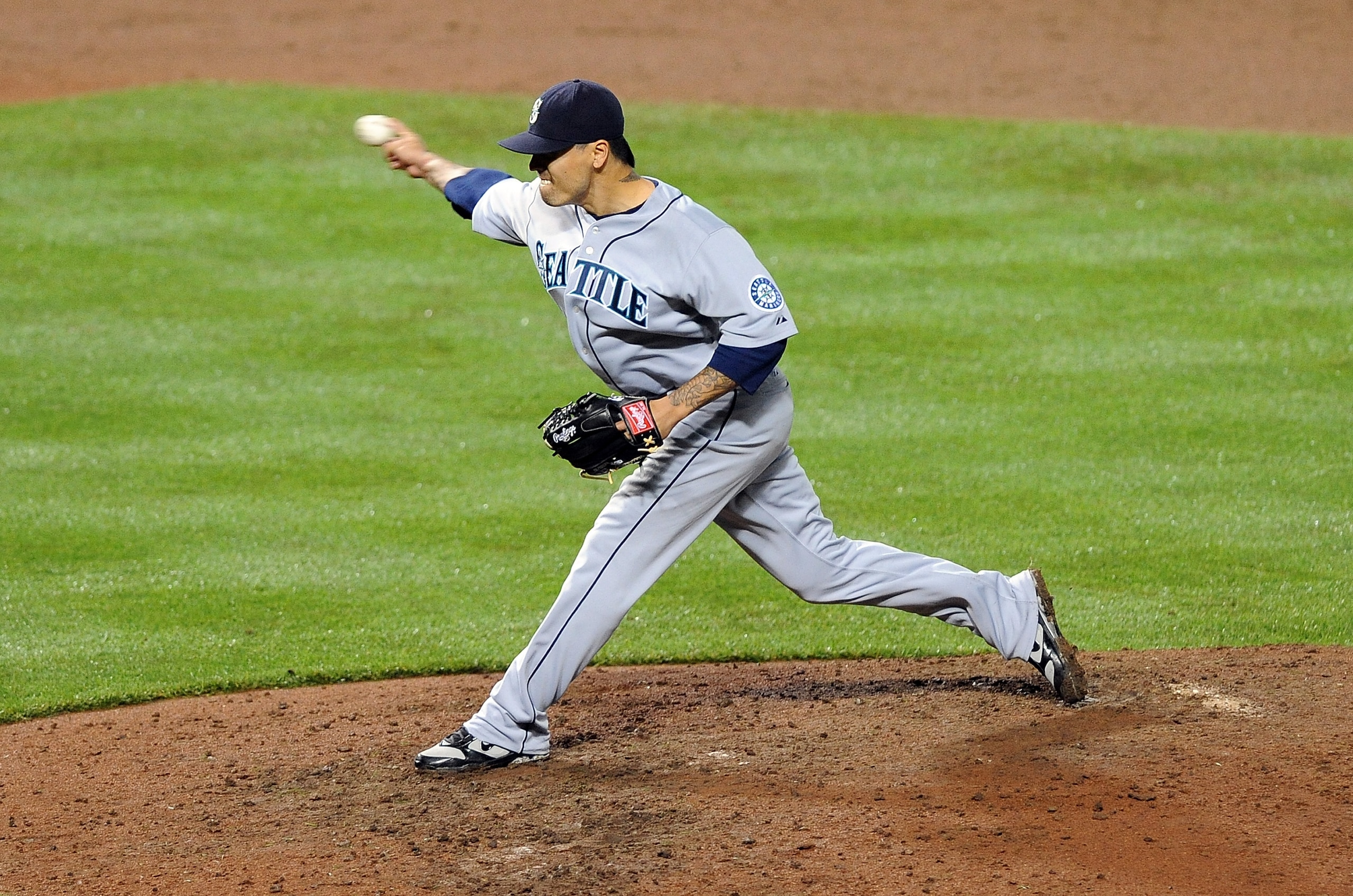
Coming into the 2010 season, the Mariners thought they were getting a guy with a knockout splitter to stick in the back of their bullpen.
While League's ERA improved over 2009, the peripheral numbers did not.
His strikeouts were cut in half, the walks went up and he didn't use his splitter with the frequency that some had hoped he would.
As we noted before, his fastball is a solid pitch against right-handed batters. Not so much against lefties.
The splitter is effective against both, but it seems he doesn't use it enough, and the times that he does, it's fairly predictable.
Last season, in any count in which there were any number of balls and less than two strikes, batters may as well have been sitting fastball. In a 1-1 count, he used the two-seamer 81 percent of the time. In all other counts in this category, it came no less than 95 percent of the time.
When in a 2-2 count, this biggest guessing game had to be played by the batter, with the fastball only coming 58 percent of the time. In all other two-strike counts (except full counts), the splitter came often.
It seems that League has little faith in his splitter when he's behind in the count. His fastball just isn't good enough against left-handed batters to be thrown exclusively in those counts, which probably leads directly to his 4.65 xFIP against lefties versus the 2.71 he ran against righties.
We only have eight innings of work to examine this season, but it doesn't appear much has changed.
League has a real weapon that could make him a stellar closer. He just needs to use it better.
Reason to Stay: Trade Value
5 of 6
Teams always want proven relievers.
While I don't know that League's results thus far are sustainable, if he's racked up 15-to-20 saves by the All-Star break, teams like the Phillies or Cardinals—or any number of other teams with hurt or ineffective relievers—could come knocking.
Bumping League back down to a setup role may not kill his trade value, as the team has been expected to reinstate David Aardsma all along. However, the shiny ray of light beaming from his number of saves would only get GM Jack Zduriencik more calls.
Reason to Go: Arbitration
6 of 6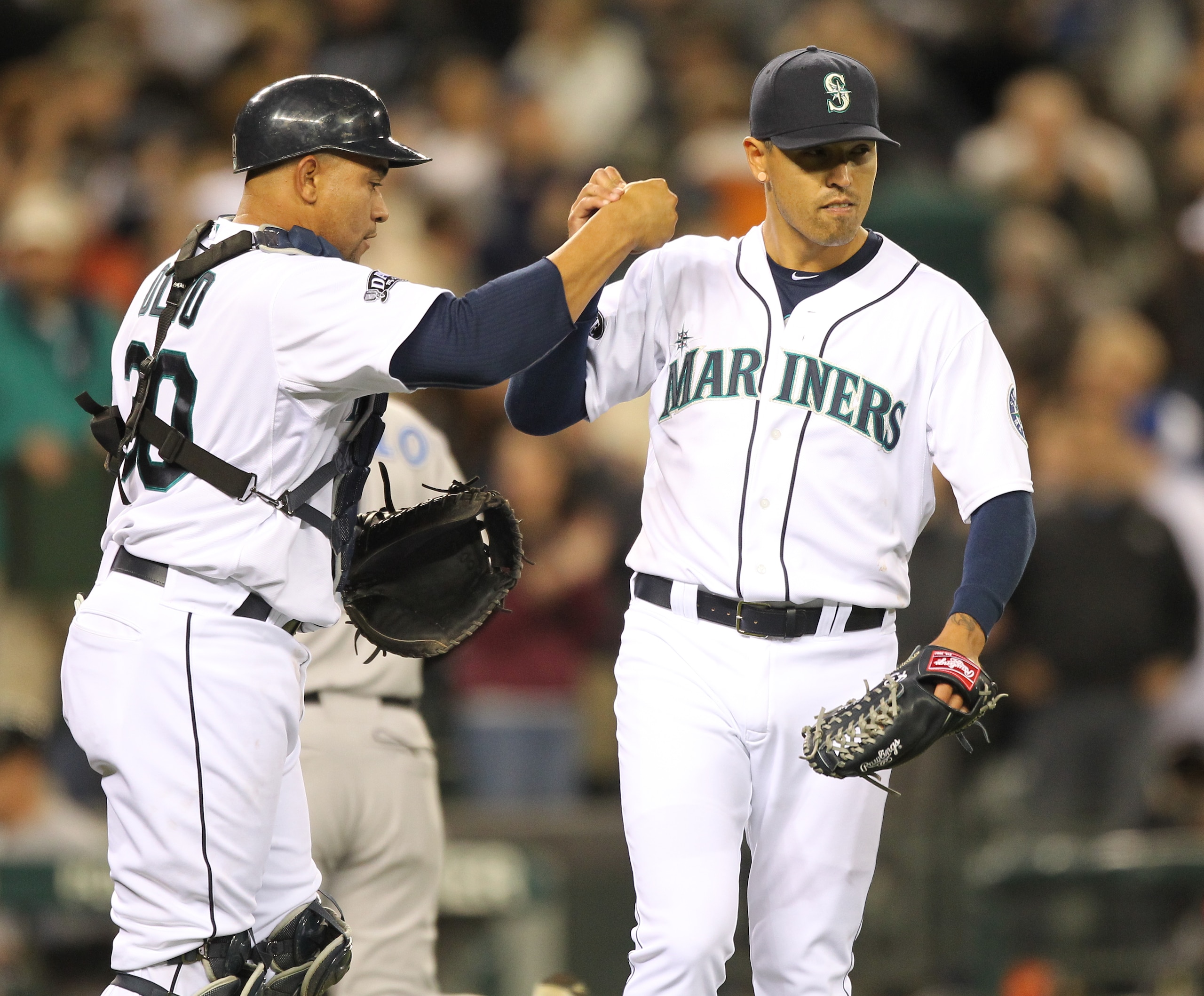
The club wants to build Aardsma's trade value. He will be a free agent after this season, and the Mariners just can't spend money on proven closers when they have so many other holes that prevent them from getting that closer save opportunities.
While League has had a nice audition in that role, and he is under club control through the 2012 season, the team may want to limit how far they drive up his price tag.
As a super-two player, League will get a fourth year of arbitration eligibility after this season. Saves drive up that figure for relievers, even if the underlying stats tell you they weren't that good.
The 2011 Mariners aren't going to contend. They'd like to get someone for Aardsma and keep League around next season at an affordable price. Removing him from the closer role would be the best way to do that.

.png?w=2560)


.jpg?w=2560 "Malik Beasley Negotiating Plea Deal (AP)")
.jpg?w=2560 "Aikman Blasts Cowboys WR 🫣")

.jpg?w=2560 "Jonathan Taylor Landing Spots")