

West Ham United: 10 Things the Club Must Do to Thrive in 2011-12
West Ham United finds itself in a difficult position.
The team faces relegation, and if it isn’t relegated, the Hammers will undoubtedly finish 17th or 16th in the league, marking the second consecutive season the squad has hung on by the skin of its teeth.
Whether the Hammers play in the Premiership or the Championship next year, WHU needs to make some serious changes if it’s to have a successful 2011-12 season.
Here are 10 ways West Ham can do so.
1. Deepen the Talent Pool
1 of 10
A clear difference between West Ham United and teams in the top half of the league is depth of its talent pool.
West Ham has a very shallow talent pool. An injury to a player like Thomas Hitzlsperger can ruin an entire season, as was demonstrated this year when the German midfielder missed the first half of the campaign on account of injury.
Apart from its full stable of forwards, the team has very little in terms of options. This leaves West Ham vulnerable to being easily picked apart by other teams and losing crucial, irreplaceable players very quickly.
Last week against Villa, West Ham lost both Manuel Da Costa and Gary O'Neil to injury, and looked completely lost without them.
The side needs to bring in two or three new defenders and midfielders during the summer transfer window to thrive in 2011-12, and these players must be quality players, not middling fillers.
Or, the team must begin integrating players like Mexican international Pablo Barerra, who is very rarely used, into its starting lineup so that he can adapt to the pace and play of the English game.
photo: Pablo Barrera, playing for the Aztecs/Tri-color, or Mexican national team.
2. Widen the Talent Pool
2 of 10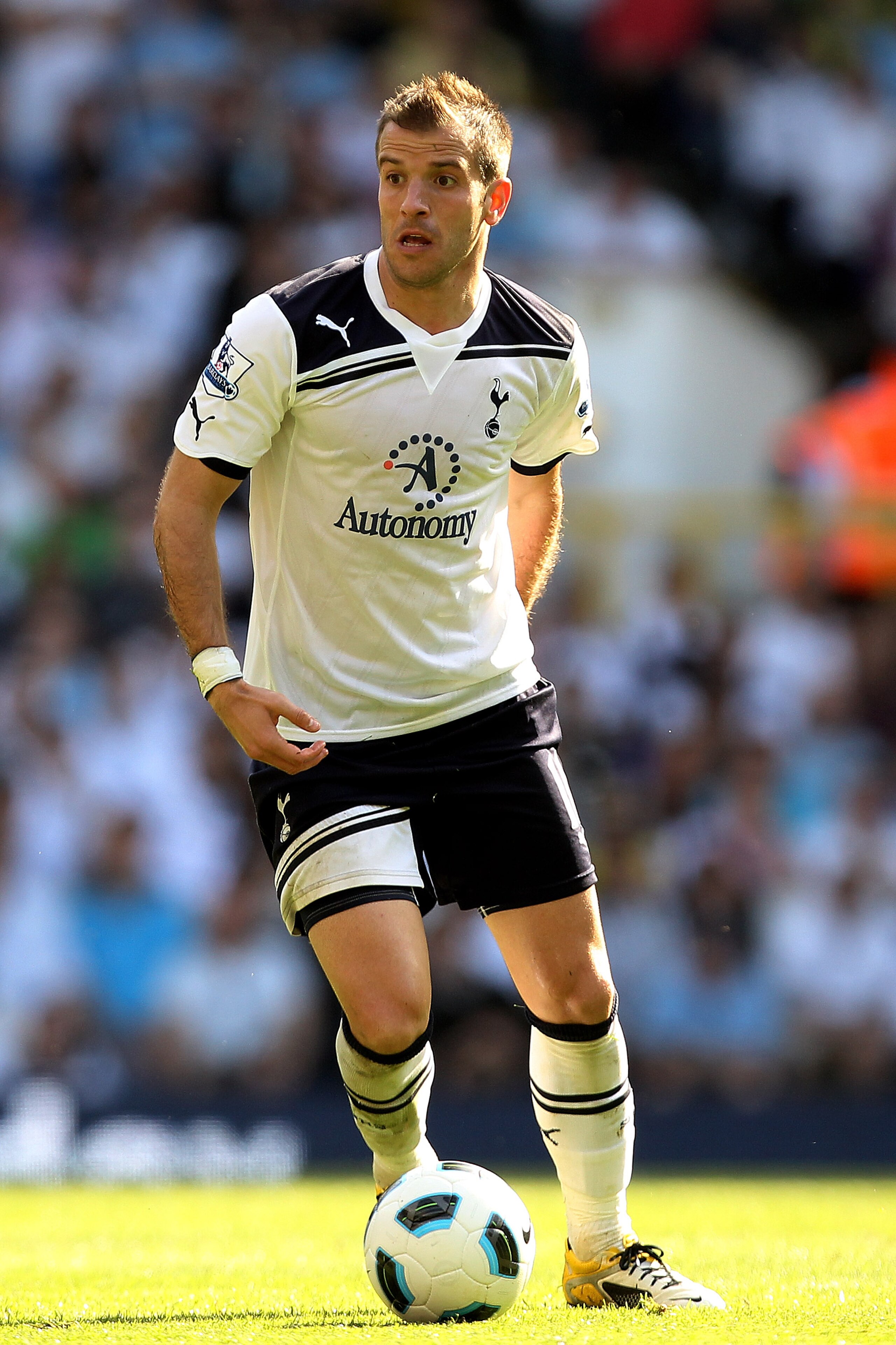
West Ham also suffers from a very narrow talent pool.
In the 2010-11 season, the Hammers have suffered from a lack of adaptability and flexibility. The key players on the squad, with the exception of a few seasoned lads like Scott Parker and Robbie Keane, lack the ability adapt to new styles of play on the field.
Add this to the shallowness of the Irons’ talent pool and you have a recipe for disaster.
Over the summer, the team needs to work on increasing the potential threat of young players like Manuel Da Costa, James Tomkins, Mark Noble and Demba Ba so that they can play multiple positions, work in a number of formations and threaten the opposition in an unpredictable and three dimensional manner.
Bringing in seasoned and three-dimensional players, particularly in an attacking midfield role like the one Rafael Van Der Vaart plays at Tottenham, will help the Hammers achieve this goal.
photo: West Ham lacks a mercurial talisman like VDV.
3. Reorganize
3 of 10
West Ham has struggled enormously over the course of the past two seasons, and each attempt to rectify these struggles, with a single exception, has been tantamount to putting a Band-Aid on a hemorrhaging artery.
The sole exception was the acquisition of Demba Ba, Wayne Bridge, Gary O’Neil and Robbie Keane during the January transfer window this season. With the addition of these four players, the organization of the team shifted dramatically and led to a short spell of improved results.
However, problems such as injury and a lack of mental fortitude have prevented the Hammers from capitalizing on this reorganization.
If the Hammers are to have any success of in the 2011-12 season, either in the Premiership or Championship, the side needs to drastically reorganize. This entails rethinking each player, every position and every tactical approach the side has employed for the past two seasons.
This doesn’t necessarily mean selling players, but rather reevaluating their skills and rethinking how those skills can be best applied for the benefit of the team.
Basically, the management at the club needs to stop trying to plug holes in a dam and accept the fact that the whole thing needs to be rebuilt.
photo: Sullivan and Gold, conspiring to do very little.


4. Play the Modern Game
4 of 10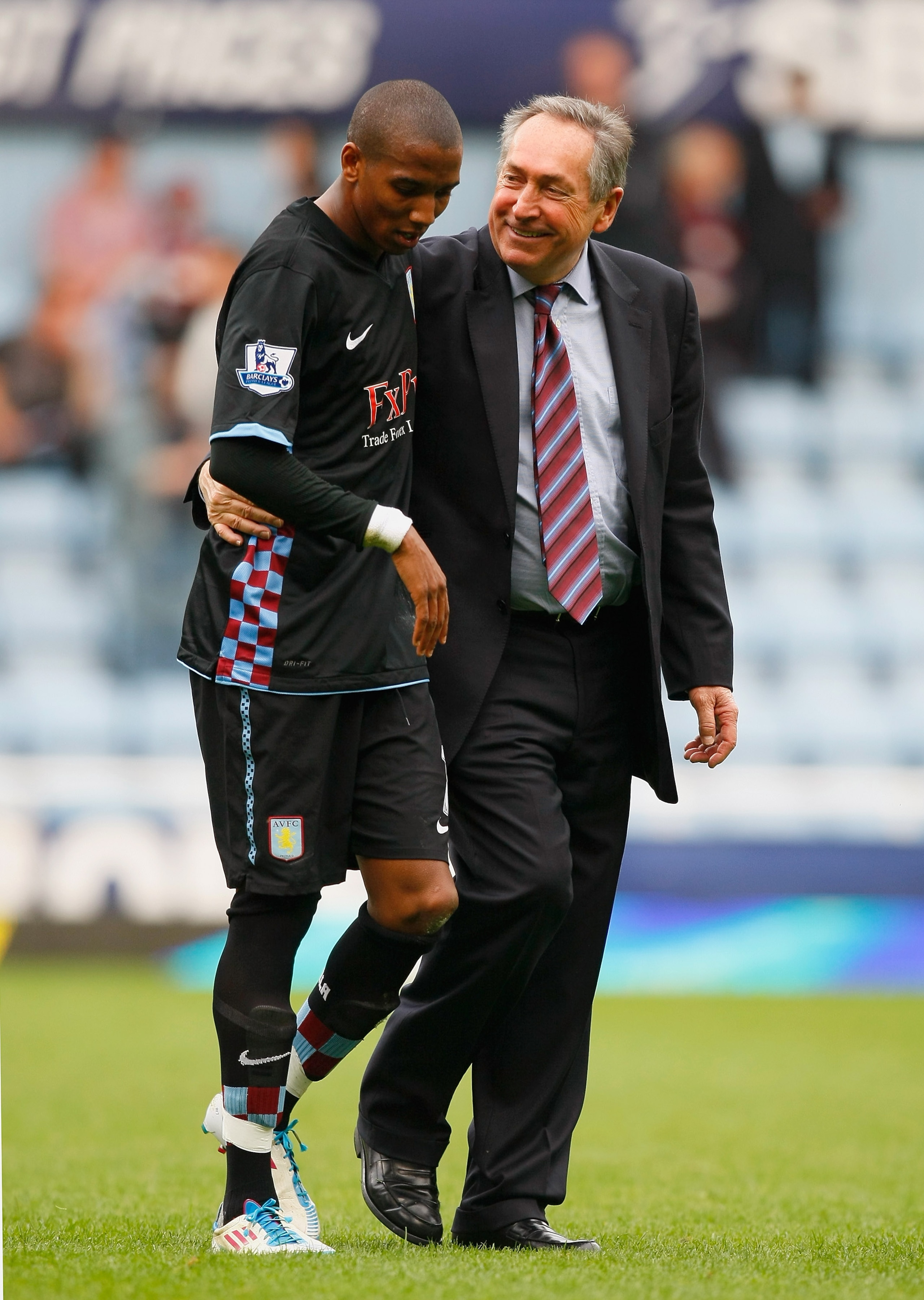
This one is so painfully obvious that being burdened with the task of pointing it out induces great levels of depression.
It’s been nearly 40 years since Rinus Michels, Johan Cruyff and cohorts introduced Total Football to the world. Despite this, West Ham United plays, with few exceptions, like a team of men glued to one spot on the pitch.
In their last two matches, against Bolton and Aston Villa, West Ham was absolutely incapable of filling space that opened on the field as players shifted.
It’s unclear whether this is due to lack of experience, an inability to pay attention to the flow of the game, or anxiety on the field, but it kills the Hammers time and again.
For the team to have success in its 2011-12 campaign, it must develop a system whereby the movement of Player A precipitates the movement of Player B into the space formerly occupied by Player A, thereby providing complete coverage of all necessary areas on the pitch.
If the team can’t do this, it will be picked to pieces by opposition offenses, as Villa did with such aplomb.
photo: Ashley Young, Gerard Houllier and the rest of Villa exploited West Ham's weaknesses to great effect.
5. Strengthen Its Defense
5 of 10
West Ham’s defense is an absolute shambles.
It's almost impossible to calculate how many points the side would have picked up if it had been able to hold the opposition to relatively low goal totals.
Other than the valiant efforts of Matthew Upson and the irreproachable play of Rob Green, West Ham hasn’t had a single solid defensive performer all season.
Avram Grant clearly has high hopes for youngsters James Tomkins and Manuel Da Costa. Developing these players while plugging holes with aging, experienced guys like Wayne Bridge and Lars Jacobsen is apparently how Grant sees the Hammers as forming a solid back line.
The squad can’t afford to wait for this development to happen.
West Ham must bring in at least two relatively young, solid, experienced defenders: Players in their mid-20’s who can play 90 minutes every week while providing Tomkins and Da Costa with the time they need on the pitch to reach their full potential.
photo: Robert Green does his best to make up for West Ham's leaky defense.
6. Practice Tactical Consistency
6 of 10
West Ham needs a solid plan.
Since acquiring his transfer and loan signings, Avram Grant has stuck to two formations, a 4-3-3 and a 4-4-2. Despite this consistency, the team doesn’t have a clear sense of what its supposed to be doing.
For instance, in a 4-4-3 with Robbie Keane, Victor Obinna and Demba Ba playing, you have three strikers on the field who like to drop back and connect with the central midfield. There is no one waiting by the goal.
In a 4-4-2 with Carlton Cole and Freddy Piquionne up front, you have two players hanging around by the goal waiting for the ball and no one feeding it to them.
Due to inconsistent performances from his forwards and poor midfield linkage, Grant has tinkered endlessly with this formula though been unable to find something that works consistently.
For the Hammers to have a successful 2011-12 campaign, Grant must nail down a single strategy that plays to the strengths of his preferred players while successfully managing the disappointment of players who don’t fit into that scheme.
photo: Cole and Piquionne, waiting for Godot.
7. Practice Tactical Adaptability
7 of 10
This may seem, at least at first glance, a contradiction of our previous point.
What we mean by this is simple: It is essential that West Ham develop the ability to adapt to its opponent rather than sticking stubbornly to its guns in each match.
For instance, if Thomas Hitzlsperger and Scott Parker are being bottled and shut down in the central midfield, Hitzlsperger should adapt his powerful left foot and keen passing to playing on the left wing, thus giving the Hammers more space and further options.
As for Grant or whomever it is that ends up coaching the Hammers next year, he must display the ability to quickly and accurately read the game and respond appropriately with substitutions and tactical adjustments.
If West Ham can’t play its opponent on the day, it doesn’t stand much of a chance at success in any league.
photo: West Ham's inability to adapt to Villa's pacey wing play proved ruinous.
8. Play Like They Mean It
8 of 10
How it pains the Upton Park faithful to say this: in the past few weeks, West Ham has displayed very little heart.
In fact, despite its brief run of good form in February and March, West Ham has been somewhat deflated as a team all season.
We all know the cliché about the passion of West Ham’s fanbase. Unfortunately, this rabid love of the Irons has failed to inspire the same in the players, with the exception of Scott Parker, Rob Green and, intermittently, a few others.
It goes without saying, but we’ll say it anyway: If the Hammers don’t have a reason to play, they don’t have a reason to win, and if they don’t have a reason to win, they won’t win.
photo: Cole, flanked by Parker (L) and O'Neil (RR) and Tomkins (R), all searching for a purpose.
9. Calm Down
9 of 10
If you’ve watched even 20 minutes of a Hammers game this season you’ve probably noticed it: The team is jittery.
West Ham gives the ball away easily, rush passes, fires wild shots rather than working to create better chances and generally reacts rashly in important situations.
It would be easy to blame this anxiety on Avram Grant, but the team suffered from something similar when Grant wasn’t around. Indeed, the team’s overall nervousness might be attributable to a lack of consistent leadership.
Of course, it might also be due to a lack of confidence, and the general expectation of defeat amongst the players that causes this nervousness.
In order to find success next season, West Ham must express confidence on the pitch. As painful as it is to say it, the best way for the side to do this may be relegation and a successful season in the Championship.
photo: Mark Noble, Hammers stalwart, on his way to firing one of his many rash, erratic shots.
10. The Thing About Avram Grant
10 of 10
It would be easy to blame all of West Ham’s problems on Avram Grant and present a very simple solution to the Hammers’ problems, namely firing him.
But such a proposition ignores some key facts, those indicating an improved performance under Grant.
West Ham finished the 2009-10 season, under the leadership of Gianfranco Zola, with 35 points. With five matches to spare in the 2010-11 season, the Hammers have 32 points.
The side’s top three scorers of the 2009-10 season had a combined 23 goals in all competitions. The top goals scorers of this season have a combined 28 goals in all competitions, with five matches left.
Unless West Ham is able to woo Martin O’Neill or Sam Allardyce to Upton Park, perhaps the best thing for the West Ham is allowing Grant to develop the team over the course of the next season, to see if he can improve upon his work during this campaign.
Certainly the signings Grant brought in have improved the team, and his style of attacking football would make West Ham a more attractive side if the gaffer can get the team working as a whole.

.jpg?w=2560 "NBA Gambling Charges")
.jpg?w=2560 "Aikman Blasts Cowboys WR 🫣")

.jpg?w=2560 "Jonathan Taylor Landing Spots")