
He Did What? Interpreting Some of the PGA Tour's More Controversial Rulings
So, who knows the rules of golf? You hit a white ball with a club, and put it in the hole. Simple, right?
Not so much.
The game of golf is mired with rules, so many that even professionals aren't aware of all of them. Imagine that, a sport where professional athletes don't know all the rules. Seems odd.
But it's hard to fault them, seeing as there are about 34 rules, with about 100 sections and subsections to them. That is not including the over 2000 decisions included for convenience.
Simply put, it is impossible to get all of the rules. The closest man to mastering the rules is Slugger White, head PGA Tour Rules Official. He is on hand for all the big decisions you see today. Most recently, Jerry Kelly's ball found its way into a palm tree. With a witness, and some photographic proof, it was determined that Kelly had hit his ball into the tree, and could be given a drop.
That is a simple ruling in the game of golf. So here's five rulings that stirred debate throughout the golf world.
5. Jim Furyk Disqualified for Being Late
1 of 5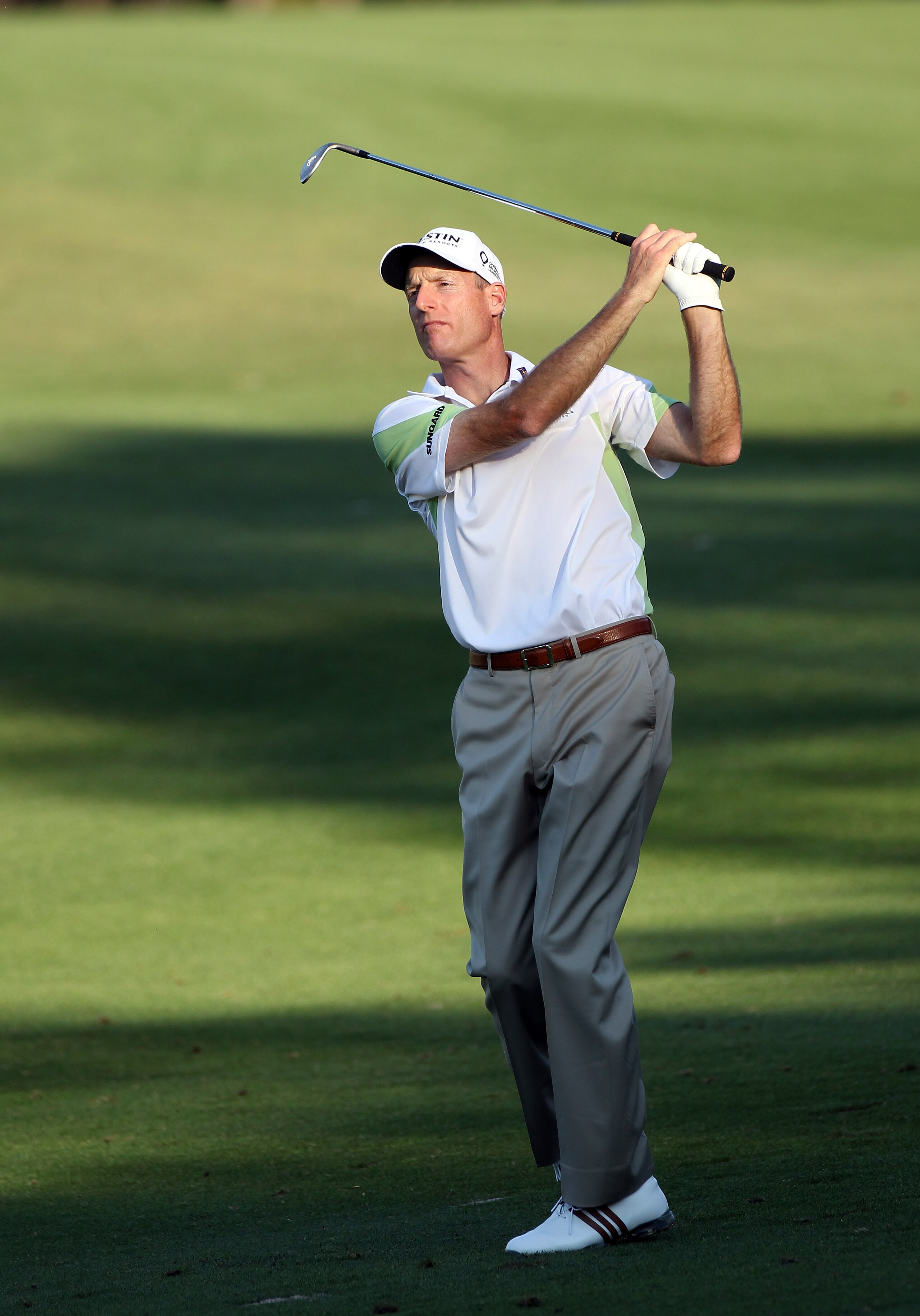
Last year, Jim Furyk's chances of winning the FedEx Cup were almost dashed by a cell phone. No, he didn't have it on, which was exactly the problem. Furyk's cell phone, which acted as an alarm, had died overnight, and Furyk was left to wake up on his own. He did so at 7:23 am. The issue with that?
Furyk had to make a tee time at 7:30 am for the pro-am of the event, or be disqualified.
Without being aware of all the circumstances, Furyk threw on clothes and ran out the door (he had to throw a hat on because he couldn't do his hair). He arrived in the locker room at 7:35 am, only to be greeted by Slugger White.
He informed Furyk that he was being disqualified. Furyk, incredulous at what had just happened, was not upset on the surface. He admitted it was his fault for being late, and was disappointed at potentially ruining his chances in the playoffs.
Phil Mickelson didn't seem to be so nice about it. Mickelson met with Tim Finchem for lunch that day, and berated him for allowing this ruling to go through. He intelligently pointed out only half the players in the field were in the pro-am field. So although the rule was intended to prevent no-shows, it was only for a select group of players.
Thankfully, Furyk wasn't too affected by the disqualification, as he was still able to win the FedEx Cup.
After this ruling was made, the rule was suspended by Tim Finchem.
My Ruling:
Although Jim Furyk did show up five minutes late for his scheduled tee time, he would have been permitted by me to run to the tee and play. Had he missed the tee time all together, he certainly would have received a DQ. However, he didn't. He made a mistake, and it is not a habit. Play on, Jim!
4. Camilo Villegas Disqualified for Swatting a Divot Away
2 of 5What a great birthday present for Camilo! Giving him the weekend off so he can go sit on the beach.
Too bad he wanted to play golf that weekend.
En route to a 71, Villegas hit a snag at the par-5 15th hole. Faced with a chip into a steep slope, Villegas tried to play a low running shot to the hole. It came up short of the green, and rolled back to Villegas. He reset, and tried the same shot, with the same result.
As Camilo came to realize the result of the second shot, he swiped at a divot that was in the way of the ball. Unfortunately, that swipe was a violation of rule 23-1, that you can not move something that may influence the path of your ball.
Villegas signed his scorecard with a seven for the hole, when it should have been a nine. No big deal, because tour officials did not catch it. However, one concerned fan did. Through a series of phone calls, one fan was able to contact the tour to inform them of Villegas' mishap.
That is where the controversy is. Villegas clearly broke a rule. It was inadvertent, but so were all of these violations.
Where the issue lies is that a fan was able to call in the foul. The NHL doesn't call a fan's house to review goals on their HD television. The NFL doesn't accept collect calls, or any, to challenge a play (only the coach's flag). The NBA doesn't as for the people court side to help them. The MLB doesn't take calls about strike zones.
So why should some fan of golf make a call here?
There is no reason, because whoever called it in has no right to do so.
My Ruling:
Although Camilo Villegas clearly broke the rule here, if it was not caught under the review of PGA Tour Rules Officials, then he is not to penalized for violating Rule 23-1, and subsequently not disqualified. No patron of the game is to be allowed to call a rule violation in, and there should be no way to contact the officials.
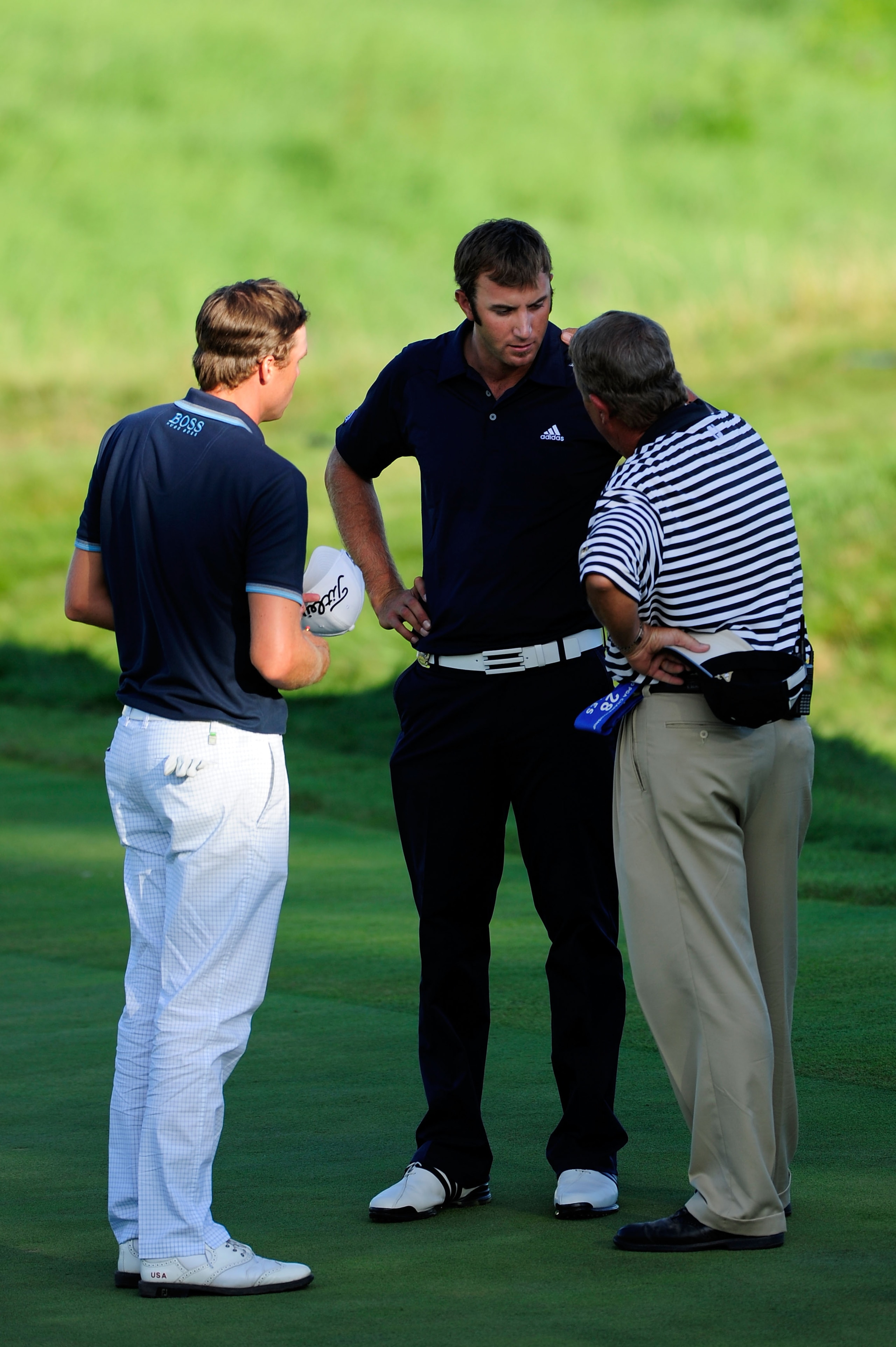
3. Dustin Johnson Penalized for Grounding His Club in a Bunker
3 of 5Although we all know the situation, let's rehash what happened in the final round of the 2010 PGA Championship, on the 18th hole nonetheless.
Dustin Johnson was in the lead by one stroke over Bubba Watson and Martin Kaymer, with only one hole to play. He selected his driver, a move with some risk at Whistling Straits. Johnson lost his tee shot, and it rolled into some dirt. He stepped up, set, made a casual joke with the fans, and finished out the hole.
After bogeying the hole, Johnson was approached by Slugger White. He told Johnson they had reason to believe that he had grounded his club in a bunker. Johnson politely entreated him to inform him what bunker it was. Slugger informed him it was the 18th.
This is where issues ensued. Johnson couldn't recall being in a bunker. However, he was. What Johson hit out of was not dirt, but a waste bunker. At most courses, it would have been permissible to ground a club in the circumstances. However, at Whistling Straights, the local rules state that all of the hundreds of waste bunkers are to be played as a normal bunker. In short, Johnson grounded his club in a bunker, a violation of rule 13-4.
The reason this isn't as big a controversy as the next two is because the tour officials properly interpreted the rule. Johnson never denied grounding his club, and that is a penalty. It is unfortunate this mistake was magnified by the circumstances, but it was a correct ruling.
Unfortunately, this penalty cost Johnson his chance at winning a playoff, giving Martin Kaymer the win over Bubba Watson, giving Johnson the title of Mr. What Could Have Been.

2. Arnold Palmer Given a Drop in the Final Round of the 1958 Masters
4 of 5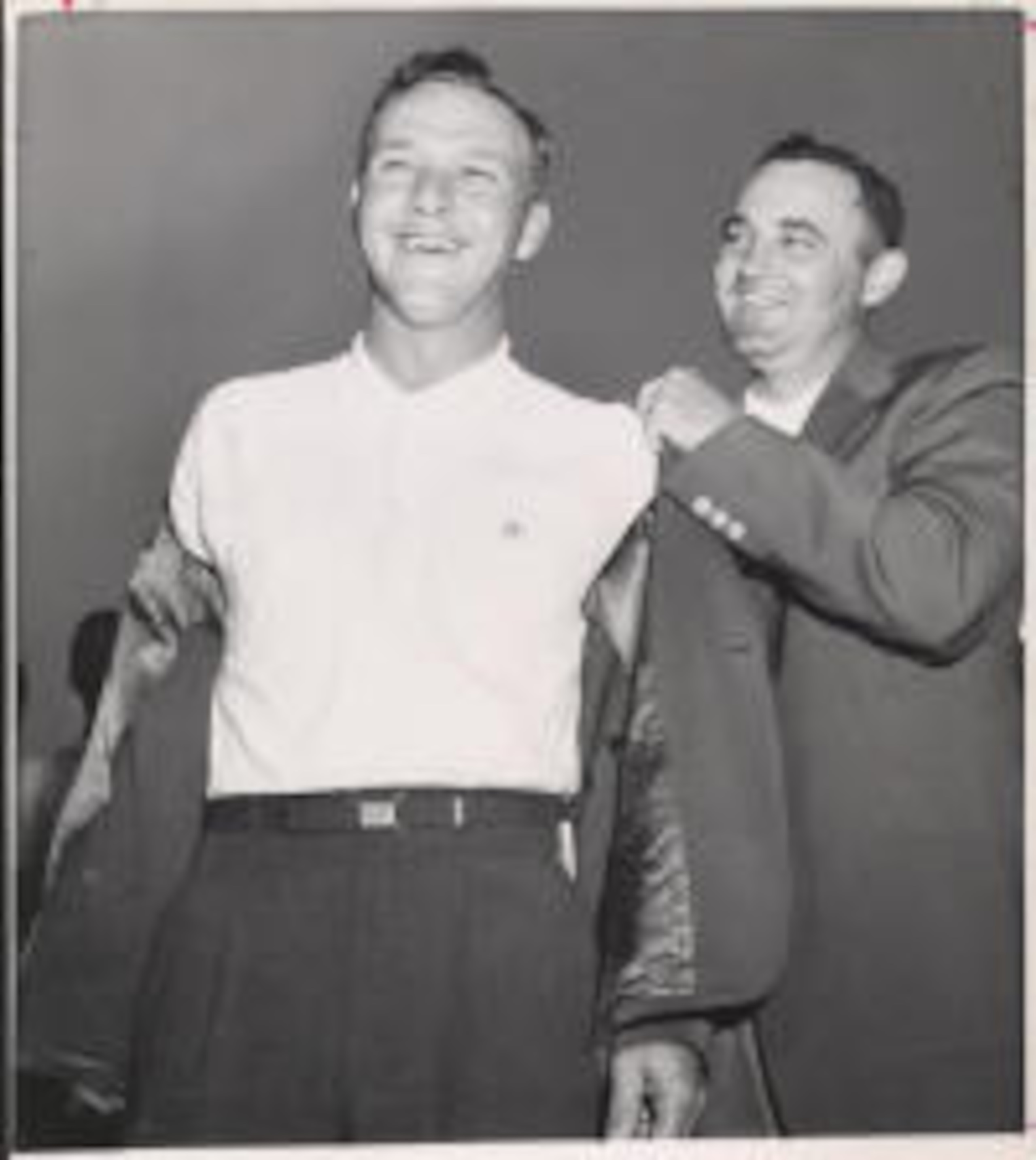
In 1958, Arnie donned the green jacket for the first, but not the last time, in his career. However, this win did not come with out some controversy.
Going into the final round, Arnold had jumped into a tie for the lead with Sam Snead. Paired with Ken Venturi, who had held the lead until the final round but was now three back, Palmer had a one stroke lead when he reached the par-3 12th hole.
Hitting his tee shot, his ball appeared to be plugged behind the green. Palmer and Venturi both agreed he should be given free relief for his ball, however Arthur Lacey, the on site official, disagreed.
Palmer chunked his chip out, and made a double-bogey. Believing that he had been ruled against improperly, Palmer declared he was playing a second ball, after he had holed out. He made par with the second ball.
When Palmer was given the par, Venturi disagreed, saying that he improperly played a second ball. He said that Arnold had to declare his intent to play a second ball before he hit the other. Arnold still contends he said he was going to, but Lacey wouldn't allow it.
The truth of the matter is that Arnold did play the second ball incorrectly, but the committee gave it to him anyway, most likely as a respect out of the bad ruling he had received.
Had Palmer lost the two strokes, he would have finished at 2-under, in a tie for third, with Ken Venturi. A playoff between Doug Ford and Fred Hawkins would have determined the winner:
My Ruling:
In this situation, there was a clear issue with the on-course official. Arnold Palmer was wrongfully denied the right to take a drop, as he and Ken Venturi agreed he should be. For that reason, it would be overlooked that he did not play to the 'T' of the rule. The rule does provide some latitude as it was written in 1958. It was also noted that Arnold attempted to play a second ball, but was denied the right by Arthur Lacey. That prevented him from "pursuing" his second ball, an element of rule 3-3 (doubt as to procedure).
1. Ernie Els Given a Drop Away from Trouble Spot in 1994 US Open
5 of 5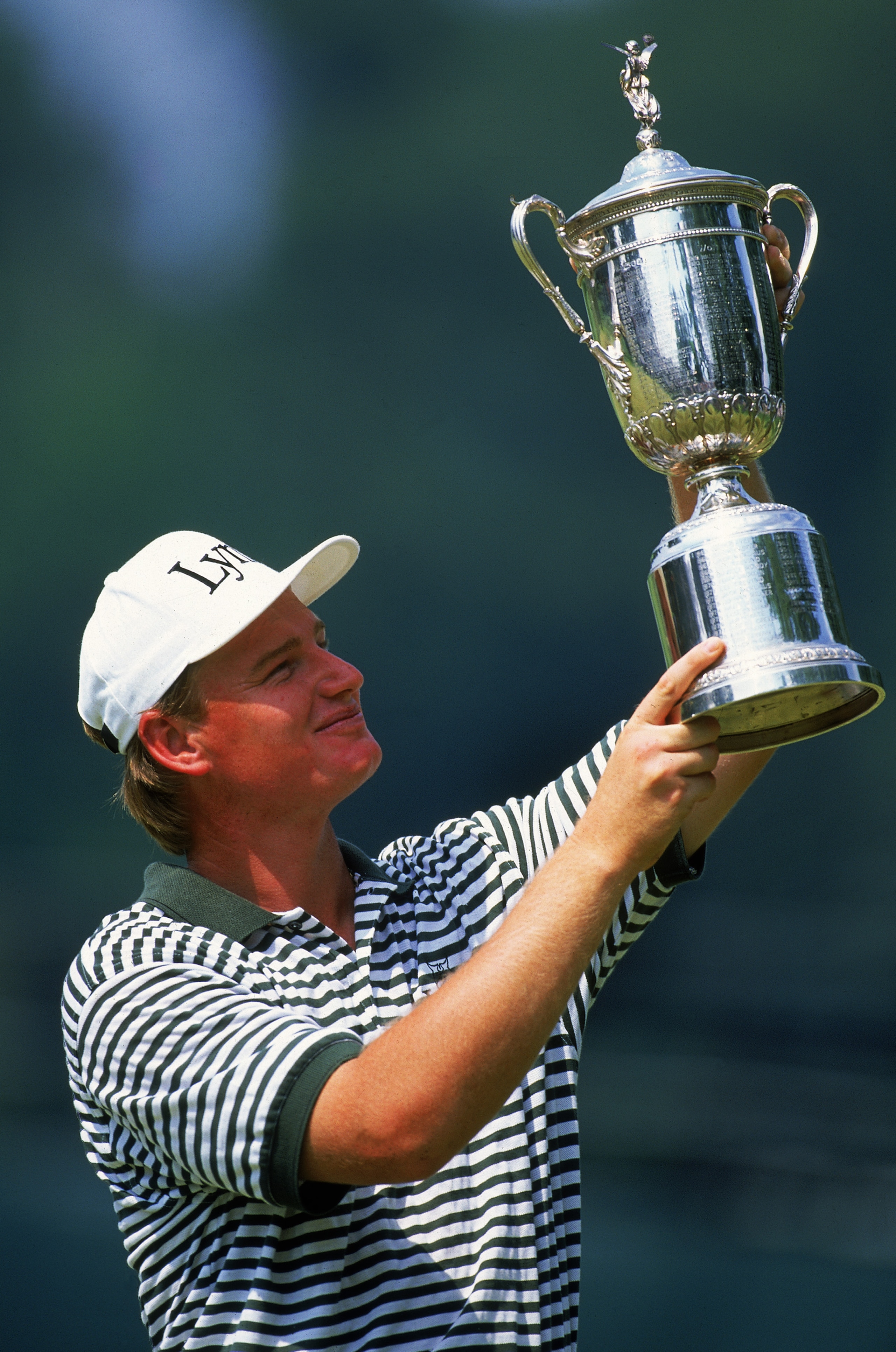
This is the most controversial of these five, because in this case the officials got it wrong, admitted it, and Els in part to the decision. Palmer's decision was given justifiably, and the other three were technically by the book.
In 1994, Ernie Els entered the US Open at Oakmont with a two stroke lead. However, his first tee shot sailed away from the fairway. Els' lie was not favorable at all, and he requested a ruling on the position of the ball. Els was given a free drop away from the trouble. The reasoning?
There was a broadcast truck and extendable arm in the way, determined to be an immovable obstruction. A short while after, the truck drove away, proving the fully movable nature of it.
The relief Els was given enabled him to manage a bogey. However, in all likeliness, Els would not have escaped from the hole with a bogey, not to mention the confidence damage seeing as it was the first hole of the day.
Els shot a final round 73, and was forced into a playoff with Loren Roberts and Colin Montgomerie. After another shaky start, Els was able to escape on the 20th hole from Loren Roberts, Montgomerie already gone.
Had Els been penalized, the 1994 US Open likely would have had a different victor, and with the ruling being admitted to be wrong, this is the worst of the bunch.
My Ruling:
The hardest thing about this decision is the nature of it. If I were to have changed anything, it would have been to force Els to play the ball as it lied, of course moving the truck. Had he gotten through it without issue with a different official, it would of course be impossible to reverse a ruling made by an official after the round.So, if possible, the ruling would have gone against Els without a doubt, and likely brought Loren Roberts or Colin Montgomerie to win.

.jpg?w=2560 "Weather Channel Trolls Texans-Titans 💀")

.jpg?w=2560 "Report: Seahawks Not Signing Mixon 😯")