NBA Right Guards: Power Ranking the League's 30 Backcourts
They're usually the smallest players on the court, but they almost always leave the largest impressions on any team.
The backcourt of every NBA team usually features a point guard that is utilized the majority of the time as a passer, while the shooting guard is utilized mostly for either defensive purposes, as a perimeter threat, or as an all-around prolific scorer.
The majority of the top teams in the league either have a point guard who can create plays or a shooting guard who can finish plays off, with each player having some sort of reason in a team's success.
The past decade's worth of champions have all featured either one or two prolific players in the backcourt, with the Los Angeles Lakers featuring Derek Fisher and Kobe Bryant, the Boston Celtics with Rajon Rondo and Ray Allen, and the San Antonio Spurs with Tony Parker and Manu Ginobili just to name a few.
Each team shares a similarity, with the point guard playing a specific role and the shooting guard being the player to knock down shots down the stretch and when the game is on the line.
The backcourt's main features in any NBA game is their ability to score and their ability to find easier looks for their bigger teammates in the frontcourt.
It's usually the guards that the ball runs through and it's up to them to dictate and control the offense while getting every player on the team involved and instilling a balance among the players who are in the lineup for that time. Not only that, but they are usually the ones who take the last shot, considering that most of the time they are the prominent shooters on the team.
When ranking the top 30 NBA backcourts, there needs to be some sort of balance among the two players. The way each player plays with each other on the court represents a prominent factor as well.
Chemistry plays one of the largest factors in this ranking during game time, when it's usually the group that plays team ball, rather than playing as five individuals, that wins games.
Winning games is usually facilitated by the guards and it's usually the winners that get the most important prize at the end: being ranked high on a list of top 30 backcourts.
30. Minnesota Timberwolves: Luke Ridnour and Wesley Johnson
1 of 30
Luke Ridnour: 12 ppg, 5.4 apg, 2.7 rpg.
Wesley Johnson: 9.2 ppg, 3 rpg, 1.9 apg
Perhaps a few years from now, rookie Wesley Johnson will be able to propel this backcourt and help the lost Minnesota Timberwolves find their way. For now, though, the Wolves backcourt of Luke Ridnour and Wesley Johnson takes the last spot in the NBA. They're not that awful of a duo, with both players being quality shooters from just about anywhere on the court. But Wes is too inexperienced and Luke isn't making any top 10s as far as point guards go.
Give credit where credit is due for Ridnour, though, since he is averaging a career high in points per game.
29. Memphis Grizzlies: Mike Conley Jr. and Tony Allen
2 of 30
Mike Conley, Jr.: 13.9 ppg, 6.7 apg, 3 rpg.
Tony Allen: 8.3 ppg, 2.5 rpg, 1.3 apg.
There must be something in the water in Memphis because Tony Allen is suddenly becoming more than a defensive presence. After three months of not scoring more than 20 points, he has dropped over 20 in five games over the past two months, with his season high being 27. Mike Conley Jr. has been performing admirably this year as well, with career highs in points, assists and steals.
Don't judge them as a bad backcourt because of their positioning on this list. Conley has the potential to become better and Allen can become a huge threat if he continues to polish his offensive game.
28. Charlotte Bobcats: D.J. Augustin and Gerald Henderson
3 of 30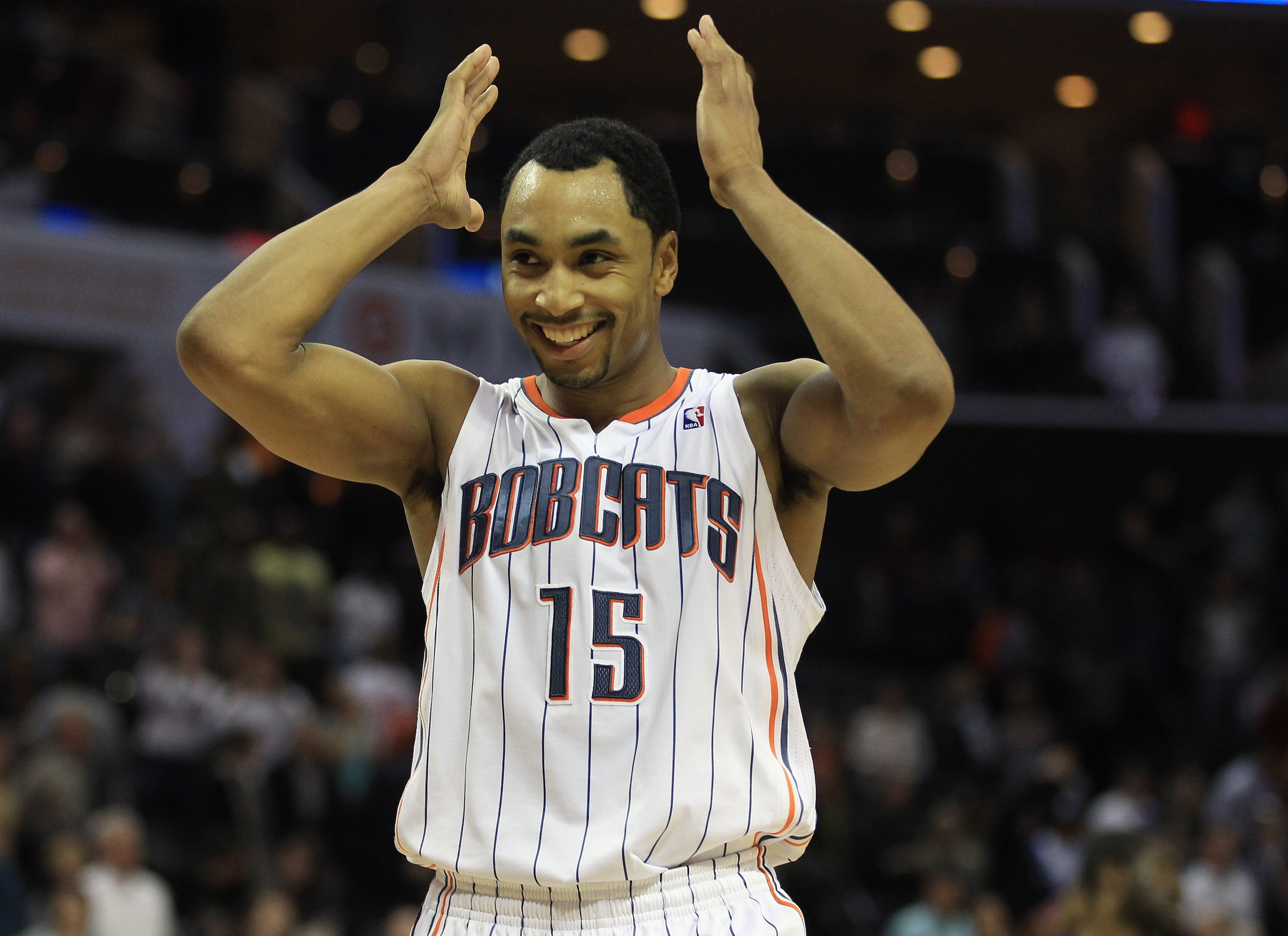
D.J. Augustin: 14.3 ppg, 5.8 apg, 2.8 rpg.
Gerald Henderson: 8.2 ppg, 2.8 rpg, 1.2 apg.
Not the most formidable of backcourt's now, but it could become a dangerous one if D.J. Augustin and Gerald Henderson continue to progress as teammates. With only five years of experience between the two, there is plenty of room for this youthful backcourt to flourish and blossom. Since former starting point guard Raymond Felton departed for New York this past summer, Augustin has taken full advantage of becoming the new starter, with career highs in every statistical category.
Henderson's production has also greatly increased now that he is seeing significant minutes. His 45-percent shooting vastly overshadows the 36 percent he was hitting last season. He has 13 games of double-digit points in the past two months alone, earning himself the starting shooting guard position.

27. Cleveland Cavaliers: Baron Davis and Anthony Parker
4 of 30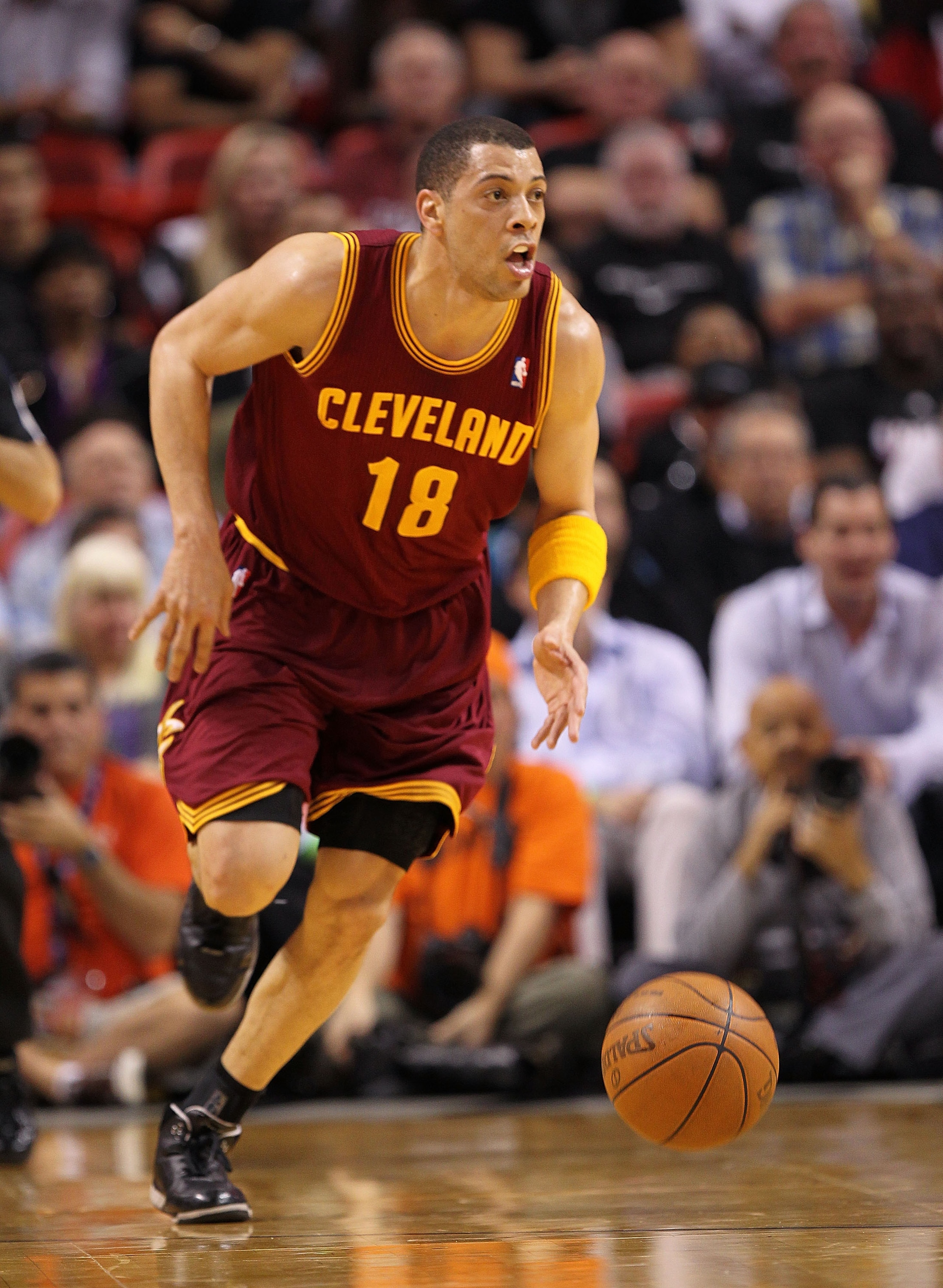
Baron Davis: 14.3 ppg, 4.3 apg, 3.3 rpg.
Anthony Parker: 8.6 ppg, 3 apg, 3 rpg.
Don't judge Baron Davis' game on his stats. The Cleveland Cavaliers would probably be better off with Mo Williams as their point guard again. At one time, Davis was recognized as an elite guard in the league who was just as dangerous a threat as any other point guard. Now he has become the Steve Francis or Latrell Sprewell of the league, who is becoming more recognizable as a negative than a positive.
As for Anthony Parker, he can hit the deep shot when called upon, but compared to many of the other shooting guards in the league, he really can't even compare.
26. Detroit Pistons: Tracy McGrady and Rodney Stuckey
5 of 30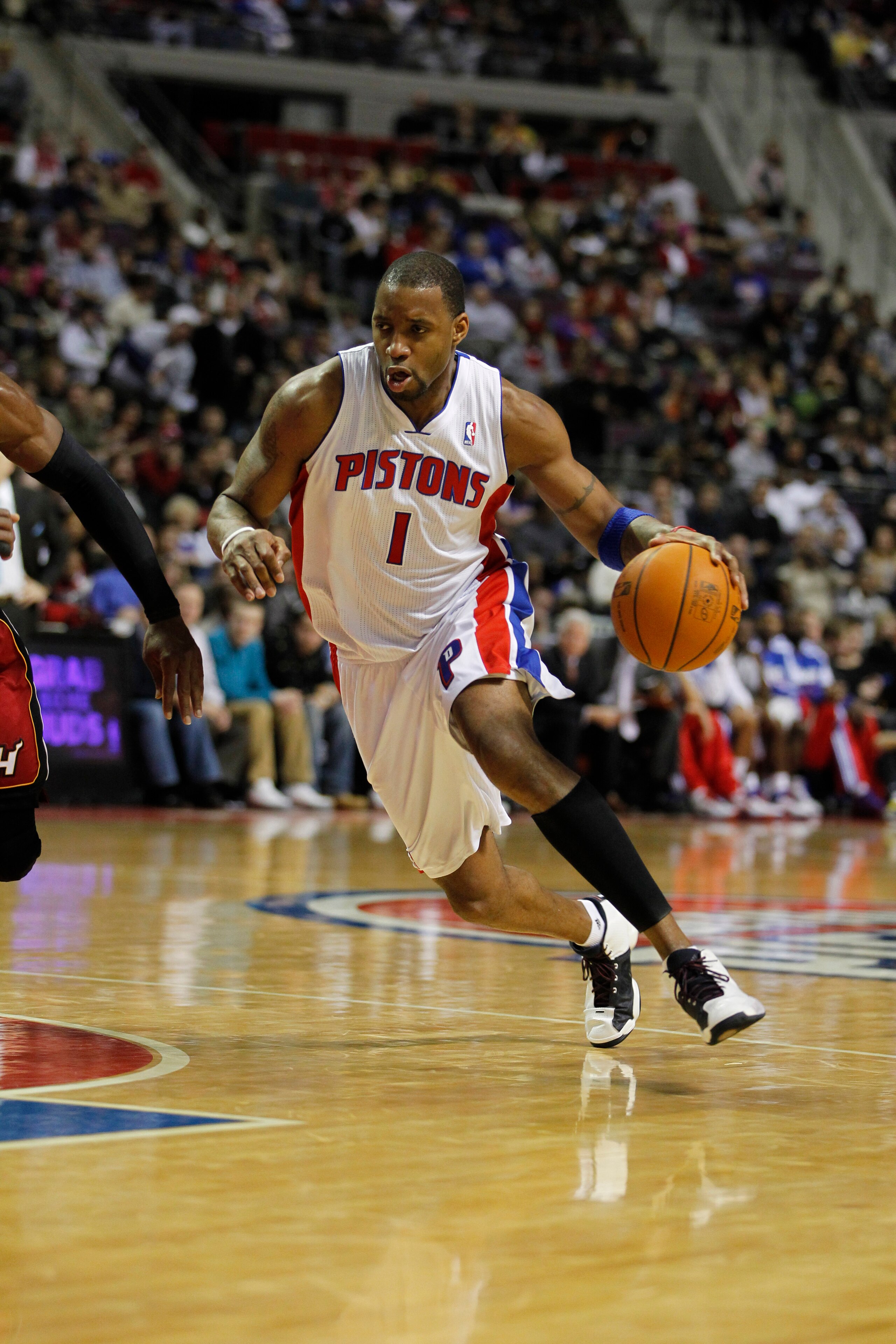
Tracy McGrady: 8.4 ppg, 3.6 apg, 3.6 rpg.
Rodney Stuckey: 14.9 ppg, 4.8 apg, 3 rpg.
Considering how much of a train wreck the Detroit Pistons organization turned into with the disputes between the players and their coach, it's a surprise that the Pistons backcourt isn't as bad as originally expected. Tracy McGrady may have fallen way off of the wagon that was parading him around as one of the top players in the league, but he can still pose a threat.
Rodney Stuckey has shown the promise to eventually become one of the better guards in the league. He has a few quality starts this year and he increased his shooting percentage, as he is more often electing to pass rather than take the shot. Last season, he was shooting 40 percent while taking 15 shots per game and now hits at a 43 percent clip that sees him only taking a little less than 12 shots.
25. Utah Jazz: Devin Harris and C.J. Miles
6 of 30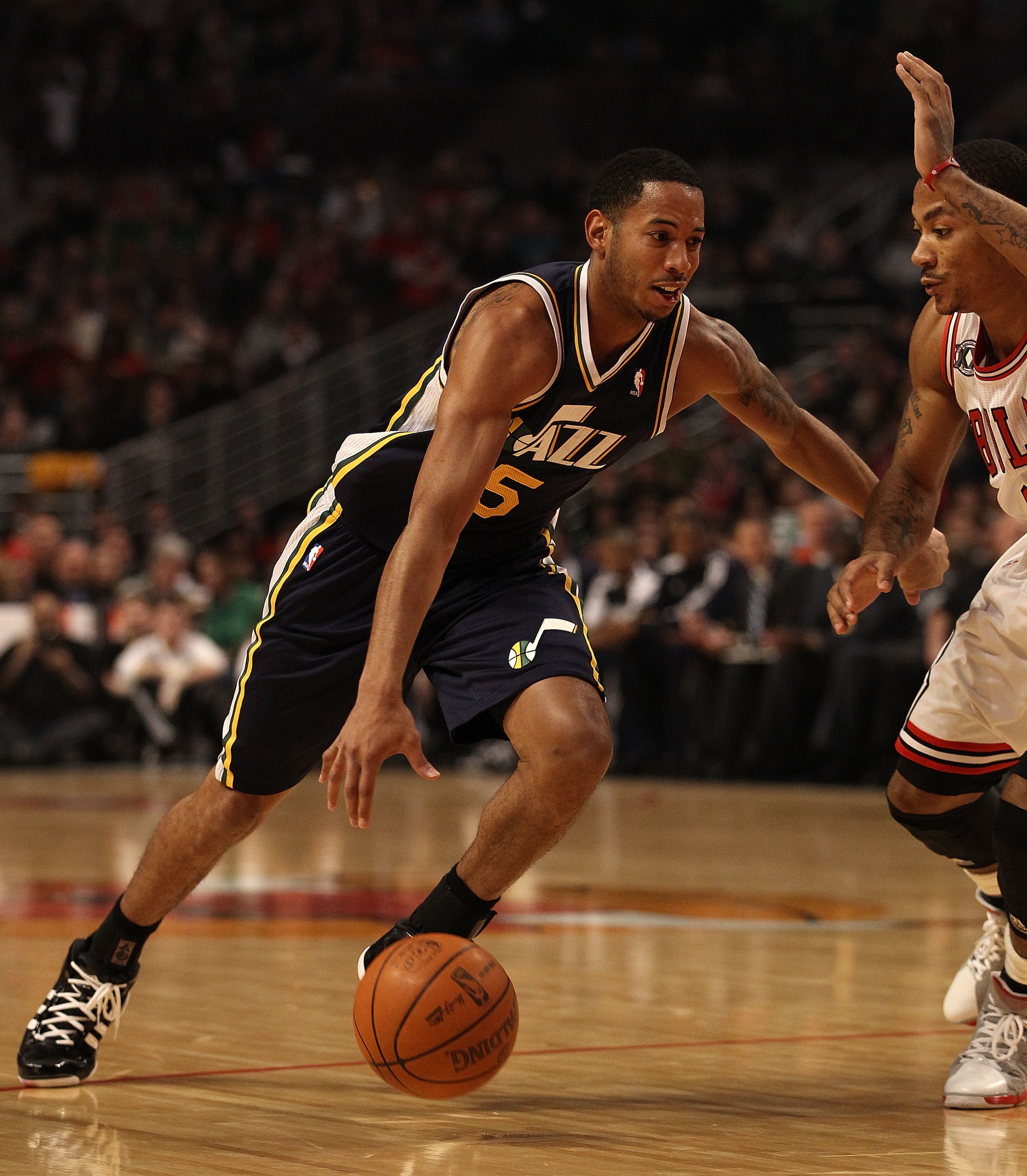
Devin Harris: 14.6 ppg, 5.2 apg, 2.5 rpg
C.J. Miles: 13 ppg, 3.3 rpg, 1.7 apg.
It's backcourts like this that make me cringe putting them this low on this list. Devin Harris is no Deron Williams in any shape or form and he didn't exactly get lucky with joining Utah either, a team in a huge slump since the resignation of long-time coach Jerry Sloan. With no Sloan, the Jazz have dropped out of the playoff race and players like Harris and C.J. Miles are suffering.
Maybe not Miles too much, since he just had a career-high 40 points on 14-of-18 shooting, including an absurd 6-of-7 from deep. Miles has hit double digits in points in all 10 games in the month of March.
24. Philadelphia 76ers: Jrue Holiday and Jodie Meeks
7 of 30
Jrue Holiday: 13.6 ppg, 6.2 apg, 4 rpg.
Jodie Meeks: 10.4 ppg, 2.1 rpg, 1.1 apg.
As a supporter of the Miami Heat, I'm beginning to wonder if the ideal postseason matchup for the Heat would be the New York Knicks and not the streaking Philadelphia 76ers. Just about every player, young or old, on this Sixers team has left an imprint on an extremely successful season, with coach Doug Collins earning serious consideration for Coach of the Year. Point guard Jrue Holiday and shooting guard Jodie Meeks have been key to Philly's success this year.
In only his second year in the league, Holiday is set to become the face of the franchise in a few years and he has earned himself career highs in every statistical category, as he sees his minutes increase. Meeks has come from out of nowhere this season, with the Sixers tapping the well known as Jodie's quality three-point shooting. Meeks is making nearly two three-pointers per game, good for 17th in the league, on 41-percent shooting.
23. Indiana Pacers: Daren Collison and Brandon Rush
8 of 30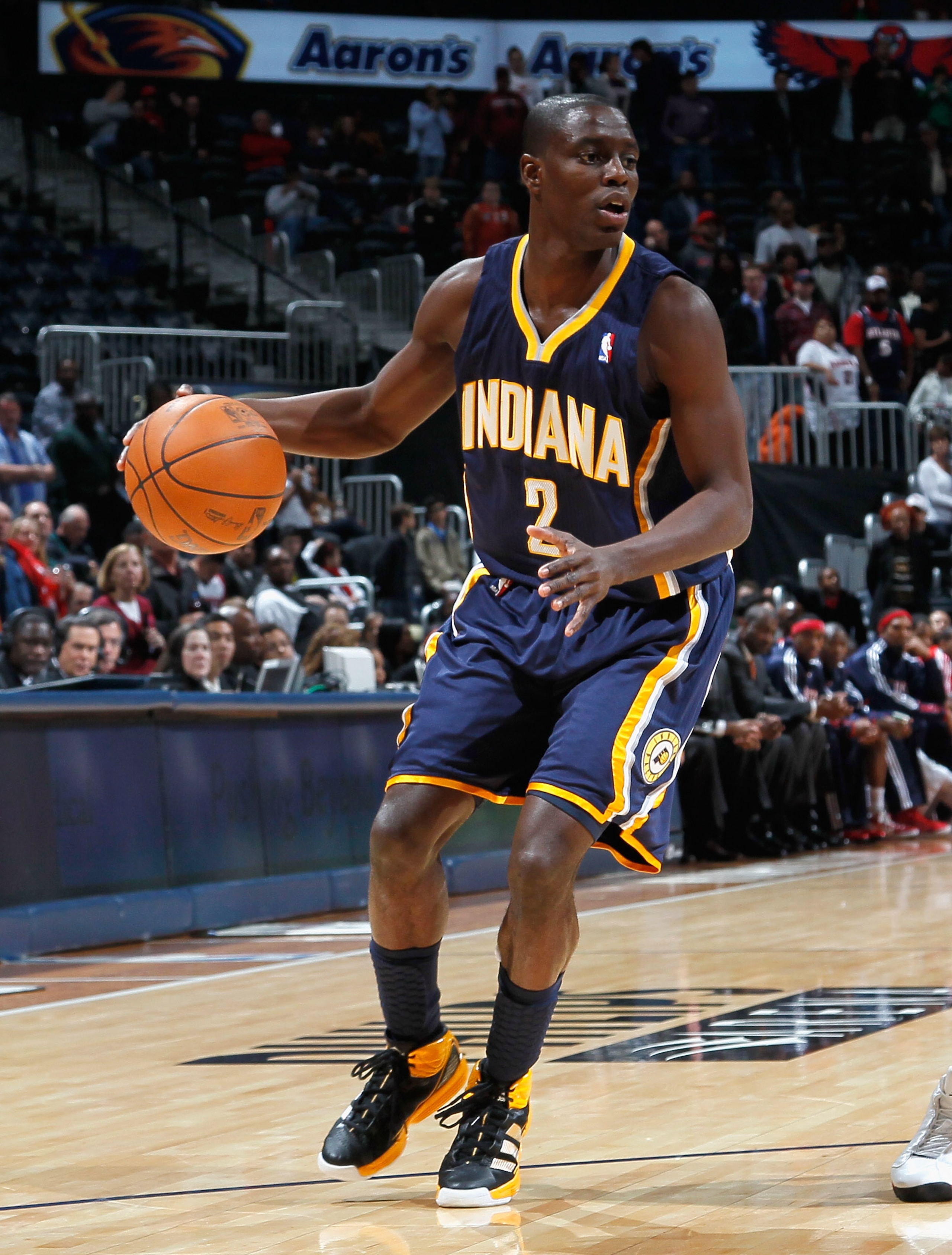
Darren Collison: 13.4 ppg, 5.1 apg, 2.8 apg.
Brandon Rush: 9.1 ppg, 3.3 rpg, 0.9 apg.
Being traded to the Indiana Pacers might have been the best thing that has happened so far in Darren Collison's extremely young career.
After an impressive rookie year at New Orleans playing under Chris Paul, Collison must be using some of the tips he learned from CP3, because he's leading the Pacers to the postseason for the first time in five long seasons. It's a little disappointing to see Collison's numbers not grow at a larger rate in his sophomore season, but he has still given the Pacers franchise a bright outlook on the future.
Brandon Rush is no one to turn a blind eye to either. He's only in his third season and he is already being recognized as one of the better defenders of the league. Like many other defensive-oriented shooting guards, he finds most of his shots coming as open opportunities from beyond the arc. It explains the one three-point shot he's hitting on 40-percent shooting per game.
22. Sacramento Kings: Tyreke Evans and Marcus Thornton
9 of 30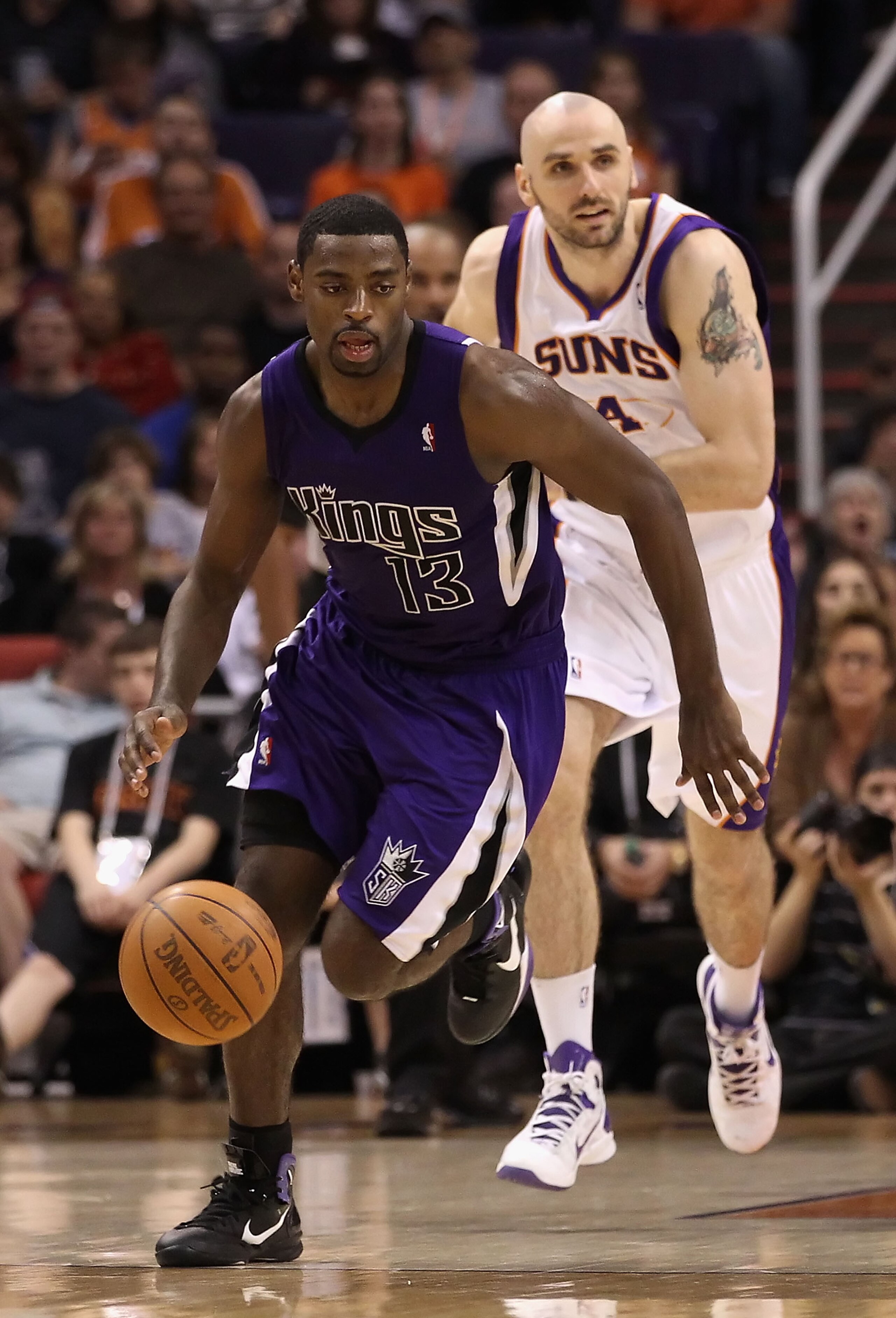
Tyreke Evans: 18.3 ppg, 5.5 apg, 4.9 rpg.
Marcus Thornton: 21.4 ppg, 3.6 rpg, 3.4 apg.
Give it a few years and this might become one of the scariest back courts in the NBA. Unfortunately it's not the future and the Sacramento Kings are still a really bad team. Reigning Rookie of the Year Tyreke Evans has experienced a few setbacks in his sophomore year, as an injury has sidelined him for 23 games this year already. The 41-percent field-goal percentage and the three turnovers per game are a bit unsettling as well.
Marcus Thornton on the other hand has given the people of some lucky city a reason to watch their new NBA franchise. Since arriving with from New Orleans a little before the trade deadline, Thornton has easily been the Kings best player, averaging a team-high 21 points per game. He's also hitting over two three-pointers per game on 43-percent shooting for good measure.
21. Toronto Raptors: Jose Calderon and DeMar DeRozan
10 of 30
Jose Calderon: 10 ppg, 9 apg, 3.1 rpg.
DeMar DeRozan: 16.6 ppg, 3.7 rpg, 1.8 apg.
I would be worried if I were a team in the Atlantic Division not called the Toronto Raptors because DeMar DeRozan is set to become one of those players that you don't want to face.
With no Chris Bosh getting most of the touches in Toronto, the door has opened for DeRozan to take the reins as a significant contributor on the offensive side. In his sophomore year, he has doubled the amount of points he scores from last year's rookie campaign.
The career high nine assists per game are a nice touch for Jose Calderon, but you have to begin to wonder if this is the best the team can get out of their sixth-year Spanish import.
He averaged as much as 13 points and a little under nine assists per game two seasons ago, but he has since regressed as far as scoring goes, with the 10 points being his lowest since his second year.
20. Dallas Mavericks: Jason Kidd and Rodrigue Beaubois
11 of 30
Jason Kidd: 8.1 ppg, 8.4 apg, 4.6 rpg.
Rodrigue Beaubois: 10.3 ppg, 2.7 apg, 1.6 rpg.
It must be strange for Dallas Mavericks fans to watch the past and future of NBA guards in their starting lineup.
While Jason Kidd might be on his last legs as a quality, reliable player in this league, he is still one of the statistical leaders in assists per game and he can still be relied on to hit the big three-point shot time after time. Even at 37 years old, Kidd has two triple-doubles this year and he is set to be the starter until the wheels fall off.
Beaubois is recovering from an injury that has kept him out for the most of the season. He is already improving from an impressive rookie campaign in which he flew under the radar to average seven points per game. As the minutes begin to pile up, Beaubois begins to become a legitimate part of this team as he sees his three-point shooting, passing, and points per game increase. Give it another year or two before Beaubois becomes the newest dangerous member of an already volatile Mavs club.
19. Houston Rockets: Kyle Lowry and Kevin Martin
12 of 30
Kyle Lowry: 13.2 ppg, 6.5 apg, 4.1 rpg.
Kevin Martin: 23 ppg, 3.2 rpg, 2.4 apg.
Anyone should have been skeptical when they first saw the contract that the Houston Rockets gave to Kyle Lowry. Why would a fifth-year player who has never averaged more than 10 points and five assists and who was also set to be a backup point guard this season deserve over $5 million per year?
Since the team elected to part ways with Aaron Brooks, Lowry has stepped up to the occasion and he is now playing the best basketball of his career.
Kevin Martin continues to be the premiere scorer that he has been since joining the NBA and he is averaging a near career high of over two three-pointers per game.
After a while, though, you have to begin to think that maybe the Rockets should be asking for more out of Martin than just scoring. He's a gifted offensive player and yet there is so much more desired from a player of Martin's caliber on a team that is desperately trying to hang around in the postseason race.
18. New Jersey Nets: Deron Williams and Anthony Morrow
13 of 30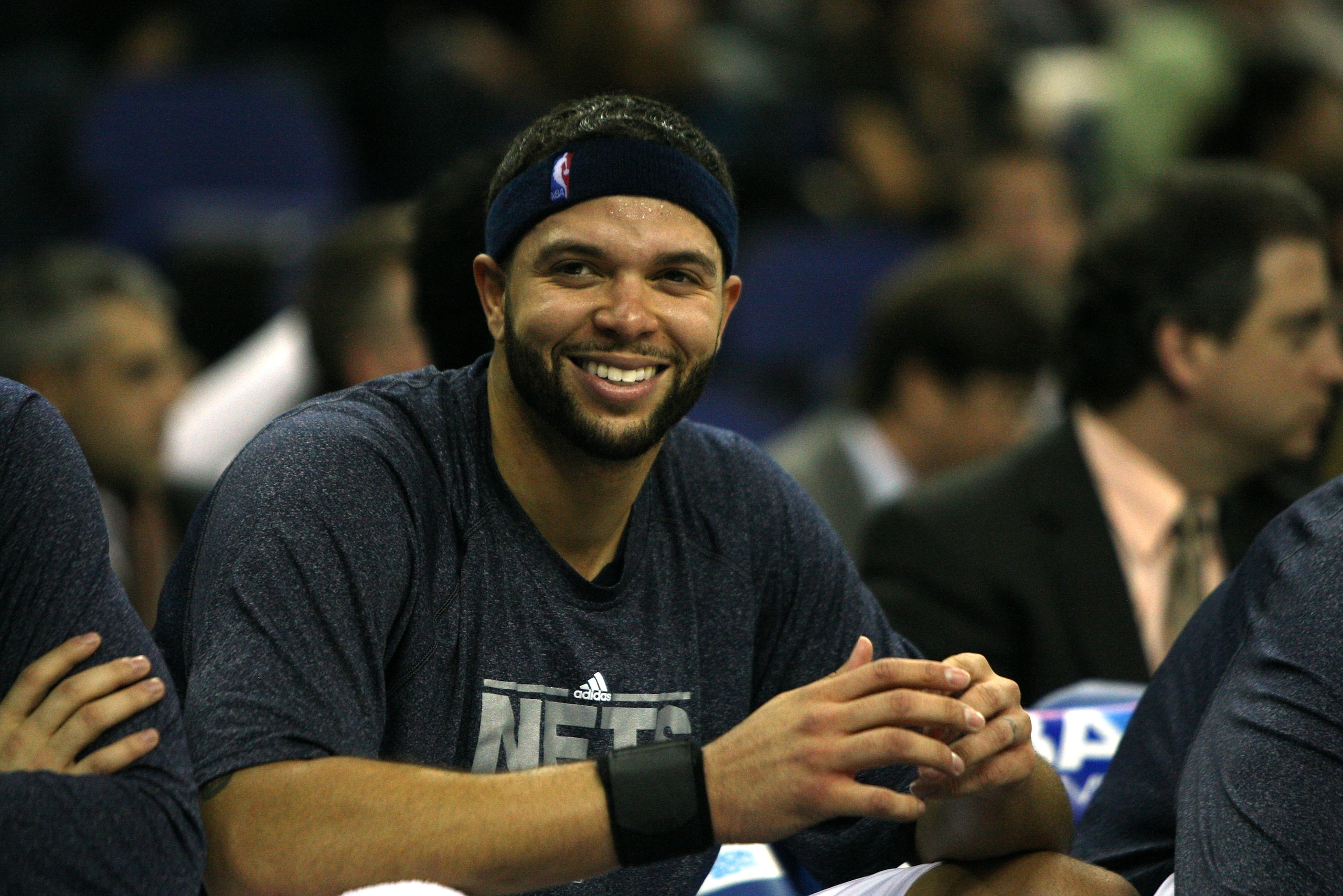
Deron Williams: 14.8 ppg, 13.1 apg, 4.4 rpg.
Anthony Morrow: 12.9 ppg, 3.1 rpg, 1.2 apg.
Those 13 assists per game is certainly a stat that stands out for a player of Deron Williams caliber, yet it's been canceled out by the four turnovers per game and the surprising 33-percent shooting he has been hitting since joining New Jersey in a trade a few weeks ago.
For some reason, Williams is also taking a career-high five three-pointers per game with his new team and is only hitting 29 percent of them. The horrid shooting and the turnovers most likely reflect Williams adjusting with his new team because we know that Deron has been recognized as a top three point guard for a few years now.
Seen as one of the steals of the offseason, Anthony Morrow has given just about the same production as he did with the Golden State Warriors for the two years he played with them. Now in his third year, Morrow is still hitting two three-pointers per game on 43-percent shooting. Aside from his dangerous prowess from beyond the arc, Morrow is mostly limited when within 25 feet.
17. New York Knicks: Chauncey Billups and Landry Fields
14 of 30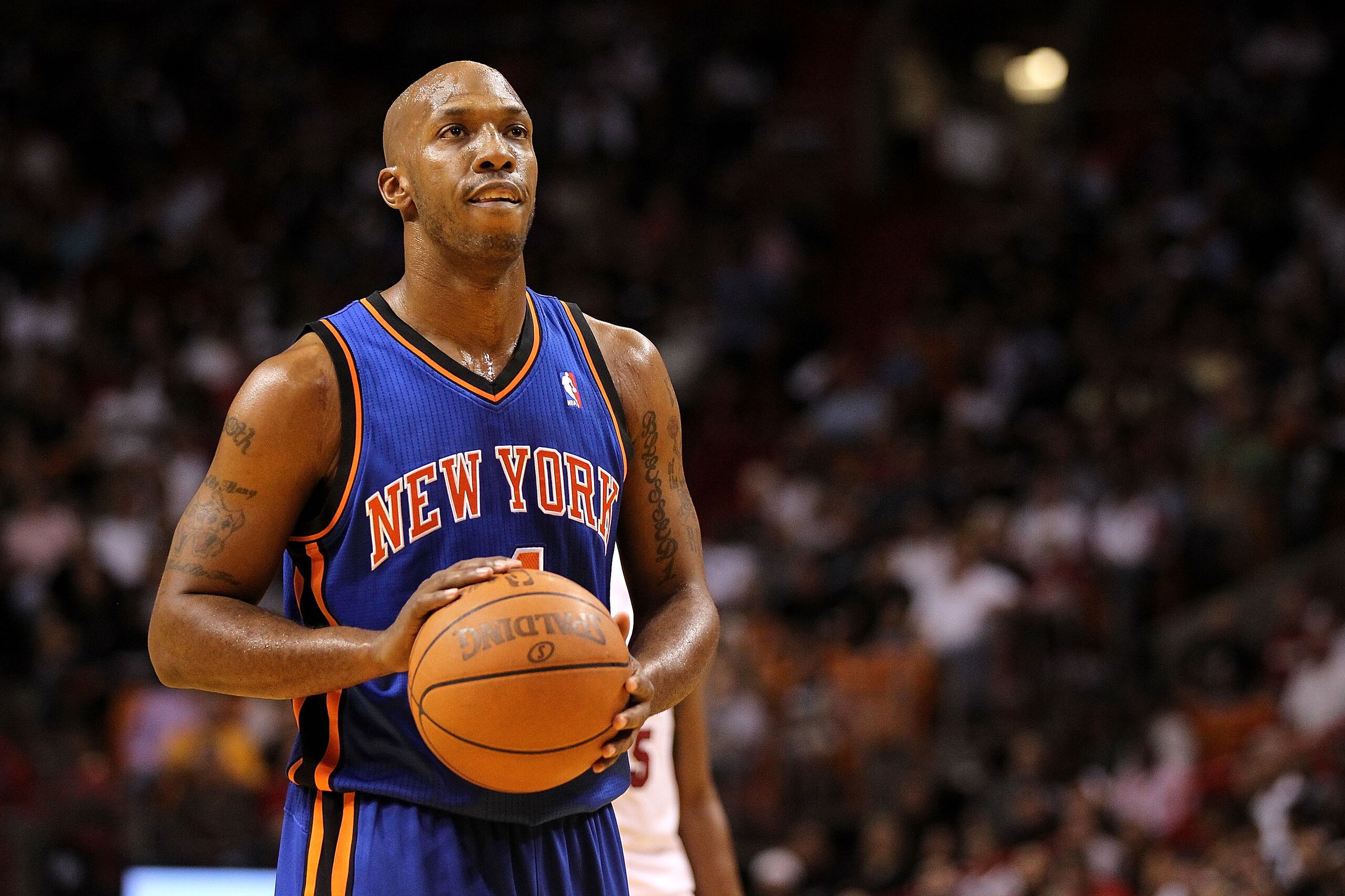
Chauncey Billups: 18.8 ppg, 5.2 apg, 3.5 rpg.
Landry Fields: 10.2 ppg, 6.7 rpg, 2 apg.
Now New York Knicks fans can feel what it's like when a big three experiment doesn't go in their favor from the start.
Of course, the Knicks will improve once they begin to bring in more suitable role players, but for now they'll let it ride with their new big three and their rookie shooting guard in Landry Fields.
Who would have guessed that the Knicks would be the ones finding the steal of the draft in Fields? He's hitting over half of his shots and his 6'7" frame gives opposing shooting guards fits on the offensive end, making him one of the most valuable pieces of a Knicks team that could use all the help it can get.
Chauncey Billups has given the Knicks a little more life at the point, but his numbers are essentially the same as Raymond Felton's before he was traded in favor of Carmelo Anthony and Chauncey Billups.
To make matters worse, Billups won't be around for as long as Felton would have been, so it won't be long until Toney Douglas becomes the starter.
16. Milwaukee Bucks: Brandon Jennings and John Salmons
15 of 30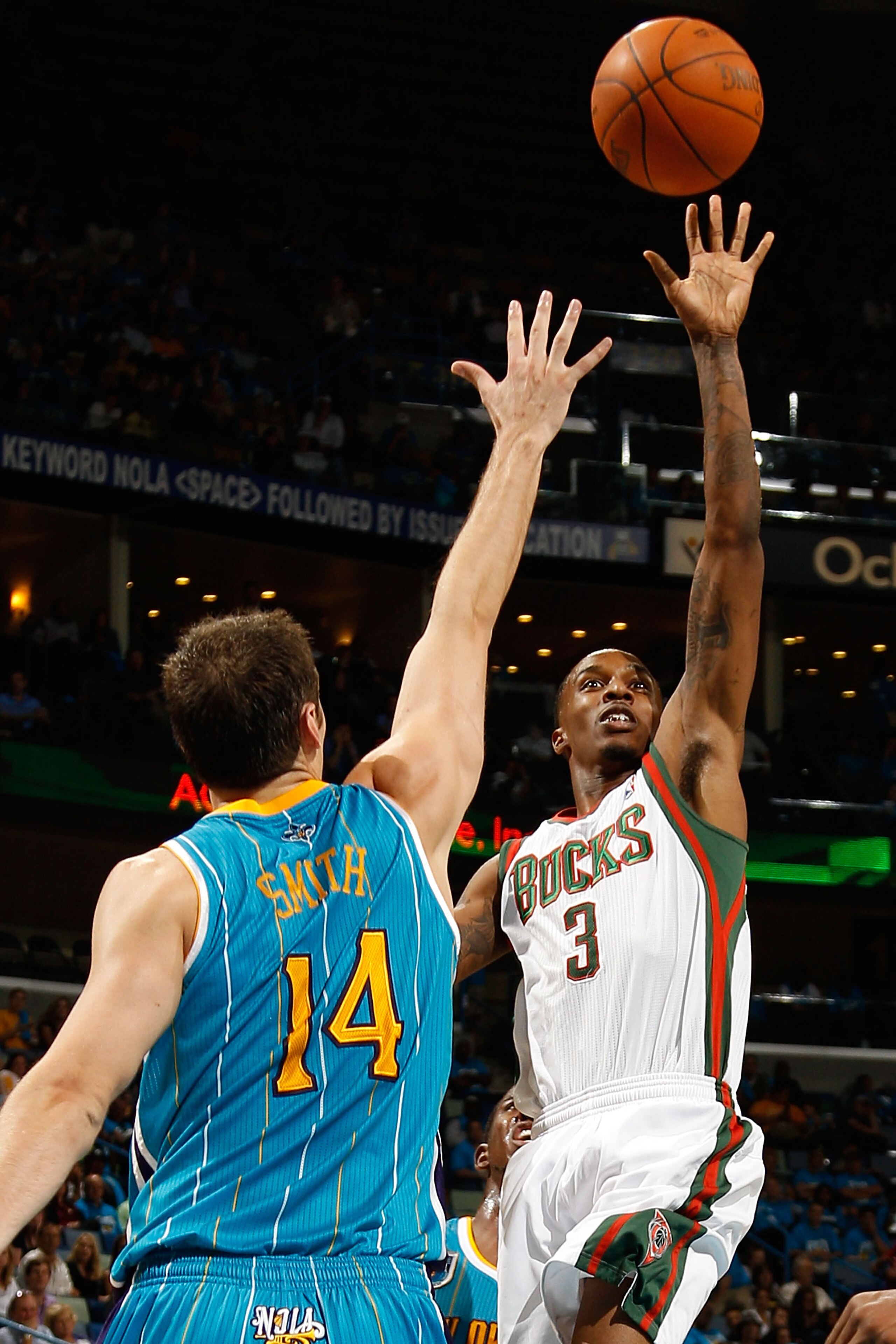
Brandon Jennings: 15.6 ppg, 4.9 apg, 3.6 rpg.
John Salmons: 13.9 ppg, 3.4 apg, 3.4 rpg.
Last year, this could have easily been a top 10 caliber backcourt. Alas, this Milwaukee Bucks squad has fallen way off since the 'Fear the Deer' hype last year, as they find themselves on the outside looking in on the Eastern Conference postseason race.
Brandon Jennings nor John Salmons have helped the team's cause, with Jennings hardly improving from an impressive rookie campaign that saw him average 15 points and six assists per game.
Salmons has been one of the teams biggest disappointments this year.
Salmons is averaging only 14 points per game just a season after he was leading the team with a career-high 20 points per contest. His 40-percent field-goal percentage is also the lowest it has been since his sophomore year in the 2003-'04 season. Milwaukee is only two games out of the eighth spot and you have to imagine that they might have that spot wrapped up if Salmons performed the same he did last season.
15. Chicago Bulls: Derrick Rose and Keith Bogans
16 of 30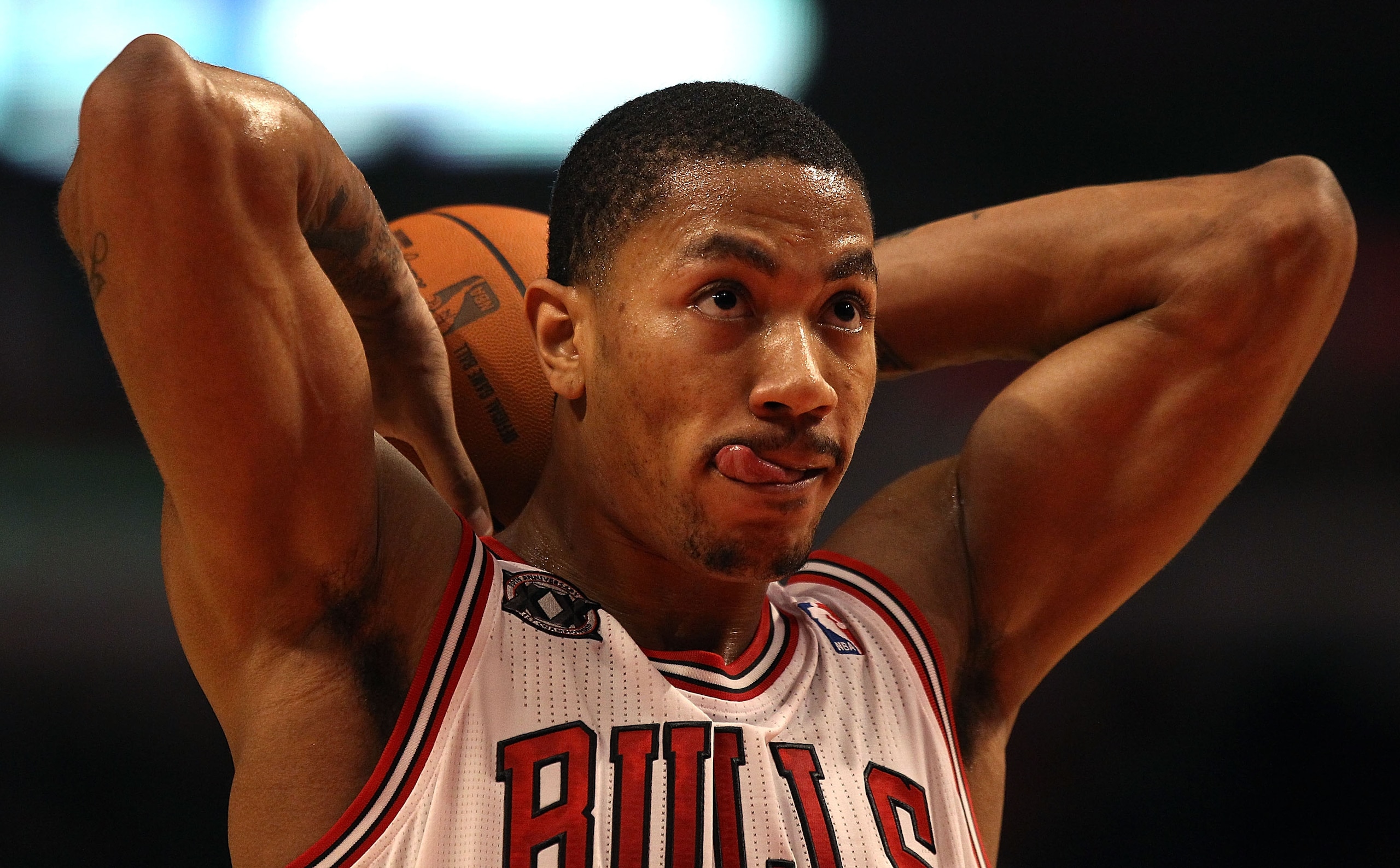
Derrick Rose: 24.9 ppg, 7.8 apg, 4.2 rpg.
Keith Bogans: 4.2 ppg, 1.8 rpg, 1.2 apg.
It's tough to put a backcourt that includes Derrick Rose this low on the list, but when your partner in the backcourt is Keith Bogans, it makes you think a bit differently. Derrick Rose has no doubt been playing at an MVP level this year, as he is leading his Bulls to the current top record in a tight race in the Eastern Conference and he has given plenty of good reasons to receive the MVP award. From his uncanny ability to finish a drive or find the open man after attracting double teams, Rose is easily having the best year of his extremely young career.
As for Keith Bogans? He's just another shooting guard who is in the starting lineup for defensive purposes and he will be looked upon on offense as the open player ready to hit the shot from beyond the arc. At 51-19, it doesn't seem that Bogans has limited his team in anyway.
14. Denver Nuggets: Raymond Felton and Arron Afflalo
17 of 30
Raymond Felton: 10.1 ppg, 6.7 apg, 4.2 rpg.
Arron Afflalo: 12.6 ppg, 3.6 rpg, 2.4 apg.
If you observed the blockbuster trade that took place between the Denver Nuggets and New York Knicks, you would easily be able to observe that, for at least this season, the Nuggets would be the better team because of just how stacked they became on quality role players. One of those players is Raymond Felton, who has already made his presence felt by replacing Billups as the starting point guard. He is now directing traffic on one of the most volatile offenses in the league.
His partner in the backcourt is Arron Afflalo, who is beginning to become everything the Nuggets dreamed of and then some. A late first-round pick in the 2007 NBA Draft, Afflalo is averaging career highs in every statistical category and he receives more significant minutes for his solid defense and his improving offense.
Afflalo is set to be a key member of this team, unless he decides to Carmelo Anthony himself away from Denver anytime soon.
13. Miami Heat: Mario Chalmers and Dwyane Wade
18 of 30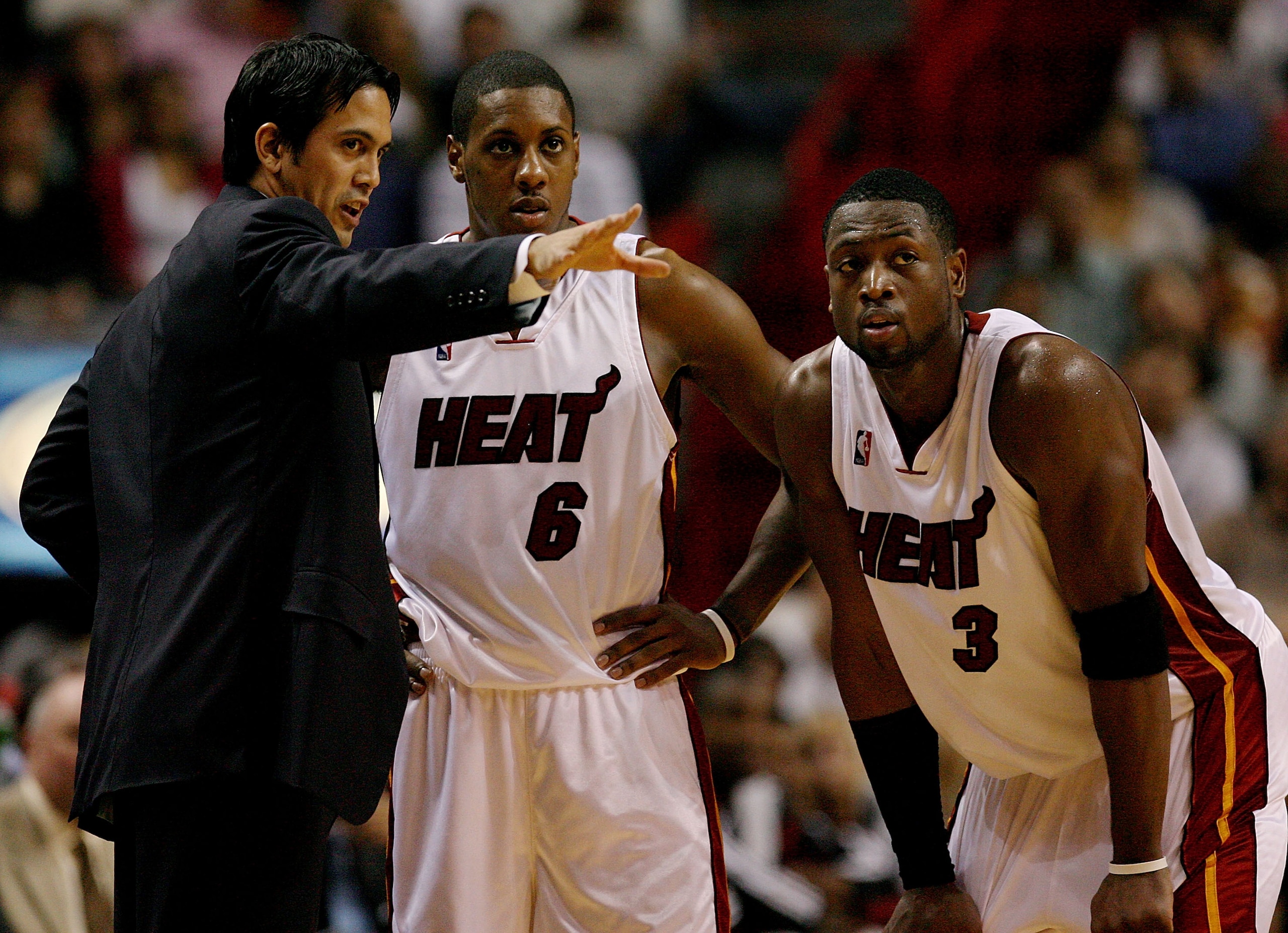
Mario Chalmers: 6.6 ppg, 2.4 apg, 2.2 rpg.
Dwyane Wade: 25.4 ppg, 6.5 rpg, 4.4 apg.
Another case of a superstar being ranked low on this list because of his backcourt teammate, Dwyane Wade this time suffers due to having Mario Chalmers on his side.
On the court, though, it's a different story between the two, who have been playing together since Chalmers was a rookie and Wade was just attempting to keep his team above water.
Chalmers had a promising rookie campaign, averaging 10 points and five assists per game, but he has failed to even come close to those marks in the two seasons since then.
Dwyane Wade, on the other hand, has been Dwyane Wade. He's one of the top rebounders and shot blockers as a guard and he always appears to be the one to hit shots when it matters most for his Miami Heat.
Even with Chris Bosh and LeBron James stealing away a majority of the spotlight, it is and always has been Wade's team. There's no easier way to tell that than when you observe this team late in games and see who is making the plays that count the most.
12. Portland Trail Blazers: Andre Miller and Wesley Matthews
19 of 30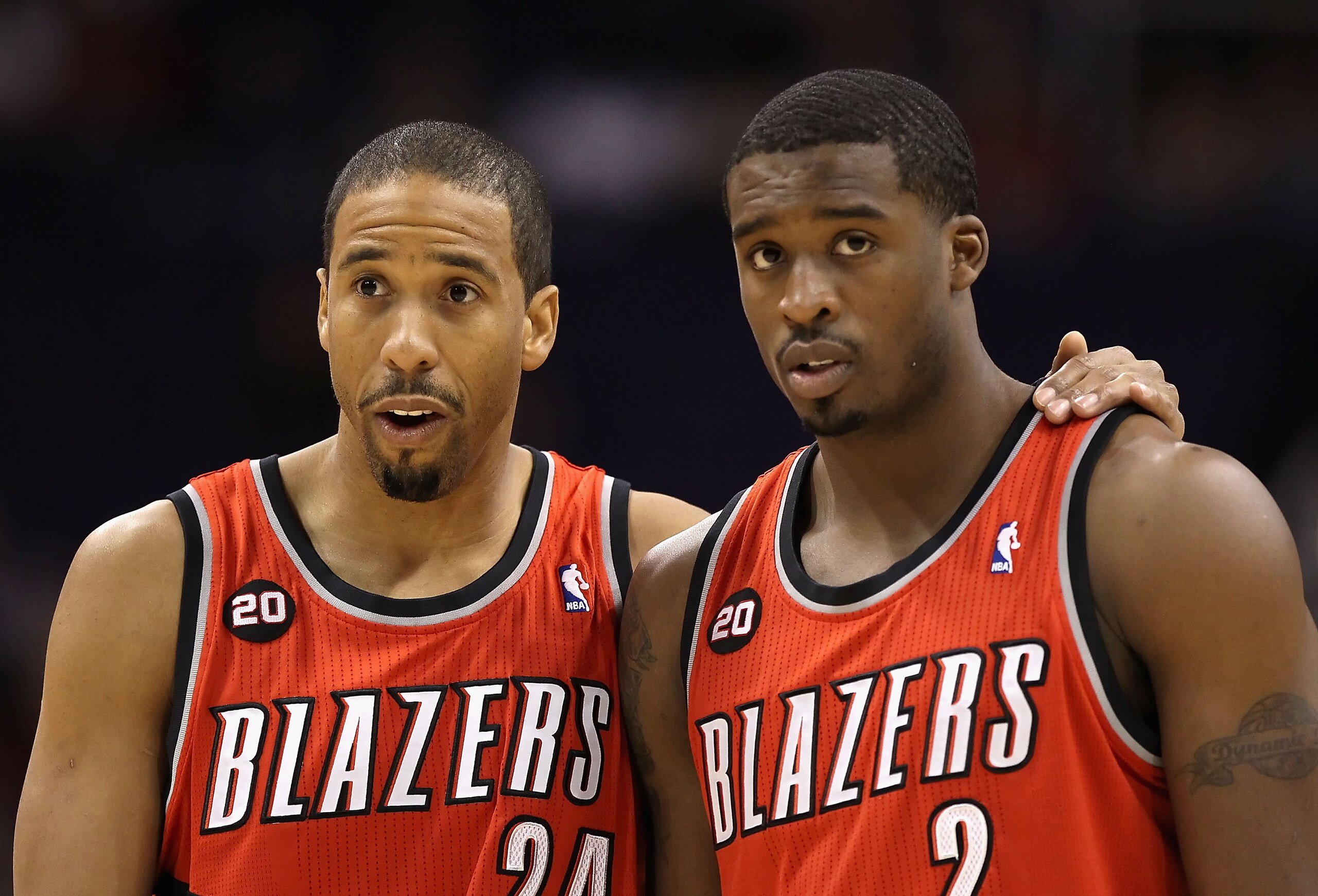
Andre Miller: 12.7 ppg, 7.2 apg, 3.8 rpg.
Wesley Matthews: 16.2 ppg, 3.2 rpg, 2.1 apg.
Don't think Wesley Matthews is attempting to live up to that heavy contract he received last year? He hasn't even played two years in the NBA, but he is already showing the qualities of any veteran shooting guard in the league right now. With the new starting role on his second team, Matthews has increased his production in just about every statistical category. One of his most surprising stats has been from beyond the arc, where he is hitting nearly two three-pointers per game on 41-percent shooting.
Andre Miller continue to be one of the more underrated guards of the league and continues to produce just as well as any other quality point guard.
At 34 years old, 13 points, seven assists and four rebounds is just about all the Trail Blazers could ask for from their 12-year veteran. His ability to make big plays in the clutch has also been a key reason for Portland's recent success over the past two seasons.
11. Washington Wizards: John Wall and Nick Young
20 of 30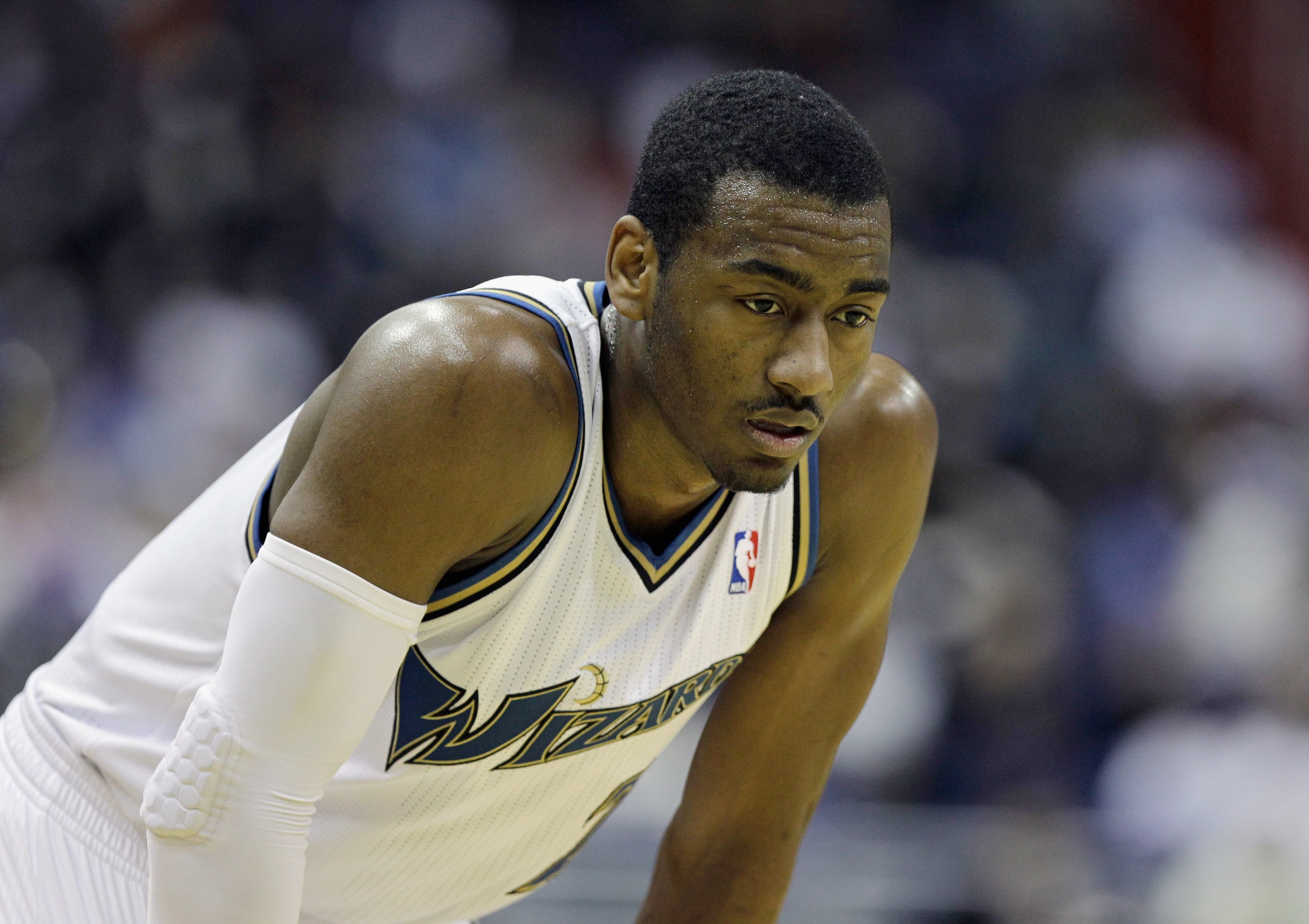
John Wall: 15.8 ppg, 8.6 apg, 4.6 rpg.
Nick Young: 17.7 ppg, 2.8 rpg, 1.2 rpg.
Even I was surprised to rank the Washington Wizards this high. I'll give credit where credit is due, though, and the backcourt of John Wall and Nick Young deserves this high of a ranking.
If not for the man-child Blake Griffin rocking rims in Los Angeles, Wall would be an easy choice for Rookie of the Year despite sitting out a few games to injuries.
His four turnovers per game is a bit more than you want from one of your key players, but he's a rookie learning the ropes and he's playing well at one of the more difficult positions to master.
Nick Young should also be in serious consideration for an award, this one being the Most Improved. Prior to this season, Young had never averaged more than 11 points per game and he was recognized as nothing more than a decent threat off the bench. Now that he is starting at the two spot,
Young has taken full advantage of the situation and he has begun to emerge as one of the more offensively talented young players of the league.
10. Los Angeles Lakers: Derek Fisher and Kobe Bryant
21 of 30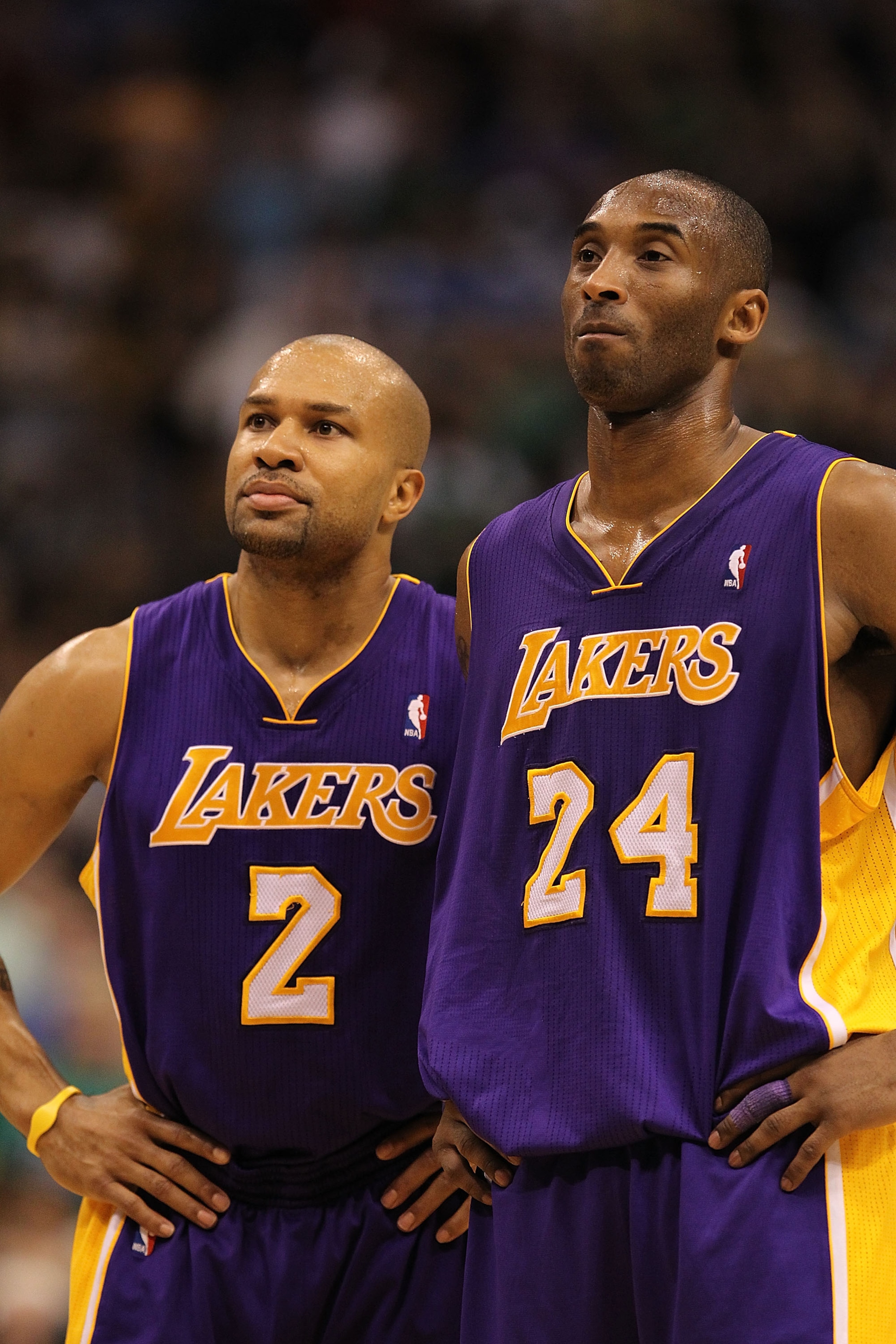
Derek Fisher: 6.7 ppg, 2.7 apg, 1.9 rpg.
Kobe Bryant: 24.9 ppg, 5.2 rpg, 4.8 apg.
Derek Fisher isn't the type of player to pick up in a fantasy league. He's not going to fill any stat sheets and he won't make any top 10 reels anytime soon, but it's all the little things he does that warrants him as being considered one of the most respected and dangerous point guards in the league.
Fisher has always had ice running in his veins and he has always been able to step up to the occasion when a game is on the line. Whenever his team needs a big shot, it can usually rely on Fish to come up with the big shot.
As for Kobe Bryant, well he's the Kobe we've known for years now. He's had the same arrogant and ambitious swagger that he's been toting for over 15 years and he has always been the most feared player in the NBA since Michael Jordan retired.
Even with his health deteriorating and age beginning to play a factor, Bryant hasn't appeared to lose a step in big games and he is still recognized as the player you least want to face with the game on the line and the ball in his hands.
9. Los Angeles Clippers: Mo Williams and Eric Gordon
22 of 30
Mo Williams: 16.5 ppg, 5.8 apg, 2.7 rpg.
Eric Gordon: 23.5 ppg, 4.4 apg, 3 rpg.
Another surprise in this list comes all the way from the other team in Los Angeles. The newly-formed backcourt duo of former LeBron James sidekick Mo Williams and the best player you've never heard of in Eric Gordon sneak in the top 10 thanks in part to the high impact they can have on a game from a scoring and passing stand point.
Williams didn't exactly get lucky by being traded from Cleveland to the Clippers, but his new team at least has a brighter future with players like Gordon and Blake Griffin surrounding him.
As for Gordon, he's quietly averaging a little under 24 points per game in only his third year as a member of the NBA.
It appears that the team has made it an initiative to allow Gordon to be the primary scorer as he has increased his shot attempts per game by over four since last season.
He has lived up to the promise of being a top 10 pick and he has shown a lot of promise to the Clippers organization. Gordon has been overshadowed by the exploits of Blake Griffin, but it's beginning to be that time when the NBA community should recognize the impressive game of Eric Gordon.
8. Oklahoma City Thunder: Russell Westbrook and Thabo Sefalosha
23 of 30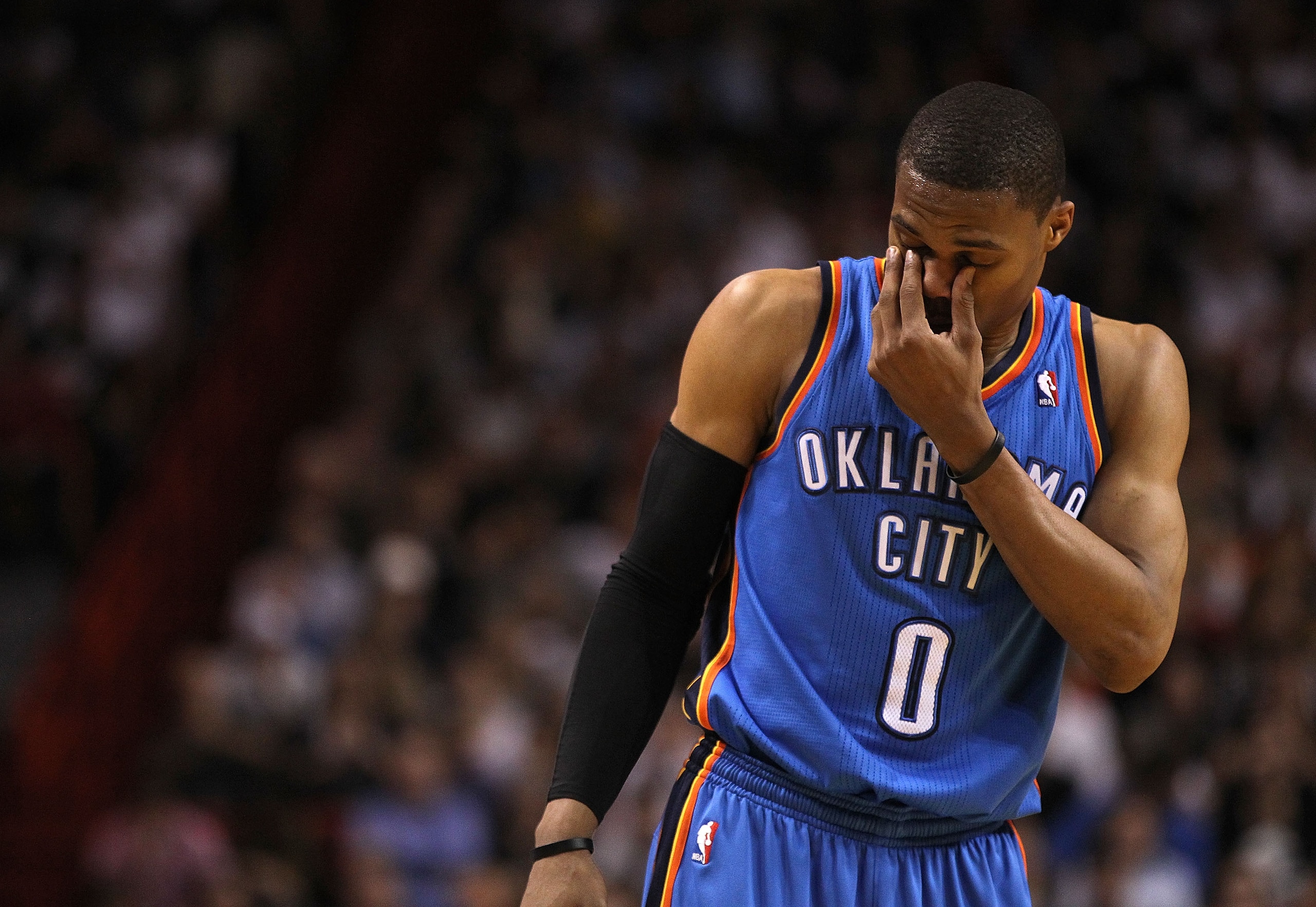
Russell Westbrook: 22.1 ppg, 8.4 rpg, 4.6 apg.
Thabo Sefalosha: 5 ppg, 4.6 rpg, 1.4 apg.
This is another backcourt that's complete with one prolific scorer and one solid defender. Coming out of Oklahoma City is the youthful duo of Russell Westbrook and Thabo Sefalosha. In only his third year as a member of the Thunder and the NBA, Westbrook has already emerged as a member of the elite point guard class and he can already be in talks with the likes of Chris Paul, Derrick Rose and Deron Williams.
His stats have improved yearly and he faces only one downside in his game this year: He has been extremely turnover prone, leading the NBA at four per game.
Swiss-import Thabo Sefalosha is a noted defender and he has a primary objective of being one of the team's defensive stoppers. He's another solid backcourt defender who finds most of his shots as open three-pointers when called upon, but he is a defender before anything else.
7. New Orleans Hornets: Chris Paul and Marco Belinelli
24 of 30
Chris Paul: 16.3 ppg, 9.8 apg, 4 rpg.
Marco Belinelli: 10.3 ppg, 2 rpg, 1.1 apg.
When you're in a backcourt with Chris Paul, chances are that you'll turn into a much better player than you thought you were.
This year has been no different, with Paul leading his New Orleans Hornets to another postseason berth with numbers that have actually dropped from previous seasons.
Recovering from an injury that kept him out nearly half of last year, Paul is averaging a little less in every major statistical category, including assists, in which he is averaging under 10 for the first time since the 2006-'07 campaign.
Marco Belinelli has never been a household name and for good reason. However, this season he is having a career year with his new team and he is averaging double-digit points for the first time over the four years he has been in the league. He is also making a name for himself from the perimeter, where he is hitting a little under two three-pointers per game on 41 percent shooting.
6. Phoenix Suns: Steve Nash and Vince Carter
25 of 30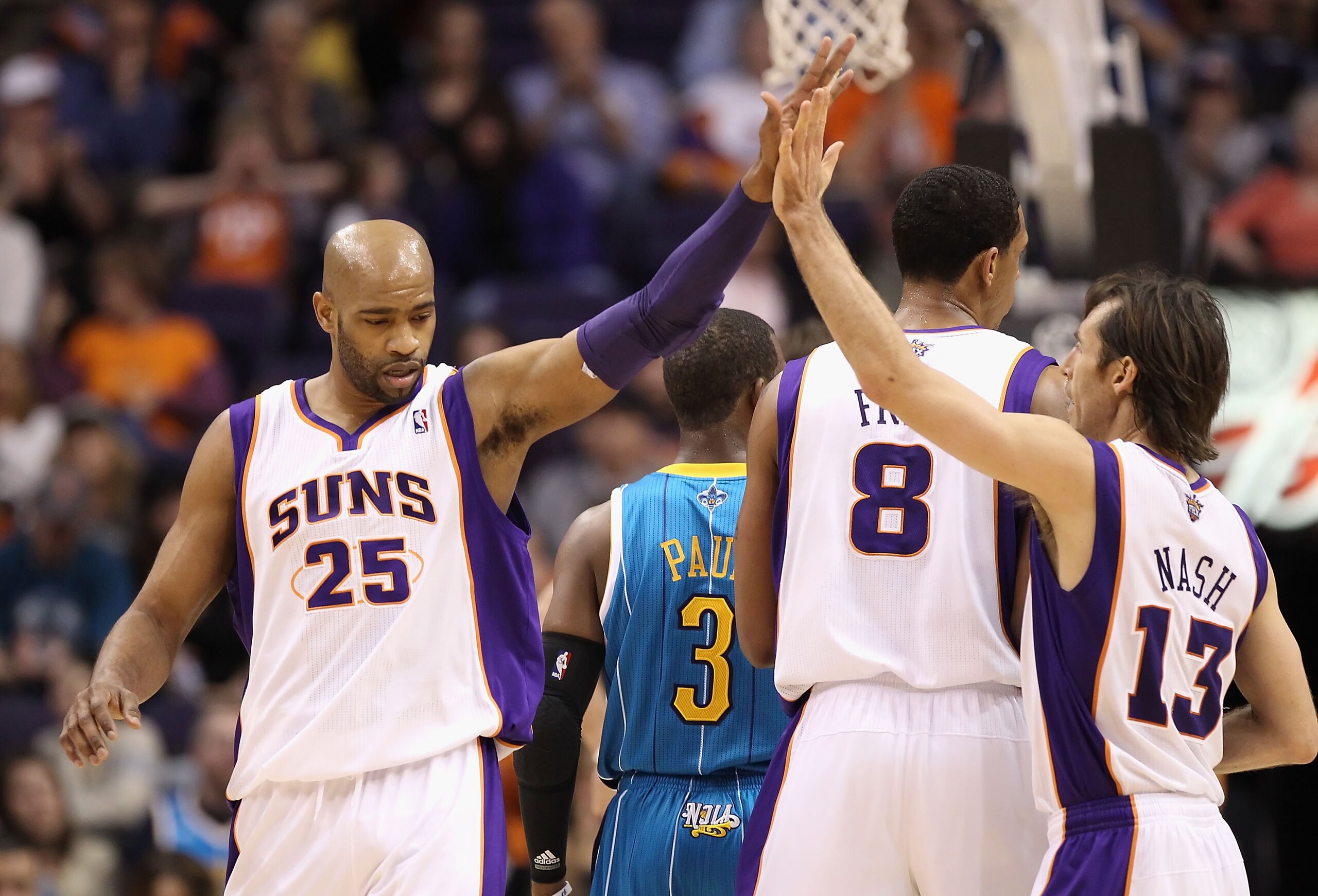
Steve Nash: 15.8 ppg, 11.5 apg, 3.6 rpg.
Vince Carter: 14.4 ppg, 4 rpg, 1.9 apg.
Life in the NBA certainly becomes easier when you have Steve Nash on your team.
It's not a coincidence that Marcin Gortat is averaging eight more points than he ever has in the NBA. Nash is just that good of a point guard. Even at 36 years old, Nash remains one of the top point guards in the league for his astounding ability to find his teammates for the easiest of scores and to even make the smallest of names turn into players that deserve All-Star nods.
His play has been no different this year, as he attempts to lead his Suns to another postseason berth in one of his final chances for the title that has eluded him for so long.
Acquired prior to the trade deadline this season, Vince Carter is beginning to adjust himself to the Phoenix Suns offensive system of running and gunning.
By taking over five three-pointers per game, it appears that Carter has already integrated himself into the roster very well, despite only hitting 37 percent of those five three-point shots. His best years might be behind him, but Vinsanity can still give teams a run for their money when he's feeling it.
5. Orlando Magic: Jameer Nelson and Jason Richardson
26 of 30
Jameer Nelson: 12.8 ppg, 6 apg, 3 rpg.
Jason Richardson: 14.2 ppg, 4.2 rpg, 1.9 apg.
One of the most underrated point guards in the league, Jameer Nelson hasn't always received the recognition he deserves for the Orlando Magic's success. Even if his stats are that of the average NBA point guard, he is still be recognized as a game changer for his ability to hit big shots down the stretch and to find ways to get Dwight Howard rolling on the offensive end.
He and Howard are easily the two most important players on the Magic, yet Nelson's name will only come up seldomly compared to Dwight's.
Acquired in the trade that sent Vince Carter to Phoenix, Jason Richardson has already integrated himself into the Orlando Magic's offensive system very well. He's taking over six three-pointers per game and he is hitting 39 percent of them.
It's no oddity for a player on the Magic to take that many three-point shots either, since Richardson is one of six players on Orlando taking at least two three-pointers per game. As a collective whole, Orlando is shooting 26 threes per game and making 10 of them.
4. Atlanta Hawks: Kirk Hinrich and Joe Johnson
27 of 30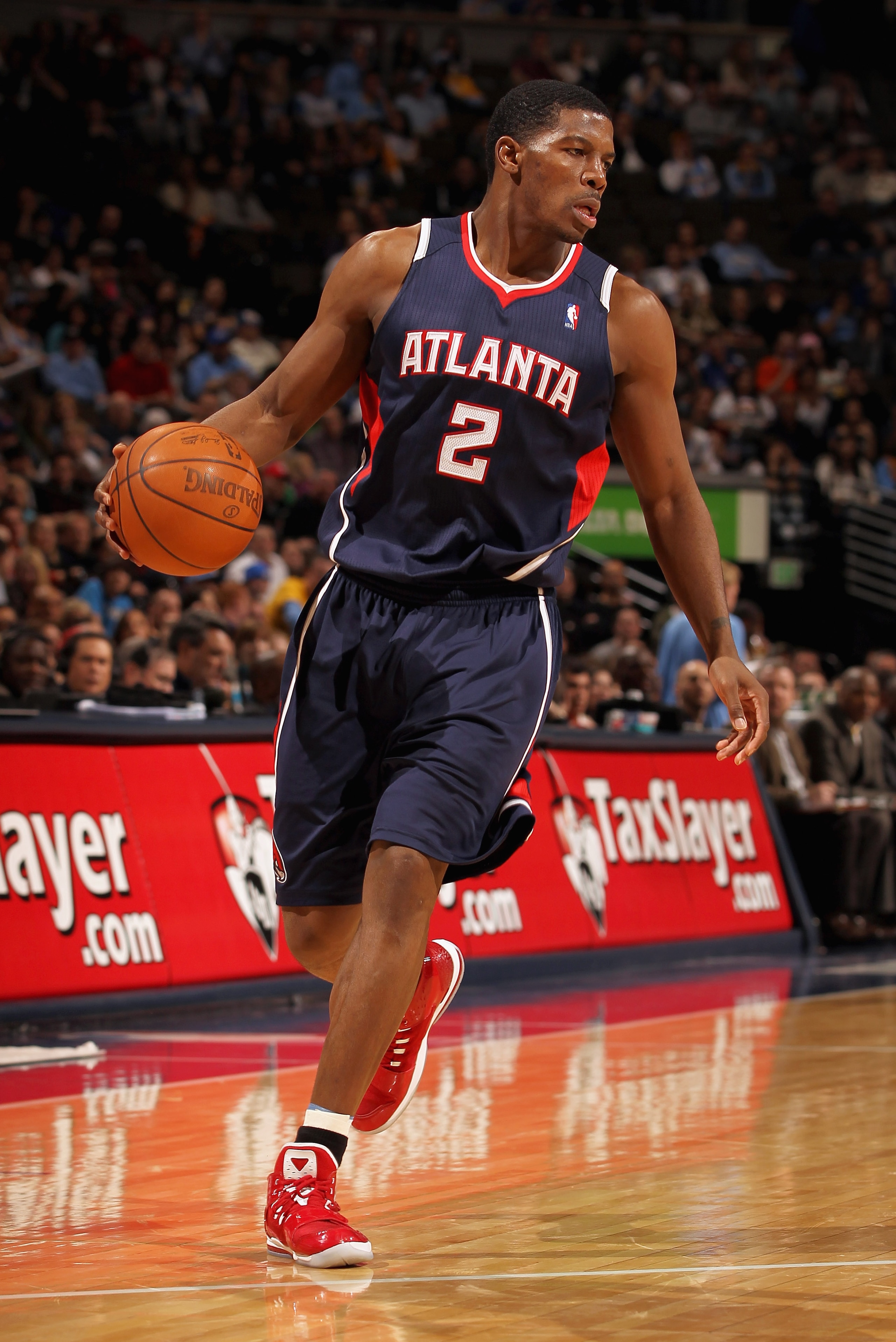
Kirk Hinrich: 8.7 ppg, 2.9 apg, 2.1 rpg.
Joe Johnson: 18.7 ppg, 4.9 apg, 4.2 apg.
A newly-formed backcourt in Atlanta features a prominent defensive stopper in Kirk Hinrich and a very expensive shooter in Joe Johnson.
The $120 million Johnson received over the offseason to stay with Atlanta another six years isn't paying off thus far as the team finds itself in the usual position, likely to be a fifth seed in the playoffs. Joe's stats have all dropped considerably as well, with his points per game below 20 for the first time since the 2004-'05 season and his three-point percentage at it's lowest since his rookie year. Either way, Johnson is still a feared shooter from anywhere on the court and should never be taken lightly.
Long-time Chicago Bull Kirk Hinrich is still attempting to work himself into the Hawks system while also attempting to play point guard for the first time in a few seasons.
His stats aren't as high as they should be, but his worth is and always has been measured in his ability to play defense and irritate opposing guards.
3. Golden State Warriors: Stephen Curry and Monta Ellis
28 of 30
Stephen Curry: 18.3 ppg, 5.7 apg, 3.6 rpg.
Monta Ellis: 24.2 ppg, 5.5 apg, 3.5 rpg.
They're the highest-scoring backcourt in the NBA and it's not even close. The formidable duo of Stephen Curry and Monta Ellis is easily the most feared offensive backcourt because of just how prolific a scorer each player can be on any given night.
A prominent scoring threat, Ellis is having another career year with his team, as he sees himself averaging over 24 points for only the second time in his career, while also greatly improving his three-point shot. His turnovers have also taken a step back with Monta averaging three this year.
Considering he was posting nearly four per game last season, it's a step in the right direction.
With Ellis taking the majority of the shots, Stephen Curry has been able to keep his stats steady and his shooting at a high percentage. He was averaging just about the same numbers in his rookie season as he is hitting in his sophomore season, with one of the most impressive stats being that he is still hitting 43 percent of his three-pointers while also hitting at least two per game. This newly formed duo of Curry and Ellis will only continue to get scarier as the two continue to progress as NBA players.
2. Boston Celtics: Rajon Rondo and Ray Allen
29 of 30
Rajon Rondo: 10.2 ppg, 11.5 apg, 4.2 rpg.
Ray Allen: 17.2 ppg, 3.6 rpg, 2.7 apg.
The NBA life becomes a lot sweeter when you have a point guard who knows what he is doing. No team has been luckier than the Boston Celtics, a team that has found a gem of a floor general in Rajon Rondo. A year after averaging a career high 14 points per game, Rondo is making a near career low of 10 points per game for all the right reasons.
He has let his scoring take a step back in favor of his passing, where he is currently averaging a league-high 11 assists per game. He's nearly turning over the ball four times a contest, yet you hardly notice with the way Rondo can find his teammates.
Ray Allen is one of the fortunate players in the league to play alongside Rondo and he has been converting the easiest three-pointers of his career with his youthful point guard.
The two three-pointers per game on a career high 46-percent shooting is one of the most impressive stats for any player who is and ever has been 35 years old in the NBA.
Allen also has a career high in shooting percentage overall at a little under 50-percent per game. He is attempting to lead his team to the title that might be out of the Celtics grasp for a few years once their big three is gone.
1. San Antonio Spurs: Tony Parker and Manu Ginobili
30 of 30
Tony Parker: 17.5 ppg, 6.7 apg, 2.9 rpg.
Manu Ginobili: 18 ppg, 5 apg, 3.8 rpg.
This is the No. 1 backcourt duo in the league and it's really not even that close.
The main reason behind the San Antonio Spurs success has been their ability to find some sort of offensive balance between every player on the team.
Even between the two backcourt players, they have been able to find it, with Parker and Ginobili both averaging nearly 18 points per game. Parker continues to astound us with his ability to weave in and out of the paint amongst the trees and his even more astounding ability to hit shots over these players as well. The 52-percent shooting he is currently hitting is the third highest of his career.
One of the most underrated shooting guards in league history, Manu Ginobili continues to lead the San Antonio Spurs to one of their best records in franchise history, while also attempting to lead the team to their fifth championship in under 13 years.
The Argentinian is scoring at an impressive clip at 18 points per game, while also hitting a near career high of two three-pointers per game on 35-percent shooting.
The backcourt that he has formed with Parker has easily become one of the most volatile and dangerous in the league and has been one of the key reasons for their success over nearly the past decade.


.jpg?w=2560 "Chiefs, Steelers Eye WR Trades")