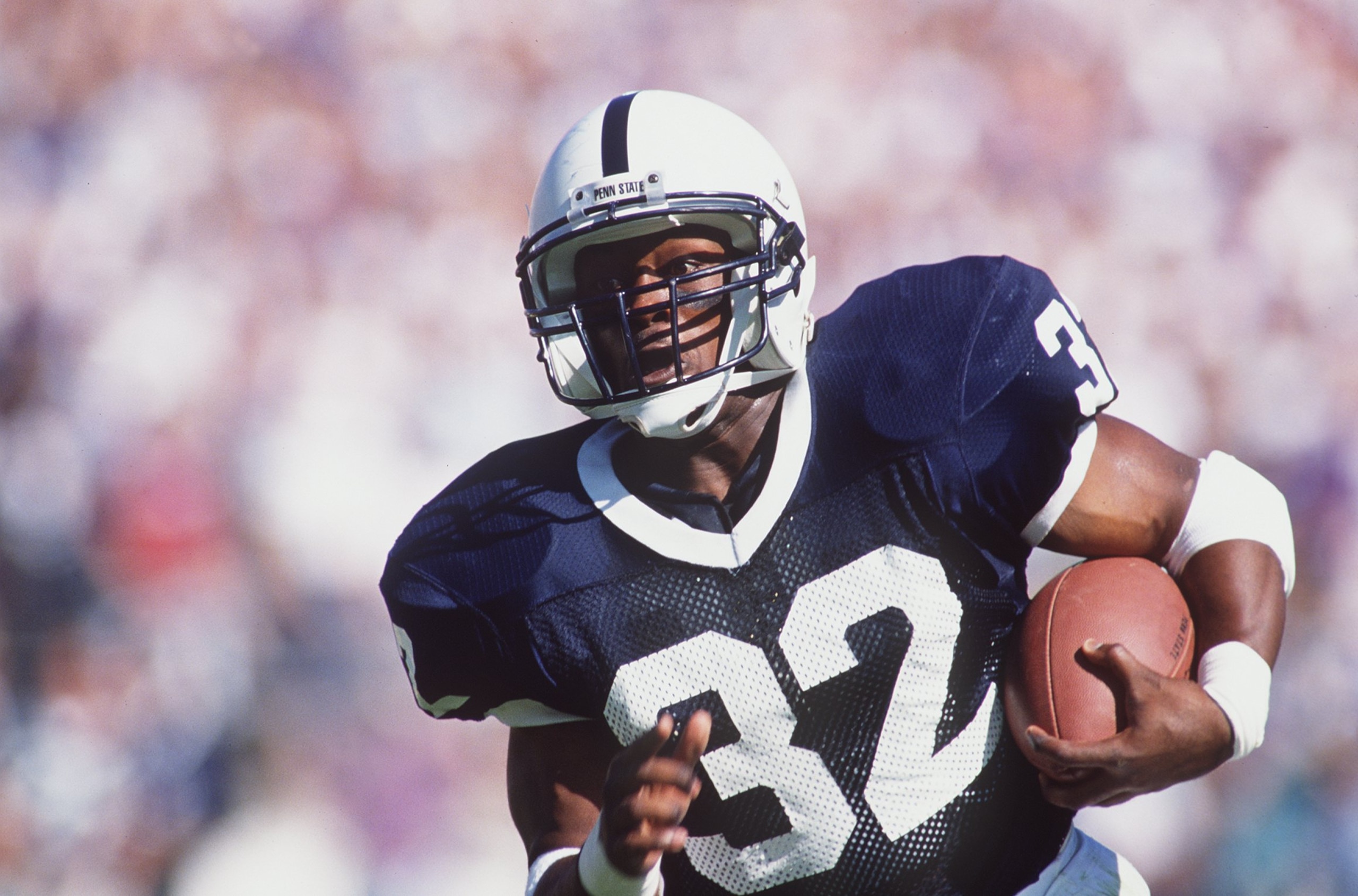

NFL Draft History: Top 25 Running Back Busts of All Time
I don't know why any team would pick a running back in the first round.
The abuse of the position means that half the backs are out after their first carry; another 25 percent retire after their third season; and the remaining 75 percent can't even coach football, let alone play it, past the age of 30.
Now I'm not very good at math (or stats), but I'm pretty sure that means 150 percent of all running backs are busts.
Despite these alarming stats NFL teams have, and tend to still, draft running backs very high in the draft.
It takes a true iron-man in the top condition of his golden god life to last long enough to justify a top pick. Every single one of us would come away a better person were we to learn a little bit about this special breed of man.
But who wants to learn stuff? You know what I say: Why bother with the hassle of trying to better myself when I could just point out people that have failed and consequently make me feel better about myself?
I have just the thing for this: Behold the 25 biggest running back busts in NFL history.
No. 25: Ron Dayne
1 of 25
Ron Dayne had a solid seven-year NFL career. He gained 3,722 yards at a rate of 3.8 yards per carry. Decent numbers for most NFL backs.
Ron Dayne was not just any NFL back, though. He was "The Great Dayne." The NCAA's all-time leader in rushing yards and the 1999 Heisman Trophy winner.
Dayne and his Heisman Trophy were drafted with the 11th selection in the 2000 NFL Draft by the New York Giants, and they teamed him with Tiki Barber so the two could be "Thunder and Lightning."
That is when complaints of Dayne being a little too thunderous began to surface. Dayne clashed with coaches and teams over his weight for the majority of his NFL career.
Dayne's 770 yards and five touchdowns helped lead the Giants to the Super Bowl, but his 3.4 yard-per-carry average left fans wanting more.
He ended up with two solid seasons as a Texan, but he failed to ever gain more than 800 yards in a season, and his 3.8 yards per carry career average is far below what people envisioned for Dayne when he left school as the most successful runner in college football history.
No. 24: Blair Thomas
2 of 25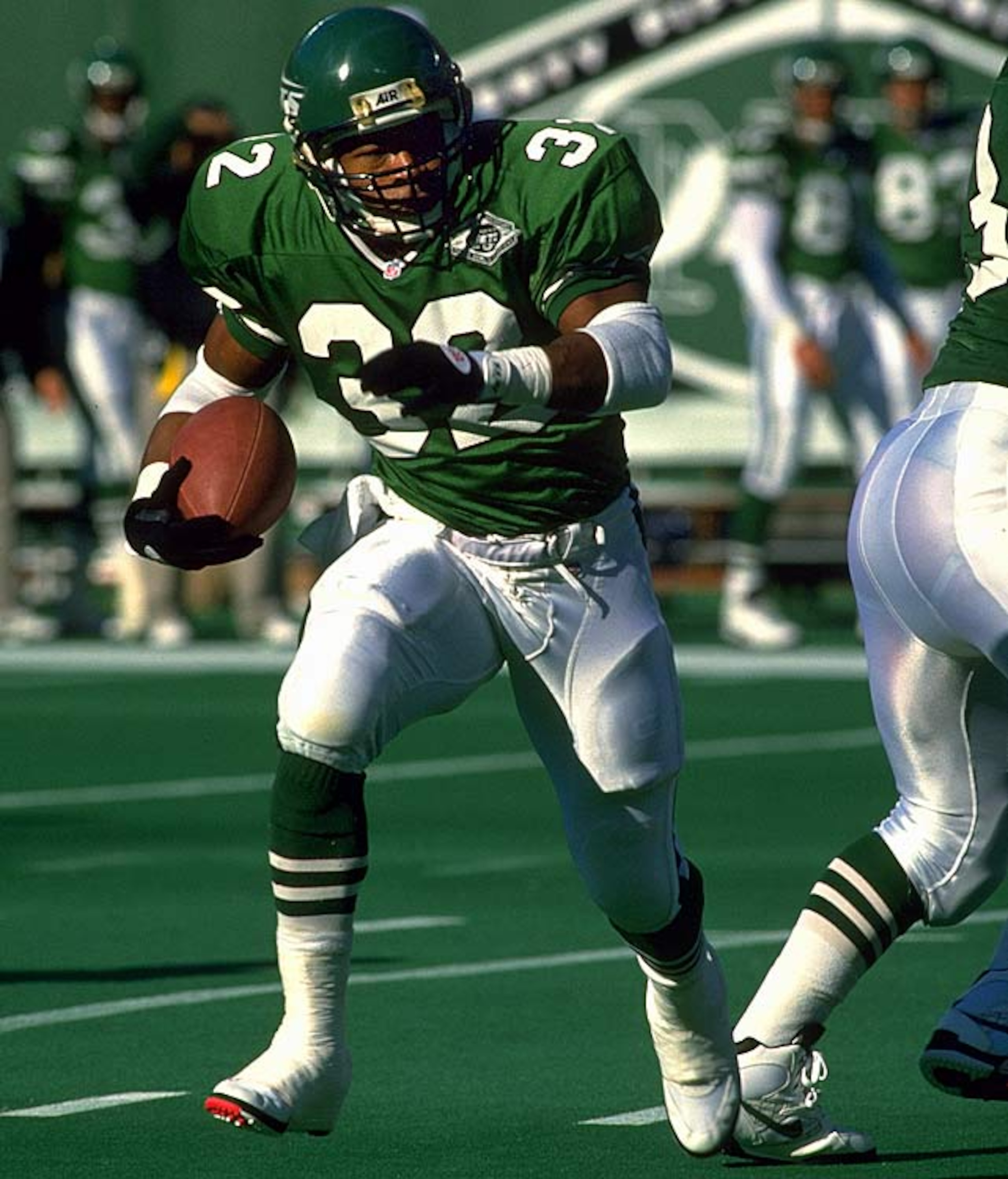
The Jets loved Blair Thomas' ability enough to make him the second overall pick in the 1990 draft. He had a decent rookie season, as he averaged five yards per carry on his way to totaling 620 yards.
The next season he raised his total 728 yards, but his yards per carry fell to 3.9, and that was the last time a team decided he was worthy of being the focus of a running game.
He went on to gain 2,236 yards in his bust-a-rific career.
In his defense, he would have gained more yards had the end zone not stopped him seven whole times in his career.
Rubbing salt into the wound that is Blair Thomas' NFL legacy is the fact that Emmitt Smith was selected 15 picks after Thomas.
No. 23: Vaughn Dunbar
3 of 25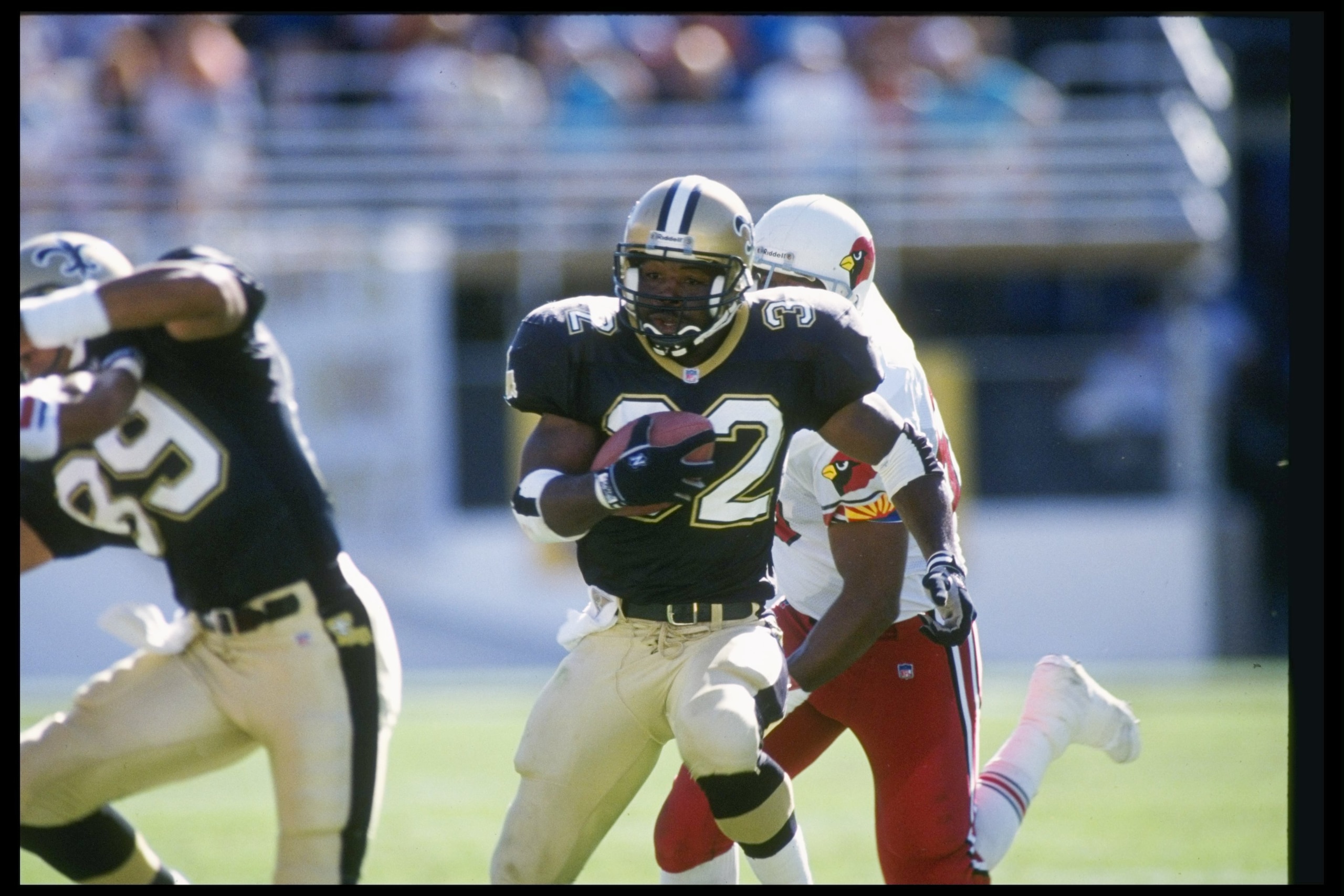
The Saints selected Vaughn Dunbar with the 21st overall selection in the 1992 NFL Draft, and they expected they had just solved their running back needs for the remainder of the millennium.
Instead they got eight starts over two years and 574 yards rushing.
Dunbar went onto the Jaguars for a season and got within sniffing distance of 1,000 career yards, but ultimately he was out of the league with just 935 yards.
.jpg?w=2560 "Seahawks Chiefs Football")

No. 22: Tommy Vardell
4 of 25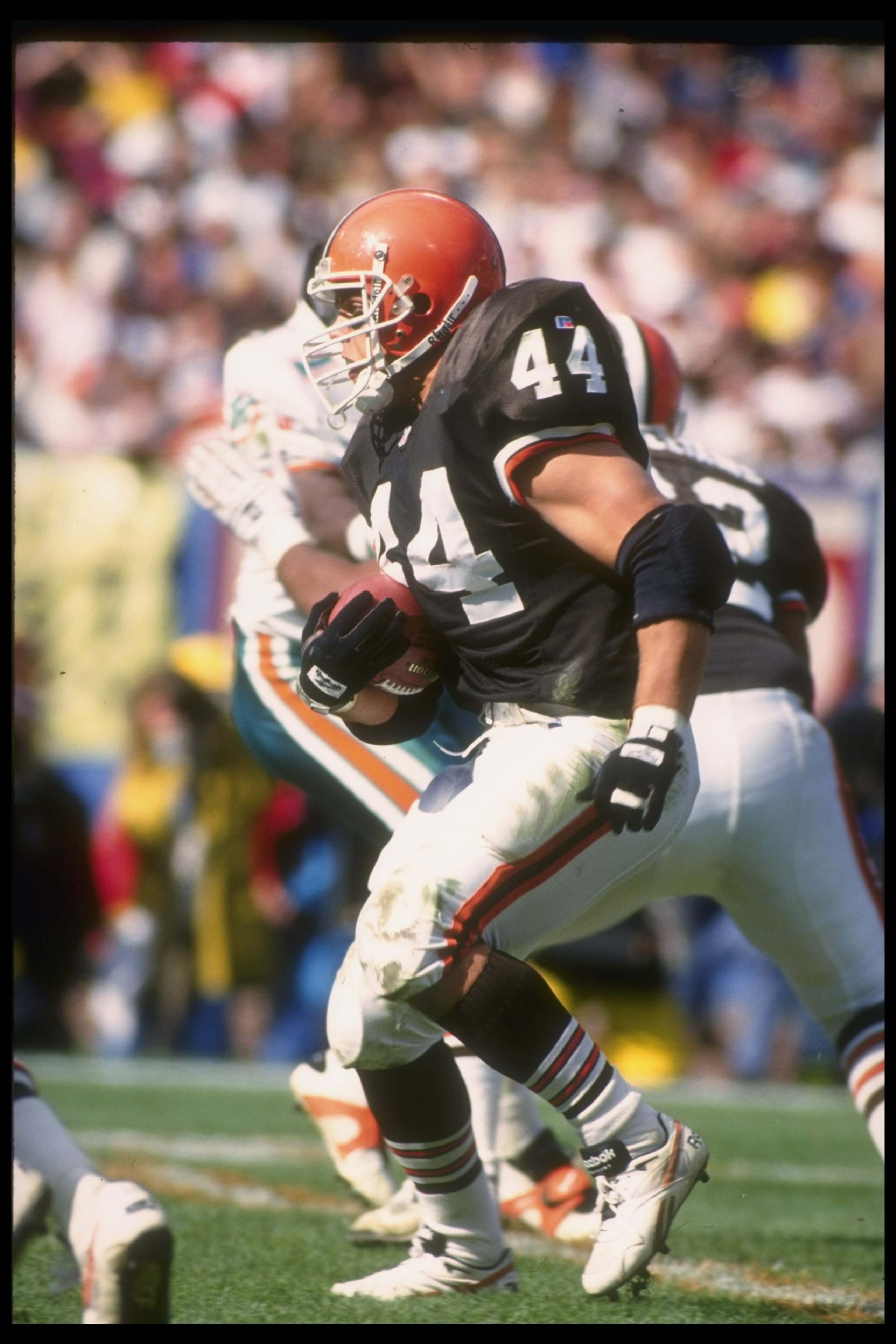
Bill Belichick and the Cleveland Browns forgot it wasn't 1956 when they drafted a fullback with the ninth overall pick in the 1992 NFL Draft.
But that is exactly what happened when they selected "Touchdown" Tommy Vardel out of Stanford. I am not clear if they envisioned Vardell as a fullback or halfback when they selected him, but a fullback is certainly what they drafted.
Vardell rushed for 1,837 yards and 37 touchdowns while at Stanford. And those numbers are better than the 1,427 yards and three touchdowns he totaled in an eight-year NFL career.
In Tommy's defense, he was a solid blocking back, and he was the fullback clearing the way for for Barry Sanders in Sanders 2,053-yard season.
There is a reason fullbacks don't get drafted ninth though.
No. 21: Brent Fullwood
5 of 25
Brent Fullwood had enough potential as a running back that the Packers drafted him with the fourth overall selection in the 1987 NFL Draft despite scoring a rumored 9 on his Wonderlic test.
Fullwood went on to spend four seasons in the NFL, primarily as a kick returner and a fullback. He rushed for 1,702 yards and scored a decent 18 touchdowns. He was even selected to the 1989 Pro Bowl.
But that is not enough to keep him from being a "bustalicious" No. 4 overall selection.
No. 20: Chris Perry
6 of 25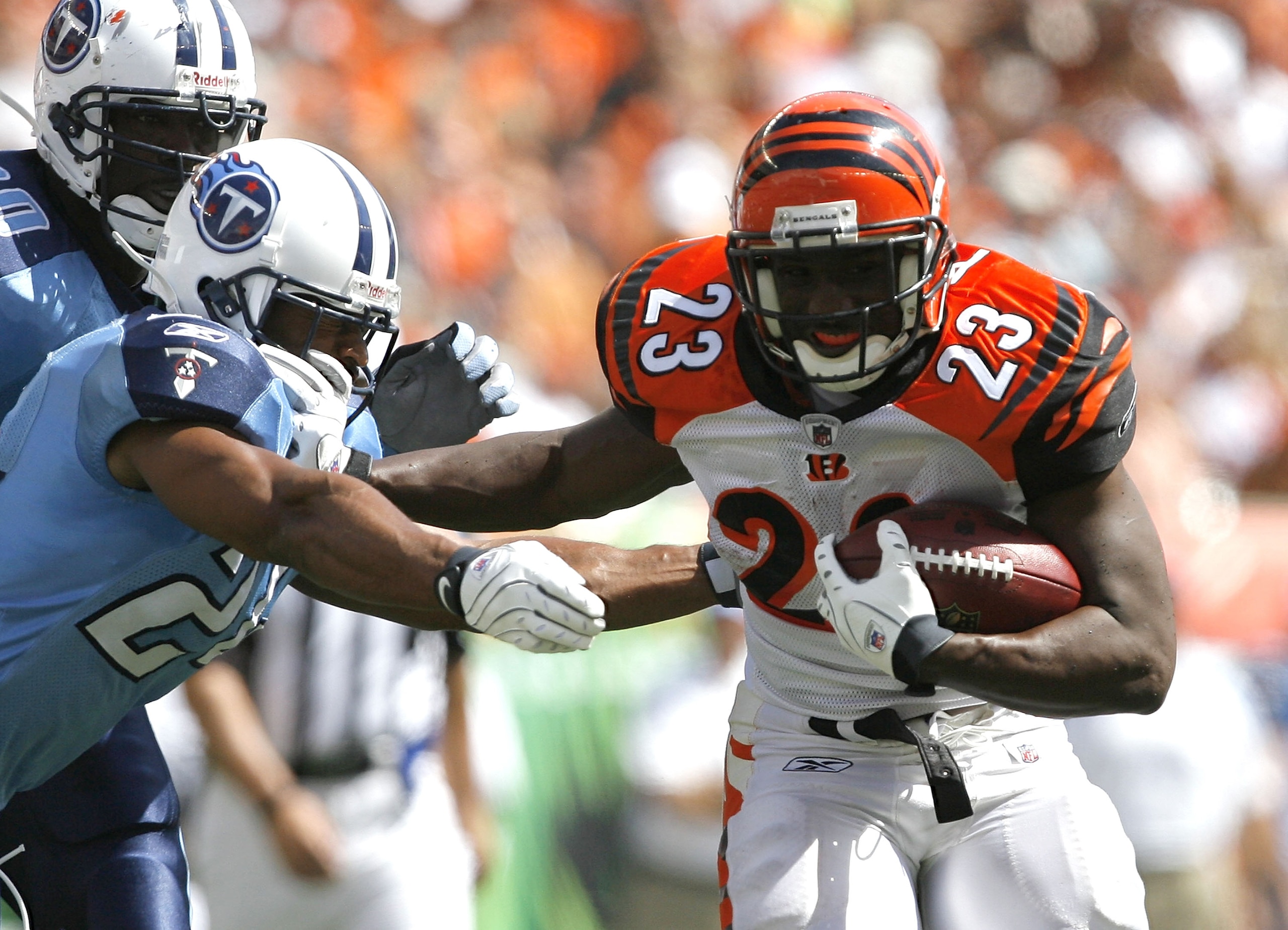
Chris Perry capped off an impressive career at Michigan by finishing fourth in Heisman Trophy voting in 2003.
The Bengals thought he would bring similar kind of production to the NFL, and they selected him with the 25th overall pick in the 2004 NFL Draft.
It may be premature to call Perry a bust as he is still an active running back. However, since that action is coming in the UFL, I feel safe in saying his 606 rushing yards gained in his four-year NFL career is bust-worthy.
No. 19: Paul Palmer
7 of 25
Paul Palmer's detractors said at 5'9" and 180 pounds(ish) that the Heisman Trophy runner-up was too small to succeed in the NFL. Turns out those were some wise detractors.
When a Google image search only reveals images for your football card and not any of your actual NFL plays, chances are pretty good that person was a bust. We'll have further evidence of this in future slides.
After being selected 19th overall by the Kansas City Chiefs in the 1987 draft Palmer amassed just over 1,000 yards in three seasons as a NFL player. He did add another 1,542 yards as a kick and punt returner, but I am pretty sure the Chiefs envisioned a little more when they spent the 19th pick on him.
No. 18: Jarrod Bunch
8 of 25
Jarrod Bunch was a punishing runner for Michigan. The Giants felt he would fit their scheme perfectly and selected him with the 27th pick in the 1991 NFL Draft.
It turned out that as a pro, Bunch was a better punisher than a runner. He punished the Giants for drafting him and the occasional lineman and linebacker he blocked.
He spent the majority of his playing time during his four-year career as a fullback. He finished up his career with 629 yards rushing and five touchdowns.
No. 17: Rashan Salaam
9 of 25
Rashaan Salaam rushed for 2,055 yards in a single college season. That was good enough to earn him the 1994 Heisman Trophy.
An accomplishment that seems even more impressive in light of the fact that it was 379 yards more than he managed to gain in four NFL seasons.
Salaam was selected with the 21st pick by the Bears in the 1995 NFL Draft. The majority of his production came his rookie year as he went over 1,000 yards, but his 3.6 yards-per-carry average displayed all of the explosion he did not have.
No. 16: Tim Biakabutuka
10 of 25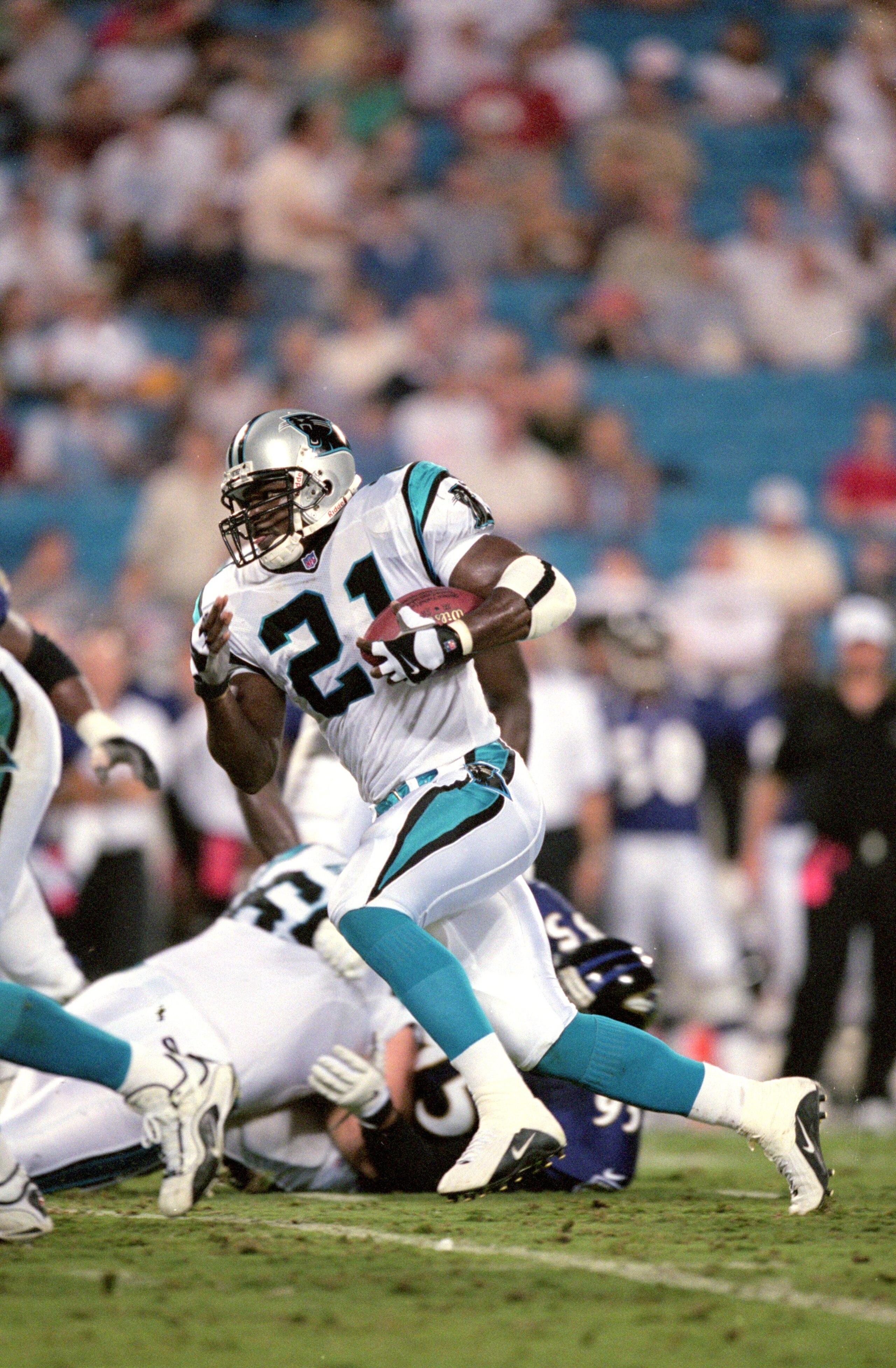
Tshimanga Biakabutuka never realized the potential in the NFL that his selection with the eighth overall draft choice would suggest, and every play-by-play announcer was ecstatic.
In 1995, Biakabutuka set a Michigan single season rushing record with 1,818 yards. He did not total that many yards in the NFL until his fifth season.
Biakabutuka played six years in the NFL. He averaged a decent 4.1 yards per carry, but his inability to stay healthy limited him to just 2,530 rushing yards.
No. 15: Bubba Bean
11 of 25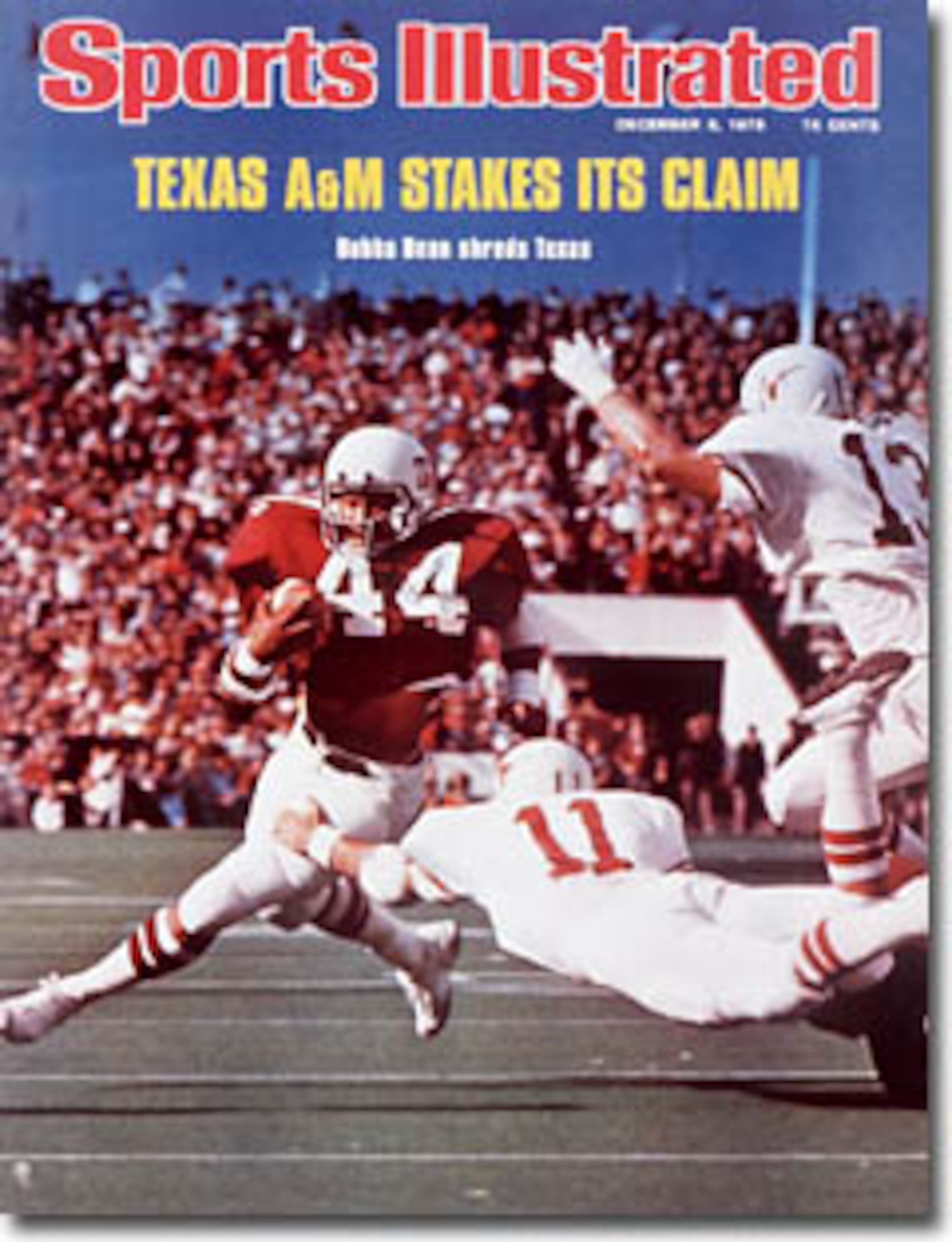
Bubba Bean was the ninth overall selection for the Atlanta Falcons in the 1976 NFL Draft.
Three years later, he was out of football.
During his career Bean rushed for 1,528 yards and six touchdowns. Solid numbers for a mid-round back, but clearly "bustable" for the ninth overall selection.
Bean is probably worthy of a little higher placement on this list, but I am giving him bonus points for his fantastic name.
No. 14: William Green
12 of 25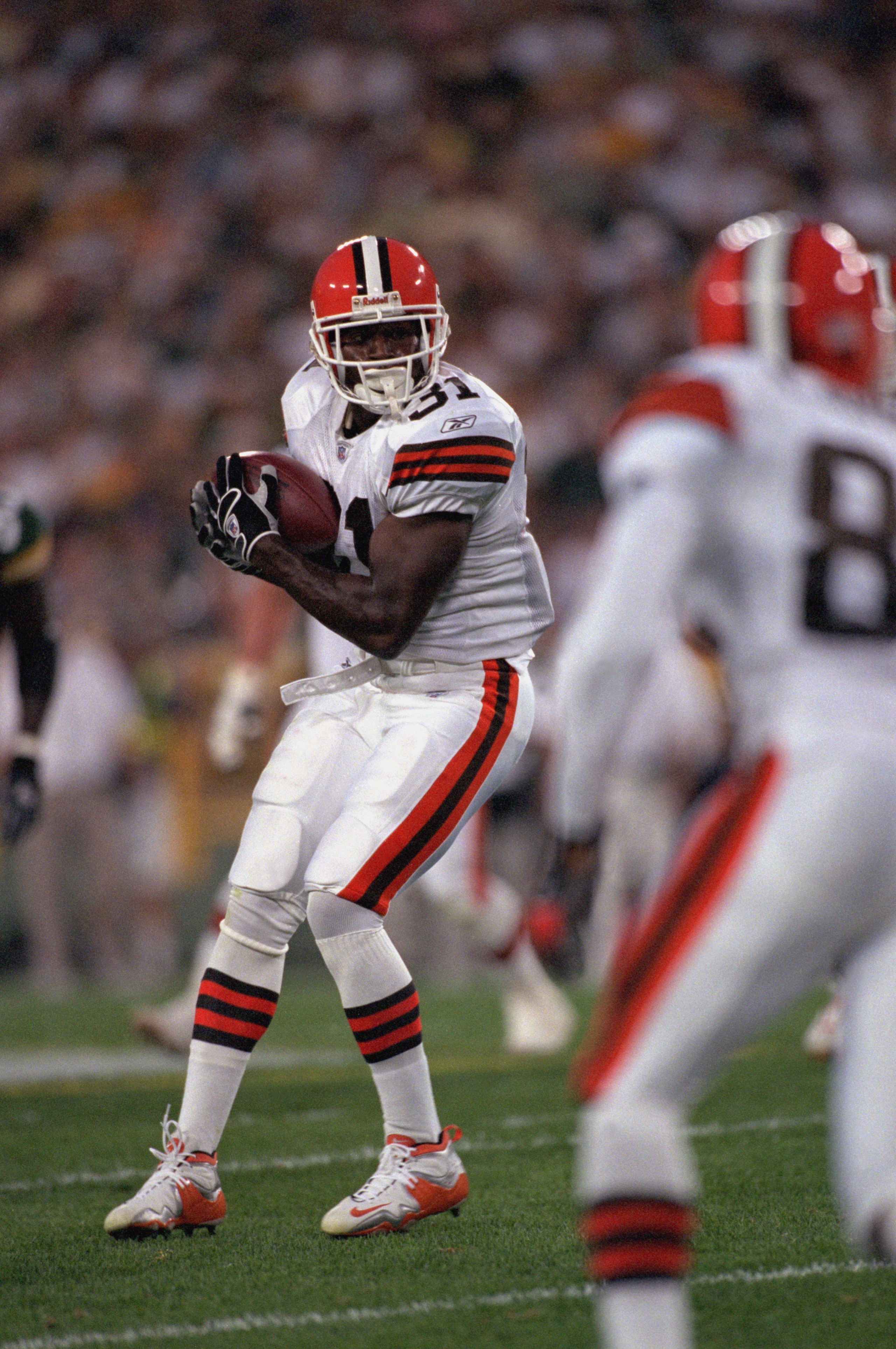
William Green was such a dynamic force running the ball that not even two suspensions for marijuana could prevent him from lingering on the draft board past the 16th pick.
He had a decent enough rookie season.
It was all downhill from there though. During his second season in 2004, Green was suspended for substance abuse for four games after he was arrested for drunk driving and—you guessed it—he also had a little weed on him. Maybe his grandma has glaucoma?
During that suspension, he was injured in what he said was a fall down the stairs, but what the authorities thought would only be possible if he fell on a knife. They felt it was more likely that he was stabbed by his fiance.
His suspension extended to the remainder of the season at that point and effectively ended his career. He came back the next year, 2004, but gained just 585 yards and seemed to have lost his explosiveness.
He then had 20 carries in 2005, and he was out of the league.
No. 13: Rocky Thompson
13 of 25
Speed kills....except when it doesn't. In Rocky Thompson's case, it definitely did not.
Thompson won the 1970 England 100-meter Dash Championships with a time of 10.1 seconds.
During that time he was also a running back at West Texas State. He showed enough promise for the Giants to make him the 18th selection in the 1971 draft.
He lasted just three years in the NFL, and he was used primarily as a kick returner. On the ground, he had just 68 carries for 217 yards.
No. 12: Joe Profit
14 of 25
Joe Profit was taken with the seventh overall pick in the 1971 NFL Draft by the Atlanta Falcons.
He went on to gain 473 yards and score three touchdowns in three NFL seasons.
That means Mr. Profit is a draft bust of enormous proportions.
Tragically, I don't think he ever fully got over this disappointment. After his three-year NFL career, Profit had a successful career in the information technology industry.
He also served on the FCC, White House Small Business Advisory committee and several other federal commission organizations that if I don't speak well of will make my words disappear.
In a particular time of darkness and weakness for Mr. Profit, he was appointed to the Internal Trade Commission by President Ronald Reagan.
You just hate to see people waste their lives like this.
No. 11: Bo Matthews
15 of 25
Bo Matthews had a remarkably unproductive eight-year career in the NFL. Needless to say it was far less productive than the Chargers envisioned when they made him the second overall pick in the 1974 NFL Draft.
In his eight-year career, Matthews gained just 1,566 yards. Matthews remained in the league for eight years because he was a solid blocking fullback.
Last time I checked, blocking fullbacks don't typically garner second overall selections.
No. 10: Alonzo Highsmith
16 of 25
Alonzo Highsmith was such a frighteningly powerful back at the University of Miami that the Oilers selected Highsmith with the third overall selection in the 1987 draft, and they were convinced they had their next Earl Campbell.
The Oilers wasted no time dropping their convictions, and they selected Lorenzon White in the first round of the 1988 draft.
Highsmith struggled with knee injuries, but mostly just ineffectiveness during his six-year career.
He retired with 1,195 yards and seven touchdowns.
He then went on to have much greater success in the ring. Highsmith retired from boxing with 27 victories and only one defeat. Twenty-three of his victories came via knockout.
No. 9: Sammie Smith
17 of 25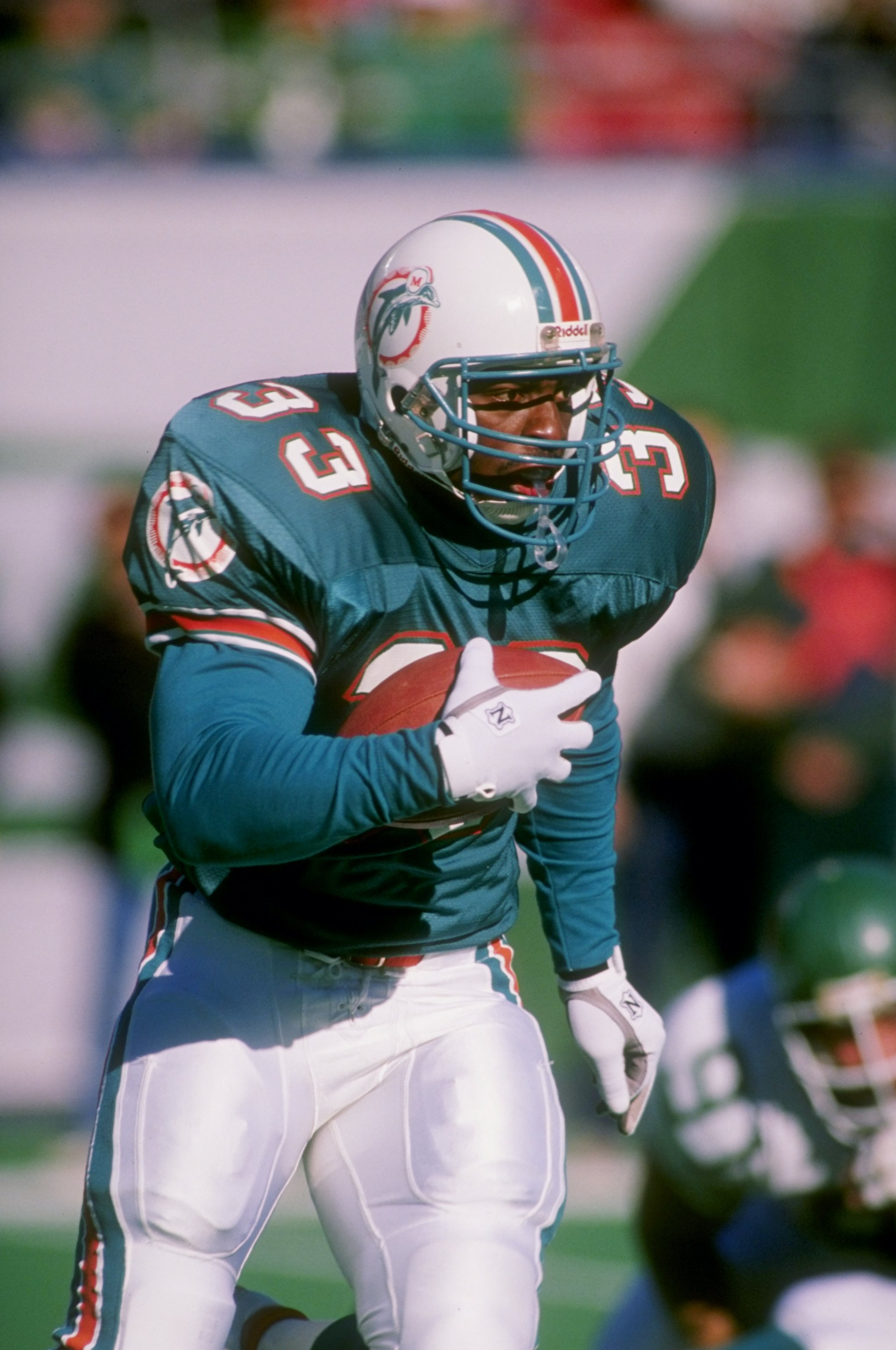
The Dolphins selected Sammie Smith with the ninth overall selection in the 1989 NFL Draft, and the future opponents of the Dolphins would come to thank them for that.
Smith was supposed to be an explosive back with good hands who would help ease the load off of Dan Marino.
He helped ease Marino's workload, but it was by cutting possessions short. In his three years as a Dolphin, Smith fumbled 17 times.
He had a brief stop in Denver after being let go by the Dolphins, and Smith left football having gained just 1,881 yards on the ground.
With his NFL career behind him and his bust status securely locked, Smith than went to work on being a bust at life. Smith was convicted of two counts of possession and distribution of cocaine, and served seven years in prison.
No. 8: Terry Miller
18 of 25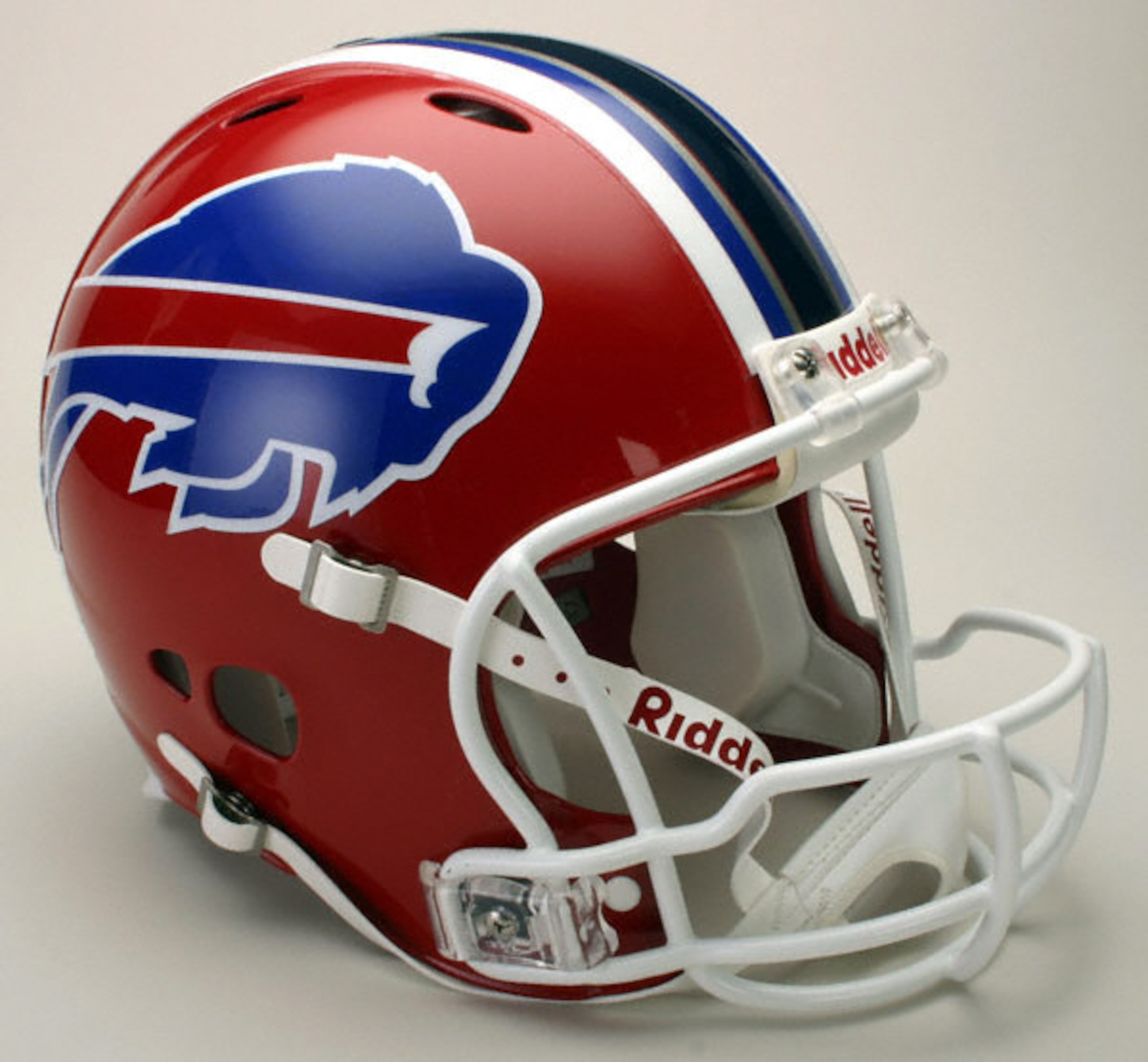
Terry Miller finished was the Heisman Trophy runner-up in 1977. He was then drafted fifth overall by the Bills, and it was expected he was going to fill the shoes of the freshly departed O.J. Simpson.
Miller went on to rush for 1060 yards at 4.5 yards per carry in his rookie season. Not mind-blowing numbers for the fifth selection, but certainly no bust numbers either. Miller saved his best bust numbers for the rest of his four-year NFL career.
Miller gained only 523 yards after his rookie season. He was out of the league in 1981 having never had a career start.
No. 7: Dick Leftridge
19 of 25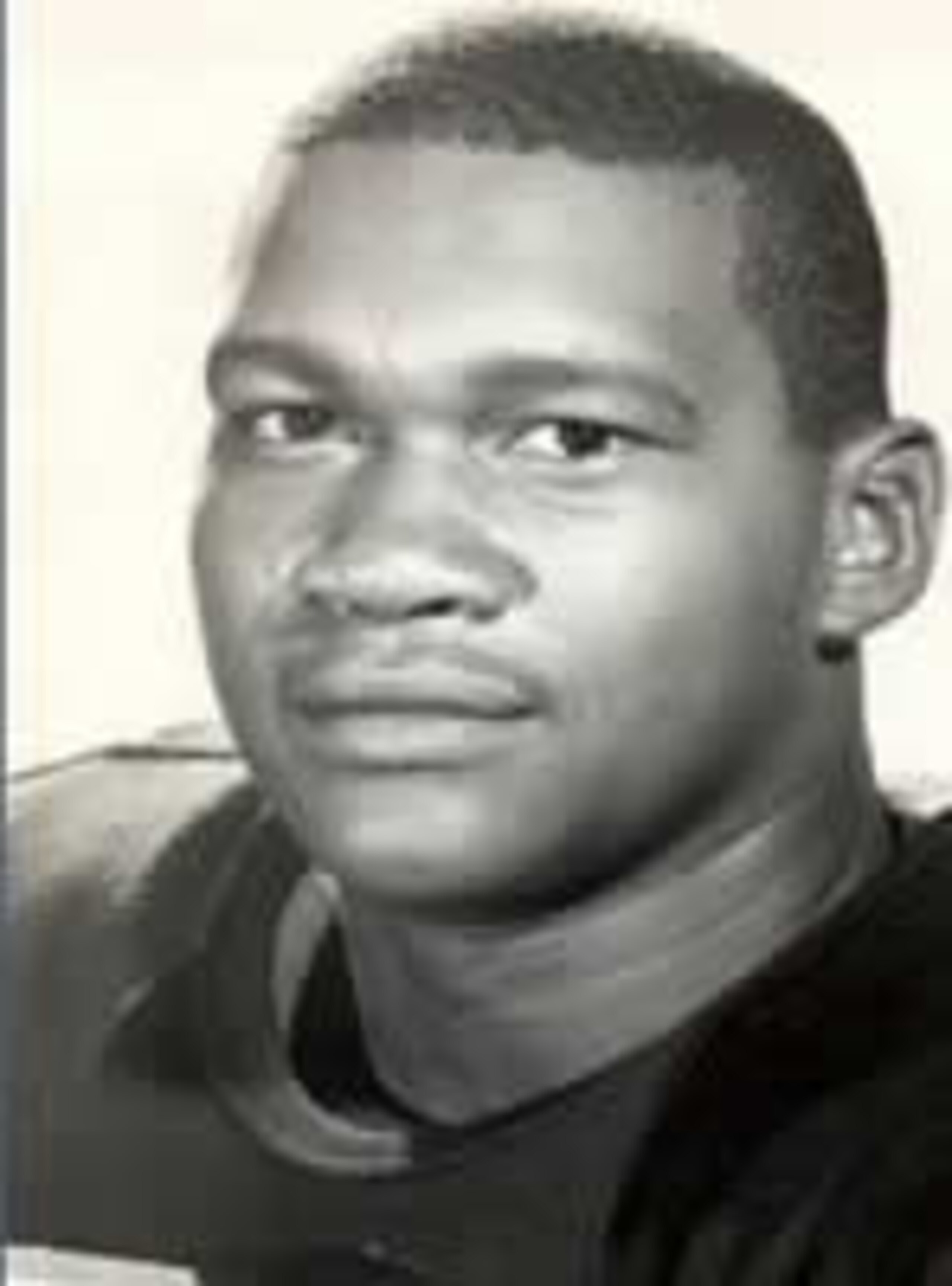
The Steelers got more than they bargained for when they drafted Dick Leftridge third overall in the 1966 NFL Draft.
The more was Leftridge's extra weight.
He appeared in just four games in his brief one-year career.
Reportedly, the Steelers had a clause in his contract that allowed the Steelers to fine him $50 for every pound he weighed over 230. If all the reports are true, Leftridge may have owed the Steelers money when it was all done.
Leftridge disputes the accusations made by the Steelers.
"The Steelers put in the papers that I weighed 300 pounds when I reported," Leftridge said. "Everybody believed that and they still do. I admit I was lazy sometimes, but I wasn't fat."
If he wasn't overweight, he mush have just sucked.
No. 6: Michael Haddix
20 of 25
Michael Haddix was taken eighth overall in the amazing 1983 NFL Draft. It seems like everyone in that draft turned out to be a Hall-of-Famer or at least a Pro-Bowler.
There were two running backs taken ahead of Haddix, Eric Dickerson and Curt Warner. Roger Craig was selected a full round later than Haddix.
Haddix went onto play eight seasons. He totaled 1,635 yards, which is not at all impressive until you take into account that he was grinding out those yards at just three per carry.
Three yards per carry would lead one to believe he was a short yardage back, but he was only in the sense that every time he carried the ball it was for short yardage.
Haddix made it into the end zone only three times.
No. 5: D.J. Dozier
21 of 25
D.J. Dozier is an overachiever. He was a bust in two sports.
Dozier was selected with the 14th overall pick in the 1987 draft by the the Minnesota Vikings.
Dozier went on to have a five-year career, and that was the highlight. A fact he seems to be aware of, "I didn't hit the milestones that I set for myself," Dozier told The Virginian-Pilot. "But looking back now, I got five years in the NFL, got to play baseball. I had a great time and I escaped unscathed for the most part."
In five years, Dozier rushed for 691 yards and seven touchdowns.
He then ditched his pads for bats and began to suck at professional baseball. He spent parts of two seasons in the majors, hit under .200 and never played again.
No. 4: Curtis Enis
22 of 25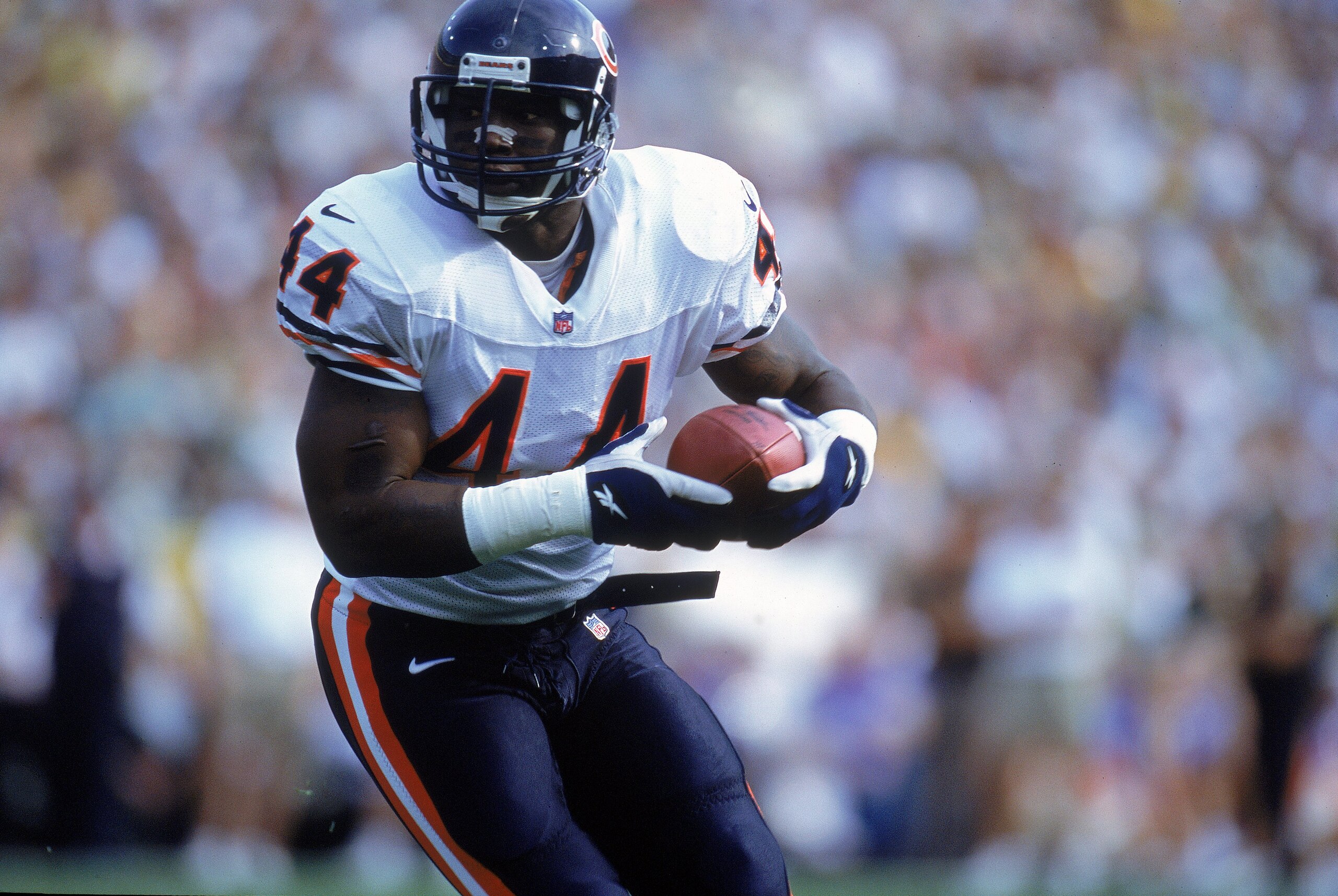
Even though Curtis Enis's career was cut short due to an NCAA rules violation, he had still shown enough potential that the Bears selected him with the fifth overall selection in the 1998 NFL Draft.
Had he been allowed to finish his career, maybe the Bears would have seen he was not that good.
Enis played only three seasons in the NFL. He gained 1,434 yards and averaged just 3.3 yards per carry.
No. 3: Larry Stegent
23 of 25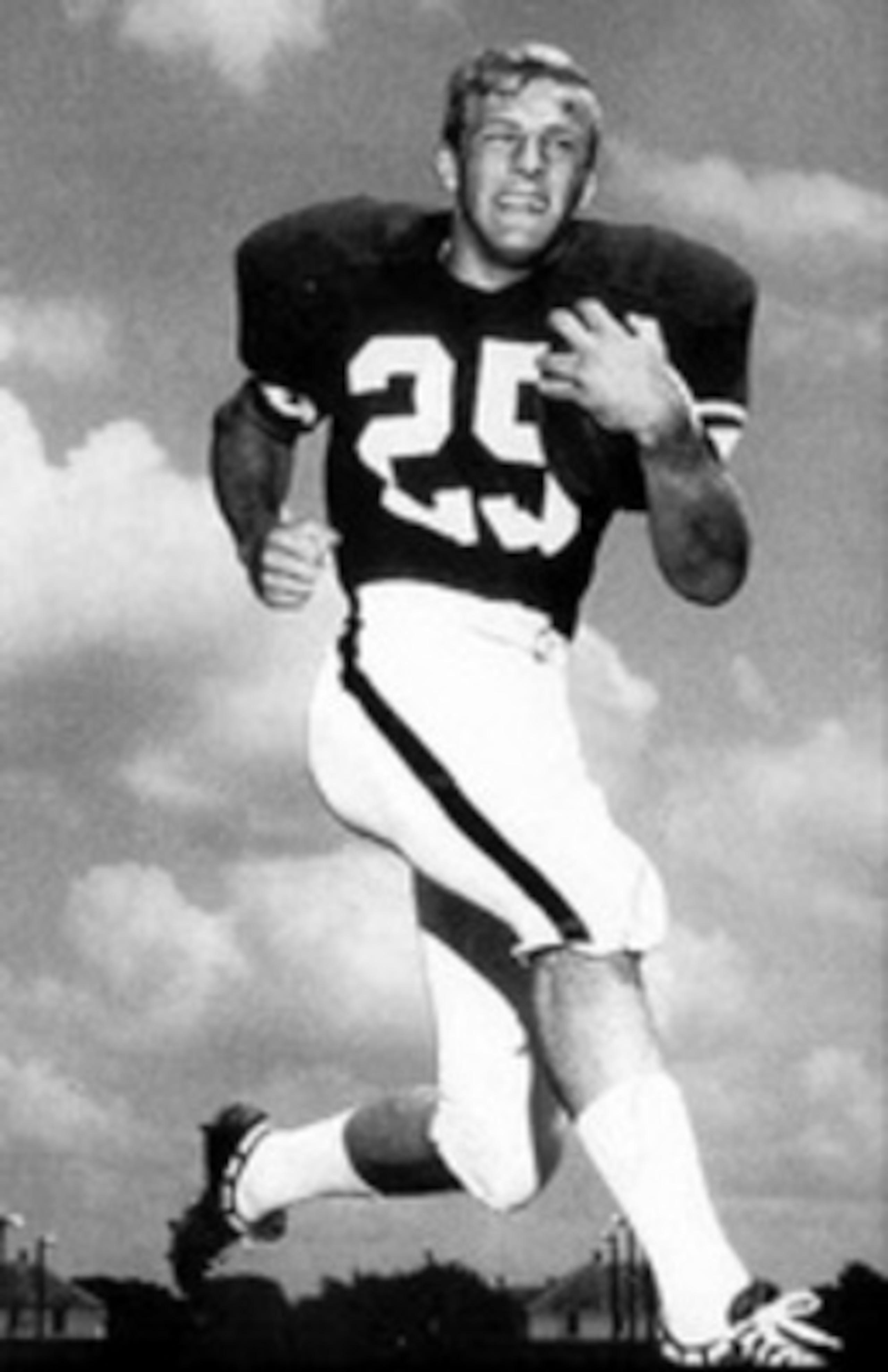
The St. Louis Cardinals snatched up Texas A&M standout, Larry Stegent, with the eighth pick in the 1970 Draft.
His selection was one number higher than the total of the games he played in the NFL.
Stegent blew out his knee in his first preseason game and missed the 1970 season.
He returned in 1971 where he had a very productive catch for 12 yards in seven games. He then called it a career after having amassed a stat.
No. 2: Lawrence Phillips
24 of 25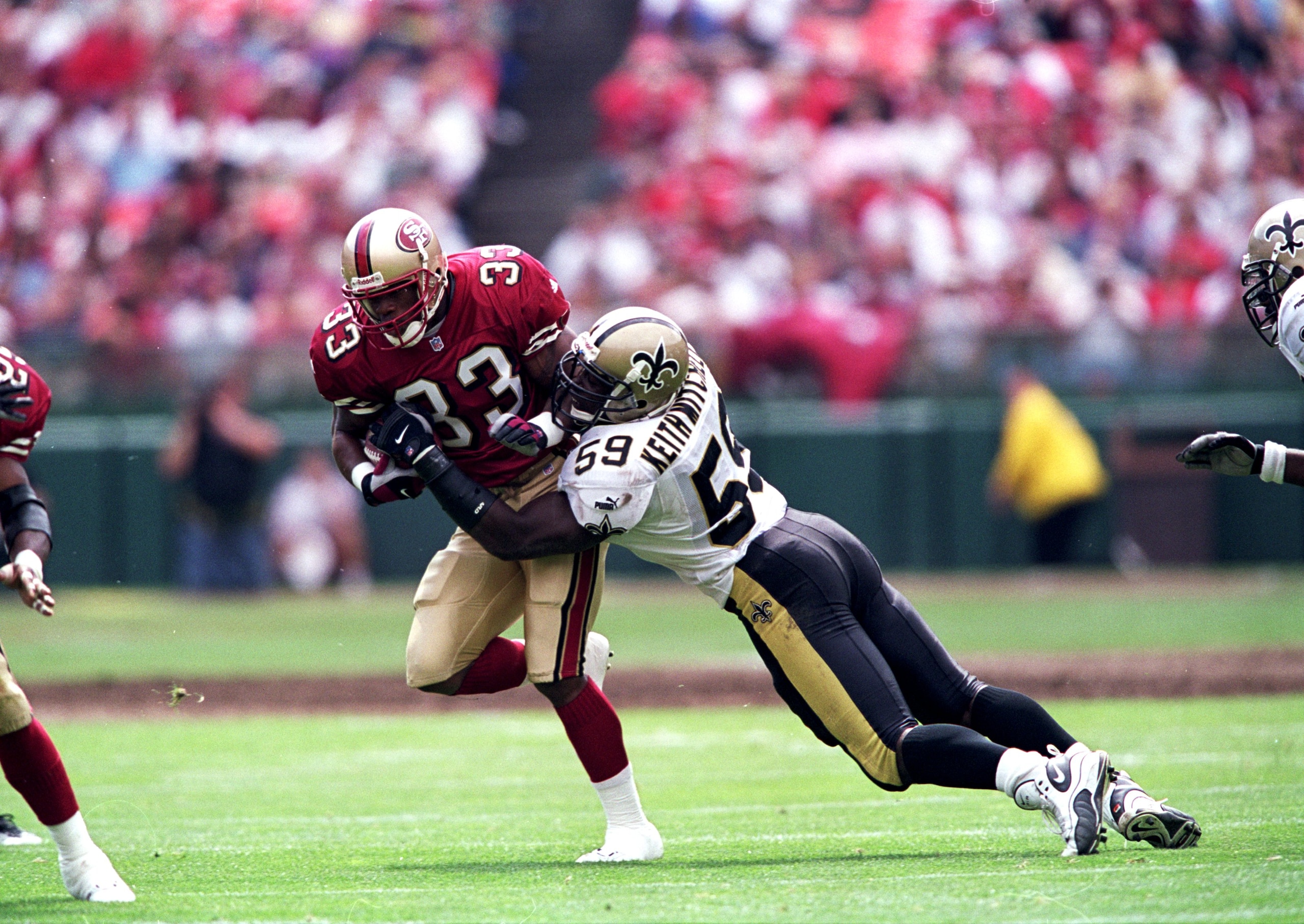
Lawrence Phillips never really made it in the NFL, and that makes him angry!
Phillips put his strength and speed on display so successfully while at Nebraska that he was drafted sixth overall by the Rams (eight spots ahead of Eddie George) in the 1996 draft, despite the obvious behavior management issues that caused him to be arrested and suspended for assaulting and ex-girlfriend.
Anger issues have plagued Phillips throughout his life. He was cut in his second season after he got into it (non-violently thankfully) with Dick Vermeil.
He bounced around after that and averaged 3.4 yards per carry on his way to totaling just 1,453 yards.
It was with the 49ers where he made his most impactful play in the NFL when he whiffed on a block that allowed Aeneas Williams to knock out Steve Young and essentially end his career.
No. 1: Ki-Jana Carter
25 of 25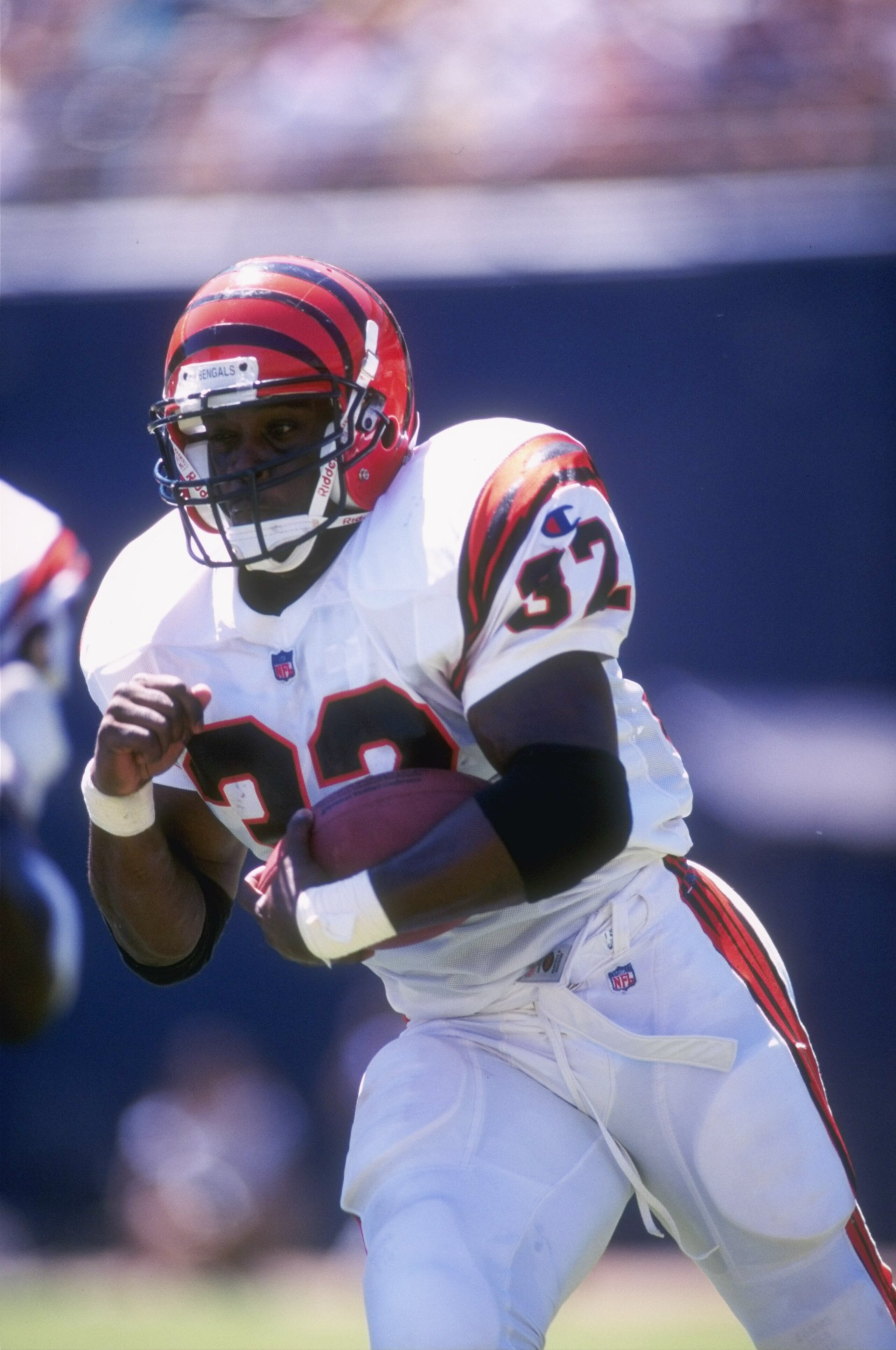
Ki-Jana Carter is prime example numero uno of why I would never take a running back in the upper real estate of the first round.
Carter was a can't-miss running back with the skills to dominate. That is why the Bengals selected him No. 1 overall.
He then blew out his knee in his first preseason game, and he missed his entire rookie season. He was not the same runner when he returned.
And although he went onto play seven seasons his NFL stats never caught up to his college stats. He retired with just 1,144 yards.





