St. John's vs. Rutgers and the 15 Most Controversial Endings in All of Sports
Wednesday's meeting between Rutgers and St. John's in the Big East tournament featured one of sport's great rarities: an officiating error so bad that even the league's commissioner (here, John Marinatto) had to admit that a mistake had been made.
In doing so, the game joined a not-always-illustrious pantheon of finishes that will be the stuff of arguments for as long as there are fans of either team to do the arguing.
Read on for a look at the top 15 disputed endings in sports history.
15. St. John's Walks Away with Victory over Rutgers
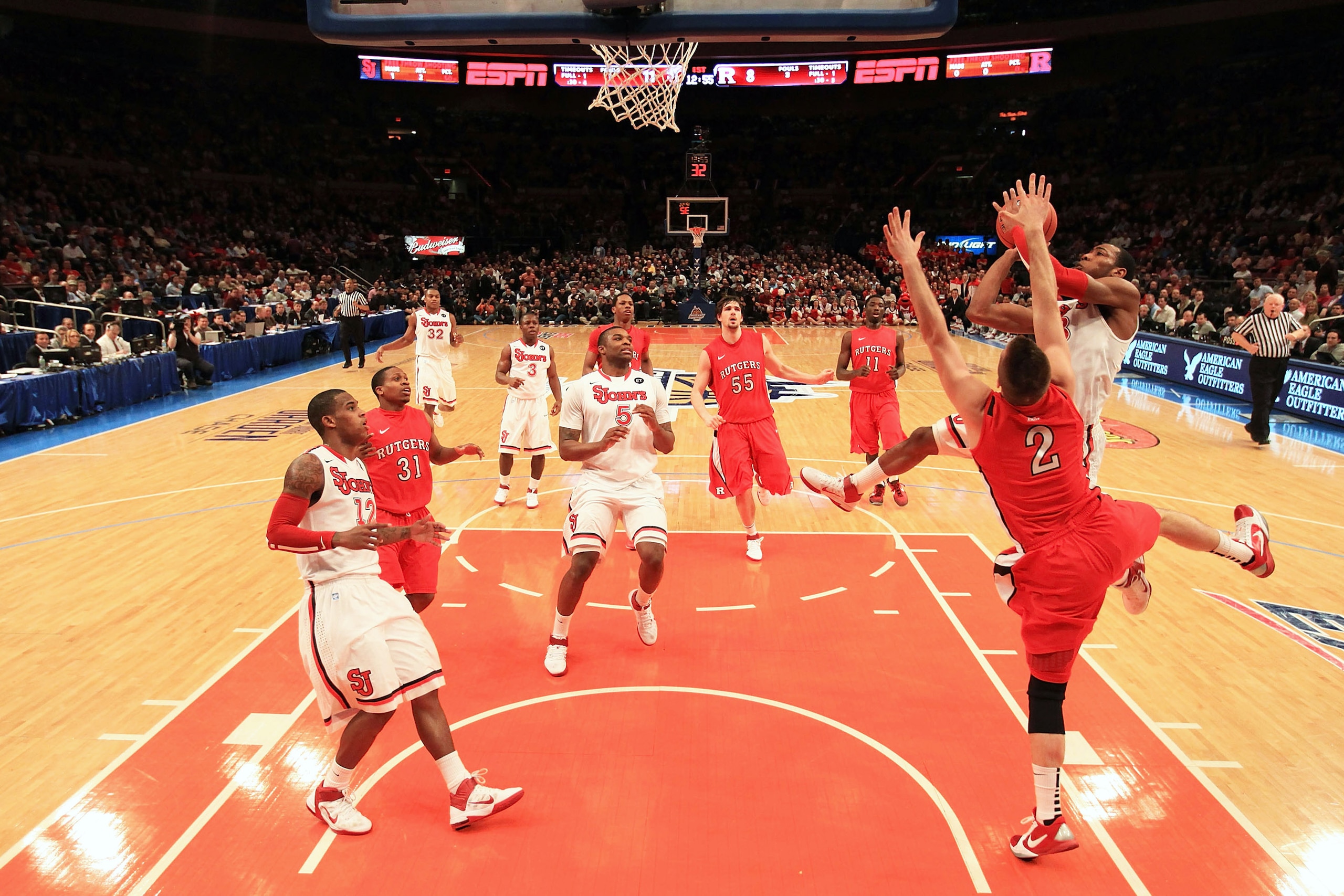
1 of 15St. John’s came into this year’s Big East tournament ranked 17th in the AP poll, and a loss to a sub-.500 Rutgers squad would’ve hurt its NCAA seeding prospects in a big way.
Nevertheless, the Scarlet Knights hung tough with the pseudo-home team at Madison Square Garden, and with just seconds to play, the Red Storm was hanging on to a mere two-point advantage.
Rutgers set up to inbound under its own basket with 4.9 seconds on the clock. The half-court pass was deflected, and Red Storm forward Justin Brownlee came up with the loose ball.
Brownlee then ran with the ball, stepping on the sideline before throwing it into the air to run out the clock.
Had either the travel or the out-of-bounds call been made, Rutgers would’ve had 1.7 seconds to run a sideline inbounds on the St. John’s half of the floor. Instead, no whistle blew, and the Scarlet Knights ended their season on the sourest of notes.
14. Atlanta Scorekeepers Hack Shaq
2 of 15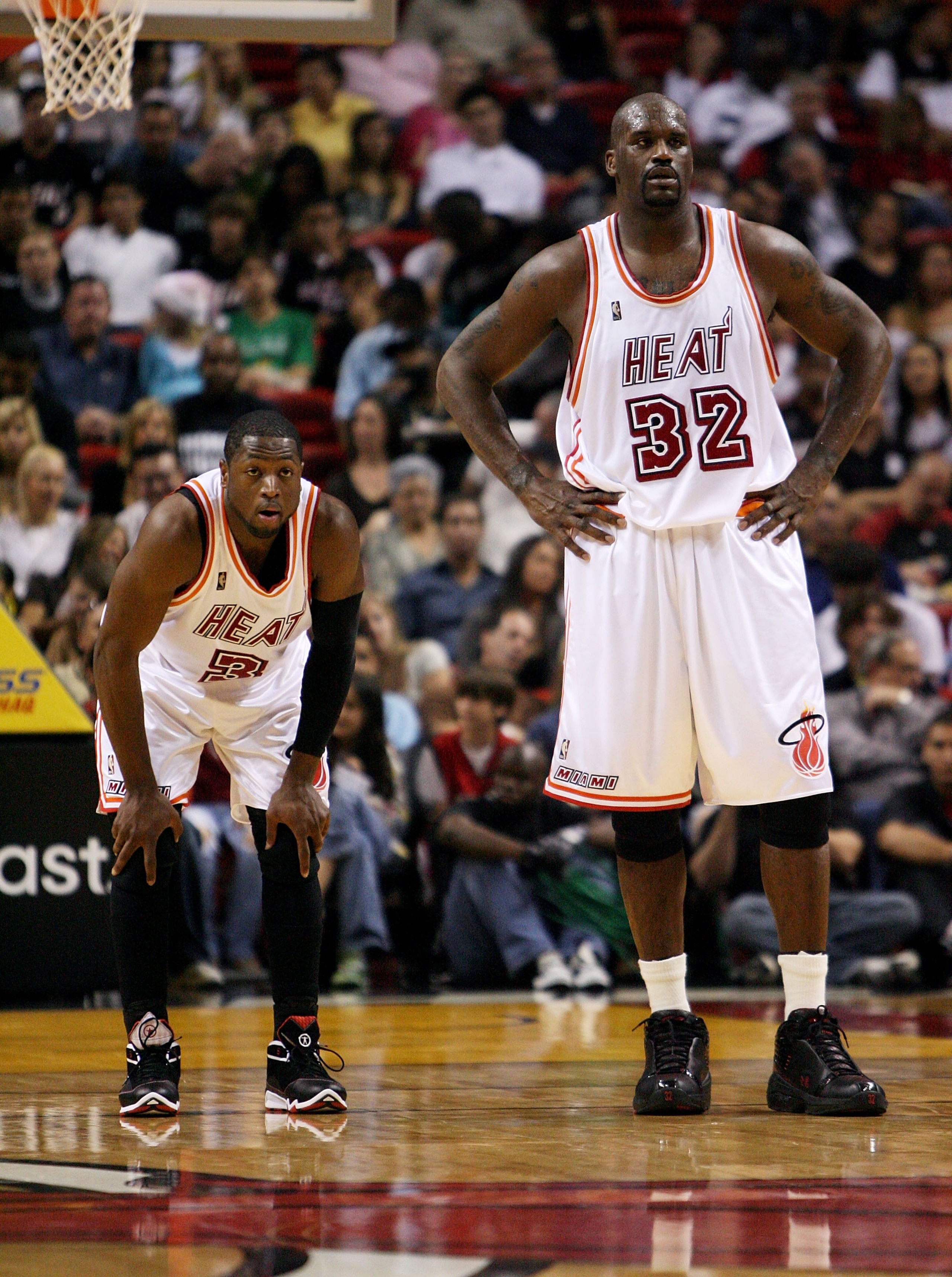
On December 19, 2007, the struggling Miami Heat had taken the Atlanta Hawks to overtime. Atlanta led 112-111 when Heat center Shaquille O’Neal was called for a foul.
Although it was actually O’Neal’s fifth foul of the game, the official scorer ruled that it was his sixth, meaning O’Neal had fouled out. The Hawks extended their lead to 114-111 on the two free throws, and went on to win 117-111.
After the game, Miami protested to the league that the result of the game was invalid because of the scoring error. The league, for a rarity, concurred, and ruled that the final 51 seconds would have to be replayed, starting from the 114-111 score.
In a nice bit of irony, the replayed game—caused by the Heat having been made to play without Shaquille O’Neal—was played without Shaquille O’Neal, who had been traded to the Suns by the time the do-over was executed in March. Atlanta won by a 114-111 final.
13. Snowplow Clears Path to a Patriots Victory
3 of 15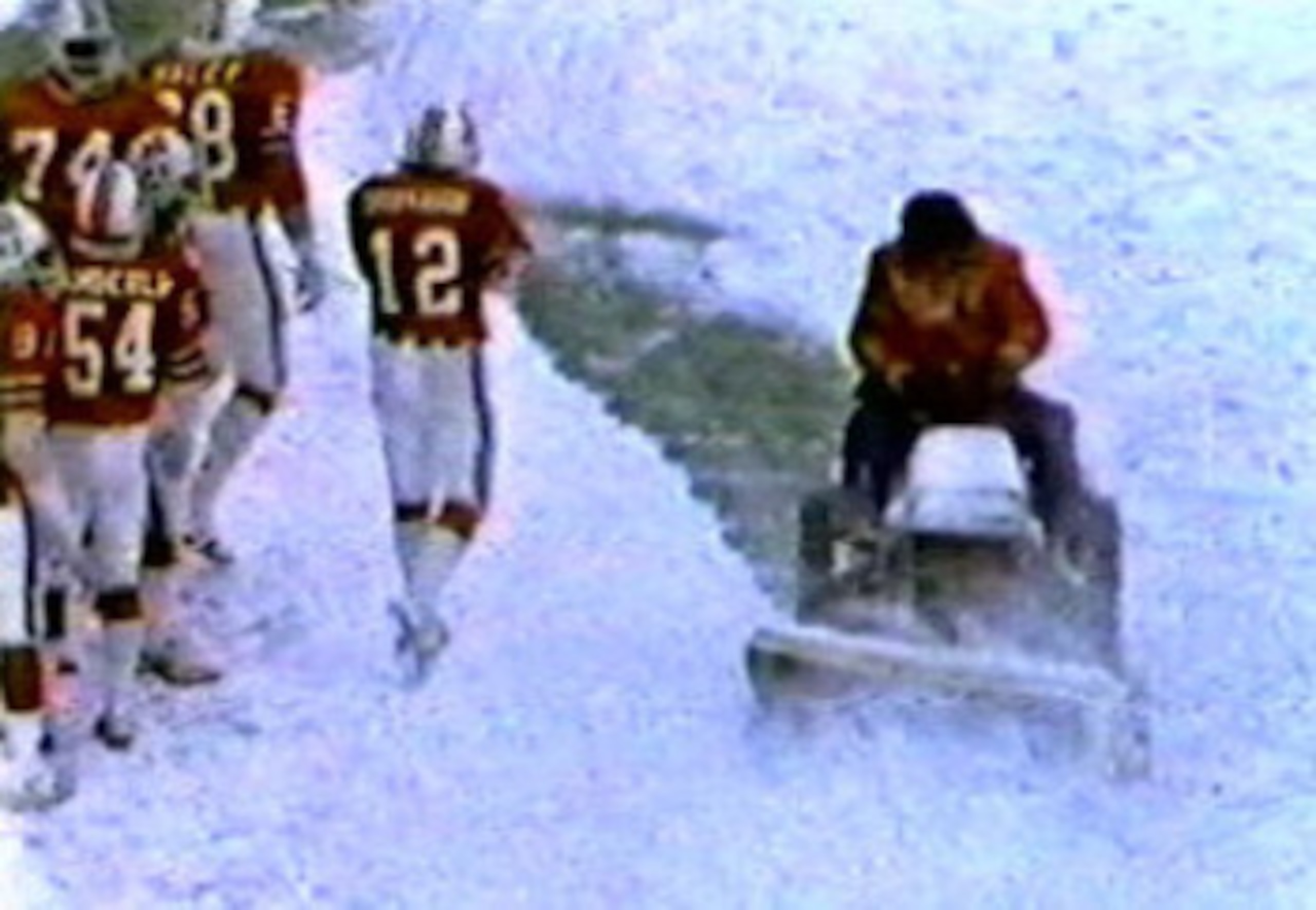
When the Dolphins and Patriots met in Foxboro late in the 1982 season, heavy snow was falling on an already frozen field. The officials, worried about being able to find the yard markers in the snow, had instituted a ground rule for the game that they could call timeout at any time and have a small snowplow clear the markers.
Late in the fourth quarter, neither offense had managed any sort of momentum in the slippery conditions. With no score, the Patriots called timeout as they set up for a 33-yard field goal try.
During the timeout, Patriots head coach Ron Meyer told Mark Henderson, who had been operating the snowplow, to clear the spot on the field from which the kick would be attempted.
When Dolphins coach Don Shula realized what was happening, he immediately complained to the officials, but no action was taken. With a clean hold and spot, John Smith’s kick went through for what would be the game’s only points.
Unsurprisingly, the NFL instituted a rule the next year to ban any team from trying the snowplow trick again. While commissioner Pete Rozelle hated the result of the game, he felt he couldn’t overturn it because there had been no rule on the books to prevent it.

12. Raiders' Holy Roller Stuns Chargers
4 of 15Early in the 1978 season, the Chargers were hosting the Oakland Raiders. Down 20-14, Oakland had the ball on the San Diego 14-yard line with just 10 seconds to play.
QB Ken Stabler dropped back to pass, but Chargers LB Woodrow Lowe had a clear path into the backfield. Rather than take a sack, Stabler deliberately fumbled the ball, bouncing it toward the Chargers’ goal line.
RB Pete Banaszak tried to recover the ball, but lost his footing and knocked it further forward. Finally, TE Dave Casper batted and kicked the ball into the end zone before finally falling on it for the game-winning TD.
San Diego’s protests fell on deaf ears. Though batting the ball was illegal, the referees determined that they couldn’t be sure Banaszak or Casper had done so intentionally.
The NFL would change the rules on offensive fumble recoveries after the season to prevent a recurrence of Stabler’s so-called Holy Roller.
11. Trent Tucker Stops Time, Beats Bulls
5 of 15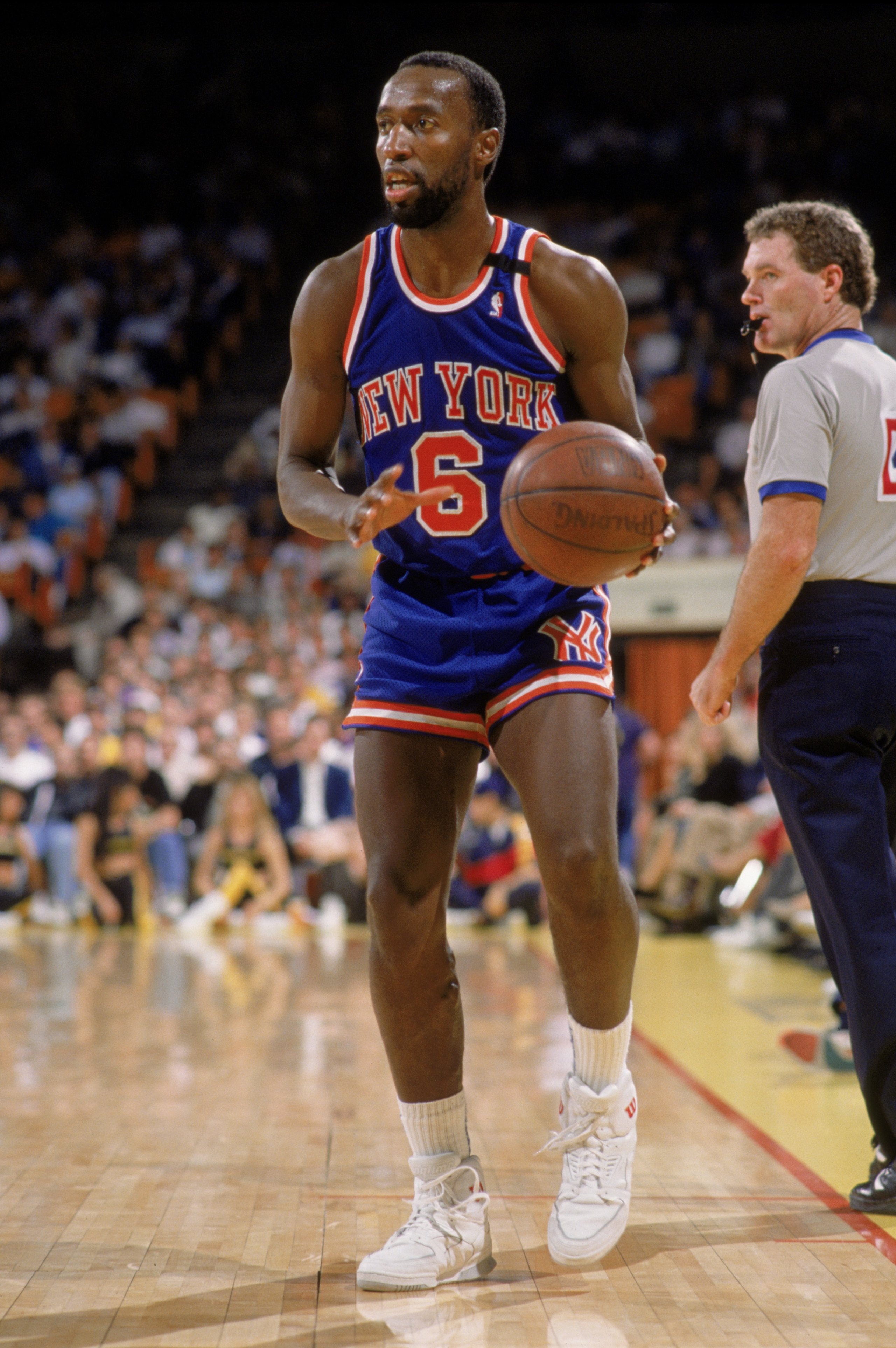
On January 5, 1990, the Bulls and Knicks were deadlocked at 106 at Madison Square Garden. Only 0.1 seconds remained in regulation as the Knicks lined up to inbound.
Expecting an alley-oop attempt to Patrick Ewing, the Bulls guarded the rim.
Instead, Mark Jackson’s inbounds pass went to Trent Tucker, who caught it, turned and nailed a three-pointer to win the game.
The Bulls protested (unsuccessfully) that Tucker couldn’t have gotten the shot off before time expired.
Coach Phil Jackson, referring to the arena’s long-standing reputation for Knick-friendly timekeeping, observed, “You can’t get a shot off in a tenth of a second. But this is Madison Square Garden, and I played here a long time, and that’s all I have to say.”
Though Chicago lost the game, its protest sparked the introduction of the modern rule that a player cannot catch and shoot unless at least 0.3 seconds remain on the clock.
10. Armando Galarraga Throws Perfect Imperfect Game
6 of 15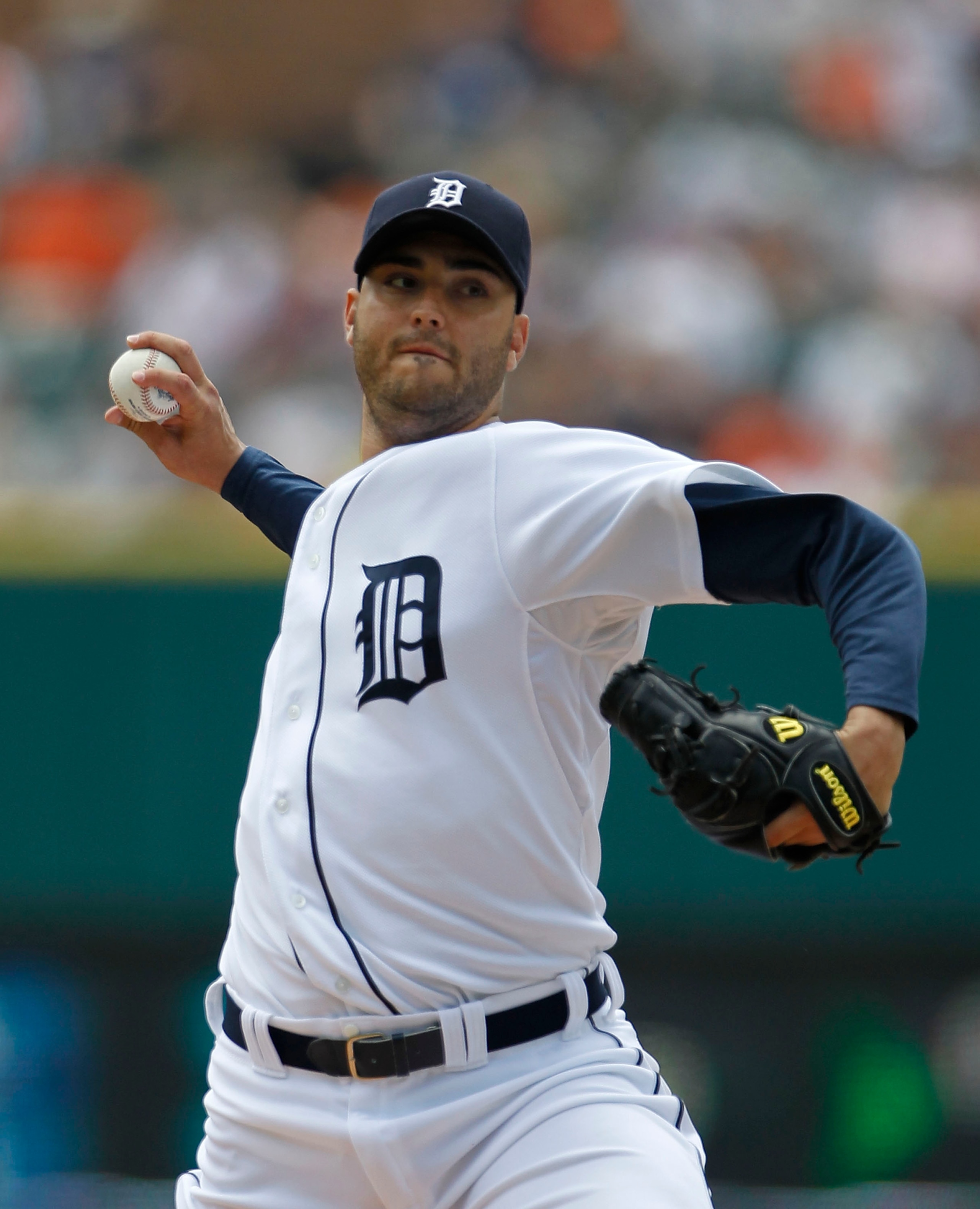
On June 2, 2010, Tigers right-hander Armando Galarraga retired the first 26 Cleveland Indians he faced.
With one out to go for the 21st perfect game in baseball history, Jason Donald hit a bouncing ball to the right side. First baseman Miguel Cabrera hustled over to field the ball in the hole, while Galarraga covered at first.
Cabrera’s throw narrowly beat Donald to the bag, but umpire Jim Joyce called him safe.
Replays showed conclusively that Donald had been out, but commissioner Bud Selig refused to overturn Joyce’s call, even after Joyce himself had tearfully admitted his mistake.
Galarraga retired the next batter for the 3-0 victory (and, arguably, the first-ever 28-out perfect game).
9. George Brett's Pine-Tar Bat Beats, Then Doesn't Beat, Then Beats Yankees
7 of 15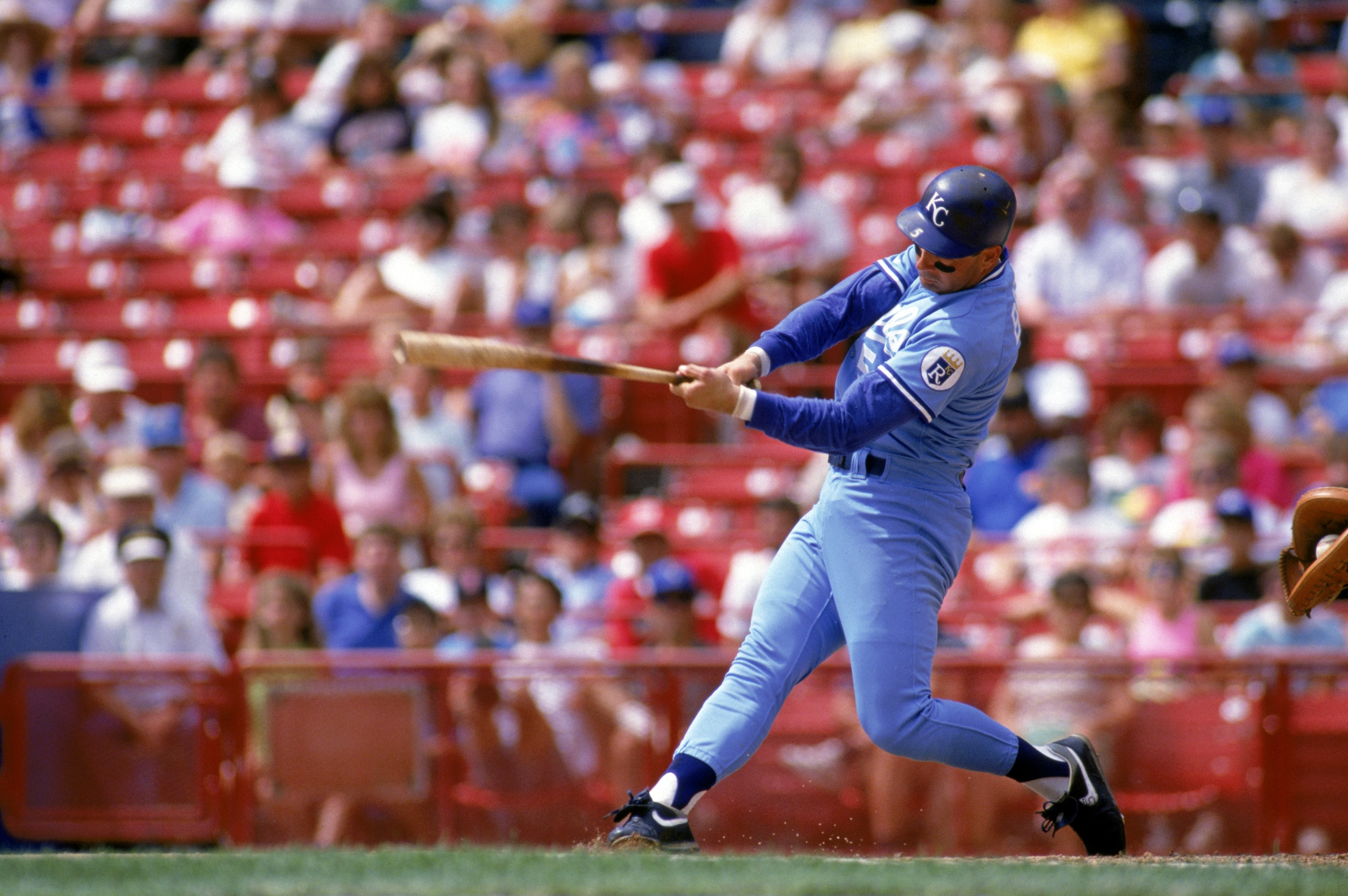
On July 24, 1983, the Kansas City Royals were down to their final out, trailing 4-3 at Yankee Stadium. Kansas City’s George Brett blasted what appeared to be a two-run, go-ahead homer.
But as Brett finished rounding the bases, New York manager Billy Martin approached plate umpire Tim McClelland. At Martin’s prompting, McClelland checked the amount of pine tar on Brett’s bat.
By rule, a bat could not have the adhesive substance more than 18 inches (just over the width of home plate) from the tip of the knob. McClelland ruled that Brett’s bat was illegal, and called him out, ending the game.
The Royals’ ensuing protest was upheld by A.L. president Lee MacPhail, who noted that the rulebook did not prescribe any penalty for a violation of the pine tar rule. He determined that McClelland’s summary call was too harsh.
After MacPhail’s ruling, the finish was replayed from just after Brett’s at-bat, with several ejections stemming from the fracas that had followed. Kansas City would hold on for the win, 5-4.
8. Fred Merkle Comes Up Short Against Cubs
8 of 15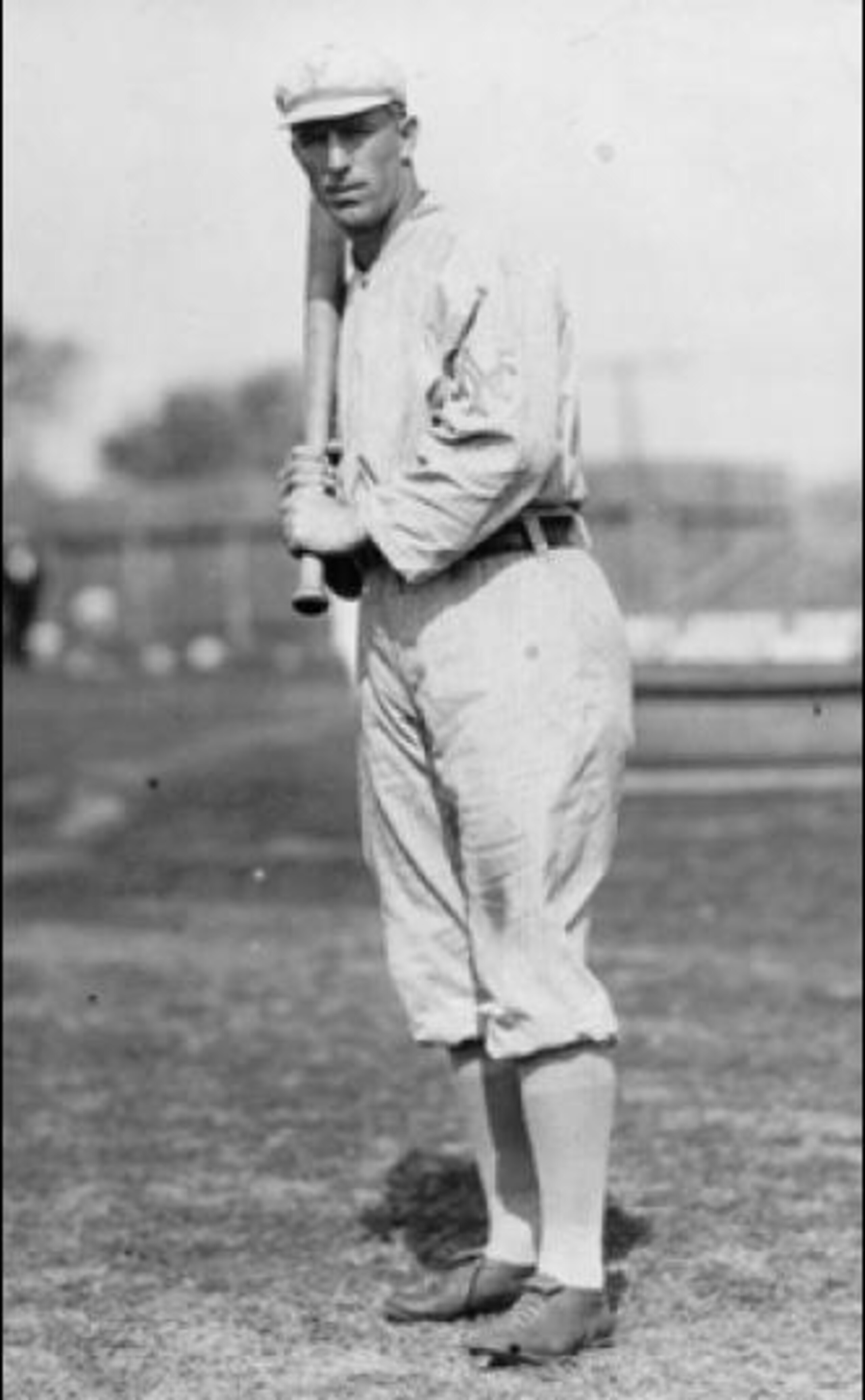
On September 23, 1908, the Chicago Cubs and New York Giants were in a dead heat for the National League pennant (there were no N.L. playoffs in that era). In the bottom of the ninth, New York came to bat in a 1-1 tie.
A Giants rally off Cub starter Jack Pfiester put runners on the corners with two out. Al Bridwell cracked a base hit into center field, apparently winning the game for New York.
However, the Giants' runner on first base, 19-year-old rookie Fred Merkle, saw the fans charging onto the field and headed for the New York dugout without touching second base. Cub second baseman Johnny Evers (of Tinker-to-Evers-to-Chance fame) saw the mistake and called for the ball.
CF Solly Hofman found it (though some argue he had the wrong ball) and threw to Evers, who forced Merkle out at second.
Merkle’s Boner, as the gaffe became known, ended the inning in a 1-1 tie, at which point the game was called on account of darkness. The game had to be made up on October 8, with the two teams still in a dead tie and a spot in the World Series on the line.
The Cubs won that game 4-2, and went on to win the World Series for the last time in their much-lamented history.
7. Colorado Takes Missouri Down, Down, Down, Down, Down
9 of 15In October 1990, the Colorado Buffaloes (ranked No. 12 in the AP poll) visited unranked Missouri. Late in the game, the Buffaloes trailed 31-27 as backup QB Charles Johnson attempted to lead a game-saving drive.
TE Jon Boman caught a pass in the right flat that looked like a sure touchdown, but Boman slipped and fell to set up a 1st-and-goal from the Missouri four-yard line.
Johnson spiked the ball to stop the clock on first down. An inside run to Eric Bieniemy was stopped at the one-yard line, and Colorado spent its final timeout.
After the timeout, however, the down marker on the field still read second down, when it was in fact 3rd-and-goal. Bieniemy was stopped again, and Johnson (thinking it was third down and not fourth) spiked the ball to stop the clock.
With none of the officials catching the error, Colorado proceeded to run a QB keeper for Johnson to score the winning TD on fifth down.
Carl James, commissioner of the then-Big Eight, ruled that the mistake could not be corrected after the fact. Colorado would finish the season 11-1-1, splitting the national championship with 11-0-1 Georgia Tech.
6. Patriots and Everyone Else Learn What a "Tuck Rule" Is
10 of 15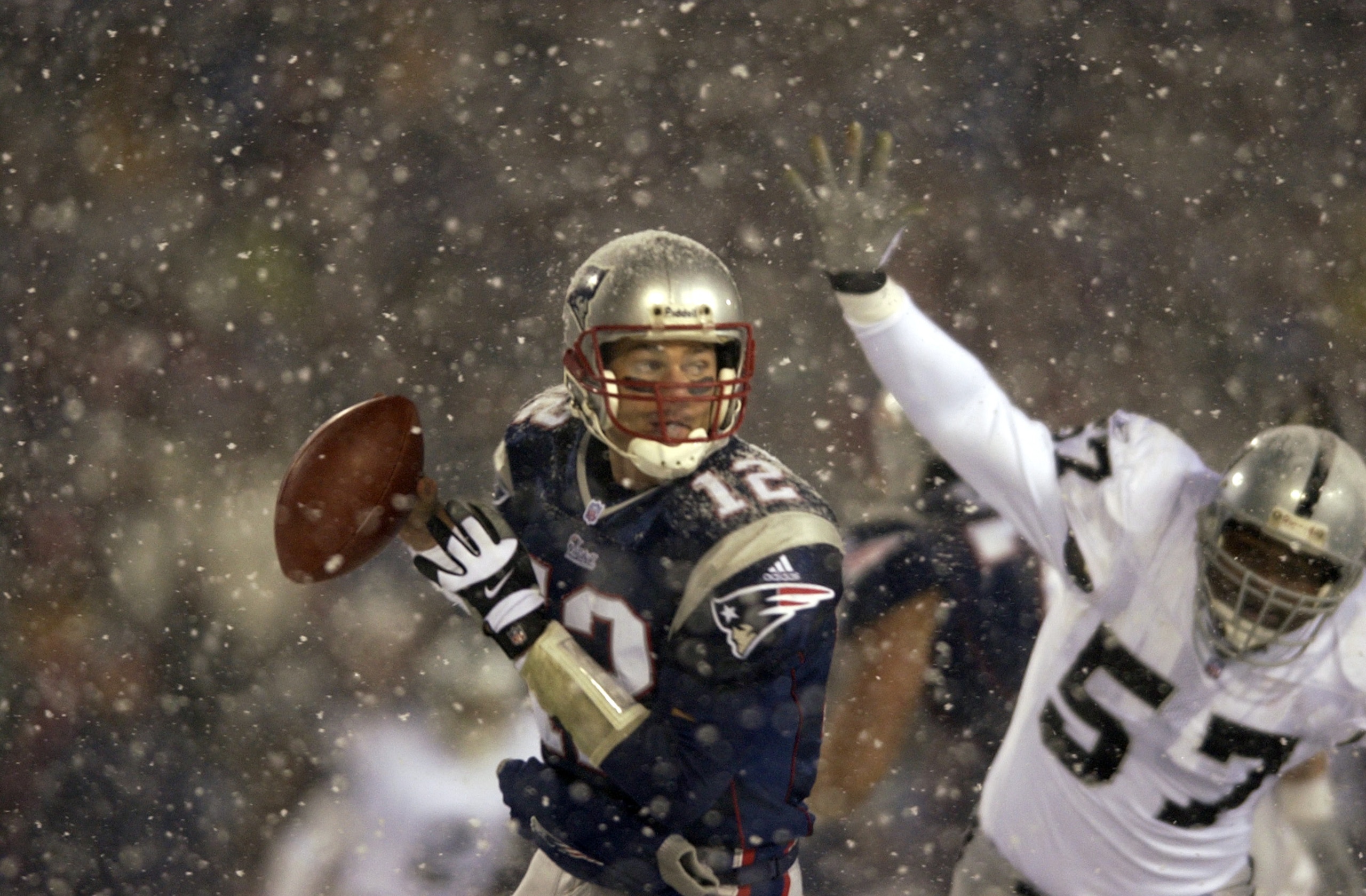
With less than two minutes remaining in their 2001 AFC Divisional Playoff game, the Raiders led the Patriots 13-10 in a driving snowstorm. Tom Brady was trying to lead one last scoring drive, but Charles Woodson came on a blitz from his blind side.
Woodson knocked the ball loose just after an apparent pump fake by Brady, and Oakland’s Greg Biekert fell on it at the Raider 47-yard line.
After the play, though, referee Walt Coleman hurried to the replay hood. When he emerged, he announced that a relatively new rule (added in 1999) meant that Brady’s fake constituted an attempted forward pass.
Because Brady hadn’t tucked the ball into his body before Woodson knocked it free, the play was an incomplete pass rather than a fumble. The Patriots retained possession.
The Raiders were dumbfounded, unsurprisingly, as Brady himself thought he’d fumbled on the play. The Patriots took full advantage of their new life, driving to the game-tying field goal and going on to win in overtime, 16-13.
New England would win its first of three Super Bowls in four tries that season.
5. Brett Hull's Skates Get Ahead of Him on Stanley Cup-Winning Goal
11 of 15In Game 6 of the 1999 Stanley Cup Finals, the Dallas Stars and Buffalo Sabres battled into triple OT tied at one. A Dallas goal would give them a 4-2 series victory.
The Stars’ Mike Modano took a shot from the right face-off circle that was saved by Dominik Hasek. On the rebound, Brett Hull’s put-back attempt deflected off Hasek and right back to Hull, who punched it in for the Cup winner.
The Sabres immediately protested, arguing that Hull, who had entered Hasek’s goalie crease during his first shot, was still in the crease when the puck bounced outside of it. Under the rules then in effect, if Hull’s skate was in the crease prior to the puck, his second shot should not have counted.
NHL officials eventually argued that Hull’s entire two-shot sequence constituted one possession, and the goal stood, giving Dallas its first Stanley Cup.
4. Late Flag Ruins Miami's Fiesta
12 of 15In the 2003 Fiesta Bowl, Ohio State had taken heavily favored Miami (holders of a 34-game win streak) to overtime. Miami opened with a touchdown, forcing OSU to match.
Facing 4th-and-3, Buckeye QB Craig Krenzel tried to connect with Chris Gamble in the end zone, but Gamble couldn’t hang on. The Hurricanes appeared to have won.
However, a late flag halted the celebration. Miami’s Glenn Sharpe was called for pass interference (much disputed by the Hurricanes and their fans), giving Ohio State four more downs from the one-yard line.
The second chance was all the Buckeyes needed. Krenzel ran it in to force a second overtime, and when Miami faced a last-chance 4th-and-goal of their own, Ken Dorsey’s pass fell incomplete to give Ohio State the national championship.
3. Royals' World Series Rally Keyed by DH, First-Base Umpire
13 of 15In Game 6 of the 1985 World Series, the Cardinals led 1-0 and were three outs away from a championship. Jorge Orta led off the ninth inning for Kansas City, facing St. Louis relief ace Todd Worrell.
Orta hit a high bouncer toward first. Jack Clark grabbed it and threw to Worrell covering the bag.
On a bang-bang play, first-base umpire Don Denkinger ruled Orta safe.
Replays would eventually show that Orta had been out by a half step. Denkinger stuck to his guns throughout the ensuing Cardinal arguments, and the Kansas City rally that followed gave the Royals a 2-1 victory.
The demoralized Cardinals imploded in Game 7, giving Kansas City its first and only world championship.
2. Soviet Basketball Team Stuns Americans (on Third Try)
14 of 15Entering the 1972 Olympics, the U.S. had never failed to win gold in basketball. At the height of the Cold War, the Soviet Union was determined to change that.
With just three seconds to play in the gold-medal game, Doug Collins drained two free throws to give the U.S. a 50-49 lead.
Twice, the Russians appeared to inbound and fail to score. Twice, the officials ruled that errors in timekeeping meant that the play had not counted.
Only on its third attempt did the U.S.S.R. connect on a full-court pass to Alexander Belov, whose layup won the game, 51-50.
The Americans protested to FIBA, but the five-member committee formed to rule on the protest contained three members from Soviet bloc nations. The protest, unsurprisingly, was denied.
The U.S. team has never accepted its silver medals, maintaining that it had earned gold instead but were cheated out of it.
1. Immaculate Reception Ushers in Steelers Dynasty
15 of 15In the 1972 AFC playoffs, the Steelers trailed the Raiders 7-6 and faced 4th-and-10 from their own 40. QB Terry Bradshaw aimed a desperate pass to RB John Fuqua, but Raiders safety Jack Tatum went up for the deflection. The two collided and the ball caromed away.
Steelers rookie RB Franco Harris made a shoestring catch on the deflection, broke to the sideline and sprinted home for the game-winning 60-yard TD.
The key to the play was the initial deflection of the pass. Under the rules at the time, if the ball had come off Fuqua, Harris would not have been allowed to catch it and the play should’ve been blown dead.
If it came off Tatum instead, the play was perfectly legal.
After an extended debate (still being carried on by fans and even players on both sides), the officials ruled that the catch was legal and the Steelers had won the game. It was the first playoff win for the franchise, which would dominate the Super Bowl stage for the next decade.

.jpg?w=2560 "Weather Channel Trolls Texans-Titans 💀")

.jpg?w=2560 "Report: Seahawks Not Signing Mixon 😯")