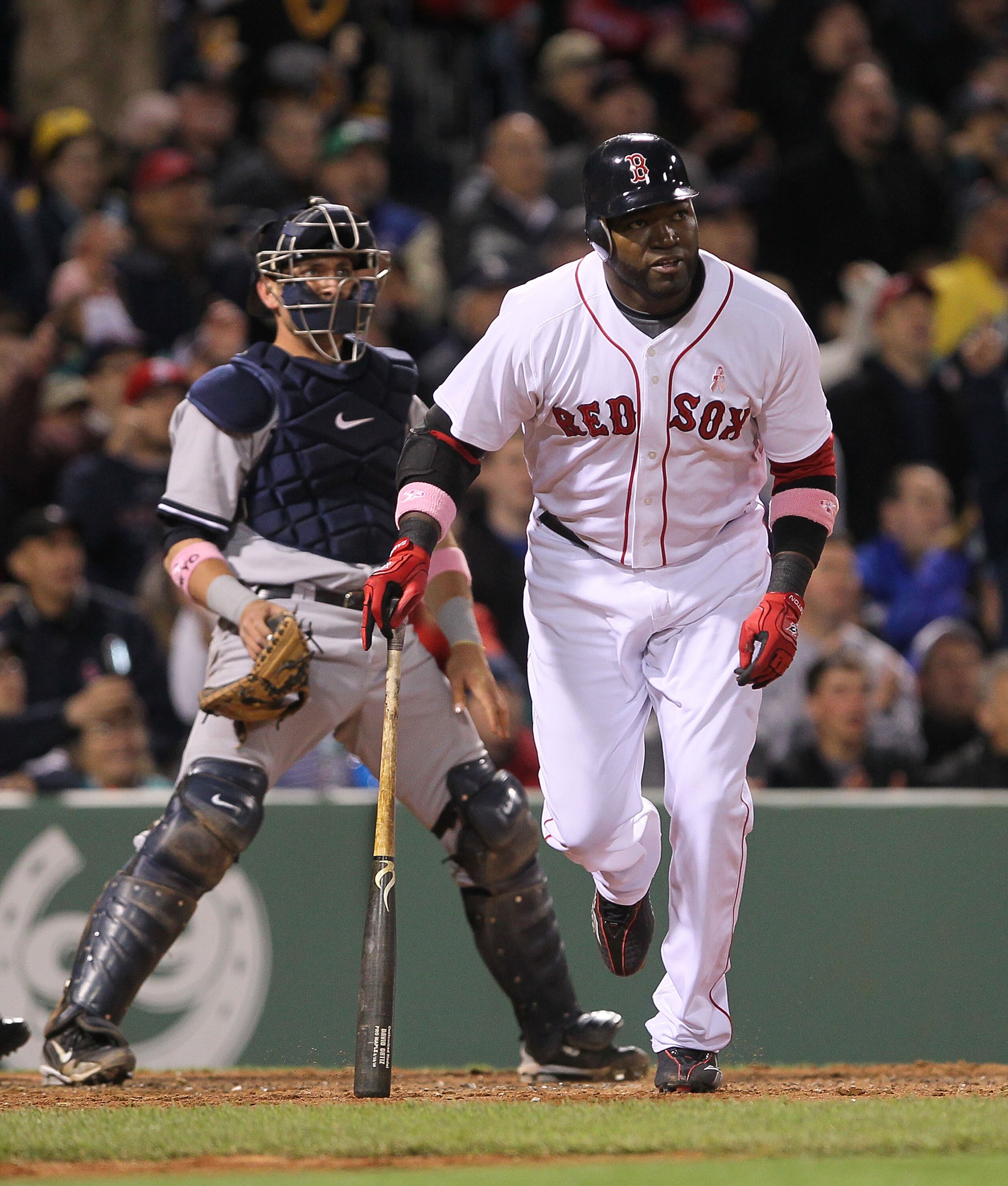


The Red Sox have all the pieces necessary in order to boast the league's best offense. They have the speed demons in Jacoby Ellsbury and Carl Crawford, they have the guys who seemingly always get on base in J.D. Drew and Dustin Pedroia and they have the guys to drive in these base runners in David Ortiz and Adrian Gonzalez.
The next step for the Sox is to strategically place these players in an order in which they will thrive. Before getting into the specifics of who should bat where, let us begin by establishing the 'definition' of a batting order.
A batting order should be a cycle, not a list. What this means is that there should be a continuous flow from not only the lead off hitter to the ninth hitter, but from the fifth hitter to the second hitter, and the fourth hitter to the eighth hitter. The reason for this is because in reality, the majority of innings will not begin with the lead off hitter. Therefore, one can not construct a lineup with a one-to-nine mindset. To construct the proper lineup, it is necessary to look at the lineup as a continuous flow.
With that in mind, let me lay out what I think would be the most successful way to position the Red Sox hitters. For the purposes of this article, we will assume that Jarrod Saltalamacchia will be starting over Jason Varitek.
1. Carl Crawford
1 of 10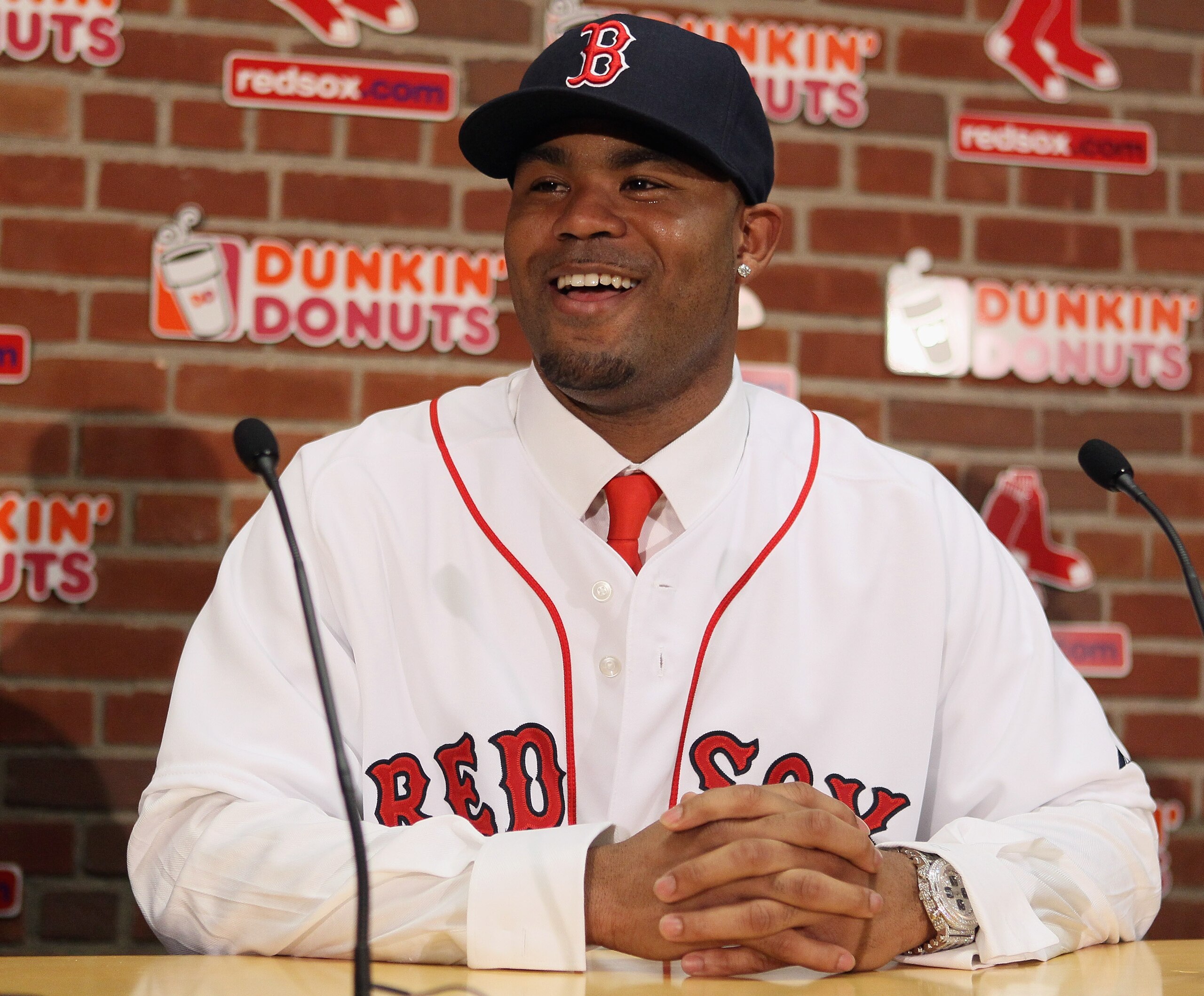
Many people might think it bizarre to bat Crawford lead off. This may be the case in many lineups, however in this Boston lineup, Crawford is best suited as a leadoff hitter. There are two main reasons that Crawford should bat lead off.
The first reason is that Crawford has the skills generally assosciated with lead off hitters. While Crawford has never considered himself to be a lead off hitter, likely due to his pedestrian on-base percentage, his skill set works perfectly as lead off for the Red Sox. He will get on base at a solid rate, and his exceptional speed will allow him to reach scoring position regularly.
However, the real reason I believe Crawford should bat leadoff for the Red Sox relates back to the continuous flow idea. Imagine that the game has progressed and the ninth hitter for the Red Sox is up. Wouldn't you rather see a great on-base percentage hitter hit ninth so that Crawford's power will be able to drive that runner in.
That provides the Red Sox with a speed to power transition both at the top and bottom of the lineup. If Ellsbury were to lead off, and Crawford were to bat third, at the bottom of the order, there would be nobody to get on-base when the order comes back to the top.
2. Dustin Pedroia
2 of 10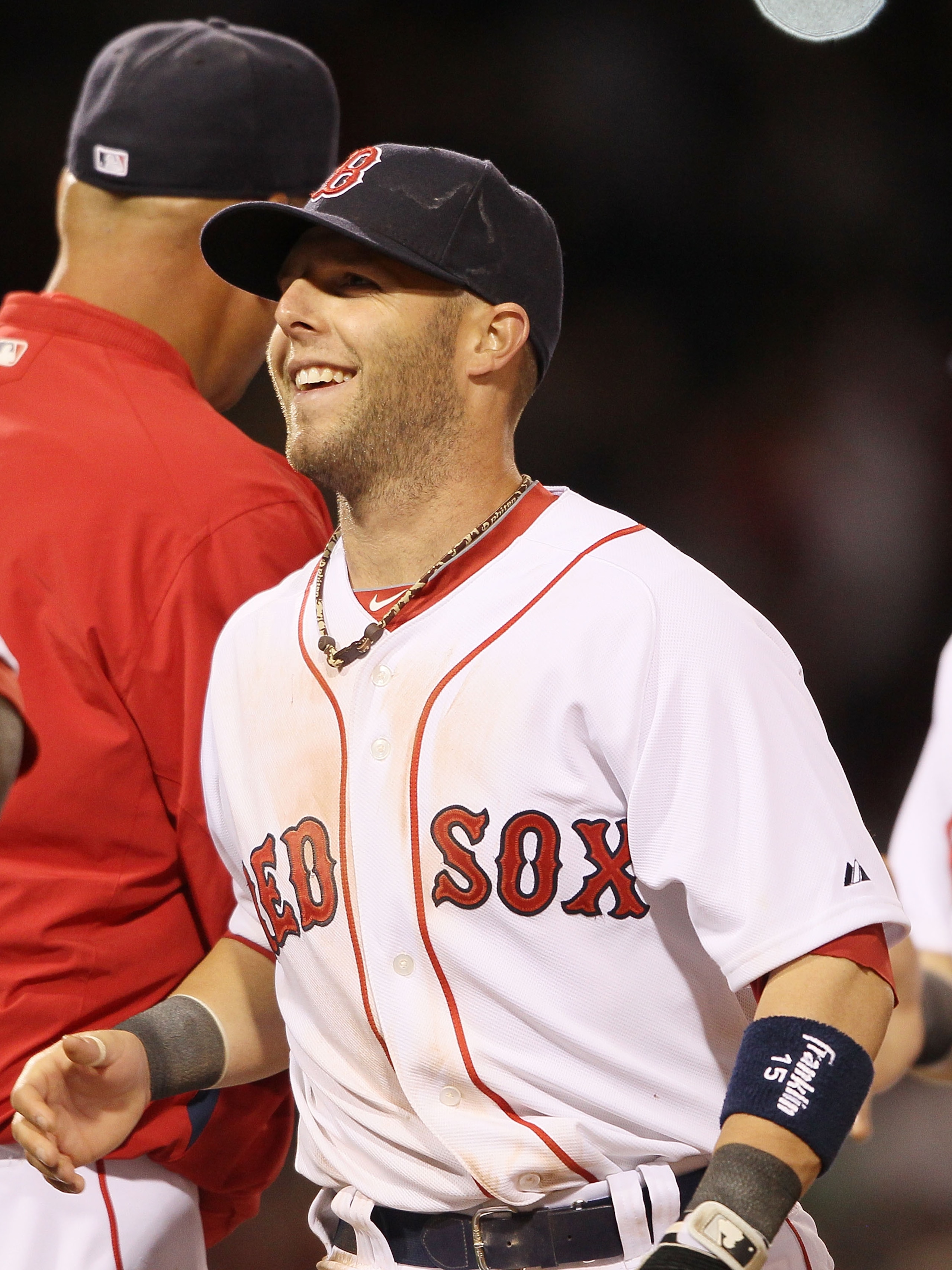
Pedroia batting second was one of the few easy choices I encountered while devising my Red Sox lineup.
Pedroia matches up perfectly with the skill set common in number two hitters. In your number two hitter, you want somebody who will get on base at a high rate. Pedroia's career .369 on-base percentage fits the bill in that regard.
Furthermore, you want your number two hitter to be a balanced hitter. In other words, you do not want someone who hits too many ground balls, as that would lead to an accumulation of double plays. Pedroia has an exact 1.00 ground ball to fly ball ratio, and very good 22.2 line drive percentage.
Pedroia is a very balanced offensive player. He can get on base, hit for occasional power, steal bases when necessary, and move runners. What more could you ask from a number two hitter?
3. Kevin Youkilis
3 of 10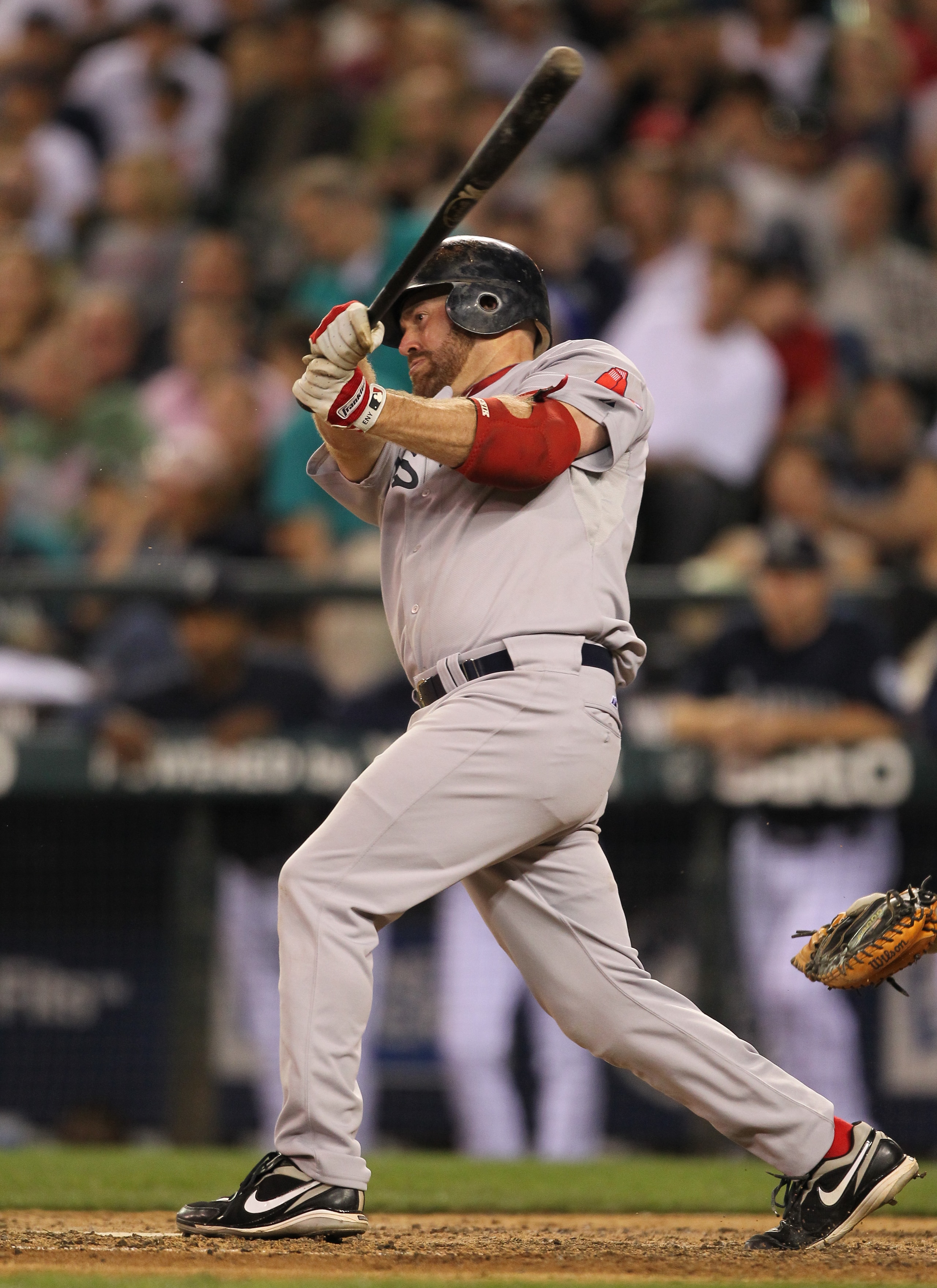
Over the past three years, Youkilis has established himself as a hitter who should be placed between third and fifth in the batting order. In 2010, he hit only third and fourth, predominately fourth. In his 27 at-bats while hitting third, he hit .370 with a 1.047 OPS.
While that is a small sample size, it is clear that Youkilis is perfect for the third spot in this lineup. The third spot is generally reserved for the best all-around hitter on the team, disregarding speed. It is safe to say that Youkilis can claim that title. He has hit .305 plus in three straight seasons, and has displayed very dangerous power, hitting 29 home run in 2008, 27 in 2009, and 19 in just 362 at-bats in 2010.
If just one the Red Sox' first two hitters were to reach base, Youkilis would be in a perfect situation to hit a double and drive in a run, leaving himself in position for the meat of the lineup.


4. Adrian Gonzalez
4 of 10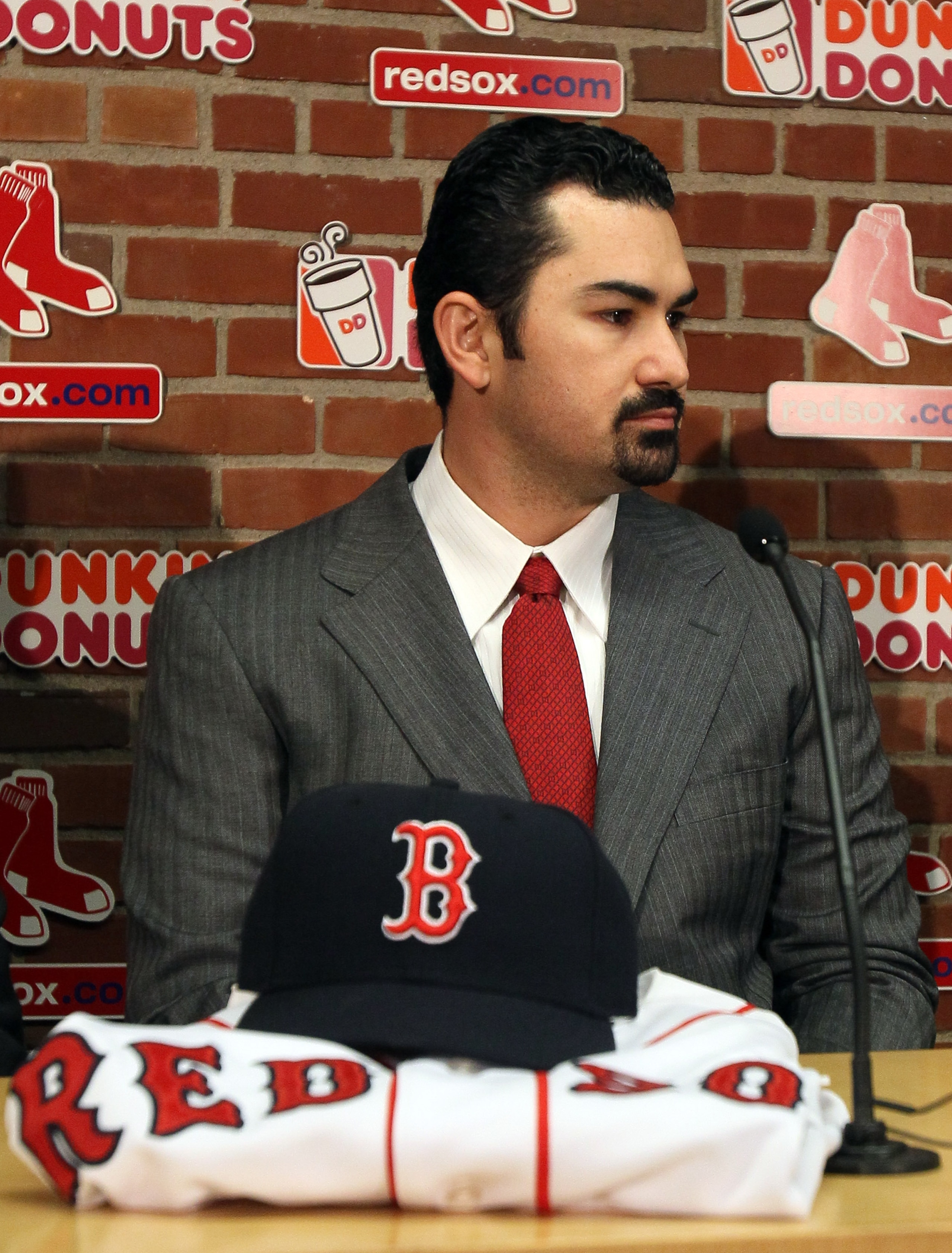
Gonzalez was another easy choice for the cleanup spot. It is safe to say that Gonzalez is the Red Sox' best power hitter.
Gonzalez has hit 30 plus home runs in three straight season, topping out at 40 in 2009. The scary thing is that Gonzalez may be even more dangerous in Fenway Park, as it is the perfectly constructed stadium for Gonzalez. It is possible that Gonzalez may struggle out of the gate, but that is no reason to not bat Gonzalez fourth.
Gonzalez showed that he was able to drive in runs when possible in 2010 by hitting .327 with 13 home runs (251 at-bats) with runners on base. His 1.282 OPS with runners in scoring position was off the charts in 2010.
Gonzalez is the perfect cleanup hitter for the Sox because not only is he a great run producer, he will also continue the flow of the lineup. While many clean up hitters are pure power hitters, Gonzalez is an especially good pure hitter when it comes to clean up hitters. He has a career .368 on-base percentage, which will allow the Red Sox' lineup to continue its dynamic flow.
5. J.D. Drew
5 of 10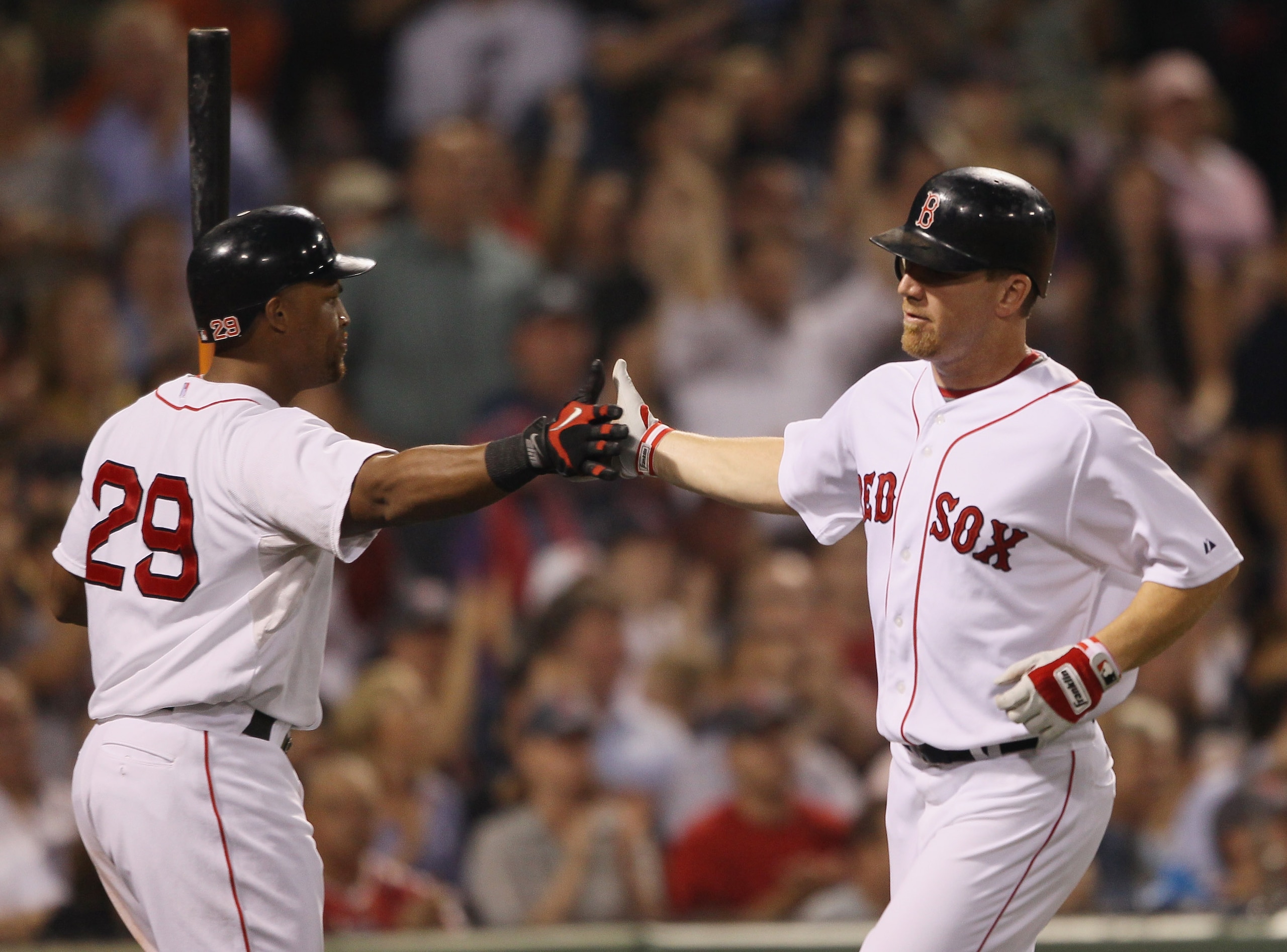
The job description of the number five hitter has been debated by baseball strategists for ages. Many people have said that the fifth hitter should "protect" the clean up hitter to prevent opposing teams from intentionally walking the clean up hitter, while others have said that the fifth hitter should be someone who has a high on-base percentage to keep the flow of the lineup going.
I personally agree with both sides, which is why J.D. is the perfect fifth hitter in my opinion. His power is very underrated; Drew has hit 65 home runs over the past three seasons despite averaging only 432.6 at-bats per season. That power is nearing the elite level, which in combination with Drew's impressive on-base percentage makes for a dangerous hitter. Drew has a career .387 on-base percentage, which is surprisingly high given his pedestrian batting average.
What this means is that the Red Sox will have Gonzalez protected and the flow of the lineup will continue due to Drew's on-base percentage. The fifth hitter often leads off the inning of hits second or third in it, which is perfect for Drew as he functions as a lead off hitter as well.
6. David Ortiz
6 of 10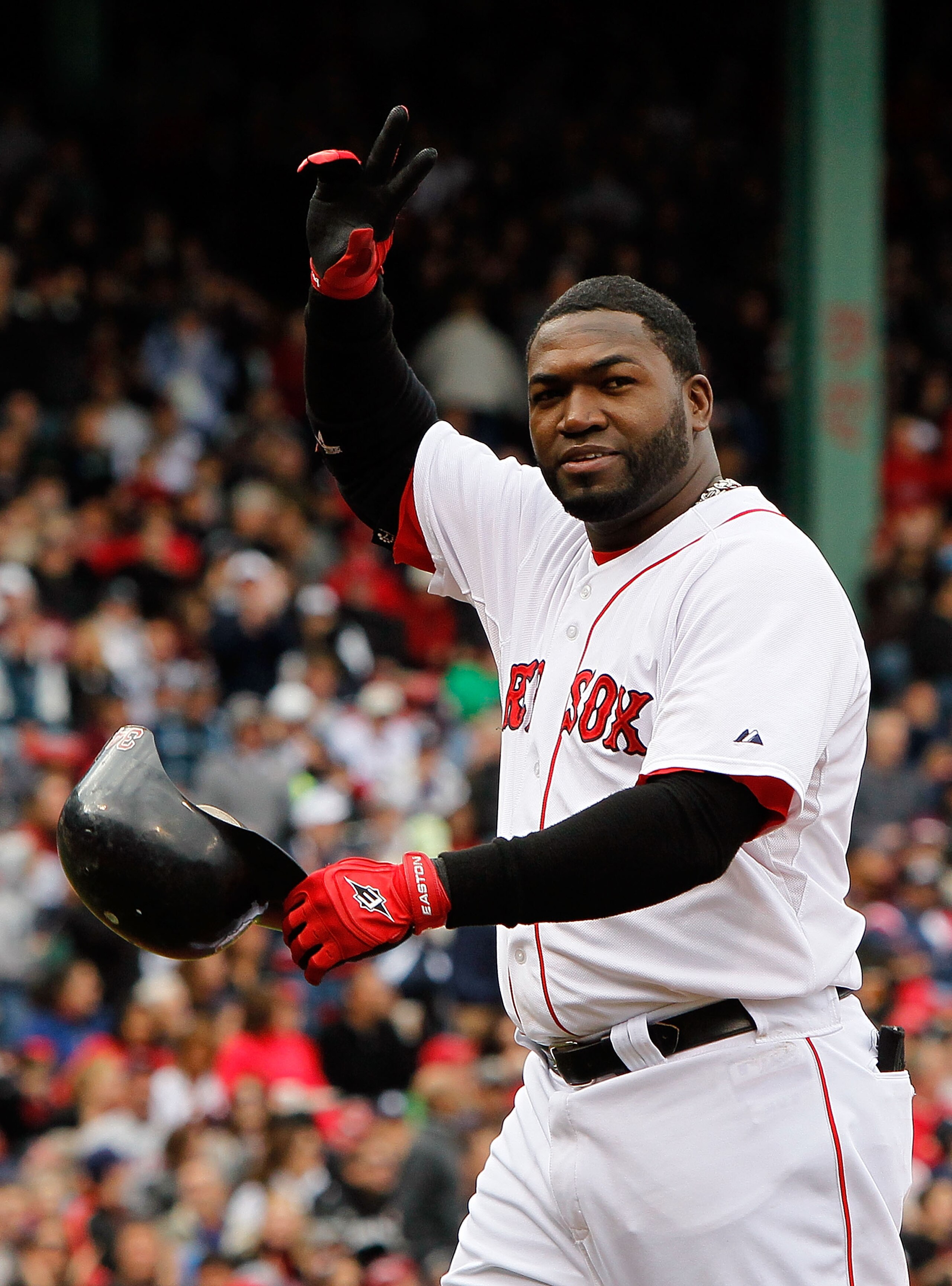
David Ortiz is an awkward hitter when it comes to lineup construction. He appears to be a straightforward power hitter, hitting 36.7 home runs per season dating back to 2003, however he also boasts the league's 27th best on-base percentage.
His statistics cry out to be batted third, however it is clear that Youkilis has transcended Ortiz at this point in terms of overall hitting.
Ortiz makes a great case to be the Red Sox' five hitter, however I believe J.D. Drew is better fit for that spot. However, Drew and Ortiz are very similar in many ways. Both hitters have mediocre batting averages, however they both still have very good power and on-base percentages.
Ortiz is much too talented to hit seventh or eighth, so by process of elimination sixth is the most rational spot for him. The benefit to Ortiz hitting sixth is that he will have plenty of opportunities to drive in runs with J.D. Drew hitting ahead of him.
7. Marco Scutaro
7 of 10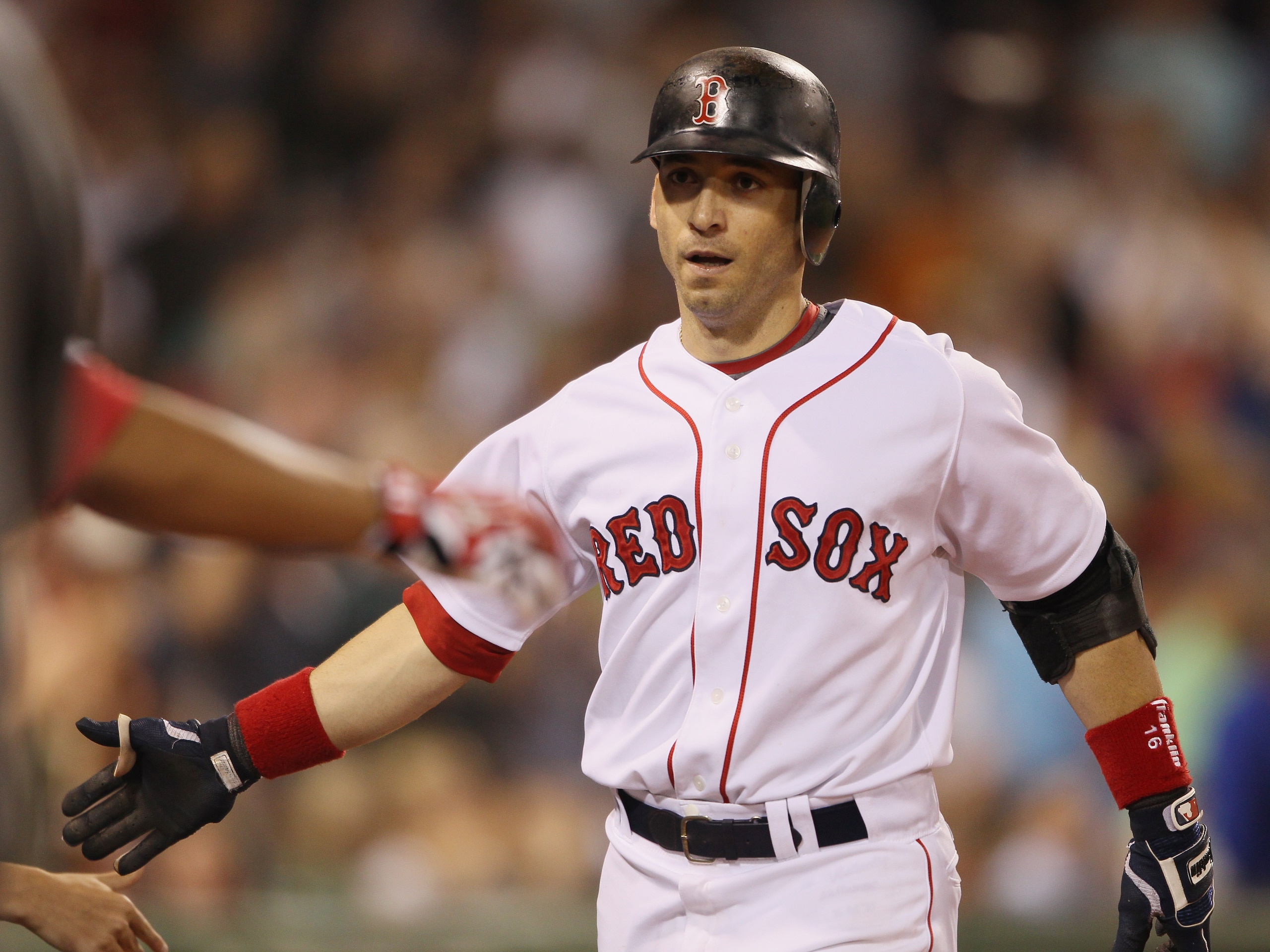
The seventh spot is up for grabs between Scutaro and Jarrod Saltalamacchia. They are both right-handed hitters, so there will be no problem breaking the flow of lefties from four to six.
The reason Marco Scutaro is an ideal seventh hitter for the Red Sox is that he hits well with runners in scoring position. With Gonzalez, Drew, and Ortiz hitting before him, Scutaro will have an endless amount of run producing opportunities. While Scutaro has a poor on-base percentage, he has a respectable batting average, which is what leads to runs. Scutaro hit .297 with runners in scoring position in 2010 with the Red Sox, demonstrating his ability to get runners in when needed.
While Saltalamacchia is certainly qualified for the spot, he does not provide the upside that Scutaro does.
8. Jarrod Saltalamacchia
8 of 10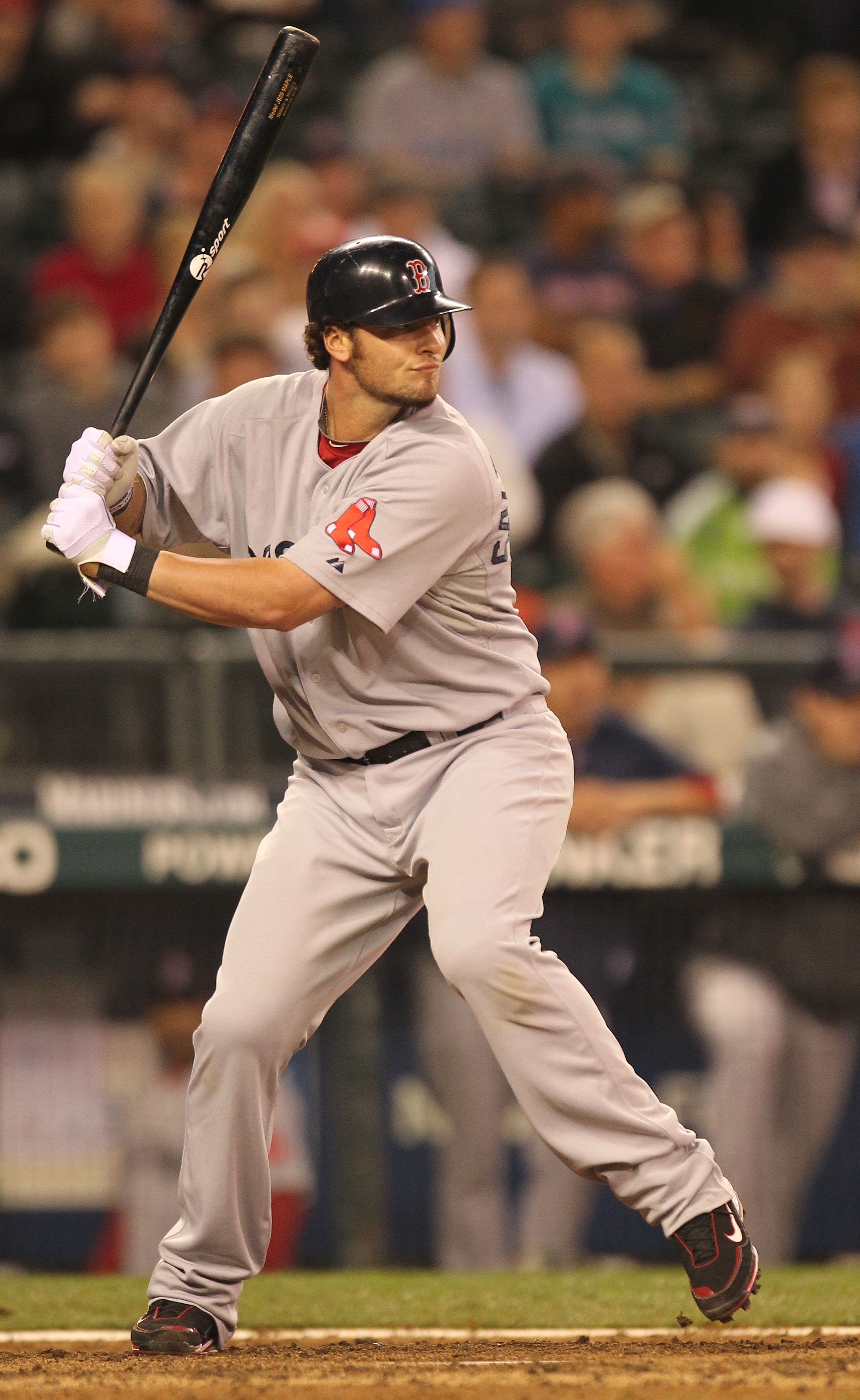
Besides potentially hitting seventh, Saltalamacchia has no place in this batting order besides eighth. There is too much talent in this roster for Saltalamacchia to hit at the top of the order or even the middle of the order. Saltalamacchia has not yet shown that he can contribute enough to be placed higher in the order.
Since 2008, Saltalamacchia has not played too much, however he has taken 325 of his 505 at-bats at the eight hole. Eighth really seems to be the only option for the 25-year old catcher.
9. Jacoby Ellsbury
9 of 10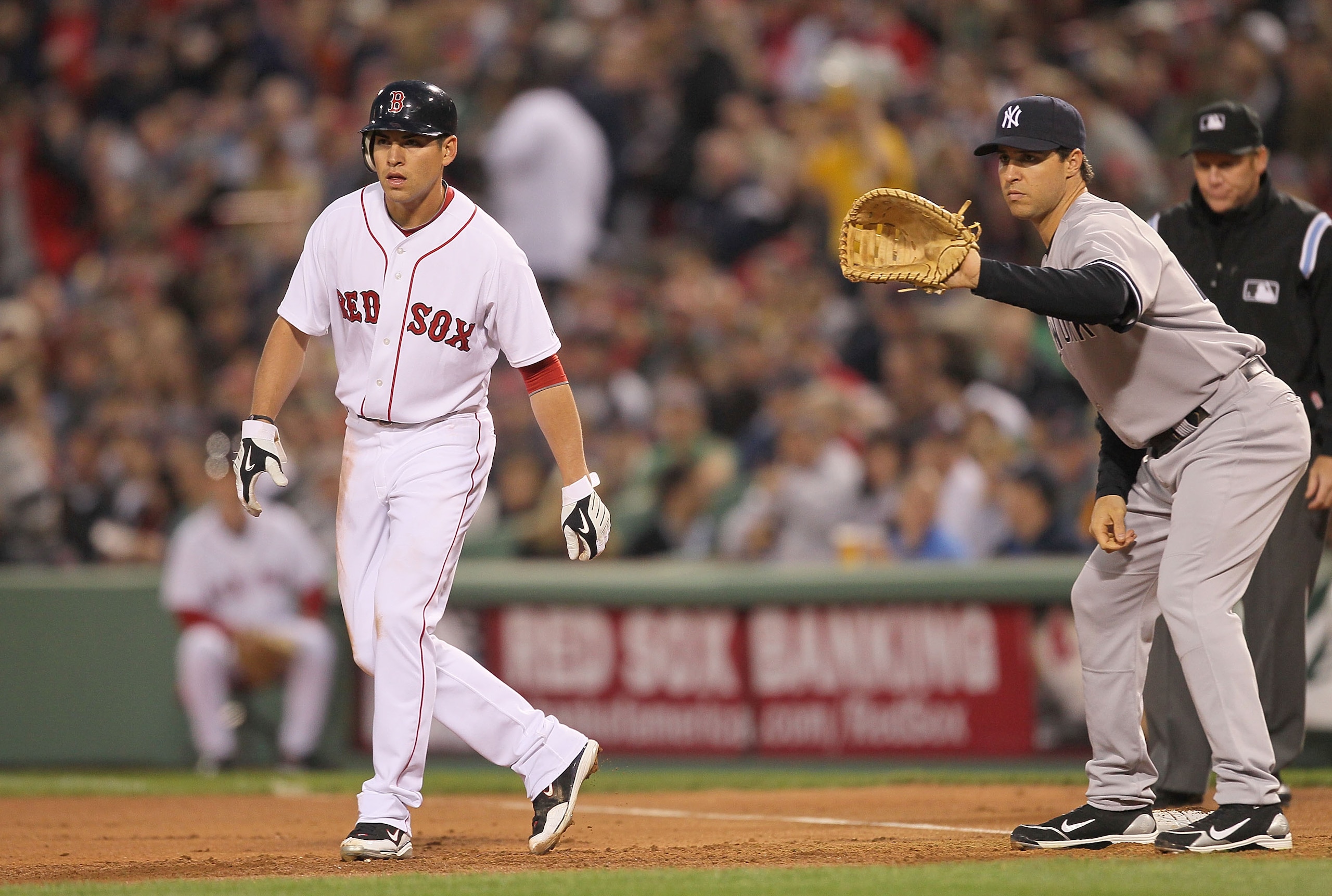
I expect Ellsbury to come back healthy and play exceptionally well in 2011. I believe he will hit above .285 and he will steal 60+ bases. So why am I putting him at ninth in the order?
I alluded to this while arguing Crawford as lead off: having Crawford hit behind Ellsbury is a much more attractive pairing than having Ellsbury trying to drive in Crawford or more likely Saltalamacchia. You may be thinking that putting Ellsbury ninth has him hitting behind Crawford at lead off, however if you think back to the idea of a batting order as a continuous process, Ellsbury will actually be hitting right before Crawford.
Thus, Crawford's power does not go to waste, Ellsbury's speed does not go to waste, and Crawford's speed does not go to waste. Just a fun fact, Ellsbury has hit .341 while batting ninth in 44 at-bats since 2008. As a lead off hitter, he has hit .279 since 2008.
Final Notes
10 of 10
1. Carl Crawford
2. Dustin Pedroia
3. Kevin Youkilis
4. Adrian Gonzalez
5. J.D. Drew
6. David Ortiz
7. Marco Scutaro
8. Jarrod Saltalamacchia
9. Jacoby Ellsbury
A recipe for success.

.jpg?w=2560 "Raiders Could Start Mendoza")


.jpg?w=2560 "Rodgers Iced Out on Plane 💎")

.jpg?w=2560 "Packers Safety Slams Refs 🤬")
.jpg?w=2560 "🚨 Week 8 AP Top 25 Poll")
