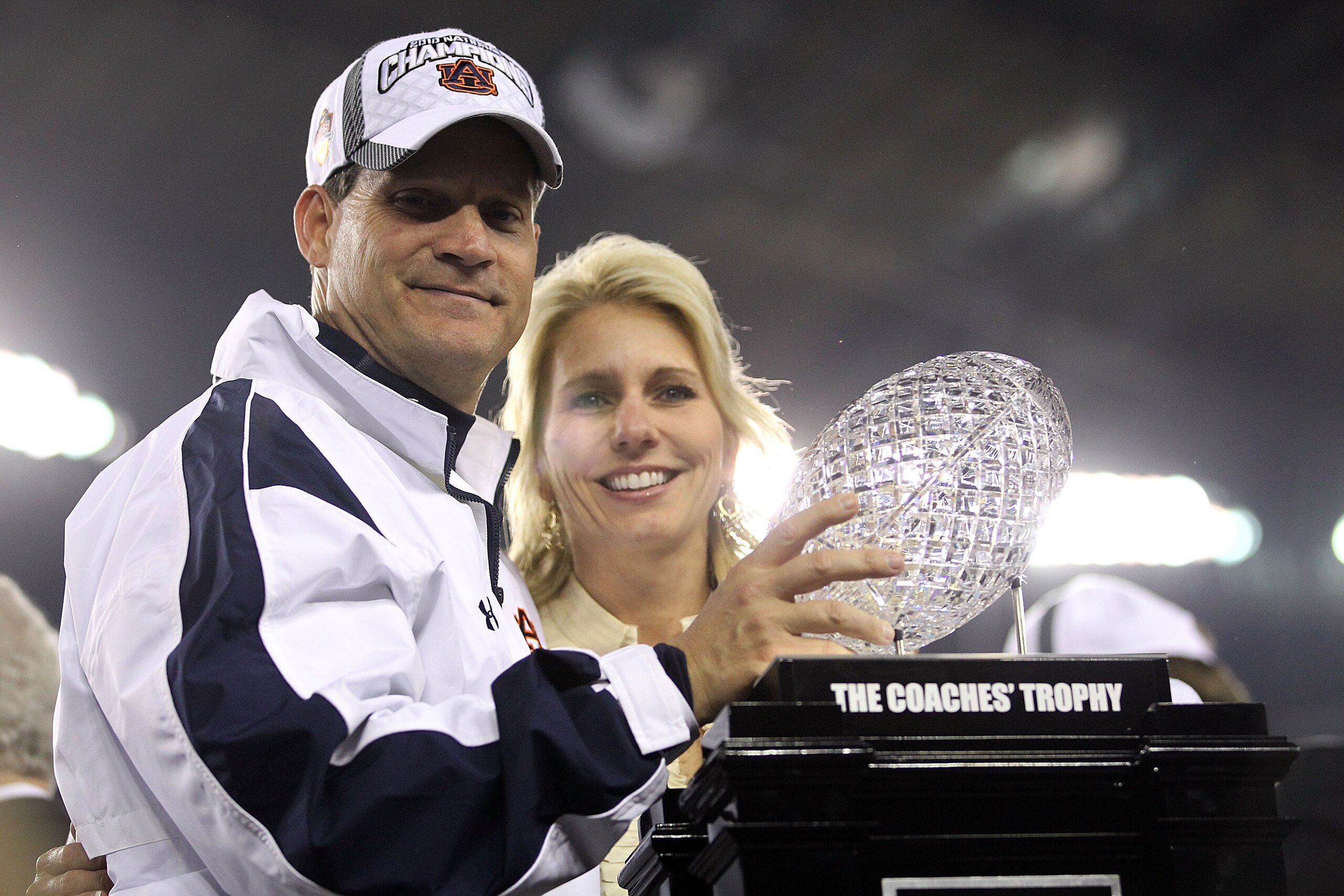

2011 BCS Title Game: Auburn's Offense Sold Tickets, Defense Won the Championship
All season long, the Auburn Tigers' offense has grabbed the headlines, and rightly so.
Cam Newton had a historical season, breaking school, conference and national records, one after another, on his way to winning the Heisman trophy.
On the other hand, the Tigers' defense was consistently called into question, with reason, throughout the year.
Through the regular season, they were ranked No. 55 in total defense (362 yards per game) and, even worse, No. 97 in red zone (opponents scored in 35 of 40 RZ opportunities).
But the old saying remained true on Monday night: "Offense sells tickets and defense wins championships."
Here's how Auburn's defense was the real story in the Tigers' 2011 BCS Championship:
Forced Oregon Out of Their Normal Playcalling Balance
1 of 4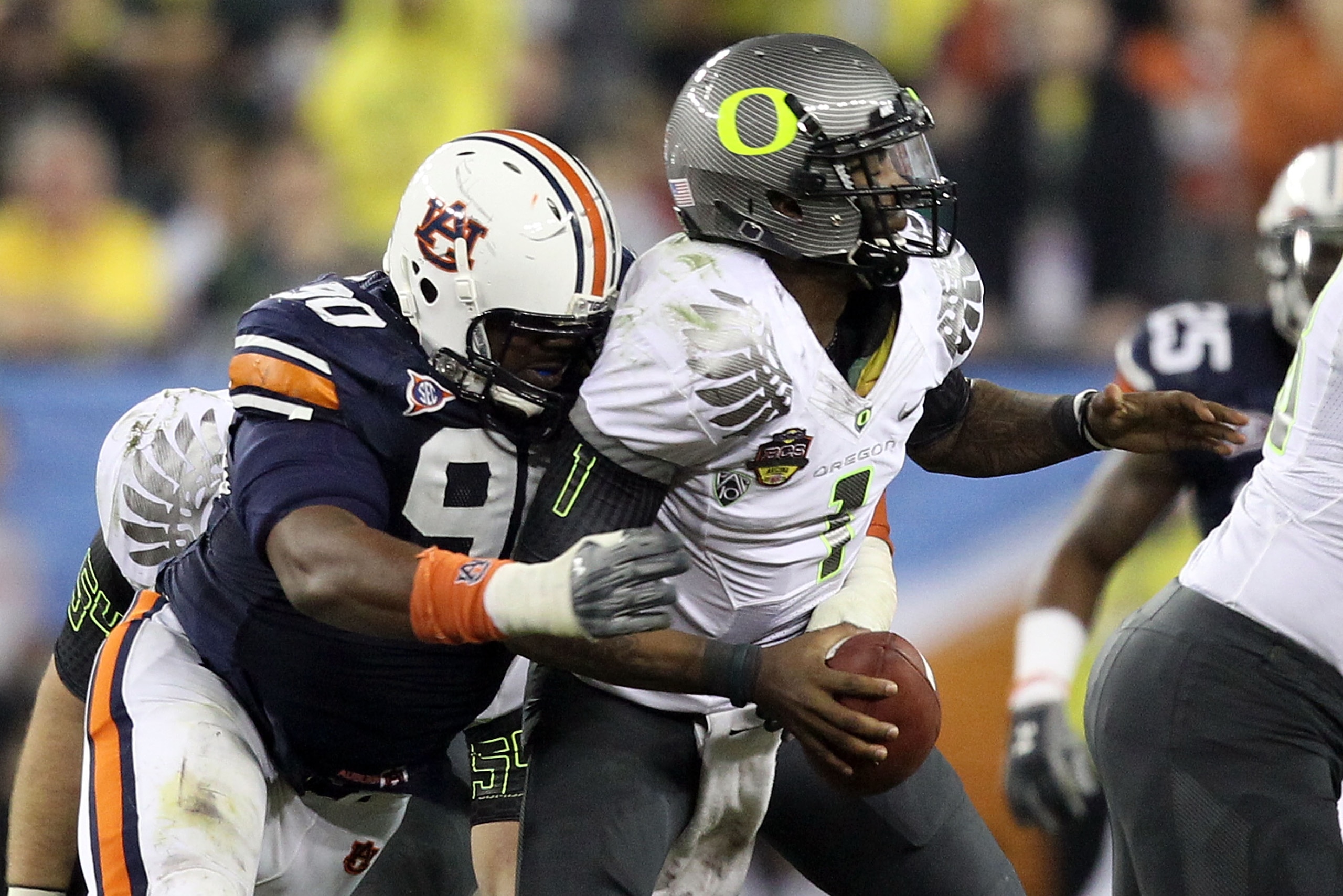
Through the year, the Oregon's offense set up everything through the run.
In fact, in the regular season, the Ducks ran the ball 661 times, while attempting 436 passes (60 percent rushing /40 percent passing playcalling balance).
Last night, the Tigers shut down the Ducks running attack, forcing them to throw the ball more than they are used to throwing it.
The Ducks ran the ball 32 times while attempting 41 passes (43/57 playcalling balance).
The Tigers' defense successfully imposed their will on how Chip Kelly called the game.
Almost anytime when you force a team out of their normal offensive playcalling balance, it is going to be good news for you.
And it was for the Tigers.
Made It More About Darron Thomas' Arm Than LaMichael James' Legs
2 of 4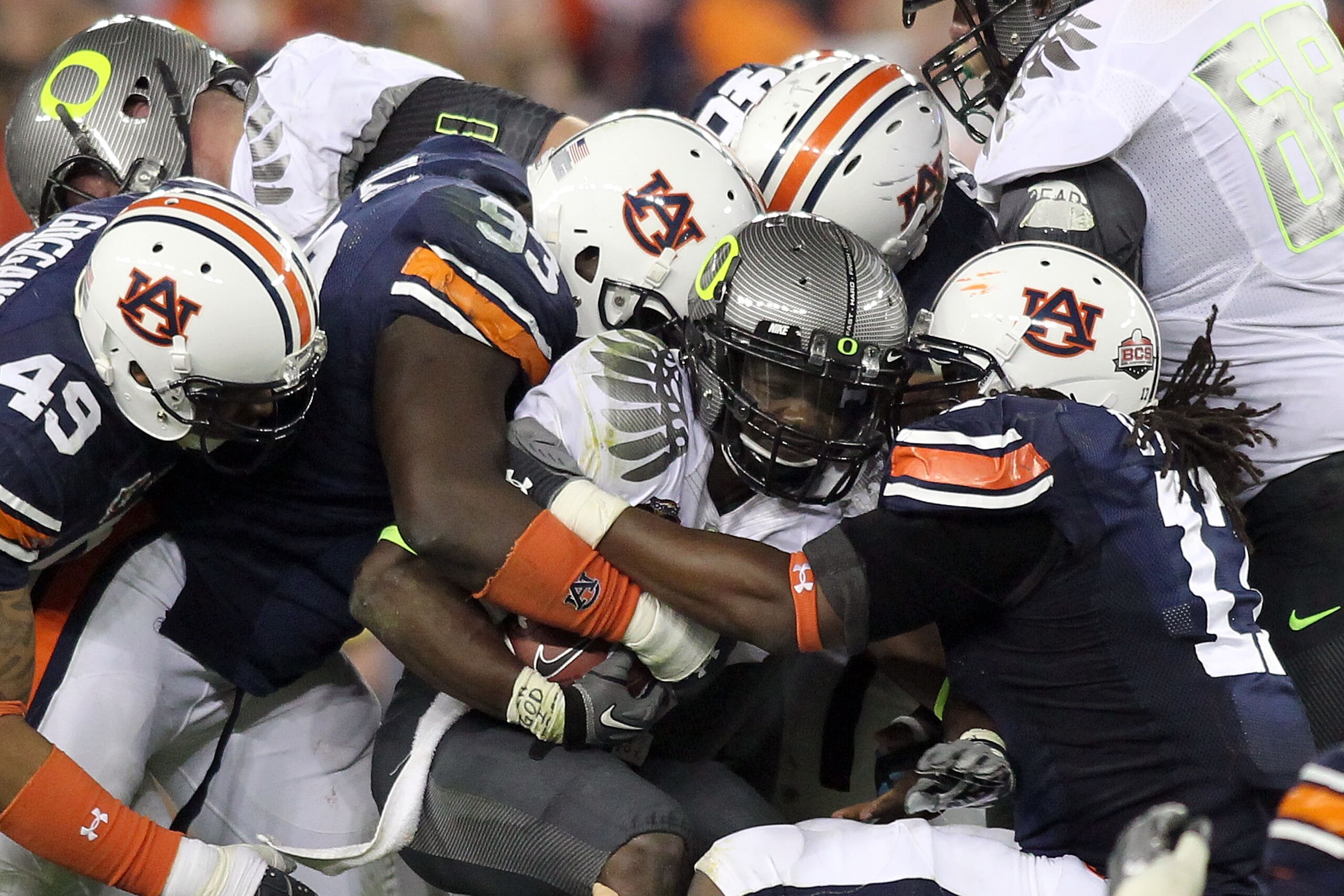
If the Tigers could somehow reduce the roll that LaMichael James, the nation's leading rusher could play, they were going to eliminate one of the Ducks' biggest weapons.
Last night, LaMichael James carried the ball 13 times and caught four passes out of the backfield—17 touches.
Through the year, James averaged 27 carries per game.
On the other hand, Darron Thomas, the Oregon QB, threw the ball 40 times and ran the ball eight times.
The Tigers' were willing to risk Thomas' arm beating them as opposed to James' legs...A risk that paid off successfully in the outcome
Stopped the Ducks on Third Down
3 of 4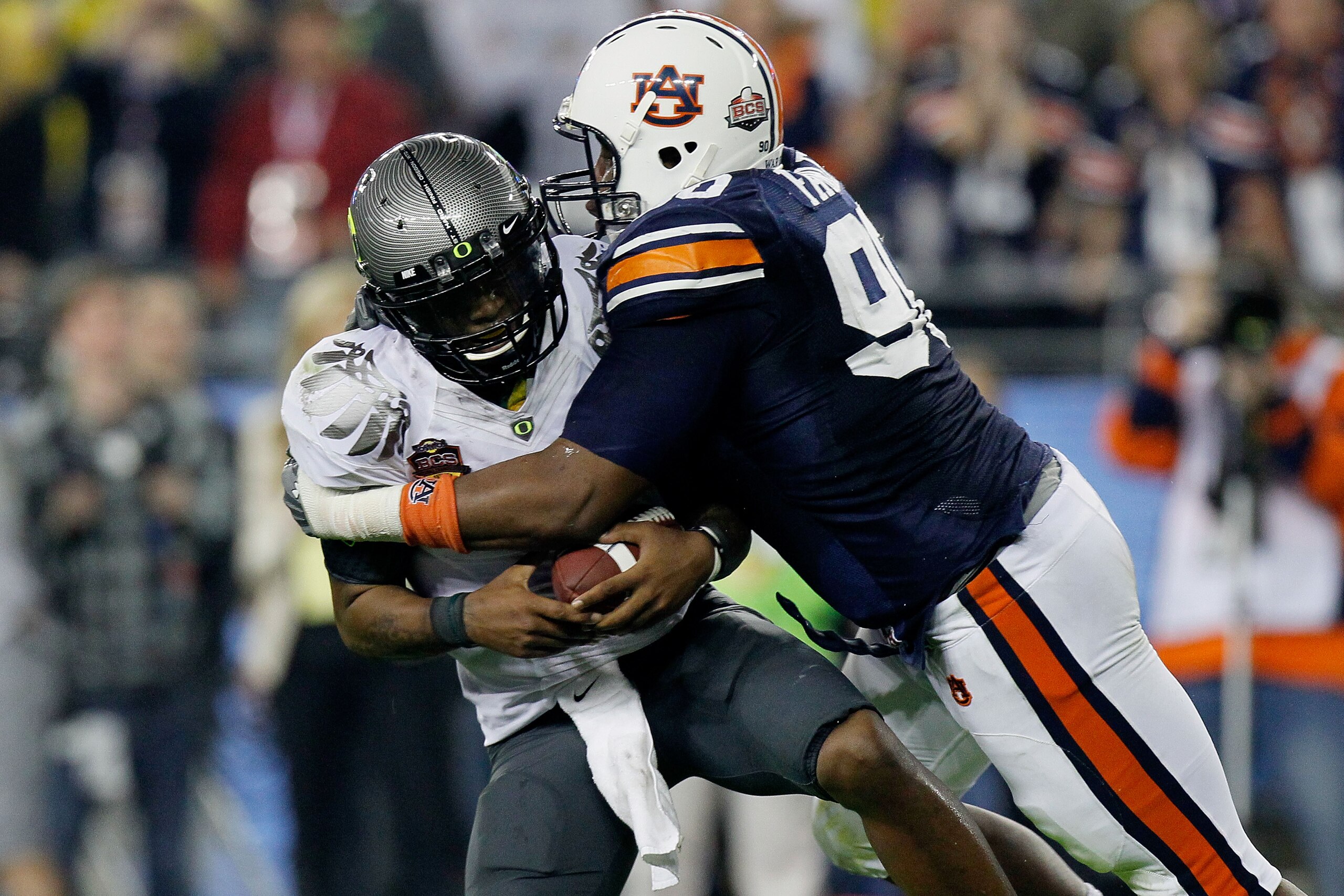
Drives stop if a team can't convert on third-down situations.
And the Tigers' defense did a fantastic job of preventing the Ducks from moving the ball down the field throughout the game.
Oregon only converted on five of 15 third downs, a below-average 33 percent.
_0.png?w=2560 "CFB Top 25")
.png?w=2560)

Limited the Big Plays
4 of 4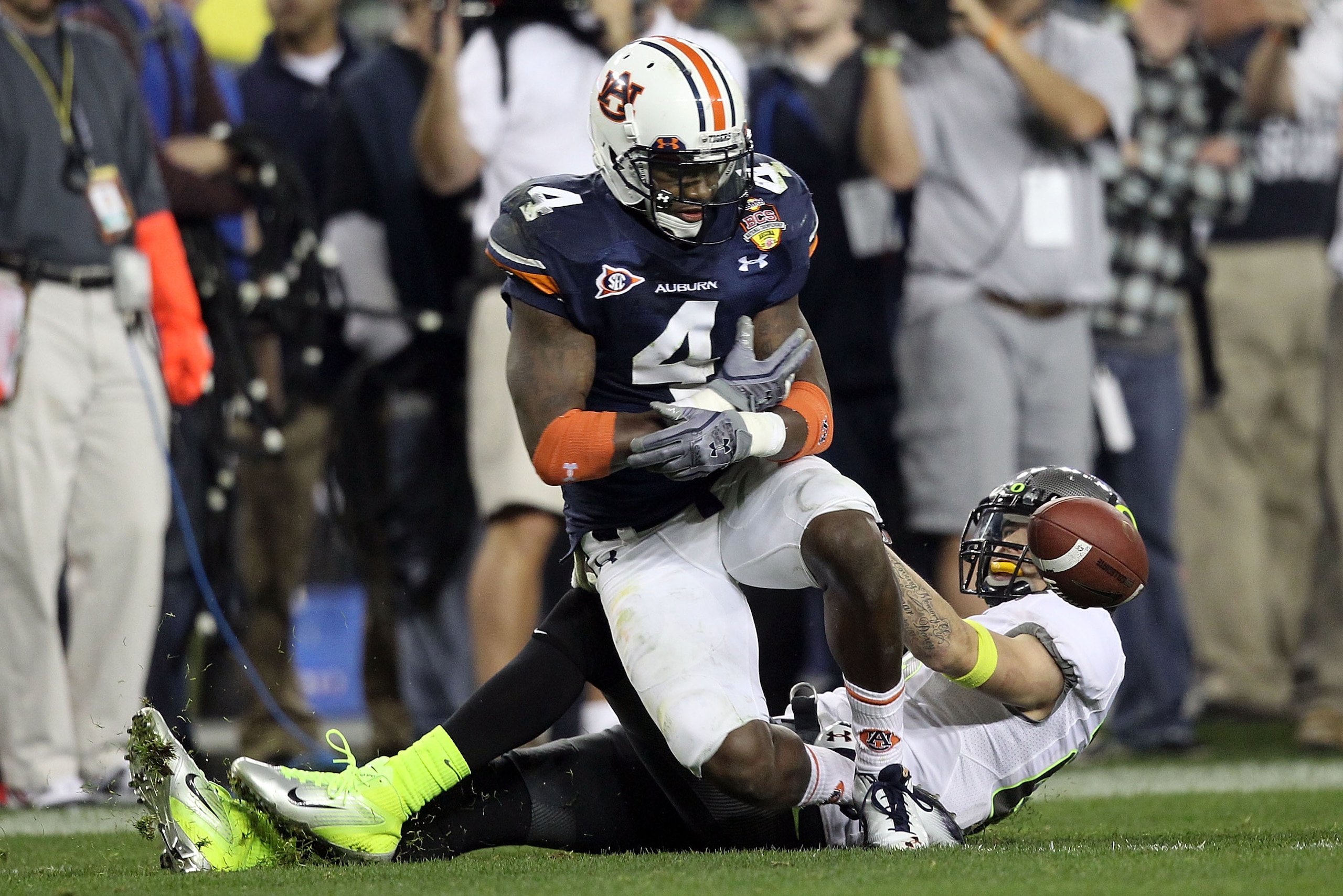
The Oregon Ducks lived off of the "Big Play" during their undefeated 2010 regular season.
LaMichael James normally had one or more run per game of at least 30 yards.
Last night, James' longest carry was 14 yards.
If you take away the one 81-yard reception, Jeff Maehl, the Ducks leading receiver, averaged less than seven yards per catch.
And even though Tuinei, Davis and Paulson all had receptions that took the ball down the field, none of them resulted in TDs.
The two Ducks touchdowns were eight- and two-yard passes.



.jpg?w=2560 "Jonathan Taylor Landing Spots 📍")


