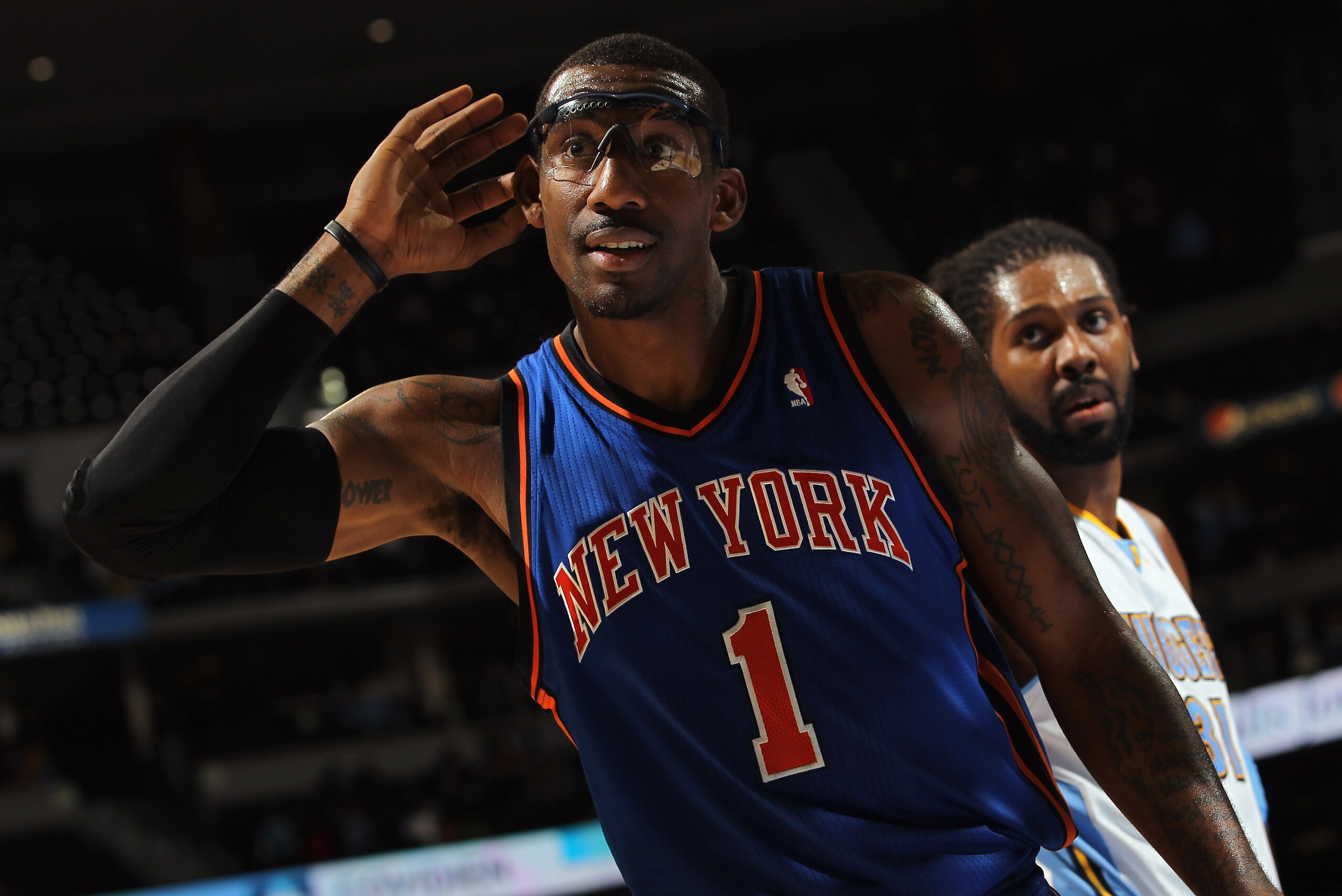

New York Knicks: Is Amar'e Stoudemire's Superstardom a Product of Mike D'Antoni?
Mike D'Antoni and Amar'e Stoudemire: a match made in basketball—and Knicks— heaven?
The answer is yes.
For the most part, Knicks' fans reaction to the signing of Stoudemire back in July was a collective groan at best. It had become more and more apparent that LeBron James was going elsewhere and continued basketball irrelevancy hung in the balance for New York.
But with just over one-third of the season in the books, Amar'e has more points, a better PPG, a higher field goal percentage, more total rebounds, nearly 50 more offensive rebounds and...did someone say defense?...40 more blocked shots than King James.
In fact, as of the end of Wednesday's games, Stoudemire leads the league in field goals and points (more than Kobe Bryant and young phenom Kevin Durant). He's second in points per game behind Durant and third overall in performance efficiency rating (PER).
And he's broken a couple of Knicks' franchise records along the way. Amar'e scored at least 30 points nine games in a row, besting Willie Naulls' 50-year-old record by two. During that stretch he shot more than 50 percent from the floor each game—also a franchise best.
Needless to say, he's having one of the best years of his career—potentially his best statistically—and the chants of "MVP" at the newly-electric Garden are not far off the mark. The woeful Knicks have wallowed in an under .500 quagmire for nine years straight and it is Amar'e Stoudemire who is most responsible for the turnaround in the team's performance and culture.
To top it all off, after playing in the shadow of two-time MVP Steve Nash, Stoudemire is emerging as a leader, looking to carry the Knicks into the playoffs for the first time in seven years. He'll be the first Knicks All-Star in nine.
Is it official? Has Amar'e arrived? Is he a superstar bringing a storied franchise back to greatness, grabbing the spotlight in the brightest city of them all?
You know what? I think so.
But, where did this come from and how did it happen so quickly? If you're a Knicks fan, it's as if you've wandered the desert for a decade and stumbled upon the most luscious oasis of basketball relevancy. But the seeds for this emergence were sewn back in Phoenix, where Stoudemire and D'Antoni first teamed up.
The foundations of Amar'e's success, in terms of physical prowess and athletic skill, were always there, but it's Mike D'Antoni's offensive scheme that takes it all to another level.
Here's why:
1. Seven Seconds Or Less Offense
1 of 8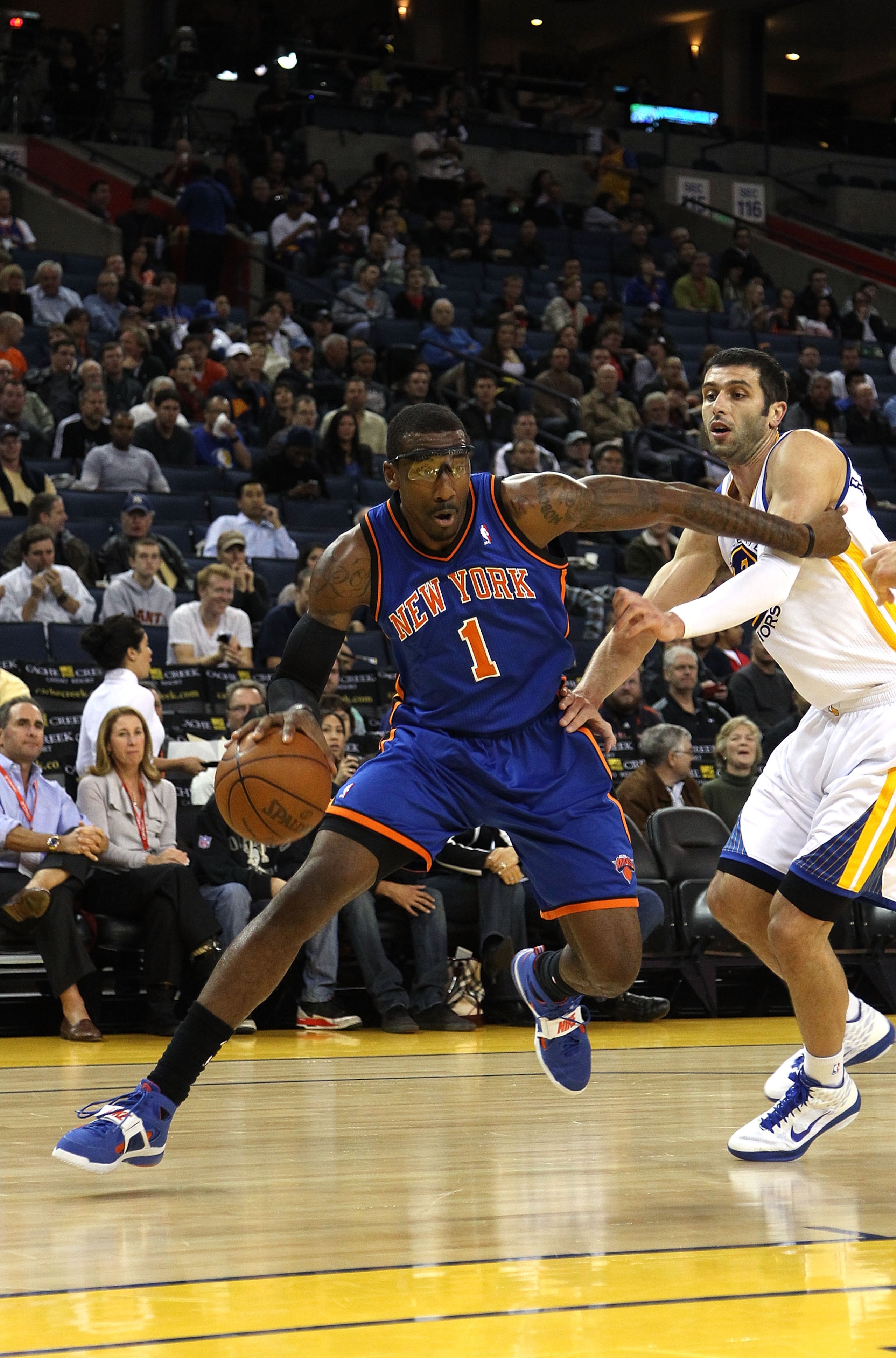
Mike D'Antoni's offensive scheme, referred to as "run n' gun," or "up-tempo," creates ample opportunity for the Knicks to score, especially off the fast break.
Three of the four full years D'Antoni coached the Phoenix Suns—all with Amar'e Stoudemire and Steve Nash—they led the league in scoring. Three out of those four years the Suns averaged no less than 110 points a game.
Despite losing seasons in his first two years as Knicks coach, 2008 and 2009, D'Antoni's teams have averaged 105.2 and 102.1 points per game. The last time the Knicks averaged over 100 points a game before that was back in 1992.
Add Stoudamire to the mix, and a surprising Raymond Felton in the Steve Nash role, and the 2010 Knicks are averaging about 108 points per game and looking more than a bit like those high-scoring Suns playoff teams, led by a superstar.
2. Lack Of Emphasis On Defense
2 of 8
Knicks' opponents are averaging 107 points a game, that's the most since 1988. D'Antoni's Knicks allow their opponents to score more points than even, gasp, Isaiah Thomas'.
So, how does that translate into good news for Amar'e?
D'Antoni's mindset can be summed up in the turning of an old axiom on its head: The best defense is a good offense. His gun-slinging, Wild West approach is tailor-made for Stoudemire, who has never been considered a premier defender.
The Knicks look more to get the jump on the fast break instead of focusing on long defensive stances. It's part of D'Antoni's strategy to pressure the other team into speeding up their play, breaking their rhythm and forcing bad shots so the Knicks can get the ball back on offense.
3. Spreading Out Opposing Defenses...
3 of 8
D'Antoni's offense frequently sets up the pick and roll and employs the threat of the backdoor cut to spread out the opposing defense.
A spread-out defense is unable to double-team Amar'e effectively.
Combine that with a fast break offense that keeps opposing defenses off balance and there is more room to score against unset defenders.
4. ...And Attacking
4 of 8
With the floor wide open, D'Antoni likes to attack the basket with Amar'e, who has more room to work with in the post or can take it straight down the middle.
The lane is rarely clogged by either Knicks players posting up or opposing defenders.
Stoudemire has also improved his mid-range shot, allowing him to pull up for an open 12 or 15 footer.
5. The Three-Point Threat
5 of 8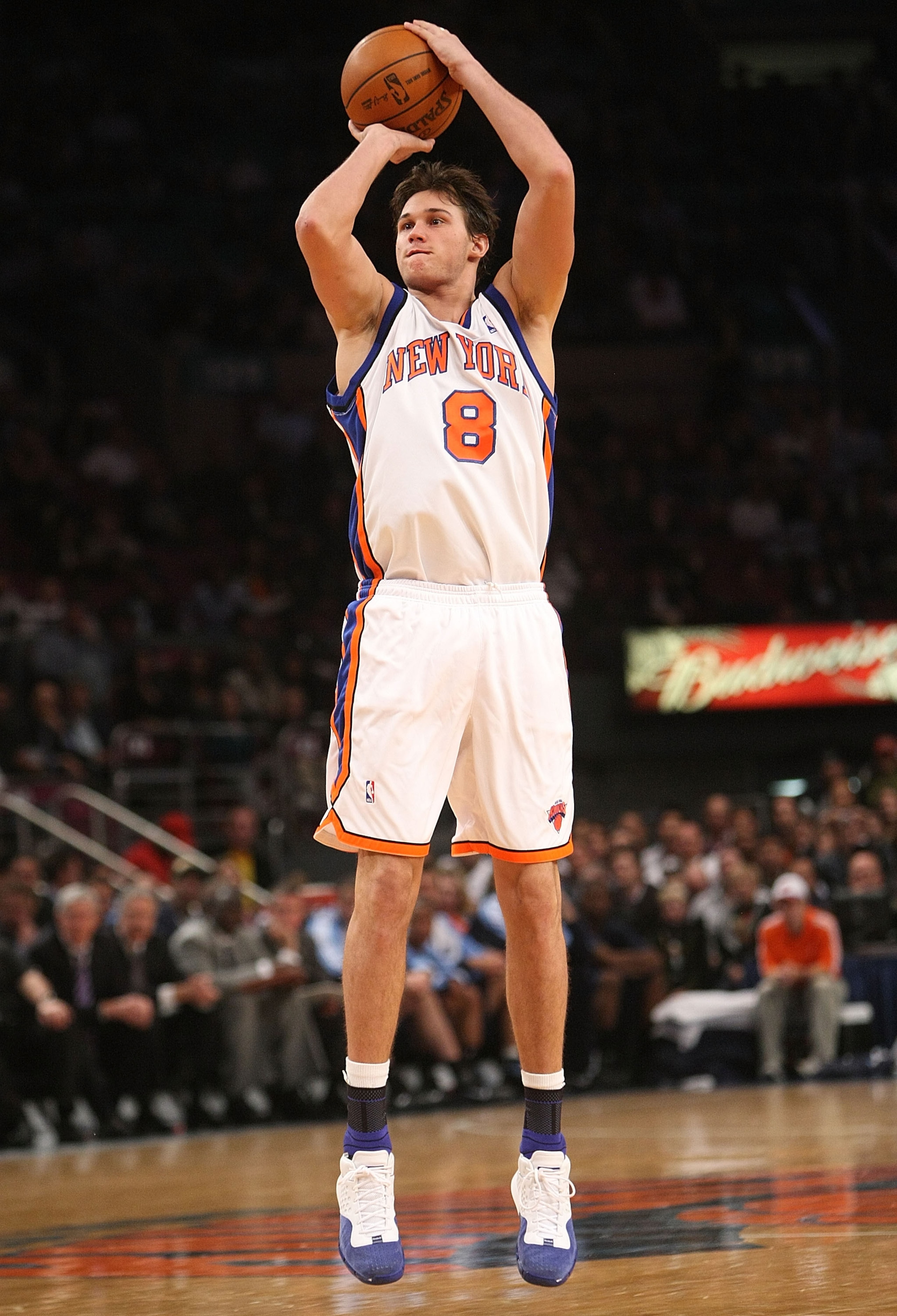
The Knicks lead the league in three-pointers made per game. They have three players—Danilo Gallinari, Wilson Chandler and Raymond Felton—who have each sunk over 50 already this year.
Combine this weapon with a D'Antoni textbook offense that spreads out defenses and Amar'e has even more room to maneuver.
6. The Felton Factor
6 of 8
D'Antoni's system relies most heavily on the point guard and power forward positions.
Raymond Felton is filling that key guard role perfectly, drawing defenders away from Stoudemire and feeding open Knicks the ball. He is particularly adept at the pick and roll and managing the floor, and is fourth in the league in assists. Felton's presence in D'Antoni's offense is benefiting both he and Stoudemire.
While he's no Steve Nash, this is precisely the type of player D'Antoni and the Knicks need to be effective. D'Antoni purposely lured Felton with Stoudemire to the Knicks, both players recognizing they could reach their highest potential together in a supercharged D'Antoni offense. It has turned out to be true.
7. Playing Time
7 of 8
Amar'e plays 37.7 minutes per game and is in the league leaders in that category and total minutes played. Felton averages a whopping 39.1.
And it doesn't look like that will slow down any time soon. Mike D'Antoni plays his critical starters nearly the whole game. And since they don't play the most physical defense, they don't wind up in foul trouble that often either.
More time on the floor means more points in this fast paced offense.
8. Something To Prove
8 of 8
There's one more reason why Amar'e Stoudemire's superstardom is and will continue to be linked to Mike D'Antoni and his high-flying offense: they both have something to prove.
After taking the Phoenix Suns to four straight playoffs (twice to the Western finals), winning Coach of the Year honors for the 2004-05 season, and leading teams to 62-20 and 61-21 records, D'Antoni has gone 78-115 in two-and-a-third years with New York. If the Knicks don't make the playoffs this year, it's possible his job will be in jeopardy.
When Miami opted for Chris Bosh over Stoudemire, Amar'e took it personally. He also had to endure the labeling of his acquisition as a desperate move by the Knicks. He's had to overcome crticisms of his defensive play, poor rebounding, lack of leadership, and propensity for turnovers—and so far he has.
By the way, Amar'e also promised the Knicks would make the playoffs.
Even Felton, the third piece of the D'Antoni-Stoudemire-Felton puzzle has something to prove. He was signed to a minimum two-year contract because the Knicks weren't entirely sold on him. They're buyers now.
Finally, they are all linked by a hunger that will only fuel their performances and the pursuit of what has eluded all three in a combined 24 years of professional basketball—a championship.
.jpg?w=2560 "Mahomes Reacts to Bettors Vid 😂")


.jpg?w=2560 "Week 1 Fantasy Duds 👎")