Kerry Wood Signs with the Cubs: 5 Reasons to Love This Deal
Somewhere, Ron Santo is beaming. Kerry Wood, a longtime Chicago Cub who never looked right in anyone else's uniform, will reportedly come home to the North Side of Chicago.
Multiple sources, including Fred Mitchell and David Kaplan of the Chicago Tribune, report that Wood and the Cubs are finalizing a deal.
If true, this news has to warm the hearts of Cubs fans everywhere. Wood became a fan favorite nonpareil in the post-Ryne Sandberg era, and the team has done its public relations a world of good by reeling in Wood just weeks after cutting ties with Sandberg.
Wood's rumored demands make the terms of this deal interesting: He had been seeking a two-year, $12 million deal. He probably gave the Cubs a hometown discount, but even so, he may well be the highest-paid reliever in a 2011 bullpen in which he would fall third on the depth chart.
Still, his arrival solidifies the relief corps and makes life easier for the Cubs as they try to shore up countless other shortcomings.
Read on for five reasons to love this deal from the Cubs' perspective.
1. Returning to the NL
1 of 5
Wood spent time with the Cleveland Indians and New York Yankees over the past two seasons after signing a big free-agent deal with Cleveland after the 2008 season.
He never quite acclimated to the American League, though, where his ERA leaped from 3.26 as the Cubs' closer in 2008 to 4.25 in Cleveland in 2009.
It ballooned even more in 2010 before a deadline deal to new York, where he began throwing a Mariano Rivera-inspired cutter and dominated opposing hitters.
Wood did continue the improved command of the strike zone he demonstrated during his years as a Cubs reliever throughout his junior circuit tenure, so there is no reason to think a return to the pitcher-friendly NL will not make him excellent out of the bullpen once again.
2. Sweet Relief
2 of 5
Adding Wood to the Cubs' bullpen makes theirs one of the league's most formidable relief stables.
Closer Carlos Marmol struck out 138 batters in 77.2 innings last season, easily an all-time record for strikeouts per nine innings pitched. Well-documented struggles with the strike zone could not ruin Marmol last season because he was too good at missing bats and keeping the ball in the ballpark.
Sean Marshall emerged as perhaps the best left-handed setup man in the National League in 2010. He struck out nearly 11 batters per nine frames with his excellent overhand curveball and began to get that pitch down in the strike zone consistently enough to get ground balls and lessen his usual vulnerability to home runs.
Startling though this statistic might be, Marmol and Marshall ranked first and fourth, respectively, among all big-league relievers in Wins Above Replacement in 2010, according to FanGraphs.
Add Wood and (probably) Andrew Cashner to that duo and the Cubs' bullpen begins to take an intimidating form. Only Marshall is incapable of reaching the upper 90s with his fastball, and all four can easily strike out more than a batter per inning. The rotation has its share of question marks, but Wood helps round out a suddenly excellent bullpen, which the team has lacked since his departure.
3. Flexibility
3 of 5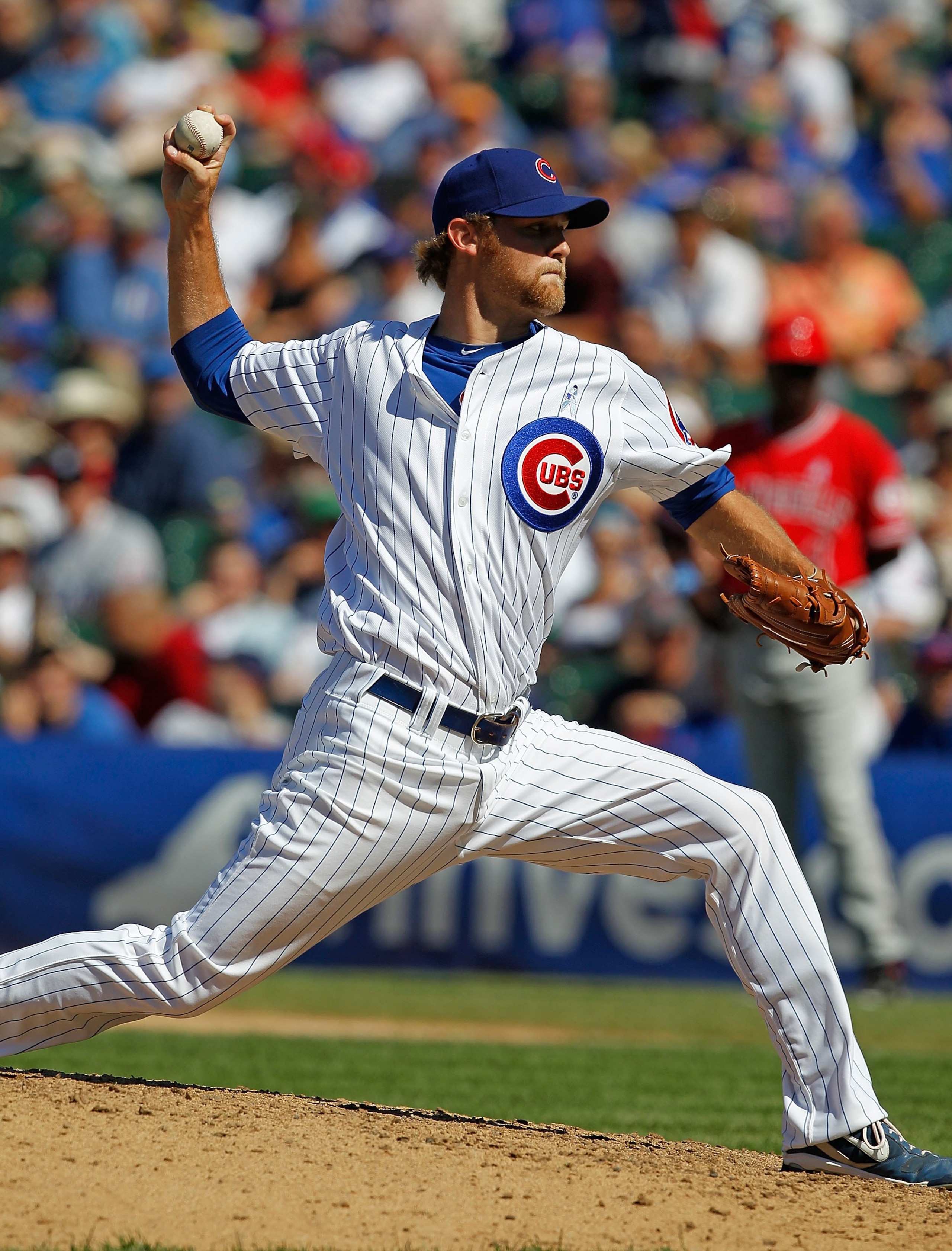
The Cubs might need help in their starting rotation sooner than later in 2011, and the Wood signing indirectly addresses that need.
Ryan Dempster and Carlos Zambrano are solid atop the rotation, though the mercurial Zambrano gives Cubs fans (and the organization) fits and could be traded before the season starts. Tom Gorzelanny and Randy Wells are also good options, though each is far underrated.
Carlos Silva will probably do about what he did last season, which is to give the team about 75 good innings before abominable conditioning and a general lack of solid stuff do him in.
One option to fill out the back end of the rotation when that happens could be Andrew Cashner. Cashner struggled with command as a rookie in 2010, but he easily reaches triple digits when he rears back and lets his fastball fly, and he has the repertoire to make hitters think when he can control his deliveries. He fits best in the bullpen but is young enough and talented enough to start for a year or two if the need arises.
Wood's arrival essentially bumps him down a peg in the bullpen hierarchy, making his role as a setup man less critical and giving new manager Mike Quade leeway to move his young flamethrower to the rotation.
Incidentally—wild hare here—the Wood signing also makes Cashner potentially expendable. If the Cubs are comfortable with Casey Coleman as their emergency starter and believe in bullpen arms like Ty'Relle Harris (acquired via trade from Atlanta this season) and Kyle Smit (acquired from the Dodgers), they could build trade proposals for big names like Prince Fielder or Zack Greinke around Cashner. Just a thought.


4. Leadership
4 of 5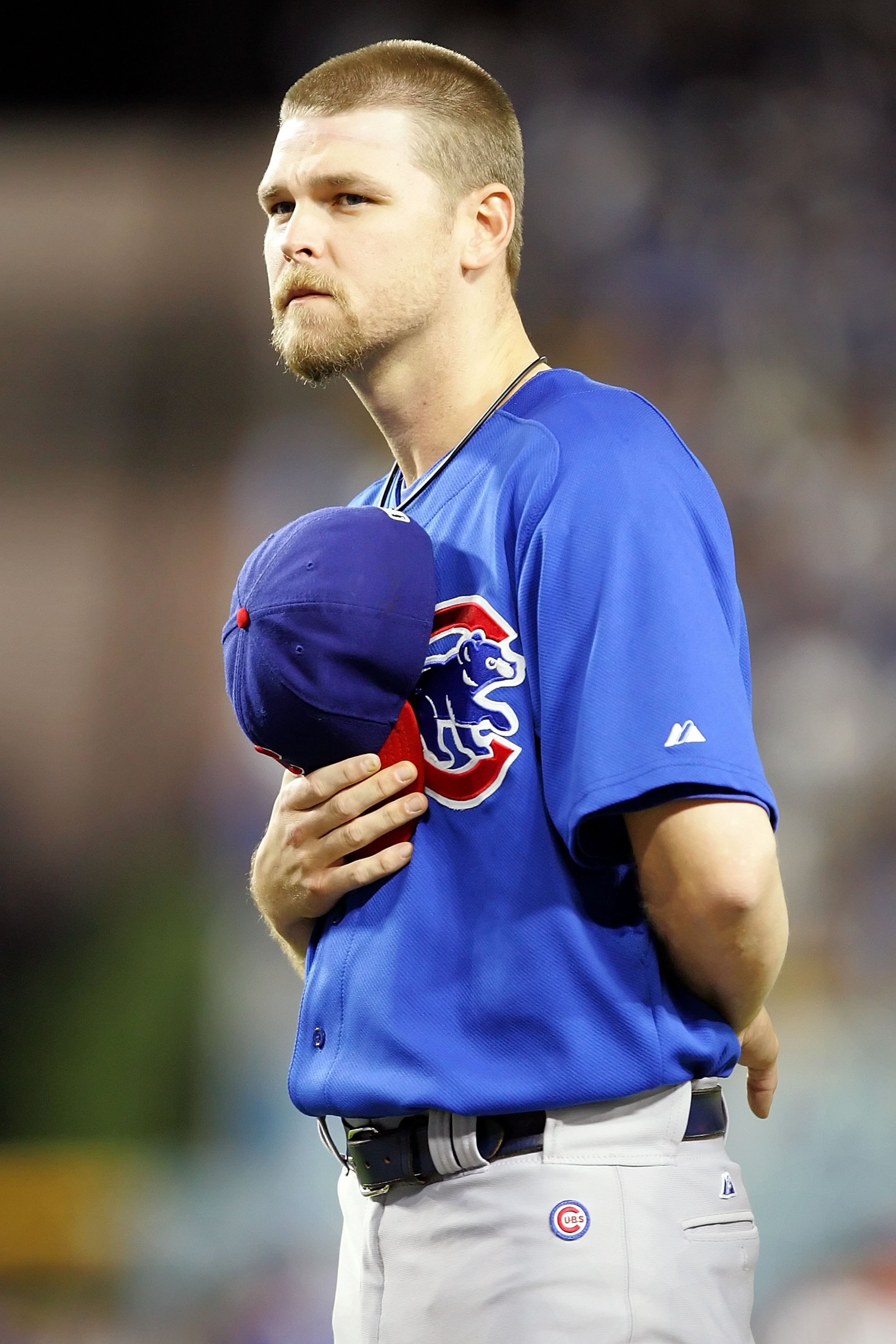
Wood's first decade-long stint in Chicago left Cubs fans desperate for a player with his sense of the baseball world.
He showed intensity, focus and impatience with selfish play. He tried to pitch through injuries more than once, and occasionally succeeded. He became the very picture of the Cubs' new and improved attitude in 2007 and 2008.
The void Wood left in the clubhouse never really got filled, and he now returns as a venerated team patriarch. He has plenty of wisdom to pass on to Cashner, whether the younger player starts or relieves for the 2011 Cubs.
He also brings with him a strong sense of community: He never uprooted his family from Chicago, which he adopted as his hometown during his time with Chicago. The city loves him, and he loves them back. The entire team can draw upon Wood's example of intense preparation and jovial love for the game, for Wrigley Field and for the Cubs franchise.
5. The Length of the Deal
5 of 5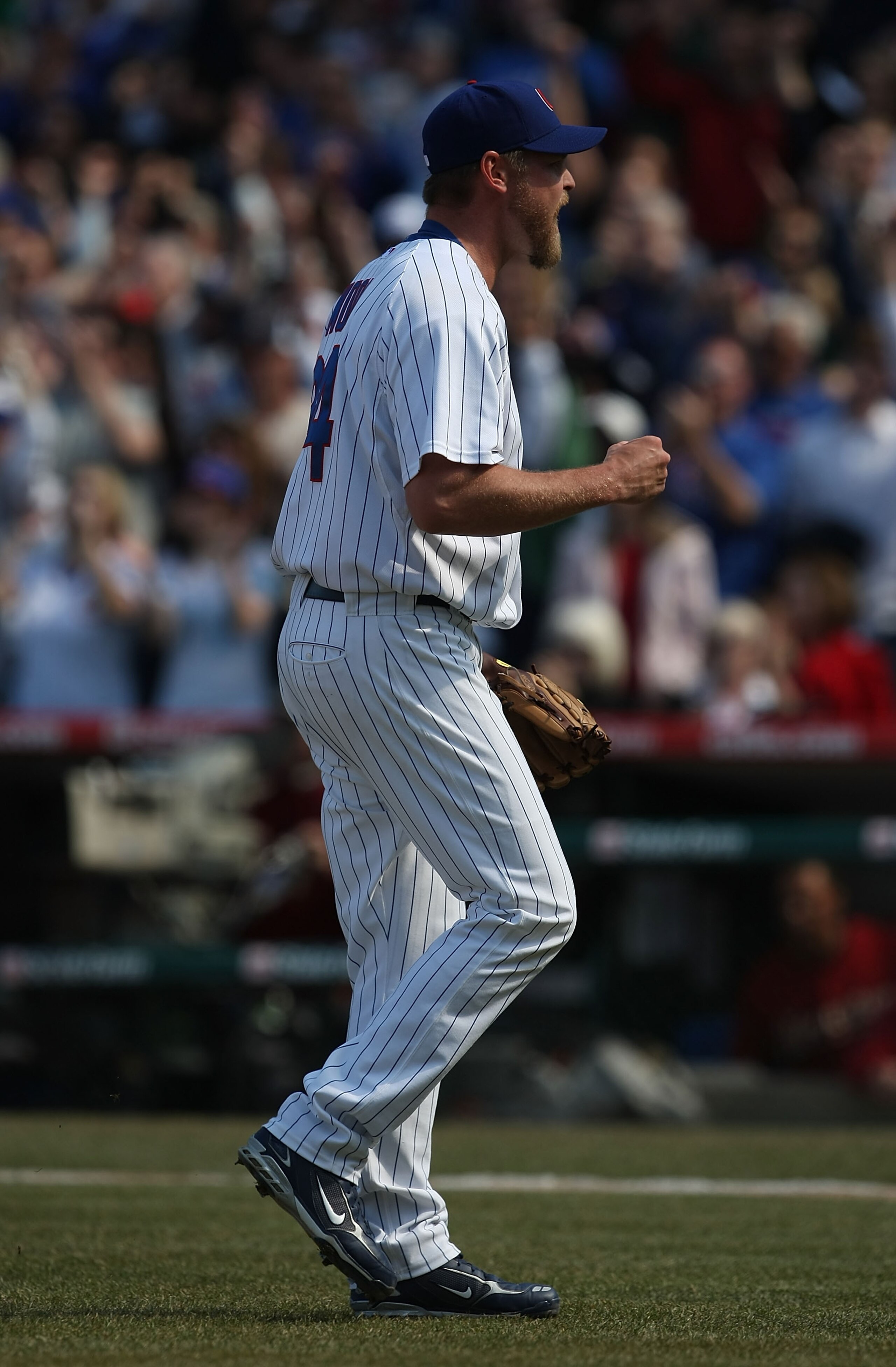
All indications are that the contract will be for two years, which means Wood's return is not merely a one-year commitment to a team without much hope of contending. Rather, he will be around for the 2012 campaign, which looks much more promising for Chicago.
Pitching prospects Chris Archer and Trey McNutt should be ready by the start of that season, and outfield stud Brett Jackson could well beat a path to right field at Wrigley before the end of 2011.
Third baseman Josh Vitters has battled injuries along his road to the big leagues, but he was the third overall pick of the 2007 draft and will get a chance to win the starting job at the hot corner in 2012.
If any of the three potential superstar first basemen who are then eligible for free agency (Prince Fielder, Adrian Gonzalez or Albert Pujols) actually makes it to market, and if the Cubs win the bidding war that is sure to ensue, that 2012 team could be a legitimate pennant contender.
Wood helps GM Jim Hendry by allowing the executive to focus on more important chinks in that prospective team's armor, rather than needing to add bullpen depth going into next winter.




.jpg?w=2560 "Malik Beasley Negotiating Plea Deal (AP)")
.jpg?w=2560 "Aikman Blasts Cowboys WR 🫣")

.jpg?w=2560 "Jonathan Taylor Landing Spots")