

Michigan-Ohio State Football: 10 Memorable Games In Rivalry's History
Tomorrow Michigan and Ohio State will embark on the 107th meeting of the most prestigious rivalry in college football. The hatred between the two states transcends sports. Its origins date all the way back to 1835, when a border dispute known informally as the Toledo War delayed the approval of a new Michigan Constitution and resulted in a skirmish between the states’ militias, although shots were never fired.
Since 1897, however, the distrust has been manifested on the football field.
In other rivalries perhaps it is true that records don't matter, but the dual eminence of Michigan and Ohio State has always been a determining factor in the greatness of the rivalry, as both teams have fought for near-ubiquitous conference and national glory.
This year No. 8 Ohio State hopes to secure a Big Ten championship and Rose Bowl berth, while unranked Michigan desires to play the spoiler and secure, perhaps, a legacy-defining win for Rich Rodriguez.
The list is somewhat biased toward modern era games. However, it is not intended to be a "best of" list, which is too subjective. It's a list of games that immediately emerge from the mind for their quality of being unique.
1995: Michigan 31, Ohio State 23
1 of 10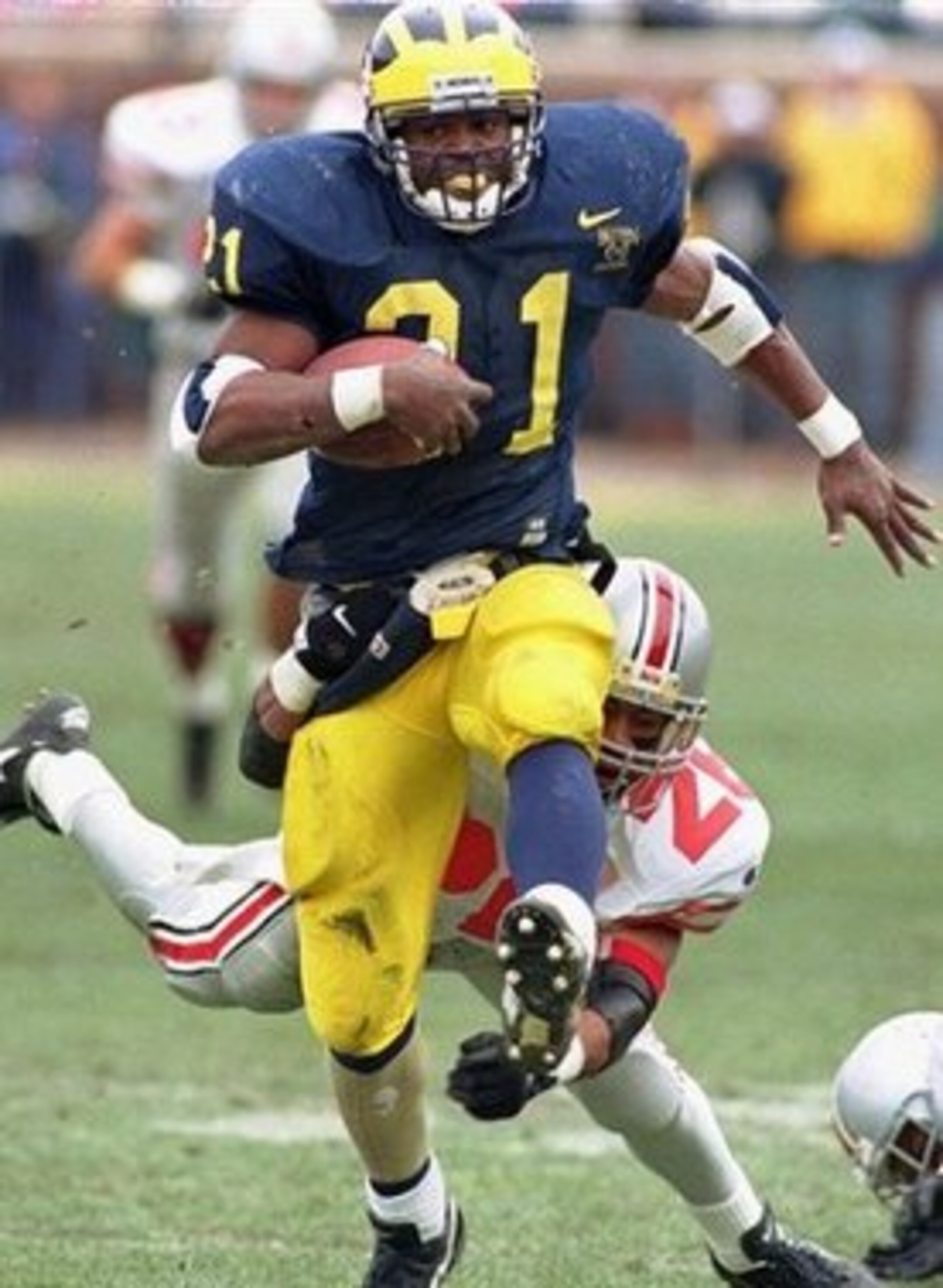
In Lloyd Carr's inaugural season, the upset of No. 18 Michigan over No. 2 Ohio State would come to define the tragic nature of the Cooper era. Buckeye running back Eddie George eventually won the Heisman trophy, but he was overshadowed by workhorse Tshimanga Biakabutuka, who rushed for 313 yards and a touchdown on 37 carries. Biakabutuka, apparently, adhered to some very sage advice: run the damned football, for as long and as far as you can.
1986: Michigan 26, Ohio State 24
2 of 10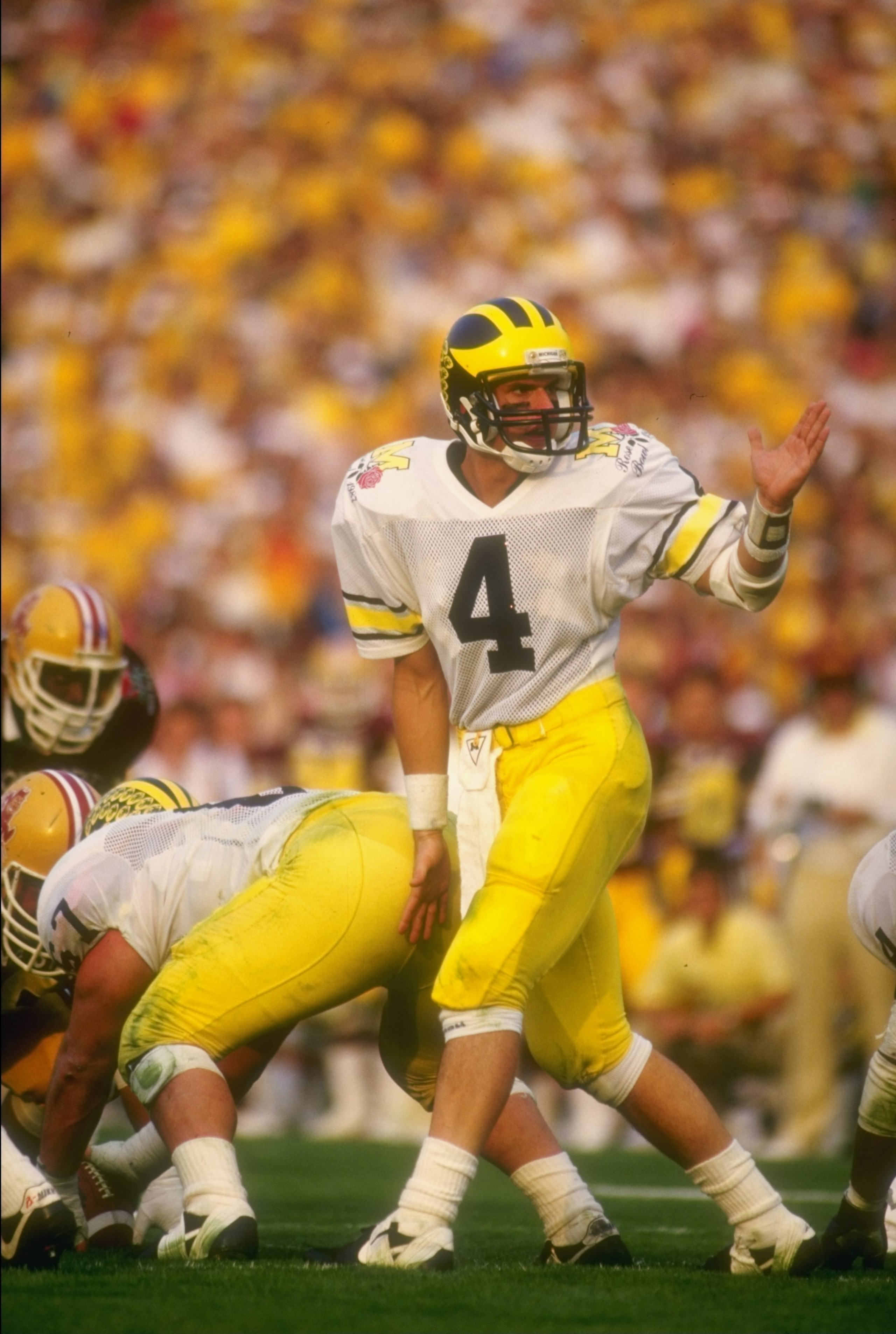
Jim Harbaugh, channeling the spirit of Joe Namath, guaranteed a Wolverine victory in Columbus, and proved that he was good for his word. Running back Jamie Morris had 210 yards and two touchdowns, powering Michigan back from a 14-3 halftime deficit. A missed field goal by Buckeye kicker Matt Frantz went wanting, and Michigan punched its tickets to Pasadena.
2002: Ohio State 14, Michigan 9
3 of 10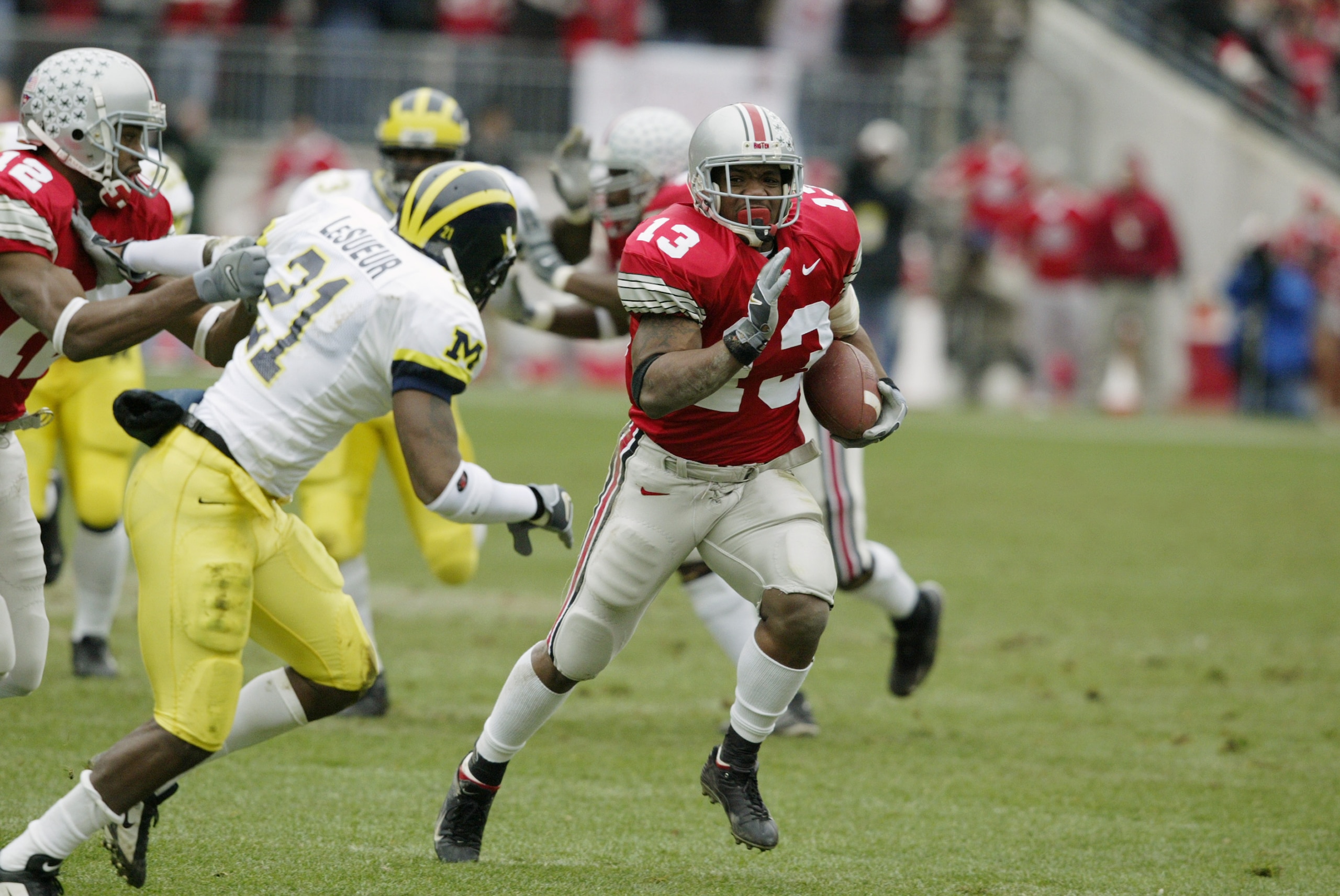
Freshman running back Maurice Clarett runs for a touchdown, and Will Allen intercepts Michigan quarterback John Navarre at the goal line on the last play of the game. Allen secure a berth for No. 2 Ohio State in the national championship, which would eventually become one of the more memorable games in recent championship memory. It also helped venerate Tressel ball as a viable term in casual football parlance.



1974: Ohio State 12, Michigan 10
4 of 10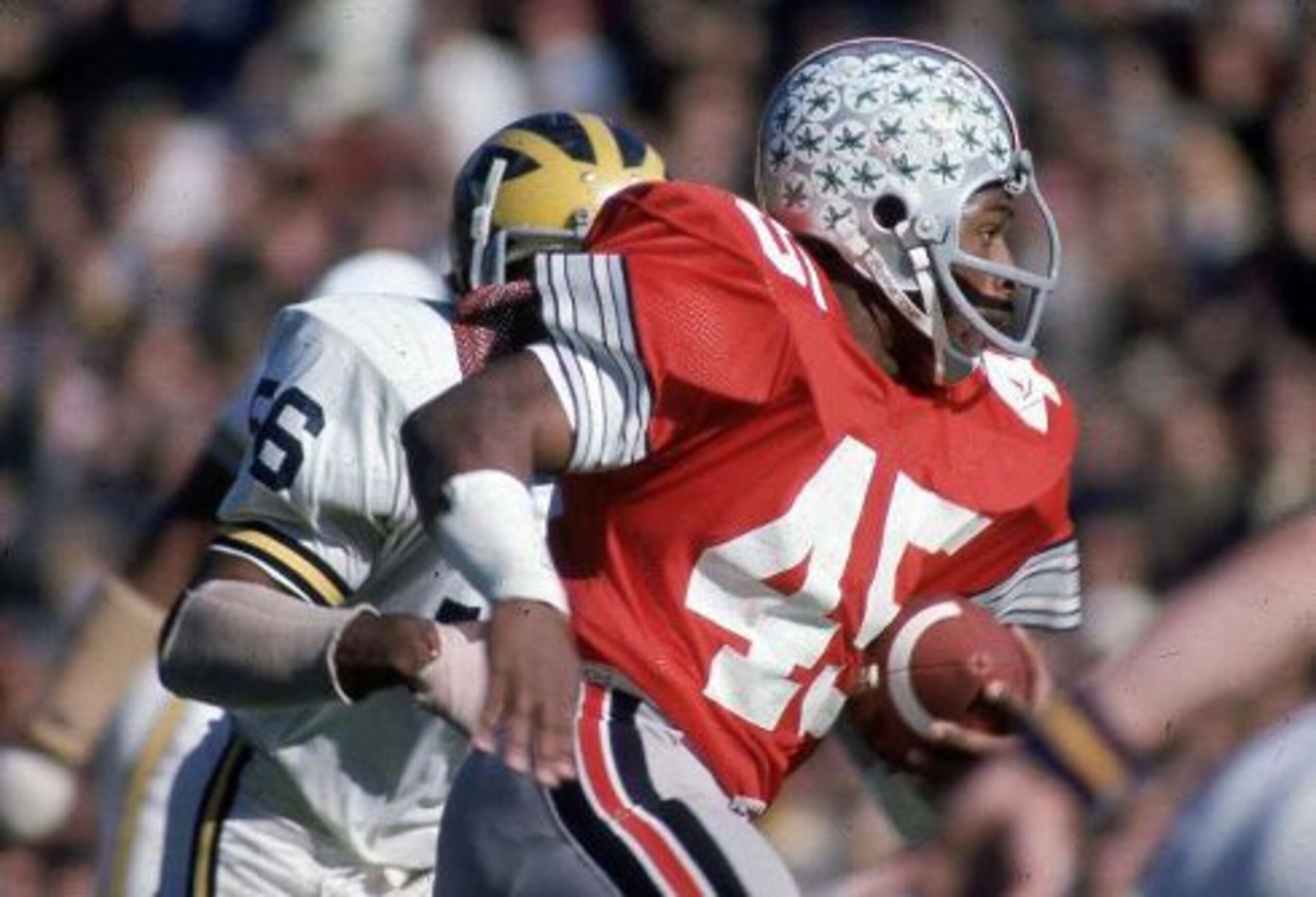
The 1974 match-up pitted No. 3 Michigan at 10-0 vs. No. 4 Ohio State at 9-1. Buckeye kicker Tom Klaban made four field goals in the win. But the real story was Archie Griffin, who had already graced the cover of the September 9th Sports Illustrated and ran all the way to his first of two Heisman trophies.
1954: Ohio State 21, Michigan 7
5 of 10
In a profound reversal of fortunes, Ohio State stonewalled Michigan six inches from the goal line and, after a turnover on downs, immediately forged a 99-yard scoring drive in the second half of the game. Undefeated and No. 1 ranked Ohio State ended up winning 21-7, and Woody Hayes eventually beat USC in the Rose Bowl for his first national championship, which helped cement his place in the apotheosis of Buckeye lore.
1973: Michigan 10 Ohio State 10
6 of 10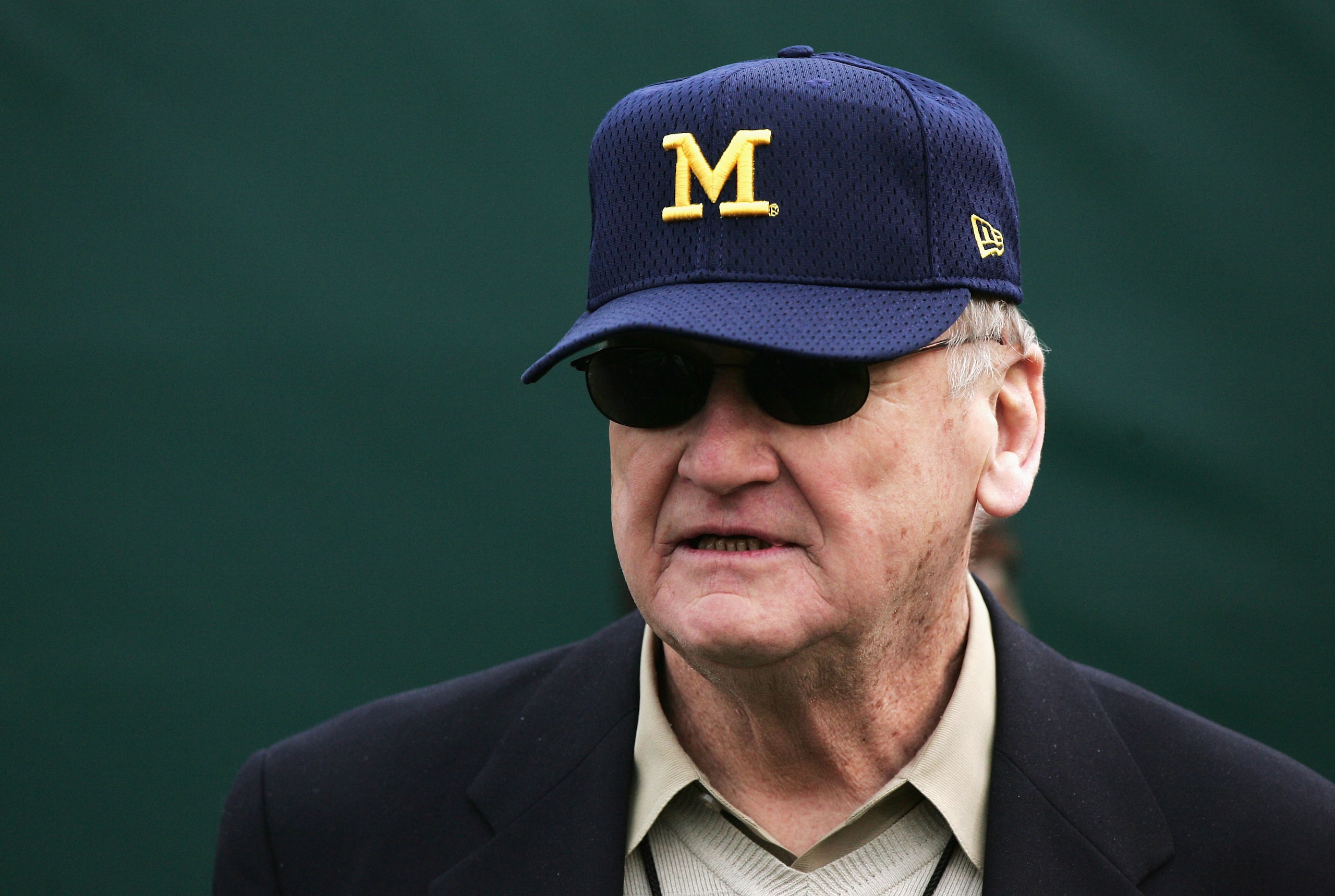
This tie—only the second in the rivalry since 1950—had a bewitching combination of drama and intrigue.
Both teams came into the game undefeated and highly ranked: Ohio State was first and Michigan was fourth. A conference championship, Rose Bowl appearance, and national championship all hung in the balance, and a newly minted record of 105,233 came to Michigan Stadium to watch the drama unfold. Unfortunately for Wolverine fans, Michigan outplayed the Buckeyes for four quarters but missed two field goals in the dying minutes of the game to settle for a tie.
The share of the Big Ten title might have been a prosaic affair, but the element that set it apart was the explosive aftermath in which Ohio State was selected to represent the Big Ten in the Rose Bowl through a secret ballot process. Invectives were quickly hurled from the Michigan side.
In rumors that were never substantiated, it was claimed by some that the injury to Michigan quarterback Dennis Franklin, who had broken his collar bone during the course of the game, had been one of the deciding factors in the vote due to the fact that the Big Ten wanted to send its best team. Schembechler claimed that this was merely a front to deny Michigan passage to the Rose Bowl. It was also rumored that Michigan State had cast a vote for Buckeyes in retaliation for Michigan's vote to bar the Spartans from admittance to the Big Ten in 1949.
Whatever the reason, Ohio State went on to defeat USC in the Rose Bowl, and Michigan was left out in the cold. The acrimony sustained itself for decades, in what was surely one of the NCAA's more controversial moments.
1950: Michigan 9, Ohio State 3
7 of 10
A game so infamous that it earned its own nickname, the Snow Bowl recast itself from a game of football to a contest of sheer endurance. The blizzard, which was the worst that Columbus had experienced in 37 years, deposited five inches of aimless, drifting snow on the ground. The game was eventually played in 4 degree temperatures.
All of the weather stuff that should normally be periphery came to the forefront and turned the game into a bit of a sideshow. Unranked Michigan ended up beating No. 8 Ohio State by a score of 9-3, even though the Wolverines never picked up a first down and failed all nine of their pass attempts. Furthermore, both teams punted a combined 45 times, and thus the strategy was dictated by the intemperate conditions. A safety on a blocked kick and a touchdown from a blocked punt secured a Rose Bowl berth for the Wolverines. Bennie Oosterbaan and Wes Fesler both helmed either sidelines, in what would be Fesler's last hurrah. The next year, Woody Hayes would practically ride into Columbus on a tank and assert his will.
2006: Ohio State 42, Michigan 39
8 of 10
It's hard to think of a more important Michigan-Ohio State match-up experienced by the current generation, and the ratings bore this out—the game averaged 21.8 million viewers for over three hours, drawing the biggest audience of any regular season college football game since November 1993, when Notre Dame played Florida State. The already-high stakes between No. 1 Ohio State and No. 2 Michigan were enhanced by the emotional death of Bo Schembechler the day before the game.
Once the contest was over, Troy Smith had thrown for 316 yards and four touchdowns, which helped secure the Heisman trophy on 86.7 percent of first place votes, a record that still stands today.
Michigan fans, meanwhile, basically blanked out after Shawn Crable hit Smith late out of bounds. The score, which was the highest in series history, was a little surprising because in spite of the proliferation of offensive talent the defenses combined for seven starters that went in the first or second rounds of the NFL draft. The game was only diminished somewhat in reflection by the embarrassing defeat that both teams endured in their subsequent bowls.
1997: Michigan 20, Ohio State 14
9 of 10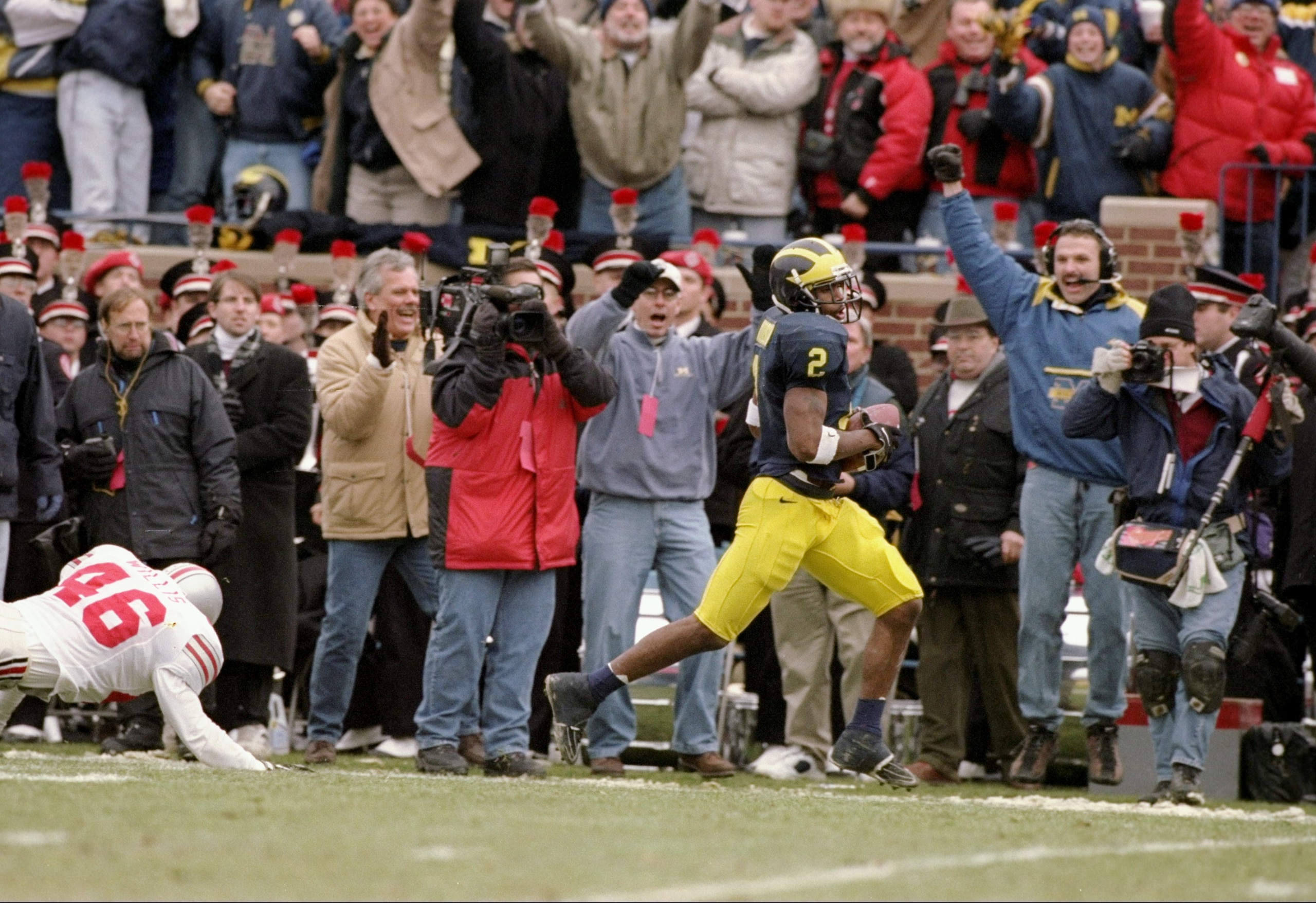
The game, which was famously emblazoned on the cover of Sports Illustrated, sent David Boston and his No. 4 Buckeyes reeling. Meanwhile, Charles Woodson wrestled the Heisman trophy away from the grasp of Peyton Manning due in large part to his performance against the Buckeyes. He intercepted a pass in the end zone and returned a punt 78 yards for a touchdown, which is probably the second most famous play in Michigan history. Led by the best defense in the country, No. 1 Michigan eventually beat Washington State in the Rose Bowl to win its first (shared) national championship in 50 years.
1969: Michigan 24, Ohio State 12
10 of 10
Bo called this the greatest game of his life. From its aftermath emerged the famous ten year war, which revived the eminence of the rivalry and sparked the most riveting stretch in its rich history.
Judging by the confidence that the players betrayed during the game, one would think that Bo had coaxed the upset out of thin air, but in reality the team had some immense talent, including All-American tight end Jim Mandich and offensive tackle Dan Dierdorf, who earned All-American honors in 1970. On the other side of the ball, famous Buckeyes such as Jack Tatum, Ted Provost, Jim Otis, and Jim Stillwagon had vaulted Ohio State to the No. 1 position in the country prior to their trip to Ann Arbor.
However, Michigan came into the match-up rolling, having won its previous four games by a combined score of 178-22, and the team continued rolling past the Buckeyes—at least until Bo's heart attack derailed the Wolverines on the eve of the Rose Bowl and left the team devastated. But even if Michigan had beaten the Trojans, it would have been remembered far less favorably than the upset in November that had sent Michigan to Pasadena in the first place.


.jpg?w=2560 "Mahomes Told Teammate to Leave Meeting")
.jpg?w=2560 "5 Teams Eyeing Jonathan Taylor")


.jpg?w=2560 "NFL investigating Eagles")

.jpg?w=2560 "Jonathan Taylor Landing Spots 📍")