

FIFA Club World Cup: A Complete History
It is mid October and with the soccer season in South America wrapping up and the European leagues are getting into mid season stride which means only one thing for the global soccer world, the 2010 FIFA Club World Cup.
This year is the seventh holding of the tournament from FIFA and it will take place in Abu Dhabi between the dates of December 8th to December 16th.
At the current moment the current teams have already qualified:
Al-Wahda (United Arab Emirates) winners of 2009-2010 UAE Premier League
Hekari United (Papua New Guinea) winners of 2009-2010 OFC Champions League
Pachuca (Mexico) winners of the 2009-2010 CONCACAF Champions League
Internazionale (Italy) winners of 2009-2010 UEFA Champions League
Internacional (Brazil) winners of the 2010 Copa Libertadores
There are two slots yet to be filled, the 2010 AFC Champions League (final on Nov. 13th) and the 2010 CAF Champions League (final on Nov. 14th).
If the brackets play out the way we all think they will we will see yet again another Europe versus South America final, in which case Inter will be 100% guaranteed a victory, which Inter however still remains to be seen. Don’t be too quick to assume the European side will win, Internacional is the first team with the opportunity to win a second FIFA Club World Cup.
The history of how FIFA came to take over the Intercontinental Cup is a bit sketchy for many and so my goal here is to explain how it came to be and the corresponding results of each years tournament.
History
1 of 7
From 1960 until 2004 the yearly world champion of club soccer came from the end of year match-up between the winners of both the South American Copa Libertadores and the European Champions League as it is now known.
Not an official tournament recognized by FIFA, the Intercontinental Cup became the sole important international soccer tournament not over seen by FIFA. It stayed that way until early in the 21st century when FIFA realized the potential benefit of merging it into the family of FIFA World Championships.
FIFA decided to hold the newly formed FIFA World Club Championship in Brazil just after the turn of the new millennium. After a surprise result there was much controversy as to the actual validity of the new championship, especially since in the year 2000 the world saw two separate clubs be crowned world champions, Corinthians of Brazil and Boca Juniors of Argentina.
FIFA scheduled the second tournament for the summer of 2001 to be held in Spain this go around. FIFA had brought on a partner with ISL, a Swiss firm, but due to its bankruptcy just prior to the event plans were scrapped and a new edition was penciled in for 2003. Despite the year postponement, the second edition was not held in 2003 but was again penciled in for 2005.
This time however, FIFA got it right, the 2005 edition became the first official tournament after the merger of the historic Intercontinental Cup and FIFA’s newly re-created World Club Cup, assuring the existence of what we now know as the yearly tournament which crows our world club champion.
2000
2 of 7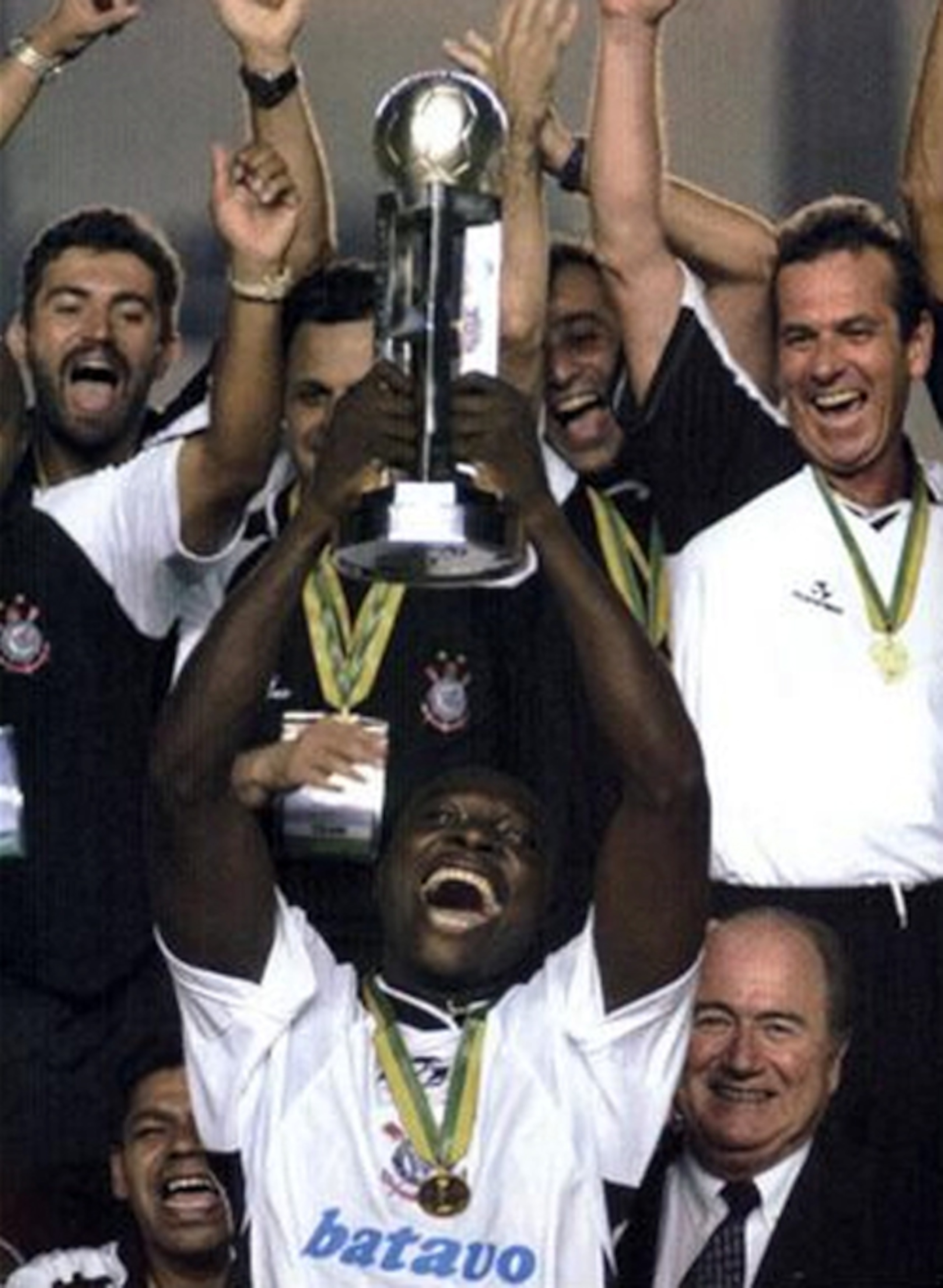
2000 Participants
Al-Nassr (Saudi Arabia) winners of the 1998 Asian Super Cup
Corinthians (Brazil) winners of 1998 Campeonato Brasileiro
Manchester United (England) winners of 1998-1999 UEFA Champions League
Necaxa (Mexico) winners of 1999 CONCACAF Champions Cup
Raja Casablanca (Morocco) winners of 1999 CAF Champions League
Real Madrid (Spain) winners of 1998 Intercontinental Cup
South Melbourne (Australia) winners of 1999 Oceanic Club Championship
Vasco da Gama (Brazil) winners of the 1998 Copa Libertadores
The first edition, although held in early January of 2000 and thus the 2000 FIFA Club World Championship, it must be noted that it really should be the 1999 championship as all of the teams gained entrance due to certain titles in 1998 and 1999.
FIFA decided to hold the inaugural tournament in Brazil, splitting games between the nations two largest cities, São Paulo and Rio de Janeiro. They decided the eight teams were to be split into two groups, each playing in their own city, and the winners of each group were to face off for the title in the famous Maracanã stadium in Rio de Janeiro.
The Rio based group consisted of Necaxa, South Melbourne, Manchester United and the host side Vasco de Gama. It didn't take long for everyone to be taken by surprise as in the first game of the group, Necaxa took an early lead in the first 15 minutes against Manchester, Dwight Yorke managed to tie the match in the last minute to assure at least one point for the English side. As expected Vasco was able to get past South Melbourne with no issues with a 2-0 victory setting up the biggest match up of the group with Vasco taking on Manchester.
Perhaps to the surprise of many not only did Vasco hold off Man U they took over the game and when the ref blew for the half the scoreboard read Vasco 3 Manchester 0. Necaxa easily went past South Melbourne 3-1 setting up a de facto semi versus Vasco for a slot in the world final. The Manchester United victory versus South Melbourne was too little too late as they finished in the third slot of the group.
In a packed (home) stadium the Rio fans saw the Mexicans take the lead just five minutes into the match from an Aguinaga goal but their dismay was quickly wiped clean when just ten minutes later Vasco tied up the match. With 20 minutes left Vasco and Brazil superstar Romario put one past the keeper ensuring that Vasco,who had played for the world title versus Real Madrid a year earlier and lost, would soon play for the World Title in their own home town.
The São Paulo group consisted of Al-Nassr, Raja Casablanca, Real Madrid and home side Corinthians. Unlike the Rio group the São Paulo group started off just as expected. In the opening match Real Madrid easily got past Al-Nassr 3-1 and Corinthians had no issues getting passed Raja Casablanca with a 2-0 score. Al-Nassr got past Raja in an exciting 4-3 game that saw give goals in the last 25 minutes of the game.
The Real Madrid versus Corinthians match was easily the most expected game of the group stage. Madrid needs no introduction being perhaps the most famous club in the world but it should be noted that Corinthians is the largest club in the largest city of Brazil, all of which only adds to the fact they were defending back to back Brazilian domestic league champions.
The Real players did not take the match up seriously, even having quotes displayed across the newspapers claiming they had never heard of Corinthians' players and therefore would have no issue winning the match. This was mainly focused on Madrid's defender Karembeu referring to Corinthians forward Edilson. Edilson decided to do his talking on the field, evident by seeing his goal here (http://www.youtube.com/watch?v=Zk8qdL2e8nY).
In a very intense game the two giants traded blows with Real first going up 1-0 with Corinthians reacting taking a 2-1 lead only to see Madrid tie the match up with less than 20 minutes to go. Anelka had two goals in this game and could have had a hat trick and victory by converting a penalty but much to his she-grin there was a penalty stopping machine in goal named Dida that night (http://www.youtube.com/watch?v=GvTzoqzUphQ).
Madrid finished off Raja in style 3-2 and sat back to see how Corinthians would fair in their final match versus Al-Nassr. A loss, tie or victory by one goal for Corinthians would place Madrid in another world final versus Vasco, however with less than ten minutes to go, Corinthians' Colombian captain Rincon put one in the net and secured Corinthians' place in the final versus fellow Brazilian club Vasco da Gama.
The so called “world” championship saw a local final for the first and most likely final time. São Paulo giants Corinthians traveled a familiar road to Rio de Janeiro to take on fellow alvinegro Vasco who had a de facto home game. The lineups were filled with young players who would go on to defend Brazil's seleção but the talent gave way to nerves and the match ended in a 0-0 tie.
Penalties would decide the first ever FIFA World Club champion, something Corinthians fans dreaded after consecutive eliminations from the continents Libertadores cup at the hands of their biggest rivals in penalty shoot out form. This time it would be different however and with the monster penalty stopper Dida and Edmundo's last attempt sailing over the bar Corinthians rejoiced and were crowned the first ever FIFA World Club Champions.
This edition was not without its controversy either. Due to the failure of FIFA's partner ISL this tournament was almost forgotten by FIFA up until the 2005 edition and the later assurance that it would not be swept under the table despite the five year gap between this yearly tournament.
Manchester United had to forfeit their slot in the FA Cup to participate in this tournament and this was the very same Manchester United coming off their greatest Treble season of 1998-1999.
Their were a lot of firsts and perhaps lone instances such as the first and probably only time the title would be decided by two teams from one nation, FIFA now selects a team in an effort to not have two teams from the same nation. It was also the first and last ever time for two facts, the year 2000 is the only year that had and will ever had two separate world champions in club soccer and it is very likely the only and last time a team who has not won its own continental competition could go on to win a world title.
Awards
Leading Scorer : 3 Anelka (Real Madrid) Romario (Vasco da Gama)
Golden Ball : Edilson (Corinthians)
Silver Ball : Edmundo (Vasco da Gama)
Bronze Ball : Romario (Vasco da Gama)
2005
3 of 7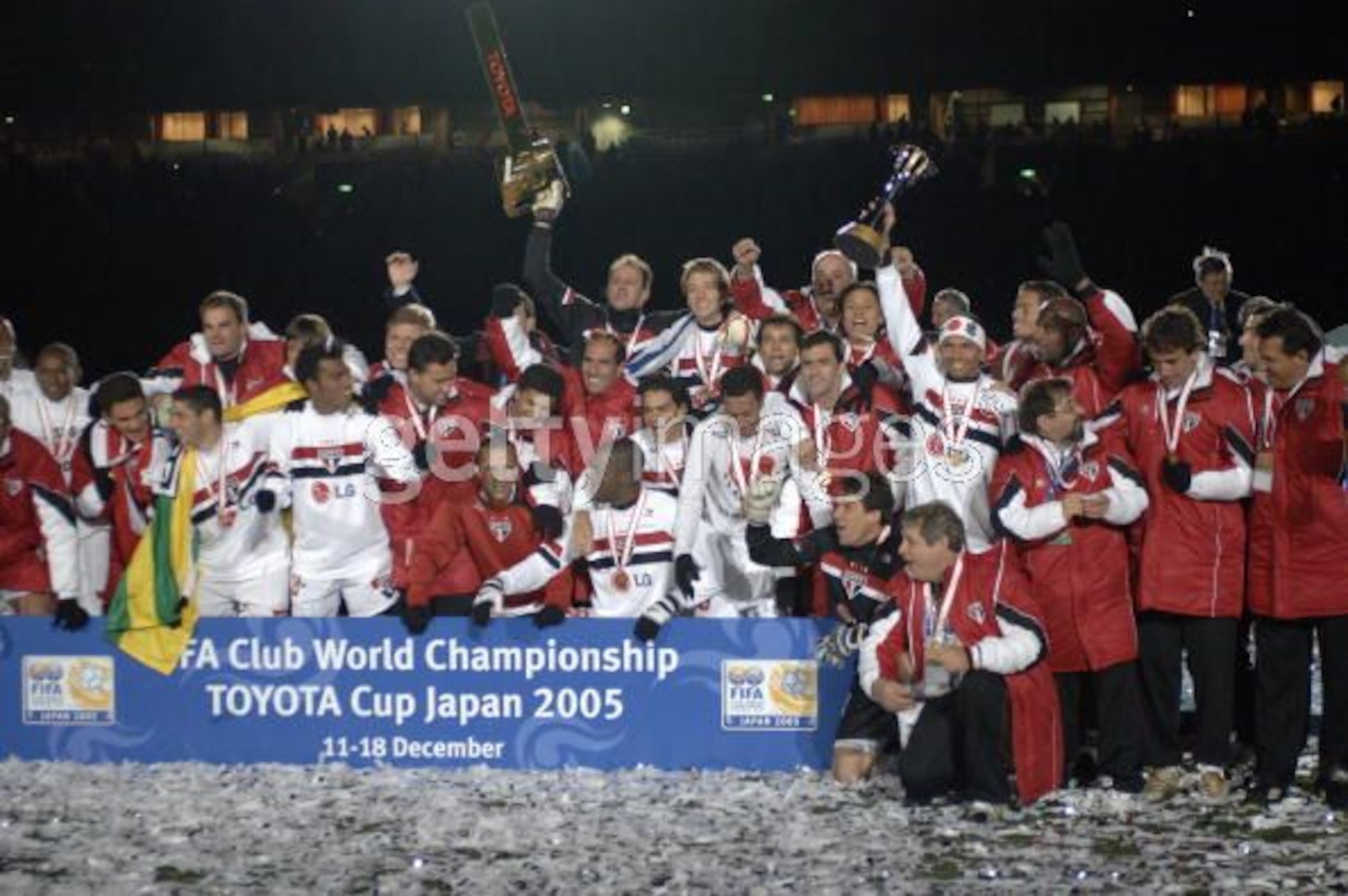
2005 Participants
Liverpool (England) winners of 2004-2005 UEFA Champions League
São Paulo (Brazil) winners of the 2005 Copa Libertadores
Saprissa (Costa Rica) winners of the 2005 CONCACAF Champions Cup
Al-Ittihad (Saudi Arabia) winners of the 2005 AFC Champions League
Al-Ahly (Egypt) winners of the 2005 CAF Champions League
Sydney FC (Australia) winners of the 2004-2005 OFC Club Championship
The often delayed and long awaited second edition of the FIFA World Club Championship finally took place in 2005 after not one but two previous attempts to stage the tournament turned out unsuccessful. It is also the first official tournament after the merger of the FIFA World Club Championship and the long running Intercontinental Cup which served as the standard for world champions since the 1960’s but was never before affiliated with FIFA.
In a new bracket format FIFA awarded both São Paulo and Liverpool a bye into the semifinals, allowing the teams from less traditional federations to play each other during the quarterfinals. The first match pitted Al-Ittihad of Saudi Arabia and Al-Ahly of Egypt. In a very lackluster performance the Saudi side was finally able to break the scoreless tie just shy of the 80th minute, leaving too little time for Al-Ahly to score an equalizer.
The second quarterfinal was not much different. Another boring performance resulted in Saprissa advancing with the same slim 1-0 victory.
The first semi pitted already twice world champion and then current Copa Libertadores champion São Paulo F.C. and Al-Ittihad. The score was 1-1 at half, with São Paulo scoring first, but just after the start of the second half São Paulo striker Amoroso netted his second goal of the match to put the Brazilians up one again. Ten minutes later São Paulo goalie, and world record holder for goals by keepers, Rogerio Ceni put the third past the Saudi side via penalty before his opponents found a way to cut the lead to one after making it 3-2 but it was too little too late and São Paulo left the field knowing they were to play for a third world title in just days to come.
The last semifinal saw Liverpool take on Saprissa and right from the start of the match it was clear who the better team was. Crouch put one into the net just three minutes into the game and Gerrard added a second 15 minutes shy of the half. Just 15 minutes into the second Crouch sealed the score putting Liverpool up 3-0 and well on their way to try for an unprecedented world title.
If you take a look at the stats the first thing that jumps out at you is how lopsided the numbers are in favor of Liverpool. 21 to 4 in shots, 8 to 2 in on target shots, 54% of possession versus 46% and perhaps the most glaring one 17 Liverpool corners to zero, that’s right zero, for São Paulo.
There is an old adage that says stats don’t lie, and I always felt that the statement was not actually correct, and here is proof that if stats don’t lie they sure as hell mislead. With a single goal scored for São Paulo by Mineiro just shy of the half hour mark, the Brazilian side equaled Boca Juniors as the only three time world champions from South America. Liverpool fans were left to wonder how this one got away again against São Paulo.
Awards
Leading Scorer : Four players with two goals
Golden Ball : Rogerio Ceni (São Paulo)
Silver Ball : Steven Gerrard (Liverpool)
Bronze Ball : Christian Bolaños (Saprissa)

2006
4 of 7
2006 Participants
Barcelona (Spain) winners of 2005-2006 UEFA Champions League
Internacional (Brazil) winners of the 2006 Copa Libertadores
America (Mexico) winners of the 2006 CONCACAF Champions Cup
Jeonbuk Hyundai Motors (South Korea) winners of the 2006 AFC Champions League
Al-Ahly (Egypt) winners of the 2006 CAF Champions League
Auckland City (Australia) winners of the 2006 OFC Champions League
The first successful time FIFA held their newest tournament, 2005 & 2006, saw much of the same of the first two editions; upsets were on the menu.
With just six sides, the initial round was already the quarterfinal stage, South American & European champions received byes into the semi finals, and one side we saw Auckland take on Al-Ahly in the first match with Al-Ahly moving on to face Internacional after a 2-0 victory. Club America of Mexico also advanced to the semi finals after finishing off Jeonbuk with a late 80th minute goal. To their dismay the reward for moving on was a meeting with Ronaldinho and Barcelona.
It didn't take long for the Spanish giants to take the lead over America in their semi final as they took a 1-0 lead just after the ten minute mark. The half ended 2-0 and with Ronaldinho and Deco adding second half goals the Catalan squad saw themselves move to the finals with a 4-0 win.
South American champions Internacional had an extremely strong side who had dispatched the previous years world champions São Paulo in the final of the Copa Libertadores to claim their first ever continental title. They tried to hide their prized possession from he praying eyes of European sides but it didn't take long for the world to meet Alexandre Pato as he scored 23 minutes into the match versus Al-Ahly. The Egyptians tied it up just after halftime but Internacional pulled through with a game winning notch by Luiz Adriano in the 72nd minute.
The previous year when we saw São Paulo beat Liverpool we said it was a big upset, and now this year we easily said this was a much bigger upset. International upstart Internacional held off the Spanish giants who had their eyes locked on their first ever world title and managed to sneak in a quick shot by Adriano with less than ten minutes to go.
The ref blew his whistle and Internacional joined its in-town rival Gremio as world champions, crushing the hopes of millions of Barcelona fans.
Awards
Leading Scorer : Mohamed Aboutrika 3 (Al-Ahly)
Golden Ball : Deco (Barcelona)
Silver Ball : Iarley (Internacional)
Bronze Ball : Ronaldinho (Barcelona)
2007
5 of 7
2007 Participants
Boca Juniors (Argentina) winners of the 2007 Copa Libertadores
AC Milan (Italy) winners of the 2006-2007 UEFA Champions League
Urawa Red Diamonds (Japan) winners of the 2007 AFC Champions League
Etoile du Sahel (Morocco) winners of the 2007 CAF Champions League
Pachuca (Mexico) winners of the 2007 CONCACAF Champions League
Waitakere Untied (Australia) winners of the 2007 OFC Champions League
Sepahan (Iran) runner up of the 2007 AFC Champions League
*Sepahan took the host nation spot due to Japan already have Urawa as its representative due to winning the 2007 AFC Champions League
The fourth edition of FIFA's World Club Cub kicked off with Sepahan of Iran dominated Australia's Waitakere United 3-1, having a 2-0 lead with less than five minutes into the match and Waitakere's lone goal came as a gift of an own goal. This great showing didn't last long as Sepahan was quickly dispatched by Urawa 3-1, with yet another own goal by the Iranian side.
The other side of the bracket had Morocco's Etoile taking on Mexico's Pachuca with the right to play South American champions Boca Juniors in the semi finals. A boring game was 0-0 with just five minutes left when Etoile scored and held on to send Pachuca home.
Both semi finals were lackluster ending in just 1-0 for both Boca and Milan, which set up the inevitable South America versus Europe final.
Before the ball rolled the world knew one thing; whoever wins this single game will have the most World Championships by a club in the world. Milan took the lead with an Inzanghi goal just past 20 minutes in but the lead would not last as Palacio evened it up for Boca just a minute later. We went to half time tied but Milan quickly established its dominance scoring twice in the first 15 minutes of the second half and taking a 4-1 lead with 20 minutes to go. Boca got an own goal with a few minutes left to make it a better looking 4-2 but it made no difference. Milan rejoiced as the only club with four world titles as they were crowned the best for the first time since 1990.
Awards
Leading Scorer : Washington 3 (Urawa Red Diamonds)
Golden Ball : Kaka (Milan)
Silver Ball : Seedorf (Milan)
Bronze Ball : Palacio (Boca Juniors)
2008
6 of 7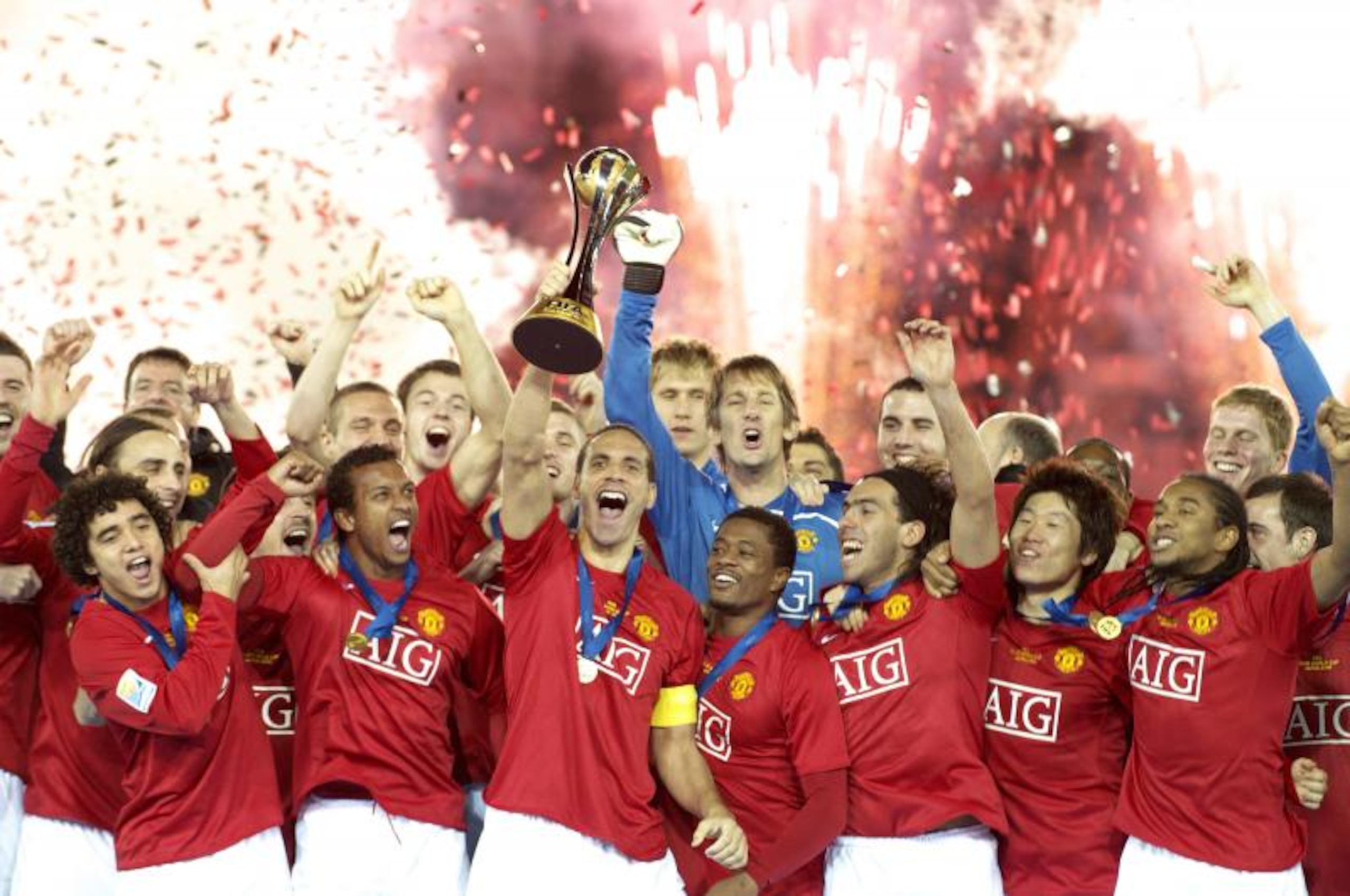
2008 Participants
LDU Quito (Ecuador) winners of the 2008 Copa Libertadores
Manchester United (England) winners of the 2007-2008 UEFA Champions League
Gamba Osaka (Japan) winners of the 2008 AFC Champions League
Al-Ahly (Egypt) winners of the 2008 CAF Champions League
Pachuca (Mexico) winners of the 2008 CONCACAF Champions League
Waitakere Untied (Australia) winners of the 2007-2008 OFC Champions League
Adelaide Untied (Australia) Runner up of 2008 AFC Champions League
It should first be noted that Adelaide was given the host nations spot for the tournament because Japan already had a representative due to Gamba Osaka winning the AFC Champions League and thus the spot was given to the highest placed team in the AFC CL which was not from Japan.
The play in match saw both Australian sides pitted against each other to so who would get to advance to play versus Osaka in the quarterfinals. Despite falling behind in the first half 1-0 Adelaide pulled through with a 2-1 victory that came with less than ten minutes left in the match.
Despite the first victory Adelaide would easily fall to Osaka 1-0 while the other quarterfinal matched up Pachuca and Al-Ahly. After the Egyptians went up 2-0 at halftime it appeared they would find their spot in the semis however Pachuca scored just a minute after the second half began and notched it up 15 minutes later. With two goals in extra time Pachuca took its place against LDU Quito after finishing up Al-Ahly 4-2.
LDU took its place on the field for their semi final versus Pachuca as the first Ecuadorian side to ever participate in any world championship and they did not disappoint. They jumped out to a quick lead after a fourth minute goal and were up 2-0 before half an hour had passed. The scored remained and LDU took its place in the final.
The other semifinal was very unexpectedly entertaining, as Manchester United took on Osaka. After first half goals by Ronaldo and Vidic, Man U headed to the locker room with a 2-0 halftime lead. Osaka found its first goal in the 74th minute to bring the match to 2-1. This is when the flood gates opened and in a four minute span Man U scored three times, twice with Rooney and once with Fletcher. Osaka even scored twice more to bring it to 5-3 but clearly to no avail.
In another South America versus Europe final Manchester came through and finished up as expected with a 1-0 victory thanks to a 73rd minute goal by Rooney. Man U was able to hoist its second ever world title trophy after this close game.
Awards
Leading Scorer : Wayne Rooney 3 (Manchester Untied)
Golden Ball: Wayne Rooney (Manchester United)
Silver Ball : Ronaldo (Manchester United)
Bronze Ball : Manso (LDU)
2009
7 of 7
2009 Participants
Barcelona (Spain) winners of 2008-2009 UEFA Champions League
Estudiantes De La Plata (Argentina) winners of the 2009 Copa Libertadores
Atlante (Mexico) winners of the 2008-2009 CONCACAF Champions League
Pohang Steelers (South Korea) winners of the 2009 AFC Champions League
TP Mazembe (Congo) winners of the 2009 CAF Champions League
Al-Ahli (UAE) winners of the 2008-2009 UAE Premier League
Auckland City (Australia) winners of the 2008-2009 OFC Champions League
The 2009 version was the first one held in Abu Dhabi after the previous three had been held in Japan. As it has been for the past several editions certain teams were slotted to come into the tournament at different times, giving both the European and South American champions a guaranteed slot in the semi finals.
Al-Ahli and Auckland City kicked off the tournament on the 9th of December with the Australian side taking the victory 2-0 and advancing to play Atlante.
In the quarterfinals we had Atlante defeating Auckaland City soundly 3-0 with Pohang Steelers squeezing past TP Mazembe 2-1 thanks to two second half goals by their Brazilian star Denilson.
Atlante would be matched up against UEFA Champions Barcelona in one semi final and despite taking an early lead in the fifth minute the Mexican side was overpowered and would eventually lose the match 3-1. Estudiantes on the other hand were powered past Pohang Steelers in the other semi final thanks to two goals in an eight minute span to ensure they would reach the finals after a 2-1 victory.
In yet another European versus South American final at the FIFA World Club Championship, the fifth time out of six it has happened, Barcelona was matched up against traditional Argentinian side Estudiantes,who happened to be led by Veron. Estudiantes jumped out to a 1-0 lead after a 37th minute header by Boselli and they held on until the very end but it wasn't to be as Barcelona got a tying header by Pedro in the 89th minute and with just ten minutes left in extra time Messi managed to sneak one in off a cross with his chest mind you.
The whistle was blown and Barcelona rejoiced after finally being able to say they are World Champions for the first time in their long history.
Awards
Leading Scorer : Denilson 4 (Pohang Steelers)
Golden Ball : Messi (Barcelona)
Silver Ball : Veron (Estudiantes)
Bronze Ball : Xavi (Barcelona)
.jpg?w=2560 "🚨 Texans Trade for MHJ")

.png?w=2560 "Money In The Bank Ends In Shocker 💼")
.jpg?w=2560 "Mendoza Makes NFL Debut 🤩")
_0.jpg?w=2560 "Live: Updates from every NFL game")
.jpg?w=2560 "Cardinals Finalizing MHJ Trade")