

Debating Sports For Dummies: 10 Really Bad Arguments You Can Avoid Making
There are two things every sports fan loves. First, they love to watch the game; second, they love to argue about it afterwards. The debate around sports is almost as much fun as the game itself. Of course some people like to ruin all the fun with really bad arguments.
By bad arguments I mean fallacious arguments. Arguments so steeped in bad logic that they aren't worth the breath (or finger muscle) that's used to express them. Just like sports, there are rules to logic, and just like sports, people should follow the rules. When someone doesn't that's called a fallacy. Here are ten fallacies and how they are commonly used in sports arguments.
Follow them and you won't just be a better arguer you'll be a better learner. You'll become a better learner, because improving your arguing improves your logic and compels you to listen to and consider other points of view. Inevitably, you'll find you learn something. Furthermore, if we're all learning to listen to, and consider what others are saying, it actually improves the community. Good logic is good for society.
10: "Stats Don't Mean Everything" —The Straw MaN Fallacy
1 of 10
It never fails, if you use a stat to support a claim, the inevitable response will come, "stats don't mean everything." Other responses such as "sometimes stats lie" may be there instead, but it's all the same. It's a fallacy known as the straw man.
A straw man is when you take someones argument and change it to an argument that is different and more difficult to defend. It may come from a combat practice where people would literally battle with a "straw man" instead of a live opponent in order to learn certain techniques. Clearly a straw man is easier to defeat than a live opponent.
If I say that player X is a better rusher than player Y because he has more yards per carry and someone responds "stats don't mean everything" that's a straw man. It's a straw man because my position isn't "stats mean everything," it's that player X is a better rusher because he actually gets more yards when he rushes. Now it's possible that there is a logical reason that I'm wrong. Perhaps the player in question only has one carry on the season and he gained six yards. The person I'm arguing against "only" has 2,000 yards and 5.5 yards.
You will rarely find a person who believes that stats literally mean everything. If you find that person you can have that argument. Otherwise it's a straw man. If you feel that there's a problem with their statistics then respond with a statistical argument, or saving that, one based in reason.
For instance a receiver may have inferior stats, but it may because he has an inferior quarterback or running game to help support him. Even then, pointing to a QB's lower rating, or back's inferior yards per carry makes for a better argument than a straw man.If there's a statistical argument that's wrong, there's normally a statistical argument to respond with. Respond to reason with reason, not fallacy.
9: "He Has Rings"—The Sweeping Generalization
2 of 10
A sweeping generalization is a generalization that excludes exceptions. You could say that smoking marijuana is illegal, someone smoked marijuana therefore they broke the law. However that person has glaucoma and a medical prescription for marijuana, therefore they are smoking it legally.
Generally speaking, it is true, great players win championships. However when it is used as proof of someone either being great or not great, it's a fallacy. Derek Fisher is not a "greater" player than John Stockton in spite of the fact that Fisher has six rings and Stockton has zero. Most people wouldn't have a problem with that.
However the same logic is used in arguing that Elway is "greater" than Marino or that Kobe is "greater" than James. I'm not arguing that either of those statement is untrue, I'm saying that championships are not a sufficient argument for either claim. If greatness can exist outside of championships, degree of greatness can't be established by more rings. There may be legitimate reasons that establish the one is greater than the other, and they may have in fact won rings because of those differences, but the rings are not in and of themselves, evidence of greatness.
8: "We Played ______ and You Played ______" — The False Comparison
3 of 10
Have you ever been engaged in a debate about rankings in the BCS polls when someone brings up the best win on their schedule and then compared it to the worse team on your schedule? It's called a fallacy of false comparison.
Someone, somewhere in the country is knocking Auburn for playing Tennessee Chattanooga while their team was beating some ranked team. The fact that Auburn has already played three ranked teams, another that is ranked now but weren't when they played them, and have two more ranked teams ahead on their schedule will matter little to such a person.
Sometimes this fallacy takes on a slightly different, better disguised agenda in arguing "out of conference" schedule. Technically with wins over Virginia Tech and Oregon State, Boise State has two wins over ranked, out of conference opponents. However no one would argue that makes Boise State's schedule more difficult. Changing the parameters doesn't make the comparison more valid.
However some will try and make the same argument if they are in a BCS conference. If you're going to compare schedules it has to be the full schedule otherwise it's a fallacious comparison. If the meat of a school's opponents are in conference, it doesn't mean that they aren't real games. Asking Auburn to play ranked opponents out of schedule makes an already more difficult schedule even more difficult.


7 "At This Rate"—The Small Sample Size
4 of 10
I remember when Jeff Francour was first coming up and he was red hot. An online person was saying that at his present rate he'd be better than Albert Pujols. The problem was that he'd been playing for two whole weeks. Obviously the prediction didn't pan out.
More recently I read an article on ESPN discussing how it was "stupid" to look at rebounds per game when we know there's such a thing as rebounding percentage available. It went on to explain how players like Samuel Dalembert and Marcin Gortat aren't getting the appreciation they deserve when we use lists like rebounds per game. It's the same fallacy. Such players have more limited minutes and are therefore the sample is less trustworthy.
Consider if you took a fair coin and flipped it three times. It came up two heads and one tails, so you conjectured that if you flipped it 100 times you would have 67 heads and 33 tails. Perhaps you flip it ten times and it comes up 6 heads and 4 tails, reinforcing your notion the coin has a propensity for heads. It's still a small sample size, and because of that, it's prone to be misleading.
Furthermore, as in the case with the rebounding, backups are likely playing against other backups. Therefore, there number are skewed because they aren't going against the same level of competition. Coupling that with the small sample set provides for misleading conclusions. If you're comparing stats, make sure that you have an honest sample size.
6: "You're Just Writing This Because..." — The Vested Interest Fallacy
5 of 10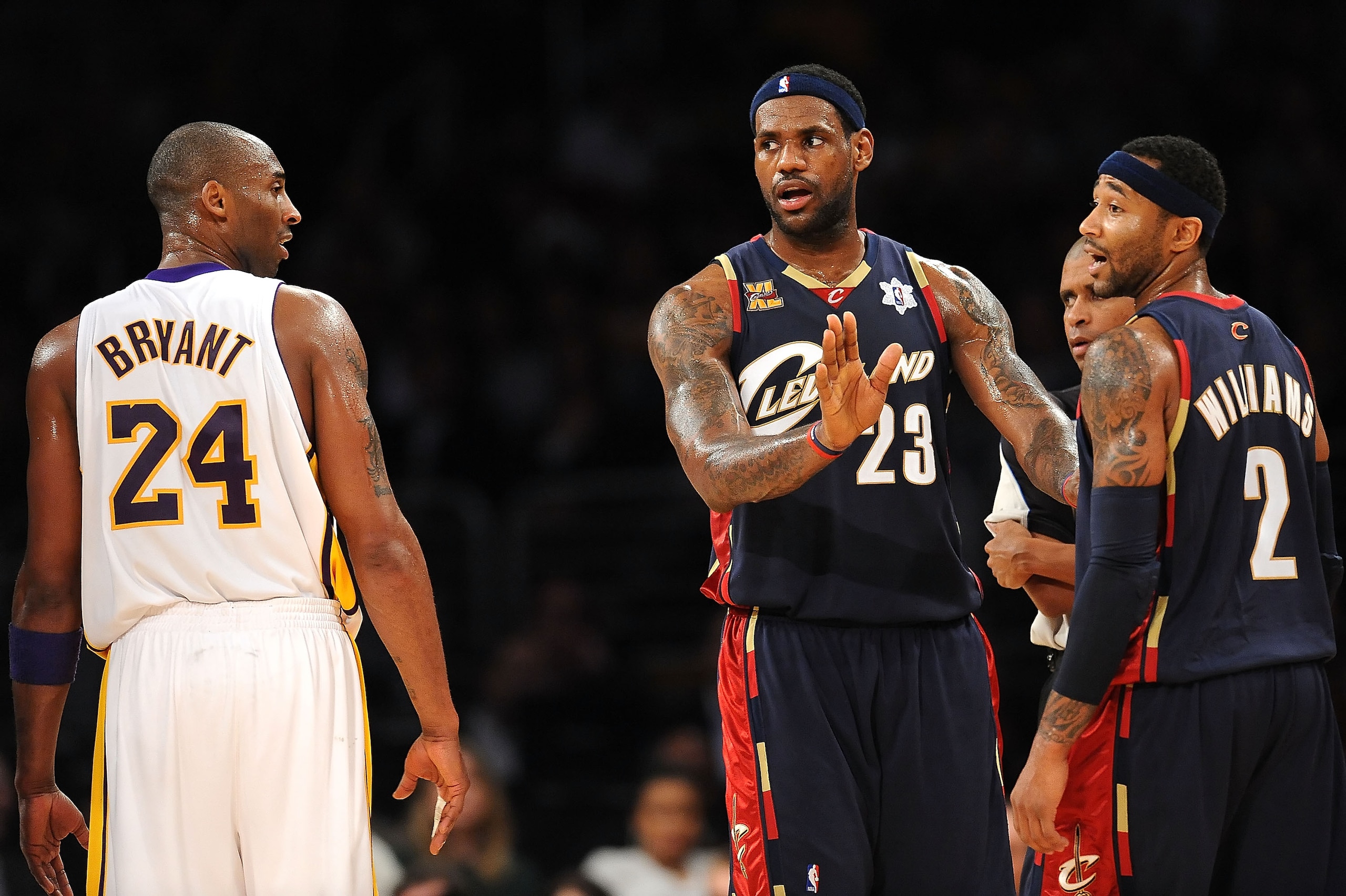
If you ever write an article on Kobe Bryant or LeBron James there's one thing that's a near certainty, you'll get attacked for it by someone. You're a Kobe/LeBron Hater/Fantatic and/or you're just writing this to get reads. Inevitably someone is going to attack your motives for the piece. It's a bad argument.
The thing is, any argument is (or should be) a logical one. The motives for the argument are moot. One can be a fan of either player and still write an intelligent, reasoned argument regardless of their feelings for them. They can even write a critical article and be objective and reasonable. If there are problems with their logic they should be addressed logically.
It's not to say that someone can't write a slanted article based on their feeling about a topic, but you should be able to respond to their reason (what there is of it) with reason .Additionally when you find yourself making such an argument you should stop and consider whether your own feeling regarding the subject is affecting your response.
5: "He Wants It More" — The Argument From Omniscience
6 of 10
Whenever someone wins there's always the claim "they want it more." Inevitably at some point in the season someone will say of some athlete, "He wants it more than anyone else." Sometimes it's, "He just works harder than anyone else." It's a bad argument.
The reason it's a bad argument is that really, we have no way of knowing who actually wants it more. "Want" is hardly a measurable commodity. Winning is a long way from evidence of actually "wanting it." Sometimes "choking" is actually an issue of "wanting it" too much. It even is said that they should "play loose" meaning they should "want it" less. Somehow in making all of these statements the declarer somehow knows precisely how much everyone "wants it." Apart from God, I know of no one who would actually have verifiable knowledge of such things.
The same is true of "working harder." Unless someone is the personal trainer of every player in the NBA, it's very hard to say that someone is the "hardest worker in the NBA." Certainly there are some players that is apparent work hard, so it's fine to say they work hard, but to say it relative to another, or everyone in the NBA, is a fallacy.
4: "Everybody Knows" — The Bandwagon Fallacy
7 of 10
Try having a discussion with someone who has a different perspective which is apparently shared by "everyone." I mean, after all who can compete with "everyone?" Setting aside the issue of whether "everyone" actually is in agreement with that person, there remains the possibility that "everyone" is wrong.
At the beginning of the season there were some who would argue that 'everyone" knew that the Heat were the favorites to win the NBA Championship. Now of course "everyone" knows that the Heat were a failure. it remains to be seen which "everyone" is right.
In the meantime, instead of "everyone" arguing with "everyone" how about good the Heat are being, everyone would benefit if everyone would stop speaking for everyone and just give their reasons. I'm sure everyone will agree with me.
3: "We Deserve To Go Because..." — The Confirmation Bias
8 of 10
It's getting to be that time of year when we're down to about four or five teams with valid reasons to be in the BCS Championship game. In each case there are valid reasons that each school should be considered. Confirmation bias occurs when you only favor that which affirms your argument and ignore anything which contradicts your argument.
For instance someone arguing in favor of TCU might point to their blowout of Utah as evidence of why they deserve to go, ignoring Boise State's win over Virgina Tech, Oregon's win over Stanford, or Auburn's win over LSU. All four teams have signature wins. In my opinion, the problem is that there are four teams that deserve to compete for the National Championship, but only two are allowed to compete for it, but that's another article.
If you want people to respect your argument address arguments from all sides and the arguments against your position as well as for it. If you do it right, you may find your position moderated somewhat. In fact if you'e never changed your position on something, you're probably guilty of this fallacy.
2: "Hater Or Fan" — The Excluded Middle
9 of 10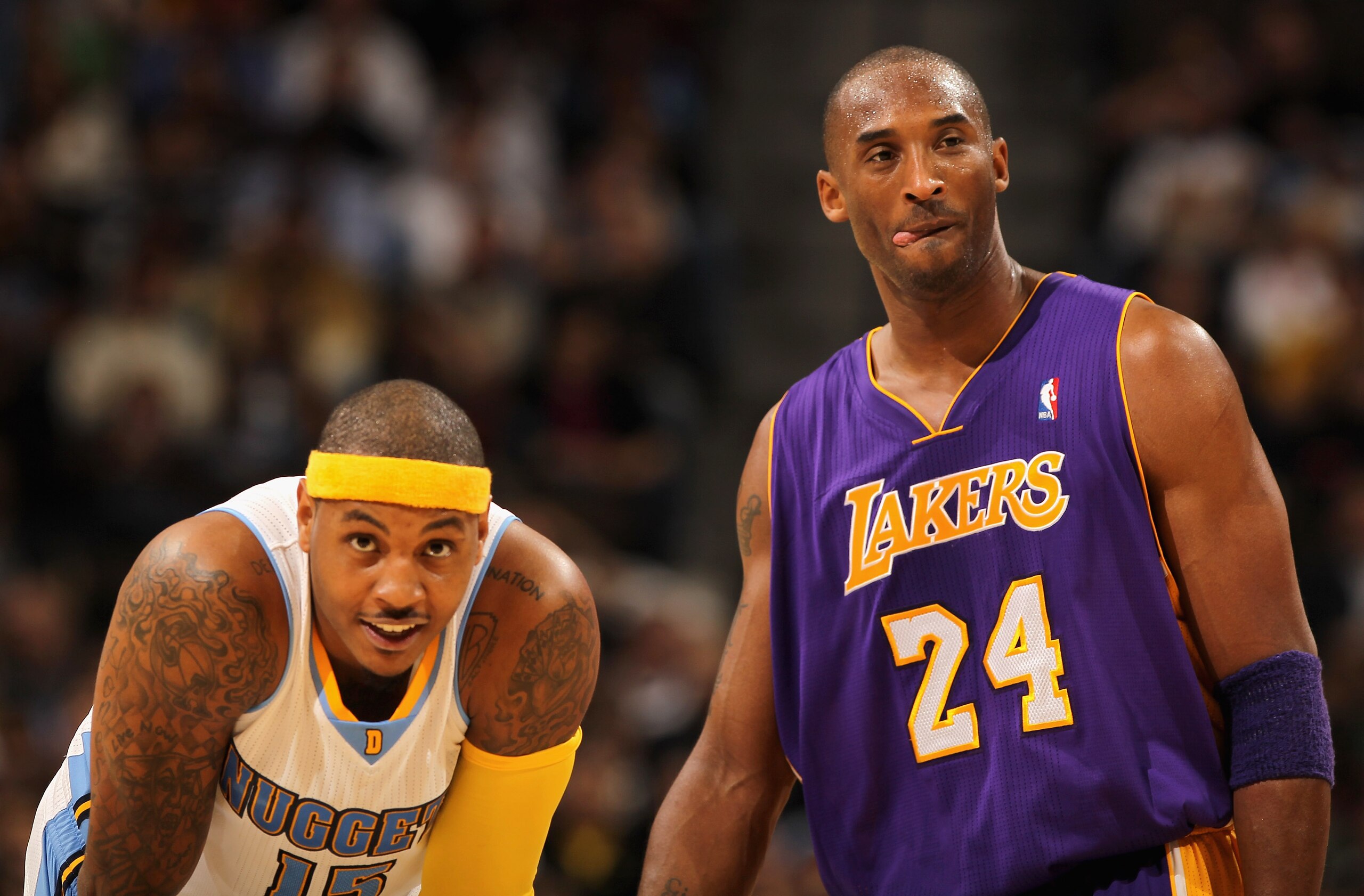
Perhaps it's the computer age but today it seems that there is more an more a tendency to reduce arguments to only two positions, and everything is either one or the other. Let's leave the binary logic to the computers shall we?
It is possible that are people who are neither, "in love with" nor a "hater" of Kobe Bryant. Yes! I know it's a shock, but it is possible. Offering people a choice of only two extremes is bad logic. There is the "middle" which should not be "excluded" which is why this fallacy is the fallacy of the excluded middle.
In all likelihood there are probably no two people in the world who are in 100% agreement on Kobe or any other player in the NBA. Even fans can disagree on what the best, or weakest part of a players' game is. Ergo, there is a virtually limitless degree of nuance. Be careful not to reduce the options to your view, and any other view.
1: What Do You Think He Wants, MVP Or Ring?" — The Loaded Question
10 of 10
If you're having the discussion about who the best quarterback in the NFL is, inevitably the question will be raised, Manning or Brady. And once that comes up it leads to the MVPs vs. the Super Bowl rings. Then, someone will query, "Which do you think he would want, the MVPs or the rings?" It's a loaded question.
Of course Manning would rather have the rings than the MVPs. If he didn't he wouldn't be worthy of the MVP. The thing is, that question doesn't decide who the better player is. A loaded question is one where the answer is obvious but leads to a conclusion that is inaccurate from the question.
For example, if I ask you whether you've stopped beating up old people yet, there's no way to answer the question. If you answer, yes, you admit that you did beat old people. If you answer no it means that you are still beating old people. If you're going to ask a rhetorical question in making a point, ensure that the rhetoric actually proves your point, otherwise you're committing a fallacy.
Some of you may have been expecting the ad hominem attack to be here. Ad hominem is when you attack a person rather address the argument. The reason it's not on the list is that it doesn't even qualify to be a bad argument, it just makes you a bad person. If you're insulting someone for disagreeing with you, you need more help than this article can provide.



.jpg?w=2560 "Jonathan Taylor Landing Spots 📍")



