
San Diego Chargers Boltbits: Offseason Improvements with an A.J. Mindset
Trying to evaluate just what the San Diego Chargers need with the offseason is a difficult task. Do you evaluate them as a 13-3 juggernaut that tripped itself up in a less than ideal situation? A few limited tweaks would then be all that is necessary.
Or do you look to the team as a bit of an overachiever? A 10 win team that found a way to win a few extra times? This approach obviously warrants a much deeper consideration, and a few broader changes.
The answer lies somewhere in between. Both looks share the common thread of a change to the running game. That one is the team’s first priority with Tomlinson’s slim chance of a return growing even slimmer.
TOP NEWS

New NFL Power Rankings 📊
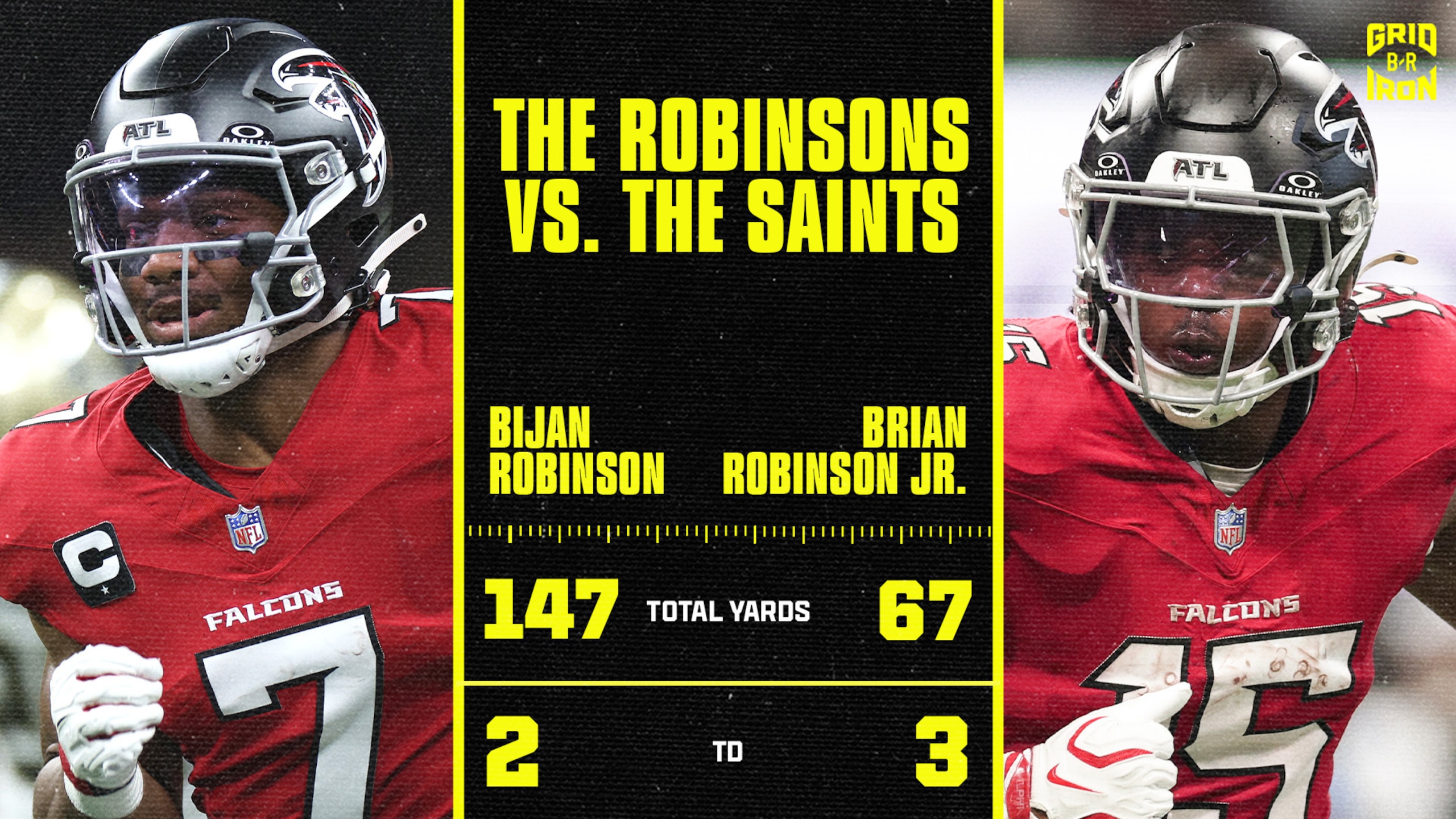
The Robinsons POUND the Rock 🪨
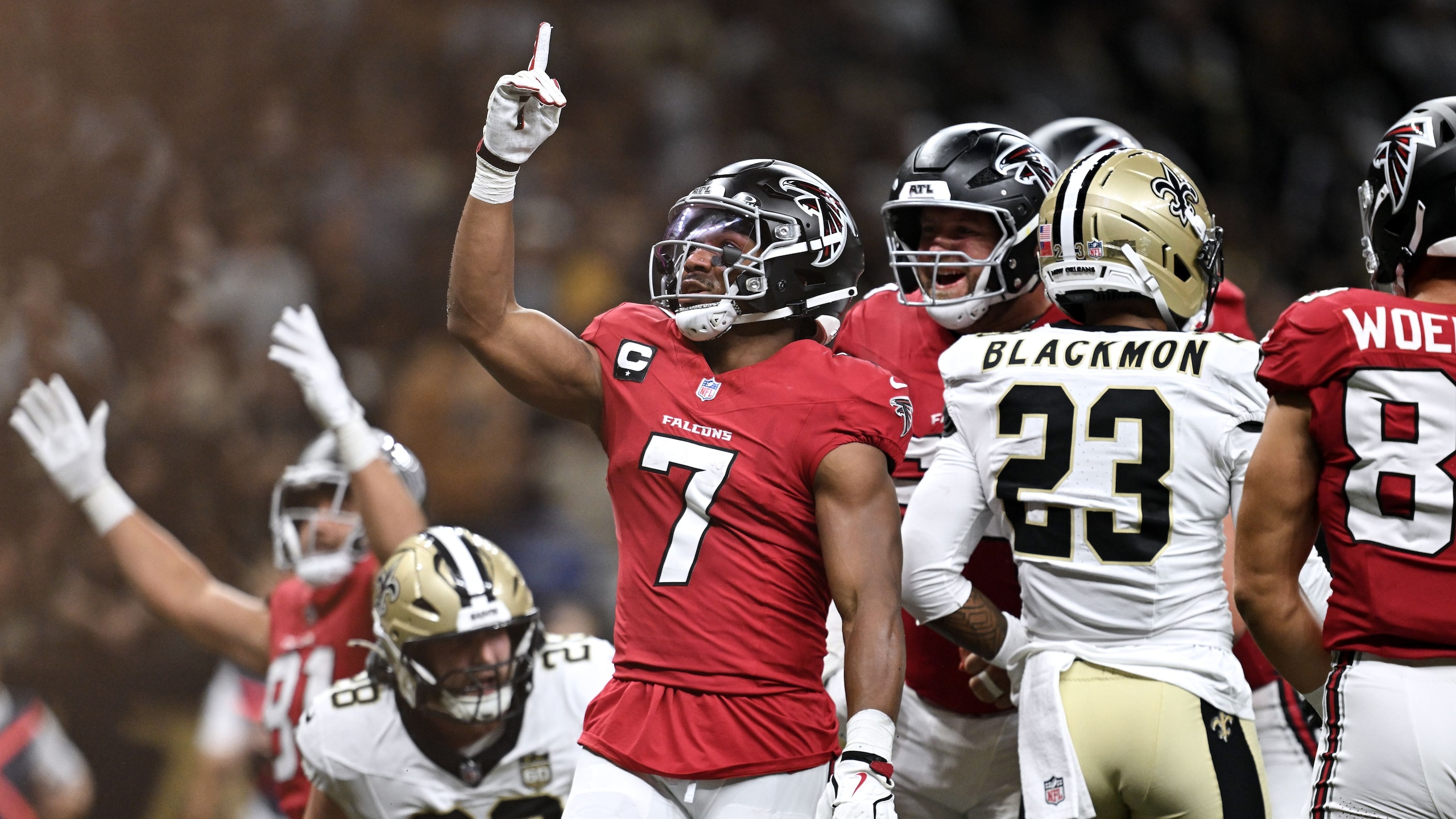
Takeaways from Falcons' dominant MNF win
Past that, it becomes a difficult order of priority. The team has many adequate but unspectacular players. As a unit they came together well while individually they appeared to be a rather modest matchup.
Not everything can be addressed in one offseason. Knowing the history of GM A.J. Smith, as well as the rise of restricted free agents, one has to approach change with the concept that only one or two names would be added via trade or free agency.
The philosophy may not be ideal, but it is unlikely to change as long as Smith is at the helm, therefore any thought given to the team's personnel must be looked at with an A.J. Smith filter, the results doesn't necessarily always reflect my approach, but rather what I think is a somewhat sensible set of ideas based on Smith's.
So where to start? The running game was addressed more deeply in two prior pieces, so if it seems skimmed a bit here, that is why.
The position’s best recourse would be in the second round. At least half of the "professional" mock drafts have the team taking Jonathan Dwyer in the first round. As a pass-first team, it would appear much more useful to preserve that pick for another position.
At least one of two from among names like Ryan Matthews, Toby Gerhart or Anthony Dixon should be available. They, like Dwyer, are power backs with good size that won’t necessarily fall with first contact. That is what San Diego needs most out of its running game and should be able to land without using its first rounder.
That addressed where else do the Charger’s need to look to shore up? Almost every position barring QB could stand to be upgraded in some manner, so let’s treat it as a bit of a triage and see just what and where the focus should go on a positional basis.
Backfield : Already addressed above, the only side note is that a bump in Tolbert’s reps and a drop in Hester’s would be a good adjunct to a new running back. He is especially useful as an augment to some of the bigger backs less accustomed to catching the ball, as Tolbert pretty good hands out of the backfield.
Verdict: Adress Rounds 2-3 high priority
Offensive Line: In front of that running game is the line. They are mostly solid with one glaring need, right tackle. When Hardwick is healthy the team has both good depth and solid starters. Along the right side, however, Clary is overmatched.
Taking the triage approach this would be a high-focus area. If a quality first round talent is still available with 27 names taken off the board, the team should put serious thought into the position. If they fail to land a first-round tackle, taking one within the top three rounds is a must.
(The second piece on the running game goes deeper into the personnel notions.)
Verdict: Address Rounds 1-3 high priority
Wide Receiver : The final piece of the offense to look at. Despite legal difficulties, Vincent Jackson has proved a useful and dynamic force on the team. His resigning supersedes just about any other Chargers free agent (with Marcus McNeill treading similar ground).
After Jackson wide receiver rates low on the needs list. Having Antonio Gates and doing a good job throwing to the backfield (especially assuming Sproles is retained), the team doesn’t need five wideouts to net playing time.
That said, they have essentially no depth here. Osgood is regarded as special teams only and Buster Davis is likely gone. Byrd’s situation is too difficult to gauge, so he must be approached as if he will not be playing.
With all of that the team could stand to pursue a wideout—a mid-round choice like Eric Decker, Blair White, Shay Hodge. A cheaper free agent is not out of the question, and the team can afford to wait for one to filter through the cracks (thus being even more affordable).
All they really need out of either option is a more traditional guy that can complement Naanee’s more unique skillset at the No. 3 spot as well as give them some depth in case of injury. A speedy solid slot guy would be a great complement to Jackson/Floyd, but just isn’t high enough on the priority list to pursue that heavily.
Verdict: Round 4-6 mild-low priority.
Tight End : Antonio Gates is a perennial pro bowler who will never be a true head-cracker but has improved somewhat when called upon to block. Brandon Manumaleuna is a monster that can occasionally pick up a nice catch and is a better run blocker than most of the O-line.
The one thing the team might be able to use at tight end is a second head banger with Manumaleuna’s heft. Kris Wilson as the third TE is an H-back type who can catch a little, block a bit, and go unnoticed. He’s adequate but disposable. With a limited TE crop, bring in an undrafted rookie to compete with him nothing more.
Perhaps Penn State’s Mickey Shuler or Virginia Tech’s Grant Boone
Verdict: Round 7-RFA very low priority
Defense
A bit more difficult to study, the injuries hampering the defense make it a much more difficult unit to grade than the offense. You know what you get when Hardwick comes back healthy, but how much of 2009’s Shawne Merriman was nagging injury and how much reflected simply a decline? How will Jamal Williams’ 35-year-old body hold up? His triceps injury isn’t something that should be ongoing, but his knees holding up were a concern last offseason.
The way this article is approaching is as if:
A. Merriman is slightly improved from 2009’s slowed performance but decidedly not returning to his mid-upper teen sack status
B. Jamal Williams will mostly hold up for the year, missing 2-3 games, with a minor dropoff from his pro-bowl form but need an heir apparent for 2011.
That said...
Defensive Tackle : The focal point is obviously nosetackle. Williams will be back after missing 16½ of the team’s 17 games last year. They have Ryon Bingham and Vaughn Martin behind him. Bingham has the experience but is a 4-3 DT and doesn’t have the bulk to be more than a backup here. Martin has the size but is extremely raw. Most of the other names at DT will probably be gone as they were signed most to augment injuries to Bingham and Williams.
Does the team have faith in Martin’s development or not? That is the question. Year One seems reminiscent of a big-strong DE draft pick now playing in Dallas. Capable, but won’t be an asset. Nosetackle is too important to just be that.
Prying one of the few free agents is a near impossibility. They are too few and valuable, Wilfork, Hampton, and Franklin would all likely be franchised or given massive contracts by their current teams. The one possibility would be Ryan Pickett, as the Packers already have a top draft pick with a year of experience waiting behind him.
Further complicating the issue is a thin NT draft. In the unlikely scenario Dan Williams drops, San Diego should snatch him up. After him there’s the rapidly falling Terrence Cody and little else before later rounds.
One possibility could be attempting to move up slightly from the team’s third round pick to grab Cam Thomas or Terrell Troup. The main issue is their being taken ahead of value because of the draft’s thinner NT stock.
Given that the team has a prospect already and Jamal Williams isn’t gone yet, if they can’t find someone that looks like a genuine starter by then, advice would lean towards waiting for the next draft rather than stockpiling Martin-type projects.
Verdict—Rounds 1-3 moderate/high priority
Defensive End: The Castillo/Cesaire/Boone rotation was adequate for the team. None were standouts, and the capacity to eat lineman and take up space (the role of the three lineman in a 3-4) was hampered by a host of undersized subs at the nose. If the team can land a big nosetackle than Bingham is sized such that he can play end in the 3-4 as well, helping on depth.
Pursuing a free agent here would seem something of a waste given the available players on the market, most of whom would become OLB’s in a 3-4 anyway. In the draft an augment might not be bad if the right pick is around at the right time.
In the draft should they not find a nosetackle, than 1-2 likely goes Oline, RB. This opens up round three for DE, if Corey Wootton or Mike Neal is available. More likely would be going after a later mid-rounder to preserve 1-3 for higher priorities.
Arthur Jones, C.J. Wilson, Corey Peters, or Jeffery Fitzgerald would all be possibilities to be had around where the team might start looking.
Verdict—Rounds 4-6 mild priority
Outside Linebacker: The assumption seems to be that Shawne Merriman will be retained. The merit (or lack thereof) of the decision will not be debated as it will most likely happen and therefore planning should be treated as such.
That said, what was a strength of the team not that long ago was something of a disappointment. Shaun Phillips’ smaller step back in production can be explained by the situation around him; Merriman’s however could not.
A former 17 sack producer Merriman netted four sacks on the year. Some of that can be attributed to being slowed by injury, and some from the additional attention given when a nosetackle is not engaging multiple blockers.
Larry English showed some athleticism when playing, but looked very much the athletic second rounder he was projected as, not mid-first rounder Smith pegged him with. He may not be the big hitter Merriman can be capable of but is better at things like batting passes and catching players from behind with his better speed.
If Merriman is retained, the team will likely stand pat or get a late-round depth guy. A potential option has floated with the team not signing Merriman and bringing in Joey Porter, whose asking price might not be too expensive given disgruntled Dolphin’s situation (and San Diego being listed as one of three teams he expressed a desire to pay for).
The downside is age. Porter is seven years older than Merriman and would likely be a 2-4 year option rather than a career player. The upside would be better athletic versatility (not just a bullrusher)—he produced nine sacks in 2009 despite losing snaps because of coaching disfavor.
With the cost of both Merriman and Porter and Phillips being set on the other side and English holding a first rounder’s contract, it would make no fiscal sense to have both, however, and the team is likely in an either-or scenario that Smith’s history indicates Merriman being the choice.
For the sake of looking at the draft we will go with the retaining Merriman scenario. That means a later draft pick for some depth behind English, but investing higher picks at other needs.
In the draft a name like George Selvie or Jason Worilds could be solid options, players whose last season dropped their stock some, thus taking someone with potential second or third round talent and dropping then into the fourth or fifth round, or taking a small school standout like Arthur Moats or Adrian Tracy around the sixth round.
Verdict with Merriman—Rounds 4-6 mild priority
Without—Rounds 2-4 moderate-high priority
Inside Linebacker: This is the first of the positions where priority is the biggest factor in the equation. In an ideal world Stephen Cooper is let go and Tim Dobbins slipped a spot on the depth chart while a hard-nosed guy that can step into coverage gets added.
Instead the Dobbins/Cooper/Siler/Burnett rotation is likely retained in full as an adequate quartet that can do enough for the team to succeed given improvement from the rest of the front seven. Given the dearth of big ticket ILB’s this draft.
The ascent up the depth chart for Siler especially helps the case. Siler was a special teamer and backup when the year began, and earned his way into the rotation when injuries gave him a chance to shine. Burnett was brought in to be the "passing down" guy, but emerged as a better tackler than coverage guy.
Even if Cooper is let go or Dobbins leaves via free agency, the team may stay relatively still because they hold Burnett and Siler. Should they draft some insurance, it would likely come in the very late rounds such as Joe Pawelek, Boris Lee, or Reed Williams.
Verdict—Rounds 6-7 mild-low priority
Cornerback: Similar to inside linebacker, not much movement is expected here as other avenues are addressed. Traditionally a strong front seven with a weaker secondary outperforms a strong secondary with a weak front seven. That philosophy paired with needs at right tackle and running back mean adequate is acceptable.
At the cornerback position Quentin Jammer continues unheralded work as a non-turnover threat but good tackler and solid cover guy. Cromartie, with his suspect tackling and better hands, earns a pass because of the team’s situation. Behind them Antoine Cason showed some early season flashes, then plunged down the depth chart.
Because cornerback is probably the hardest defensive position to gauge instant results from, an early pick would be a poor gamble at this stage. Free agency is equally unattractive. Sure there’s a few Dre Bly’s out there but is that an upgrade or a 33-year-old Cromartie?
In the draft a mid-round pick would not surprise. The highest potential I could see would be a third round selection like Kareem Jackson or Patrick Robinson. More likely would be something around a fifth rounder just to push Cason (and maybe Cromartie) such as Amari Spievey, Rafael Priest, or Patrick Stoudamire
Verdict—Rounds 5-6 moderate-mild
Safety: Another position with strong similarities to ILB. The unit is deep, though not necessarily the strongest in the world. Kevin Ellison stepped in admirably for complete bust Clinton Hart, and the team looked much more stable on defense with the move. He doesn’t really have the physical tools to make vast strides, however, and the improvement was from weakest link to adequate, not great.
On the other side, Eric Weddle is similar. He has solid positioning that pairs well with decent speed. He is however a bit small and needs to improve the angles he takes since he will never be a light’s out hitter. He also is not going to be a threat to put up big INT totals.
Steve Gregory makes a good compliment at the chief backup. He earned the team’s nickel role and is versatile enough to be plugged into multiple DB slots. Paul Oliver rounds out the rotation as a solid fourth option who, despite his slightly bigger 210 pound frame, is better at covering ground than making tackles.
With no particular contract concerns at the position and good depth the team is likely to stay put for other focal efforts, giving younger players like Ellison and CJ Spillman a year or two to show possible development.
If a guy like T.J. Ward or Myron Rolle drops to the seventh because of non on-field concerns, they could get snagged. It would be just as likely to see no change
Verdict—Round 7 or UFA
So there you have it. Very few non-draft options were given primarily to make an attempt at viewing the process via the A.J. Smith mindset. The collective bargain uncertainty taking nearly all viable younger free agents to restricted status (and therefore driving up the prices on the few unrestricted options ), as well as the number of free agents the team will attempt to re-sign means that the Chargers should expect very little activity on that front.

.jpg?w=2560 "Rams Eagles Football")
.jpg?w=2560 "Grading WWE Raw 🔠")


.jpg?w=2560 "Injury-stricken Seahawks signing veteran RB")
