
Top 11 Early Breakout Players in 2021-22 Men's College Basketball Season
We love to spend the college basketball offseason focusing on the litany of transfers and star-studded freshmen, but more often than not, breakout incumbents key national championship runs.
Just last season, Baylor's Davion Mitchell and Gonzaga's Drew Timme went from role players to all-conference phenoms en route to a championship showdown. Virginia never would have won it all in 2019 were it not for De'Andre Hunter transforming from sixth man as a freshman to No. 4 overall draft pick as a sophomore. Both of Villanova's most recent titles were built on the backs of Kris Jenkins, Donte DiVincenzo and Eric Paschall blossoming into trustworthy assets.
And through the first month of this season, basically every team exceeding expectations is doing so thanks in large part to one or two returning players who have improved dramatically since last year.
"Returning" is a key word in that sentence. While there can be breakout transfers and breakout freshmen, we are focusing exclusively on players who did not change teams last offseason.
Even with that restriction, there was no shortage of excellent options. Here are the honorable mentions who didn't quite make the top 11, in spite of their significant improvement: Ochai Agbaji, Kansas; Colin Castleton, Florida; Michael Devoe, Georgia Tech; Keon Ellis, Alabama; Coleman Hawkins, Illinois; Zed Key, Ohio State; Pete Nance, Northwestern; Olivier Nkamhoua, Tennessee; David Roddy, Colorado State; Adama Sanogo, Connecticut.
Players are ranked primarily by how drastic their individual breakout has been, though playing on a team that has been better than expected helped in several cases.
11. Brandon Slater, Villanova
1 of 11
2020-21: 3.8 PPG, 2.2 RPG, 0.5 APG, 0.8 SPG, 41.7% 3PT
2021-22: 14.6 PPG, 3.7 RPG, 1.7 APG, 1.0 SPG, 48.1% 3PT
It has been pretty much a given for the past decade that Villanova head coach Jay Wright will have either a junior or senior break out in a huge way.
This year, that out-of-nowhere star has been Brandon Slater.
He was the No. 53 overall recruit in the 2018 class, but Slater barely saw the floor as a freshman and played sparingly in each of the past two seasons. And with the starting backcourt of Collin Gillespie, Justin Moore and Caleb Daniels plus small-ball 4 Jermaine Samuels all returning for another season, it seemed like Slater was headed for yet another year in a background role.
Over the summer, though, he stole a starting job from Daniels—one that maybe would have gone to Bryan Antoine (knee) if he could've stayed healthy for a change—and Slater has capitalized on that opportunity.
He has scored in double figures in each of Villanova's first seven games after scoring eight or more points just four times in his first three seasons. After shooting 13-of-50 from three-point land in his first three years, he's sitting at 13-of-27. We're not even a full month into the season and he would need to miss 23 consecutive triples to drop back down to his prior career percentage from distance.
Slater is also shooting 78.6 percent from inside the arc and 82.6 percent from the free-throw line, so pretty much everything he touches is golden.
10. Marcus Bingham Jr., Michigan State
2 of 11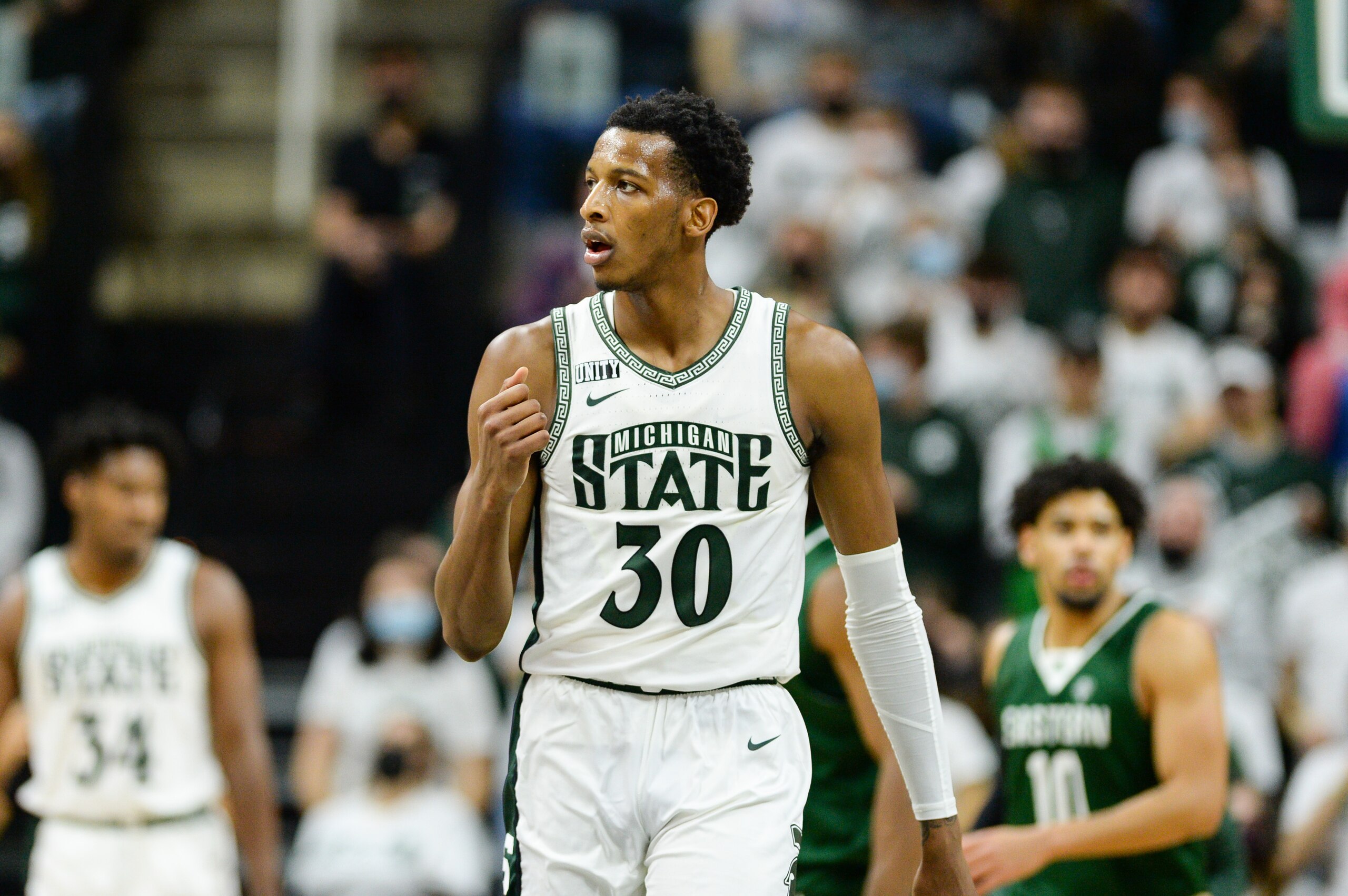
2020-21: 3.5 PPG, 3.2 RPG, 1.4 BPG, 0.6 SPG
2021-22: 10.6 PPG, 7.8 RPG, 3.1 BPG, 1.4 SPG
It took a few years, but Marcus Bingham Jr. finally figured out how to dominate in the paint.
As a 6'11", 215-pound freshman, Bingham took twice as many shots from three-point range (14) as he did from inside the arc (seven)—and he missed all seven of those two-point attempts. As a sophomore, he became more of a conventional post player but still wanted to be a stretch 5, averaging 3.3 three-point attempts per 40 minutes. He finally abandoned the deep ball last year and got more active on the defensive end in the form of steals.
But it wasn't until this season that the now-7'0", 230-pound senior finally started demanding the ball for easy buckets.
Granted, it doesn't hurt that Michigan State has two legitimate point guards this year in A.J. Hoggard and Tyson Walker. Maybe Bingham's breakout would've happened last year if the act of running offense hadn't been such a struggle for the Spartans. Either way, he's here now, and the Spartans have several quality wins thanks to his play in the post.
In the Battle 4 Atlantis opener against Loyola Chicago, he went for 11 points, nine rebounds and seven blocks, including a huge block on the Ramblers' final possession and the alley-oop dunk for the win. Bingham also put up nine points, 12 rebounds, three blocks and two steals in the Wednesday night win over Louisville in the ACC/B1G Challenge.
9. Justin Bean, Utah State
3 of 11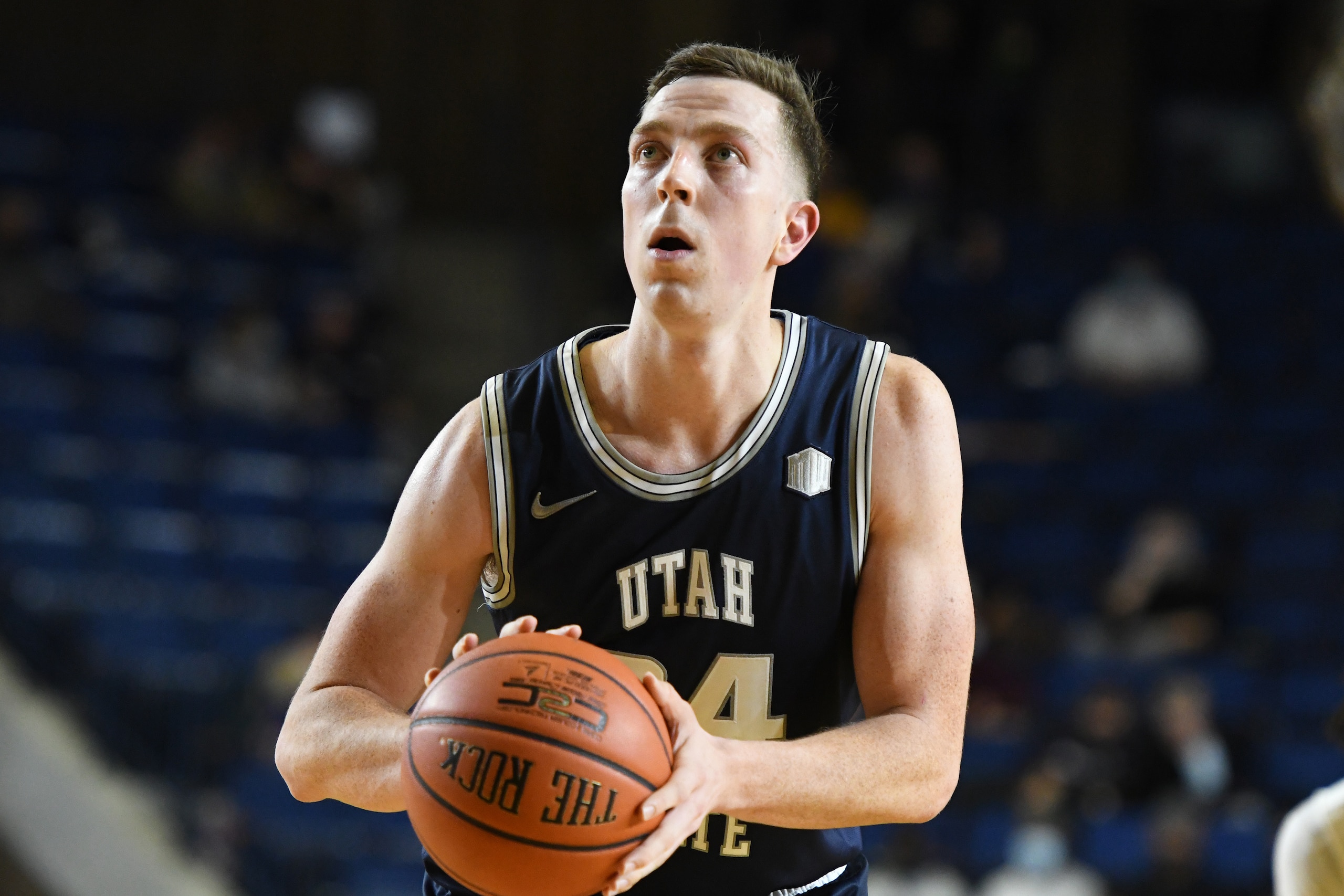
2020-21: 11.4 PPG, 7.7 RPG, 1.9 APG, 1.3 SPG, 23.8% 3PT
2021-22: 22.6 PPG, 12.9 RPG, 2.6 APG, 1.6 SPG, 58.8% 3PT
Justin Bean was already a darn good player, earning Mountain West All-Conference honors in each of the past two seasons. Neemias Queta justifiably soaked up most of Utah State's spotlight during those two years, but Bean scored in double figures in each of the final 10 games of the 2020-21 campaign. The Aggies never would have made it to the NCAA tournament without him.
How does that guy possibly qualify as a breakout candidate?
By nearly doubling his scoring and rebounding and suddenly becoming a reliable three-point shooter.
Starting on that latter point, Bean shot 19-of-77 (24.7 percent) from three-point range in 92 games during his first three seasons. It simply wasn't an element of his game that opponents needed to fear. But he is 10-of-17 from distance in the early going, drastically improving both his volume and his accuracy.
Paint play is still his bread and butter, though, and he is shooting 70 percent from inside the arc—in part because it's much easier to drive the lane when opponents are worried about your deep ball.
Bean has scored at least 14 points in each game and corralled at least 10 rebounds in six of seven contests. He went for a career-high 30 points to go with 14 boards in USU's second game of the season against Richmond, and he kicked it up a notch for 33 points, 16 rebounds, four steals and four assists a few days later against Penn.
That double-overtime victory over the Quakers kept the Aggies in the winner's bracket of the Myrtle Beach Invitational, which led to Bean putting up 24 points and 19 rebounds in a championship-game victory over Oklahoma.

8. Julian Strawther, Gonzaga
4 of 11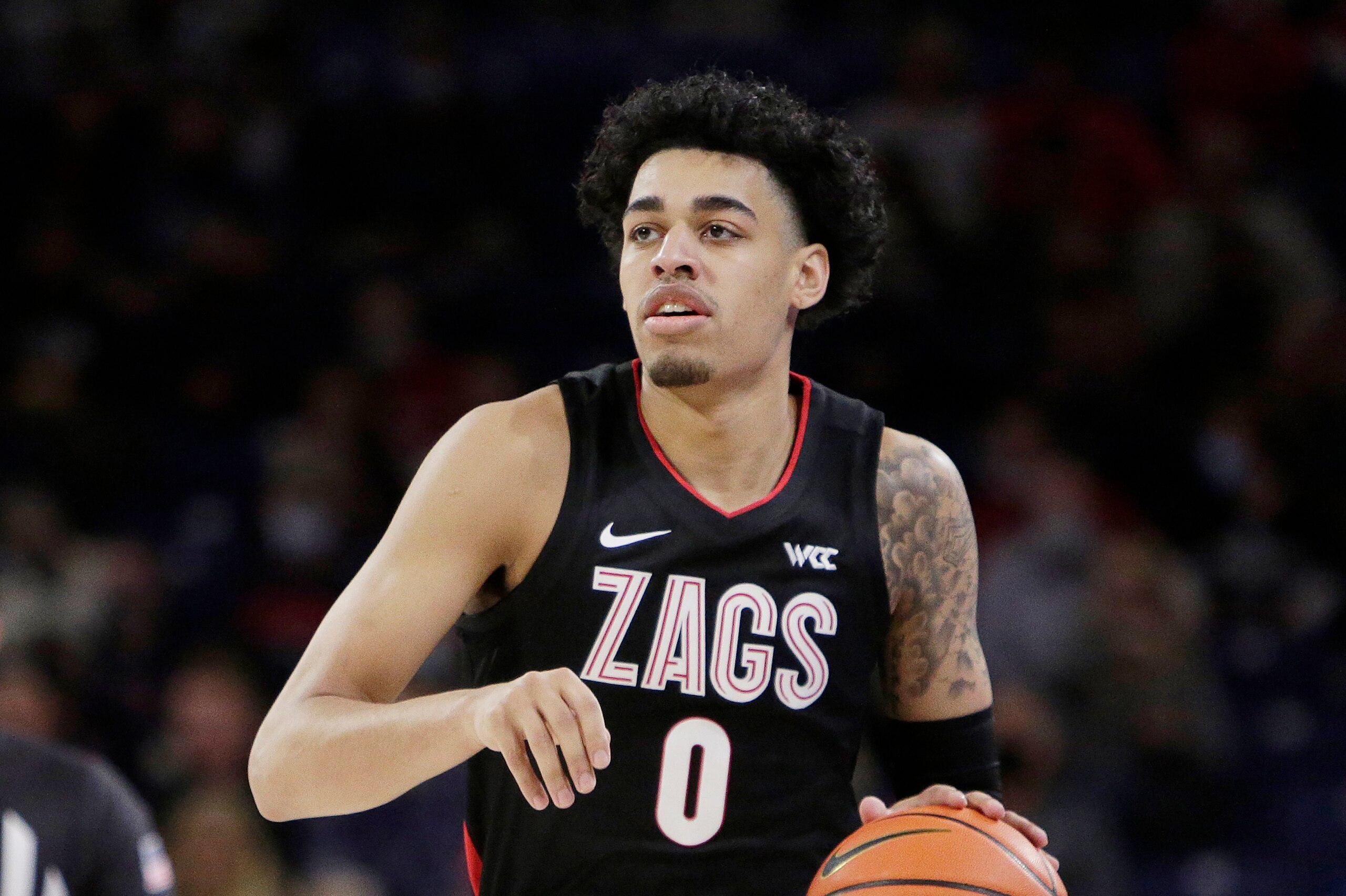
2020-21: 3.4 PPG, 1.2 RPG, 32.1% 3PT
2021-22: 14.0 PPG, 7.0 RPG, 42.5% 3PT
In the preseason, Julian Strawther was a complete afterthought, even as a possible starter for the No. 1 team in the country.
Drew Timme and Chet Holmgren were Gonzaga's All-American candidates, Andrew Nembhard was the veteran leader of the backcourt, Rasir Bolton was the intriguing incoming transfer and any player-specific banter beyond those four guys typically went in the direction of highly touted freshmen Hunter Sallis and Nolan Hickman.
But Strawther has quickly emerged as quite the fascinating NBA draft prospect.
His best marks as a freshman were 12 points and five rebounds (in separate games), and he wasted no time in shattering those personal bests with a 17-point, 10-rebound double-double in the season opener against Dixie State. He didn't do much in the subsequent key game against Texas, but Strawther was indispensable in last week's big battles with UCLA and Duke. He had a combined 32 points and 19 rebounds in those two games in his hometown of Las Vegas.
The 6'7" wing shoots about as well and as often as Corey Kispert did, and he rebounds as well as Joel Ayayi did.
Strawther's spot in the lineup was probably the only thing you could have pointed to as a concern for the Zags one month ago. But now? He just might be their most valuable player.
7. Wendell Moore Jr., Duke
5 of 11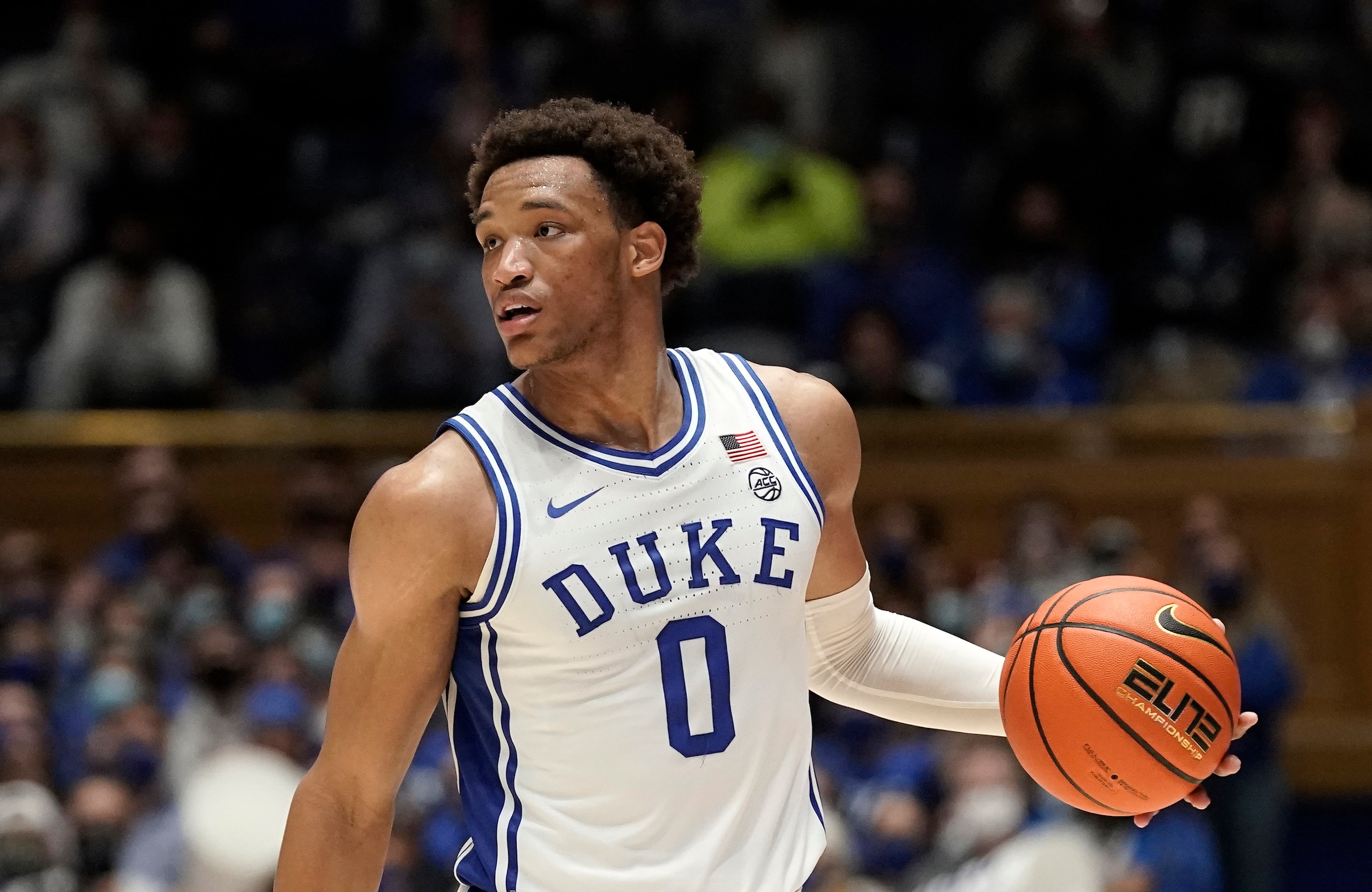
2020-21: 9.7 PPG, 4.8 RPG, 2.7 APG, 1.2 SPG, 48.1% 2PT
2021-22: 17.8 PPG, 6.5 RPG, 5.6 APG, 1.8 SPG, 68.8% 2PT
In Wendell Moore Jr.'s first two seasons at Duke, it was never a question of talent, but rather an issue with consistency.
Seemingly unable to string together multiple good performances—it wasn't until his 38th and 39th games that Moore first had back-to-back O-ratings of at least 100, per KenPom.com—he bounced in and out of the starting lineup. Case in point: After scoring a combined six points in Duke's four games last December, he went off for 25 points in the first game of January.
But now that Moore is in his third season, he has become a veteran leader and has taken on the role of stat-sheet stuffing lead guard. Eight games in, he is leading the Blue Devils in assists, is tied with Paolo Banchero for the team lead in points and ranks second in both rebounds and steals.
Moore had 20 points and six rebounds, six assists and four steals in the marquee win over Gonzaga last Friday. In the subsequent loss to Ohio State, he had 17 points, eight rebounds, five assists and two steals with just one turnover. Both of Duke's freshman phenoms struggled in that one, but this junior almost carried the Blue Devils through it anyway.
At the risk of putting Moore on too high of a pedestal, his per-game numbers are darn near identical to what Grant Hill did as a senior in 1993-94—17.4 PPG, 6.9 RPG, 5.2 APG, 1.9 SPG. If he can come anywhere close to maintaining his current pace, he'll join Hill as the only Blue Devils in the past three decades to average at least 12.0 points, 4.5 assists and 4.5 rebounds per game.
6. LJ Cryer, Baylor
6 of 11
2020-21: 3.4 PPG, 0.8 APG, 0.6 RPG, 0.5 SPG, 36.4% 3PT
2021-22: 14.7 PPG, 2.3 APG, 2.1 RPG, 1.1 SPG, 48.7% 3PT
Even with the additions of Arizona transfer James Akinjo and 5-star freshman Kendall Brown, it was inevitable that the "role players" from last year's national championship run were going to take a big step forward for Baylor.
Flo Thamba has improved on defense. Matthew Mayer has also gotten better on D and has become a more assertive shooter. Adam Flagler has evolved into more of a combo guard as opposed to just a spot-up perimeter shooter. Jonathan Tchamwa Tchatchoua is a more efficient scorer and a much better defensive rebounder.
But there's no question that LJ Cryer has taken the biggest stride.
Over the final four games of last season, Cryer played a grand total of eight minutes, scoring one point and grabbing two rebounds. He made just four field goals during Baylor's last 24 games in 2020-21.
Lo and behold, Cryer led the Bears in scoring in four of their first five games, making more three-pointers in those first five contests (17) than he did all last season (16). He had an off game in the Battle 4 Atlantis semifinal against VCU, but A) so did Akinjo and B) what guard hasn't had an off day against VCU? He bounced back a bit with eight points and a pair of steals in the B4A championship victory over Michigan State.
Cryer is still technically a reserve, though he is averaging more than 25 minutes per game for a team that just might repeat as national champs.
5. Dereon Seabron, North Carolina State
7 of 11
2020-21: 5.2 PPG, 3.5 RPG, 0.8 APG, 0.7 SPG
2021-22: 21.7 PPG, 10.9 RPG, 2.9 APG, 2.6 SPG
If you're wondering why this is a top 11 instead of a nice round top 10, it's because I didn't realize until Wednesday night's quadruple-overtime game between Nebraska and North Carolina State just how badly I needed to have Dereon Seabron on this list.
Even before Wednesday, Seabron was probably worthy of a spot in the top 10. He had at least 18 points and nine rebounds in each of NC State's first five games and had multiple assists and multiple steals in four of their first six games.
Then he went off for 39 points and 18 rebounds against the Cornhuskers, and he is more than tripling both his scoring and rebounding averages from last year.
Yes, he had the benefit of 20 extra minutes, but he already had a double-double (22 points and 11 rebounds) before the bonus time began. His stat line just grew more absurd as the game went on for well over three hours.
And the fascinating thing about Seabron is that he's built like LaMelo Ball (6'7", 180 lbs), but he plays like an old-school center. He doesn't block shots, but he is just 1-of-11 from three-point range and has led all players (from both teams) in rebounds in five of seven games.
4. Johnny Davis, Wisconsin
8 of 11
2020-21: 7.0 PPG, 4.1 RPG, 1.1 APG, 1.1 SPG
2021-22: 19.3 PPG, 5.7 RPG, 2.7 APG, 1.8 SPG
After losing four of the five leading scorers from a 13-loss No. 9 seed, Wisconsin was not supposed to be good this year. The Badgers looked like a bubble team, at best, in the preseason.
Yet, here they are, sitting at No. 23 in the AP poll with four wins away from home against KenPom Top 75 teams.
And they have Johnny Davis to thank for that.
Wisconsin's second-year lead guard is leading the team in per-game points, rebounds, assists and steals, and the Badgers are undefeated when he plays. (Davis missed the 63-58 home loss to Providence, which might be as much of a testament to his value added as the success they've had with him on the floor.)
Davis isn't a particularly efficient shooter, but he's the volume scorer Wisconsin needed to make up for all it lost from last year's team. He attempted at least 17 shots in each of Wisconsin's three games in the Maui Jim Maui Invitational and scored 36.4 percent of the Badgers' points during that trip to Las Vegas.
Wisconsin has had its fair share of great frontcourt players over the past decade, but high-scoring guards have been tough for the Badgers to come by. The last one to average so much as 15 points per game was Jordan Taylor in 2010-11. But both Davis and fifth-year senior Brad Davison might finish above that mark this year.
At any rate, Wisconsin will be one of the lowest-scoring teams in the nation if those two guards don't keep it up.
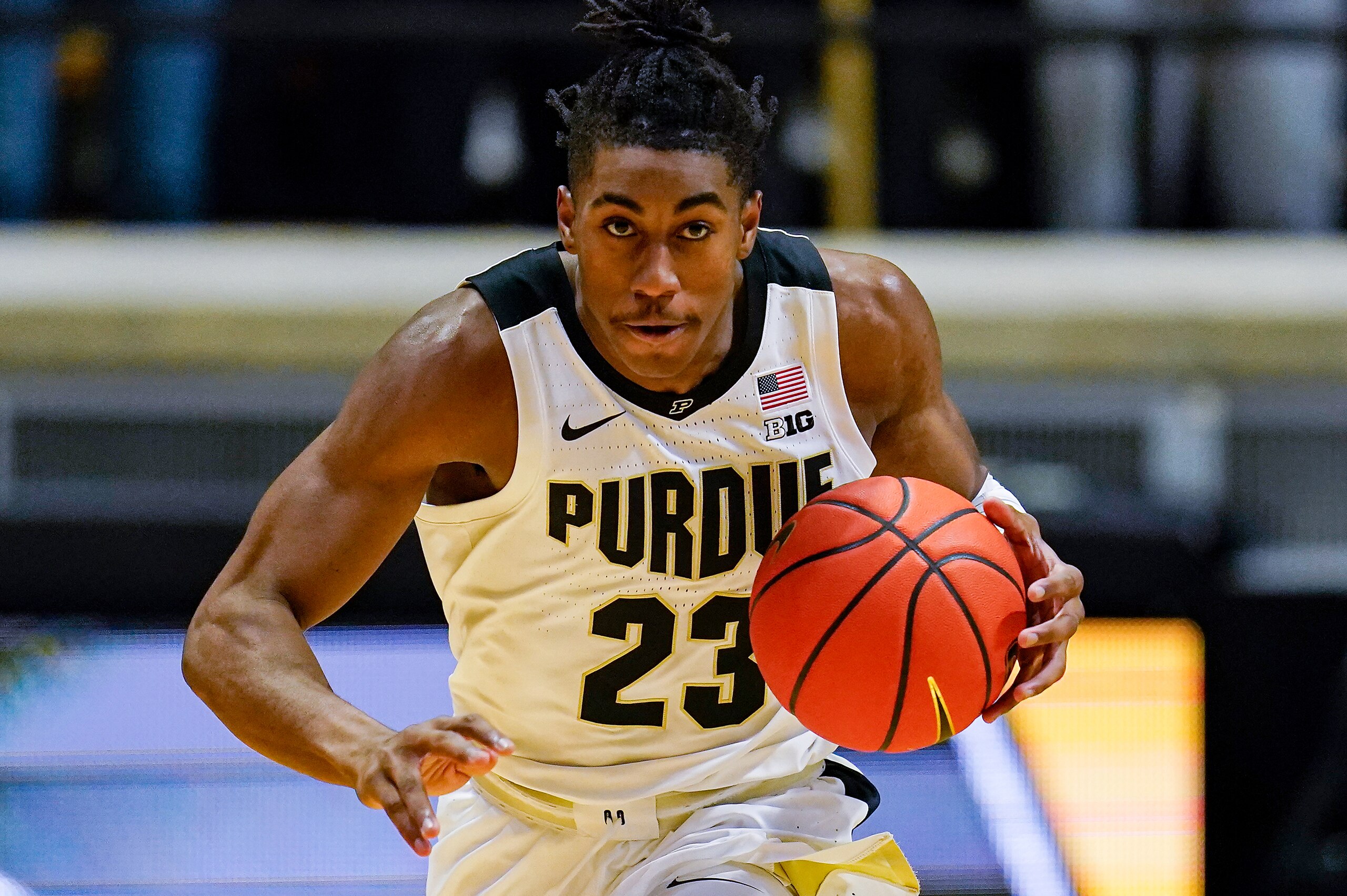
3. Zach Edey and Jaden Ivey, Purdue
9 of 11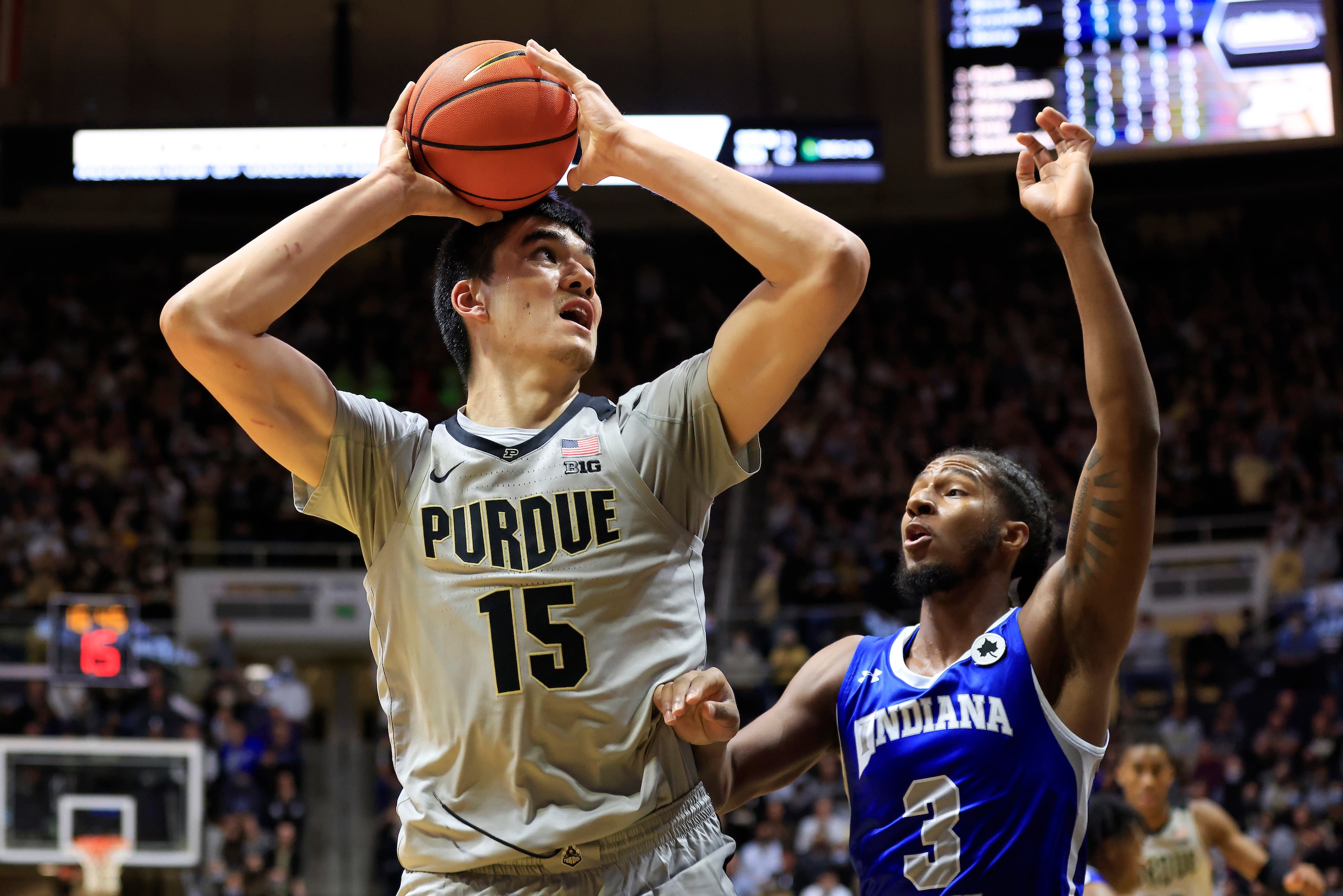
Zach Edey
2020-21: 8.7 PPG, 4.4 RPG, 1.1 BPG, 0.4 APG
2021-22: 16.9 PPG, 7.1 RPG, 1.4 BPG, 1.0 APG
Jaden Ivey
2020-21: 11.1 PPG, 3.3 RPG, 1.9 APG, 0.7 SPG, 25.8% 3PT
2021-22: 15.4 PPG, 6.3 RPG, 3.9 APG, 1.4 SPG, 43.3% 3PT
Barring a home loss to Iowa on Friday night, Purdue will be ranked No. 1 in the next AP poll for the first time in program history. It has been quite the meteoric rise for a squad that got bounced in the first round of the NCAA tournament by North Texas last March.
That improvement isn't due to an influx of transfers or highly touted freshmen. In fact, the Boilermakers added zero transfers, and Caleb Furst is the only freshman who isn't redshirting.
Rather, it's because Zach Edey and Jaden Ivey have made the leap to stardom in their second year in the program.
For both players, that leap began toward the end of last season.
After three months of all of us wondering why Purdue didn't run more plays to get the ball to its 7'4" center, Edey closed out the 2020-21 regular season with back-to-back games of at least 20 points.
He vanished again with a goose egg in the scoring column against North Texas, but it was clear he could be a go-to guy in the paint and a major shot-blocking presence for roughly 20 minutes per game if head coach Matt Painter so chose. And that's exactly what he has been this year, averaging 16.9 points in just 18.7 minutes per game.
Ivey also blossomed to the tune of 18.2 points over his final six games last season, and then he really drew the attention of NBA scouts with his play for Team USA in the FIBA U19 World Cup over the summer. He entered the year as a Top 25 guy for pretty much anyone who does preseason player rankings, and he backed it up in a big way with 22 points, 10 rebounds and six assists against North Carolina, followed one day later by 10 points, seven assists and seven rebounds against Villanova. Ivey was also the star of Tuesday night's win over Florida State.
2. Christian Koloko, Arizona
10 of 11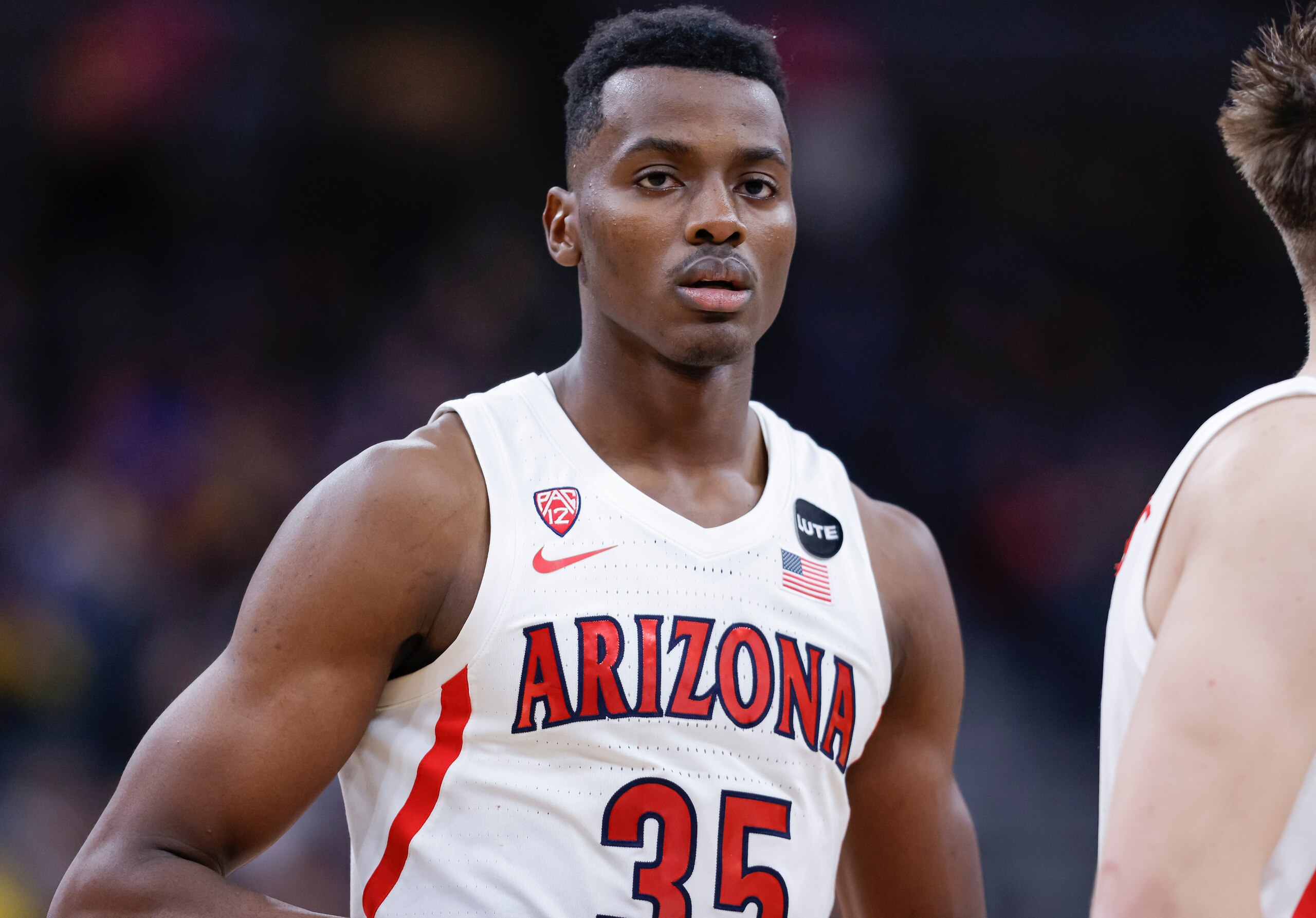
2020-21: 5.3 PPG, 4.8 RPG, 1.3 BPG, 0.3 APG, 0.5 SPG
2021-22: 16.2 PPG, 7.5 RPG, 3.5 BPG, 1.7 APG, 1.0 SPG
Arizona lost five of its 10 leading scorers from last season, and four of the five noteworthy returnees were part of the 2020 recruiting class. That left third-year big man Christian Koloko as the closest thing the Wildcats had to a veteran leader, even though he had scored in double figures just twice in his first two seasons.
That 7'1" center did one heck of a good Deandre Ayton impression in November.
In Arizona's second game of the season, Koloko racked up 18 points, 11 rebounds and five blocks in 19 minutes against UT Rio Grande Valley. In his most recent game, he went for 20 points and seven rebounds in just 15 minutes against Sacramento State.
The most impressive performances came against Wichita State and Michigan in the Roman Main Event. In the overtime win over the Shockers, he filled up the box score with 13 points, 11 rebounds, four blocks and three assists. And against the Wolverines, not only did he score a career-high 22 points and post seven boards, four blocks and two assists, but he also kept Michigan's Hunter Dickinson from getting into any sort of a groove.
On a per-40 minutes basis, Koloko has skyrocketed from 12.2 points, 3.1 blocks and 0.7 assists to 27.5, 6.0 and 2.8, respectively. And during that time, Arizona has skyrocketed along with him from a preseason afterthought to a possible title contender.
1. Keegan Murray, Iowa
11 of 11
2020-21: 7.2 PPG, 5.1 RPG, 1.3 BPG, 0.5 APG, 0.8 SPG
2021-22: 24.6 PPG, 8.9 RPG, 2.3 BPG, 1.6 APG, 1.1 SPG
Last year, Keegan Murray was a spark plug off the bench for Iowa. At times, it felt like he was the only Hawkeye capable of playing defense, but he always gave them a jolt of energy for his 18 minutes per game. There was little doubt that—with two-time first-team All-American Luka Garza out of the picture—Murray would become a bigger factor in his second season.
But who could have guessed that he would become Garza 2.0?
It's wild enough that Murray has more than tripled his scoring average to nearly 25 points per game, but it's particularly absurd that he is doing so in just 26.1 minutes on the court.
Through his first five games, he was at 131 points in 120 minutes of work. That's 43.7 points per 40 minutes, by the way. He went for 24 with seven rebounds and five blocks in 17 minutes in the season-opening win over Longwood. And the lone game during that hot start in which he didn't have more points than minutes, Murray merely put up 27 points, 21 rebounds and four blocks against North Carolina Central.
After not scoring more than 14 in a game as a freshman, Murray put up at least 23 points in each of his first six games. He also scored 18 with nine rebounds and three assists against Virginia, which is quite the feat. He became just the sixth player in the past nine seasons to hit all of those marks against Tony Bennett's pack-line defense.
We'll see how he fares in Big Ten play against the likes of Kofi Cockburn, EJ Liddell, Trayce Jackson-Davis, Hunter Dickinson and the three stars in Purdue's frontcourt, but Murray has been awesome.
Unless otherwise noted, statistics are courtesy of Sports Reference and are current through the start of play on Thursday, Dec. 2. Recruit ratings via 247Sports.
.jpg?w=2560 "Cardinals Giants Football")

.jpg?w=2560 "Report: Chiefs Contact Hill's Agent")
.jpg?w=2560 "OBJ Calls Out Giants 😳")
.jpg?w=2560 "Tyreek makes another cryptic post amid Chiefs rumors")