
The Achilles' Heel for Men's College Basketball's AP Top 10 Teams
Every team in men's college basketball has a potentially fatal flaw—even the two atop the AP Top 25 who still have not tasted defeat in the 2020-21 season.
Most of the Top 10 teams have more than enough strengths elsewhere to make up for their biggest shortcomings. But they still exist, just waiting to be exploited like a thermal exhaust port on the Death Star.
Several have depth-related concerns. Others have three-point woes. Many are just plain not good at playing defense. All are issues that could result in an unexpectedly early exit from the NCAA tournament.
As you start thinking about who you can trust next month, keep these Achilles' heels in mind. Because even Top 10 teams can run into matchup nightmares in the first round.
Five of these 10 teams played Tuesday night, but all statistics and data are current through the start of play Tuesday morning.
No. 10 West Virginia Mountaineers
1 of 10
Achilles' heel: Shooting from inside the arc
West Virginia does a lot of things well on offense. As has been the case just about every year under Bob Huggins, the Mountaineers thrive on the offensive glass. They also shoot better than 37 percent from three-point range and almost lead the nation in free-throw attempts per game (23.8).
However, they only make 70 percent of those freebies, and they are converting on less than 46 percent of their two-point attempts. The only other viable at-large candidate below 46 percent is Wichita State at 44.4 percent.
In their six losses, the Mountaineers shot a combined 42.2 percent from inside the arc. The low point was the loss at Oklahoma, in which West Virginia shot 14-of-24 from downtown but was a woeful 10-of-36 from two-point range—against a Sooners team that doesn't do much shot-blocking, no less.
In fairness, this isn't a new problem. West Virginia typically is below the national average in two-point percentage. Because the 'Eers are so dominant on the offensive glass, they aren't afraid to settle for mid-range (read: lower-percentage) jumpers. But they usually aren't this bad at the two-point game, and they often more than made up for it with elite defense.
This year, the defense isn't anything special. The Mountaineers have allowed at least 71 points in 10 of their last 11 games, and the exception came against Kansas State's woeful offense.
West Virginia swept Texas Tech, has wins over Kansas, Texas and Oklahoma State and is the only team to come anywhere close to beating Gonzaga. This team is clearly quite good. But betting on a team that frequently struggles to make twos or get stops on defense is a terrifying proposition.
No. 9 Iowa Hawkeyes
2 of 10
Achilles' heel: Defense, especially along the perimeter
Iowa's offense is a runaway freight train. Not only does Luka Garza lead the nation in scoring, but the Hawkeyes also have a bunch of guys capable of going off on any given night.
Joe Wieskamp, Jordan Bohannon and CJ Fredrick have each had multiple 20-point performances. Jack Nunge has put up at least 17 points on four occasions. And their next four top scorers—Keegan Murray, Patrick McCaffery, Connor McCaffery and Joe Toussaint—combine for nearly 20 points per game.
It's hard enough to stifle Garza. It's impossible to completely neutralize this offense.
But while Iowa could score 80 on anyone (except for Indiana, for some reason), the Hawkeyes are also liable to give up 80 to anyone.
Garza, Nunge and Murray do a more-than-adequate job of defending the paint, but Iowa frequently struggles to defend the perimeter. Already this season, 10 opponents have made at least 10 three-pointers against the Hawkeyes. They have also forced fewer than 10 turnovers in 10 of their 23 games.
When those sections of the Venn diagram overlap, things can get ugly. Minnesota made 17 triples and committed eight turnovers in its 102-95 overtime win over Iowa. Ohio State shot 14-of-32 and coughed it up just six times in its 89-85 road win over the Hawkeyes.
As if the threes and lack of turnovers isn't enough, Iowa is also a subpar defensive rebounding team. And that inefficiency on defense does not bode well.
If you're thinking about picking Iowa to the Final Four, you might want to scroll down to our note in the Ohio State section.
No. 8 Villanova Wildcats
3 of 10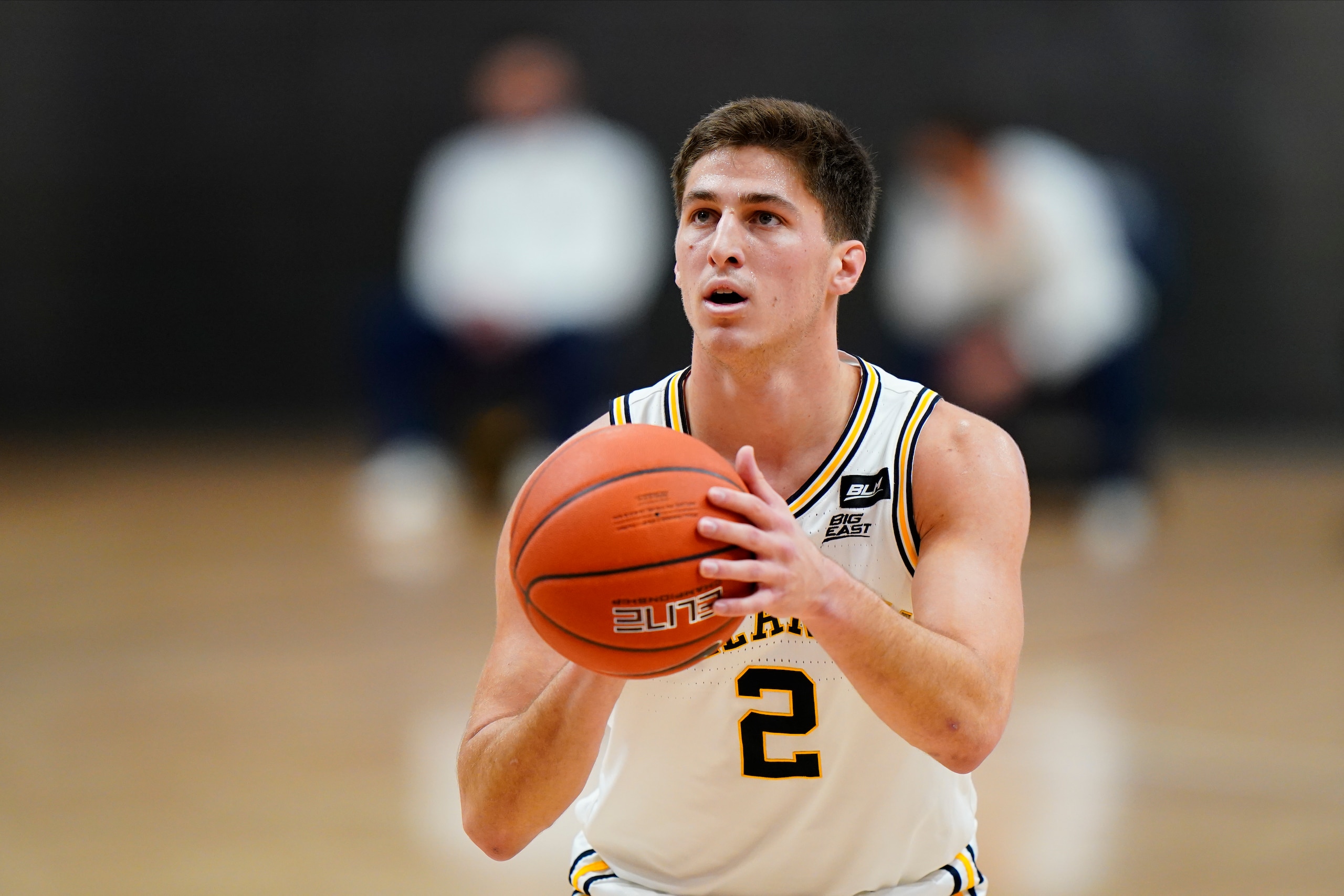
Achilles' heel: Mediocre defense
When Villanova won its national championships in 2016 and 2018, everyone marveled at the three-point shooting and for good reason. In those 12 tournament games, Villanova shot 132-of-295 from distance. That's an average of 11.0 makes at a 44.7 percent clip. And this year's iteration of the Wildcats shoots threes better and more often than the 2015-16 team did.
However, all of that focus on the deep ball made people overlook how important defense was to their success. Villanova entered the 2016 tournament ranked seventh in adjusted defensive efficiency and started its 2018 run at No. 22 in that category.
As of Monday morning, Villanova ranked 82nd in adjusted defensive efficiency. And as we'll dig into deeper when we get to AP No. 4 Ohio State, that's a major concern.
Even before going on a COVID-19 pause of nearly a month, Villanova's defense wasn't great. But it has been extra shoddy over the past few weeks. Letting Creighton explode for 86 points in a 64-possession game was the biggest cry for help. Villanova's defense also struggled in an 84-74 home win over Georgetown, which doesn't even have a top-100 offense.
Even worse, the three-ball has been defying Villanova lately. The Wildcats were on fire in recent wins over Marquette and Georgetown, but they have shot 31.3 percent or worse in four of their last seven games. As soon as one of those shooting performances surfaces in the tournament, Villanova will be in a world of trouble.

.jpg?w=2560)

No. 7 Oklahoma Sooners
4 of 10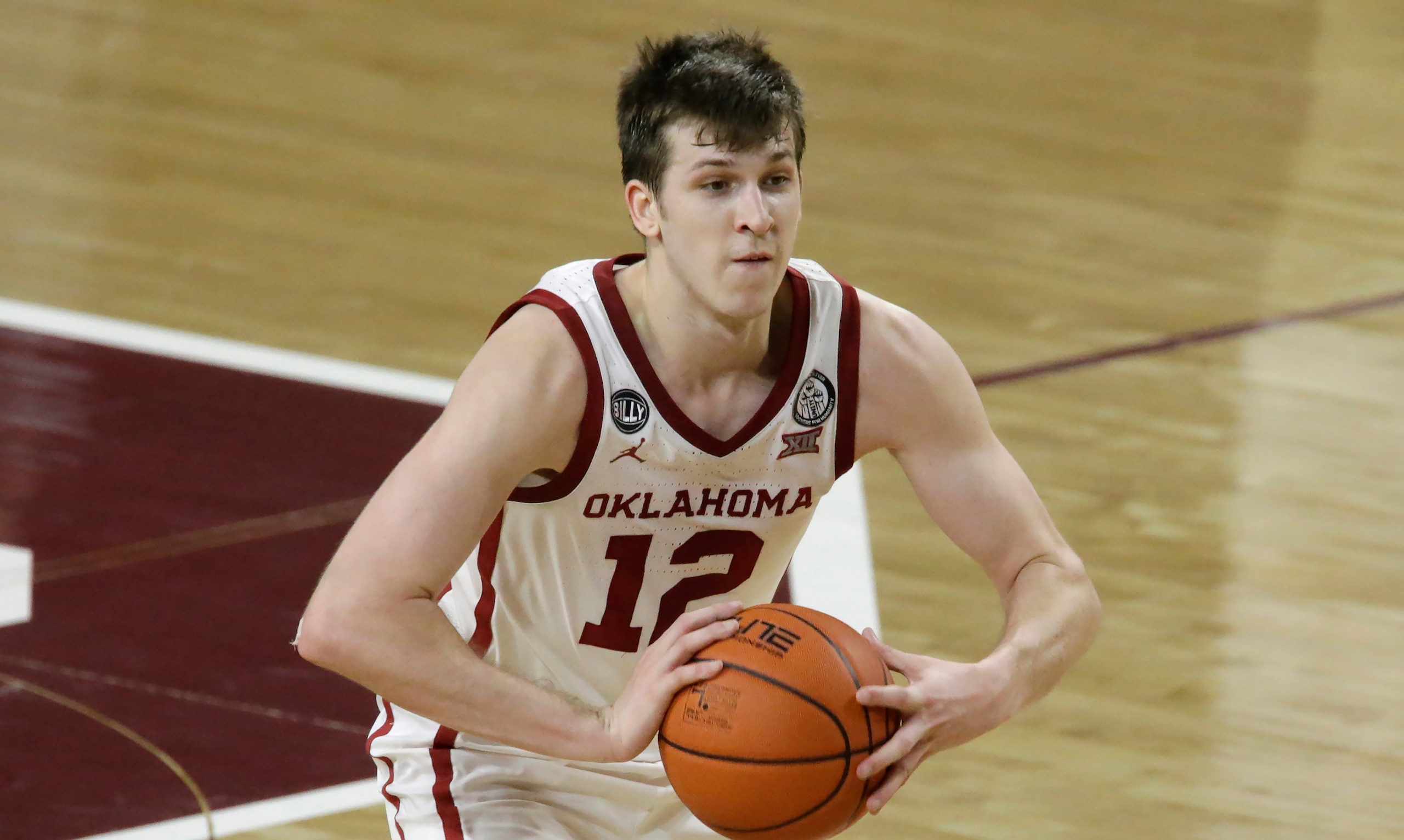
Achilles' heel: Perimeter shooting (offense and defense)
In a predictably convincing season-opening win over UTSA, Oklahoma shot the lights-out, draining 17-of-34 three-point attempts.
In the 18 games since then, though, the Sooners are shooting 31.9 percent while averaging 7.4 makes per game.
Not only are those numbers well below the national average, but they also have allowed their post-UTSA opponents to make 8.4 threes per game at a 36.6 percent clip.
In their recent marquee wins, this wasn't an issue. Texas and West Virginia shot a combined 13-of-49 (26.5 percent) in those Oklahoma road wins, and the Sooners shot slightly better than Kansas and Alabama in each of those home victories.
Just because they haven't been burned lately doesn't mean they aren't playing with fire, though. And even with those three-point percentages working in their favor, those four wins were by a combined total of 14 points.
It won't be long in the tournament before they run into a capable three-point shooting team like Iowa, Virginia, Florida State, Illinois, Michigan, Villanova or San Diego State, and we'll see how well the law of averages treats the Sooners then.
Moreover, Oklahoma is nothing special in the rebounding department, ranking roughly 150th in the nation in both offensive and defensive rebounding percentage. That's not as much of an Achilles' heel, but it's something a team with a dominant frontcourt could exploit.
No. 6 Alabama Crimson Tide
5 of 10
Achilles' heel: Three-point dependency
Over the past few NCAA tournaments, we've seen some teams ride the deep ball to deep runs. Villanova won it all in both 2016 and 2018. Auburn caught fire and made the Final Four in 2019.
Generally speaking, though, teams who live and die by the three tend to do the latter. And despite excellent defensive efficiency ratings, it's hard not to worry what will happen if and when Alabama has an off shooting night.
In its first seven games of January, Alabama shot 43.7 percent from beyond the arc, averaging 13.4 made triples per game. If the Crimson Tide were to find that consistent stroke again in March, of course they could win the title.
In their seven most recent games, though, they've shot a more modest 35.5 percent, resulting in losses to Oklahoma and Missouri and disturbingly close calls against SEC bottom-feeders South Carolina and Vanderbilt.
Nearly 48 percent of Alabama's field-goal attempts come from three-point range, and that rate is actually up to 55.6 percent over its last three games.
That's fun while the shots are falling, but even Villanova had to survive an absolute dud in each of its title runs, shooting 4-of-18 against Kansas in the 2016 Elite Eight and 4-of-24 in the 2018 Elite Eight against Texas Tech. Best of luck to Alabama in trying to salvage a win if that happens, considering the Crimson Tide are average at best in most other offensive categories.
No. 5 Illinois Fighting Illini
6 of 10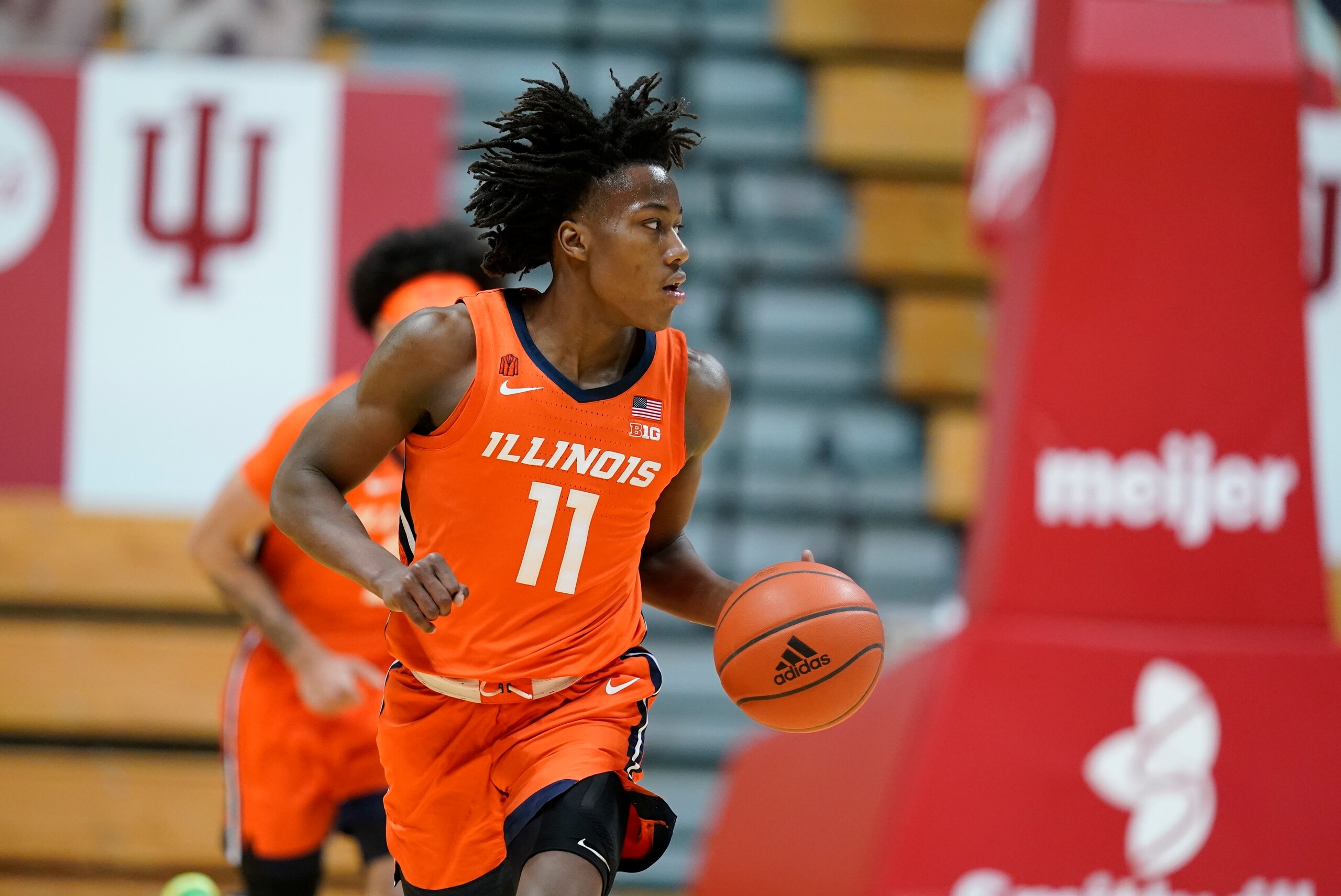
Achilles' heel: Inconsistency outside the dynamic duo
Ayo Dosunmu and Kofi Cockburn are outstanding players.
This is not new information.
When they both announced this summer that they would be putting off the NBA draft for one more year of college hoops, the Illini's preseason expectations went from maybe eighth-best in the Big Ten to maybe eighth-best in the country.
Dosunmu just put together his second triple-double of the season and is averaging better than 21 points per game. Cockburn has been awesome in the paint, averaging 17.6 points and 10.3 rebounds a night.
Who is else is going to show up for the Illini on any given night, though? Or what happens if one of the two stars has a dud?
The other guys in the rotation are plenty capable.
Trent Frazier has over 1,300 career points and is closing in on 100 starts in his college career. Da'Monte Williams and Jacob Grandison don't shoot much, but they're both three-point snipers when they do, boasting a combined season line of 37-of-69 (53.6 percent). Adam Miller hasn't quite lived up to the recruiting hype, but he's a capable scorer. Andre Curbelo is an occasionally turnover-over prone freshman, but his vision running the point is impeccable. And Giorgi Bezhanishvili is a solid offensive rebounder who plays his role of backup center admirably.
If even two of those six guys plays well, Illinois is in business. But that doesn't always happen.
In the December loss to Missouri, Dosunmu and Cockburn combined for 55 points, but Curbelo was the only other guy to score more than four. In the January loss to Maryland, Dosunmu and Cockburn both eclipsed 20, while the rest of the team combined for 19. And in the recent game at barely-competes-in-most-Big-Ten-games Nebraska, Illinois needed overtime in spite of 52 points from its dynamic duo.
This is a team that could win it all or a team that could get bounced by a No. 7 seed if its role players aren't playing their roles.
No. 4 Ohio State Buckeyes
7 of 10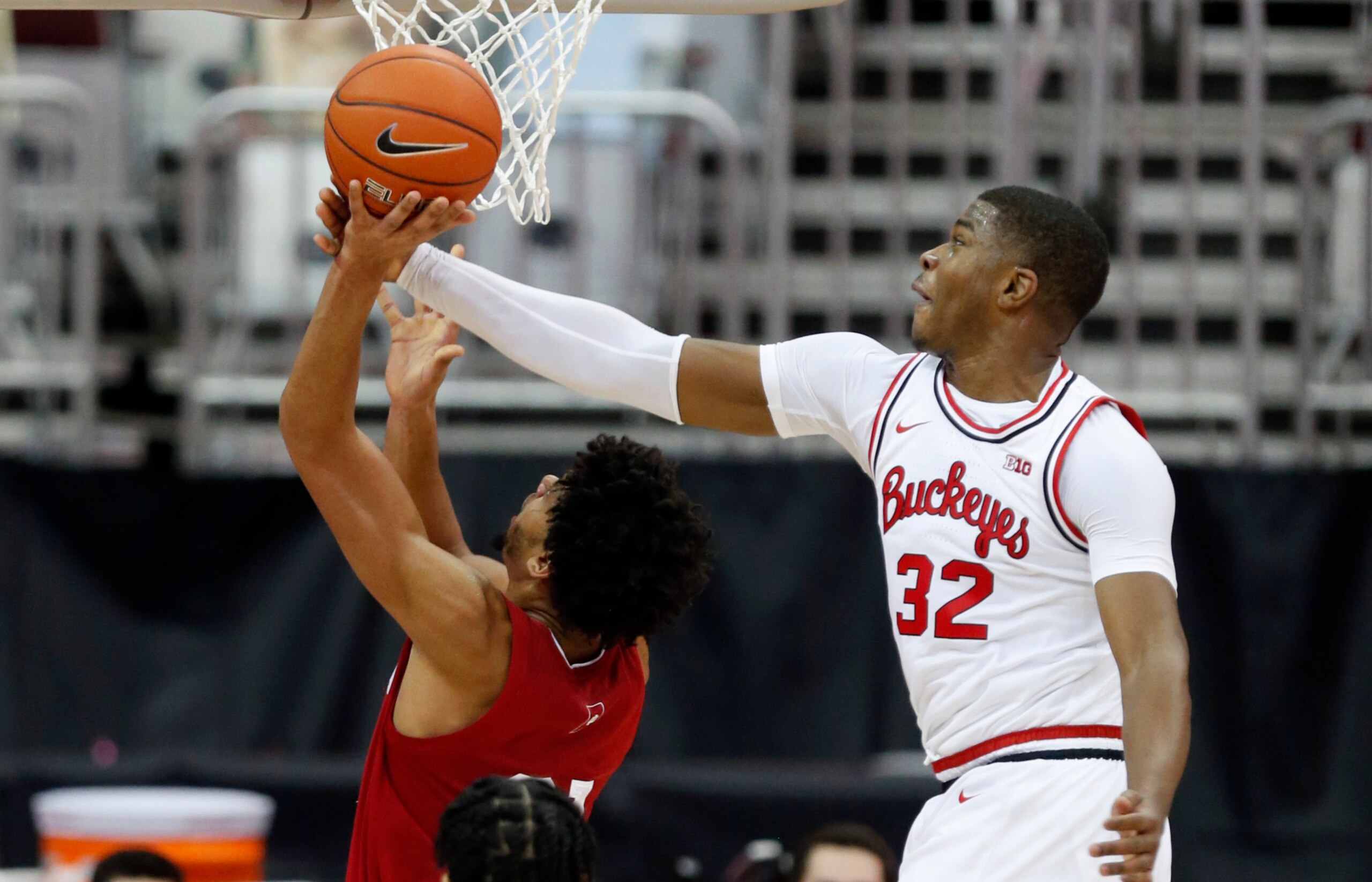
Achilles' heel: Playing defense
Ohio State's offense? Awesome. Just dropped 87 points on one of the best defenses in the country. The Buckeyes shoot well, rarely commit turnovers, excel at getting to the free-throw line and do an above-average job on the offensive glass. Only Iowa and Gonzaga rank ahead of Ohio State in adjusted offensive efficiency, which is really saying something.
Ohio State's defense?
Ehhh...
Despite playing at a slower-than-average tempo, the Buckeyes allow nearly 70 points per game—and that's including early-season wins over the likes of UMass Lowell and Morehead State. Since the beginning of January, they've allowed 73.1 points per game and have struggled against the Big Ten's more efficient offenses.
Illinois scored 81. Iowa scored 85. Michigan scored 92. Penn State scored 161. Granted, that's two games against the Nittany Lions, but that's still an average of 80.5 points allowed against a 7-12 team.
As vividly displayed in the first half of Sunday's game against Michigan, there's a lot of "hope and pray" involved in Ohio State's perimeter defense. The Wolverines shot 10-of-13 from three-point range in those opening 20 minutes, while the Buckeyes forced just two live-ball turnovers. Even though the Buckeyes were phenomenal on offense, the defense kept them from picking up what would have been a marquee win.
Now for the bad news about Ohio State, Iowa and Villanova that will hopefully embed in your brain for when it's time to fill out the brackets.
In the past 16 NCAA tournaments, there have been 28 teams that finished the year in the top five in adjusted offensive efficiency and outside of the top 50 in adjusted defensive efficiency (and received a bid to the tourney). None of them made it to the Final Four, and only three—Notre Dame in 2015, Michigan in 2014 and Florida in 2012—made it so far as the Elite Eight.
Other members of that club include the 2018 Wichita State team that lost to Marshall, the 2014 Duke team that lost to Mercer and the 2012 Missouri team that lost to Norfolk State.
Defense matters in March. Buyer beware.
No. 3 Michigan Wolverines
8 of 10
Achilles' heel: Turnover margin
For most of the past decade, this has been a major Achilles' heel for the other Michigan school. The Spartans of MSU have been in a near-constant state of losing the turnover battle, and now it's a concerning issue for the Wolverines.
In a recent win over Rutgers, Michigan only forced three turnovers, one of which was a shot-clock violation. It's usually not that bad, but the Wolverines barely force 10 turnovers per game and have one of the worst steal rates in the country (4.3 per contest). And while they are fairly turnover-averse on offense, they do cough up the ball more than 12 times on average.
Because they are so efficient on offense, because their two-point defense is outstanding, because they rarely commit fouls and because they have posted a positive rebounding margin in all but one game this season, that negative turnover margin has not often been a major problem.
But in their only loss of the season, a minus-11 turnover margin was a huge factor at Minnesota. And in the early game against Oakland that necessitated overtime, the Wolverines turned it over 20 times.
If that issue flares up in the tournament against a team capable of hitting some threes against a perimeter defense that is just OK, it could be trouble. At any rate, if Oakland had shot better than 8-of-34 or if Rutgers had shot better than 3-of-12, Michigan would have more than one loss right now.
No. 2 Baylor Bears
9 of 10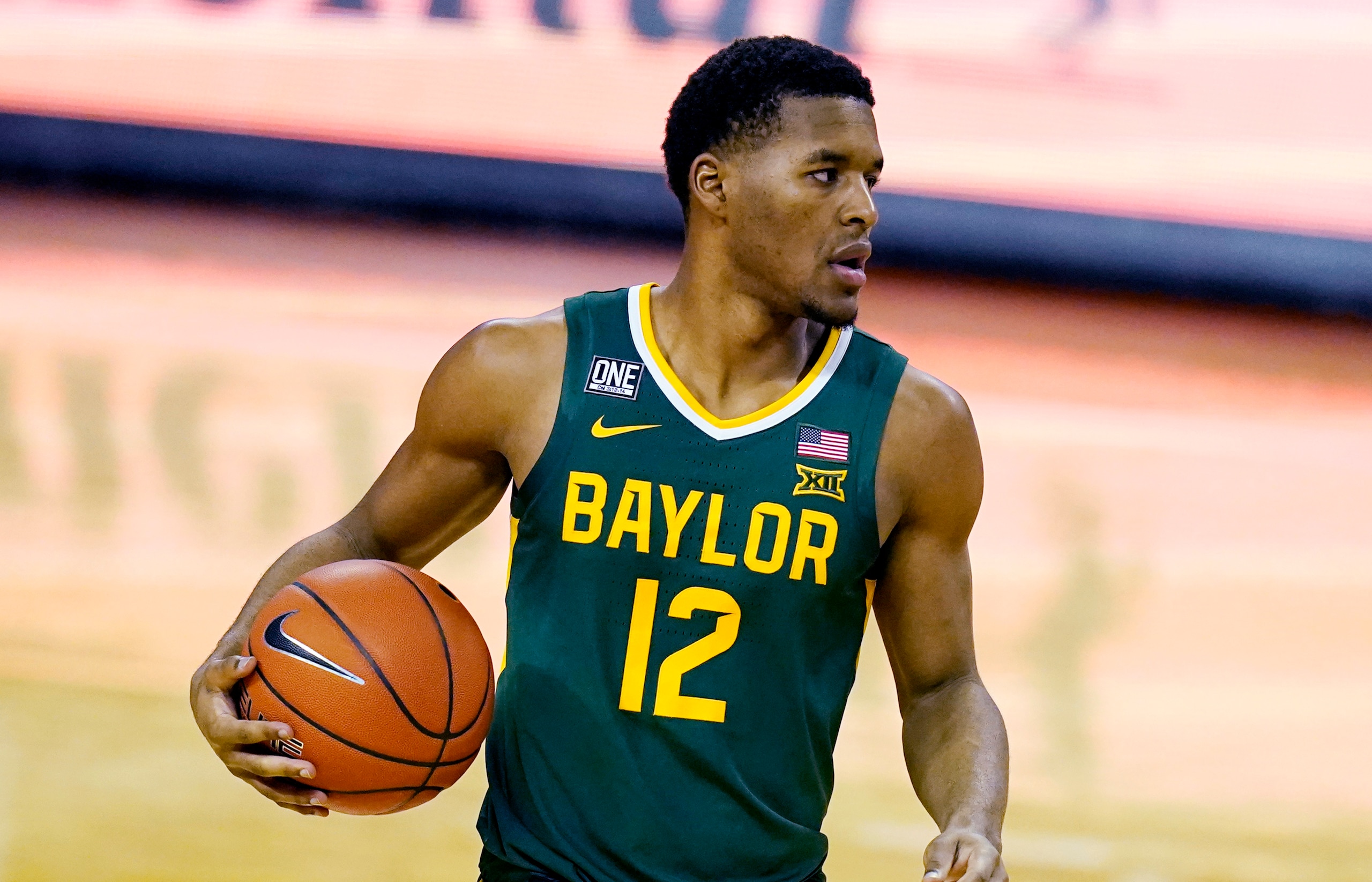
Achilles' heel: Free throws and defensive rebounding
Baylor's combination of strengths is ridiculous. The Bears are the best three-point shooting team in the country, and they rank top-five in both offensive rebounding percentage and defensive turnover percentage. In all but one game this season, they either made 10 threes, grabbed at least a dozen offensive rebounds or racked up 10 steals. Sometimes they'll do all three, and that's just not fair.
They do have two potentially significant points of weakness, though.
The first is free-throw shooting. Baylor neither gets to the line often nor converts at a high rate from the charity stripe. And sometimes in its quest to force turnovers, it gets a little too physical and gives the opposition free points. Over its last five games, Baylor has averaged 12.0 attempts while allowing 18.0. It's only because Texas shot a putrid 3-of-14 in its loss to Baylor that the Bears aren't attempting fewer free throws than their opponents are making.
On the defensive rebounding front, Baylor barely ranks in the top 250 in the nation, allowing 10.5 offensive rebounds per game. The Bears create a remarkable amount of second-chance opportunities for themselves, but they squander much of that edge by giving it right back on the other end. In fact, since the beginning of January, Baylor has allowed 88 offensive rebounds while collecting just 82 of its own.
Neither of those minor issues has kept Baylor from staying undefeated, of course. But there are a few opponents who could capitalize on those two areas.
West Virginia is one of those teams, and they have yet to meet in Big 12 play because of COVID-19 postponements. They are scheduled to play this Thursday in Waco, Texas. If the Mountaineers are able to hold their own in that one, it means a team like Houston or USC could knock the Bears out of the Big Dance.
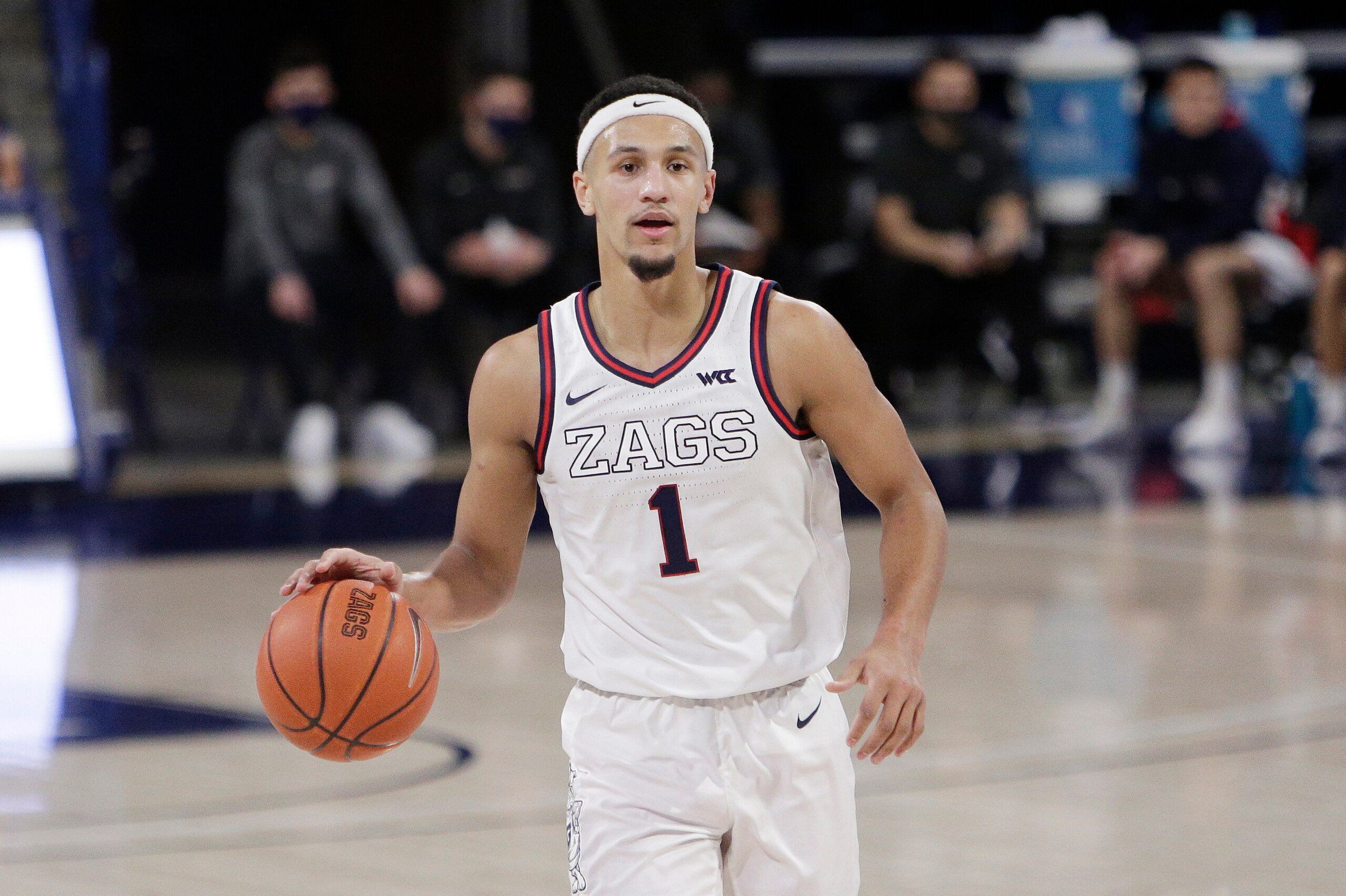
No. 1 Gonzaga Bulldogs
10 of 10
Achilles' heel: A physical game that tests their depth
Trying to find fault with Gonzaga is no easy task; a fool's errand, one might say. Not only have the Bulldogs not suffered a loss, but they also haven't even been legitimately challenged in nearly three months. For crying out loud, their last three wins were by a combined margin of 98 points, and their current adjusted efficiency margin in KenPom.com (38.53) is even leaving what 38-1 Kentucky did (36.91) in the dust.
But if they're going to slip up somewhere in the NCAA tournament, it would likely be the product of foul trouble or injury.
Because while Gonzaga's primary six-man rotation (Jalen Suggs, Corey Kispert, Joel Ayayi, Anton Watson, Drew Timme and Andrew Nembhard) is the best in the country, it's still a six-man rotation.
Aaron Cook would probably at least be serviceable in a pinch. Oumar Ballo has barely played in a month, though. Dominick Harris has had some nice performances in blowouts, but he has yet to score in six tries against "Tier A" opponents. Likewise, Julian Strawther has logged a total of 21 minutes and two points in those same six games.
If Gonzaga is forced to go more than one spot into its bench for a prolonged stretch of a game, things could get interesting—especially if the guy it's forced to replace is Corey Kispert, otherwise known as their senior leader and the best three-point shooter on the team by far.
To that end, Kispert rarely gets into foul trouble. However, Gonzaga was tested on those occasions.
He fouled out in 25 minutes against Iowa—a game that Gonzaga won by 11, despite shooting 50 percent from deep and somehow holding the most efficient offense in the nation to 4-of-22 three-point shooting. He also committed four fouls in the close call against West Virginia and got into early foul trouble in the Feb. 4 game at Pacific, where Gonzaga trailed by one at the half.
Maybe it won't come up, but depth almost always gets tested at some point during a deep NCAA tournament run.
.jpg?w=2560 "Falcons Saints Football")
.jpg?w=2560 "Rams Eagles Football")
.jpg?w=2560 "Injury-stricken Seahawks signing veteran RB")


.jpg?w=2560 "2 NFL Officials Suspended")
