


After skipping the 2018 Winter Olympics in Pyeongchang, South Korea, the NHL will return for the 2022 Winter Games in Beijing. This is a result of last summer's memorandum of understanding extending the collective bargaining agreement to the end of 2025-26. NHL players will also participate in the 2026 Milan Cortina Winter Olympics in Italy.
The 2022 Beijing Games are scheduled to be held one year from this month, running from Feb. 4 to Feb. 20, 2022. That's assuming the COVID-19 pandemic doesn't force a postponement of the Games, and the NHL's involvement possibly still depends on the pandemic not complicating the league's 2021-22 schedule.
The United States will be well represented by NHL talent. Some, such as Chicago Blackhawks winger Patrick Kane, could be making their return to the Olympics with Team USA for the first time since the 2014 Winter Games in Sochi, Russia. Others, such as Toronto Maple Leafs center Auston Matthews, could be first-time participants.
Here's our way-too-early projection for Team USA's men's 2022 Winter Olympic roster. We've broken it down by potential forward lines, defense pairings and goaltending. We've also included two spare forwards and two spare defensemen to round out the 25-man roster. Bear in mind these lines aren't carved in stone and can be shuffled as required.
Forward Line 1: Matthew Tkachuk, Auston Matthews, Patrick Kane
1 of 8
This line has a good combination of scoring punch and experience that should match up well against any other in the men's Olympic hockey tournament.
Toronto Maple Leafs center Auston Matthews is one of the NHL's top goalscorers, reaching 40 goals in his rookie campaign in 2016-17 and a career-best 47 last season. He's a clutch scorer, with 26 game-winning goals in his NHL career. The 6'3", 220-pounder centers the Leafs' top line and is a natural fit here.
Matthew Tkachuk of the Calgary Flames is a former linemate of Matthews during their days with the USA Hockey National Team Development Program. At 6'2" and 202 pounds, Tkachuk is a physical, agitating offensive forward who can skate on either wing and creates havoc around the net.
Patrick Kane should be among only a handful of veterans from the 2014 Sochi Games returning with Team USA in Beijing. Kane, who will be 34 when the Games begin, remains a respected top-line winger who tallied 84 points last season for the Chicago Blackhawks. He will be relied upon to provide veteran experience and leadership.
Forward Line 2: Johnny Gaudreau, Jack Eichel, Brock Boeser
2 of 8
Another highly skilled offensive unit that provides Team USA with a strong one-two scoring punch among its top two lines.
Jack Eichel, the Buffalo Sabres' No. 1 center and captain, also brings leadership to this line. The 6'2", 213-pounder is another big-bodied center with a lethal shot and plenty of offensive ability. He's steadily improved in each of his five NHL seasons, posting a career-best 82 points in 2018-19, his most recent full campaign.
On his wing is one of the NHL's most gifted playmakers, Johnny Gaudreau of the Calgary Flames. Despite his diminutive frame (5'9", 165 pounds), he's a speedy and creative passer who's exceeded 60 points in five of his six NHL seasons, including a career-best 99 points in 2018-19. Gaudreau should thrive alongside these two snipers.
Vancouver Canucks right wing Brock Boeser rounds out the line. He has battled injuries during his first three full NHL seasons but has nevertheless proved himself as a dangerous scorer. He tallied 29 goals in 62 games in 2017-18 and 26 goals in 69 games the following season, and his quick release should make him a solid fit alongside Eichel and Gaudreau.
Forward Line 3: Kyle Connor, Dylan Larkin, Blake Wheeler
3 of 8
This line brings a solid mix of offense and two-way play that will be crucial in short-handed situations.
Over the past three seasons, left winger Kyle Connor played himself on to the Winnipeg Jets' top line. He's a strong, swift-skating forward and has exceeded 30 goals in three consecutive years. He also plays a responsible game in his own zone. Connor's versatility makes him a valuable contributor to any line.
Sochi veteran Blake Wheeler is Connor's linemate with the Jets, so it makes sense to keep those two together. The 6'5", 225-pound Jets captain will be 35 at the Beijing Games, but his size, experience, leadership and offensive skills will be invaluable in this tournament.
Twenty-four-year-old Dylan Larkin was named captain of the Detroit Red Wings at the start of this season. Another strong-skating forward with two-way skills, he's a natural to center USA's third line between Connor and Wheeler. He possesses a strong work ethic and can skate at any forward position.

Forward Line 4: Jake Guentzel, J.T. Miller, Bryan Rust
4 of 8
A fourth line that contains another mix of speed, versatility and two-way skills.
Jake Guentzel has established himself as a reliable offensive forward since his debut with the Pittsburgh Penguins in 2016-17. He rises to the occasion in big games and could prove well-suited to the Olympic stage. A left winger, he can also play center if required.
Brian Rust skates with Guentzel on Sidney Crosby's line in Pittsburgh, so the two know each other well. A two-time Stanley Cup champion with the Penguins, Rust is a solid two-way forward with a decent scoring touch, netting 27 goals last season. He also has checking-line and penalty-kill experience.
Vancouver Canucks center J.T. Miller should be a good fit with Guentzel and Rust. He can play center or either wing and possesses a strong game at both ends of the ice. He doesn't shy away from battling for pucks, which will prove worthwhile in a penalty-killing role.
Spares: Jack Hughes, Brady Tkachuk
Hughes is a highly skilled young forward in his second season with the New Jersey Devils. The first overall pick in the 2019 draft is showing considerable improvement this season, with eight points in nine games so far. If he keeps trending upward, he could get the nod for Team USA.
Like his brother Matthew, Brady Tkachuk is a big, feisty forward with good offensive skills who thrives in big-game situations. He could be a useful addition if Team USA wants to bring some extra muscle to its scoring lines, provided he can add a little discipline to his game to avoid bad penalties.
Defense Pairing 1: Zach Werenski and Seth Jones
5 of 8
It only makes sense to keep one of the NHL's best defensive pairings together. Zach Werenski and Seth Jones are the top blue-line duo for the Columbus Blue Jackets, and both are talented two-way rearguards who log big minutes in all situations.
The more offensive-minded of the two, Werenski has exceeded 40 points in three of the past four seasons. He moves the puck well, has an accurate shot and tallied a career-best 20 goals last season, and he could be the quarterback for the No. 1 power-play unit.
Jones is the better all-around defenseman. He regularly skates over 25 minutes per game and isn't afraid to use his 6'4", 213-pound body in a shutdown role. He has a booming shot, too, and has reached or exceeded 30 points in each of his previous four seasons.
Defense Pairing 2: Jaccob Slavin and John Carlson
6 of 8
A strong second pairing features an excellent all-around blueliner in Jaccob Slavin with one of the best puck-moving rearguards in John Carlson.
Slavin is a top-pairing defenseman on the Carolina Hurricanes. The 6'3", 207-pounder has 30-plus points in each of the past four seasons, but it's his defensive skills that make him a worthy addition to the Team USA blue line.
Another returning veteran from the 2014 Team USA squad, the puck-moving Carlson was a finalist last season for the Norris Trophy. He's tallied 70 or more points in each of the past two seasons, and being paired with Slavin would allow him to join the attack frequently.
Defense Pairing 3: Quinn Hughes and Charlie McAvoy
7 of 8
Quinn Hughes and Charlie McAvoy are rising young stars who play key roles with their respective NHL clubs. They could see limited playing time with Team USA in 2022, but they possess the skills to move up in the pecking order.
Hughes enjoyed an impressive NHL debut last season with the Vancouver Canucks, becoming a finalist for the 2020 Calder Trophy as rookie of the year. While not physically imposing at 5'10" and 180 pounds, he's a smooth-skating defenseman with exceptional offensive abilities who would work well in power-play situations.
In his fourth season with the Boston Bruins, McAvoy has become an effective No. 1 blueliner. A strong skater with plenty of talent and good hockey sense, he plays well at both ends of the rink. He can be effective on the power play or killing penalties.
Spares: Torey Krug and Adam Fox
Torey Krug is among the NHL's best puck-moving defensemen, signing with the St. Louis Blues last summer after several productive seasons with the Boston Bruins. He could slot into the left-hand side on any of Team USA's blue-line pairings if necessary.
In just his second NHL season, Adam Fox has taken over the top-pairing right-side position on the New York Rangers. He's a good young defenseman with lots of upside and could earn consideration for Team USA.
Goaltenders: Connor Hellebuyck, John Gibson, Ben Bishop
8 of 8
Team USA's goaltending features a Vezina Trophy winner, a former William Jennings Trophy recipient and a three-time Vezina finalist.
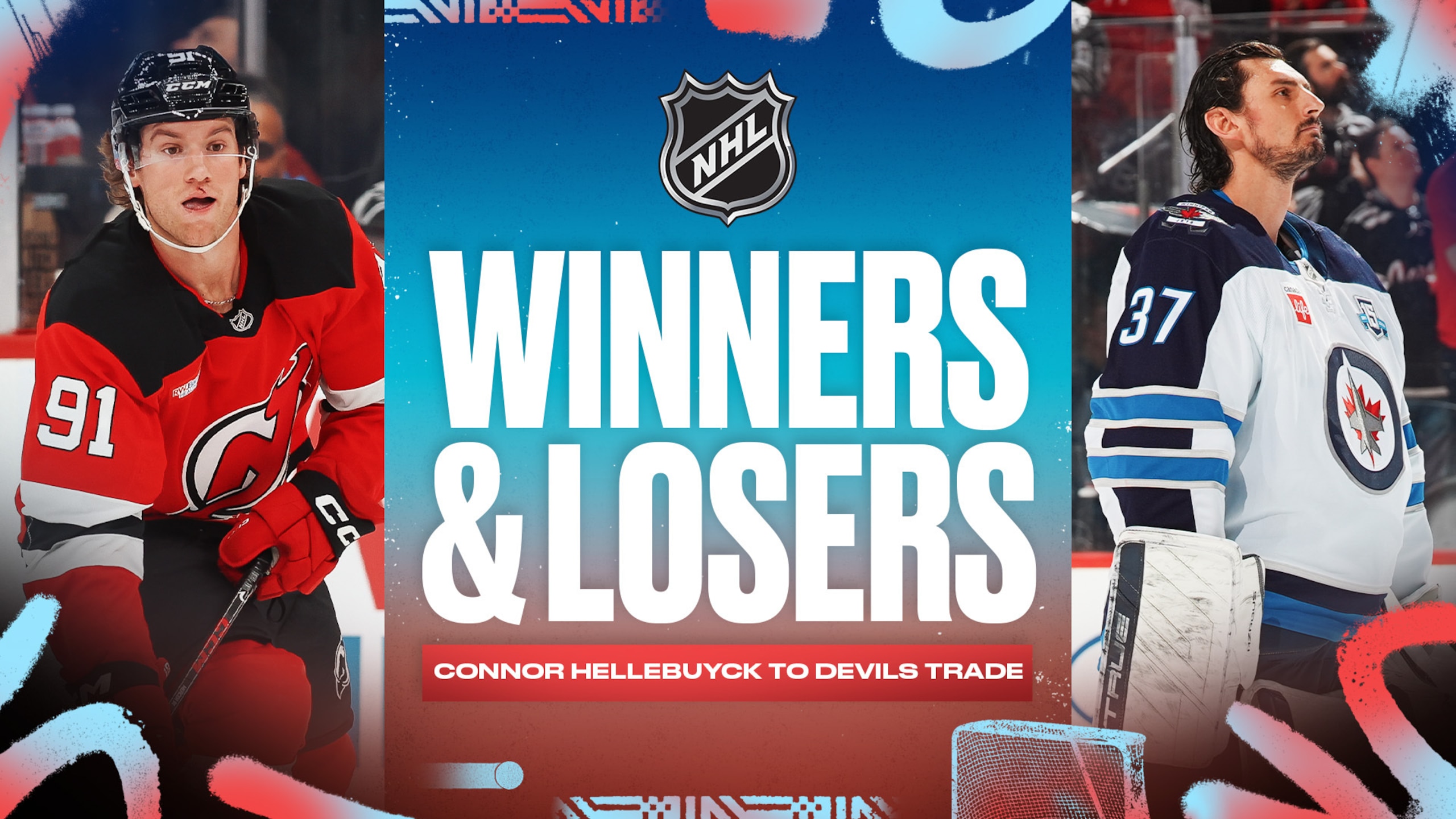
The Vezina winner is the Winnipeg Jets' Connor Hellebuyck, who took home the award last season and was a finalist in 2018. He's a proven performer and among the NHL's elite netminders and must be considered the favorite to be Team USA's starter.
Anaheim Ducks netminder John Gibson won the Jennings along with then-teammate Frederik Andersen in 2015-16. While the Ducks are no longer the dominant club they were earlier in Gibson's career, he remains an excellent, well-respected goalie. Pencil him in as Hellebuyck's backup.
Rounding out the trio is Ben Bishop of the Dallas Stars. The 6'7", 210-pounder was a Vezina Trophy finalist in 2014, 2016 and 2019. Frequent injuries have hampered Bishop in recent years, but he remains a viable third-goalie option for Team USA.
.jpg?w=2560 "NHL Trade Grades Connor Hellebuyck")


.jpg?w=2560 "Latest Peyton-Colts Rumors")


.jpg?w=2560 "Ugly Jets Scoring Stat 😳")
.jpg?w=2560 "Landing Spots for Trade Candidates 📍")