
A Morality Play for Our Time: Usman vs. Covington Is More Than Mere Grudge Match
The Merriam-Webster Dictionary has a definition for "morality play":
"An allegorical play popular especially in the 15th and 16th centuries in which the characters personify abstract qualities or concepts (such as virtues, vices, or death)."
In a morality play, no one apologizes. Some characters are good, some are bad, and all present themselves to the audience and let the people decide.
TOP NEWS
LeBron Plays 1 Half in 76ers Debut 🔔
Caitlin Clark may not take max money
Clark Finishes 4th in MVP Voting
Morality plays might feel anachronistic, but America's version is alive and well and goes down Saturday when Colby Covington and Kamaru Usman face off for the undisputed UFC welterweight championship.
At age eight, Usman immigrated to the United States from his native Nigeria. He doesn't consider himself political. Covington is a little different. An ardent supporter of President Donald Trump and a buddy of the first family, Covington is a high-volume alt-right troll of the first order.
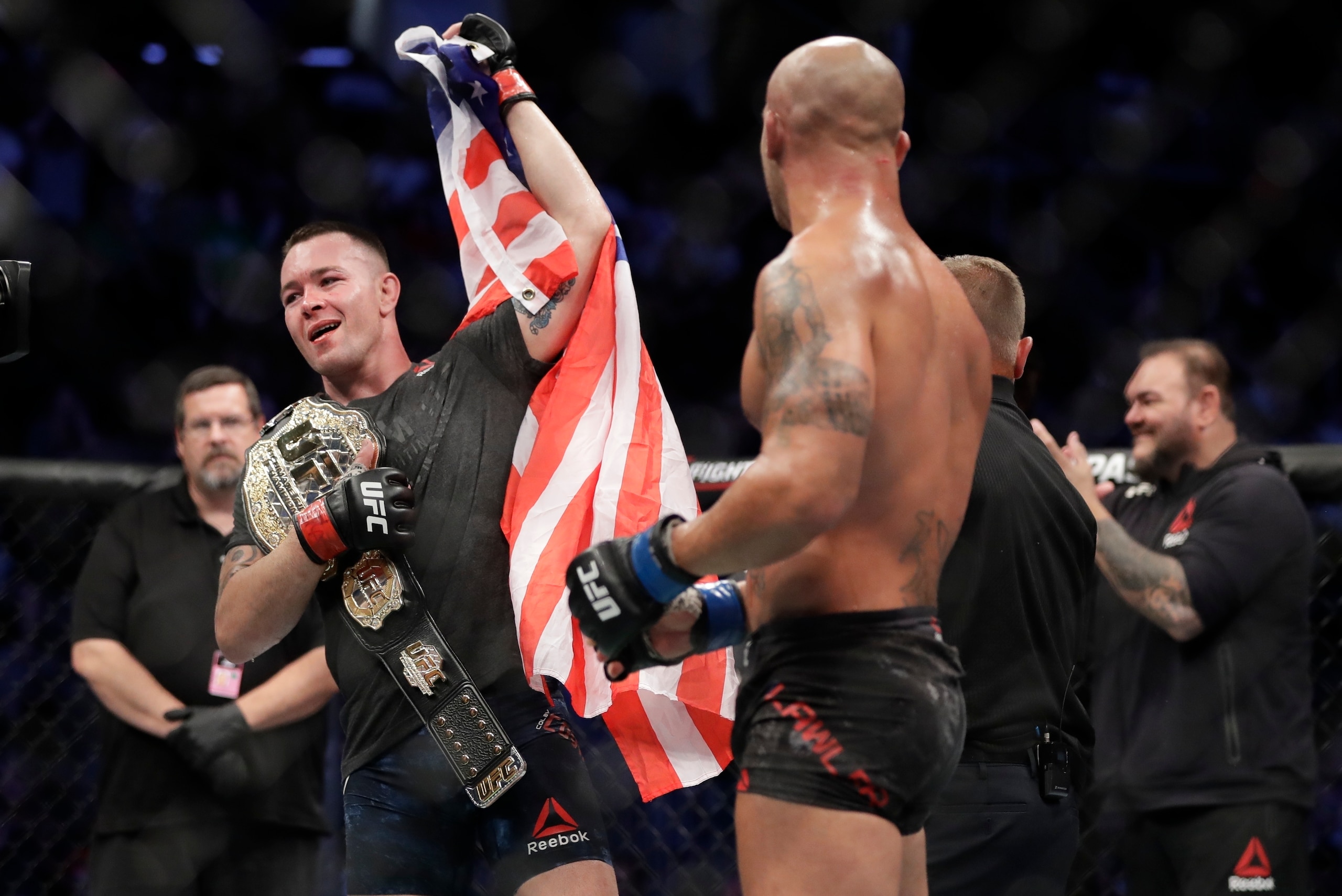
Both men are outstanding fighters, with Usman the champ and Covington holding the interim strap until the UFC stripped him for inactivity. They both bring wrestling-based games to the table that rely on controlling the position of the other man. In a cosmic nod to the sort of perfect opposition between them, both men sport identical 15-1 records.
You may be shocked to learn these two don't like each other very much. Without even getting into the rivalry's political component, they verbally sparred over PEDs, coaches, and which one is more "American," whatever that means. There's plenty more at any Google user's fingertips.
To hear them tell it, there's nothing contrived about this rivalry. Though it's a far-ranging grudge, what makes it a morality play is the politics and the demographics these fighters embody. For both men, now is not the time to stick to sports.
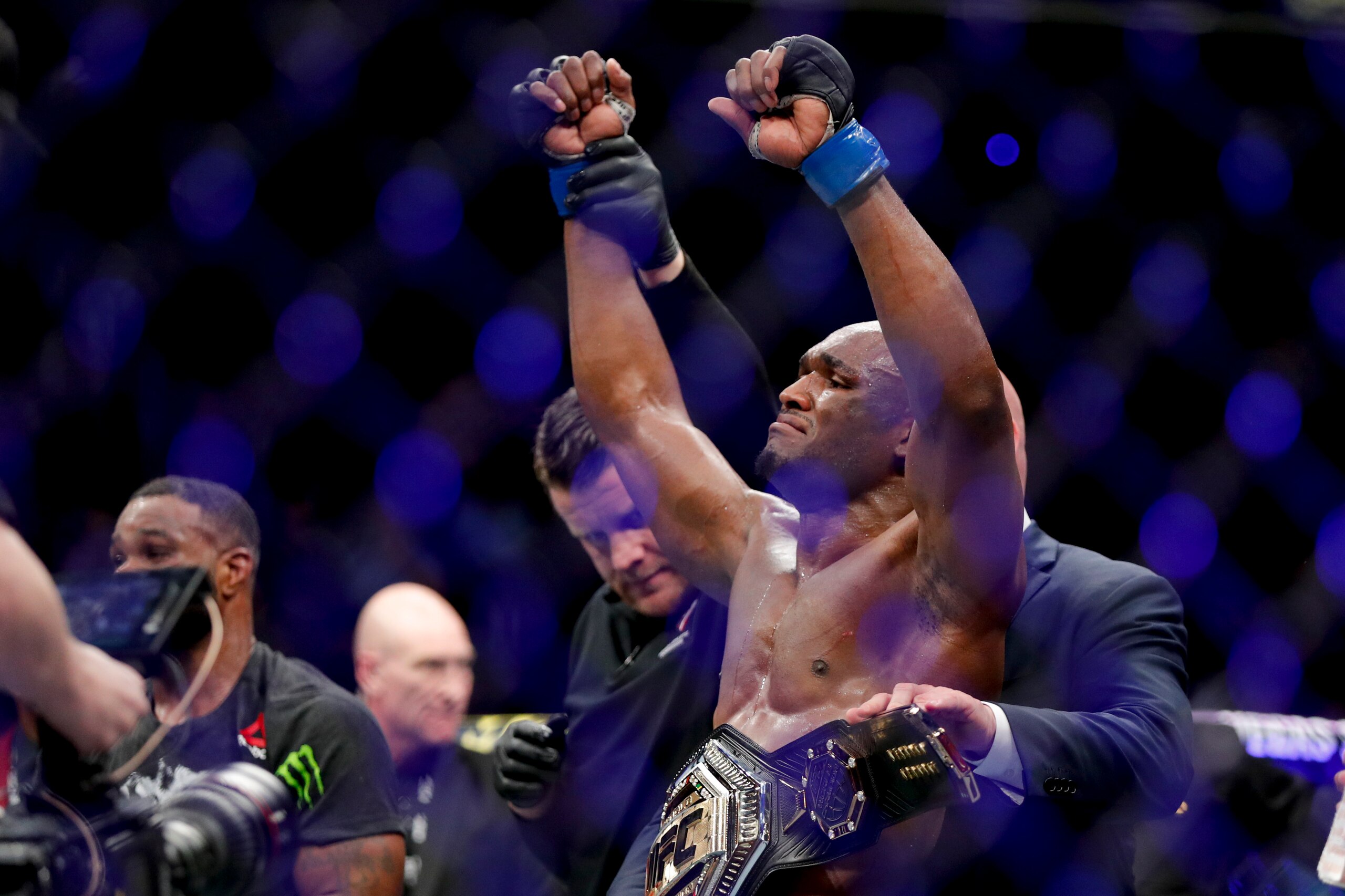
At UFC 245 in Las Vegas Saturday, they will leave the metaphors behind and fight the fight their contemporaries can only dream about. Bleacher Report recently conducted exclusive interviews with both men, in quieter moments when the stage was a little lower, to learn more about what made them who they are today and how they see their roles in this morality play for our time.
They did not hold back.
The Red Corner
In one corner you have Covington: shameless self-promoter, unapologetic MAGA hat wearer, tweeter of opening-weekend movie spoilers.
"I just don't care about people's feelings, man," he says when asked about the spoilers. "It shows how sensitive the world is. People should have tougher skin. They shouldn't get their feelings hurt."
That about sums up all of Covington's public moves. To his fans, when he calls Brazilians "filthy animals" or pokes fun at a brain-damaged ex-fighter, it's just another example of political incorrectness in action. The search for right and wrong takes a back seat to what satisfies the gut. The worse it stings the enemy, the better. Them calling it offensive only summons harder laughter.
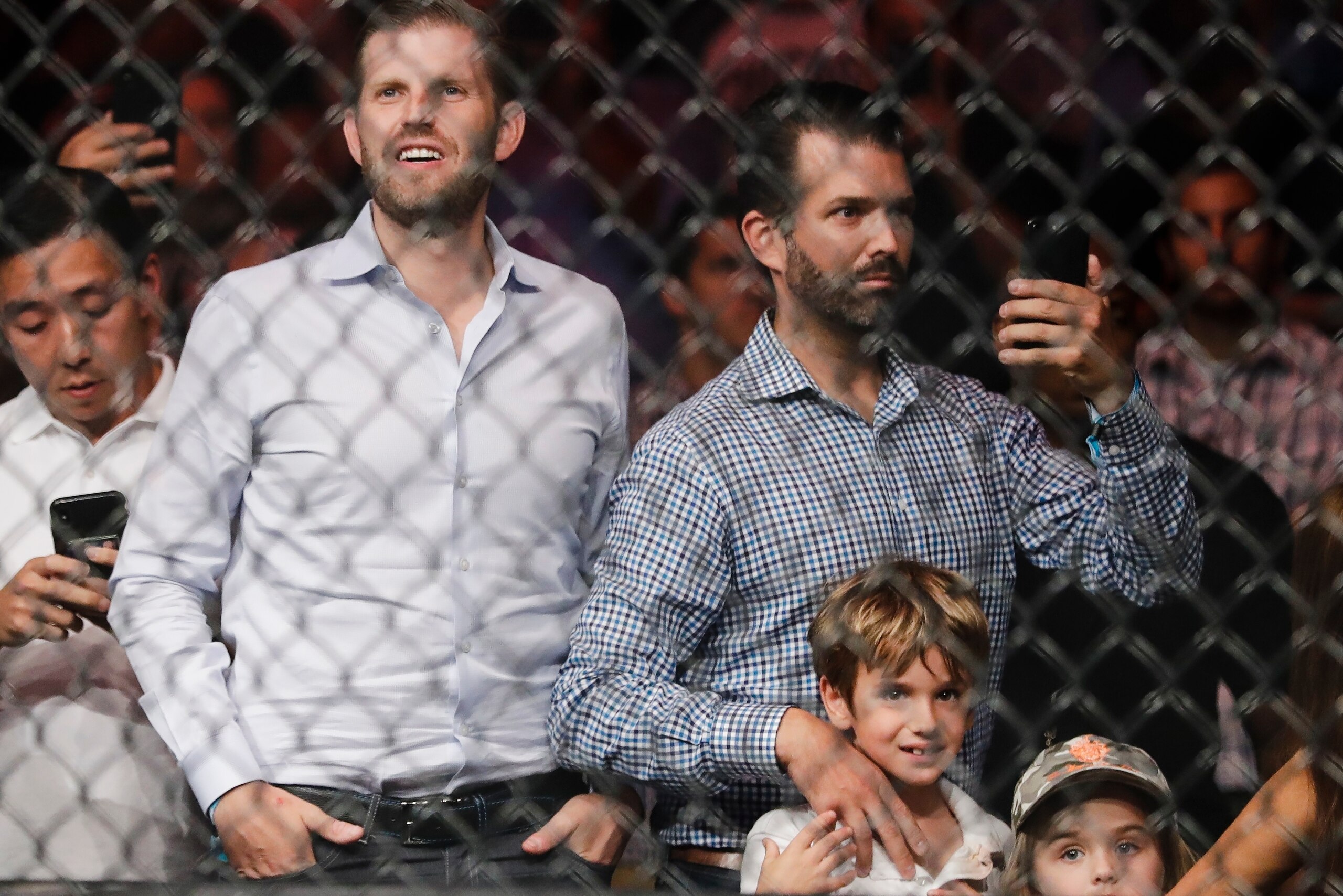
To fight aficionados, Covington is an example of something else. As the story goes, his approach is nothing more than a pre-engineered means of attracting attention. In the pro wrestling parlance beloved by so many, Covington is playing the heel—an indispensable role in any morality play.
But don't make the mistake of thinking this whole thing is just a mask, underneath which is a mild-mannered Clinton Democrat. There's undeniably a self-promotional component to his style, but when it comes to its substance, Covington says there is no daylight between his public and private selves.
"It's the same person, man," Covington says. "What you see is what you get. It's all real. None of it's fake. When it's time to do business, I just turn it up to 11."
Covington grew up in Thurston, Oregon, later wrestling for Thurston High School. His grandfather served in both the Korean and Vietnam wars, laying the foundation for Covington's ardent support for the armed services (he routinely dedicates his fights to the troops). According to the United States Census Bureau, Lane County, where Thurston is located, is 89.1 percent white—12.6 percentage points higher than the national average.
After winning state his senior year, Covington bounced around a bit before winding up at Oregon State, where he earned two conference titles and one All-American nod. You don't get anywhere without work, and that goes double for wrestling. Covington's work ethic is apparent.
By his own description, Covington is a lifelong Republican. A proud Trump supporter, Covington's views should be familiar to anyone who understands the GOP's modern policy platform.
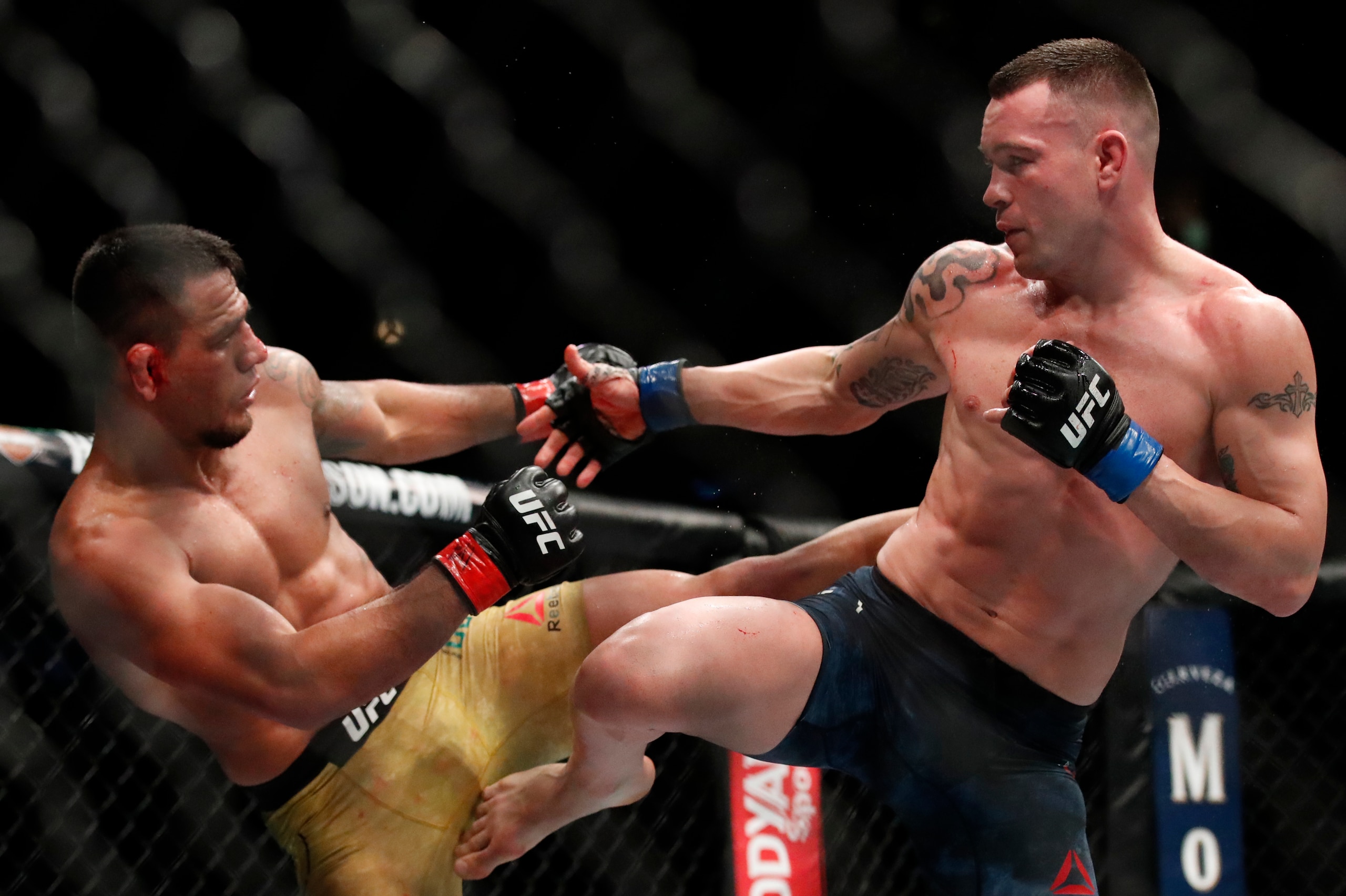
"I knew I didn't like the way the liberals thought," he explains. "The way they thought about borders and taxation and communism. ... To be honest, I don't follow the news too much. I came to learn the news was fake. I'm not going to believe anything they say."
That begs the question: How does he feel about Usman's immigrant status?
"I would hate for you to report fake news," Covington says. "Show me a birth certificate where he was born in Nigeria."
Come again?
"I'm saying he was born here," Covington continues. "He was born in Dallas. I've gotten a lot of secondhand info that he's not born in Nigeria. He's using it to get attention."
The Blue Corner
There appears to be an impasse if you want to call it that. Because Usman, according to Usman, was born in Nigeria. His father served in the Nigerian army. As a boy, Usman—who as of Wednesday is roughly a -175 favorite Saturday at Caesars—moved to Arlington, Texas. According to Census data, Arlington is 63.0 percent white; 13.5 points lower than the national average.
It's been a long time since Usman's feet first hit American soil, but he remembers plenty from his days in Africa.

"It's a simple life," he recalls. "We had food but we had to plant the corn. We had to plant the yams. You know? When we lived with my grandmother, we had to walk to the river to get water. I don't remember how far it was, but it felt like miles. ... After you brought it home, you had to boil it. It was a happy life, though. It was a good life."
Usman acknowledges that he, like it or not, has emerged as a representative of population segments that frequently draw the ire of Covington and those who agree with him. Even though he doesn't follow politics, Usman understands the dynamics perfectly well.
"Growing up in both systems, I can kind of feel the attitude of someone like Colby Covington," he said. "He's privileged, and he feels entitled. But he forgets that Americans are immigrants. Immigrants worked their butts off to make this country what it is. ... I've surpassed what he's done. He feels like he should be past me. I wasn't given all the opportunities he was. But I'm still ahead of him."
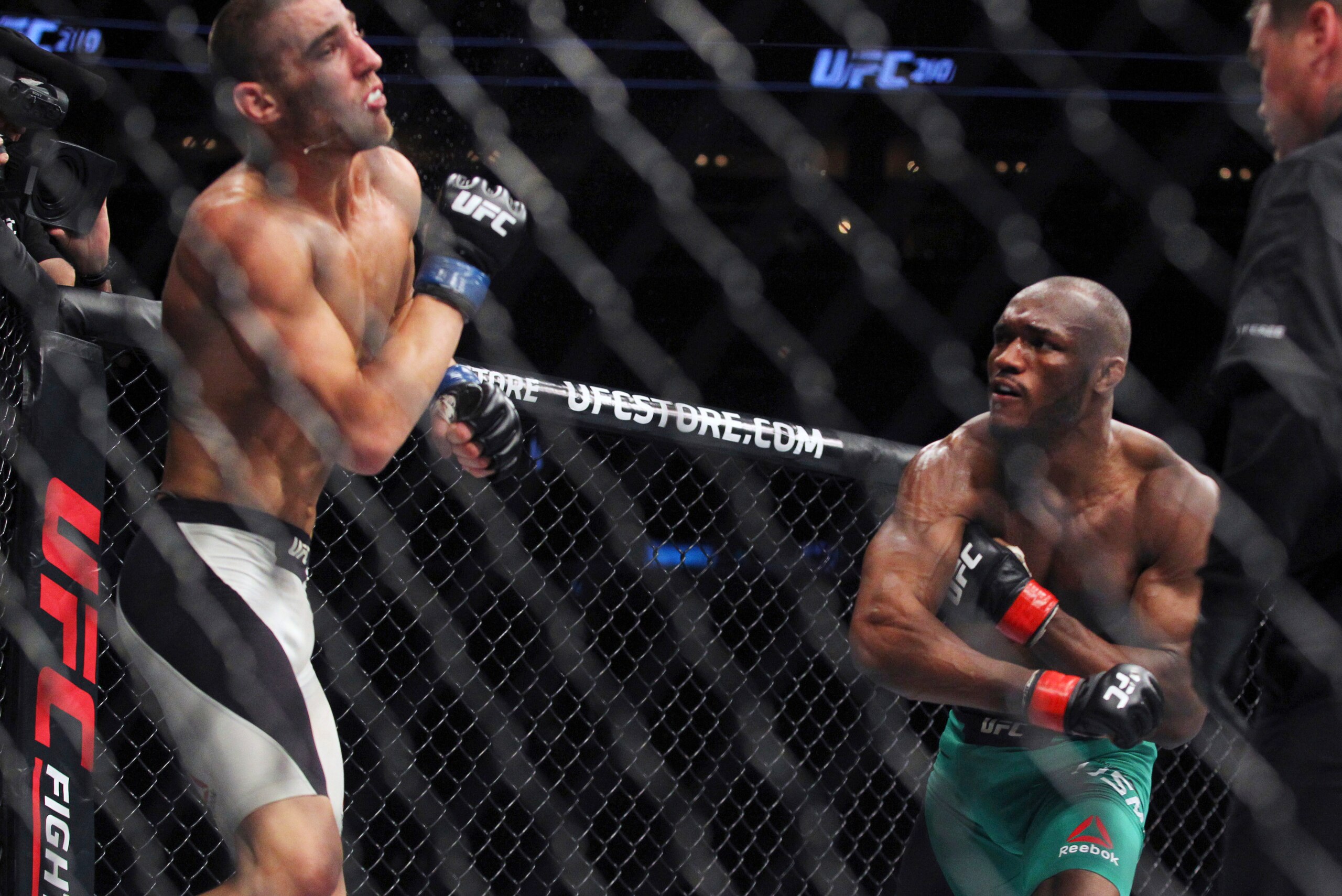
There is one topic Usman and Covington agree on. Each man sees his public persona as serving a purpose. Like Covington, Usman rejects the notion that Covington's public exhibitions should be treated as pure kayfabe.
"Obviously [Covington's public persona is] an act, but doing it continuously at this level shows your personality, too," Usman says. "It's part of who you really are. Words have power. He's adding to the pollution of what our society is going through. ... They say all publicity is good publicity, but I don't believe that."
The gulf between Usman and Covington is so wide that it is unrecognizable as a gulf. Thus, as each man readies himself for this R-rated morality play, it's virtually impossible not to take a side.
Scott Harris is an MMA and feature writer for Bleacher Report.

.jpg?w=2560 "Colts Interested in MHJ Trade")
.jpg?w=2560 "Lions DC Defends Play Calls 🫥")