
Best-Case, Worst-Case Scenarios for NBA's Top Stars on New Teams
The wildest offseason in NBA history sets the stage for a fascinating 2019-20 campaign.
Through blockbuster trades and max-money free-agency deals, a small army of the Association's brightest stars swapped jerseys this summer.
The movement itself was a nonstop source of edge-of-your-seat action. But the acclimation process of these marquee players in their new places is what could define the upcoming season.
Some will hit the ground sprinting. Others might need the entire 82-game marathon and then some to find their footing. We can't tell you which players will fall into which categories, but we can (and will) examine the best- and worst-case 2019-20 scenarios for the top hoopers in new homes.
Jimmy Butler, Miami Heat
1 of 10
Best-Case
Jimmy Butler finally finds his hoops home in the militaristic setup Pat Riley and Erik Spoelstra have created with the Miami Heat. The uber-competitive nature of all three makes the Miami Heat the hardest-working team in the Association, and Butler is a natural tone-setter at both ends for the post-Dwyane Wade Heat.
After taking a backward step statistically with the Philadelphia 76ers, Butler breaks his career highs of 23.9 points and 5.5 assists. He also steers a relentless, more versatile—due to Butler's arrival and Bam Adebayo's expanded role—defense from a seventh-ranked unit into a top-three powerhouse.
Butler returns to the All-Star Game after a one-year hiatus and scores the second top-10 finish in MVP voting of his career. Miami enjoys home-court advantage in the opening round of the playoffs and uses it to make its first conference semis run in four seasons.
Worst-Case
Butler quickly realizes South Beach isn't the same without Wade and learns the hard way he doesn't have a legitimate co-star on either end. The Heat rank among the bottom third in three-point shooting and offensive efficiency, while the heavy burden of Butler's offensive demands wreak havoc on his shooting percentages.
The swingman again clashes with younger teammates, putting Miami in a tough spot as the youngsters are clearly the club's next-most important players. There are whispers of Butler seeking a change of address, but his age, contract and injury history keep any serious suitors from emerging.
He misses enough time that, when combined with the team's sluggish play, it costs him an All-Star spot. The Heat fall short of the playoffs for the third time in four seasons.
Anthony Davis, Los Angeles Lakers
2 of 10
Best-Case
"I would put our roster up against anybody," Anthony Davis said at his introductory news conference. "I feel like that in a seven-game series that we would come out victorious."
Agree with that or not, it's clear the new-look Los Angeles Lakers have a chance to be special. LeBron James and Davis sit second and third, respectively, in career player efficiency ratings. That dominance surfaces early and often, as the Purple and Gold's new pairing sets the standard for NBA partnerships.
Davis avoids the nagging injuries that have plagued him in the past and finishes on the All-NBA first team and among the top three in MVP votes. He spawns more than a few "Is Anthony Davis Officially the NBA's Best Player Now?" deep dives, while he and James return the Lakers to their championship glory of the past.
Worst-Case
Injuries keep the Davis-James duo from approaching its peak. Davis misses 20-plus games for the second consecutive season, while the injury bug pesters James like never before in his age-35 season.
Tack on L.A.'s failure to find a third star, and this team never distinguishes itself in the crowded Western Conference. Davis is good, the Lakers are good, but neither qualify as elite. He doesn't make any noise in the regular-season award races, and they unceremoniously bow out of the postseason's opening round.
Kevin Durant, Brooklyn Nets
3 of 10
Best-Case
Kevin Durant tore his Achilles just two months ago. Even though the Brooklyn Nets aren't ruling him out for this season, he's obviously looking at a lengthy rehab process.
His realistic best-case scenario is a return to normalcy, or something close to it. That doesn't even necessarily mean logging any game action, but simply feeling and moving similarly to how he did before the injury.
For the glass-overflowing optimists, though, there's a long-shot scenario in which Durant reappears at or near the start of the postseason and instantly makes the Nets the biggest wild card in the field. Brooklyn probably isn't contending for a title, but any team with Durant and Kyrie Irving could score its way to a series win.
Worst-Case
While some impatient Nets fans might consider Durant sitting out the season as the worst-case scenario, the severity of his injury makes that a realistic—if not probable—possibility.
Besides, that's far preferable to his returning prematurely and doing even more damage to his body. Achilles injuries are the worst an NBA player can suffer. It's possible Durant never looks the same again, and further injury this season might be a forewarning of what's to come.


Paul George, Los Angeles Clippers
4 of 10
Best-Case
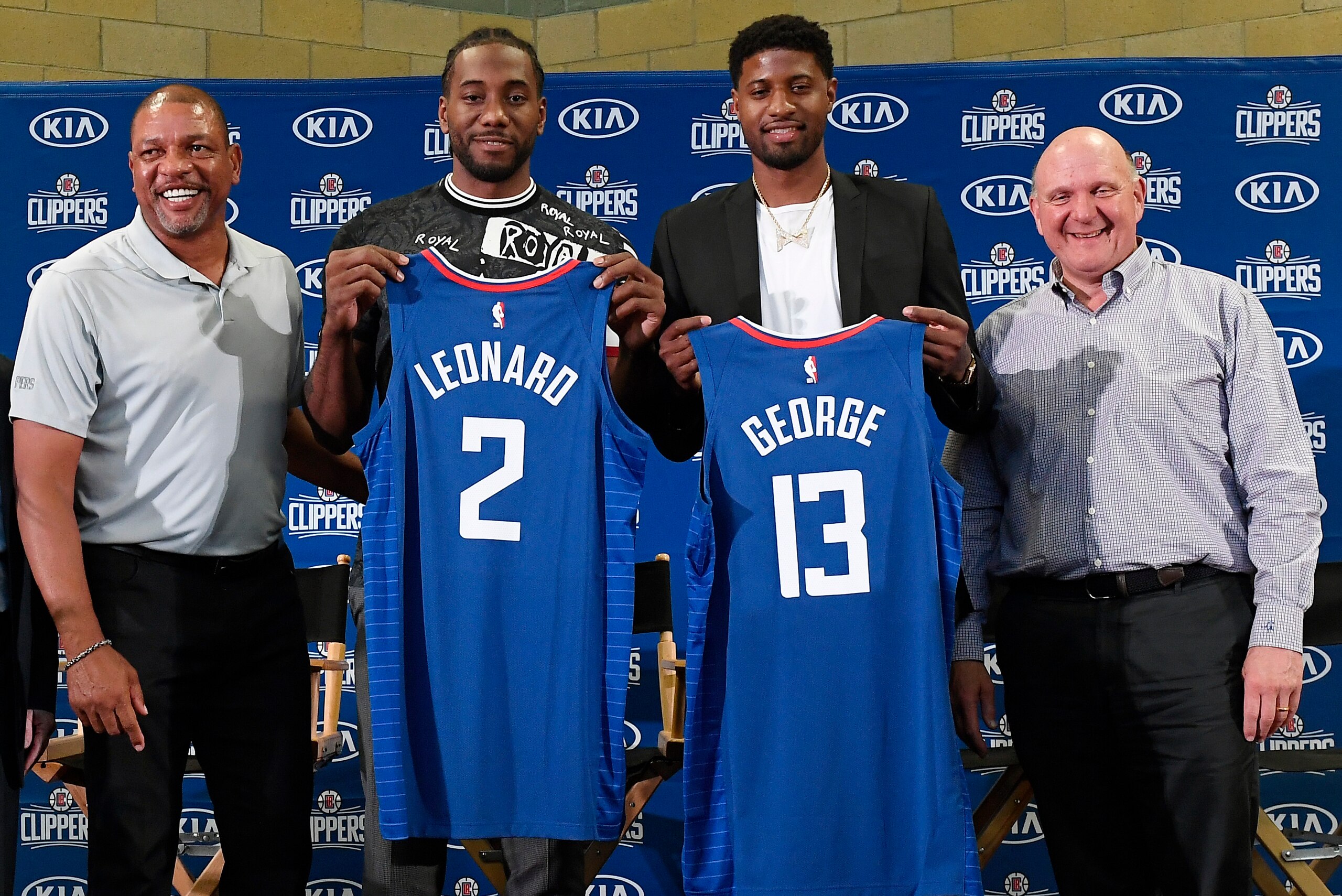
Paul George's ideal season looks a lot like his last one.
While he had made five previous All-Star trips, he had never dominated to his 2018-19 degree. By year's end, he made his initial appearances as an MVP finalist and All-NBA first-teamer while pacing the league in ESPN.com's real plus-minus.
Moving from OKC to L.A. costs George some volume production, but he makes up for those losses with increased efficiency and the most team success of his career. Behind George and Kawhi Leonard, the Los Angeles Clippers set a franchise record for wins (the current high mark is 57) before securing the organization's first NBA title.
Worst-Case
George makes all of us wonder why we didn't spend more time discussing the fact that he had two shoulder surgeries this summer. The lingering effects are seen in his three-point shooting, which falls from the elite ranks to only a shade above average.
Between George's shoulder pain and Leonard's ongoing maintenance plan, the Clippers' potentially dynamic duo doesn't spend enough time together to jell. When they do share the floor, they merely take turns attacking rather than strike a cohesive rhythm.
L.A. is good but never great, and its championship hopes are dashed before the conference finals.
Al Horford, Philadelphia 76ers
5 of 10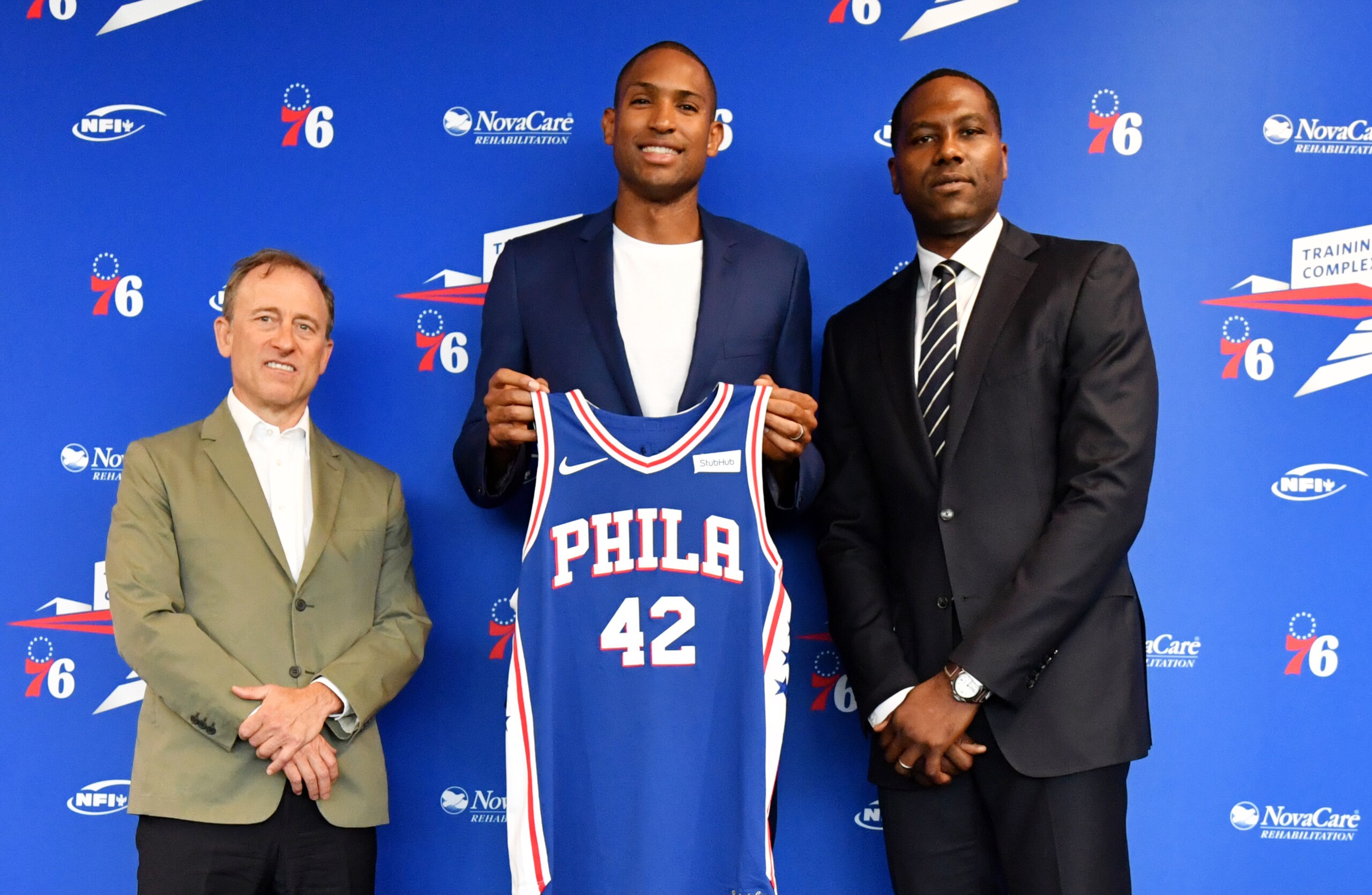
Best-Case
Al Horford functions as the connective tissue for a Philadelphia 76ers team that has struggled to make its whole as good as—let alone greater than—the sum of its parts. The five-time All-Star seamlessly transitions to his third NBA franchise and immediately becomes the Sixers' second-best at nearly everything: passing, rim protecting, switching on defense, rebounding, etc.
Philly coach Brett Brown solves his super-sized puzzle and strikes the perfect balance with the Horford-Joel Embiid pairing. The twin towers overwhelm opponents with length, ability and suffocating defense, but they also spend enough time apart to each spread his wings and soar at the center spot.
On the court, Horford makes fans forget about Jimmy Butler. In the locker room, Horford deftly handles the leadership role vacated by JJ Redick. Horford proves to be the missing piece, and the Sixers celebrate their first NBA title since 1983.
Worst-Case
Philly looks foolish for chasing size during the small-ball revolution and failing to find the requisite floor-spacers to make this unique setup work.
A lack of shooting torpedoes this team, which finds itself needing a lot more scoring than Horford can provide. He doesn't have the off-the-dribble quicks to exploit overzealous close-outs nor the rapid release to punish slow ones, so opponents are free to throw the kitchen sink at Embiid. Speed is this team's kryptonite, and size isn't the strength that it should be, since the interior is too congested for the bigs to impose their will.
The Sixers don't distinguish themselves in a rather underwhelming East, and their anticipated showdown with the Milwaukee Bucks is thwarted by a premature playoff exit.
Kyrie Irving, Brooklyn Nets
6 of 10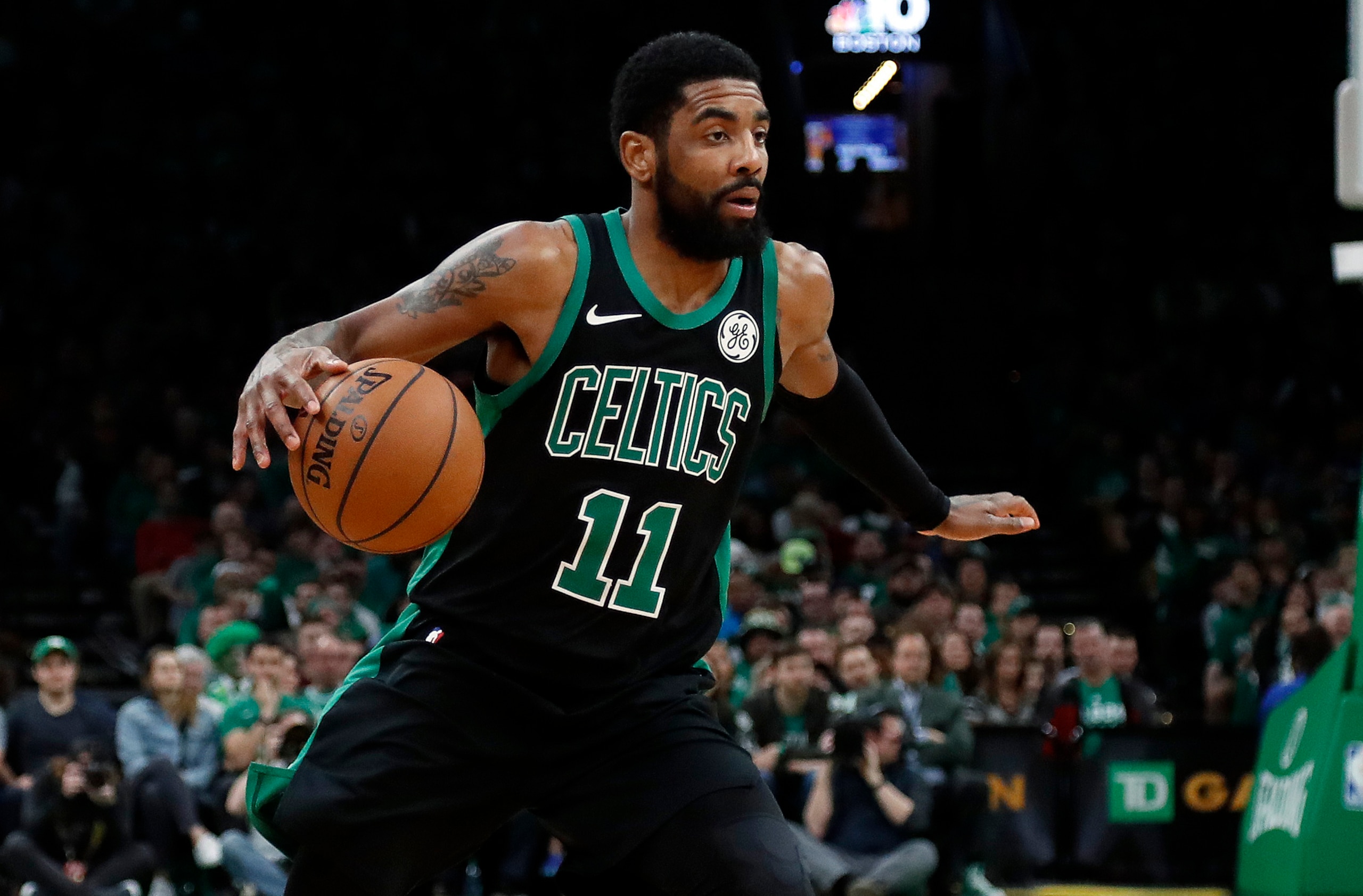
Best-Case
Inside the lines, Kyrie Irving does Kyrie Irving things.
As a top-20 scorer and passer since entering the league, he isn't adding to his game so much as fine-tuning it. And with playmaking help in the form of Spencer Dinwiddie (4.6 assists per game last season) and Caris LeVert (3.9), Irving concentrates more on his scoring efficiency and subsequently delivers his first 50/40/90 season.
In the locker room, Irving learns from his mistakes in Boston and rallies this team behind him. He uses the lack of expectations with Kevin Durant's absence as a rallying point, and this roster comes together seemingly overnight.
Brooklyn delivers just its second 50-win NBA season in franchise history, then it gets a major boost from Durant's surprise return prior to the playoffs. The Nets are the team no one wants to face, and they celebrate a series win for the first time in six years.
Worst-Case
Irving fails to connect with his new teammates. His score-first mentality pumps up his stats but doesn't make the team especially dangerous. Durant never makes it off the sideline, putting Irving in a similar spot as the last campaign—only with less scoring assistance.
Brooklyn isn't a top-10 unit on either end, and Irving's media sessions are as prickly as ever. The new-look Nets aren't any more relevant on a national level, and their playoff run derails as quickly as the last one did.
Kawhi Leonard, Los Angeles Clippers
7 of 10
Best-Case
"I think we got something special," Kawhi Leonard told reporters at his introductory press conference. "We can make history, and we got the right team to do it."
Leonard plays a central role in the Clippers' history-making season, first by conquering Los Angeles, then by taking over the entire Association.
The dynamic two-way swingman leaves zero doubt as to the identity of the NBA's best overall player. He joins the 50/40/90 club, tops his career-high 26.6 points per game and adds a third Defensive Player of the Year trophy to his collection.
L.A. is the season leader in wins and efficiency, then gets crowned league champions after barely breaking a sweat in the postseason.
Worst-Case
Between the latest round of load management and various nagging ailments, Leonard's body prevents him from ever getting into a groove. He and Paul George awkwardly share control of a Clippers offense that can be prolific, but it often appears as if there are too many cooks in the kitchen.
This isn't an elite team on either end, Leonard's absences leave him well outside the MVP picture and the Clippers can't shake their "little brother" status as they helplessly watch the Lakers hoist yet another championship banner.
D'Angelo Russell, Golden State Warriors
8 of 10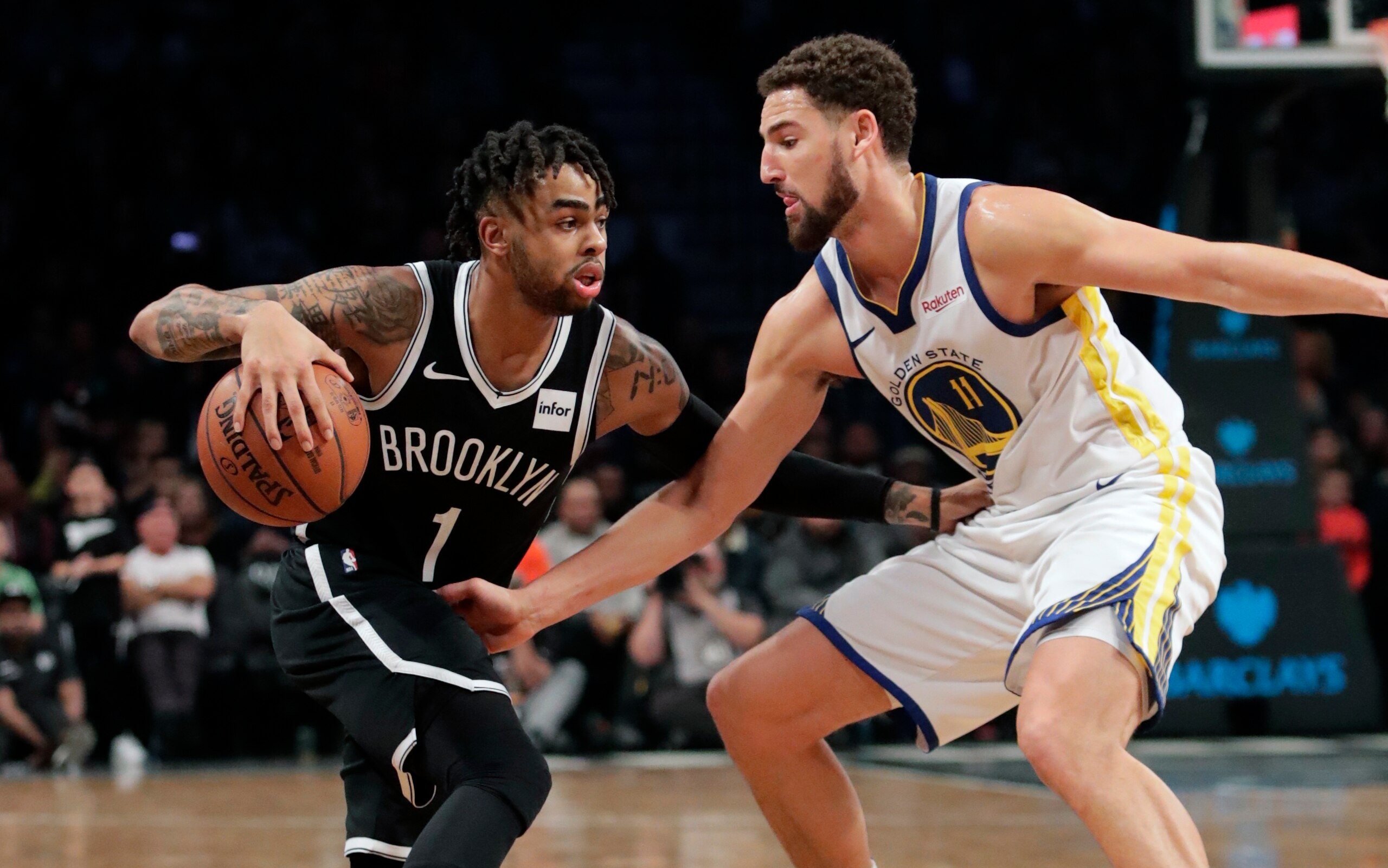
Best-Case
Maybe Golden State Warriors head coach Steve Kerr has overindulged on offseason optimism, but he sounds genuinely fired up about the D'Angelo Russell addition.
"I think he's going to fit right in with our group," Kerr said, per Ben Golliver of the Washington Post. "We're going to need him, desperately. Without Klay [Thompson] especially, we need D'Angelo's scoring."
In a perfect world, Russell forms a pick-your-poison backcourt with Stephen Curry. He loses a few assists per game, but he's still a nightly 20-point scorer with the best shooting rates of his career. By the time Thompson completes his ACL recovery, Golden State has the league's highest-scoring and best-shooting trio.
The Dubs' defense isn't great, but it's good enough to get by thanks to the team's elite offense. Russell caps his second consecutive All-Star campaign by helping Golden State make its sixth straight Finals appearance.
Worst-Case
Russell's ball dominance and the Warriors' free-flowing motion offense are oil and water. They can coexist on certain nights, but they never mix together. The defense is disastrous, a bottom-third unit overall with a backcourt offering no more resistance than a couple of traffic cones.
Russell and the Warriors are far worse together than they were apart. As he loses both volume and efficiency—resembling the volume scorer he'd largely been through three seasons—his $117.3 million contract appears an egregious overpay. Even though the relationship is failing, he and the team are stuck with one another.
The Dubs don't make it out of the opening round.
Kemba Walker, Boston Celtics
9 of 10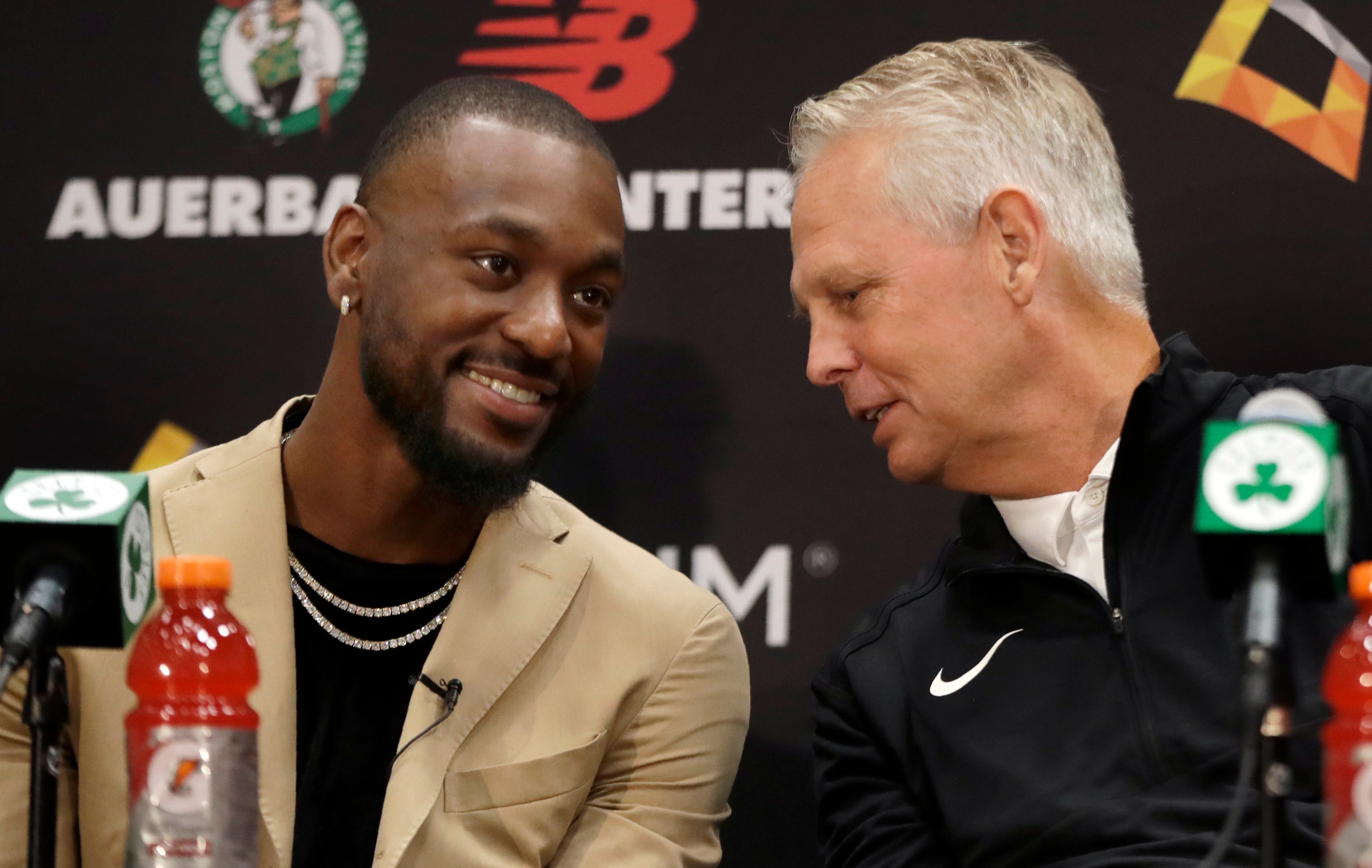
Best-Case
Kemba Walker unifies the Boston Celtics, replacing Kyrie Irving on the floor but also Al Horford in the locker room. He enjoys his best season as a shooter and shot-creator, but his ability to elevate youngsters like Jayson Tatum and Jaylen Brown makes him a top-five MVP finisher for the first time.
Last season's Shamrocks were one of four teams to hold top-10 efficiency ranks on offense and defense. Next year's group repeats the feat, only its offense jumps from the 10th spot into the top five. Walker's fingerprints are all over the improvement as he strikes the perfect balance between scorer, setup man and off-ball support sniper.
Boston is a top-four team in the East, and it shows as this team trounces its first-round opponent. The second round is a stiffer challenge, but Cardiac Kemba keeps his club one step ahead in the clutch. The train probably derails in the conference finals, but Boston doesn't go down without a fight.
Worst-Case
Inside the lines, Walker is the store-brand Kyrie, and the Celtics' offense suffers tremendously since it's already missing Horford's wheel-greasing touch. The Boston media goes heavy into discussing whether Walker is merely someone who puts up numbers on bad teams. This offense devolves into five players fighting for touches at all times.
Walker is left out of a shallow Eastern Conference All-Star pool, and the Celtics never factor into any championship discussions. Walker's first career playoff series win continues to elude him.
Russell Westbrook, Houston Rockets
10 of 10
Best-Case
Russell Westbrook proves an unlikely source of increased offensive efficiency for the Houston Rockets.
Even though the Brodie still doesn't make many threes (but ups his percentage by shooting smarter ones), his relentless attacks improve the quality of the ones his teammates take. Houston drives-and-kicks its way to another record number of threes, and Westbrook again finishes top-five in assists. James Harden, who gladly accepts Westbrook's help captaining the ship, trades quantity for quality and makes a run at a 50/40/90 line.
With the depleted Dubs out of their way, the Rockets finally launch themselves out of the West and into their first Finals appearance since 1995.
Worst-Case
Head coach Mike D'Antoni's neon-green light convinces Westbrook no shot is a bad one, and he short-circuits this attack by laying bricks at an alarming rate. Last year, he became just the fifth player to fire up 400 three-pointers despite hitting them at a sub-30-percent clip. This year, he's the third to do so on 500-plus attempts.
Even worse, the shots Westbrook misses are ones Harden can no longer take. The two stars mute each other's production, and not even D'Antoni can find a way to fix the offense. The defense finishes in the bottom half for the second straight season.
The Rockets aren't particularly relevant, save for the occasionally wild stat lines of Westbrook or Harden. A deeper Western Conference is more than Houston can take, and the franchise fails to win a postseason series for the first time in four years.
Unless noted otherwise, statistics courtesy of Basketball Reference and NBA.com.
Zach Buckley covers the NBA for Bleacher Report. Follow him on Twitter, @ZachBuckleyNBA.



.jpg?w=2560 "NFL investigating 2 referees for separate viral exchanges")
.jpg?w=2560 "Report: Chiefs Contact Hill's Agent")
.jpg?w=2560 "OBJ Calls Out Giants 😳")
.jpg?w=2560 "Tyreek makes another cryptic post amid Chiefs rumors")