Wolfenstein Youngblood Review: Gameplay Impressions, Videos, Speedrunning Tips

Despite being a spinoff to well-known series, Wolfenstein: Youngblood clearly isn't afraid to take some major risks for the sake of innovation.
And along those lines, the latest effort from developer Arkane Studios is a big hit with some notable misses.
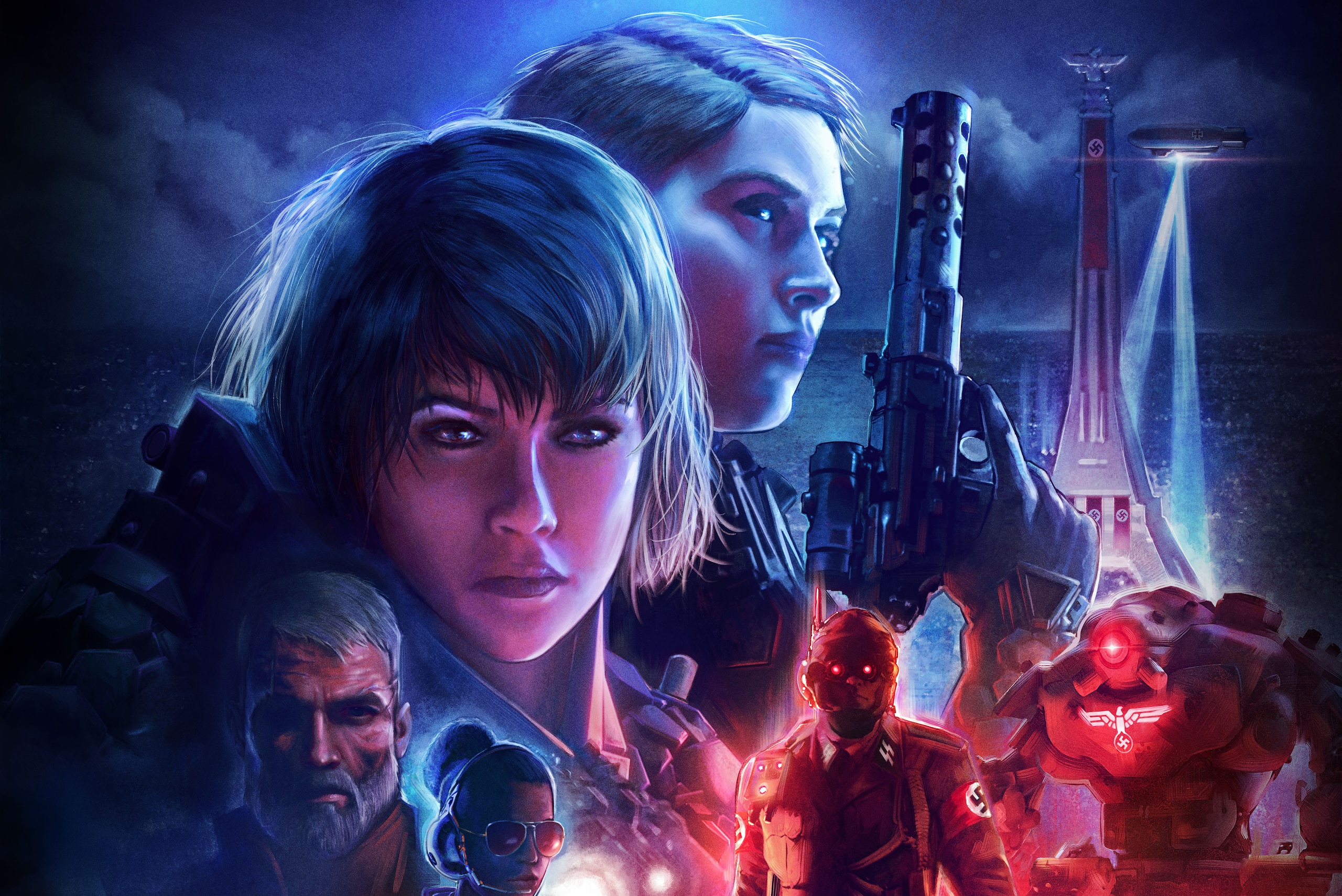
The alternate-history series this time features twin sisters Jess and Soph Blazkowicz as the Nazi hunters, which it uses to justify a heavy co-op slant to this latest release.
TOP NEWS

🚨 NC State Fires Head Coach

Malachi Toney Sets ANOTHER Record
.jpg?w=2560 "NBA Gambling Charges")
Malik Beasley Negotiating Plea Deal (AP)
Also along for the ride is a deep dive into the RPG realm, which gives the shooter a highly customizable feel in how players approach it. Think of a Borderlands-type game mixed with Arkane's Dishonored efforts atop Wolfenstein itself.
In some cases, it's as messy as it sounds, which is why the game and its hilarious protagonists don't take themselves too seriously throughout the enjoyable ride.
Graphics and Gameplay
This is about as pretty as a game influenced by Nazis winning the major wars can get.
Maybe pretty isn't the right word, anyway. Neu-Paris is a colorful locale with lots of red-branded flags as expected, which stand in stark contrast to the variety of environments within the war-torn city.
Cobblestone streets, dark slums lurking in the shadows of bigger buildings, pretty foliage and more make the game a treat for the eyes.
Overall, it's part grisly given the habits of fictional Nazi enemies, part downright gorgeous, and it's littered with details. The combat is fluid and consequential from a visual standpoint, with guns popping realistically based on what attachments they sport and enemies calling out to each other.
The kamikaze robot dogs that dive-bomb players (yes, these are a thing) and dog-like tanks (ditto), as well as other robotic monstrosities, look ripped right from a Terminator film and are as lethal as they seem.
Like Dishonored and other games from these developers, the action gets visually brutal quickly, if not unsettling. The latter is a good thing for most, but the first time a head pops off or meaty muscle goes flying, the charming dialogue from the sisters seems to go forgotten.
That dialogue is part of the brilliant sound design, as the sisters are hilarious. There's a conversation to be had about the chatter between the two trivializing the reality of their situation and task, especially given some of the torture scenes they run and jump through, but the cheesy '80s-style banter is hard not to crack a smile at. Out in the world, ambient sound is immersive, especially on something like an Astro A50 headset to give better directional cues.
Exploring the city is another area Youngblood truly shines. The devilish details of an evil regime aside, the game uses impressive amounts of verticality and nooks and crannies to keep things fresh from an exploration standpoint. There's a hint of Metroid here, too, as it isn't uncommon to come across an impassable barrier until the player unlocks something later in the game.
For those who have played a Wolfenstein in the past, the weighty shooting remains mostly intact. It's mixed up a bit in a spongy way thanks to the RPG-ification of things, but it's still best-in-class material. It's the same story for the power suit-enabled super jumping, cloaking and general traversal.
Given the co-op slant, it was rather important the game nails all the functionality there. This is seamless at all times, though, as players of any level can join a player's session or vice versa, as the sisters are never apart.
When a player wants to ride solo, the A.I. companion is outstanding for the majority of the game with one big exception—boss fights.
When it's time to scrap with a heavyweight at the end of a raid level or elsewhere, the A.I. controlled sister seems to go down fast and needs constant babysitting. It's easier said than done once the player's cover is blown and the assault from the boss is underway while the A.I. slowly scampers for cover in order to be revived.
The shared life system is a little too generous as well. Players can revive each other or the A.I. within a timeframe and not technically lose a life. If one of the sisters actually dies, then a shared life goes away. Players can stockpile three of these as it is, and finding more isn't exactly difficult.
But that minor quibble aside, the co-op functions well enough to fulfill its intentions and is a fun romp, solo or with others.
Story and More
Given the notes about the banter between the sisters, it shouldn't be shocking to see the story here isn't too serious. A few big cutscenes paint an overarching picture, and then things get underway. The sisters are fighting the Third Reich and tackle the fictional Little Berlin in search of their father.
It's all window dressing in a quick and sloppy way to get to the meat of the gameplay: There's a base of operations with mission-givers and a fast-travel system that dumps players off in various parts of the city and otherwise, where they then proceed through semi-open worlds to their objectives.
Once that gets rolling, the story takes a massive backseat, which is fine. Objectives come and go without much story weight, as the emphasis was clearly placed on the functionality of the co-op and diverse gameplay.
Stealth, for example, is a viable approach throughout Youngblood, though the difficulty curve for this sort of playthrough is outrageously tough and gets easier as players unlock skills. This has a Dishonored-feel to it as well: Throwable items are ridiculously strong and one-shot most enemy combatants, as does sneaking up behind one for a melee kill.
Simple use of the cloaking mechanic and juggling its recharge time can get players through tougher portions of the game than they are supposed to via level-gating.
Level gates are a big thing in Youngblood. The mission screen makes it clear when a player won't survive an area. Some mission objectives display a level number close to that of the player's level—others simply display a skull.
Trying to tackle one of those objectives with a skull next to it will leave players banging their heads against a wall, especially because the checkpoint system in areas can be unfair-feeling at times.
Youngblood does tout a shield-matching system of sorts, which is a little silly in action. On paper, players are supposed to match the bullet types of their guns to the baddies they encounter, but it can be hard to make out which shield types enemies sport.
This leads to a few problems. For one, especially on normal difficulty, drowning everything in lead seems to work regardless. But when it doesn't, certain enemies can feel entirely too bullet-spongey.
While this is a good idea overall, it would have been nice to see the game go all-in on the technological side of the story and give enemies color-coded shields so players have a more fluid experience in terms of diagnosing the riddle in front of them in real-time.
Sticking with the RPG-esque topic for a moment, Youngblood features a trio of skill trees players get to upgrade as they earn experience and materials. Some might suggest this feels shoved in for the sake of having it, but upgrading things like armor, mobility, jumping and stealth elements, to name a few, really helped the game feel like it has a solid state of character growth.
One could argue these should have been upgrades found out in the game world, but it was still fun to go in and decide how to spend those precious resources to make the characters stronger.
The same idea applies to the arsenal at a player's hands, too. A variety of unlocks for each weapon means personalizing it to a player's objective and playstyle.
The standard SMG can go heavy on suppressor-based attachments or become a noisy death-dealing machine. Stacking three types of attachments together give out stat bumps otherwise unavailable, and all of those stats are readily available on the customization screen.
Back on the co-op front, the "peps" system is a silly emoticon fest. Pop one of those for the other player and they get a boost. These vary and are purchasable in-game, which naturally leads to the conversation about a storefront and microtransactions. Truly, most feel obsolete besides the health-regenerating peps, anyway.
Youngblood doesn't pressure players into purchasing anything through sheer solid progression and availability of coins within the game. The leveling system moves quickly enough, and coin is bountiful for those who pay attention out in the world, so it never felt like any part of the game was designed to encourage other purchases. And, honestly, the gunplay and encounters are fun enough that a little bit of grind to level up never felt like it detracts from the experience.
Loading and transitions to new areas are cleverly hidden, at least. Sometimes the sisters dance on camera in an elevator while they wait. Sometimes one props up a heavy door while the other scooches underneath.
As far as the technical side goes, the mentioned issue with the checkpoint system is a big gaffe. Putting in a ton of time to work through a big mission, only to run out of lives and be returned to the moment the player entered the area a far ways away, stinks. And so does the inexplicable decision to prohibit pausing while playing solo—players can bring up the menu or map, but the game continues in the background, leaving the characters exposed to enemies.
Speedrunning Tips
As a first-person shooter with an RPG side, the latest in the Wolfenstein series shouldn't have any problems encouraging folks to get speedrunning.
The build variability and decision to play stealth or otherwise will make for an interesting time on platforms like Twitch. Those runs will probably vary from 100-percent runs to even no-kill runs, minus bosses.
The most basic elements apply to a Youngblood speedrun—including the option to simply whip right past plenty of enemies. This applies out in the open world and within levels.
When a player hops off the subway and has to make their way to the entrance to a level, a combination of double jumps and stealth mean they can usually get through without firing a bullet.
This applies within levels, too, as simple memorization of the layouts can lead to quick jumps and traversal. When straddled with the A.I. companion, leaving them as fodder and quickly getting to the objective will spur the A.I. spawning to open the co-op door, so playing solo isn't harmed by the nature of the game.
For those players who want to slaughter their way to a fast run, keying on health and armor abilities will prove critical. The build there is simply outputting as much damage as possible, so picking the non-cloaking ability and getting aggressive will lead to fast runs.
Regardless of the run style, the sprawling map with all of its shortcuts and barrier-surrounded areas depending on unlocks will require a big dose of memorization and best-route digestion as well, which might have some onlookers reminded of a Metroid-style speedrun.
Impressively, a co-op slanted game here isn't a slouch in the speedrunning department.
Conclusion
Wolfenstein purists might not necessarily like where the series is going, but Youngblood is an incredibly fun romp of a shooter, provided players can put up with a few baffling errors.
Youngblood certainly isn't perfect. Where the gun-tree unlocks are brilliant, the open-ended structure is derailed by impassable enemies out of a player's league. Where becoming stronger via skill tree unlocks is fun over time, bad checkpoints and no pausing stick out as big problems.
As a spinoff, the setting, diversity of gameplay and rather seamless co-op integration makes Youngblood a success. It's got some legs as far as replayability and some surprising depth for those willing to scratch beneath the surface, which is especially encouraging considering the groundwork here could now be applied to the next big release in the series.



.png?w=2560 "Week 8 Winners & Losers 📊")

.jpg?w=2560 "Aikman Blasts Cowboys WR 🫣")
.jpg?w=2560 "Jonathan Taylor Landing Spots")