


The situation every NFL player enters is every bit as important to his future success or failure as raw talent.
A year ago, the Arizona Cardinals failed in every regard to set up their first-round pick, Josh Rosen, for success. He bumbled his way through a poor rookie campaign because the organization provided little help on the offensive side of the ball, fired the offensive coordinator midseason and, ultimately, went in another direction at head coach after only one year.
Internal strife never gave last year's 10th overall pick a chance.
Rosen is no longer part of the team after the Cardinals saw the error of their ways, changed direction and decided to build around this year's No. 1 overall pick, Kyler Murray.
TOP NEWS
.jpg?w=2560 "Chiefs Giants Football")
Mahomes Told Teammate to Leave Meeting
.jpg?w=2560 "Steelers Buccaneers Football")
Baker Gets Glove From Rays 🧤
.jpg?w=2560 "Steelers Saints Football")
Steelers Roll Saints in Paris
The team is now taking the complete opposite approach, and the reigning Heisman Trophy winner should be smiling ear to ear after seeing the rest of the Cardinals draft class. Arizona achieved exactly what an organization with the No. 1 overall selection should do: The team got value and quality players at the top of every round.
Obviously, the first overall pick is critical to the entire process. The stars aligned when the Cardinals decided to fire Steve Wilks, hire Kliff Kingsbury as head coach and Murray chose football over baseball. Otherwise, an entirely different conversation would be ongoing.
Instead, an ideal situation developed through a confluence of factors.
The Kingsbury hire spurred an entirely different approach from the franchise. The offensive-minded coach with Air Raid roots turned the Cardinals from a rudderless squad into a team with an obvious plan. They're being built to make the coach's system succeed and score plenty of points.
Murray is the focal point, even though general manager Steve Keim was hesitant at first.
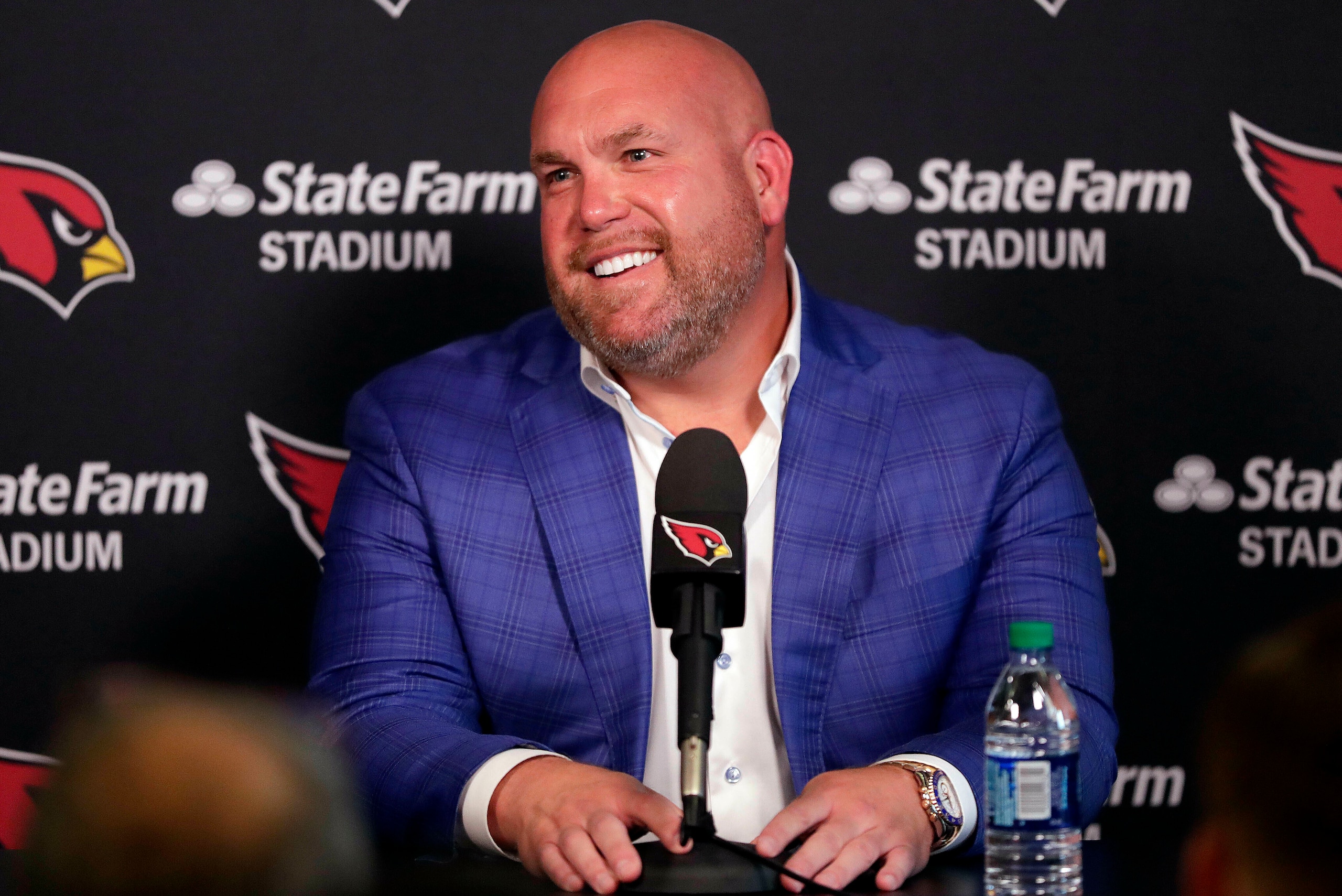
"I'm not going to lie to you, I was reluctant," Keim told reporters Thursday after the selection. "I did not want to watch the tape, I did not want to fall in love with the player. I watched more and more, saw the things he can do. As I continued to get to know the person, as we did all our homework, our due diligence, the more and more I became convinced this was the right guy for us."
Admittedly, Murray isn't the right fit for every team. His size (5'10" and 207 pounds), or lack thereof, is something certain organizations couldn't overlook. As the game continues to evolve, prototypical size is far less of a priority. It's even less so in Arizona, where Murray is a perfect system fit. The 2018 Big 12 Offensive Player of the Year played in an Air Raid derivative at Oklahoma under Lincoln Riley, who was a backup quarterback when Kingsbury led the Red Raiders as their starting signal-caller.
So, the concepts Murray must learn will be very similar, if not identical, to those he'll employ as a professional. The godfather of the Air Raid, Washington State head coach Mike Leach, explained the approach to Arizona Sports 98.7 FM's Kevin Zimmerman:
"The two things that I always try to focus on is you want to attack the whole field, you know, sideline to sideline, and about 30 yards downfield. You also want to get it in everybody's hands. I think within that—I think that's what you're trying to scheme your way through. I think that's just efficient, good offense.
"If you want to have a good offense, you utilize all your resources, which is your space and your personnel."
Spacing, not precision, drives the entire scheme. "Get to grass" is a common phrase heard from Air Raid disciples.
North Carolina Tarheels offensive coordinator Phil Longo echoed this, per Inside Carolina's Ross Martin:
"Decisions are made by the receiver. And they are doing it athletically and they are doing it on the fly. And he is really doing it without having to really think, it's instinctively reacting to where the grass is and the quarterback is always throwing to a guy who is in space. We don't have that many contested catches for throws in this offense because of the nature of the way we allow receivers to run routes.
"The quarterback is going to distribute the ball to athletes in open space and we can do less coaching and let those guys do what they do well."
Murray's inclusion is exciting because he brings a totally different dynamic as a top-level passer and runner. Other Air Raid prospects, like Baker Mayfield and Patrick Mahomes, took the league by storm last year. Neither runs nearly as well as Murray does. The Cardinals' new quarterback is a threat at all times, especially when the offense is predicated on spreading out a defense to its breaking point, and there aren't any spies in the NFL who can run with Murray.
"He's a dynamic talent, a unique talent that I don't know if anyone has seen," Kingsbury said, per Darren Urban of the team's official site.
Murray will be even more dangerous with the surrounding cast the Cardinals built through a combination of personnel already on the roster, trades, free-agent signings and draft picks. Larry Fitzgerald, David Johnson and Christian Kirk are a solid core of talent among the skill positions. Veteran additions Marcus Gilbert and J.R. Sweezey will help solidify a shaky offensive line that already featured D.J. Humphries, Justin Pugh and Mason Cole. These cornerstones needed help, though.
The influx of incoming talent from this year's draft class is simply staggering, especially on the offensive end. Multiple weapons will enter the lineup as ideal fits.
The Air Raid doesn't use traditional X-, Z- and slot receivers. Instead, designations are made between inside and outside receivers. Fitzgerald will lead the way as a 15-year veteran capable of excelling in both roles. Kirk is a dynamic weapon with the ball in his hands. These two will be joined by three rookie receivers.
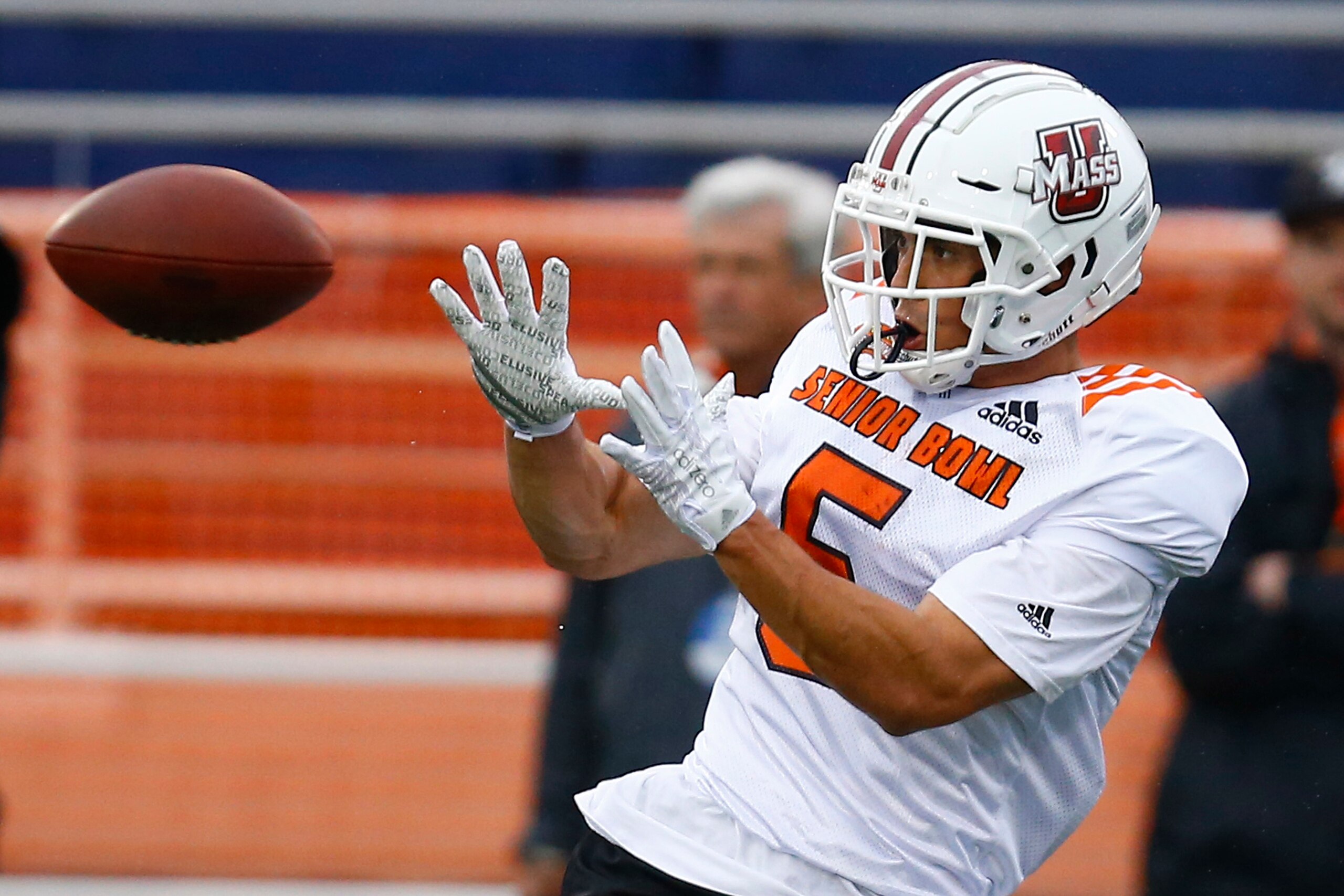
This year's 62nd overall pick, Andy Isabella, is a blazing-fast option with 4.31-second 40-yard-dash speed. The 5'9", 188-pound target led major college football last season with 1,698 receiving yards. Isabella's size indicates a move inside, but his suddenness as a downfield threat makes him an interchangeable piece.
Arizona started the fourth round by selecting Iowa State wide receiver Hakeem Butler. Butler falls on the opposite end of the spectrum from Isabella. The second-team All-Big 12 performer stands 6'5" and weighs 227 pounds. An immense catch radius makes him another deep option. Despite his frame, Butler actually finished second among slot receivers in yards per route run. Butler's size and skill set didn't hide the fact he's not a precise route-runner, which is partly why he fell to Day 3 of the draft. That won't matter as much now in Kingsbury's offense due to the emphasis on coverage recognition, not timing routes.
The Cards didn't just double down on the receiver position; they found a third option. Arizona drafted Fresno State wide receiver KeeSean Johnson with the first pick of the sixth round. Johnson set a program record with 275 career receptions.
"He's got great ball skills, but I don't see him outside, and he's not as quick as you want inside," an NFC scout told NFL.com's Lance Zierlein.
That's OK. The scheme will help create space for Johnson, whereas his ball skills can't be replicated.
As the draft came to a close, the Cardinals made a sneaky-good selection when tight end Caleb Wilson became Mr. Irrelevant. Kingsbury's system doesn't really require tight ends. At least, they're not a big part of the plan. However, Wilson is a move tight end. Essentially, the 6'4", 240-pound target with 4.56-second 40-yard-dash speed can become a mismatch as an oversized slot or wing.
Offensive line depth improved with the selections of Georgia center Lamont Gaillard and Morgan State offensive tackle Joshua Miles.
The Cardinals defense, meanwhile, must play complementary football moving forward. Arizona can't ruin a promising offense by ranking among the league's worst on the other side of the ball. Sixteen-year veteran and recent free-agent signing Terrell Suggs will serve as the emotional leader, but the group needed help in every facet.
A pair of premium picks went toward the secondary.
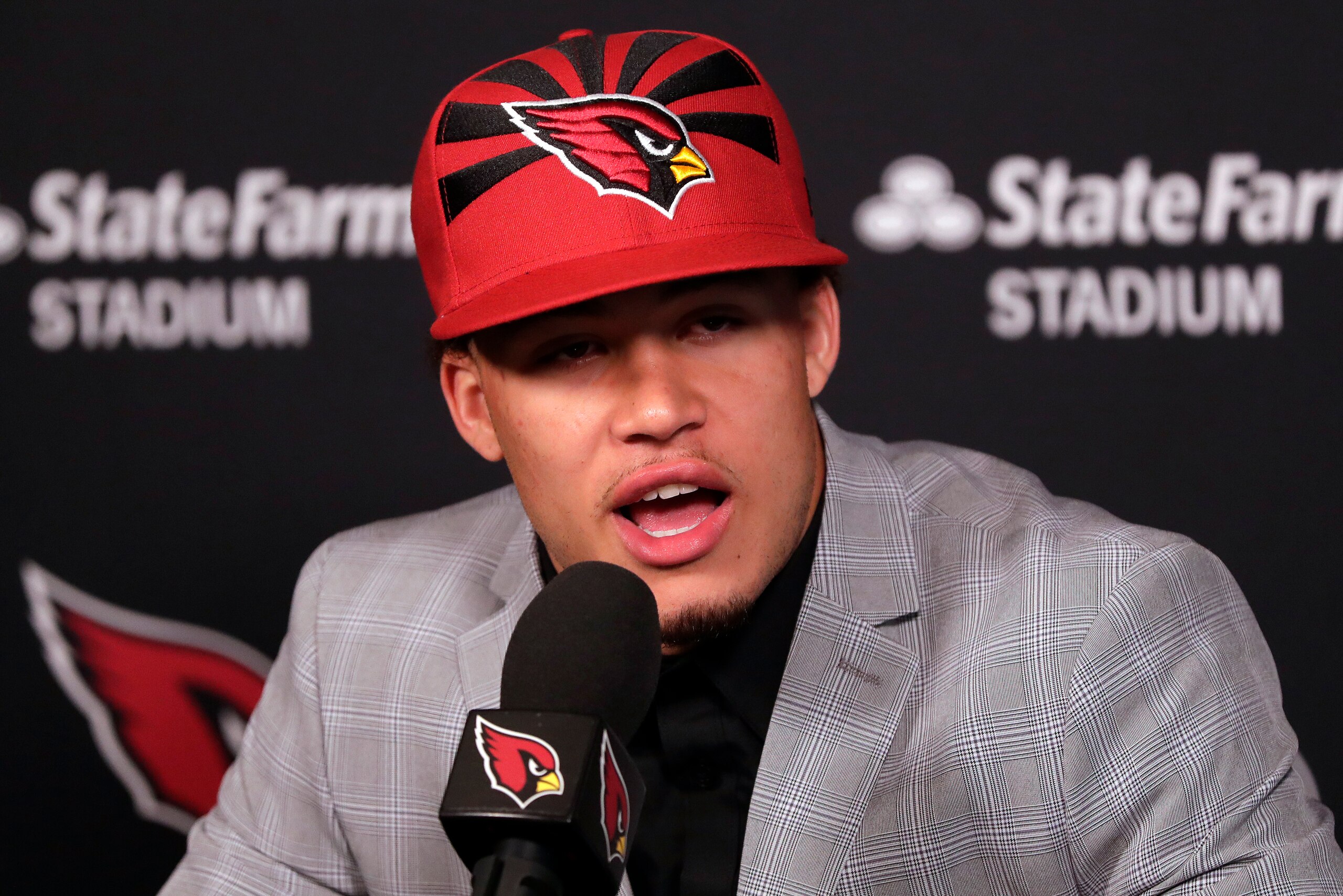
The organization finally found a bookend to Pro Bowl cornerback Patrick Peterson when it chose Washington's Byron Murphy with the first pick of the second round. Each franchise stacked the cornerback board differently, but Murphy was considered the best all-around corner in the class despite his slight stature (5'11" and 190 pounds).
Safety help came in the form of Alabama's Deionte Thompson at the top of the fifth round. At one point in the predraft process, Thompson carried a first-round grade. But inconsistency pushed him down the board. However, his sideline-to-sideline range at free safety is outstanding.
Murphy and Thompson paired with Peterson and Budda Baker form a dynamic foursome. The secondary, including D.J. Swearinger and Robert Alford, is prepared to handle the oncoming onslaught of opposing offenses trying to outscore Arizona.
Keim added punch to the pass rush with defensive end Zach Allen at the top of the third round. The former Boston College Eagle can learn from and rotate with Suggs and Chandler Jones as an outside linebacker or 5-technique. Seventh-round pick Michael Dogbe led all American Athletic Conference interior defenders with 39 quarterback pressures last season, per Pro Football Focus.
On paper, the Cardinals are a burgeoning team with the potential to vastly improve upon last year's 3-13 record.
Everything aligned perfectly for Murray to excel from the onset of his career. A Rookie of the Year campaign seems more likely than not.
Brent Sobleski covers the NFL for Bleacher Report. Follow him on Twitter: @brentsobleski.
.jpg?w=2560 "Eagles Jaguars Football")
.jpg?w=2560 "Titans Colts Football")
.jpg?w=2560 "🚨 Week 8 AP Top 25 Poll")
.jpg?w=2560 "Updates from EVERY Game")