
Fluke or for Real: Making Sense of 10 Most Surprising MLB Starts
Few things can test one's perception of reality like the opening weeks of a Major League Baseball season.
It's a time when anything can and will happen, up to and including seemingly great players playing like scrubs and seemingly less-than-great players playing like stars.
So it goes in the first two weeks of the 2019 MLB season, so we've come along to make sense of 10 especially baffling early performances with a game of "Fluke or for Real?" This involved taking a look at what's under the hood and determining whether it supports the numbers on the surface.
We'll start with five pitchers (plus one honorable mention) and end with five hitters.
Note: Some advanced stats are current through Tuesday, April 9.
Trevor Rosenthal, Washington Nationals
1 of 11
After missing 2018 recovering from Tommy John surgery, Trevor Rosenthal has a chance at a fresh start with the Washington Nationals.
It isn't going so well.
The first nine batters Rosenthal faced reached base, and seven came around to score. He finally got three garbage-time outs in Washington's 15-1 victory over the Philadelphia Phillies on Wednesday, but not without giving up three walks and a run.
The 28-year-old seemingly has no idea where the ball is going. He's walked seven batters and hit another one, and his rate of pitches within the strike zone has plummeted from 47 percent in 2017 to just 32 percent.
Rosenthal's arm slot is slightly lower than it was two years ago, yet he's at least been consistent with his release points. That lends some credence to the notion that his malfunction is less mechanical and more psychological. As he told reporters, "I'm just pressing a little bit too much now to make a really good pitch."
There is, however, the matter of whether Rosenthal can succeed on his fastball alone. His 98.1 mph average is impressive, but it isn't as much of an advantage at a time when most relievers throw in the mid-to-high 90s. Moreover, Rosenthal's fastball is flatter than it was at last check.
In short, this reclamation project needs a lot of work.
Verdict: For Real
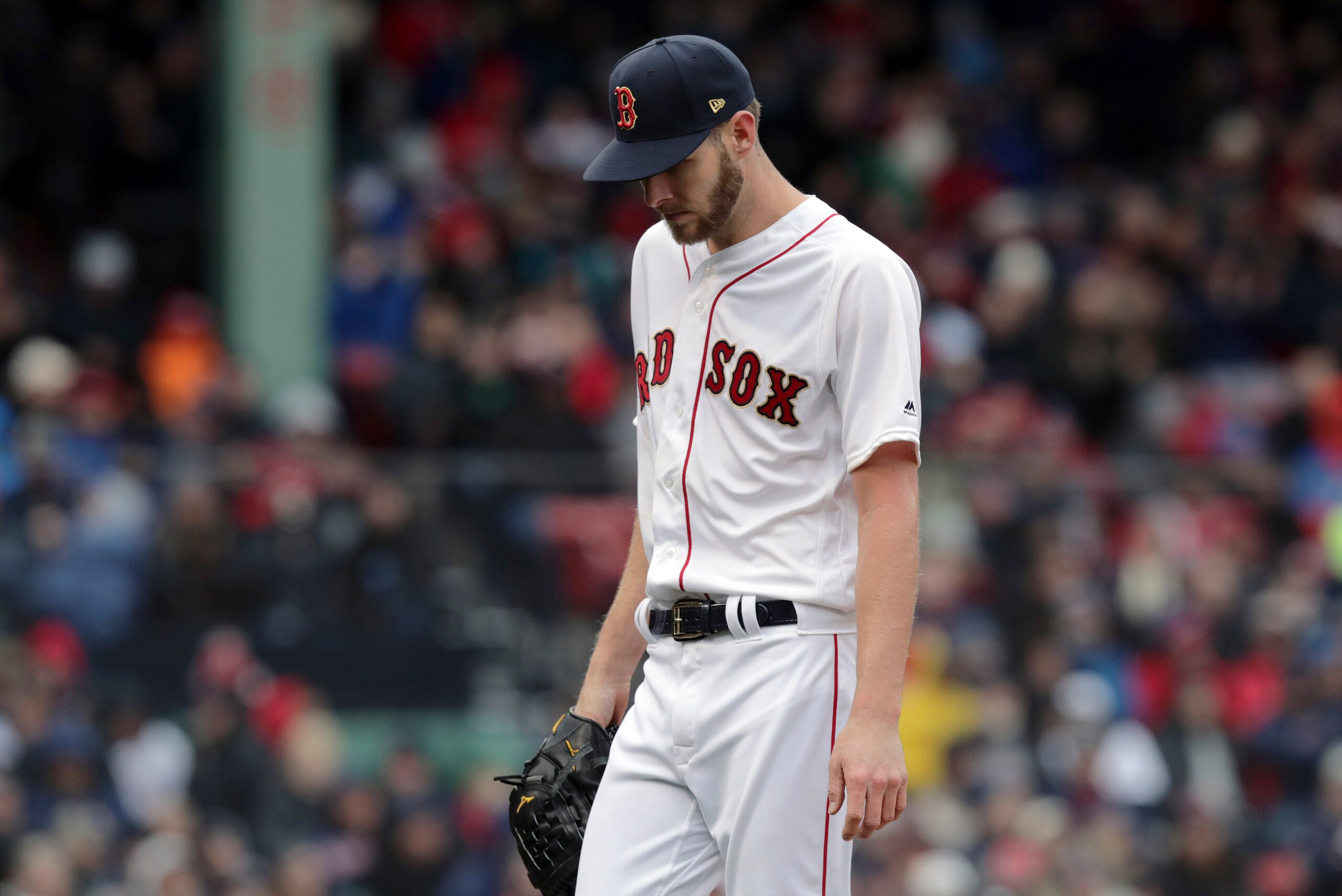
Chris Sale, Boston Red Sox
2 of 11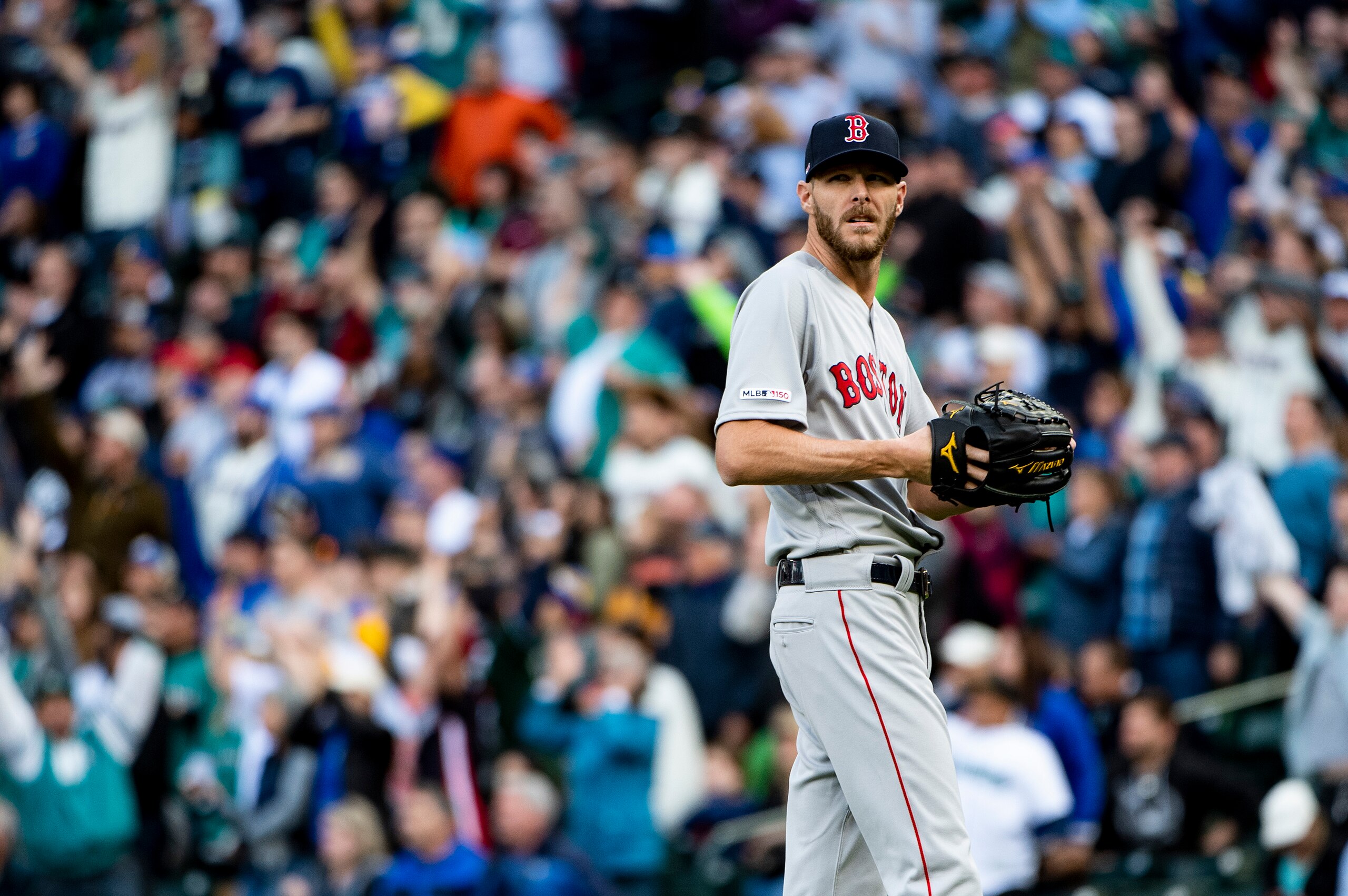
Chris Sale's credentials include seven All-Star selections and six top-five finishes in the American League Cy Young Award voting. He's also fresh off signing a $145 million contract extension with the Boston Red Sox.
For a guy like this, a 9.00 ERA with 16 hits allowed and only eight strikeouts in 13 innings through three starts is not a good look.
The left-hander's big bugaboo is his fastball velocity, which is down from an average of 94.7 mph in 2018 to just 91.3 mph out of the gate. His 88 total fastballs have yielded seven hits and exactly one swing-and-miss.
According to Rob Bradford of WEEI.com, Red Sox pitching coach Dana LeVangie suggested on April 2 that Sale, 30, is intentionally starting slow so he can save some gas for later in the year.
However, the shoulder woes that Sale went through in 2018 raise the question of whether there's something else going on. Moreover, the fact that he's only throwing 37.0 percent fastballs points to an apparent lack of confidence in his heater.
Even if Sale is indeed healthy, there's little reason to think his current approach will work any better over time than it is now.
Verdict: For Real
Aaron Nola, Philadelphia Phillies
3 of 11
Aaron Nola broke out as an ace in 2018 with a 2.37 ERA and an MLB-best 10.5 WAR, according to Baseball Reference. The Philadelphia Phillies promptly rewarded the 25-year-old with a $45 million contract extension.
Though Nola hasn't had it as bad as Sale in 2019, he's saddled with a 6.46 ERA and less-than-stellar peripherals that include 14 hits, five home runs, eight walks and only 13 strikeouts in 15.1 innings.
However, Nola's arm appears to be in good shape. His fastball velocity is down, but only slightly from 92.4 mph to 92.1 mph. His arm slot is also normal, and his release points have been reasonably consistent.
It also bodes well that Nola isn't serving up too many "hit me" offerings. His rate of pitches within the heart of the strike zone is only 19.2 percent, which is his lowest since he entered the majors back in 2015.
Hitters are averaging 89.9 mph exit velocity on their batted balls off Nola—a career-worst for him—but that figure may be overselling how hard he's actually being hit. His hard-hit rate is steady and his soft-hit rate is actually up.
The question here is, "Why worry?" The best answer is, "Good question."
Verdict: Fluke
.jpg?w=2560)
Matt Shoemaker, Toronto Blue Jays
4 of 11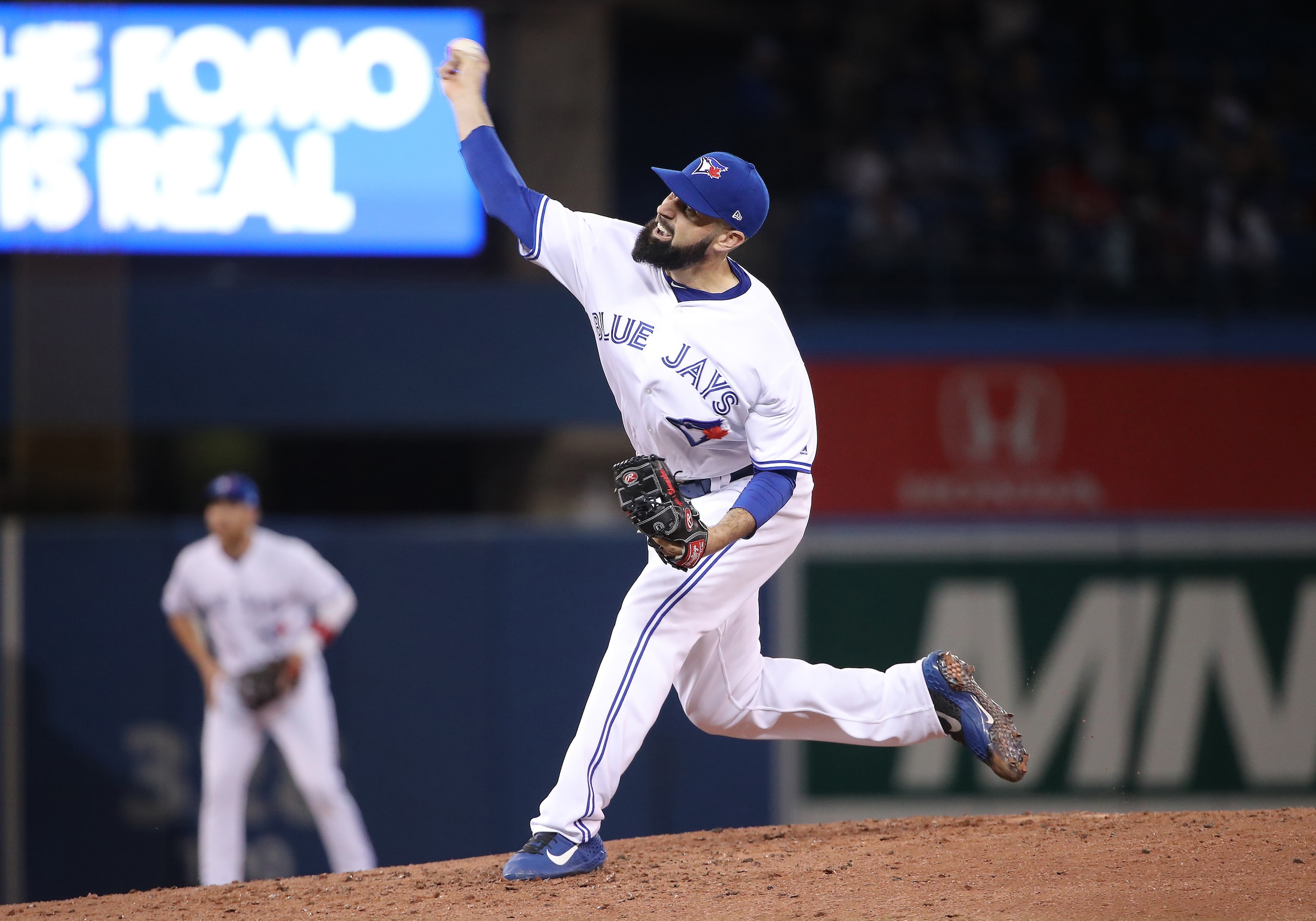
Matt Shoemaker was a reliable pitcher for the Los Angeles Angels between 2014 and 2016, but injuries overcame him over the next three seasons. He's now with the Toronto Blue Jays on a one-year deal.
So far, so good. The 32-year-old's first three starts have produced only two earned runs over 19.2 innings. He's struck out 19 and permitted only nine hits and five walks.
Shoemaker hasn't busted out any extra fastball velocity, but there is something different about how he's attacking hitters. He's featuring his splitter more prominently, and it's part of a high-low-lower attack pattern in tandem with his fastball and slider.
This is a good approach for the Launch Angle Era in theory. In practice, it's getting Shoemaker many infield pop-ups to go with all his swinging strikes.
Still, Shoemaker hasn't yet gotten his hard-hit rate below the league average, and that should probably be hurting him more than it has been. The 164-point difference between his expected slugging percentage (.456) and actual slugging percentage (.292) is sixth-largest among pitchers who've faced at least 40 batters.
Count Shoemaker as a pitcher who's better but not this good.
Verdict: Fluke
Luis Castillo, Cincinnati Reds
5 of 11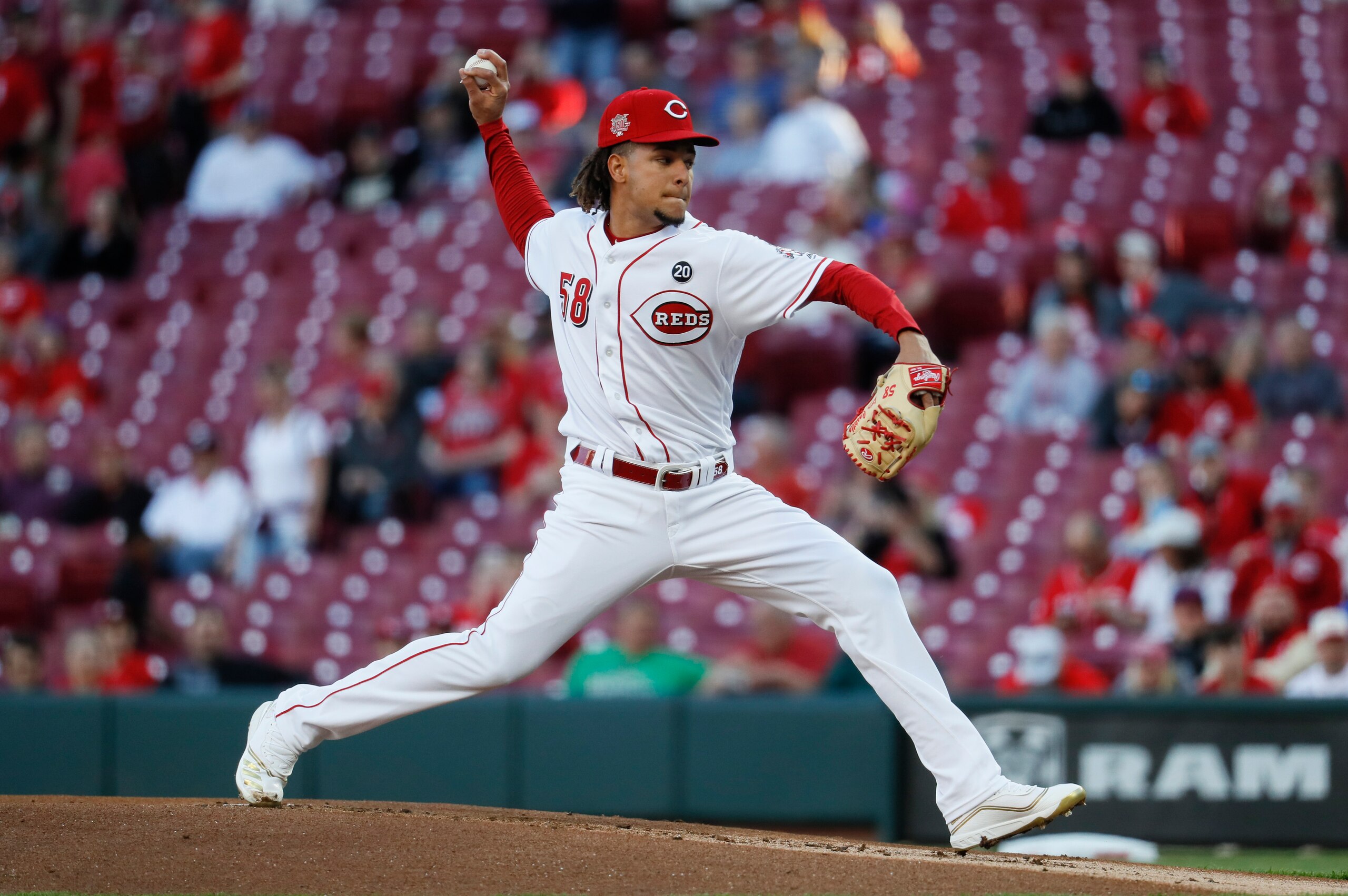
The best pitcher in the National League right now? According to FanGraphs wins above replacement, it's Cincinnati Reds right-hander Luis Castillo.
This is not the same Luis Castillo who once had a 35-game hitting streak, but it is the same Luis Castillo who was decidedly mediocre in putting up a 4.30 ERA in 2018. Now he has a 0.92 ERA through his first three outings of 2019, complete with 25 strikeouts and only five hits allowed in 19.2 innings.
And now for a confession: We're only feigning surprise here, because all available evidence says that Castillo really is this nasty.
The 26-year-old righty first made a name for himself with an electric debut in 2017. And after a slow start, he finished 2018 with a 2.63 ERA in his final 14 starts.
Castillo's primary weapon is a fastball that's sitting at 95.3 mph, but his rising success is tied to the increased use of his changeup. It's a devastating pitch with arm-side fade worthy of Pedro Martinez, and it's the driving force behind his National League-low 57.4 contact percentage.
In short, all aboard the Luis Castillo Hype Train.
Verdict: For Real
Honorable Mention: Matthew Boyd, Detroit Tigers
6 of 11
With respect to Luis Castillo, Matthew Boyd might be the most dominant pitcher in baseball right now.
The Detroit Tigers lefty made his third start Wednesday, and it resulted in one run and six strikeouts over six innings. Altogether, he's sitting on a 2.60 ERA with a whopping 29 strikeouts in 17.1 innings.
Boyd can only be an honorable mention, however, because this was written before his under-the-hood stats were updated to account for Wednesday's performance.
What is apparent from what's available is that Boyd is up to something with his slider. He's featuring it more often, and it's picked up more horizontal run and vertical drop. Lo and behold, its whiffs are way up.
It may not be much, but that's something that says his hot start is for real.
Chris Davis, Baltimore Orioles
7 of 11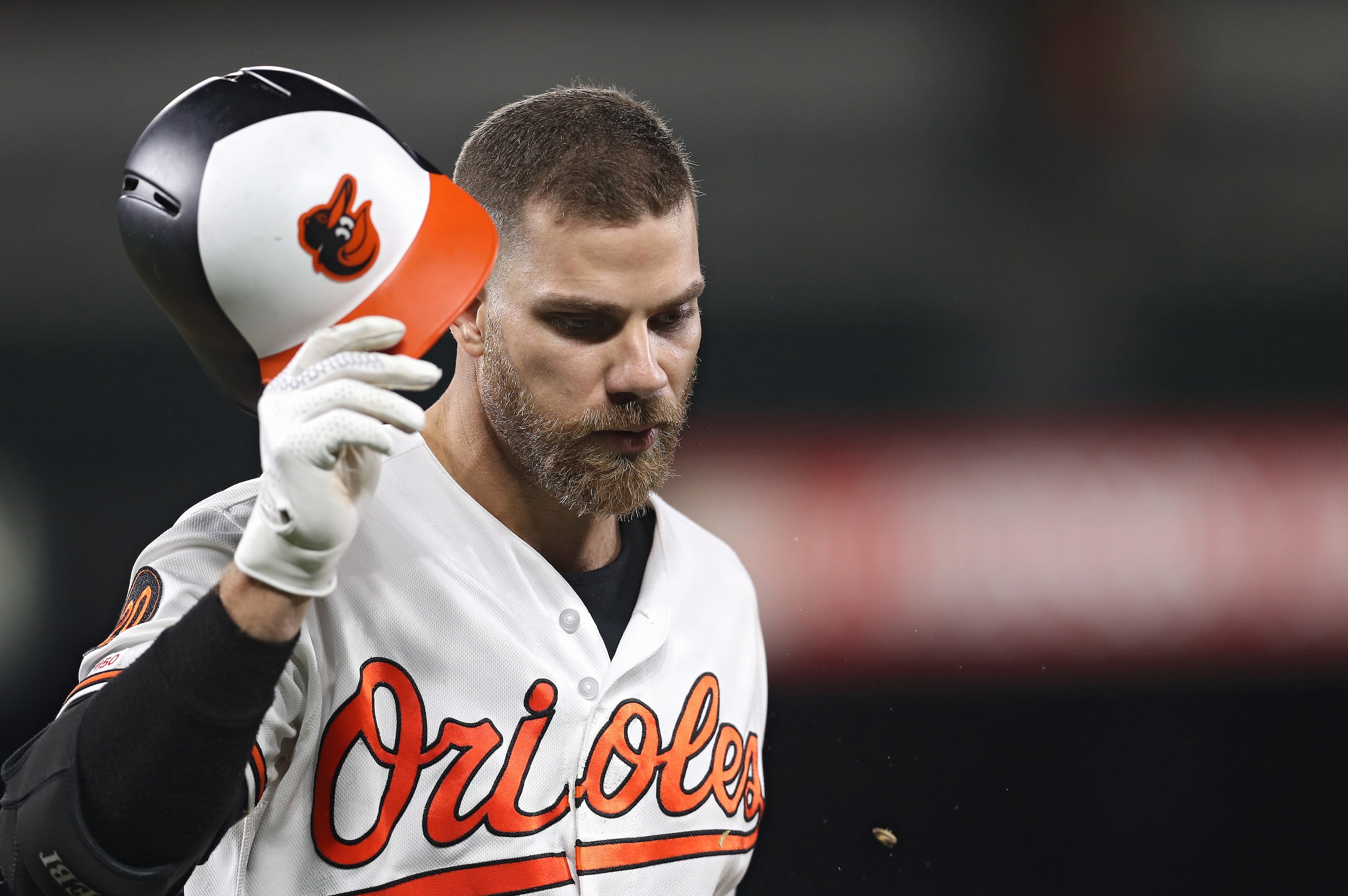
Ah, but is it that surprising that Chris Davis is off to a rough start in 2019?
Let's agree that the surprise is that his start has been this rough. Though he hit only .168 with a .539 OPS in 2018, even numbers like those don't portend an 0-for-29 start this season that stretches an overall hitless streak to an MLB-record 0-for-50.
We've already examined what's ailing Davis—who led the majors in home runs in 2013 and 2015—in graphic detail in another article. The short version is that the 33-year-old's once-mighty power has dried up and that he may be losing confidence in his swing.
The bright side for now is that Davis is averaging a solid 91.3 mph on the balls he's put in play. But there have been only 13 of those, and four have been pop-ups or ground balls.
In the meantime, it's good that he's rarely swinging at pitches outside the strike zone, but certainly less good that his in-zone swing rate is also trending down. He's operating like a hitter who's hoping for four wide ones, not something good to hit.
Unfortunately for the Baltimore Orioles, this one is owed $92 million through 2022.
Verdict: For Real
Yasiel Puig, Cincinnati Reds
8 of 11
After some rough years with the Los Angeles Dodgers, Yasiel Puig reclaimed his stardom with an .827 OPS and 51 homers across 2017 and 2018. He figured to do just as well with the Cincinnati Reds in 2019.
In actuality, Puig is 4-for-30 with one extra-base hit and only two walks in his first nine games as a Red.
It jumps out that Puig's strikeout rate has leaped from a below-average 20 percent to 28 percent. That points to real issues with his approach, including breakdowns in his strike-zone discipline and overall contact rate.
To boot, the contact Puig has made hasn't been so great. He's averaging a career-low 87.6 mph on his batted balls. His hard-hit rate is also down.
This is happening despite the fact that Puig is getting more fastballs and more pitches in the strike zone to swing at. That could indicate that pitchers have found reasons not to be afraid of him.
Of course, Puig's slow start could also be rationalized by pointing out that he's adjusting to a new city and to a new team, and that the cool temperatures of the Cincinnati weather and the Reds offense aren't helping.
Maybe so, but none of this undercuts the idea that Puig has work to do.
Verdict: For Real
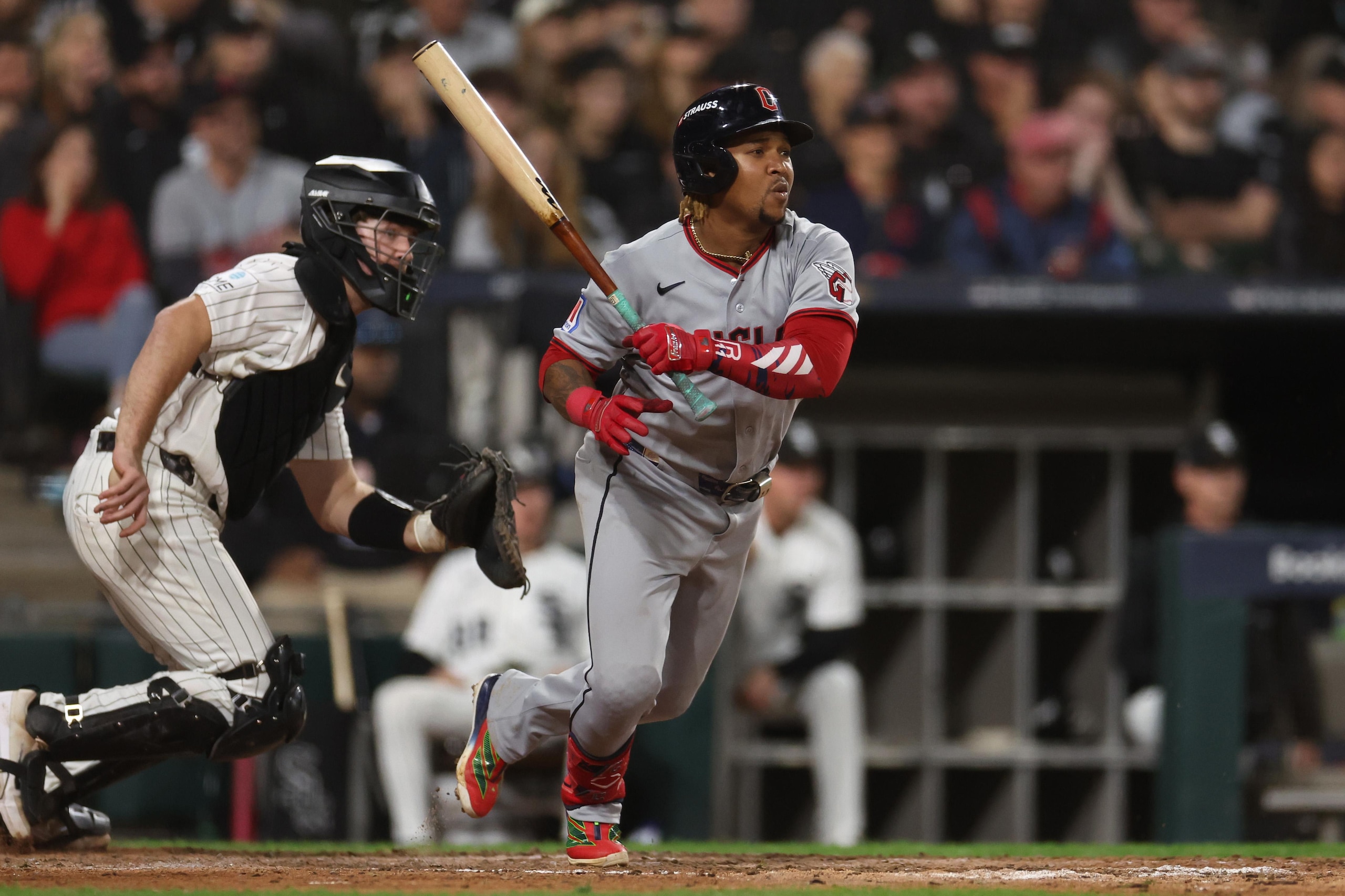
Jose Ramirez, Cleveland Indians
9 of 11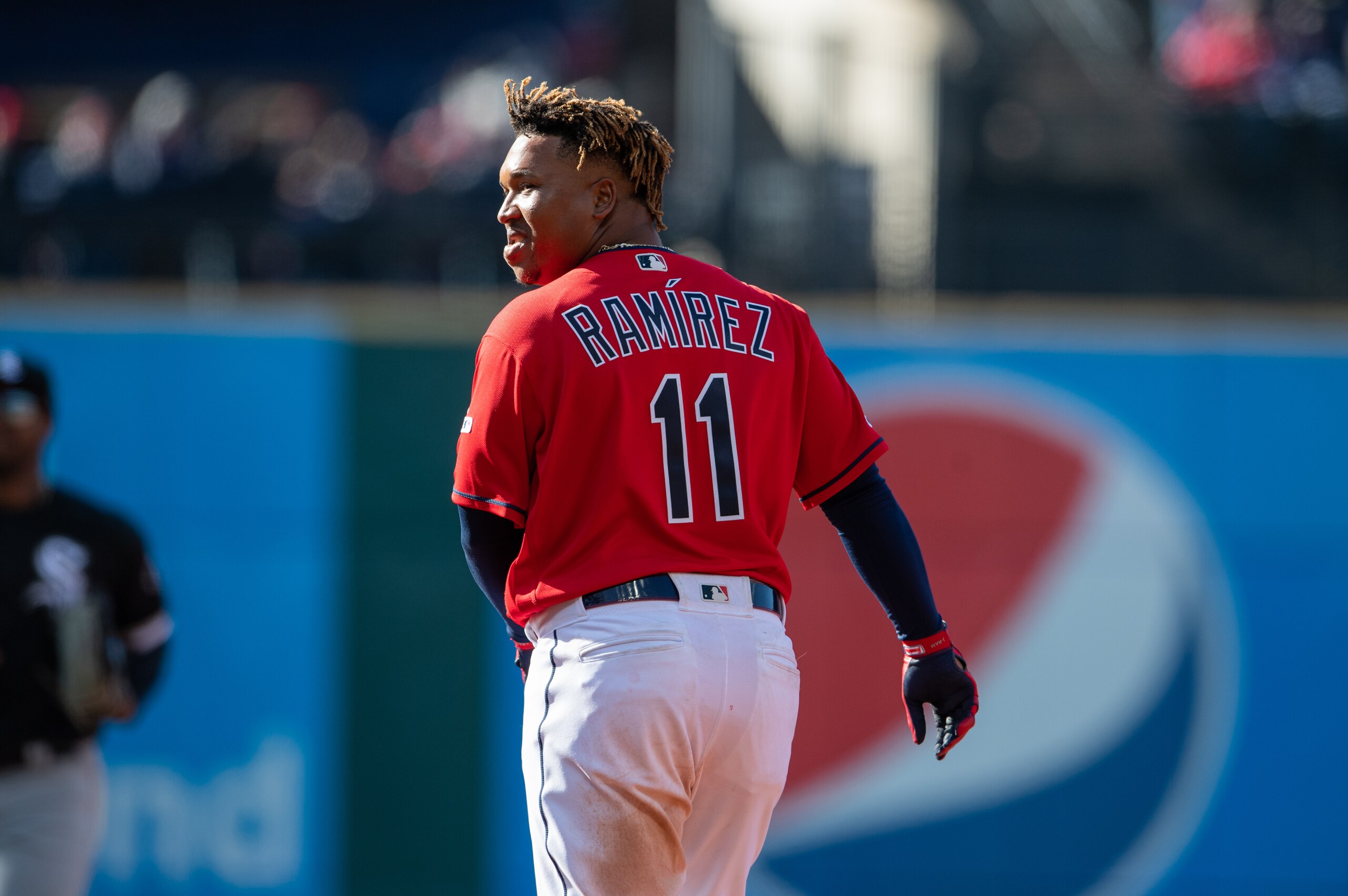
The Cleveland Indians would need Jose Ramirez to be at his best even if Francisco Lindor was healthy. They especially need him to be at his best while Lindor is recovering from an ankle injury.
What they're actually getting from the two-time All-Star is a .154/.190/.205 slash line through 11 games. This marks quite the fall for a player who averaged a .948 OPS with an MLB-high 172 extra-base hits across 2017 and 2018.
As noted by FanGraphs' Devan Fink, Ramirez's funk dates back to August. One of the symptoms of it is the downfall of Ramirez's rate of batted balls to his pull side, which is typically the best side for slugging.
Otherwise, however, there aren't that many red flags planted in Ramirez's slow start.
To wit, his strikeout rate is still far below the MLB average, and he's keeping the majority of his batted balls off the ground. Moreover, his 88.9 mph exit velocity is par for the course, and his hard-hit rate is actually up.
So the Indians need not worry. Their 26-year-old superstar should be just fine.
Verdict: Fluke
Tim Anderson, Chicago White Sox
10 of 11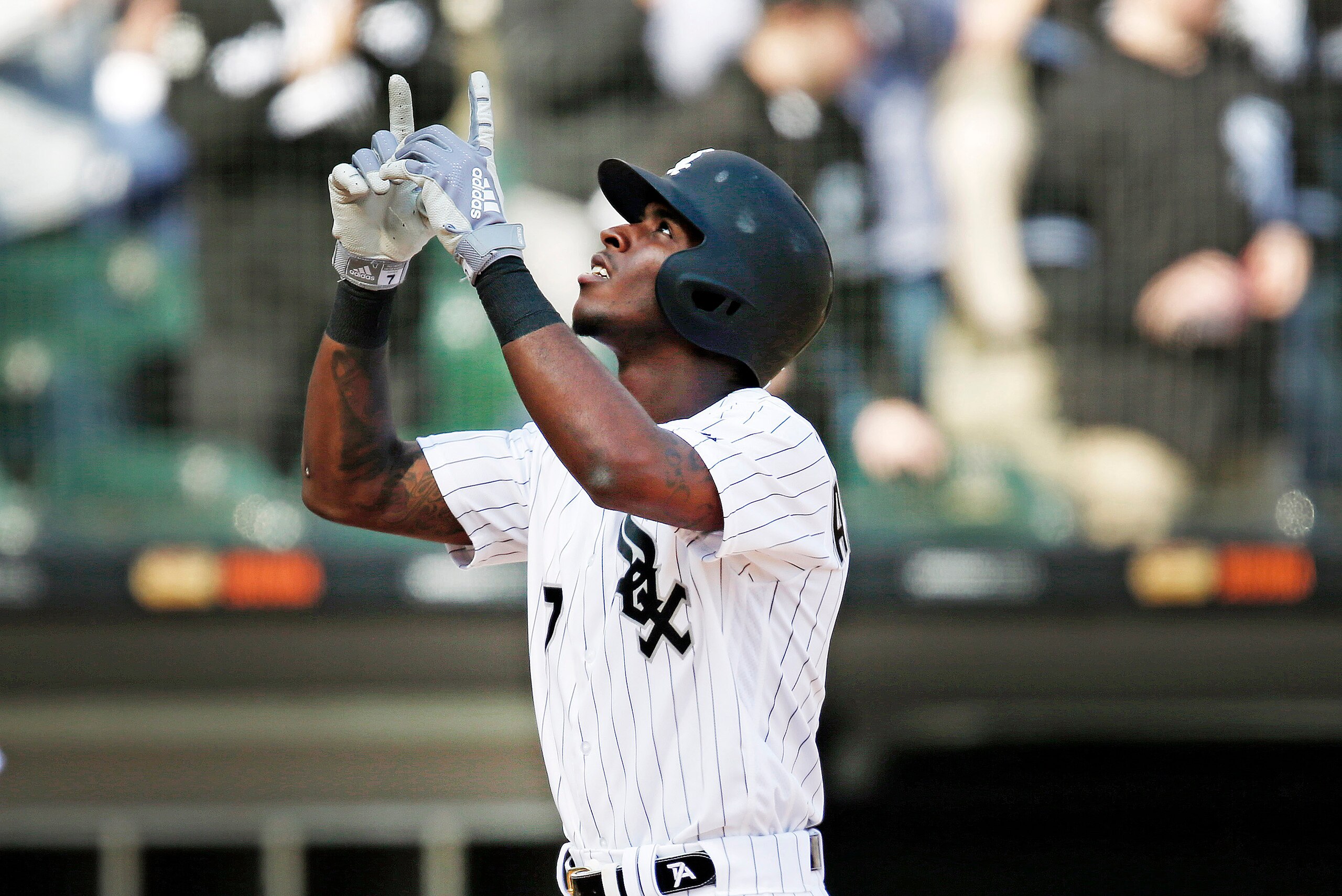
Flipping now to the opposite side of the offensive spectrum, one of the names that sticks out is Tim Anderson.
The Chicago White Sox's 25-year-old shortstop is hitting .514 through nine games, with a 1.256 OPS to boot. This is quite the step up from the .258 average and .697 OPS he posted in his first three years as a major leaguer.
Anderson himself foresaw all this. In January, he predicted that he would break out in 2019 because he was learning to pair his natural athleticism with certain "cheat codes."
Vague, yet it's crystal clear that a new-and-improved version of Anderson has shown up for 2019. His strikeout rate is down, and his average exit velocity has shot up from the mid-80s to 91.3 mph. Within that is a 96.7 mph average on fly balls and line drives.
One catch, however, is that most of Anderson's batted balls have been on the ground. Another is that he's still an aggressive swinger with only marginally improved strike-zone discipline.
Anderson might not be Mike Trout 2.0, but it's easy to believe that he's found something in 2019. It's good enough that he's better.
Verdict: For Real
The Entire Seattle Mariners Offense
11 of 11
This slide could belong to Daniel Vogelbach. Or Tim Beckham. Or Jay Bruce. Or Domingo Santana.
But, well, the hell with it. Let's do the Seattle Mariners' entire offense.
This was supposed to be a sort of rebuilding year for the Mariners, yet they're off to a 12-2 start that's been fueled by an overwhelming offensive onslaught. They lead MLB with a .933 OPS and 34 home runs. And it hasn't all been one guy, as they have six players with an OPS over .900.
To some extents, these Mariners are the platonic ideal of a modern offense. They've controlled the strike zone well enough to drive their collective walk rate up to 10.3 percent. They've also swung for the fences to the tune of a third-ranked 16.3-degree launch angle and MLB-low 33.5 ground-ball percentage.
What would complete the ensemble is a steady diet of hard contact, but that's where the Mariners come up short. Their 35.2 hard-hit percentage is tied for 20th, and the 93.0 mph exit velocity they're getting on all their fly balls and line drives is tied for 16th.
Lo and behold, there's a 93-point gap between Seattle's expected slugging percentage (.475) and actual slugging percentage (.568).
Yet this isn't so much rain on the team's parade as it is a light sprinkle. The Mariners' inevitable return to earth may not be a crash landing.
Verdict: For Real
Stats courtesy of Baseball Reference, FanGraphs, Baseball Savant and Brooks Baseball.

.jpg?w=2560)