

The Achilles' Heel for Each Top 10 Team in Men's College Basketball
With Selection Sunday fast approaching March 17 and conference tournaments set to kick off in early March, the bracket for the men's college basketball tournament is starting to fall into place.
While we always prepare ourselves for surprises as the field of 64 is set, it's safe to say the top teams won't shift dramatically between now and then.
Sure, top squads could rise or fall in the coming weeks. But for the most part, heavyweights such as Duke, Virginia and Gonzaga are known commodities.
But even the NCAA's most talented teams can't be perfect. Some come pretty darn close, but each heavy hitter has an Achilles' heel that, if exposed, could spell disaster during March Madness.
Using the Associated Press Top 25 poll as a guide, we looked at the Top 10 teams to point out the single deficiency in each's game that could send it home early from the Big Dance.
No. 10 Marquette Golden Eagles
1 of 10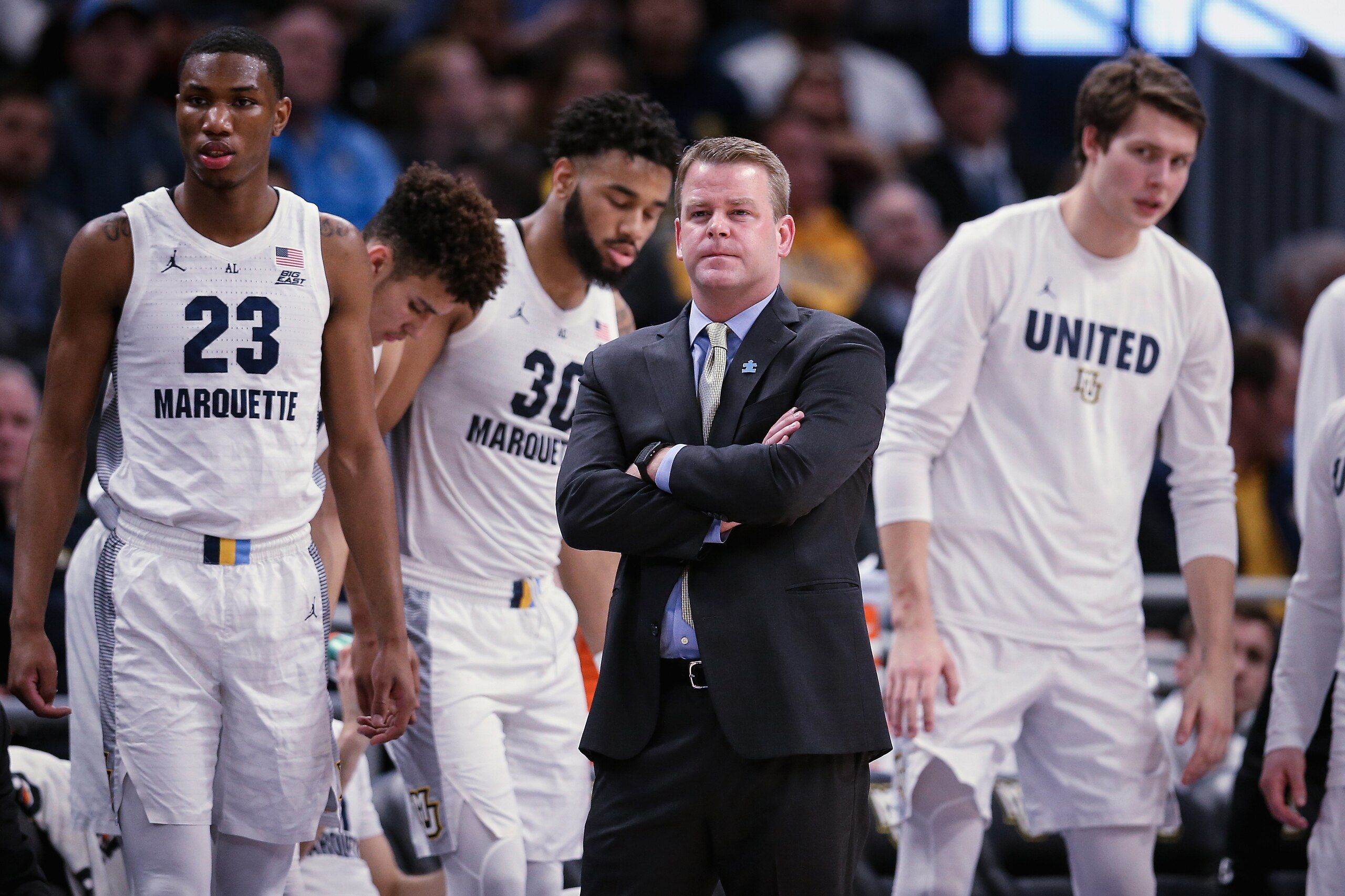
Achilles' Heel: Depth
Marquette made its way back into the Top 10 on Monday, and it was well-deserved for the Golden Eagles. They are on the ascent at the end of the regular season largely thanks to Markus Howard, their star point guard who's averaging an incredible 25.3 points per game. What's more, Howard has hit the 30-point mark in eight games this season.
Marquette has three players averaging 10.0 or more points per game; however, as one might expect, the drop-off after Howard's production is pretty steep. Forward Sam Hauser is next, with an impressive 15.2 points per game. Forward Joey Hauser, however, barely qualifies with his 10.0 points per game.
Needless to say, Howard will have to carry the Golden Eagles this postseason. But they're not well-stacked behind him. (To wit, Howard also leads the team with 4.0 assists and 1.1 steals per game.)
How to Exploit It
Not many teams have bested the 23-4 Golden Eagles, who are in first place in the Big East. But those who have—Indiana, Kansas and St. John's (twice)—did so by holding Howard in check.
It's no coincidence that in all four losses, Howard failed to finish as the team's outright leading scorer. In Marquette's first game against St. John's, its conference opener, the Red Storm held Howard to eight points on 2-of-15 shooting.
Nightmare Matchup: Texas Tech
If tournament opponents have one objective against Marquette—to take Howard out of the game—Texas Tech may be the team best equipped to do it. The Red Raiders are KenPom's No. 1 team in the nation in adjusted defensive efficiency.
Texas Tech ranks second in the nation in scoring defense, just behind Virginia. The Red Raiders hold opponents to an average of 57.3 points per game, a marked improvement from their 64.8 mark last season.
In recent weeks, Chris Beard's squad has held guards Devon Dotson and Christian James in check in wins over Kansas and Oklahoma. This defense is one of the nation's best and stands a realistic chance of slowing down Howard enough to knock Marquette out of the tourney.
No. 9 Michigan Wolverines
2 of 10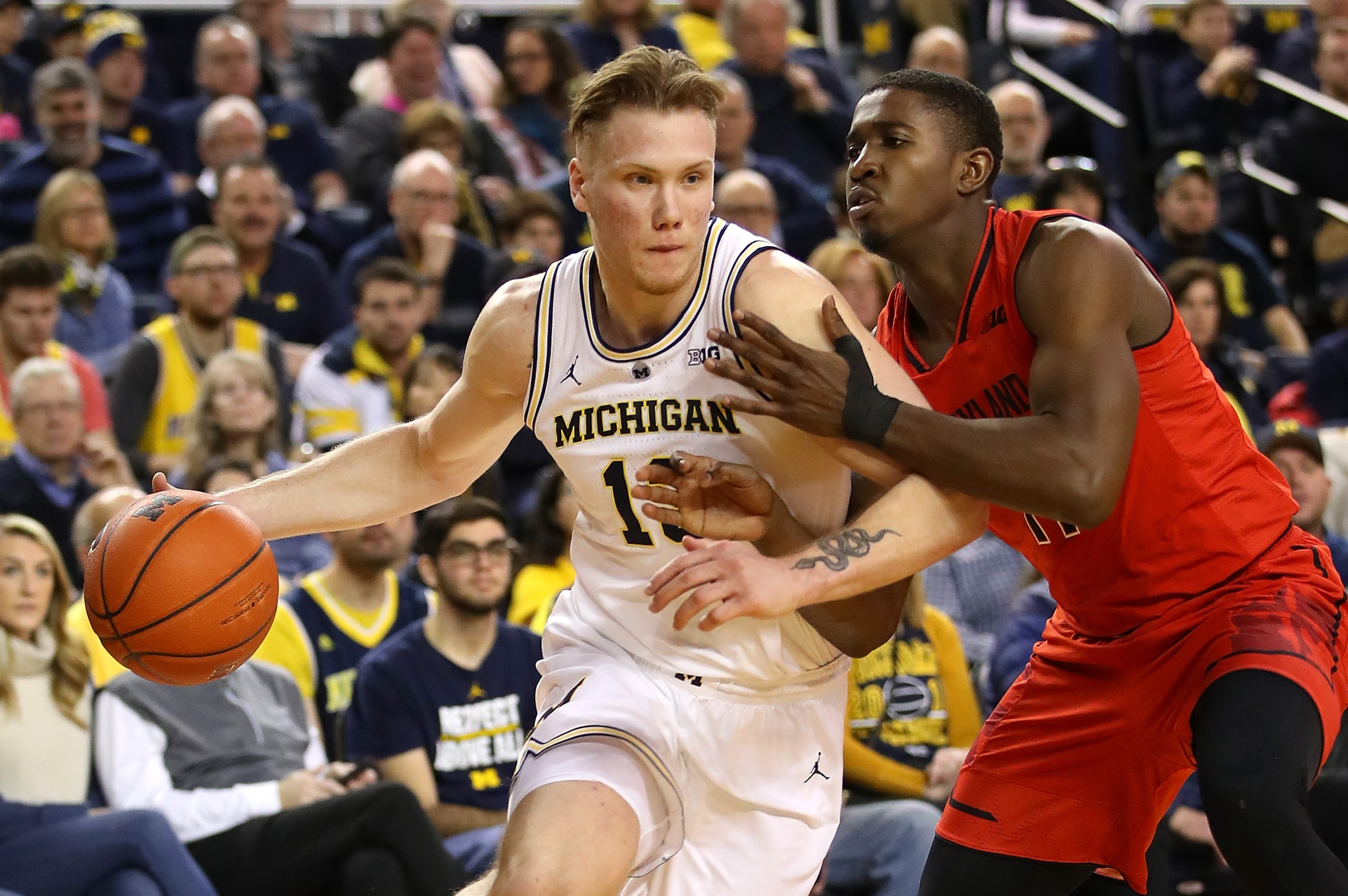
Achilles' Heel: Shooting
Michigan has one of the strongest defenses in men's college basketball. If only that were balanced by the other side of the ball. The Wolverines offense falls short in almost every aspect, whether it's threes (34.5 percent, 165th in Division I), twos (51.6, 146th) or free throws (69.5, 209th).
While the Wolverines limit their opponents to a terrific 58.4 points per game (the third-stingiest scoring defense), they only put up 70.3 points per game, which ranks 247th. Despite their stout defense, if the Wolverines can't score, they'll be sitting at home watching the tournament progress.
How to Exploit It
Despite Michigan's clear shortcomings offensively, shutting down the Wolverines isn't so cut-and-dried. Opponents have to know which of their offensive weapons, from Ignas Brazdeikis to Jordan Poole to Charles Matthews, is going to go off in any given game and then contain that player. Michigan doesn't get consistent production from its stars, but its big names have (and will continue to) put up points.
The 2013-14 UConn team is a good example of one that overcame a mediocre offense to win the tournament, but that squad was the exception, not the rule.
Nightmare Matchup: Virginia
Simply put, Virginia has the best scoring defense in the nation. The Cavaliers are tops with an average of 54.5 points allowed per game. In KenPom's adjusted defensive efficiency, they rank second overall after Texas Tech and first among current AP Top 10 teams. Incidentally, the Wolverines rank third, but that's not going to help them if they can't put points on the board.
The Cavaliers are built to pick apart teams that struggle shooting the ball, and if the Wolverines are unlucky enough to draw them in the tournament, they aren't likely to be able to overcome this deficiency in their game.
No. 8 Houston Cougars
3 of 10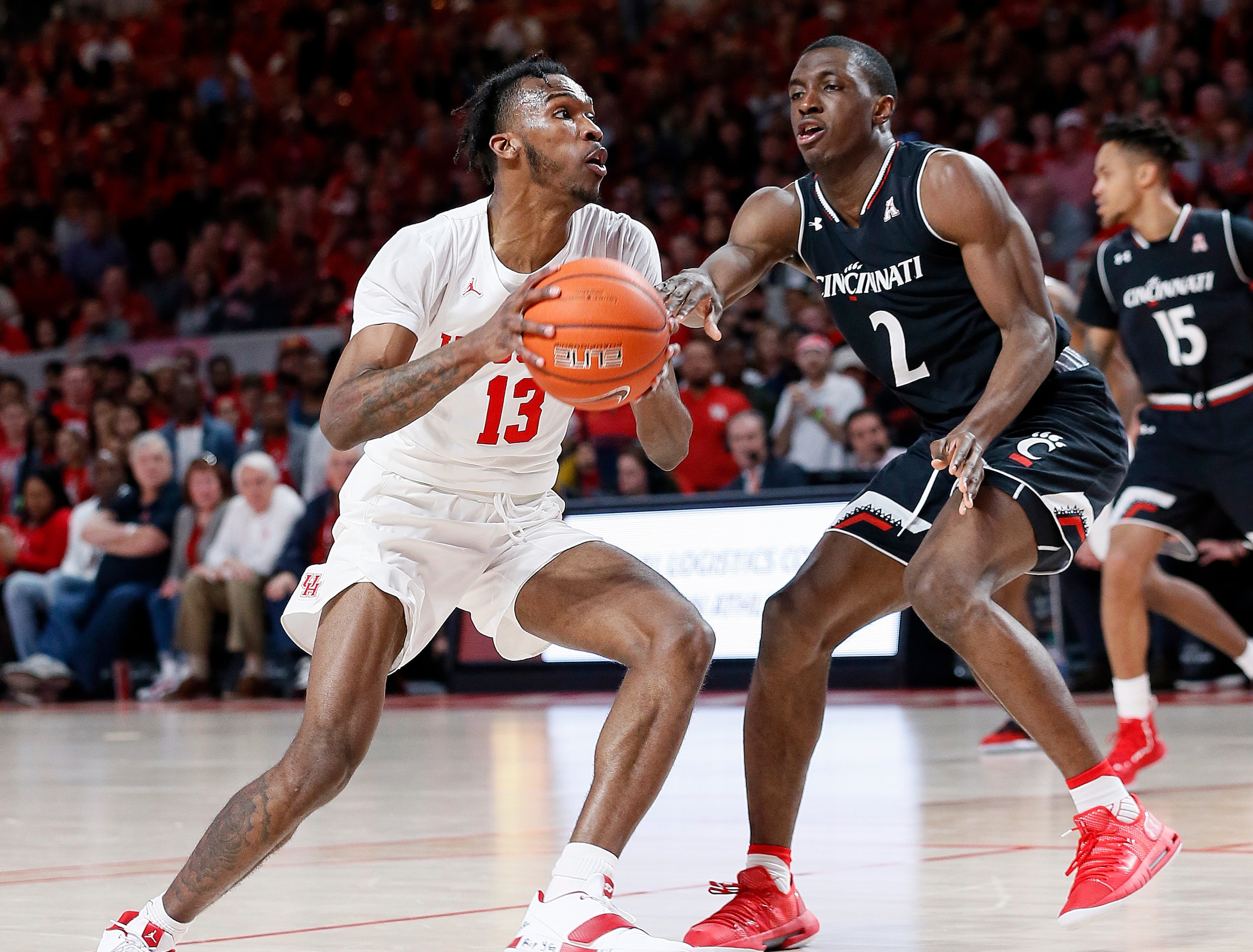
Achilles' Heel: Shooting
Houston has had to hustle on offense this year, but shooting specifically has presented a problem. The Cougars' field-goal percentage of 44.3 ranks 200th; with Marquette and Michigan, they are the only teams in the Top 10 to rank lower than 50th in that category.
In free-throw percentage, the Cougars rank 115th (72.3 percent). What's worse, in their last three games, they've shot only 69.4 percent from the line. That's a trend that needs to improve.
How to Exploit It
If Houston wants to advance in the tournament, it needs to figure out how to put easy points on the board. So far, the Cougars' shooting woes and inability to get to the free-throw line suggest that will be a struggle.
Houston ranks 40th in offensive efficiency, per TeamRankings.com. It's not that the Cougars don't score; with 75.2 points per game (111th), they may not be an offensive juggernaut, but they can hang. However, it all comes down to how they're shooting.
Though the Houston defense is stout (60.3 points allowed per game, fifth), any opponent that can generate those kinds of easy points could leave the Cougars behind.
Nightmare Matchup: Gonzaga
When it comes to shooting, Gonzaga's is a thing of beauty. It's no surprise the Bulldogs are in the top spot in the AP poll considering their well-rounded ability. The Zags could be better from outside (37.3 percent, 54th), but they rank first, first and 14th in field-goal (53.2), two-point (64.0) and free-throw (76.6) percentages.
Gonzaga is simply good at getting points wherever it can, which is in stark contrast to Houston.
.jpg?w=2560 "Saints Lions Football")
No. 7 Tennessee Volunteers
4 of 10
Achilles' Heel: Inconsistent Defense
Tennessee was a stout defensive team last year that did enough on offense to advance to the round of 32 before it lost to red-hot Loyola of Chicago. This year's squad has done a 180.
This year's Vols can shoot; they rank third in field-goal percentage (50.4) and 12th in two-pointers (57.0). But stopping those shots? That's another story. On defense, Tennessee struggles mostly against the three, allowing opponents to make 33.2 percent (118th). The Vols do better inside the arc, where they allow just 43.4 percent shooting (eighth).
How to Exploit It
It begins with three-point shooting. The Volunteers are so vulnerable to the three that opponents have learned to rain them down. And outside that specific deficiency in their game, the Vols leave a lot to be desired on defense; KenPom ranks them 38th in adjusted defensive efficiency.
As Kevin Flaherty of 247Sports pointed out, "No team with a defense as poor as Tennessee's has been has won a national championship in the KenPom era (2001-02 to present)." Opponents may not have to do much on top of that to triumph over these Vols.
Nightmare Matchup: Wofford
At first blush, Wofford might not seem like a nightmare for anyone; after all, the Terriers earned their very first AP Top 25 ranking Monday. But forget the fact, for a second, that Wofford is ranked No. 24 in the nation. Consider, instead, that the Terriers rank second in three-point percentage, making a whopping 41.5 percent of their attempts.
If the Terriers stay hot, that could spell big trouble for the Vols.
No. 6 Michigan State Spartans
5 of 10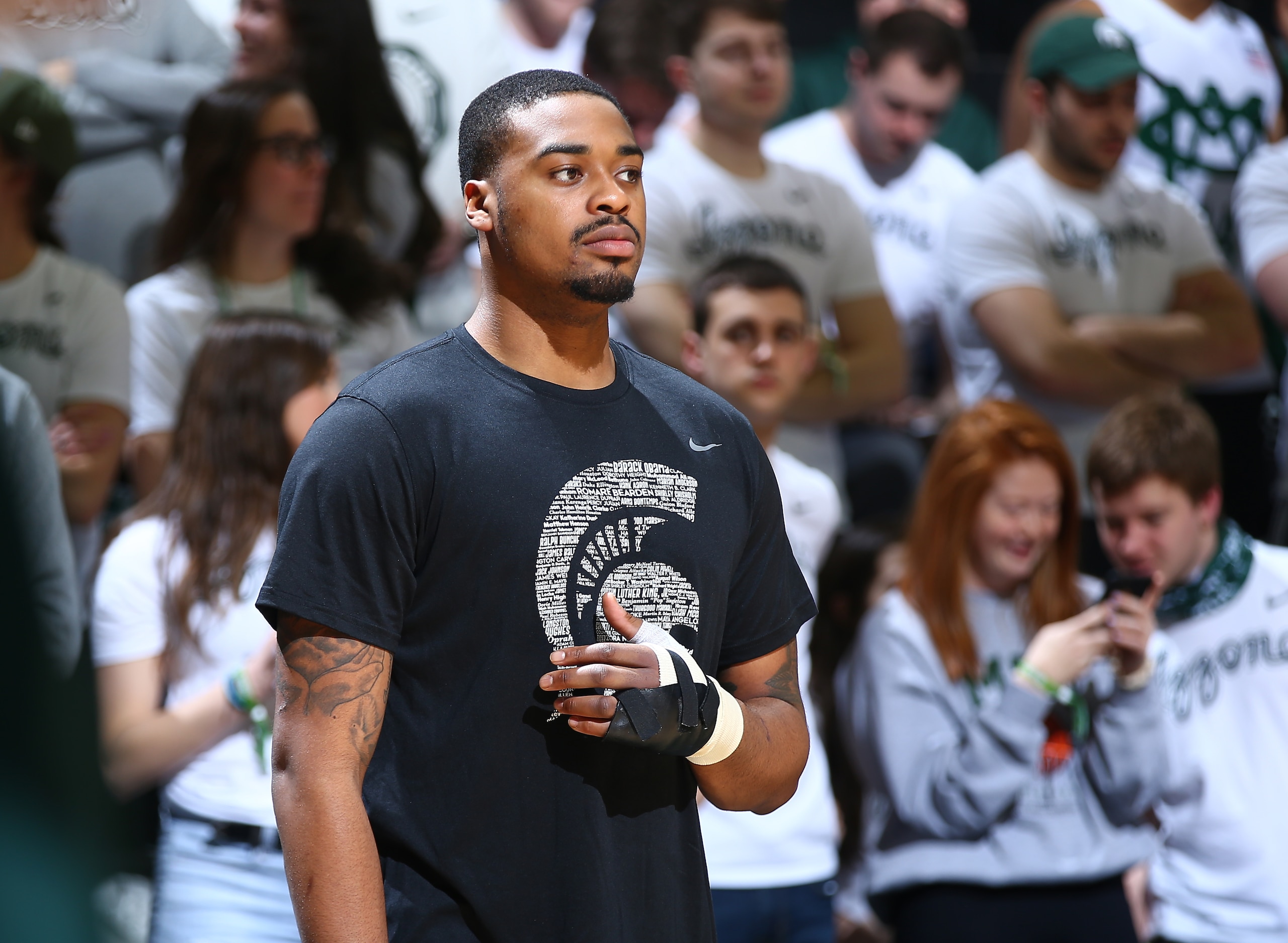
Achilles' Heel: Injuries
The injury bug has landed in East Lansing, Michigan, at precisely the worst time. As soon as Michigan State rang in the new year, it began to lose players. In late January, it was announced junior guard and co-captain Joshua Langford had suffered a season-ending ankle injury. Then, senior forward Kenny Goins injured his elbow against Minnesota on Feb. 9, though he quickly returned to the lineup.
And forward Nick Ward is out indefinitely with a hairline fracture in his left hand suffered against Ohio State on Feb. 17. He could return by the end of the season.
How to Exploit It
This one's pretty easy. The Spartans are down two of their Big Three, and they'll have to make up Ward and Langford's 30.1 points per game. We don't know for sure how much of the tournament Ward could miss, but as long as he's off the court, opponents are going to take advantage of his replacement, Xavier Tillman. Tillman may be Ward's rebounding equivalent, but he brings only 8.9 points per game.
If opponents can disrupt the Spartans' rebounding—specifically, Goins' and Tillman's—they'll throw a wrench in things.
Nightmare Matchup: Virginia Tech
Since Langford's injury, the Spartans have been overly reliant on Big Ten Player of the Year candidate Cassius Winston. Though he's been on fire recently, a team that has great guard depth could prove too much for Winston to handle.
No. 20 Virginia Tech has that makeup.
Guards Ahmed Hill, Nickeil Alexander-Walker and Justin Robinson spearhead an offense that is No. 13 in the nation in KenPom's offensive rating. And the Hokies have forward Kerry Blackshear Jr. to match up with Tillman and/or Ward in the paint.
No. 5 North Carolina Tar Heels
6 of 10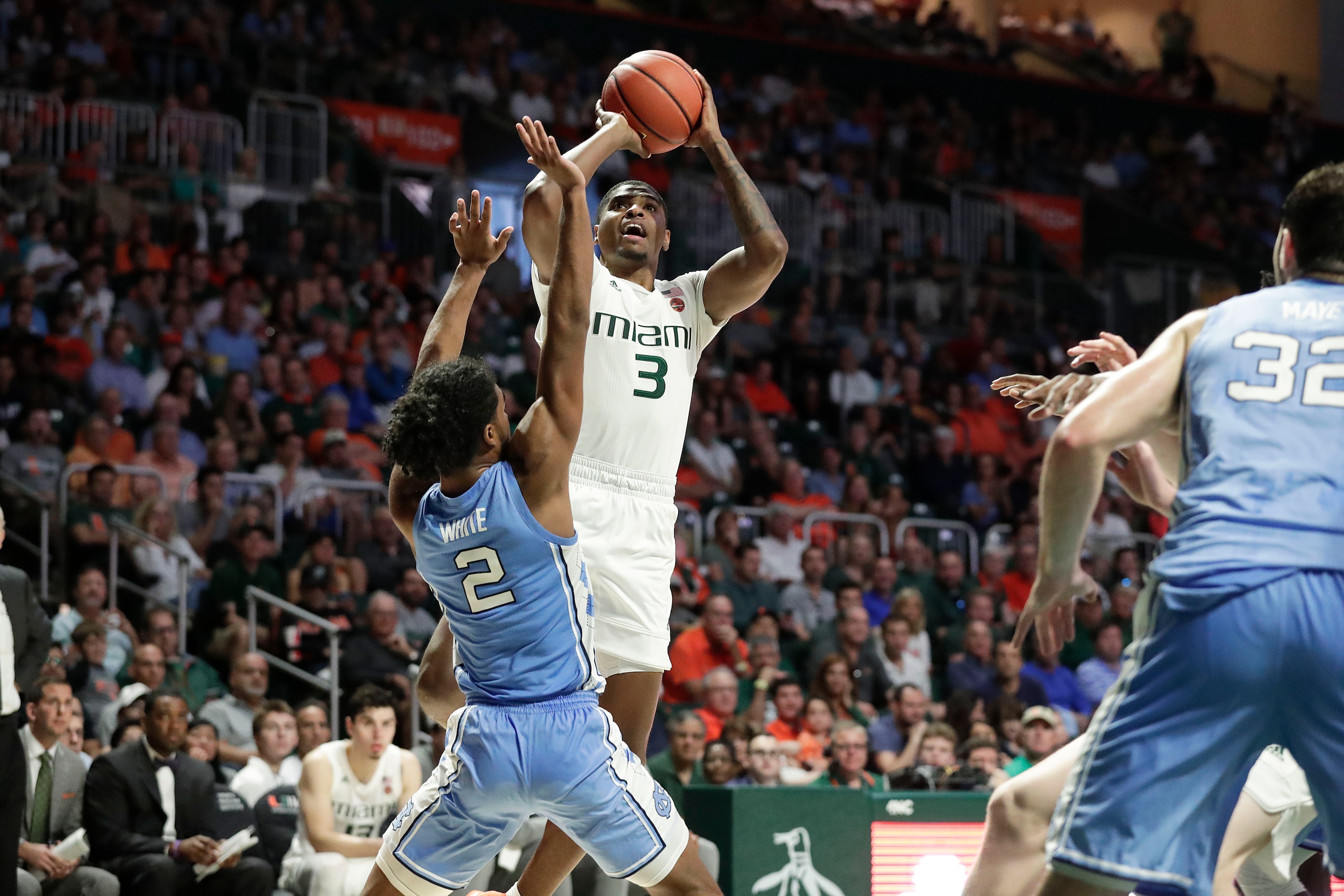
Achilles' Heel: 3-Point Defense
After a shaky start to the regular season, North Carolina has evened out, winning 10 of its last 11 games. But the defense remains questionable heading into the postseason, especially when it comes to the three.
The Tar Heels give up 8.6 three-pointers per game, ranking 258th in threes allowed. Yikes. Roy Williams' Tar Heels squads haven't been known for strong defense, but UNC's high-octane offense has been good enough to make up for it.
Case in point, the last three Tar Heels squads, which have finished their seasons within the AP Top 10 and earned a No. 1 or No. 2 seed in the tournament, all ranked in the top 10 in college basketball in points and assists. However, those teams all let opponents shoot 34 percent or better on three-pointers, ranking 278th, 129th and 321st in that category from 2016 through 2018. This season, it's the same story, with the Tar Heels allowing opponents to shoot 33 percent from outside, currently ranking 107th.
How to Exploit It
Unfortunately for the Tar Heels, threes continue to reign supreme in college and pro hoops alike. Teams already know how to exploit this weakness.
Last season, Texas A&M ended UNC's bid for the title in the second round of the tournament thanks largely to its three-point prowess. The Aggies drained 10 three-point shots in 24 attempts, and the Tar Heels never had a chance.
This season—this month, in fact—Virginia made a filthy 55 percent of three-point attempts against the Tar Heels defense and won 69-61. It's the same blueprint any team facing North Carolina this March will look to replicate.
Nightmare Matchup: Virginia
This one's easy. Virginia just recently rallied over North Carolina on Feb. 11, ousting the Tar Heels in Chapel Hill front of Michael Jordan. The Cavaliers have to be eager for another potential rematch in the tournament.
Virginia makes the second-highest percentage of treys of any team ranked in the Top 10, at 39.2 percent (11th). Marquette is actually sixth, at 39.9, and gets a higher percent of its points from threes, at 35.8 per TeamRankings. But Virginia has the upper hand now after the February win and knows how to exploit the Tar Heels' biggest weakness, leaning on top scorers Kyle Guy and De'Andre Hunter. The Cavaliers' three-point percentage is also tops in the ACC.
This is not a team the Tar Heels, given their one glaring weakness, want to tango with in the Big Dance.
No. 4 Kentucky Wildcats
7 of 10
Achilles' Heel: Inexperience
Talent is talent, but in a single-elimination tournament, Kentucky coach John Calipari will hope his squad can act like it's been there before...even when most of the players haven't.
Specifically, Kentucky struggles with turnovers, which can be tied to experience (or lack thereof). The Wildcats rank an ugly 139th in turnover percentage, per Sports Reference, and have 345 total, or 12.8 per game. These young Cats need to buckle down and brush up on their ball protection before entering the Big Dance.
How to Exploit It
Aside from turnovers, Kentucky struggles with consistency. Sometimes, Calipari's squad is downright dominant, such as when it blew out Tennessee 86-69 on Feb. 16.
However, just before that triumphant win, Kentucky had dropped a home matchup against No. 19 LSU 73-71. That kind of yo-yoing simply won't do in the tournament.
Nightmare Matchup: LSU
We'll go with an SEC foe in LSU largely because the Tigers represent the only loss the Wildcats have suffered in their last 14 games and snapped Kentucky's 10-game win streak. The Tigers also upset No. 5 Tennessee in overtime Saturday. Will Wade's team is getting hot to end the season, and the Wildcats don't want to meet LSU again.
No. 3 Duke Blue Devils
8 of 10
Achilles' Heel: Zion Williamson's Injury
Sure, Duke has some real deficiencies. One need only look at their outside shooting: The Blue Devils rank an astounding 331st in the country, making just 30.6 percent of those shots.
But let's be real: The biggest challenge Duke faces moving forward is the possibility of being without transcendent star Zion Williamson, who injured his right knee Wednesday against archrival North Carolina when he tore through his shoe.
How to Exploit It
Before teams can know if they will be able to exploit the absence of Williamson in the tournament, they'll have to find out whether he will indeed be absent.
Duke has not issued a timetable for Williamson's return, assuming, of course, that he plays another game this season. On Monday, coach Mike Krzyzewski said Williamson is "getting better," but he didn't share any details beyond the fact that the big man won't play against Virginia Tech on Tuesday.
How would teams exploit Williamson's potential absence? They will start by taking a page out of UNC's book. After Williamson was injured in the opening minute, Duke lost to North Carolina 88-72 as the Tar Heels scored 32 of their first 34 points in the paint. Without Williamson clogging the lane, that's exactly what future opponents should look to do, as well.
Nightmare Matchup: Gonzaga
It takes a giant to bring down a giant. Even though Duke has fallen slightly in the AP poll, the Blue Devils still look like a surefire No. 1 seed. So, too, do the No. 1 Gonzaga Bulldogs, one of the few teams in the nation that looks primed to bring down the Blue Devils in this year's tourney.
Gonzaga has earned its No. 1 ranking thanks to a stellar 27-2 record that encompasses an 18-game winning streak, most recently a complete drubbing of BYU 102-68. In fact, Gonzaga has won its last four games by an average margin of 35 points.
To find the Bulldogs' last loss, you have to go back to Dec. 15, and the Zags will continue riding that momentum straight into the tournament. If Williamson returns for postseason play, this matchup is a clash of Titans that the Bulldogs proved they can win with their two-point victory over Duke in November. If Williamson doesn't play, this pairing could spell Duke's doom.
No. 2 Virginia Cavaliers
9 of 10
Achilles' Heel: Tempo
Virginia may be one of the most complete teams in the tournament—just look at how many teams for which it's listed as a nightmare matchup.
But no team is perfect, and the Cavaliers have a weakness of their own: tempo. Is that a particularly foreboding or difficult to overcome deficiency? Not at all, but Virginia needs to improve before its pace of play comes back to haunt it in the tournament.
How to Exploit It
If you think tempo amounts to much ado about nothing, consider this: According to Kevin Flaherty of 247Sports, "No team in the KenPom era has won a title playing with an adjusted tempo as slow as Virginia." The Cavaliers always play with one of the slowest paces in the country, and while they lost to No. 16 seed Maryland-Baltimore County in last year's tournament for many reasons, tempo was certainly among them.
With a slow pace of play, the Cavaliers don't build insurmountable leads, giving their opponents time to hang around. Any team that faces Virginia will thus have a chance if it can build a lead—even if the Cavs are one of the most balanced teams in the country.
Nightmare Matchup: Duke
Of the country's fastest teams, Duke, at No. 21, per TeamRankings.com, is the second-fastest among the Top 10 in the AP poll (North Carolina is sixth). The Blue Devils average 76.2 possessions per game and are the heavyweight that is most likely to give Virginia fits because of their speed. The Cavaliers have only two losses—both to Duke.
No. 1 Gonzaga Bulldogs
10 of 10
Achilles' Heel: Offensive Rebounding
Many analysts would point to the Gonzaga defense as its biggest weakness. While the Bulldogs are tops on offense, ranking No. 1 in KenPom adjusted offensive efficiency, they land at No. 24 in defensive efficiency.
However, the Bulldogs haven't dropped many games on account of their defense. The Zags are 27-2 and have lost to only Tennessee and North Carolina. That's not so shabby when you consider those two squads are ranked second and seventh, respectively, in adjusted offensive efficiency.
Gonzaga might struggle with offensive rebounding in March. Is it nitpicky to home in on a weakness that is a subset of one of the team's biggest strengths? Maybe, but the Zags need to take care that opponents don't use this one shortcoming against them. According to TeamRankings.com, the Zags rank 60th in offensive rebound percentage (30.5). The tournament is all about getting easy points when you can, and this is one area of Gonzaga's elite offense it could stand to improve.
How to Exploit It
Any team that hopes to beat Gonzaga will have to outscore the Bulldogs. Few teams, including defensive juggernaut Virginia, can hope to simply slow them down. As a result, that team will need to score the easy points that Gonzaga perhaps will not. Rebounds, free throws and forced turnovers will prove vital for tournament opponents that hope to keep up on the scoreboard.
Nightmare Matchup: Virginia
Virginia can give any team nightmares, and that should be no different for Gonzaga. While the Bulldogs are built to go all the way—even if that road leads through Virginia—one of the few March Madness-bound squads with any hope of stopping the Zags' high-octane offense is the Cavaliers with their stout defense.
.jpg?w=2560 "Commanders Eagles Football")
_0.png?w=2560)


.jpg?w=2560 "Most Tradeable Players on Every Team")