
Predicting 2019 NBA All-Star Game Reserves
New season, new squad, new conference—same All-Star captaincy honor for LeBron James.
The newly minted 15-time All-Star was the top vote-getter again for the NBA All-Star Game, meaning he'll have the first selection in the (televised!) draft on Feb. 7.
Giannis Antetokounmpo, meanwhile, claimed the Eastern Conference throne James vacated last summer, so the Milwaukee Bucks centerpiece got the other captain's chair.
Joining James in the Western Conference frontcourt are Kevin Durant and Paul George, while Stephen Curry and James Harden claimed the two backcourt spots. Out East, the starter pool includes Antetokounmpo, Joel Embiid, Kyrie Irving, Kawhi Leonard and first-time All-Star starter Kemba Walker.
But the draft pool is far from full. The coaches still must select 14 reserves for the Feb. 17 exhibition in Charlotte, and the players will be announced Thursday, Jan. 31, during TNT NBA Tip-Off.
Who wants to wait that long, though? With more than a half-season of data to pull from, we have everything our crystal ball needs to predict the 2019 All-Star Game reserves.
Eastern Conference Backcourt
1 of 6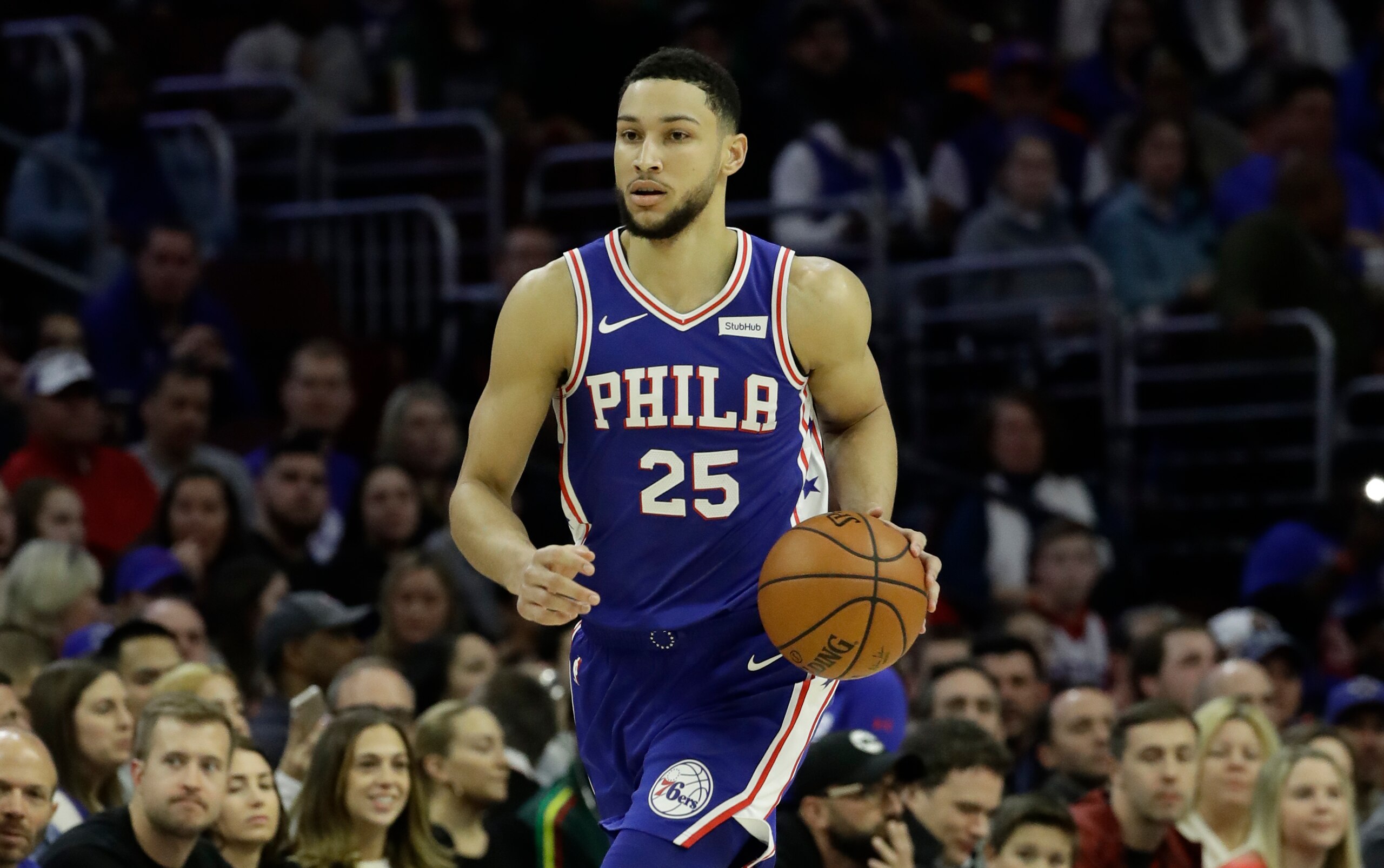
Ben Simmons, Philadelphia 76ers
2018-19 Per-Game Stats: 16.6 points, 9.5 rebounds, 8.3 assists, 1.3 steals, 0.8 blocks, 57.8 percent shooting
Career All-Star Selections: 0
If there are NBA players who are more fascinating than Ben Simmons, you can probably count them on one hand.
Think about it. He's a 6'10", 230-pound point guard. When do you ever see that? He's one of the 30 most efficient players in a shooting-crazed league, even though he's 0-of-11 from distance for his career—and 0-of-0 this season. He's also moonlighting as a pseudo-reality star because of his proximity to the Jenner/Kardashian umbrella of influence.
Oh yeah, he's a big-time baller, too. He can play as a lead guard, a ball-screener or an above-the-rim finisher, and he's just as versatile (if not more so) on defense.
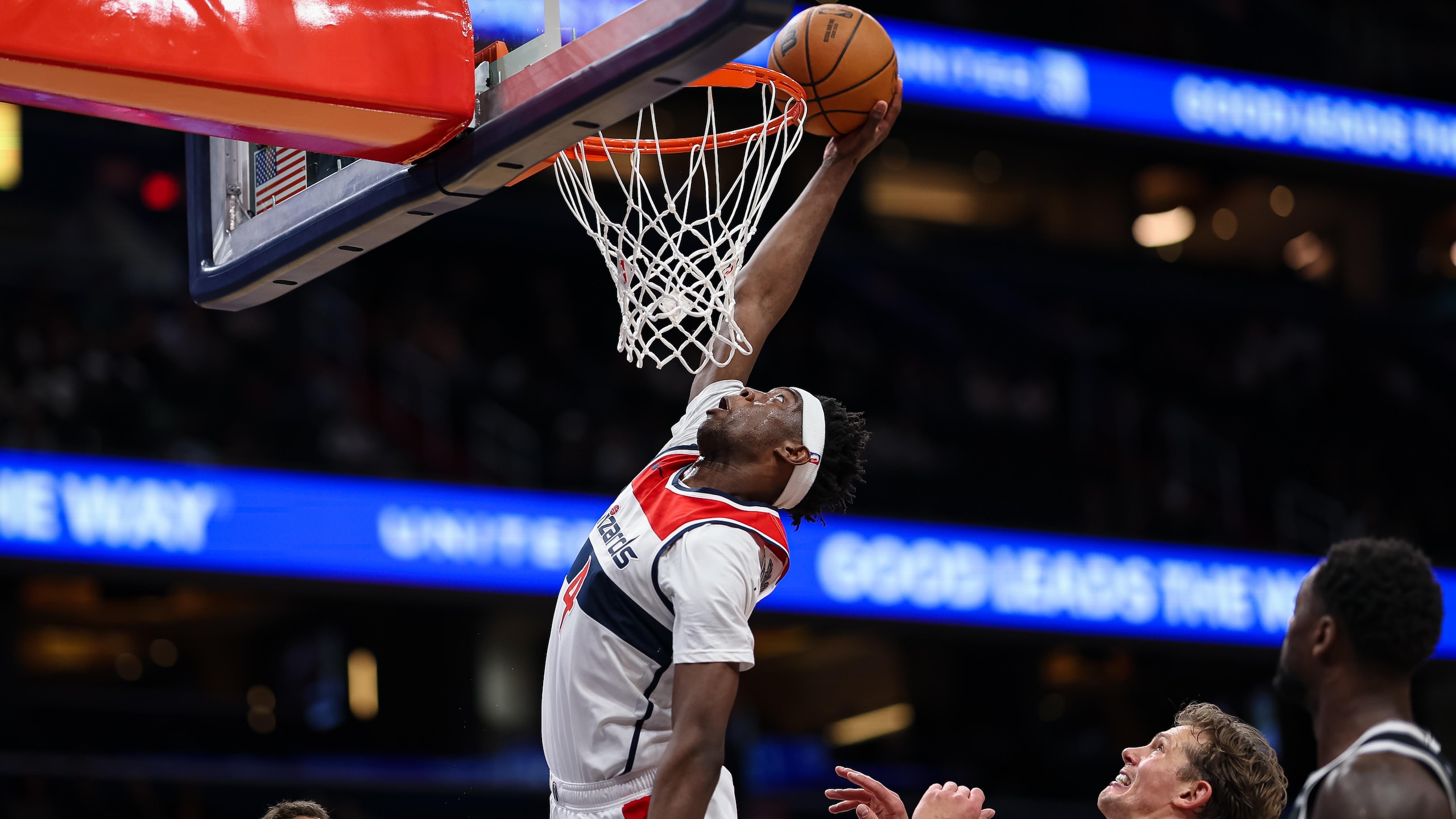
Bradley Beal, Washington Wizards
2018-19 Per-Game Stats: 24.7 points, 5.0 assists, 5.0 rebounds, 1.3 steals, 0.9 blocks, 46.7 percent shooting
Advanced Metrics: 19.3 player efficiency rating (PER), 1.23 real plus-minus (RPM)
Career All-Star Selections: 1
The season-long stats are impressive enough, but have you been watching Bradley Beal's John Wall-less tour de force? In the 11 games since Washington's floor general was shut down for season-ending heel surgery, Beal has bumped his nightly contributions to 28.5 points on 45.1 percent shooting (39.1 percent from three-point range), 6.0 assists, 5.4 rebounds and 2.3 steals.
On a related note, the Wizards are 7-4 in that stretch after they stumbled through a dysfunctional 13-22 start.
This looks like a jump from supporting actor to featured star, as Beal keeps hinting there's more to his game than we imagined. He recently engineered a 43-point, 15-assist, 10-rebound triple-double, which was only the fourth of its kind in NBA history.
Eastern Conference Frontcourt
2 of 6
Blake Griffin, Detroit Pistons
2018-19 Per-Game Stats: 26.3 points, 8.1 rebounds, 5.3 assists, 0.8 steals, 0.5 blocks, 48.1 percent shooting
Career All-Star Selections: 5
Maybe Father Time will eventually change this, but doesn't Blake Griffin look like a $171 million player? He shares the floor with a paint-clogging center and usually a couple of perimeter players who'd be fringe rotation guys most other places, and he's still 14th in potential assists per game with 11.7. (By the way, he's 32nd in actual assists per game, which says everything you need to know about his supporting cast.)
Point Blake's own days of space-spoiling are over. He's not only up to 2.4 treys per night, but he's also burying them at an above-average 36.6 percent clip. He's also converting 75.2 percent of his shots within three feet, which is his best mark since 2012-13.
Want the best glimpse of his offensive impact? Try stomaching a full session of Detroit's non-Griffin minutes some night (provided you aren't squeamish, of course). When he sits, the Pistons' offensive production craters by 10.3 points per 100 possessions.
Nikola Vucevic, Orlando Magic
2018-19 Per-Game Stats: 20.5 points, 12.0 rebounds, 3.8 assists, 1.0 steals, 1.2 blocks, 51.7 percent shooting
Career All-Star Selections: 0
Holy volume eruption, Voochman! Guys don't usually break out at age 28, but how else would you describe what Nikola Vucevic is doing? Four of those five counting-category numbers are personal bests. The one exception is steals, where he's 0.1 off his career high.
But the efficiency might be even more impressive. He only started attempting threes with semi-regularity two seasons back, and he's already hitting 38.1 percent from outside. Tack on 54.8 percent shooting on twos, and you're looking at another career high with a 57.6 true shooting percentage.
No matter your all-encompassing metric of choice, Vucevic likely grades out as elite. PER places him ninth overall, while RPM slots him 13th.
Jimmy Butler, Philadelphia 76ers
2018-19 Per-Game Stats: 19.6 points, 4.9 rebounds, 3.7 assists, 2.0 steals, 0.6 blocks, 47.4 percent shooting
Career All-Star Selections: 4
This isn't the most comfortable selection, since Jimmy Butler spent the early portion of this season sabotaging the Minnesota Timberwolves and forcing his way out. The choice gets even harder to make when guys like Pascal Siakam, Khris Middleton and John Collins all have compelling All-Star arguments.
But here's where it swings in Butler's direction: He's the most talented player of the four. There might be more static around him, but the dude is still on a short list of the Association's best two-way forces.
He's still finding his way on the Sixers, and yet, his Philly version is already a 52.4/60.0/70.0 shooter in the clutch. Maybe coaches will hold the messy exit from Minnesota against him, but it's hard to ignore the fact that he's one of just four players who are averaging at least 19 points, four boards, three dimes and two thefts.
Eastern Conference Wild Cards
3 of 6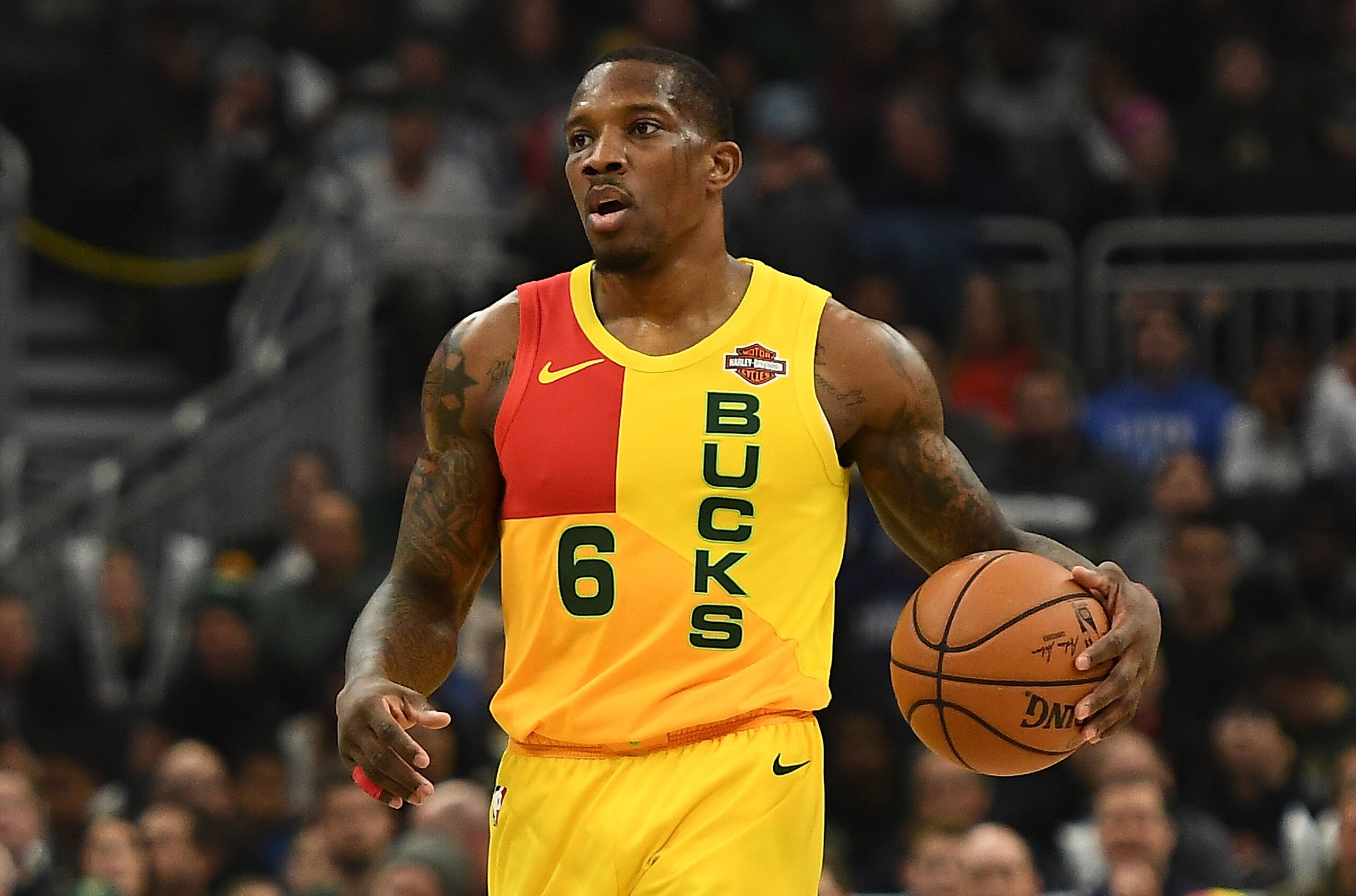
Kyle Lowry, Toronto Raptors
2018-19 Per-Game Stats: 14.2 points, 4.5 rebounds, 9.4 assists, 1.4 steals, 0.5 blocks, 41.6 percent shooting
Career All-Star Selections: 4
While this would be Kyle Lowry's fifth straight All-Star trip, he's hardly a lock. Assists aside, none of his traditional stats pop. His shooting rates have almost flatlined (he's at just 31.9 percent from three), and his PER is the worst he's posted since 2010-11.
But he's had to adjust to Kawhi Leonard's arrival more than anyone, and Lowry is doing all the little things to help smooth the process. He's never been this caliber of playmaker before, and that assist number doesn't include all the smart tosses he throws that get the ball flying around. He's a pesky defender who always finds ways to get his mitts on the ball, and you never catch him out of position.
Even if his numbers aren't what we're used to seeing, his impact remains colossal. Toronto is a whopping 14.8 points better per 100 possessions when he's on the hardwood.
Eric Bledsoe, Milwaukee Bucks
2018-19 Per-Game Stats: 15.8 points, 4.4 rebounds, 5.5 assists, 1.4 steals, 0.4 blocks, 49.6 percent shooting
Career All-Star Selections: 0
This spot is tightly contested, not only by the aforementioned frontcourt options but also by D'Angelo Russell, JJ Redick, Josh Richardson, Myles Turner and a handful of others. (Victor Oladipo would have snagged his spot somewhere, but injuries are the worst, so here we are.) But Eric Bledsoe edges the rest, both for his play and Milwaukee's at large.
Something feels right about the Bucks—this season's most efficient team by a healthy margin—having multiple All-Stars, especially when there are deserving candidates. Outside of three-point shooting (which basically every other non-Giannis Buck provides), Bledsoe checks every box of a star-level glue guy.
RPM places him 15th in the league—a testament to his ability to affect both ends. He's been obliterating his opponents all season, shaving 1.6 percentage points off their normal shooting rates while hitting a face-melting 61.4 percent of his two-pointers.

Western Conference Backcourt
4 of 6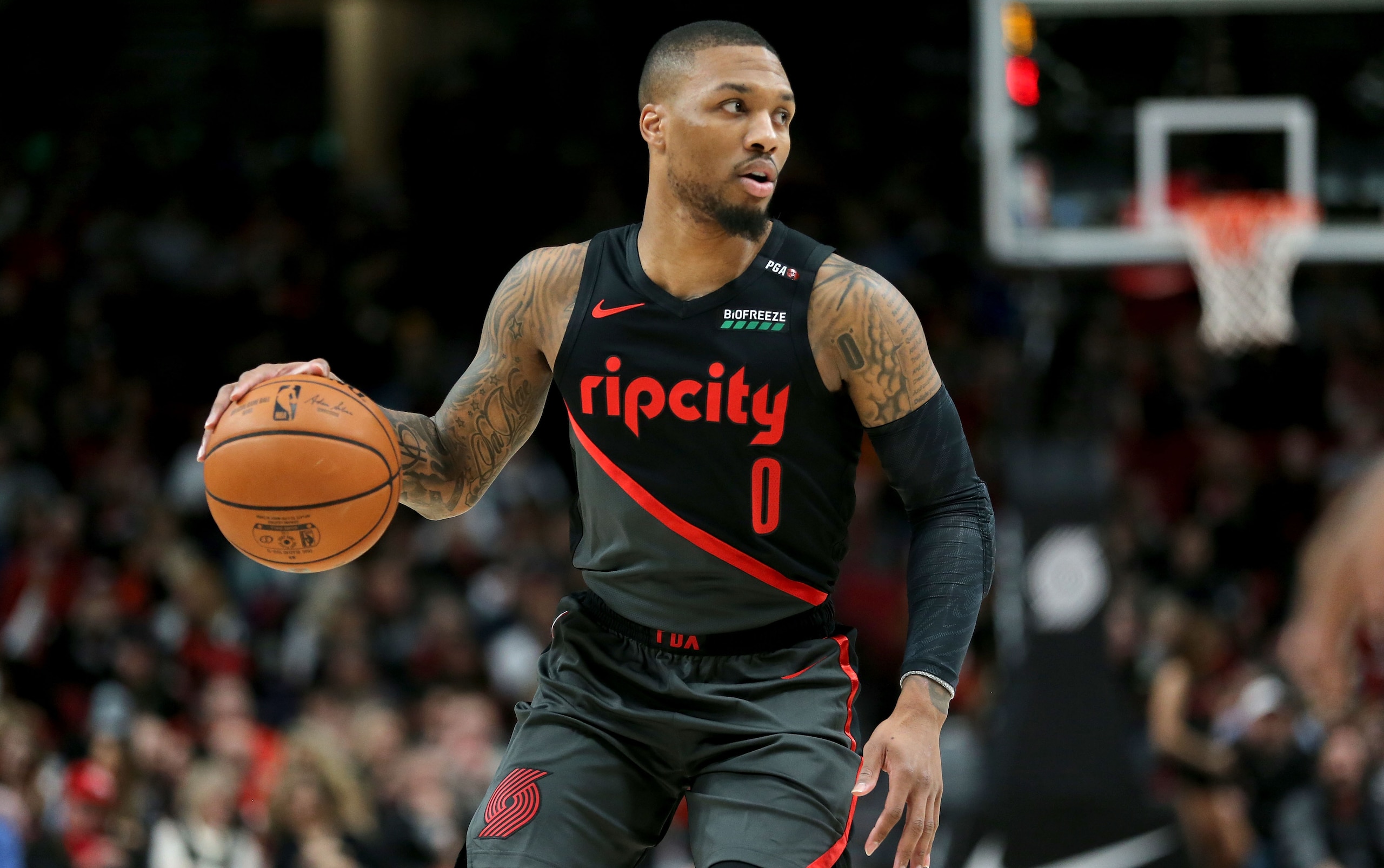
Damian Lillard, Portland Trail Blazers
2018-19 Per-Game Stats: 26.3 points, 4.5 rebounds, 6.2 assists, 1.0 steals, 0.5 blocks, 44.7 percent shooting
Career All-Star Selections: 3
We probably don't talk enough about the damage Damian Lillard does on the offensive end.
He's an above-average shooter on catch-and-shoot and pull-up threes, a 56.7 percent finisher inside of three feet and a top-20 table-setter despite being his club's No. 1 scorer. He might be the league's most dynamic pick-and-roll player, even though Portland hasn't given him the shooting depth, playmaking big man or athletic screeners to keep defenses honest when he's on the attack.
Lillard has his shortcomings as a defender, but he's absurdly proficient on offense. RPM grades him behind only Harden and Curry at point guard.
Russell Westbrook, Oklahoma City Thunder
2018-19 Per-Game Stats: 21.8 points, 10.6 rebounds, 10.6 assists, 2.4 steals, 0.3 blocks, 41.6 percent shooting
Career All-Star Selections: 7
Russell Westbrook is having one of the worst shooting seasons ever for such a high-volume player, but he's still a relatively comfortable choice for everything else he brings.
Despite losing his touch from almost everywhere—he's shooting 30.2 percent on jumpers—his relentless approach still puts constant pressure on the defense. OKC is woefully short on shooters and shot-creators, but it's still a middle-of-the-pack offense because The Brodie puts so much attention on himself. His ability to switch assignments plays a part in the Thunder's No. 3 ranking in defensive efficiency.
And, I'm sorry, but we have to talk about the triple-double average. We spent more than five decades debating whether anyone other than Oscar Robertson could pull it off. Now, we're pretending it's not a big deal that Westbrook has normalized 20-plus-point triple dips? Even if you chalk them up as statistical quirks, they still speak to how many areas he influences every time out.
Western Conference Frontcourt
5 of 6
Anthony Davis, New Orleans Pelicans
2018-19 Per-Game Stats: 29.3 points, 13.3 rebounds, 4.4 assists, 1.7 steals, 2.6 blocks, 50.8 percent shooting
Career All-Star Selections: 5
You could make a decent argument that Anthony Davis is the best player in basketball. Just look at those numbers. The PER is the NBA's best. The blocks (second), points (second), rebounds (fourth) and RPM (third) are all among the top five.
So, yeah, making his "case" as an All-Star reserve is like selling water to a parched person.
The most interesting thing here is that after two seasons as an All-Star starter, Davis (the 2017 All-Star MVP) lost his spot. But it took a tiebreaker to force him out. Both he and George had the same weighted vote score, but George had more fan votes, so the starting gig is his.
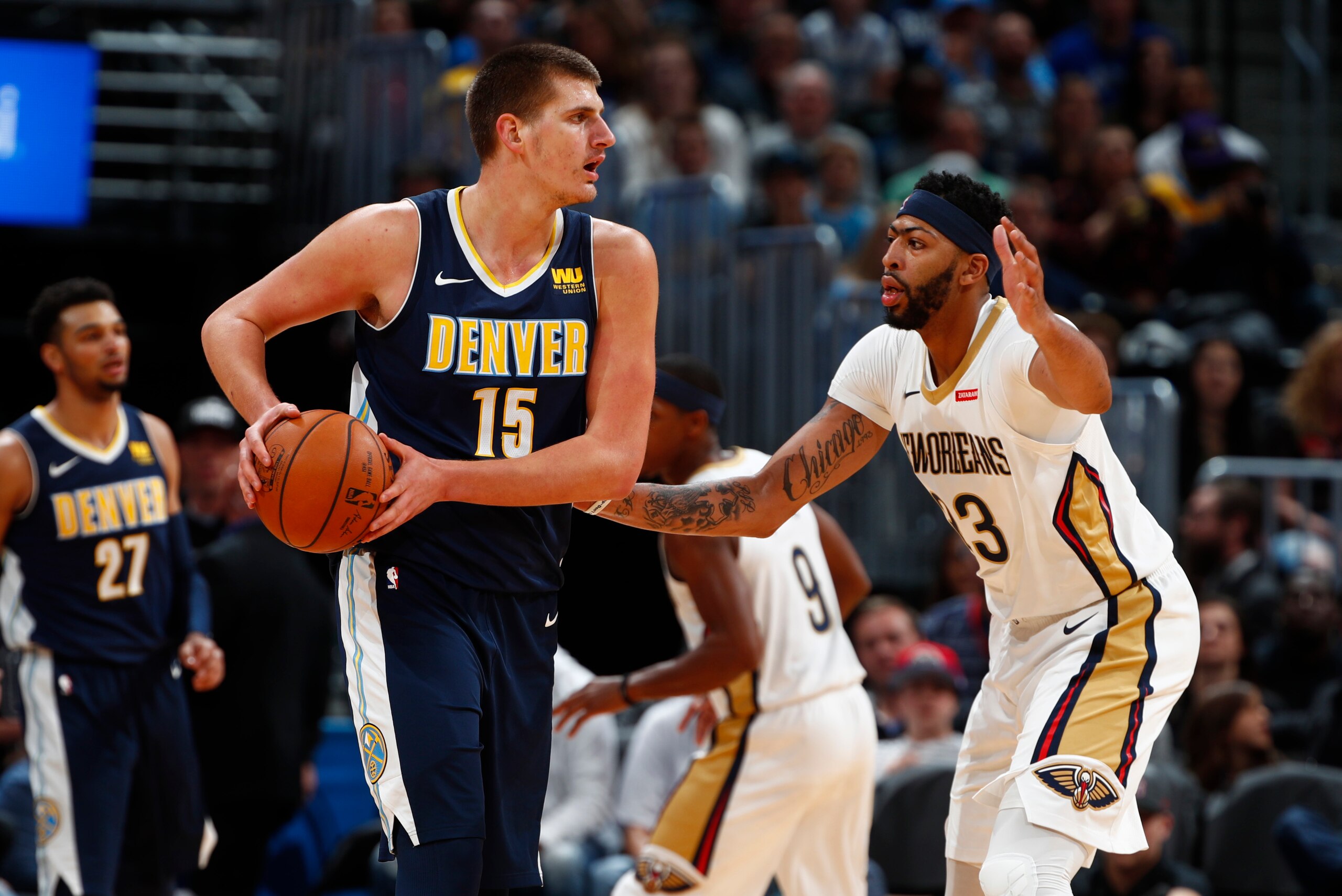
Nikola Jokic, Denver Nuggets
2018-19 Per-Game Stats: 19.8 points, 10.3 rebounds, 7.7 assists, 1.3 steals, 0.7 blocks, 50.4 percent shooting
Career All-Star Selections: 0
The West was always going to have a frontcourt crunch, as there were five potential starters competing for three spots. That Nikola Jokic came up short wasn't a total surprise, since he's probably the least recognizable of the five—and, as such, didn't finish higher than fifth in the fan, player or media voting.
That's hardly a reflection of the year he and his Nuggets have had, though.
Jokic is doing things players his size (7'0", 250 pounds) just don't do. If the campaign closed today, he'd join Wilt Chamberlain as the only 7-footers to ever average 19 points, 10 boards and seven assists. Denver, meanwhile, has the West's second-highest winning percentage (.674) and third-best point differential (plus-4.8 points per game).
Karl-Anthony Towns, Minnesota Timberwolves
2018-19 Per-Game Stats: 22.5 points, 12.3 rebounds, 3.0 assists, 1.0 steals, 1.9 blocks, 49.4 percent shooting
Career All-Star Selections: 1
You know those toolboxes packed with so much stuff they can't latch closed? That's basically what Karl-Anthony Towns takes to the offensive end every night.
His size (7'0", 248 pounds), footwork and soft touch all form a near-unstoppable post-up package, and he's averaging the league's second-most post-up points. But he's also a 53.3 percent shooter on drives. And a 38.3 percent splasher on catch-and-shoot triples. And a top-10 offensive rebounder. And the sixth-best distributor among 7-footers.
His defense has perked up a bit since the Nov. 12 Butler trade, and Towns' biggest fault at that end now might be an overzealous pursuit of blocks. With his offense and importance to his team, though, KAT should be a lock.
Western Conference Wild Cards
6 of 6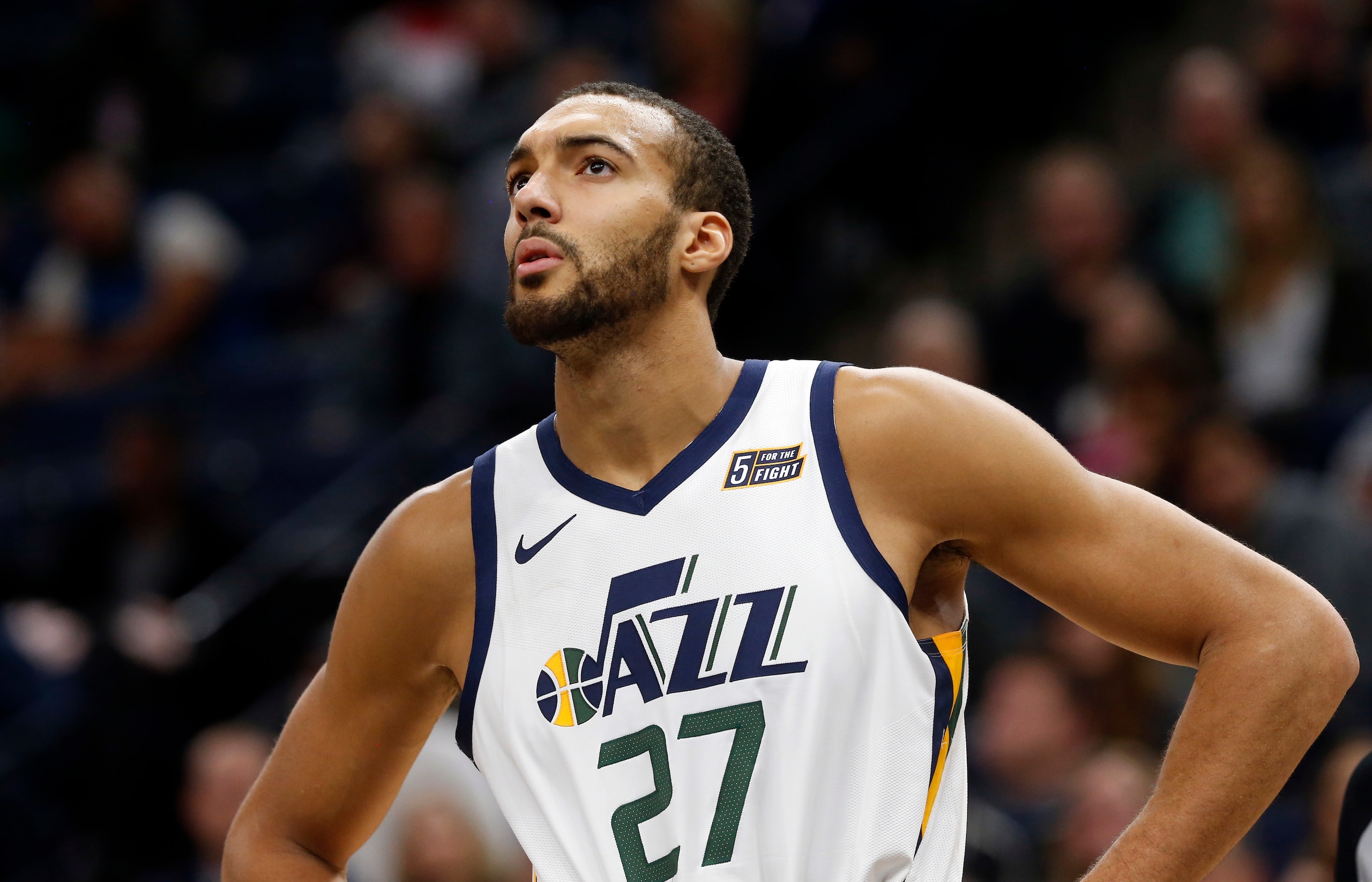
Rudy Gobert, Utah Jazz
2018-19 Per-Game Stats: 14.9 points, 13.0 rebounds, 2.2 assists, 0.9 steals, 2.1 blocks, 64.2 percent shooting
Career All-Star Selections: 0
Rudy Gobert's defensive dominance is both well-documented and permanently enshrined with at least one Defensive Player of the Year honor.
But we should still marvel at it just a little, right? He's the interior anchor of the NBA's fourth-best defense and an impossibly long rim-protector who shaves 7.1 percentage points off his opponents' shooting within six feet. He has the size (7'1", 245 pounds) and reach (and boards and blocks) of a traditional big, but also the lateral quickness to keep up with the current game.
Let's talk, though, about how critical he's become to Utah's attack. He adds vertical spacing as a lob threat, but he also frees his teammates as the NBA's premier screen-setter with league-best marks in screen assists (6.1) and screen-assist points (14.1). The Jazz actually lose more on offense (7.7 points per 100 possessions) than defense (5.5) when he takes a seat.
Jrue Holiday, New Orleans Pelicans
2018-19 Per-Game Stats: 21.0 points, 4.7 rebounds, 8.1 assists, 1.6 steals, 0.8 blocks, 48.2 percent shooting
Career All-Star Selections: 1
Before you go on an all-caps rant in the comments, you should know something—I hate your team. Why else would this roster exclude Klay Thompson, Tobias Harris, Danilo Gallinari, DeMar DeRozan, LaMarcus Aldridge, Luka Doncic (might be the only time this decade he misses the cut), Mike Conley, Devin Booker, De'Aaron Fox and maybe a dozen other deserving candidates?
Well, blame the basketball gods for making the Western Conference super deep. Then, blame the NBA for keeping conference affiliation as part of this process. And finally, blame yourself for not realizing that all the "AD has zero help!" takes made you gloss over just how good Jrue Holiday has been.
He's a 20-point scorer, a top-six distributor, a versatile, shutdown defender and a top-20 RPM guy all rolled into one. If you go purely by the numbers, he's been more important to the Pelicans than even Davis, and it's not close (16.6 net differential for Holiday, 7.2 for Davis). Holiday's spot nevertheless is the least safe in the conference, but it's earned if he gets it.
Oh, and if you're wondering why the Warriors aren't sending their usual allotment of stars to the game, it's because, as coach Steve Kerr said, Golden State hasn't been itself for much of this season. The squad started slow, putting Thompson and Draymond Green both behind the 8-ball. Green's 12.9 PER is his worst since 2013-14, while Thompson's 55.8 true shooting percentage is his lowest in five seasons.
Statistics courtesy of Basketball Reference, NBA.com and ESPN.com and accurate through games played Wednesday.
Zach Buckley covers the NBA for Bleacher Report. Follow him on Twitter: @ZachBuckleyNBA.
.jpg?w=2560 "Grading WWE Raw 🔠")
.png?w=2560 "Allen's BRUTAL 1H Stats 🫤")
.jpg?w=2560 "Monday Night Raw Blog 🔴")