

Forgot About Dre Ball
Frankly, this is what Dre Ball always wanted. Well, sort of.
For years, his basketball dreams had been connected to his cousins and uncle with the same name: Dre had been classmates with LiAngelo on and off since preschool. He had played alongside his older cousin Lonzo since they were kids. He was set to, in his senior season, share the backcourt with LaMelo. Dre worked out with LaVar, who taught him The Big Baller Way.
Then, in an instant, everything changed. “I wasn’t a part of [the move to Lithuania]. It was just something they did,” says Dre.
TOP NEWS
FAs Who Need Change of Scenery 🔁
LeBron addresses his unusual commute
.jpg?w=2560 "Patriots 49ers Football")
Aiyuk Slammed by Ex-Teammates 😬
While the international sports media attempted to make sense of the move, Dre was left trying to figure out what had happened—and what to do.
In some ways, he was ready for the challenge. “I always had confidence in myself and my abilities,” Dre says. “I just needed the opportunity.” In other ways, though, he had never experienced the limelight. The pressure of the spotlight, the uncertainty of college recruitment and the burden of continuing his family’s legacy at Chino Hills was his to bear alone.
Those who have seen Dre play recognize his potential. “He has been in the shadow, but in three years, that kid will be one of the best players in his class when it matters,” says Clint Parks, a well-known trainer on the grassroots circuit. Dre’s unique skill set and size (he’s 6’7”) has also attracted the attention of pros like Kevin Durant, who believe he is perfectly suited for an evolving NBA—a league in which versatile players who can exploit mismatches and operate in the open floor are highly valued. “Long arms, can guard multiple positions,” Durant said on Overtime. “Everybody gonna need one of those type of guys.”
Still, Dre finds himself the forgotten Ball. Zo routinely makes headlines with LeBron James in Los Angeles. (He makes fewer headlines as a rapper.) Melo has since returned stateside a 6’5” wunderkind, going viral every game at the Spire Institute, a high school and post-grad academy in northeast Ohio. (LaVar and Gelo are conspicuously present at Melo’s games.) Dre, meanwhile, has never been featured on the family’s Facebook reality show, Ball in the Family.
Now a Pepperdine Wave, Dre hopes that, after a life largely spent on the sidelines as a backup to his cousins, he can forge his own path.
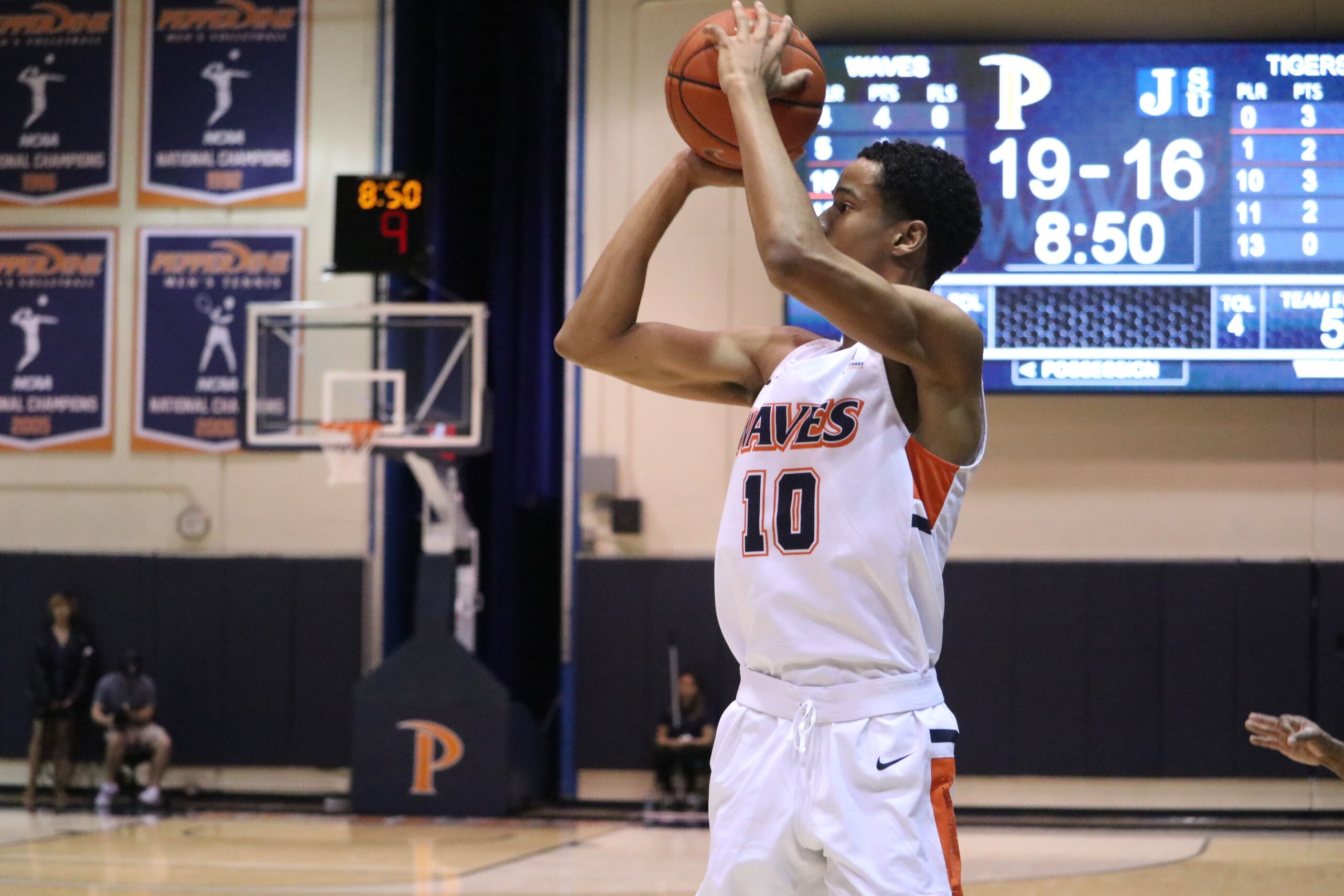
“I'm not looking to take a backseat to anyone,” he says. “I'm there to put in work to get to where I want to go. The assumptions about my last name never bothered me. I stopped listening to those whispers a long time ago.”
Dre was four when his parents, Stephanie and Andre, moved him to Chino Hills. The new neighborhood was only 33 miles east of the family’s previous residence in Lakewood, but the landscape—an overall flatness dotted with farms—felt like a different state. “It was cow country,” Stephanie says. “We used to get off the freeway and then drive and drive.”
The decision to move was largely undertaken as a matter of practicality: Andre’s six siblings all lived nearby, which meant that there would be after-school care for Dre—whom everyone called Little Andre (never junior)—and he’d grow up alongside his extended family. Stephanie and Andre could still commute to their jobs in Los Angeles, all without worrying about who would watch their son after preschool. “It wasn’t an inconvenience for the family,” says Stephanie, adding, “They were his caretakers.”
On Sundays, Andre played basketball with his brothers at the Neighborhood Activity Center. The NAC, as the court is known, featured the area’s best runs. He brought young Dre with him; his brothers did the same with their kids. While the older Ball brothers ran full court, the younger cadre did the same on the side court. Lonzo, the oldest of the group at 7, had a refined game, unmatched by anyone his age. Gelo could connect from deep as easily as he could bully his way to the rim. Melo was already starting to showcase an uncanny efficiency from the perimeter. Dre paired an innate quickness with his uber-hops, emerging as a natural finisher for his cousins’ passes—layups at first and then alley-oops as he discovered dunking.
“That’s all they knew,” says Stephanie. “Basketball was a passion that started with his dad and uncles.”
Dre didn’t much look like his cousins—his frame was lean and slender, favoring his mother’s side of the family—but he shared their athleticism. Through preschool and elementary school, Dre spent a lot of time hanging with Zo, Gelo and Melo at their house. LaVar, a former Carolina Panther practice squad player who had once dreamed of becoming a U.S. Marshal, was a stay-at-home father and worked as a personal trainer at a local LA Fitness. (Tina, his wife, was a middle school physical education teacher.) So he helped the kids pass time by running hills, lifting weights and playing 3-on-3 in the Balls' backyard. “We just looked at how his children were playing, and since Dre was right with them, he fell in line,” says Andre, adding, “My brother said that Dre could ball, and we all agreed it would be good for them to train as well as play together.”
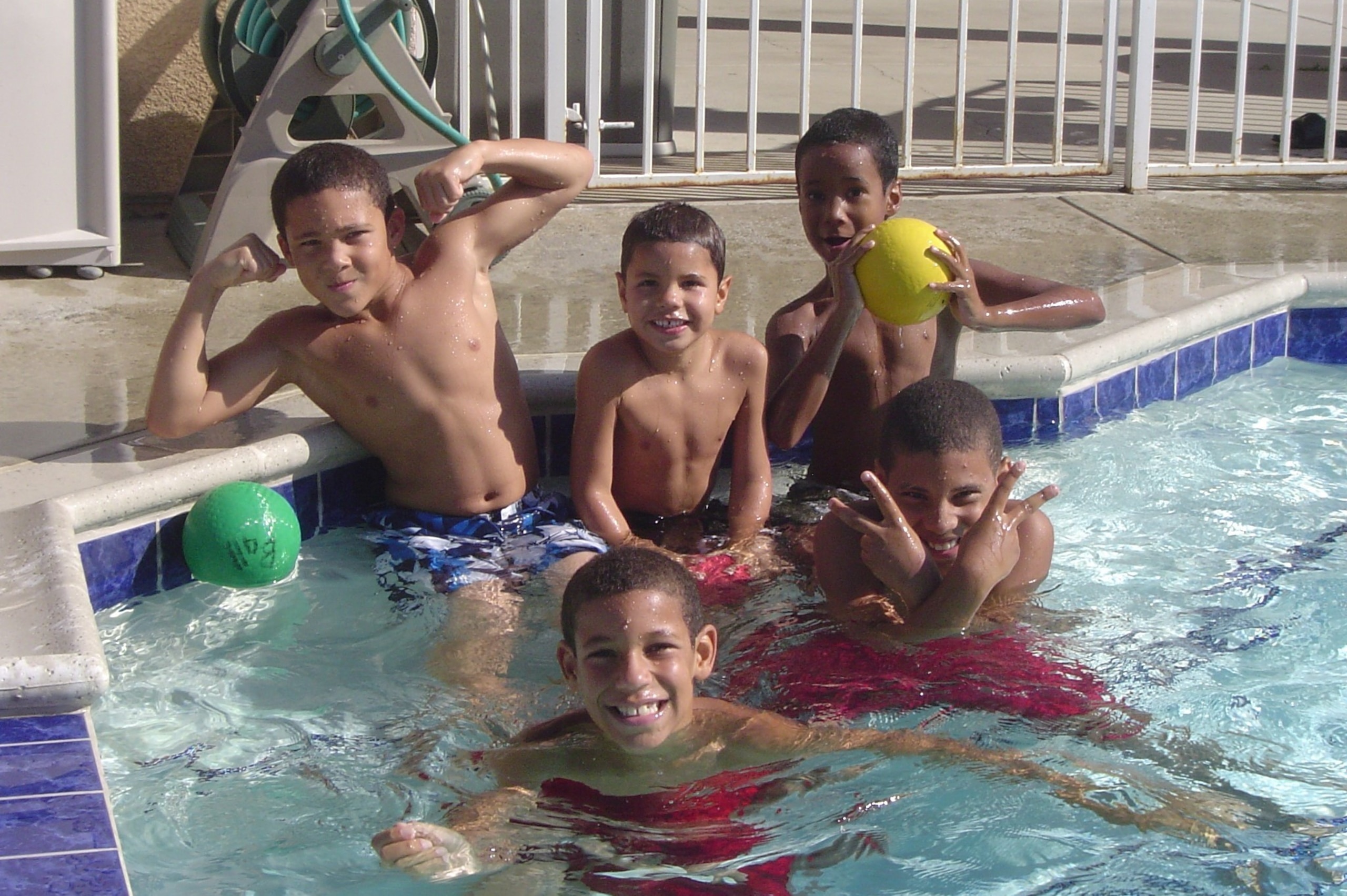
LaVar insisted that his progeny play against older competition. He believed the experience would make the quartet better and stronger. Failure wasn’t an option for the kids. “They expect success,” says Steve Baik, the head coach at Chino Hills for six seasons. (He coached Lonzo for four seasons.) “And if they fail, they know to get right back up and not feel sorry for themselves.”
Playing up had other advantages too, like increased exposure. “The more you win, the bigger stage you play on,” Dre explains. Though, as it turned out, the quartet was their own best competition: “We pushed each other every day. There was always enough talent on the court at any time to play each other, and we matched up with everyone.”
That sort of basketball pressure cooker only helped to further Dre’s game. “There are a lot of good things LaVar did pushing those kids and working them out beyond their limits,” says Dennis Latimore, the head coach of Chino Hills, who played collegiately at Arizona and then Notre Dame. “They all at a young age saw the type of work ethic needed to separate themselves.”
Latimore adds, “To go against a talent like Lonzo as a first-grader is transformational.”
Coexisting alongside kids as talented as Lonzo, Gelo and Melo wasn’t easy. Wherever Dre would go, he became known simply as “Cousin Ball.” Still, when it came time to choose a high school, Dre elected to follow his cousins to Chino Hills. “We weren’t completely comfortable with the school, but it was Andre’s decision, so we left it up to him,” Stephanie says.
Whether Dre seriously considered another path is difficult to determine. “I just play the game, and at the end of the day, they’re just my cousins,” he says. But those closest to Dre told me that the decision to deviate from those he had surrounded himself with his entire life was daunting. “He was a young kid, and he was happy to go with the flow,” says Baik, who coached Dre for two seasons.
Stephanie adds, “Dre didn’t want to be a dissenting opinion and go outside of what was familiar to him as a kid.”
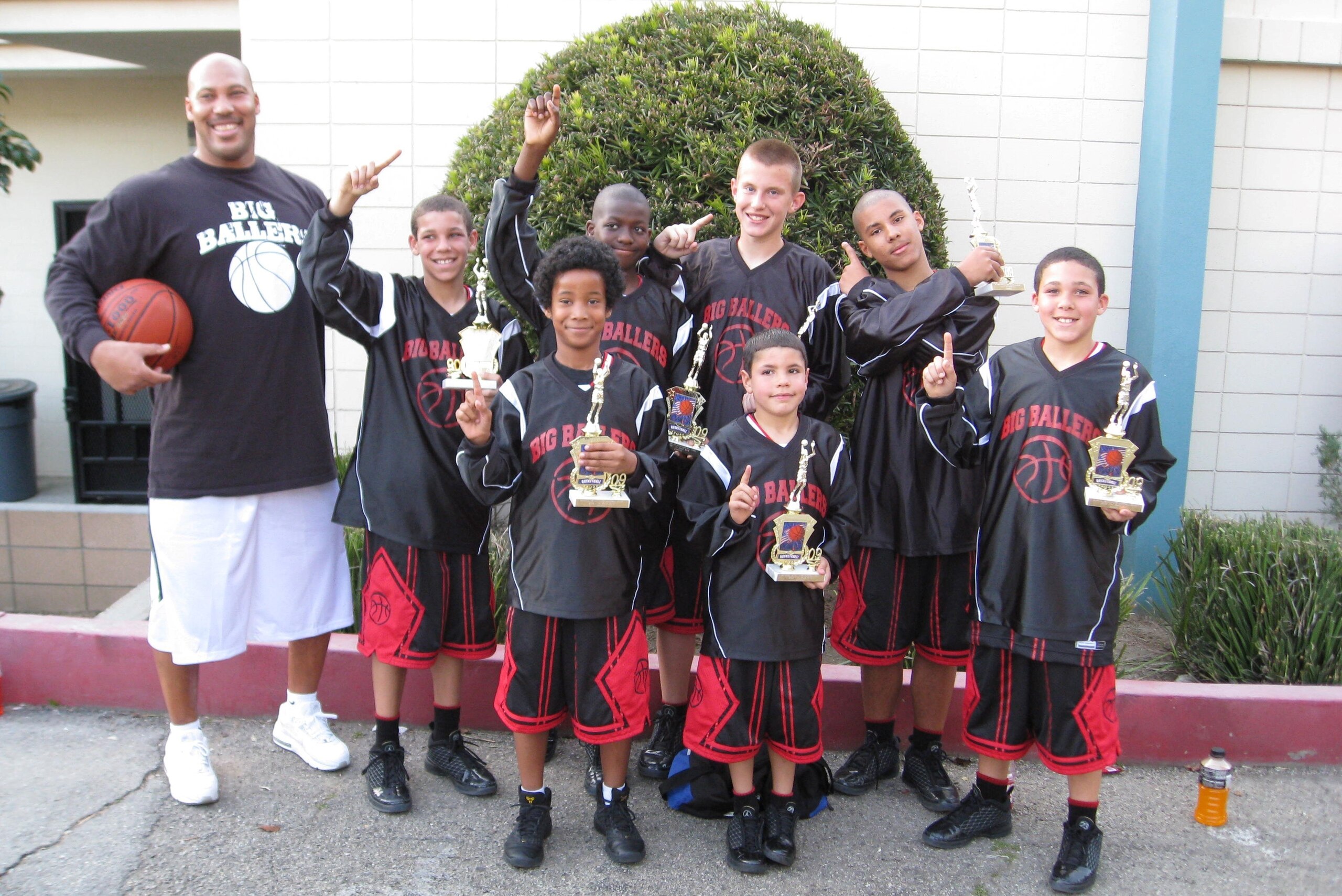
On a roster already stocked with Lonzo and Gelo—Melo, a year behind Dre, wouldn’t enroll at Chino Hills until the 2015-16 season—Dre was arguably the team’s biggest surprise. Though Chino Hills’ season ended in a double-overtime loss in the state title game (Dre scored seven points), the frosh’s potential enticed college coaches, who noted not only his physical traits but also his surname. “He was a great prospect,” says Baik. “His last name opened up doors for him that wouldn’t have existed if he wasn’t Lonzo’s cousin. Coaches thought higher of him because of that.”
As Dre entered his sophomore year, Chino Hills was projected to win a national title. Of the four, Dre was the only Ball who hadn’t committed to UCLA, but as the first player off the bench he was still expected to be an “impact guy,” according to Baik. (Dre was one of the few who could consistently catch and finish all of his cousins’ now-famous alley-oops.)
But a dislocated kneecap sidelined him for a month, and when he returned, the team’s rotation was set. Chino Hills rolled to a 35-0 record without Dre seeing much action.
The next season was much of the same: A shoulder injury suffered during the summer’s AAU slate morphed into a torn right labrum, ending Dre’s season shortly after the preseason. Lonzo was starring at UCLA, on his way to becoming a lottery pick. Gelo was coming into his own as an assassin from the perimeter. Melo dropped 92 in a game and went viral. Dre missed the AAU circuit that summer and stopped training with LaVar, opting to rehab on his own and work out with Andre at a nearby 24 Hour Fitness. “It was lonely for him,” says Stephanie. “He was limited and could only work on his legs, so he was by himself.”
As the Balls leaped into the national consciousness, Dre remained largely adjacent to the family’s national buzz. His parents sometimes worried their son might feel as if he was being pushed against his will. Did he really want this? His dad would often exclaim, “You don't have to do this!” But Dre insisted that to achieve something, as LaVar had shown, he had to work for it.
Then, a series of wholly unpredictable events suddenly thrust Dre into the national limelight. First, he finally got healthy. Then, Lithuania happened. (LaVar proclaimed that Chino Hills would go from “sugar to shit” without his sons on the team. When asked what Dre thought of those comments, Stephanie demurs, adding, “We learned for a long time to take everything LaVar says with a grain of salt.”) Finally, Dre also got a new coach in Latimore, who no longer would have to deal with LaVar on the sidelines. (Baik abruptly resigned in 2016.)
“Before I got here, there was not a lot of common sense going on,” Latimore says of the relationship his predecessors maintained with the Balls. “No parents dictate what happens with the team.”
Dre was never dismissive of his cousins' success. He continued supporting them in private—texting in a group chat or FaceTiming—and publicly on social media. He understood his cousins had chosen their own path, and now it was his turn.
With his cousins and uncle gone, Dre began training outside the family for the first time, enlisting the help of Clint Parks, who connected with Stephanie on social media midway through Dre’s senior season. The two worked to improve Dre’s comfort level with his left hand and his ability to take advantage of his athleticism and score over smaller defenders in the mid-post.
Parks worked with clients such as Tony Snell, Kawhi Leonard and Kyle Kuzma—each had trained with Parks at a period in which his skill development was raw, and all were still learning how to harness and expand on their potential. “I like working with kids who are sleepers,” he says. “Under-the-radar prospects that don’t get the love they deserve, and I help them fulfill their potential.”
Dre was similar. “He needs work,” Parks recalls. “You don’t want him to be a finished project at 17.”
That season, Dre flourished, as did his Chino Hills squad, which won 22 of its last 27 games. “Their absence forced him to step up,” says Stephanie, “and he could stand on his own, which was less stressful for him.” In the CIF Southern California Regional Division I final, Dre dropped 32 points versus St. John Bosco, helping his team reach the state championship game on a variety of long three-pointers and drives to the rim. (Chino Hills won the championship, trouncing Las Lomas of Walnut Creek.) “You can teach skills, but you can’t teach a 45-inch vertical and his quickness,” Latimore says. “Dre reminds me of Andre Iguodala, who I played with for a year at Arizona. He has that type of length and jumping ability.”
After the Southern Regional final performance, Kevin Durant proclaimed that Dre was one of the “diamonds in the rough,” a player whose “game gonna get better and develop” even though he had been “overshadowed” by his cousins. The recruiting floodgates opened—Long Beach State and Pepperdine all offered scholarships. (Dre already had an offer from Northern Arizona and Portland.) “I wondered why he hadn’t been signed yet,” says Pepperdine head coach Lorenzo Romar, who was in attendance at the Southern Regional final. “I was told that people hadn’t gotten the chance to see what he could do.”
Dre’s output against St. John Bosco was illuminating for Romar. “His athleticism jumps out at you, as does his length,” he says. “Those are the players I’ve always tried to recruit.”
Initially, Dre wondered if he should wait for bigger programs to follow suit. But Andre told him: “If they want you but haven’t called you, are they worth waiting for?” Dre committed to Pepperdine in the late spring of 2018.
Dre’s potential has overshadowed what has been something of an adjustment to Division I. Through nine games, he has averaged around 10 minutes per game. However, he continues to pique the interest of the hoop world, particularly online. His arsenal of dunks—in games and in practices—frequently earn thousands of views on Instagram. He still has that same versatility too. He should be able to play multiple positions on the Wave’s extremely fluid rotation. He remains eager to show himself, even if those minutes don’t come right away.
“Coach Romar tells me to go as hard as I can; it doesn’t matter if it’s wrong,” he says.
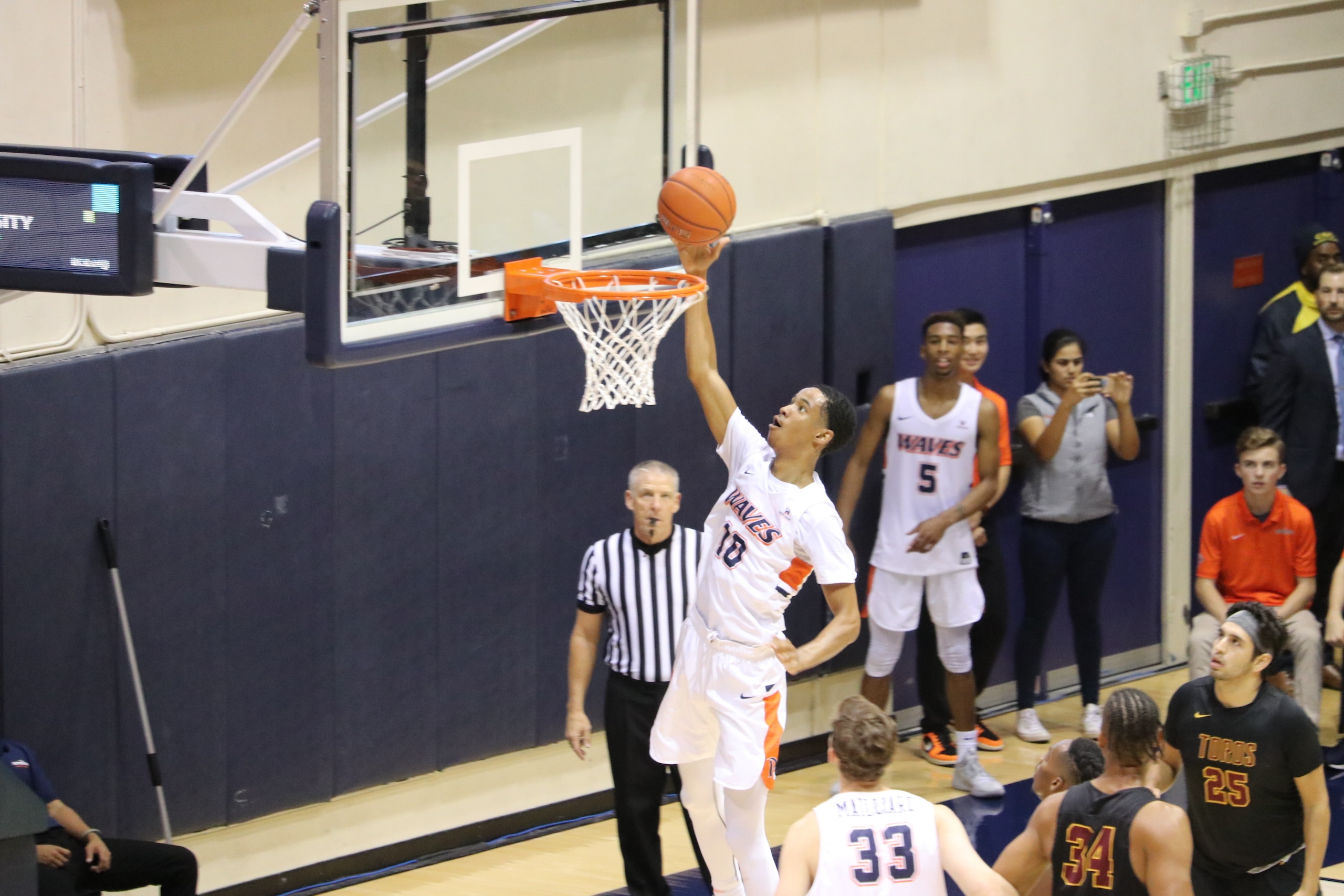
He still thinks back to those days when he first enrolled at Chino Hills, though. “When I played with my cousins, I used to get in my own head and mess up my rhythm,” he says. “It was a mental thing, but since they left, I’ve started a new path.” Back then, he told Baik that his goal was to be the best player he could be. “He didn’t know what that meant,” says Baik. “He hadn’t experienced that level of commitment.” That focus shifted this past year.
There are advantages that are inherent to being “Cousin Ball.” “What a great time to be Dre Ball right now,” Latimore says. The reality is that Dre may have not arrived at Pepperdine with the same determination and drive if the quartet had remained intact. Which is perhaps why he handled his recruitment without their input or advice. He was on his own, so why shouldn’t he be fully in charge for the next stage of his life? “They were already in Lithuania,” his father says, “so it was just us.”
.jpg?w=2560 "Raiders Saints Football")

.jpg?w=2560 "Report: Eagles to Sign Cowboys QB")
.jpg?w=2560 "Caleb Reposts Hype Video 🥶")
.jpg?w=2560 "Grading SmackDown 🔠")