
World Cup 2018: Breaking Down Where England vs. Croatia Will Be Won and Lost
The second 2018 World Cup semi-final, between Croatia and England, is a chance to tread long-overdue ground for both sides.
Croatia haven't found themselves at this stage of a World Cup since 1998, when they were taken down 2-1 by hosts France. England must look even further back for their last semi-final, a penalty loss to West Germany in 1990, which was their highest point since the famous home victory in 1966.
Both teams will be giddy and excited to have reached the final four, but they'll also be laser-focused and determined. You expect to meet a France, a Germany or a Brazil at this stage of the competition; Croatia will see England as about as soft a draw as you could reasonably expect for this stage, while England will return the sentiment.


.jpg?w=2560 "Saints Giants Football")
In short, both teams will smell blood.
Story So Far: Croatia
Croatia started out hot—one of just three teams to win all three of their group games (the other two being Uruguay and Belgium)—slaying Lionel Messi's Argentina along the way. They rotated practically their entire team for the third game against an Iceland side in need of a victory and still got the job done.
The key man for the Vatreni has unsurprisingly been Luka Modric, who has managed to translate his dominant Real Madrid club performances to his national team—something often difficult to put into practice.
Be it from the No. 10 role in a 4-2-3-1 formation, from slightly deeper in that same setup, or as a No. 8 in a 4-3-3 configuration, he's had a huge impact: two goals, one assist, the most passes per game of any teammate (68.4) and the most tackles plus interceptions of any Croatian (14).
His midfield partner, Ivan Rakitic, has hit some high notes too, excelling against Argentina and playing solidly in the quarter-final against Russia. Together they form a formidable pairing that surely takes up an entire portion of England boss Gareth Southgate's opposition-analysis dossier.
Croatia manager Zlatko Dalic has started Modric and Rakitic in every must-win game so far, but who joins them in midfield has changed.
If Marcelo Brozovic starts, it tends to signal the Vatreni's intention to play a little tighter and counter-attack; if Andrej Kramaric plays ahead of Modric and Rakitic in a double pivot, they likely sense an opportunity to control and play on the front foot.
Dalic's liberal chopping and changing has made Croatia hard to plan for, but once the lineup is released, the Three Lions will know how their opponents intend to play.
Story So Far: England
Of all people, Croatia defender Vedran Corluka may have summed up the dramatic change in England's World Cup campaign best when talking to reporters: "They are confident and have a young team. But before they didn't have any pressure. You all just said to them, 'Just do what you can,' but now even you are hoping that it can 'come home,' yeah?"
He's right. While most England fans will be proud of this team even if they lose to Croatia—a semi-final berth is far more than anyone expected heading into the tournament—there is a lust for success creeping in that has changed expectations.
It started with Harry Kane's late winner against Tunisia. England should have put the game to bed in the first half but didn't, committing an error that led to an equaliser. They looked set to drift to a draw until their star striker stepped up at the death.
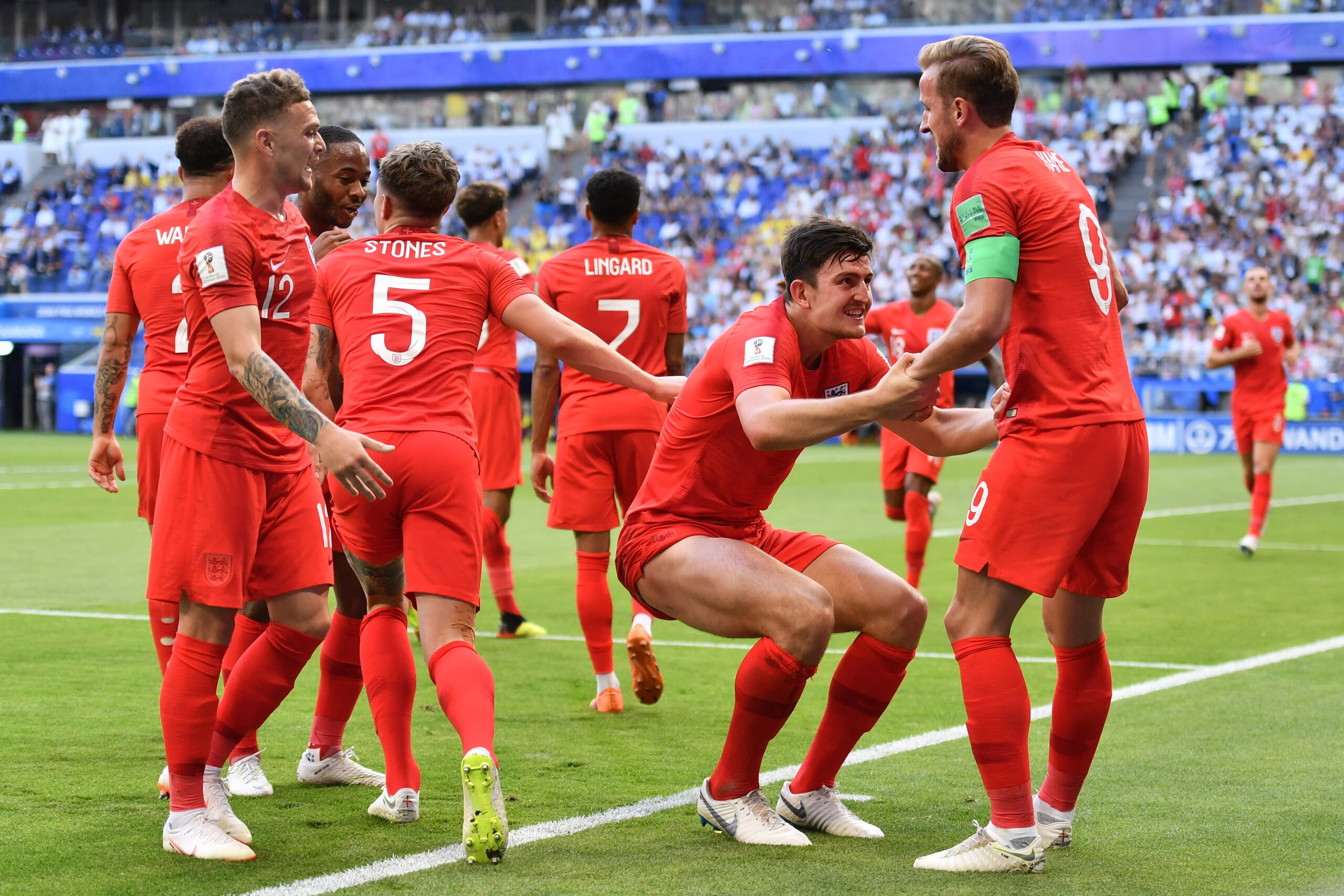
It continued into the Colombia game, in which the team conceded an agonising 93rd-minute equaliser to force extra time and penalties but dusted themselves down and secured victory from the spot—the first time that had ever happened at a World Cup in the nation's history.
It culminated (for now) in a professional, almost nerveless performance against Sweden in the quarter-finals. The lack of drama or worry was distinctly un-English to say the least.
Southgate can point to great performers in every area of the pitch, from goalkeeper right through to attack, and there is a confidence oozing through this side. They might also hold a fitness advantage over Croatia, having strolled through their last game before the Vatreni went to penalties.
Flashpoint 1: Croatia's rejigged defence a weakness?
According to Spanish outlet Marca (h/t the Daily Mail's Robert Cottingham), Croatia's first-choice right-back, Sime Vrsaljko, is unlikely to play in the semi-final on Wednesday because of an injury he suffered in extra time against Russia. This is a massive blow to Dalic. Not only has Vrsaljko been one of the best in his position during the finals, but the backup options also aren't particularly palatable.
Tin Jedvaj is out of form and didn't play well against Iceland when given the chance, which saw Vedran Corluka come on for Vrsaljko against Russia and play centre-back, with Domagoj Vida shifted to the right.
Vida has moved around a lot for Croatia of late, playing left-back against Brazil in the first tournament warm-up game and then right-back against Senegal in the second. Neither went particularly well. He's not technically neat enough to play possession football from the flank or attacking enough to impact in the final third, and although he is quick, he got torn apart by speed in both friendlies.

Even at centre-back during these finals, partnered with Dejan Lovren, Vida has had some concerning moments. In a high defensive line, something the Vatreni have utilised often in possession in Russia, he's misjudged several balls and some runs, resulting in chances for the opponent.
If he's pushed out to the right, England must test the area liberally. They don't play anyone in that natural position in their 3-5-2 formation, but Raheem Sterling has positional freedom moving from in to out and—particularly on the counter-attack—should be spinning into the channel between Vida and Corluka and encouraging quick Jordan Henderson passes.
If Vrasljko is fit and Vida remains in the centre, Sterling should still dart out to either side and stress the centre-backs, hunting for errors to exploit.
Flashpoint 2: Watch those gaps, England!
So far, Croatia have come up against two sides who play a three-man defensive line (Argentina and Denmark) and beaten them both. One performance was more convincing than the other, but in both, the Vatreni demonstrated a clear understanding of how to exploit the spaces a three-man line leaves.
The full-backs push and stay touchline-wide, drawing the opposition's wing-backs out to meet them one-on-one. The winger then slips inside and hits the channel between the outside centre-back and wing-back, with a central midfielder (Modric if it's on the right, Rakitic if it's on the left) usually slipping the ball in to chase.
It results in Ante Rebic (right) and Ivan Perisic (left) receiving the ball in the box either facing goal or at the byline, giving them the chance to dribble inward or cross. Croatia are a big side, with their wingers basically wide strikers and Mario Mandzukic's physicality up front, and allowing them to cross is a very, very bad idea.
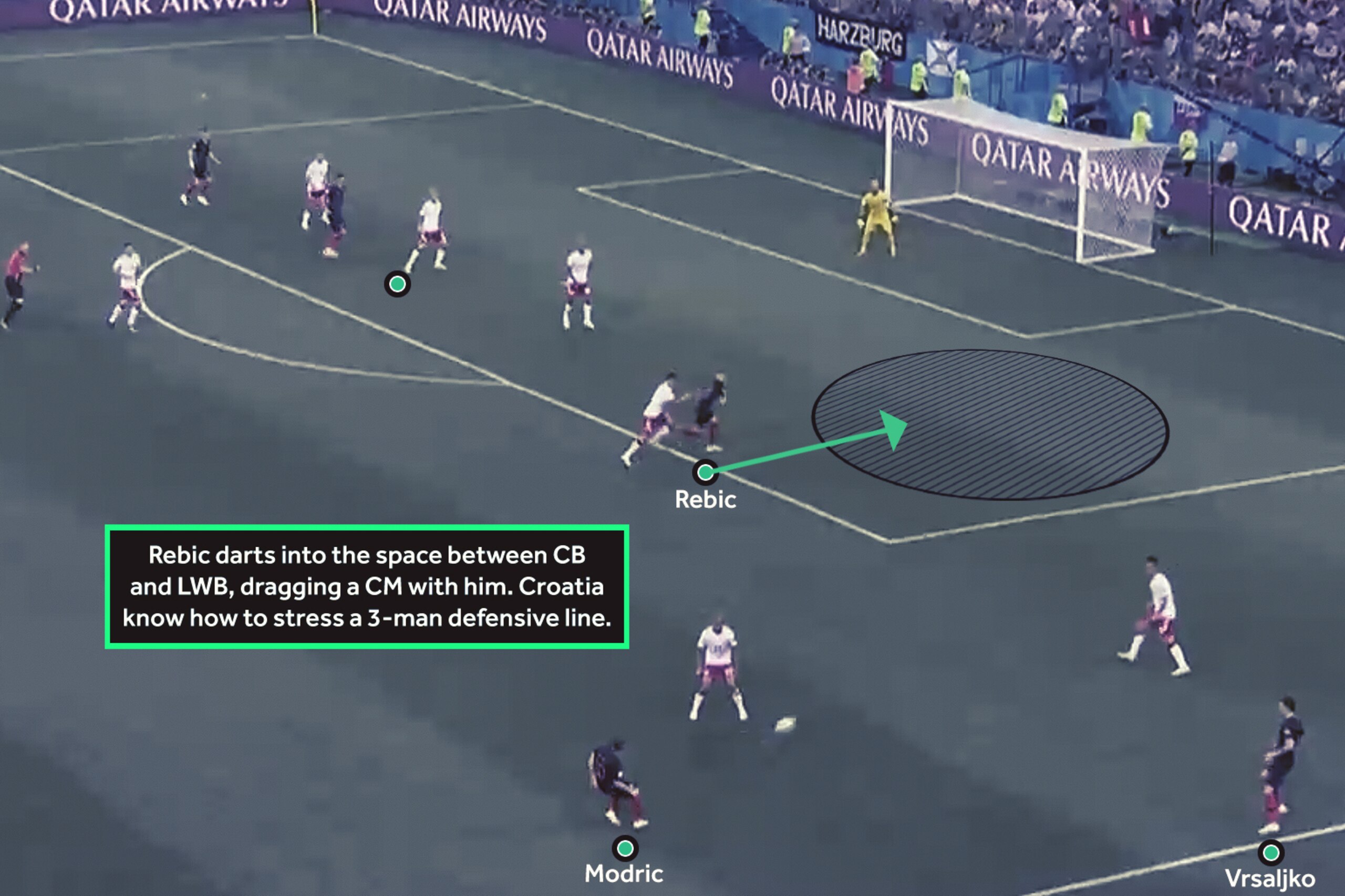
Dalic's side were able to subject Argentina to extreme pressure doing this because their wing-backs left swathes of space, but they hurt a more defensive Denmark side in the same way too. You might even consider it their preferred method of attack. Given that Mandzukic spends so much time tracking back and defending, it's often the only way to move forward.
The England combinations under threat here are Kieran Trippier-Kyle Walker (right) and Harry Maguire-Ashley Young (left). Maguire has had an incredible tournament, but if Rebic squeezes in alongside him one-on-one in the box, there might be some trouble; the Croatian is physical and aggressive but also has incredibly swift feet. Walker must be aware that Perisic is capable of the spectacular even when he appears to be cornered and nullified.
All statistics via WhoScored.com




.jpg?w=2560 "Latest Report Card Grades for Top 20 CFB QBs 🔠")