NFL Draft 400: Top RBs for 2018 NFL Draft
Scouts and general managers have called the 2018 NFL draft class average, but we still have questions. Who is the best overall player? How about the best at each position?
The goal of the NFL Draft 400 series is to figure that out.
The top 400 players were tracked, scouted, graded and ranked, with help from scouting assistants Marshal Miller, Dan Bazal and Jerod Brown. Together, we viewed tape of a minimum of three games per player—the same standard NFL teams use.
Oftentimes, we saw every play from a prospect over the last two years. That led to the grades, rankings and scouting reports you see here.
Players were graded on strengths and weaknesses, with a pro-player comparison added to match the prospect's style or fit in the pros. The top 400 players will be broken down position by position for easy viewing before the release of a top-400 big board prior to the draft.
In the case of a tie, players were ranked based on their overall grade in our top 400.
36. Ralph Webb, Vanderbilt
1 of 36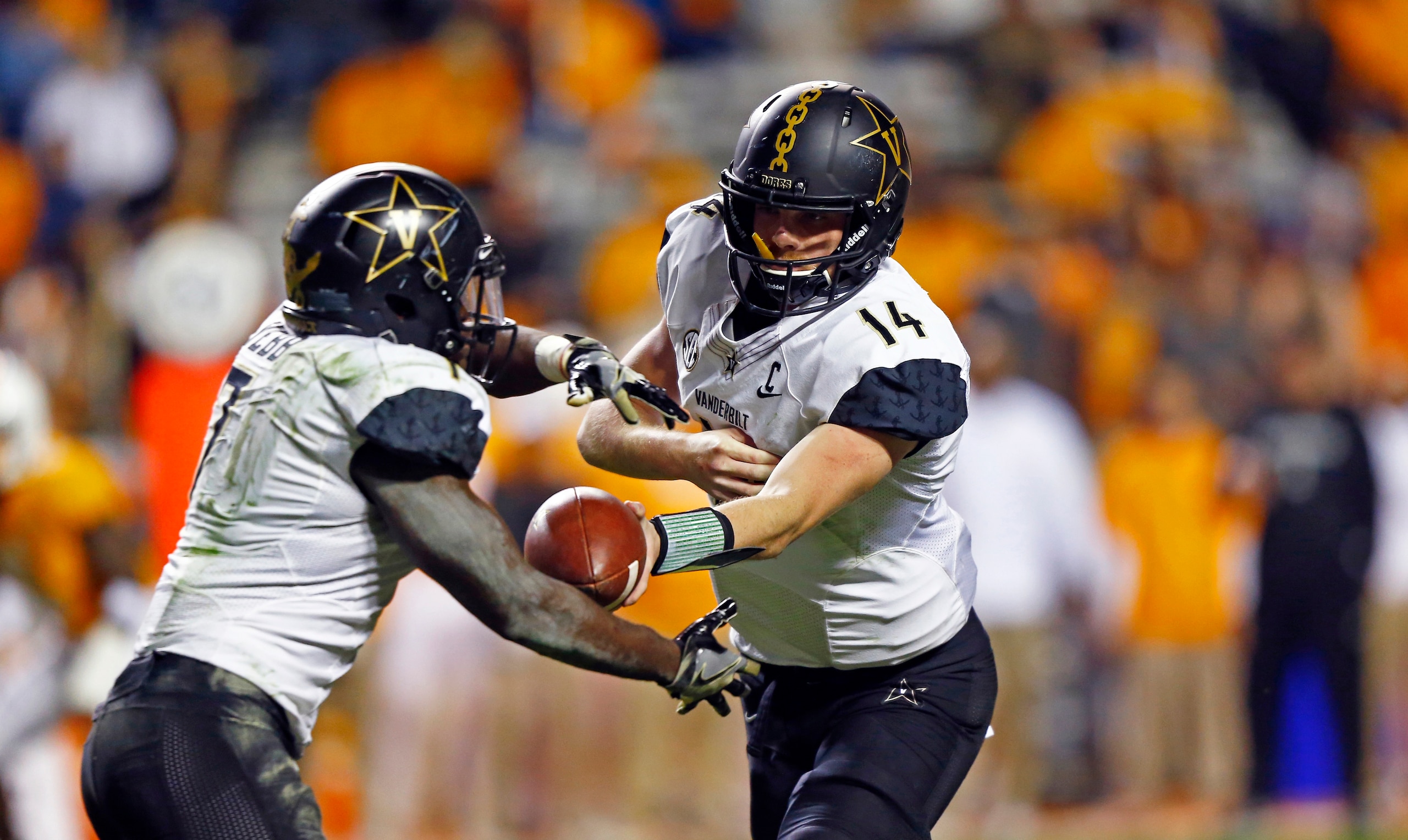
POSITIVES
—Fought through some injuries this past season but has been one of the most durable backs in college over the past four years.
—Powerful back who runs with a low center of gravity.
—Shows great vision and ability to plant and go once a hole opens up.
—Dangerous runner in the open field where he is able to use his agility and lateral quickness to escape would-be tacklers.
—Better-than-average receiver who could make his living in the NFL as a third-down back.
NEGATIVES
—More quick than fast, he doesn't appear to have the breakaway speed on film to match the 4.48 40 time he put up on Vanderbilt's pro day.
—Had a bit of a disappointing senior season after back-to-back 1,000-yard seasons.
—Over 900 carries have put a lot of mileage on his legs, not to mention a ton of them came against tough SEC defenses.
—A lack of athleticism shows up on tape and in testing.
—Webb doesn't have the speed to be a threat in an NFL offense.
OVERALL
Webb was a really good college running back but doesn't have the traits we look for in a pro. His stiff hips, slow feet and lack of power after contact limit his ability to make a mark against NFL defenses.
GRADE: 4.99 (Camp Body)
PRO COMPARISON: Branden Oliver, Free Agent
35. Demario Richard, Arizona State
2 of 36
POSITIVES
—Thick, compact frame that is particularly useful in goal-line and short-yardage situations.
—Four-year contributor and led Arizona State in rushing the last three years.
—Leg drive is relentless in pileups and leads to potential for additional yardage.
—Has experience as lead back and receiver and may offer positional versatility in NFL.
NEGATIVES
—Upright runner who barrels through gaps without awareness or forward lean.
—Lumbering running style that lacks aggressive explosion into and through contact.
—Richard doesn't have NFL-caliber speed or athleticism.
—Doesn't offer much in terms of a receiving option; will struggle to separate from even adequate NFL defenders
OVERALL
Richard will struggle to garner any meaningful snaps in the NFL. At best, he's a short-yardage back and a limited gap-scheme runner. He may convince an NFL team to give him a shot on the practice squad with the athletic versatility to mirror a variety of roles in the NFL. The overall lack of long speed and vision, paired with poor acceleration, is a major concern for a player his size.
GRADE: 4.99 (Camp Body)
PRO COMPARISON: Elijah Hood, Oakland Raiders
34. Kamryn Pettway, Auburn
3 of 36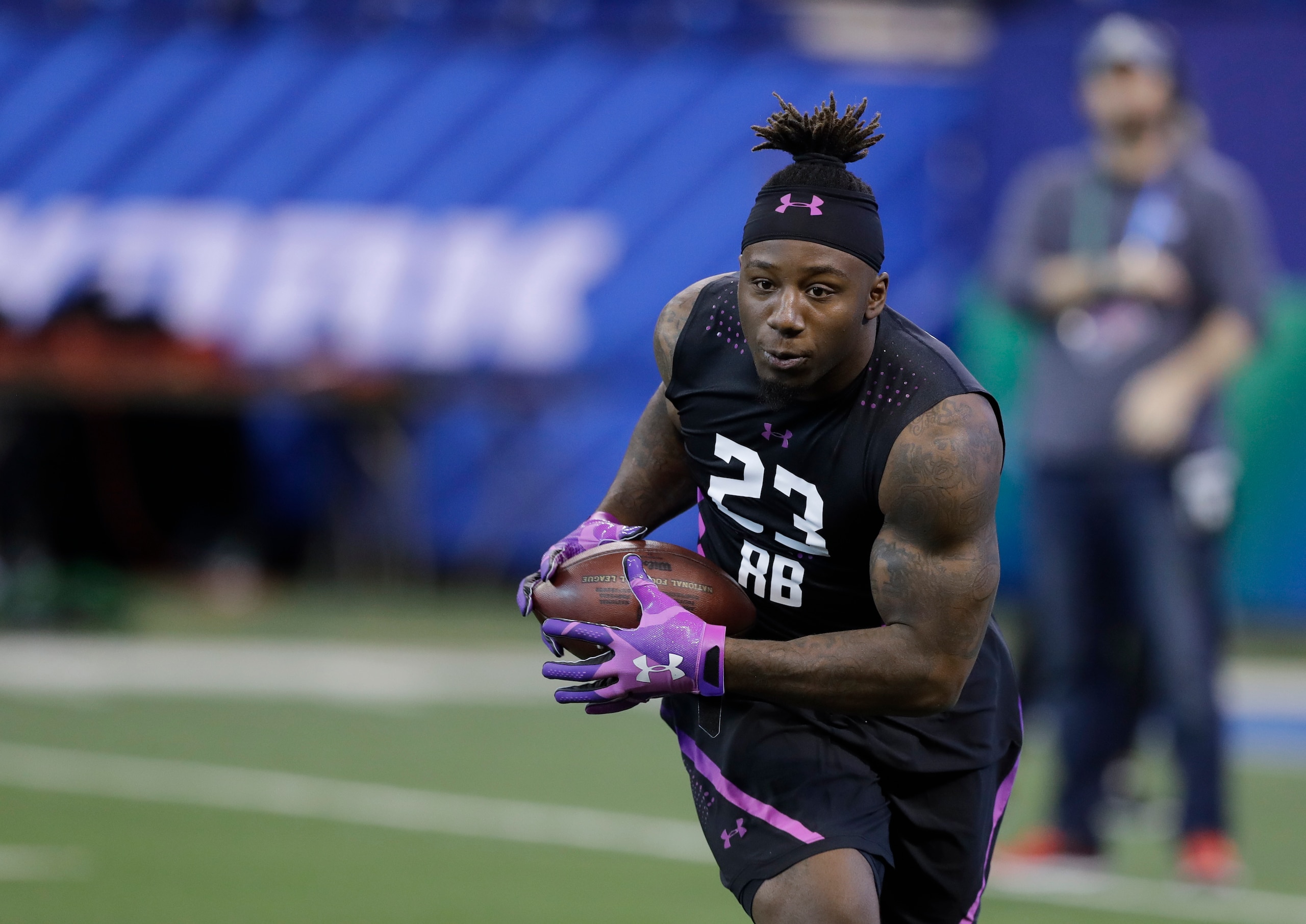
POSITIVES
—A throwback runner who will lower his shoulder and deliver a blow.
—Finishes runs going forward and fights for the extra yard.
—Experience playing fullback early in career at Auburn.
—Drives his feet through contact.
NEGATIVES
—Has taken a beating in the SEC and may have topped out physically.
—Lacks lateral moves and cuts.
—Doesn't see open lanes and grades out below-average on vision.
—Huge character concerns according to area scouts.
—Has missed time in multiple seasons due to injuries.
—No pass protection or receiving ability.
OVERALL
Entering the 2017 season, Pettway was the Auburn running back scouts were talking about. That ended once school visits started and the season began. With Kerryon Johnson becoming the featured back, Pettway was quickly a forgotten man. He looks the part and did get a combine invite, but he will struggle to be drafted.
GRADE: 4.99 (Camp Body)
PRO COMPARISON: Jeremy Hill, New England Patriots
33. Kyle Hicks, TCU
4 of 36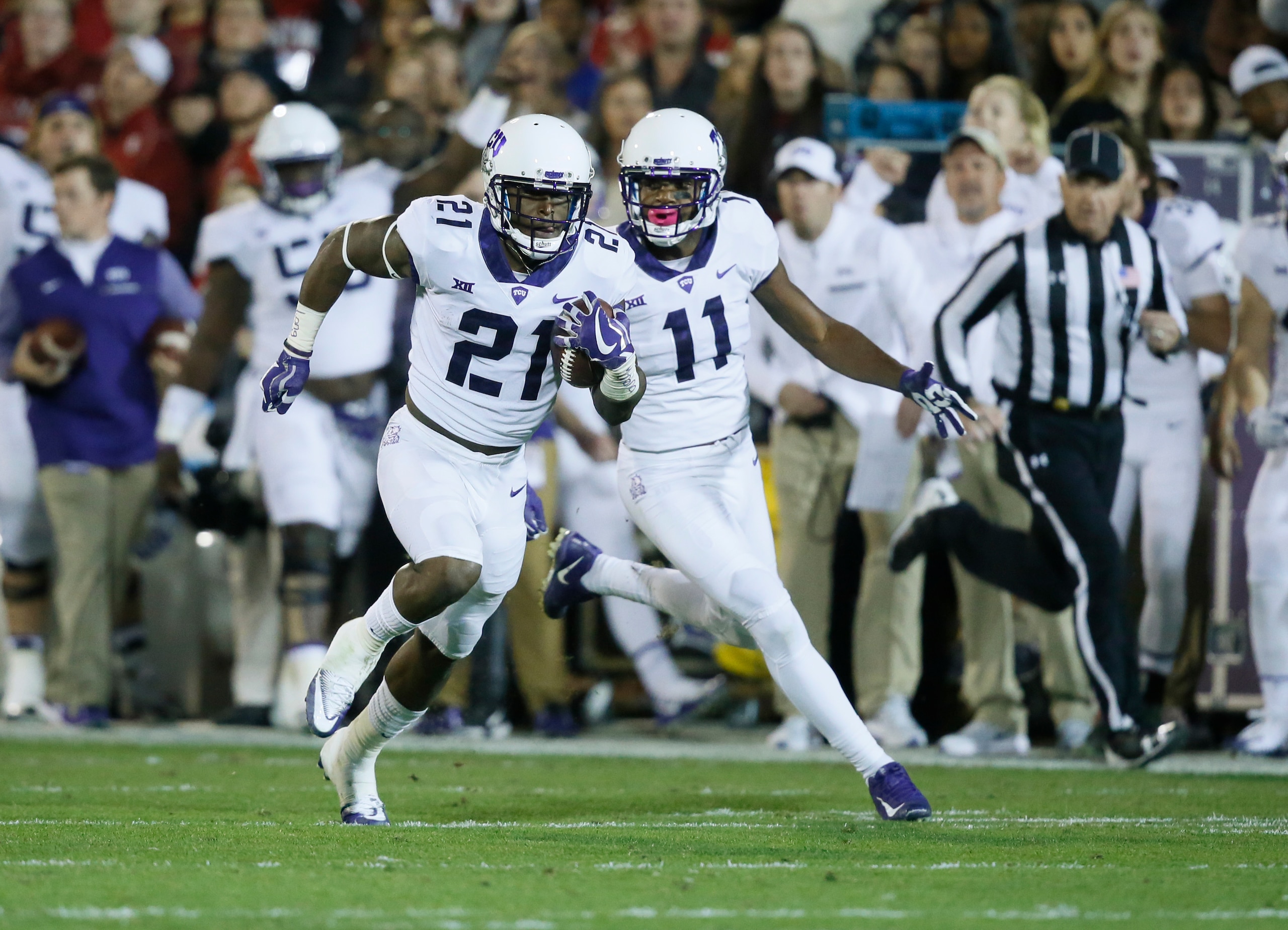
POSITIVES
—Reliable receiver out of the backfield and able to create yardage after the catch.
—Hicks is a much more impressive runner once he's able to open up his stride length and run at what looks like top speed with a more natural gait.
—Balance and body control, particularly on display in the open field.
—At top speed, his movements are fluid and demonstrate natural lateral agility to extend runs.
NEGATIVES
—Hicks' vision is absolutely horrendous as he routinely fails to identify space at and beyond the line of scrimmage.
—Stop-and-start running style but doesn't have stop-and-start burst. He doesn't seem to have an awareness for what he does well as a runner.
—Hicks will have to answer questions about his decisiveness as a runner. Teams will want to see him identify gaps on runs between the tackles and show burst to get through traffic.
—Public intoxication arrest before senior season that teams will check on.
—Doesn't run behind his pads for tough interior yards and instead elects to bounce runs, leaving himself with nowhere to go.
OVERALL
Kyle Hicks will intrigue teams as a third-down back with some pass-catching prowess. The reality is, however, that his skill set is too limited for him to be a significant contributor on an NFL team anytime soon. Hicks' vision is a legitimate concern and creates a haphazard running style that fails to take advantage of quality yards available by play design. His best hope is to stick as a developmental practice squad player with an opportunity to hone his craft with NFL-level coaching.
GRADE: 4.99 (Camp Body)
PRO COMPARISON: Fozzy Whittaker, Carolina Panthers
32. Jarvion Franklin, Western Michigan
5 of 36
POSITIVES
—A 5'11", 239-pounder with thick, muscular frame who looks to punish tacklers.
—Willing pass protector with bulk to take on linebackers with speed.
—Vision and patience as cutback zone runner is impressive given his size.
—Consistent production across four years of collegiate performance.
NEGATIVES
—Slow jump-cuts that decelerate behind line of scrimmage more than is necessary.
—Despite size and finishing potential, elects to make one too many moves in crowded spaces rather than putting head down to gain tough yards.
—Has vision and patience to identify cutback lanes but lacks agility and foot speed to make sudden change-of-direction movements against equal or superior competition.
—Can't separate from adequate competition in open field as a receiver and will likely see field on third-down primarily as a pass protector.
—Lacks immediate burst and explosion out of the backfield and takes time to build up even adequate NFL-caliber speed.
OVERALL
Jarvion Franklin is the prototypical bigger back in the NFL with the frame to handle pass-protection responsibilities on third down. He'll struggle to separate from NFL-caliber speed but can offer a rotational piece to a running-back-by-committee team and has developmental traits to make him a priority undrafted free agent.
GRADE: 4.99 (Camp Body)
PRO COMPARISON: Anthony Dixon, free agent
31. Donnie Ernsberger, Western Michigan
6 of 36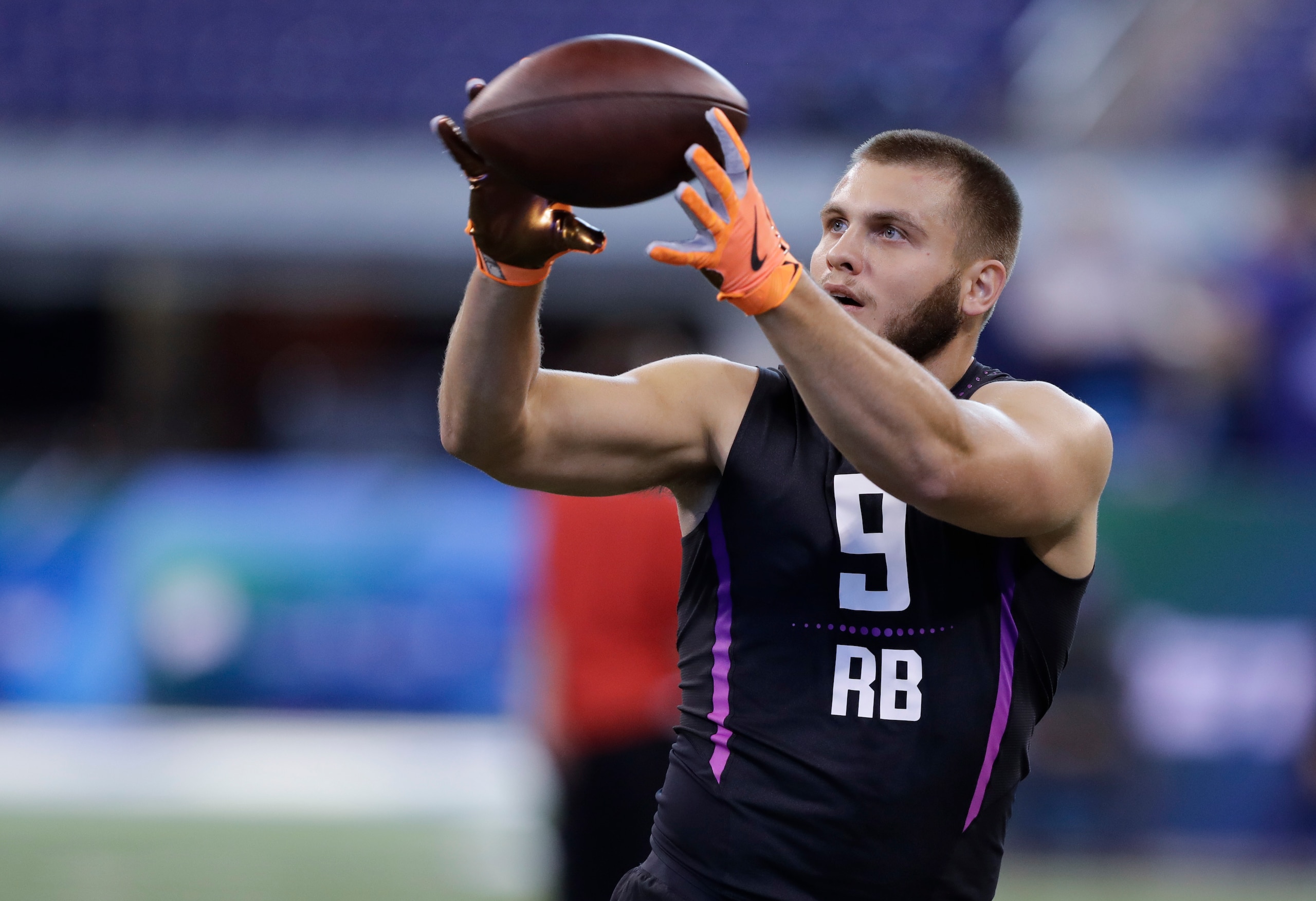
POSITIVES
—A versatile player listed as a tight end in college but was invited to the combine as a fullback.
—Is a standout special teams player.
—Has experience as a pass-catcher and runs nice routes with good, clean angles.
—Is athletic enough to shake some defenders and make plays in space as a receiver.
—Flexibility across schemes adds value to his stock.
NEGATIVES
—Has limited true fullback experience.
—Plays very tall as a blocker and shows inconsistent pad height and leverage.
—Isn't an impressive athlete when trying to balance and plays stiff.
—Excelled as a blocker with power and not angles or hand placement.
OVERALL
Ernsberger is a jack-of-all-trades and master of none, but that might help him land a roster spot. He's a willing and able contributor on special teams and showed during his time at Western Michigan that he's happy playing wherever he's asked.
GRADE: 5.00 (Priority Free Agent)
PRO COMPARISON: Derek Watt, Los Angeles Chargers
30. Jeff Wilson, North Texas
7 of 36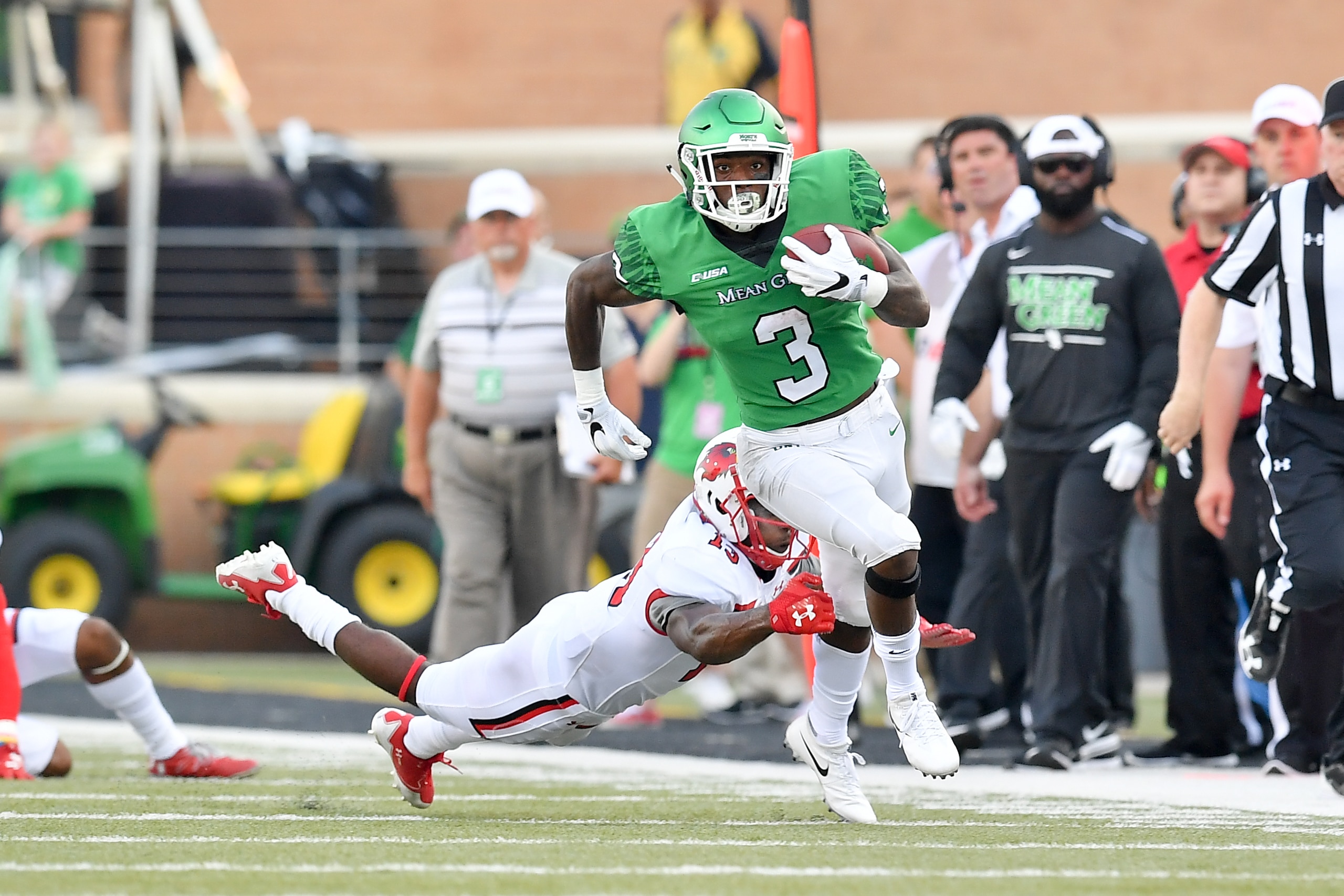
POSITIVES
—30 rushing touchdowns over the last two seasons.
—Can be a factor in the receiving game.
—Is able to make initial cuts and then find daylight as a runner.
NEGATIVES
—Seven fumbles lost (8 fumbles overall) in the last two seasons.
—Did not play the final three games of the season due to a foot injury.
—Was not able to test in predraft process due to same injury.
—Only managed more than 1,000 rushing yards once in his collegiate career.
—Was put on a specialized strict nutritional plan for 2017 season to be able to stay on the field more.
OVERALL
Wilson's thin frame with very little lower-body thickness, fumbling issues and limited yard production make him a long shot to have a role in the NFL. Add in height and an upright running style and he's going to struggle. Curious to see if teams ask him to move to WR.
GRADE: 5.00 (Priority Free Agent)
PRO COMPARISON: Kelvin Taylor, Cleveland Browns
29. Ito Smith, Southern Miss
8 of 36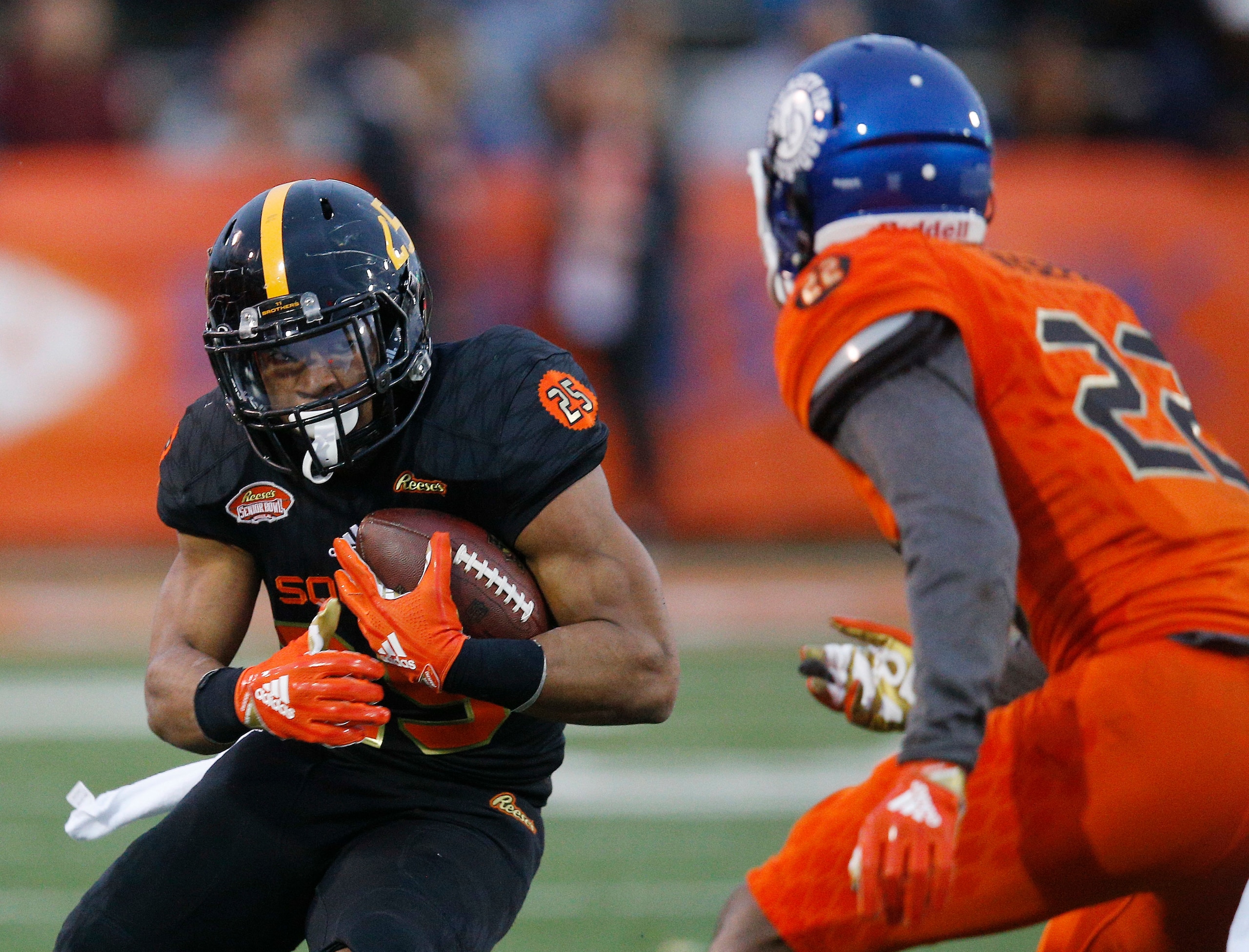
POSITIVES
—Filthy open-field moves that highlight lateral agility.
—Smith is a reliable receiver out of the backfield who can make plays behind the line of scrimmage or downfield.
—Has good vision on outside runs to press gaps and the patience to slowly move target angles to boundary.
—Can finesse his way to yardage inside with wiggle to sneak through for adequate gains.
—Enough speed to be a viable NFL-level running back.
NEGATIVES
—Small frame (weighed in at 5'9", 201 pounds at the Senior Bowl) that looks even smaller on film.
—Struggles to generate any extra yardage on runs in between the tackles.
—Lacks downhill power to finish runs falling forward.
—960 touches on a compact frame that doesn't look built to withstand routine NFL-caliber contact.
—Agility becomes too much of a reliance; lacks the patience to let plays develop or accept the five-yard runs.
OVERALL
Ito Smith is an excellent complementary piece to a bigger back that can handle the brunt of the dirty work. Smith is a valuable offensive weapon and can excel with roughly 10-15 schemed touches a game that utilize him as an explosive player in space. He'll struggle to generate significant and consistent yards as a runner between the tackles, but his pacing and vision on the edge is a reliable counter-piece to a starting back.
GRADE: 5.00 (Priority Free Agent)
PRO COMPARISON: Duke Johnson, Cleveland Browns
28. Lavon Coleman, Washington
9 of 36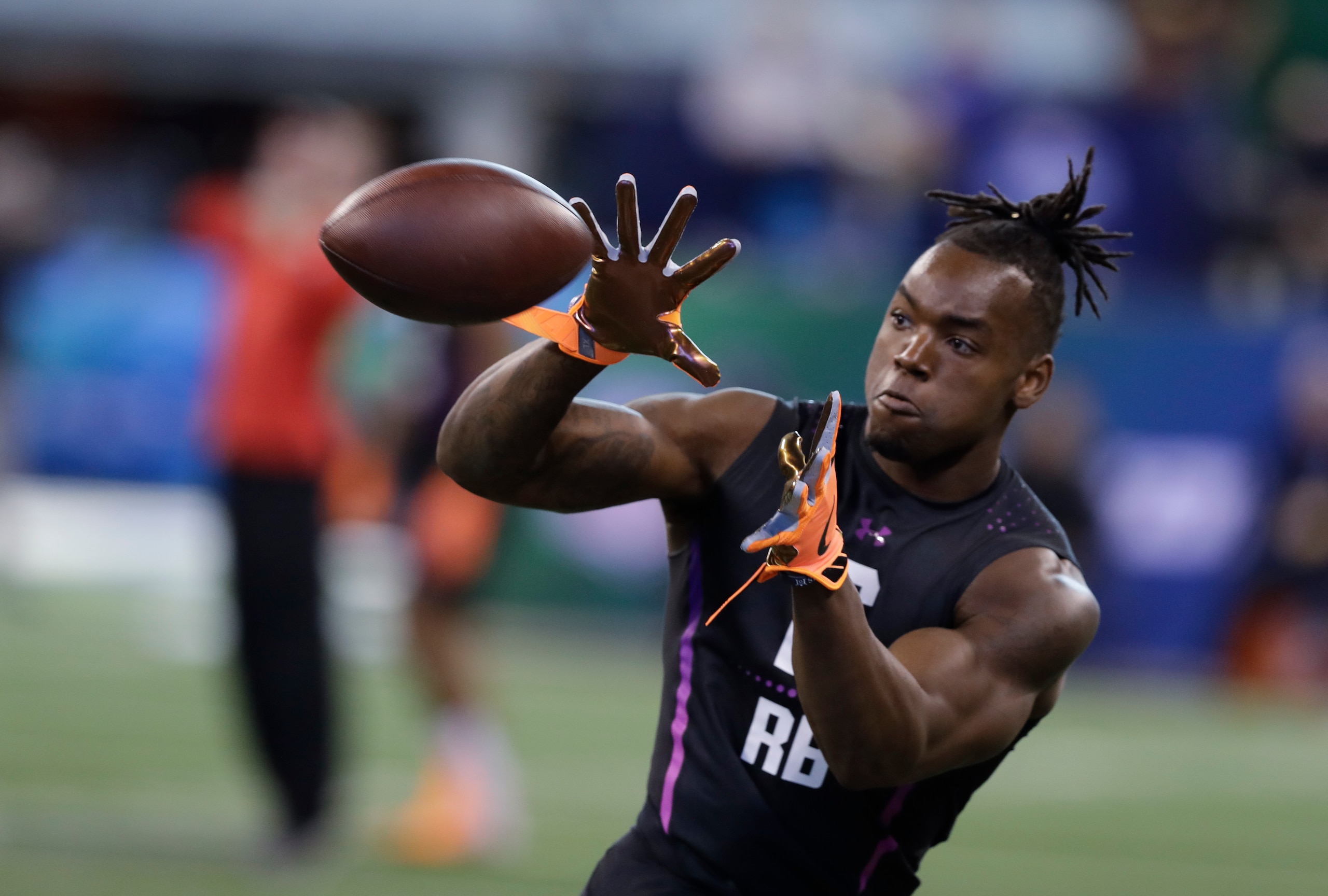
POSITIVES
—Coleman has ideal size for an NFL starting back and impressive acceleration to the boundary.
—Understands angles at the second level and can create extra yardage through spatial manipulation.
—2016 film showed more balance and finish of runs at the second level.
—Weight room junkie who put up 23 reps on the bench press.
—Special teams experience and ST MVP in 2016.
NEGATIVES
—Coleman is an indecisive runner who allows for potential gains to come and go while he watches.
—Upright runner into and through contact who doesn't break as many tackles as you'd expect from a back his size.
—Dropped weight to 215 and ran 4.65 40-yard dash at pro day. Long speed is an issue on film and, despite dropping weight, struggled to run particularly fast.
—Never won starting job at UW (Perhaps positive that he has under 400 college carries).
—Doesn't have the power or leg drive to finish the difficult runs between the tackles.
OVERALL
Lavon Coleman is a core special-teamer who will struggle to make a roster as anything more than the fourth running back. His size is ideal, but he doesn't maximize it as an aggressive interior runner. On the edge, he lacks the long speed and decisiveness to identify gaps and exploit them for explosive runs. His best chance is as a major special teams contributor while hoping for a shot to impress coaches with a balanced approach in a zone-running scheme.
GRADE: 5.00 (Priority Free Agent)
PRO COMPARISON: Spencer Ware, Kansas City Chiefs
27. Justin Crawford, West Virginia
10 of 36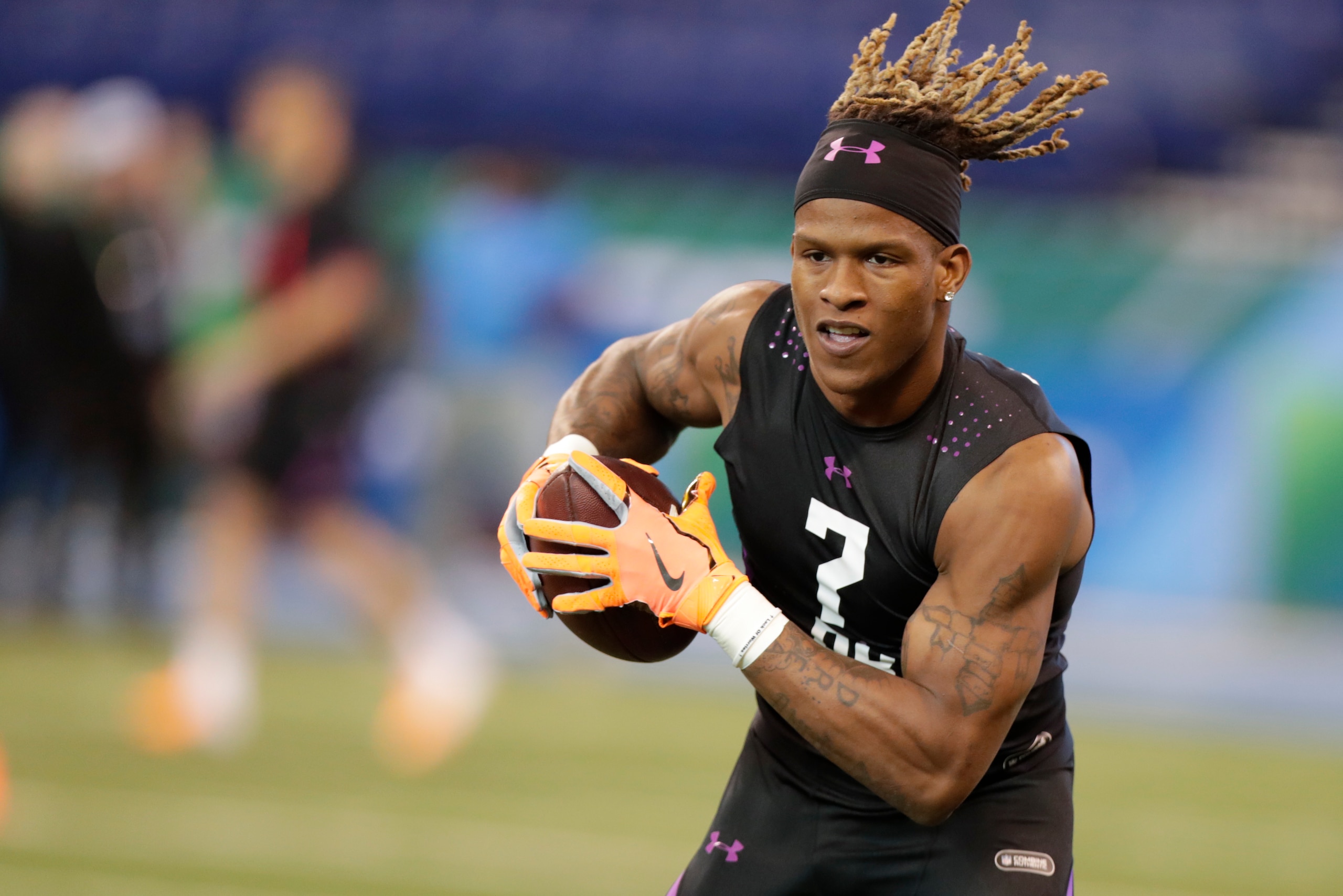
POSITIVES
—Slippery in the open-field, Crawford has the quick feet to make defenders miss and look silly if he gets around the corner.
—Good feet. Puts his foot in the ground and changes direction. Keeps driving feet after engaging defenders.
—Crawford knows he has to put in the work off the field. Either in the weight room or film room, Crawford is going to be working to produce in the NFL.
—Active runner. Crawford is not the biggest back but he will make you earn a tackle. Fights for every extra yard.
—Ideal special team or depth player. Motivated to play well, comes to work every day and takes advantage of his time on the field.
NEGATIVES
—Struggles mightily with pass protection. Oftentimes he misses assignments or is so late to get there his only option is to hold.
—Poor vision left Crawford running directly into defenders and his own line.
—Lacks the second-gear speed for an undersized back. Crawford was caught from behind way too many times.
—West Virginia did not use Crawford much as a pass-catching target, which is one area of concern for teams looking to get depth at running back or a possible third-down option.
—Ball security: Crawford fumbled four times in 2017 and pumps the arm that is carrying the ball when he runs. NFL defenders will strip that all day.
OVERALL
LOVED watching his 2016 Oklahoma film. Not many backs will outwork Justin Crawford. A solid showing in the 40 would have propelled Crawford's stock, but weighing in under 200 pounds and running a 4.64 will make it hard to catch on with a team. Factor in his 22 total catches at West Virginia and you have an uphill battle. Crawford needs to show eagerness as a returner and special teams player, as this may be his role.
GRADE: 5.00 (Priority Free Agent)
PRO COMPARISON: Jeremy Langford, New York Jets
26. Nick Bawden, San Diego State
11 of 36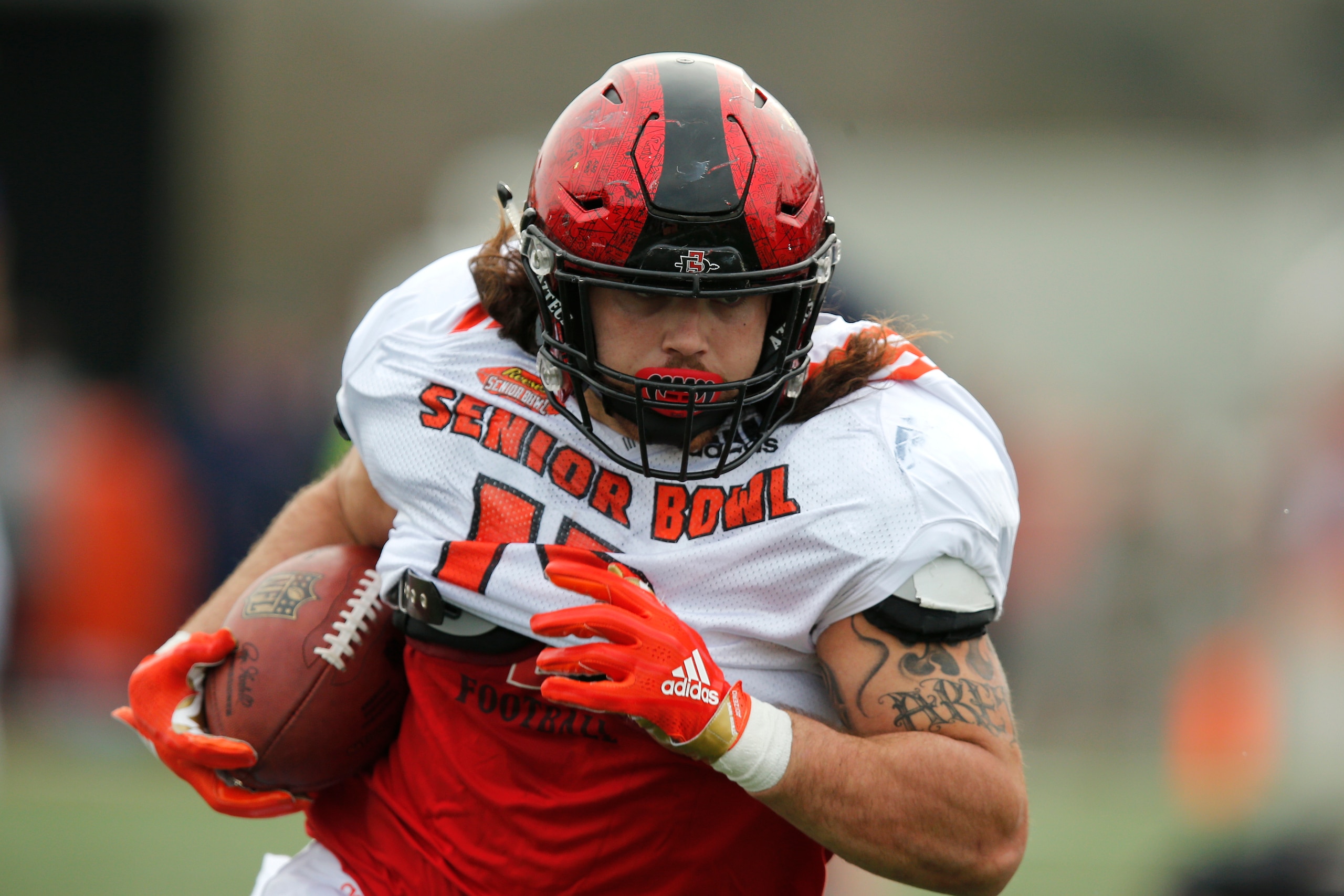
POSITIVES
—Looks the part with a big, hulking frame packed full of muscles.
—Cleared holes the last two years for Donnel Pumphrey and Rashaad Penny, who both dominated the NCAA rushing leader charts.
—Locks onto blocks and won't easily be shed or run off. Has great play strength.
—Can be used as a swing receiver out of the backfield and has soft hands.
—Was recruited as a quarterback out of high school and has a good overall understanding of offenses.
NEGATIVES
—Still looks like he's getting used to playing fullback.
—Blocking angles and vision could use work. He's late to engage at times and can look lost in space.
—A lack of need for a punisher at fullback makes him less likely to be drafted.
—Can be stiff at the point of attack and might struggle to maintain technique against speedier defenders.
OVERALL
Bawden was one of the best fullbacks in college the last two seasons, but that doesn't guarantee you'll hear your name called on draft weekend. Bawden is a solid athlete and has made major improvements since transitioning from quarterback, but the need for players like him is small in the pros.
GRADE: 5.00 (Priority Free Agent)
PRO COMPARISON: James Develin, New England Patriots
25. Chris Warren, Texas
12 of 36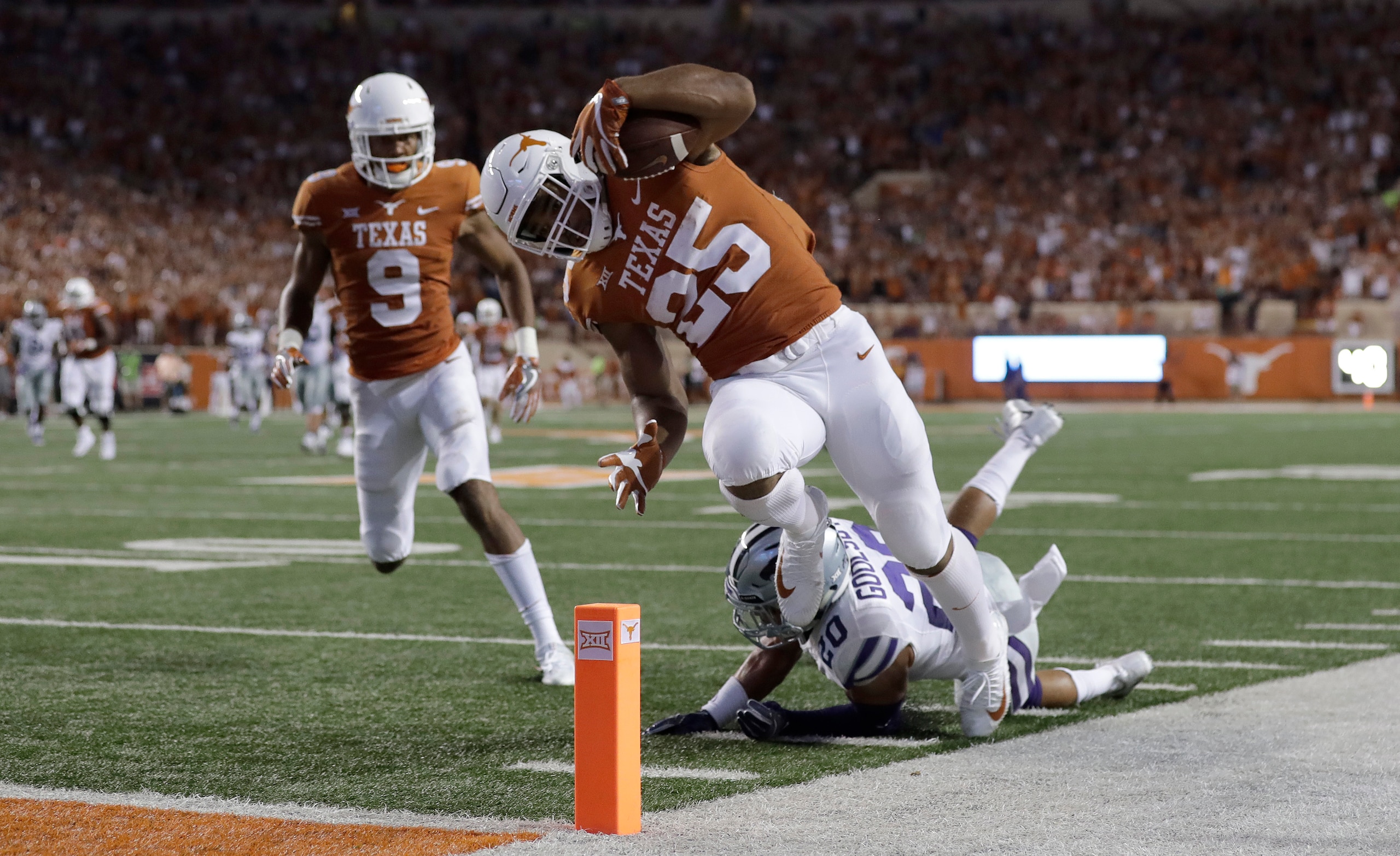
POSITIVES
—Standing 6'4", 250 pounds, Chris Warren is a wrecking ball of a running back that gets even better with more carries.
—Moves incredibly well for a player his size. Fluid hips and quick feet allow him to shake defenders that are already nervous about his size.
—Adequate hands for a running back. Texas even looked for mismatch opportunities by splitting Warren out wide.
—A football pedigree and great understanding of all phases of the game—especially picking up blitzing linebackers.
—Short-yardage back who can also create mismatches in the pass game.
NEGATIVES
—A combination of being 6'4" and an upright runner made Warren a much easier tackle than his 250-pound frame should have been.
—Looked fatigued early in the season. Couldn't break arm tackles and was brought down easily by smaller defenders. Couldn't stay healthy for the long haul.
—Warren was never the bowling ball, downhill runner Texas fans wanted. In fact, Texas used quarterback Sam Ehlinger more often as a short-yardage back.
—Love for the game will come into question with Warren. Is he playing football because he loves it, or is he doing it because his dad did, and that's all he has known?
—Production. It's hard to find a good running back that has never been productive. He struggled early in Tom Herman's offense in 2017 and lost carries because of it, resulting in 314 rushing yards.
OVERALL
A jack-of-all-trades at the running back position. Warren has the size and athleticism to excel at the next level. While his experience at H-back may not have been what he wanted, he played well in the role and may look to do it again in the NFL.
GRADE: 5.00 (Priority Free Agent)
PRO COMPARISON: LeGarrette Blount, Detroit Lions
24. Ryan Nall, Oregon State
13 of 36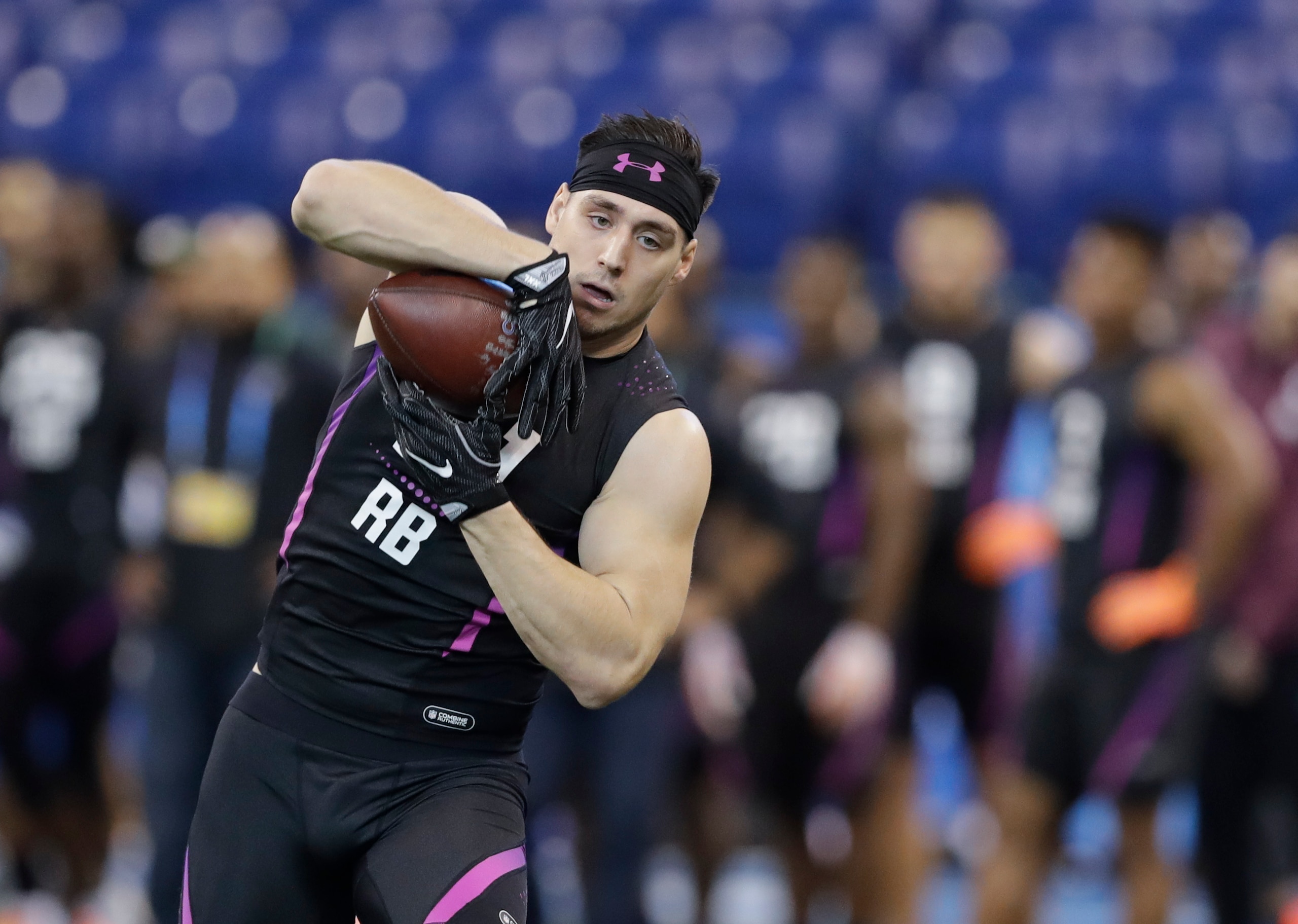
POSITIVES
—Nall is a patient runner who isn't afraid of congestion at the line of scrimmage.
—He's willing to bounce through tight spaces at the line of scrimmage for dirty five-yard gains.
—Thick frame and versatile athlete who offers positional flexibility.
—Can operate specifically as a short-yardage back and package player with athletic ability to be a reliable runner or receiver in short areas.
—He understands the expectations of run plays and won't waste time before running into traffic if a three-yard gain is the need.
NEGATIVES
—He'll struggle to run anything in a zone scheme. He's a gap-scheme runner with interior responsibilities only.
—Lacks the outside agility and speed to bounce runs.
—He has tight hips that lead to a slow crossover step, effectively reducing the style of play calls that he can run.
—Nall doesn't have the unscripted stop-and-start acceleration that he'll need to be an effective every-down back.
OVERALL
Nall is an ideal interior runner who could carve out a role on a team by offering positional flexibility. He's a powerful player who can handle contact inside and offers some thickness that is rare in the offensive backfield. He should expect to see some movement during training camp as a team utilizes him more as a package-specific player rather than a complementary running back.
GRADE: 5.00 (Priority Free Agent)
PRO COMPARISON: Rod Smith, Dallas Cowboys
23. Phillip Lindsay, Colorado
14 of 36
POSITIVES
—Impressive compact frame with ability to take major hits and continue running hard between the tackles.
—Solid receiver out of the backfield with explosiveness and acceleration to be dangerous after the catch.
—Lindsay's competitive toughness is apparent on film with effort and energy through the whistle every play.
—Willing pass protector who relies on energy and aggressiveness; his stout frame (5'8", 190 lbs) helps him win leverage early.
—Immediate burst through line of scrimmage is impressive and creates explosive plays often.
NEGATIVES
—Looks to do too much, often creating dangerous plays by treating every play like a highlight.
—Utilizes spins too frequently, leaving the ball susceptible to trailing defenders and unforeseen contact.
—Runs feel hurried and can push pace sooner than necessary in outside zone plays.
—Quite a few carries over last two years combined with serious hits on a small frame make durability a concern.
OVERALL
Phillip Lindsay is an absolute competitor who, at worst, will rely on sheer energy and toughness to be an adequate NFL running back. At his best, he's a complementary piece who can handle 10-15 snaps per game as a versatile runner and receiver out of the backfield. His energy is both a blessing and curse and will help him secure a spot as a primary backup on a team within a season or two if he can work within an NFL scheme requiring him to trust his offensive line more.
GRADE: 5.20 (Priority Free Agent)
PRO COMPARISON: Jacquizz Rodgers, Tampa Bay Buccaneers
22. Chase Edmonds, Fordham
15 of 36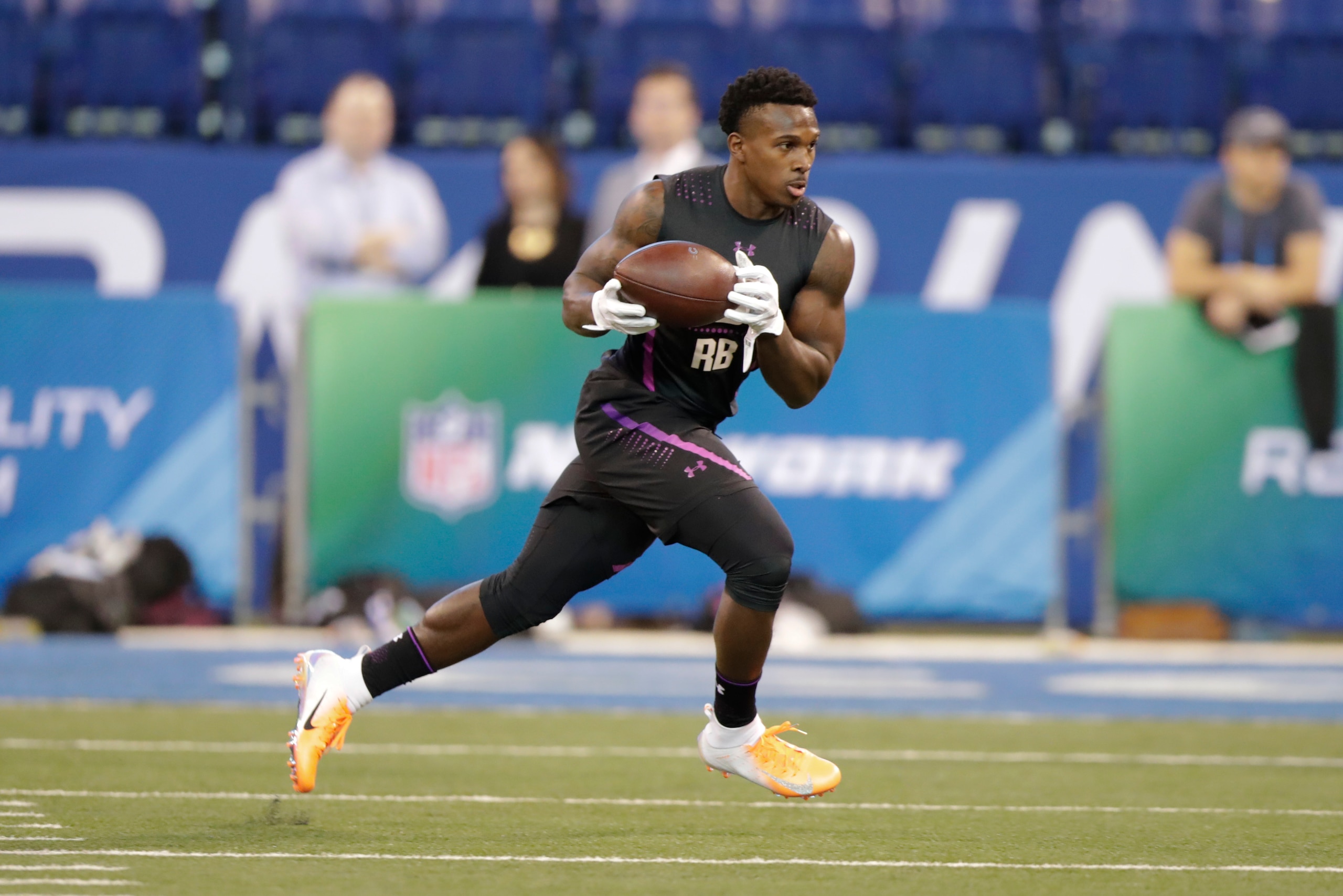
POSITIVES
—Edmonds posted ridiculous production numbers as the primary offensive weapon on Fordham's team.
—Balance throughout contact is impressive and allows for yards after contact.
—Vision to bounce off-tackle runs and isolate cutback lanes is well above average.
—Edmonds' ability to be a checkdown receiving option with burst provides versatility.
—Impressive flexibility to maintain balance through rapid change of direction.
NEGATIVES
—Leg injuries limited his 2017 season and will cause durability concerns after a high-volume workload.
—Fordham isn't playing in the SEC, and competition concerns will arise given Edmonds' ability to simply out-athlete the talent across the line of scrimmage.
—Pass protection will have to improve as a viable third-down rotational back.
—Interior runs feel forced and lack decisiveness of off-tackle runs.
—Struggles to finish dirty runs with power, routinely looking to bounce rather than grind out the tough runs.
OVERALL
Chase Edmonds' primary weakness is the level of competition that he faced at Fordham. Fair or not, he'll have to answer those concerns once he's with an NFL team. At worst, he's a solid outside zone runner with the vision and balance to identify cutback lanes. Edmonds has to improve in protection if he's interested in carving out a third-down role. Nonetheless, his balance and wiry running style make him an intriguing Day 3 flier.
GRADE: 5.20 (Priority Free Agent)
PRO COMPARISON: Charcandrick West, Kansas City Chiefs
21. Josh Adams, Notre Dame
16 of 36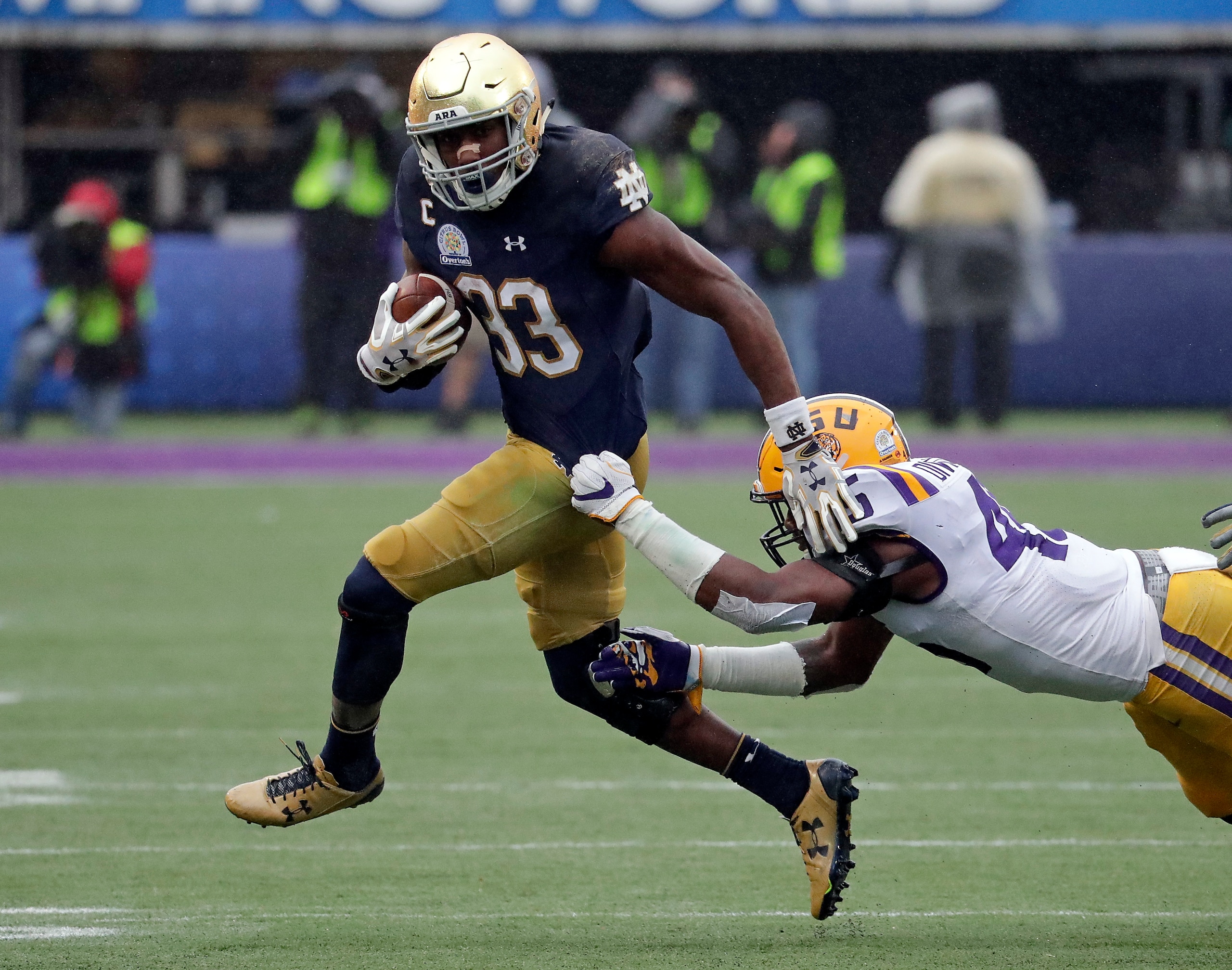
POSITIVES
—One of the nation's most productive backs, Adams is a workhorse who can pound and punish defenses.
—He didn't test at the combine, but his film showcased instances of running away from defenders on downhill, one-cut-type explosive plays.
—Adams can run through contact and has the pad height and balance to be solid after meeting a defender.
—He has a jacked physique and despite his height (6'2") can get low and power through traffic.
—Teams running an inside zone scheme would love Adams' ability as a Day 3 back who can step in and produce on first and second downs.
NEGATIVES
—Adams is incredibly tight-hipped and doesn't have the lateral agility to make defenders miss in the hole.
—He's a classic one-cut runner with buildup speed who must run downhill to pull away from defenders.
—Adams lacks the shake or burst to pick up yards on the outside of the formation. He's only a between-the-tackles runner.
—Was a non-factor in the passing game and should be looked at only as a short-yardage or power-type back.
—Adams was inconsistent as a blocker. His issues are more effort than ability.
OVERALL
Adams' production and the fact that he played at Notre Dame may have over-inflated his stock during the season. When looking at how his traits translate to the NFL, Adams looks like a Day 3 player.
GRADE: 5.25 (Priority Free Agent)
PRO COMPARISON: T.J. Yeldon, Jacksonville Jaguars
20. Justin Jackson, Northwestern
17 of 36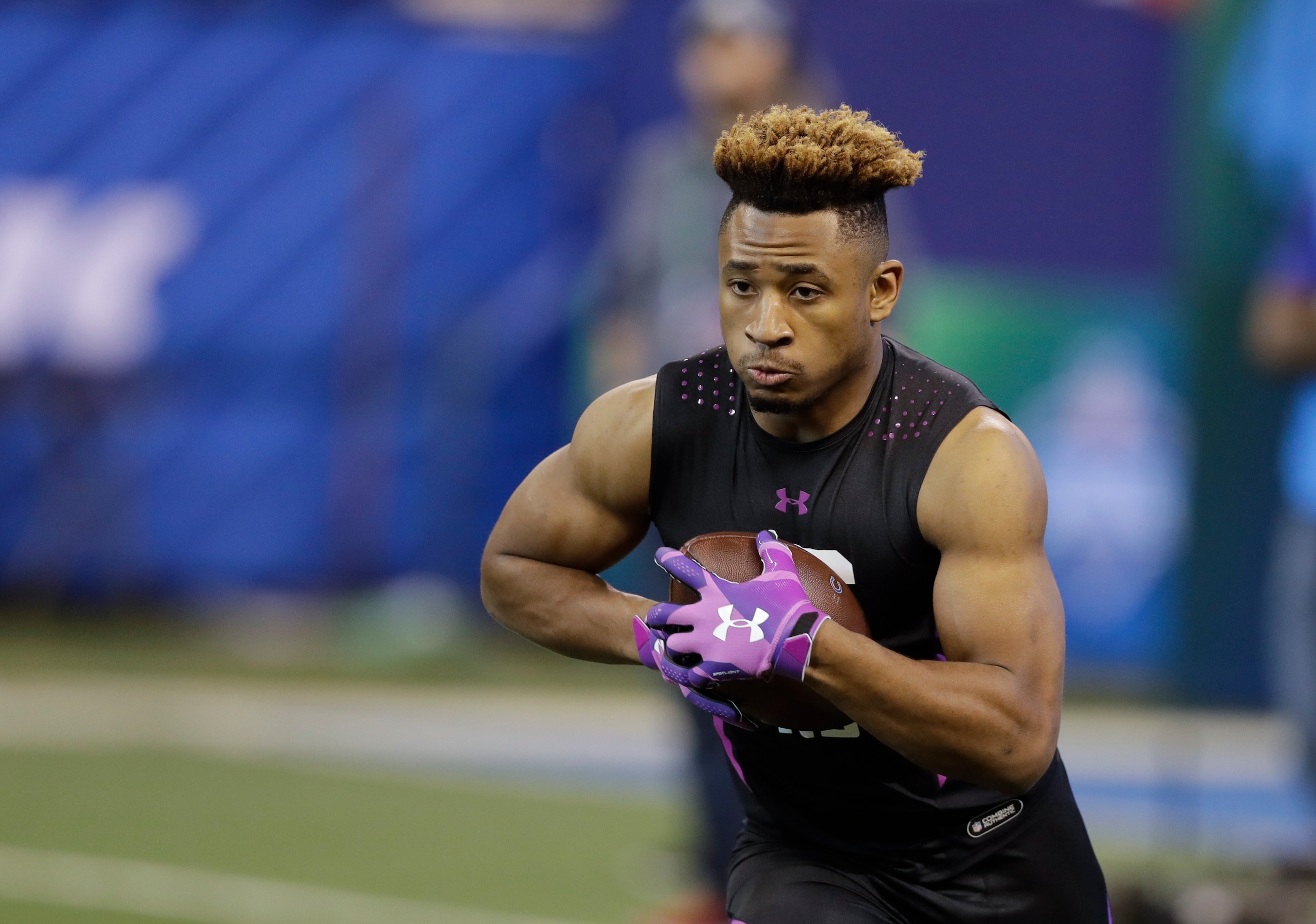
POSITIVES
—Agile runner with the ability to find creases between tackles.
—Productive workhorse back who holds Northwestern rushing records and has shown consistency in approach to tally over 1,150 rushing yards each season.
—Elusive in the open field with strong spatial awareness to identify open areas at second level.
—Impressive foot speed to stab toes and go; gains acceleration through lateral moves.
NEGATIVES
—Upright style that lacks any forward lean into or through contact.
—Jackson rarely delivers blows to defenders and is often easily overwhelmed physically by tacklers.
—He'll struggle to carve out a third-down role, lacking the thickness to be a routine pass protector, and is just an average receiver out of the backfield.
—Jackson has a ton of mileage but not the expected college-type production for players with nearly 300 carries per year. Most with these carry numbers would be approaching 2,000 yards if they're legit prospects.
OVERALL
Jackson is a Day 3 prospect who will intrigue teams that can look past the high number of carries and lack of physicality to shed poor tacklers. He's best as a rotating piece in a backfield with an established starter. Jackson offers some variety and quickness in the open field and particularly on special teams, but he'll struggle to be a third-down back with critical responsibilities.
GRADE: 5.30 (Priority Free Agent)
PRO COMPARISON: Wendell Smallwood, Philadelphia Eagles
19. Martez Carter, Grambling
18 of 36
POSITIVES
—Carter shook, shimmied and straight-up ran away from defenses while at Grambling. He has a second gear to pick up chunk plays in a hurry.
—A three-tool threat as a runner, receiver and returner, Carter ran back four kickoffs for touchdowns in college. His ability to accelerate works great when given space to operate.
—Carter is a good outside runner who can make defenders miss and has solid vision on outside runs. He also brings an added element as a throwback option on RPOs.
—He is an ideal addition as a third-down “scatback” and adds value as a returner. That alone could get Carter drafted higher than projected.
NEGATIVES
—Carter (5'7", 193 lbs) lacks the ideal size to be more than a role player at running back and potential contributor in the return game.
—His film shows way too many runs where he gets cute and tries to juke and shake defenders instead of just hitting the hole. He’ll lose yards in bunches in the NFL with this style.
—As a role player, he has to prove he can run between the tackles some and also learn to pick up blitzes. He also lacks the size to run through contact.
—Playing at a much lower level of competition is a major concern when projecting his traits and production forward.
—While Carter is patient, he might be too patient. We’d like to see him run with more urgency and attack more.
OVERALL
Carter is an intriguing prospect late on Day 3 who could make a splash in the league early with his return skills and then add in more responsibility as a runner and receiver. Teams in need of a poor man’s Tarik Cohen will like him.
GRADE: 5.30 (Priority Free Agent)
PRO COMPARISON: Tarik Cohen, Chicago Bears
18. Darrel Williams, LSU
19 of 36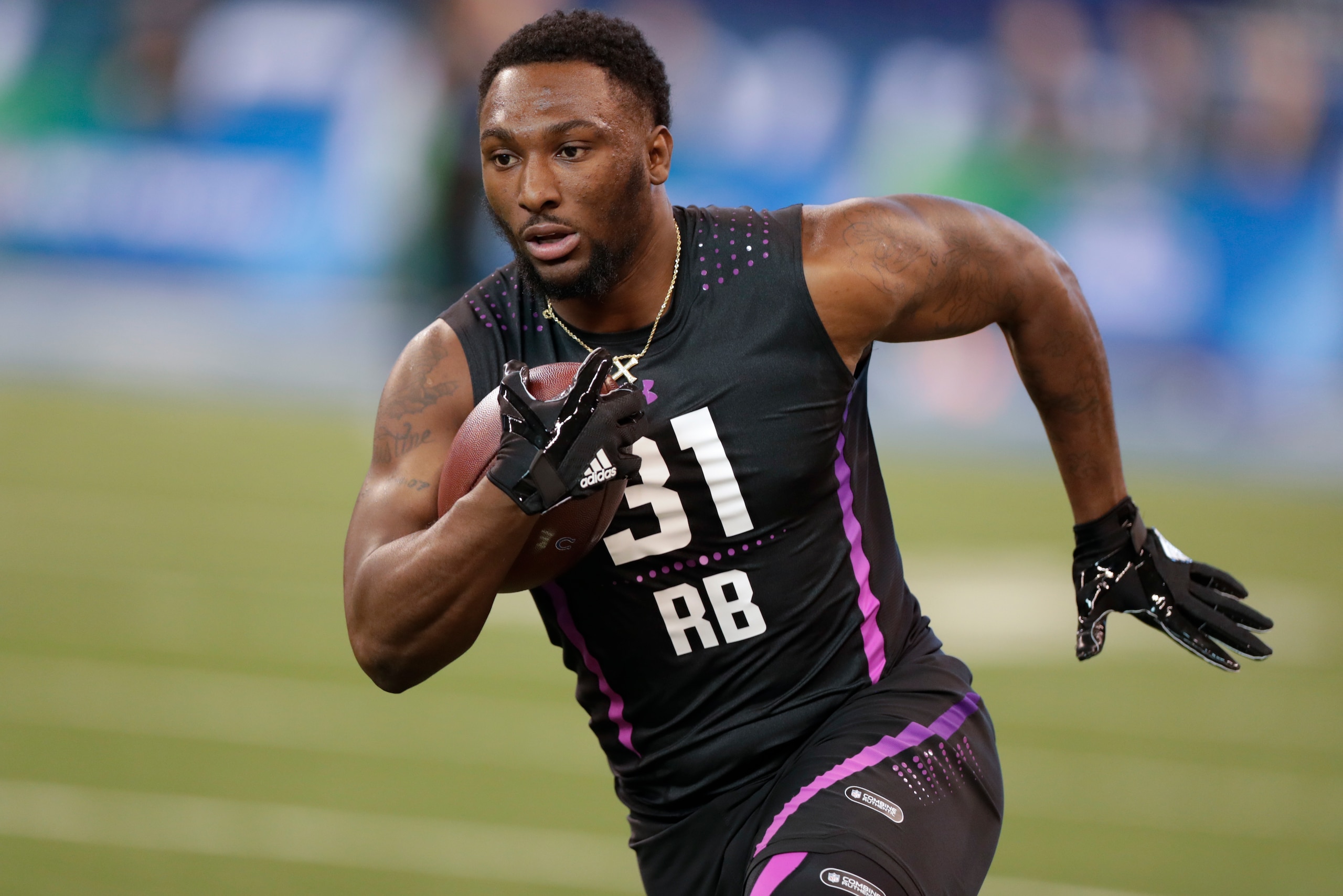
POSITIVES
—Williams is a bulldozer at running back and is built like a brick house at 6'1" and 229 pounds with thick legs and a big trunk.
—He's a throwback-type runner who will put his shoulder down and drive through a defender. He can make his living in short-yardage situations.
—Williams doesn't get too cute at the line of scrimmage. He's a one-cut, downhill specialist.
—He has the traits to be an effective short-yardage and goal-line-type back, and he has shown the ability to get into the end zone in tough situations.
—Was named LSU's co-MVP following the 2017 season.
NEGATIVES
—A lack of speed and lateral agility are major concerns that could keep Williams from being drafted. He has below-average burst, speed and shake.
—Williams' vision can be discouraging. He doesn't always see cutback lanes and instead tries to bulldoze his way through blockers.
—Because of his size, Williams can run heavy and get his nose over his toes. He needs to learn to run with better balance.
—For a big back, you won't see him break tackles and get to the next level. He gets tough yards but not many chunk plays.
—Williams does not project as an outside runner. His 4.72 time at the combine could keep him off boards.
OVERALL
Williams had some big moments at LSU and is a physical, strong back, but he lacks the speed and overall athleticism to be viewed as more than a bit player in a backfield.
GRADE: 5.30 (Priority Free Agent)
PRO COMPARISON: Stevan Ridley, Free Agent
17. Roc Thomas, Jacksonville State
20 of 36
POSITIVES
—Thomas is an impressive athlete with agility, power, vision and the balance to hurt defenses.
—Thomas has exceptional traits and shows the vision to find running lanes.
—Can shake defenders with footwork and speed to both find space and pick up chunk yardage.
—Wasn't used in the passing game often, but he has the traits to be more of an impact player once in the pros.
—He's able to create yards through vision and strength.
—Thomas is scheme-versatile and could go from Day 3 to a starter role.
NEGATIVES
—Thomas is not big enough for the style he runs with. There have to be concerns about his wearing down over time.
—Thomas beat up bad defenses and isn't as athletic as his numbers made him look.
—A lack of bulk causes Thomas to be a poor asset in pass protection. He'll get run over by defenders.
—Thomas will run up the backs of blockers and must work on patience. He has an issue trusting his offensive line.
—Our major issue with Thomas was that he passes up singles while looking for a home run. There are times in the NFL when you have to be happy with a three-yard gain, but he'll lose yards looking for a chunk play.
OVERALL
Thomas is a fun prospect with traits to get on the field early in this NFL career, but he must improve his vision and learn to take what's given to him by the defense.
GRADE: 5.50 (Round 6)
PRO COMPARISON: Andre Ellington, Free Agent
16. Jordan Wilkins, Ole Miss
21 of 36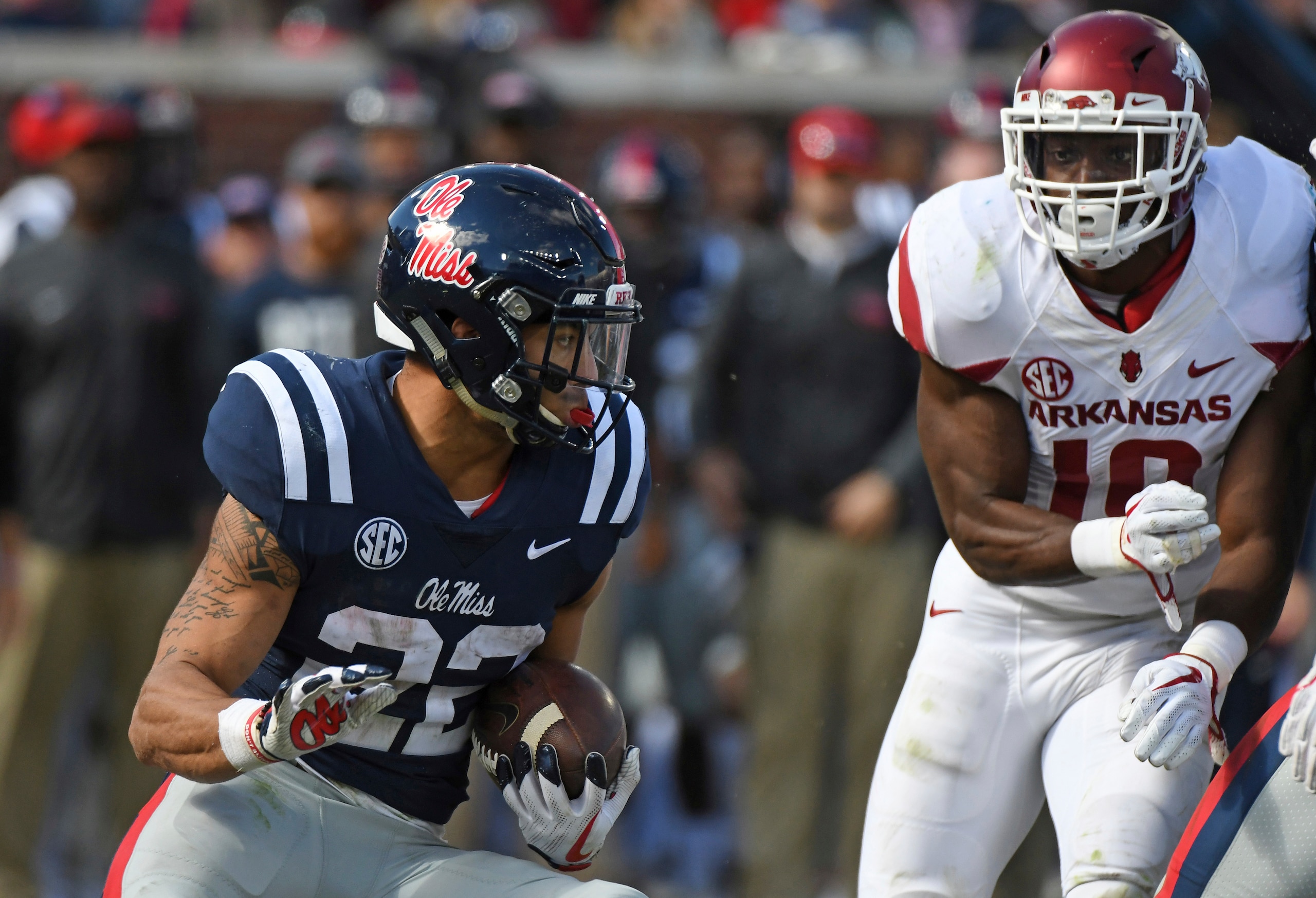
POSITIVES
—Wilkins is one of the sleepers of the loaded running back class thanks to his size, vision and top-notch agility.
—Has start-stop speed and can pull away from defenses. He’s shown nice moves with footwork and hip agility.
—Wilkins has the ability to be a one-cut performer in a zone scheme. He gets downhill in a hurry and has enough agility to shake a defender suddenly and re-direct.
—Overall running back traits like balance, vision and agility are high level from Wilkins.
—NFL scouts we spoke to love that Wilkins is relatively fresh coming out of the SEC.
NEGATIVES
—Wilkins missed the 2016 season with an academic suspension and missed time during summer practices before his senior season with an injury.
—Despite a big frame, he does not run well through contact. Can be soft in traffic and go down on first impact.
—Runs high and doesn’t drive with his legs to push piles.
—Tends to just make the most from big lanes and doesn’t always create well on his own.
—Will get caught tip-toeing through the tulips when he needs to just hunker down and run hard.
OVERALL
Wilkins is a bit of a hard evaluation coming off a knee injury, but he does have traits that project well to the NFL. He’s agile and quick, and his frame could support a role as a third-down player.
GRADE: 5.70 (Round 5)
PRO COMPARISON: Chris Carson, Seattle Seahawks
15. Bo Scarbrough, Alabama
22 of 36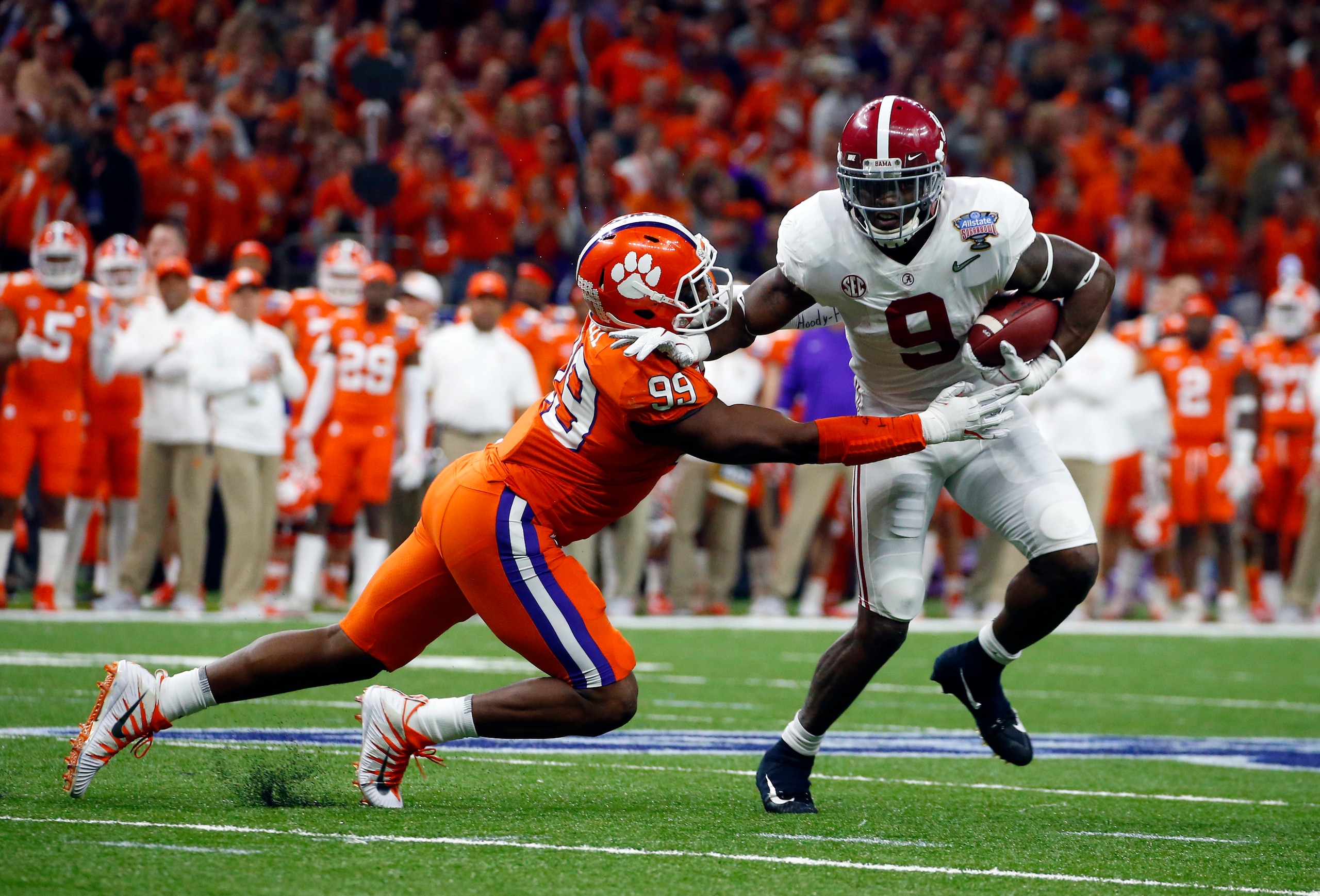
POSITIVES
—This is the first guy you send off the bus. Scarbrough is a massive man with excellent muscle tone throughout his frame. He looks like Derrick Henry’s younger brother.
—When Scarbrough gets a path to daylight, he can punish defenses...much in the way Henry did against the Kansas City Chiefs in the playoffs. When he has a clear lane, his speed and size are tough to stop.
—A true one-cut runner with no nonsense to his style of play, Scarbrough should be an effective short-yardage and goal-line back.
—Cold-weather teams that value a punisher will like Scarbrough’s tape. He dominated down the stretch in 2017 and was a bell cow for Alabama at times. He’s capable of handling a big workload.
NEGATIVES
—Was never the featured back at Alabama and will be knocked for the system Nick Saban has produced in Tuscaloosa.
—Scarbrough offers nothing as a third-down option and was not used in college as a receiver or really as a pass protector.
—Is a big man with limited lateral agility and is a true one-cut runner. That means he’s likely to be limited to a wrecking-ball-type role, and he’s been injury-prone throughout college.
—When defenses were able to penetrate the Alabama line, Scarbrough could be shut down. He’s not able to make defenders miss in the hole, and his high-cut running style makes him easier to bring down than you expect for a 230-plus-pounder.
—Scarbrough seems like he’s coming into the NFL 10 years too late. His style of play is no longer a priority in a modern offense.
OVERALL
Scarbrough is the type of prospect that could be good in a handful of games when the matchup is right but will struggle to be more than a situational runner in the NFL. He’s a fun player to watch and isn’t afraid to get physical, but he simply lacks the agility to be a featured runner.
GRADE: 5.75 (Round 5)
PRO COMPARISON: Derrick Henry, Tennessee Titans
14. Kalen Ballage, Arizona State
23 of 36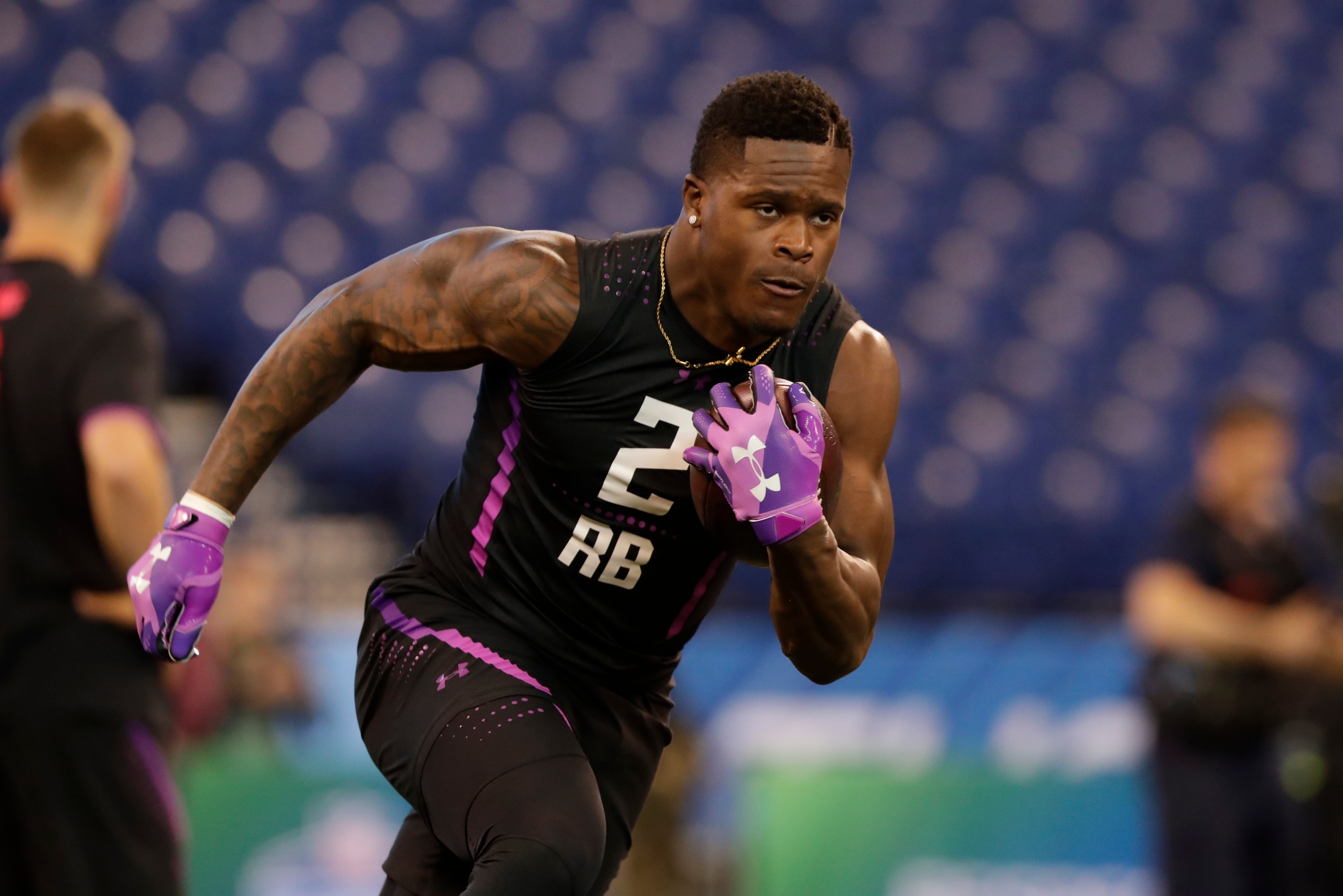
POSITIVES
—Ballage is a "first off the bus" kind of guy who is an uber-athlete at the position.
—He has a toolset that is perfect for the NFL with power, speed, hands and versatility as a route-runner.
—Had moments of huge production as a runner, receiver and returner. He can play multiple spots.
—Teams that want a back who can catch will like Ballage. He has natural hands and is a smooth route-runner.
—Ballage can run with power and balance while bringing burst to his game. His good runs make your jaw drop and convince you he could be a starting NFL running back.
NEGATIVES
—Ballage's lack of vision is a major concern. If a hole isn't clearly there for the taking, he'll struggle.
—Arizona State rarely featured him, and he's made a name for himself off one game—an eight-TD performance against Texas Tech in 2016.
—Only had two 100-yard rushing games in the last two seasons and was at times shut down by average Pac-12 defenses.
—Teams should be concerned with Ballage's lack of production in 2017. His numbers and play took a major dip.
—Ballage looks the part, but his tape was disappointing and left us wanting more from his awesome skill sets.
OVERALL
Ballage is either fool's gold or a potential steal. He'll spark many debates about traits versus production in scouting rooms. There is very little wear and tear on his frame and he is a great athlete, but a lack of impact on Saturdays will give teams pause.
GRADE: 5.75 (Round 5)
PRO COMPARISON: Jordan Howard, Chicago Bears
13. Dimitri Flowers, Oklahoma
24 of 36
POSITIVES
—A versatile, athletic fullback who could easily move around the formation and play H-back.
—A legacy player whose father, Erik, played in the NFL.
—A tough between-the-tackles runner who also adds value as a receiver.
—Flowers excels in short-yardage situations and can handle duties as a ball-carrier.
—Is a Day 1-starter type who is scheme-versatile enough to fit in a variety of offenses.
NEGATIVES
—Plays a position that not every team uses, which limits his value.
—Can get lost as a runner and blocker at times.
—Has to get open with body positioning and won't run away from linebackers.
OVERALL
Flowers should walk right into an NFL locker room as a starter. He's ready to make an impact as a runner, receiver and a blocker. He would be ideal for a system that wants a fullback who can clear rushing lanes while also adding value as a receiver.
GRADE: 5.99 (Round 4)
PRO COMPARISON: Kyle Juszczyk, San Francisco 49ers
12. Royce Freeman, Oregon
25 of 36
POSITIVES
—One of the most productive players in college football over the last four seasons, Freeman opted to return to Oregon for his senior season instead of entering the 2017 draft.
—Freeman has a jacked physique and looks the part walking off the bus with a 230-plus-pound frame that's thick throughout.
—Thanks to a coaching change, Freeman has shown he can produce in multiple schemes. The 2017 offense asked him to bang between the tackles, and he did that job well, but in the past he played well in space.
—Freeman offers upside as a third-down back. He comes into the league with proven hands and the body to improve as a blocker.
—Teams running a true inside zone should love Freeman's 2017 tape and the potential of getting him back to the athlete he was before injuries in 2016.
NEGATIVES
—A knee injury suffered in 2016 seriously robbed Freeman of his previous explosiveness, turning him into more of a one-cut power runner.
—Freeman doesn't always run like a big man and will shy away from contact or try to bounce runs. He may still be working off the rust (mental and physical) from his knee injury. He seems to have lost some lateral agility.
—You won't see true speed or burst from Freeman. He isn't the type of back to run away from defenses if he hits daylight. He will be caught from behind on long runs.
—Freeman's production is comforting, but he's been used a lot over the last four seasons and may have already played his best ball.
—Teams will need to be thorough in evaluating Freeman's injury and the subpar traits he showed afterward. If they believe he'll bounce back in 2018, his value could be higher.
OVERALL
If Freeman can return to his pre-injury form, he'll be one of the steals of the 2018 draft class. He's a physical back with a diverse skill set that fits into many different offensive systems. Don't be surprised if Freeman has a better rookie season than players we've ranked ahead of him.
GRADE: 5.99 (Round 4)
PRO COMPARISON: Jordan Howard, Chicago Bears
11. Akrum Wadley, Iowa
26 of 36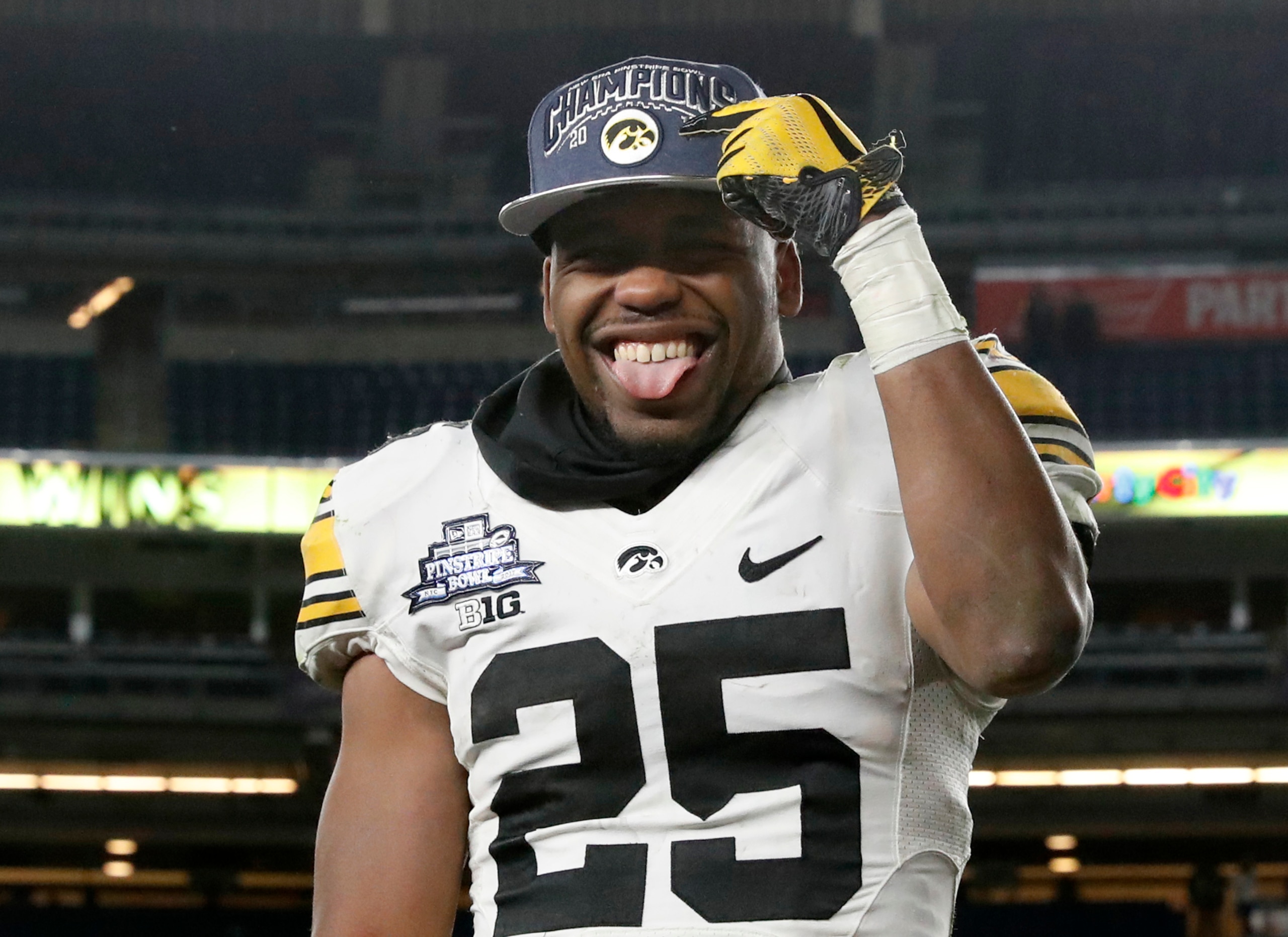
POSITIVES
—A productive three-down back at Iowa who has the agility and balance to be a threat in the open field.
—Wadley is a deadly cutback runner and has the hips and feet to juke and shake defenders. He accelerates well off a cut and has an arsenal of moves.
—The Iowa game tape shows a talented pass-catcher and receiver out of the backfield. He can have an instant impact on third downs as a receiver.
—Wadley is experienced moving around the formation and playing in more pro-style sets. He's also been used in the slot as a receiver and has shown he can beat defenders as a route-runner.
—As a third-down back and potential returner, Wadley offers potentially great value if selected on Day 3.
NEGATIVES
—Might never be more than a rotational back but lacks the bulk to be an adequate pass protector.
—A lack of bulk limits what he can be as a runner. He's mostly an outside slasher type who loves to bounce runs to space.
—Wadley has to be more patient as a runner and let things develop while trusting his linemen to get their jobs done. He'll overrun the play and press too often.
—He can be too cute in the backfield and sometimes just needs to put his head down and run.
—Wadley's size, average timed speed and lack of ability as a pass-blocker will push him down boards despite his exciting traits in space.
OVERALL
Wadley's role will be determined by how quickly he can develop as a pass-blocker. If drafted to be an outside runner and receiver on third downs, he can make a splash impact right away.
GRADE: 5.99 (Round 4)
PRO COMPARISON: Marlon Mack, Indianapolis Colts
10. Nyheim Hines, North Carolina State
27 of 36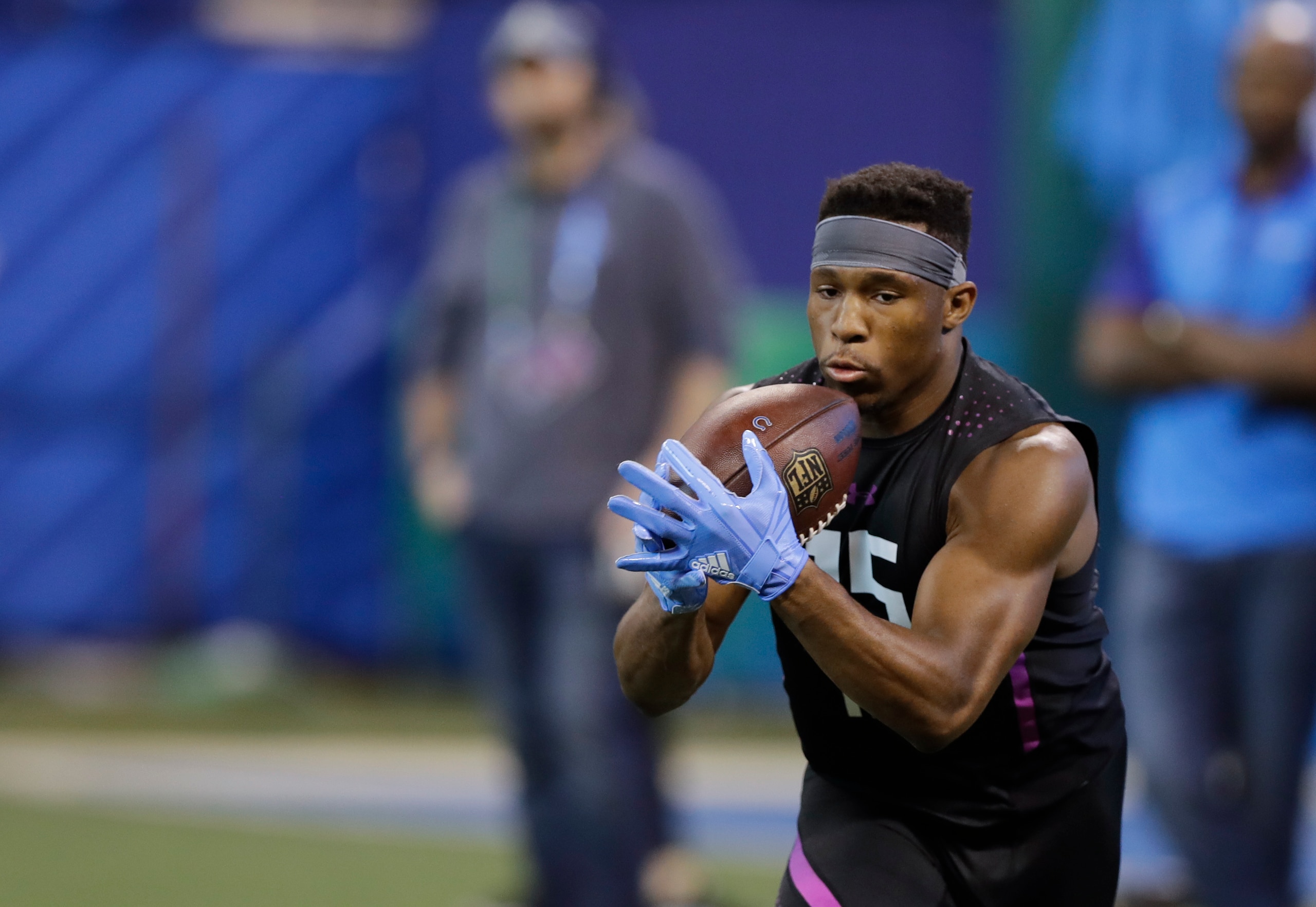
POSITIVES
—Nyheim Hines is exceptionally fast on tape and on the track. He timed at 4.38 seconds in the 40-yard dash at the combine.
—Was a playmaker at NC State and ripped off chunk plays in the passing and running games with three touchdowns of over 50 yards.
—Hines showed off hands, route running and ability to create space with his feet.
—Despite a small frame, Hines runs with power and some meanness to his game.
—Hines brings immediate value as a runner, receiver and return man.
NEGATIVES
—Hines is undersized by NFL standards and also didn't test well in terms of three-cone or short shuttle that show balance and short-area burst.
—Lack of size makes him a non-factor as a pass-blocker, which could keep him off the field on third downs.
—Despite having a lot of catches, Hines' small hands are a concern and show up on tape with bobbles, drops and "double catches."
—Hines' vision is much better on the outside than the inside, and he doesn't run well through traffic.
—One of the more scheme-dependent players in this class and could be washed out if he's not drafted into a role where he's moved around and used in a variety of ways.
OVERALL
The term "sprinter speed" gets overused, but Hines has it. He's able to take it to the house when he has space and should be seen as an exciting player outside the hashes threat. Teams that value versatility will be excited by Hines.
GRADE: 6.00 (Late Round 3)
PRO COMPARISON: Tarik Cohen, Chicago Bears
9. John Kelly, Tennessee
28 of 36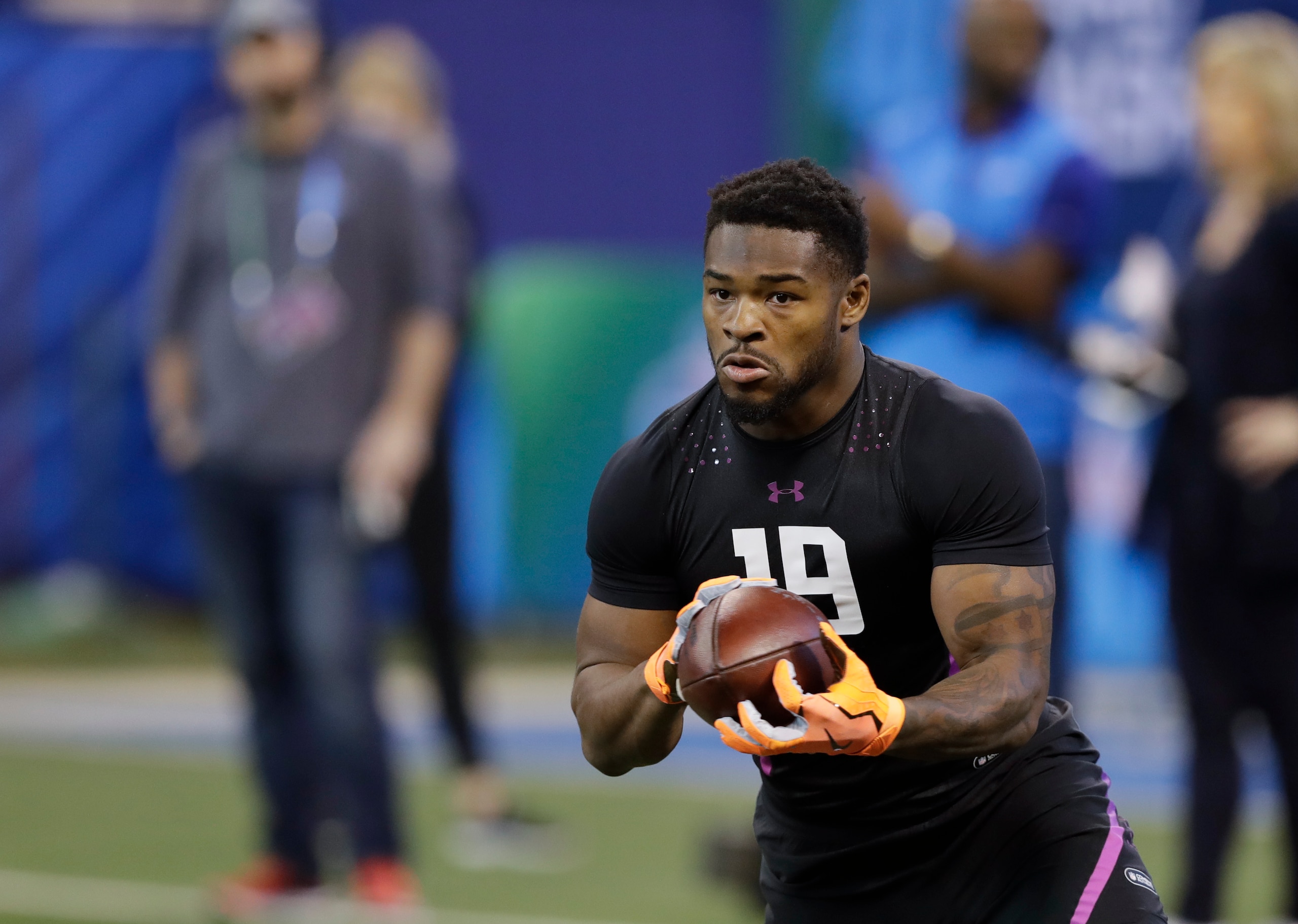
POSITIVES
—Kelly is a stout, tough, physical runner who can tear up a defense with his punishing style but also as a talented receiver out of the backfield.
—He rarely goes down on first contact and looks for ways to hurt would-be tacklers with either a stiff arm, a lowered shoulder or a thigh to the body.
—Kelly is tailor made for inside zone schemes given his compact frame, power and straight-line vision between the tackles.
—As a third-down option, Kelly is a good receiver and might be a better pass-blocker. He more easily translates to the pros as an option in passing situations than he does as a pure bell-cow back.
—Playing behind Jalen Hurd and Alvin Kamara for so long at Tennessee means Kelly comes to the NFL with limited wear-and-tear.
NEGATIVES
—Just a one-year starter at Tennessee and has limited extended production.
—Kelly was arrested in 2017 for marijuana possession following a traffic stop. He was suspended one game.
—Is considered undersized for NFL standards and may be scheme- or role-specific for teams.
—He doesn’t flash elite speed or quickness, which could be a devastating weakness for a smaller back.
—Teams have questioned whether he can stay healthy with a small frame and such a punishing style of play. One scout called him “an offensive version of Bob Sanders."
OVERALL
Different teams could have wide ranges of opinions on Kelly, but we like his toughness and ability to contribute immediately on third downs. Plug him into a West Coast system that likes inside zones and he’ll see the field early.
GRADE: 6.25 (Mid-Round 3)
PRO COMPARISON: James White, New England Patriots
8. Rashaad Penny, San Diego State
29 of 36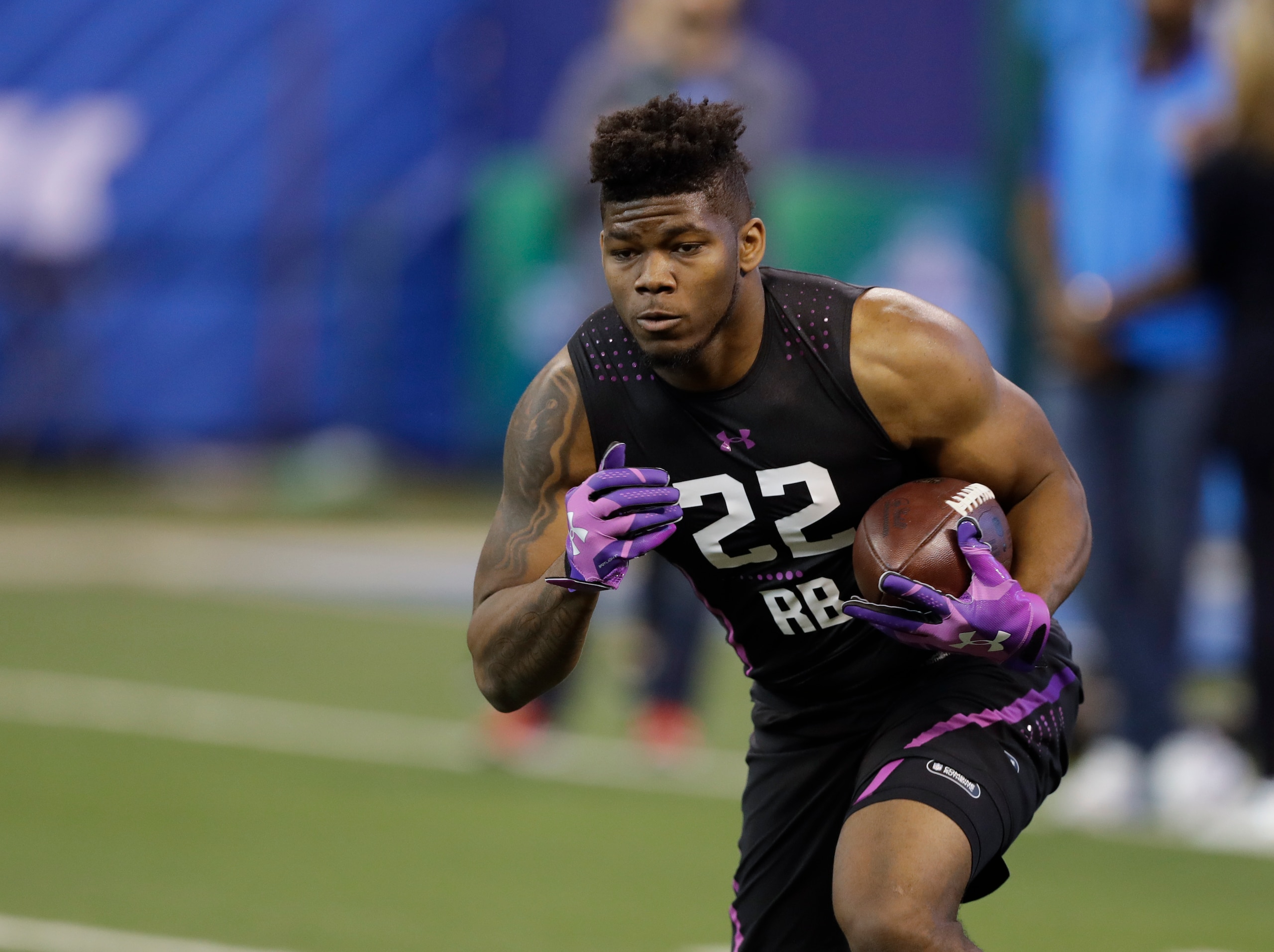
POSITIVES
—Penny looks the part on the hoof with NFL size, strength, speed and vision. He also produced as a runner, receiver and return man at SDSU.
—Is a very good outside runner (mostly to the left) and has the speed to pick up serious yardage. He has impressive quickness to cut.
—Penny is naturally strong and carries his 220-pound frame well with broad shoulders. He's strong and could see a heavy workload right out of the gate.
—Great touchdown production (25 offensive TDs in 2017) and is an asset in the red zone as a runner and receiver.
—Penny is a patient runner who is scheme-versatile because of his tool set (power, quickness).
NEGATIVES
—Penny is good but doesn't wow you with any one trait. Might be more solid than special.
—For a shorter back, he runs tall, exposes his body to massive hits and doesn't run through much contact.
—Scouts told us they expect he'll struggle picking up an NFL playbook and doesn't handle football concepts well.
—Is a bit of a one-lane runner at times and doesn't wow you with vision and cutback ability.
OVERALL
Penny's production was eye-opening at SDSU, and he fits the profile of a starting NFL back with his size, speed, strength and quickness. He looks like a solid Day 2 pick with an early starter grade.
GRADE: 6.50 (Round 3)
PRO COMPARISON: Lamar Miller, Houston Texans
7. Mark Walton, Miami
30 of 36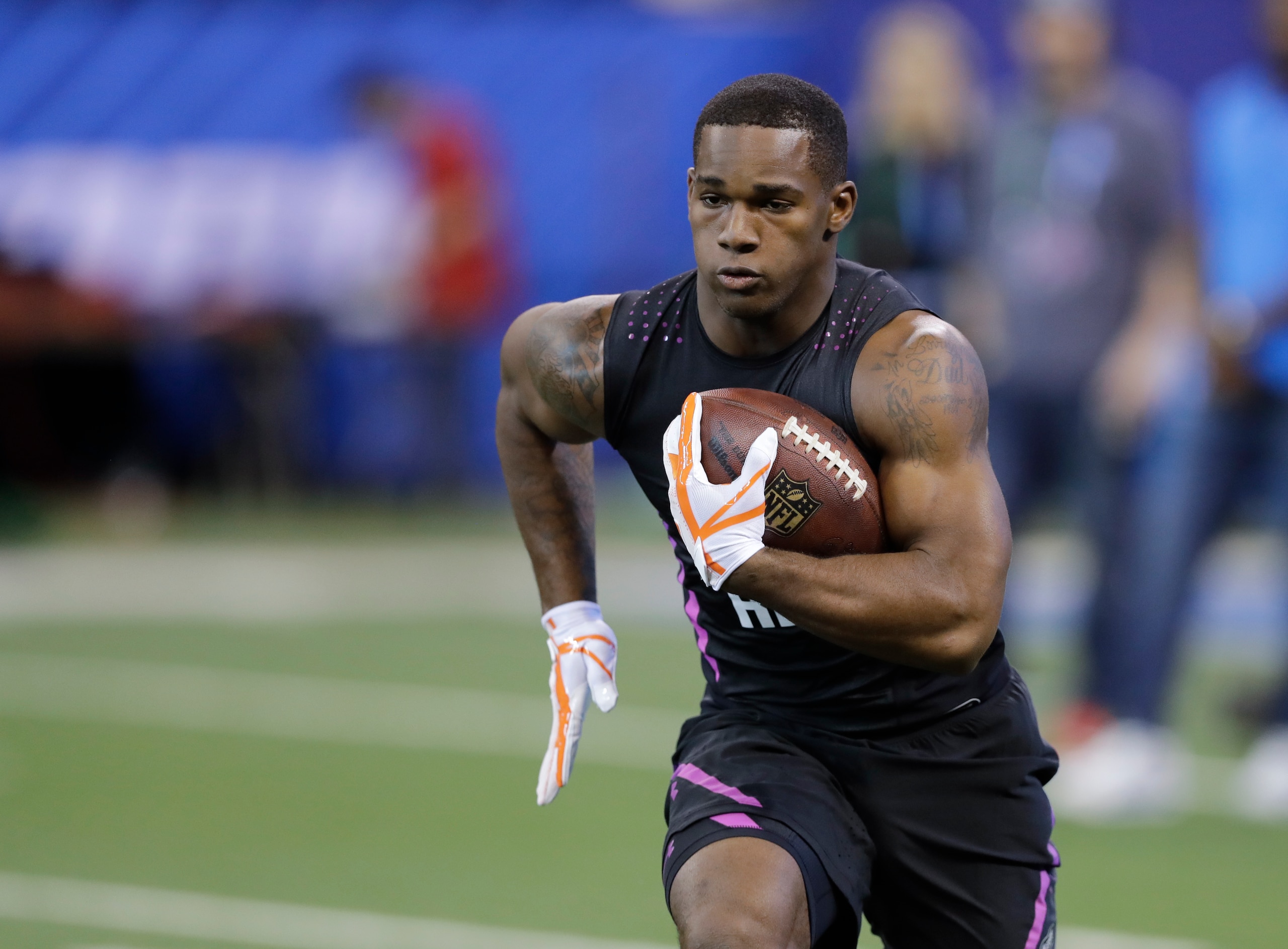
POSITIVES
—One of the draft's best runners in space, Walton can rip off big runs by shaking defenders and then closing with speed.
—Walton is a three-down threat and will likely see his first role in the NFL as a receiving option out of the backfield or flexed out in the slot.
—He has tree-trunk thighs and will use them to run through contact, and he shows nice agility while breaking ankles with his quickness and cutting skills.
—Walton doesn't have great size, but he is not a timid runner.
—Has excellent ball security and should be praised for limited fumbles in college.
NEGATIVES
—Is considered undersized for the NFL at 5'10" and 188 pounds; did not test exceptionally well at the combine.
—Coming back off ankle injury that ended his season in early October.
—Can be too cute as a runner and likes to pick and choose his rushing lane instead of attacking the lane and running with urgency.
—Walton likes to dip his shoulders and attack but might be too small to run with that type of abandon in the pros.
OVERALL
Walton is the type of back the NFL wants on the field for third-down situations and has the tools to be used as more than that in a scheme that favors outside runners with hands. His lack of size and recent injury could push him down boards, but we see an immediate NFL contributor.
GRADE: 6.50 (Round 3)
PRO COMPARISON: Giovani Bernard, Cincinnati Bengals
6. Nick Chubb, Georgia
31 of 36
POSITIVES
—Chubb has the size and power to be an effective runner between the tackles and picks through trash well to find rushing lanes.
—He understands how to run under his pads and will get below tacklers with his naturally low center of gravity, which also aids him as a power runner.
—He has a violence to his running style that shows up with stiff arms and lowered shoulders that make him a great fit in the AFC or NFC North.
—Is a natural runner that is ideal for an inside-zone scheme and has the ball security to excel there.
—Chubb was a team captain at Georgia and is well-regarded as an excellent leader and locker room influence
NEGATIVES
—Had reconstructive knee surgery in 2015.
—Lacks explosiveness and speed to turn the corner, as seen in the national title game.
—Does not have the agility or burst to shake defenders and can be limited to a power runner role.
—Chubb has not been an active threat on third downs and doesn't bring obvious value to the table as a pass-catcher.
OVERALL
In the right scheme, Chubb can be a Day 1 starter if he's asked to pound the ball between the tackles and not be a slasher or a receiver out of the backfield. The issue is that the NFL is trending toward more speed at the position, and Chubb's lack of burst and injury history make him a concern despite the fact that he's a great football player.
GRADE: 6.70 (Mid-Round 2)
PRO COMPARISON: Jay Ajayi, Philadelphia Eagles
5. Kerryon Johnson, Auburn
32 of 36
POSITIVES
—A fast, powerful, big back with the tools to step right into a pro offense and make an impact.
—He is a smooth, patient runner but aggressively hits the hole when he finds a rushing lane.
—The Auburn offense prepared him well to play for all three downs in the NFL.
—Has excellent tools as a runner. He'll break out stiff arms and spin moves, and he isn't afraid to run through a tackler in the open field.
—Johnson is a classic bruiser but has the agility and speed to be a complete back. If healthy, he can be a starter and lead an offense.
NEGATIVES
—Johnson might be too aggressive at times and was banged up throughout college.
—Runs straight up and down at times and will get caught stopping his feet behind the line of scrimmage.
—Shared carries throughout college and wasn't the man until his final season.
—Could struggle with outside zone schemes in which his vision and lateral quickness will be tested.
OVERALL
Johnson is one of the most impressive backs in this loaded class, but his history of injuries are a concern. His patience, balance, power and speed as a runner could land him in the first round if teams are comfortable with his health.
GRADE: 6.70 (Mid-Round 2)
PRO COMPARISON: Isaiah Crowell, New York Jets
4. Ronald Jones, USC
33 of 36
POSITIVES
—A productive burner in the USC offense with the speed to turn the corner and run away from defenses.
—Runs with excellent agility and lateral quickness. Can shake defenders in the hole or juke tacklers in the open field.
—Has great balance and can make quick cuts to get upfield or jump-cut to change direction.
—Elite burst to get to top speed in a hurry.
—Has shown the ability to be an impactful receiver out of the backfield.
NEGATIVES
—Pulled his hamstring while running the 40 at the combine (4.65 time).
—Lacks ideal size for a starting NFL back (5'11", 200 lbs).
—Scouts are concerned Jones lacks the size to see premium touches and may be limited to a complementary role.
—Runs upright at times and takes too many steps to get to his desired lane...both things open him up to hard hits.
OVERALL
Jones has a chance to be a major asset in the NFL, but he could see his stock slip because of size and usage concerns. If drafted into the right system, he has the tools to be a Day 1 impact player and could threaten for Offensive Rookie of the Year honors.
GRADE: 6.90 (Round 2)
PRO COMPARISON: Jamaal Charles, Free Agent
3. Sony Michel, Georgia
34 of 36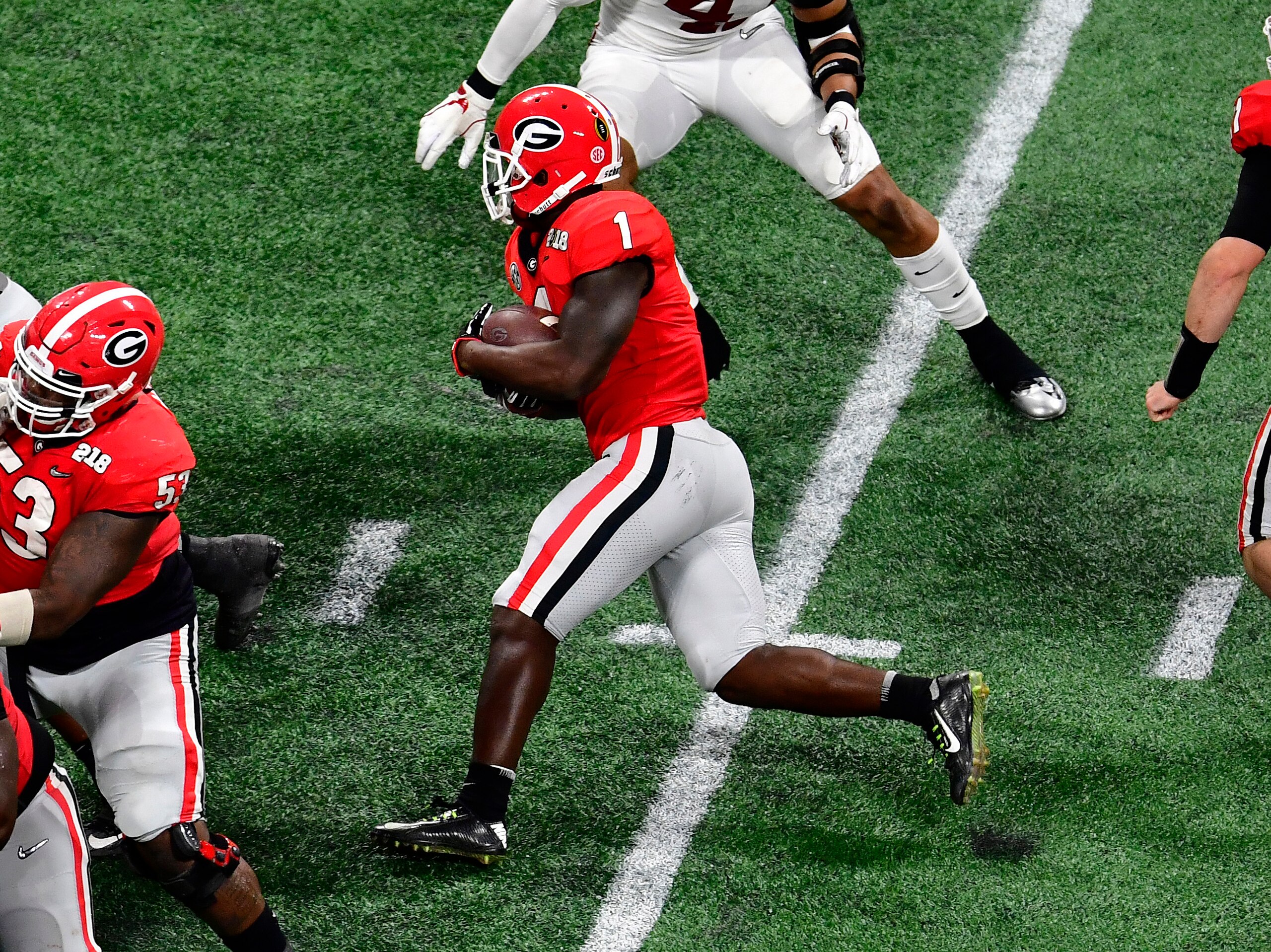
POSITIVES
—A talented runner and receiver with a proven versatile skill set.
—Played well against major competition in the SEC and in the College Football Playoff.
—Has the speed to turn the corner and rip off chunk plays against NFL speed.
—Michel has the power to run through contact.
—Vision and the ability to find running lanes looks well-developed, but he'll also lower his head and run hard when the hole isn't there.
NEGATIVES
—Was not a true starter at Georgia and his running mates all had similar success. System questions exist.
—Dominated while running left behind first-round prospect Isaiah Wynn.
—Can be tight-hipped at times and doesn't show much shake or wiggle in his game.
—Might wear down quickly because of his aggressive running style.
—His film shows more fumbles than you'd like from a powerful runner.
OVERALL
Michel was overshadowed at times by Nick Chubb but broke out in 2017. He looks like he'll make an easy transition to a starter role in the NFL and has the power to be a bell-cow-type back.
GRADE: 6.99 (Round 2)
PRO COMPARISON: Alvin Kamara, New Orleans Saints
2. Derrius Guice, LSU
35 of 36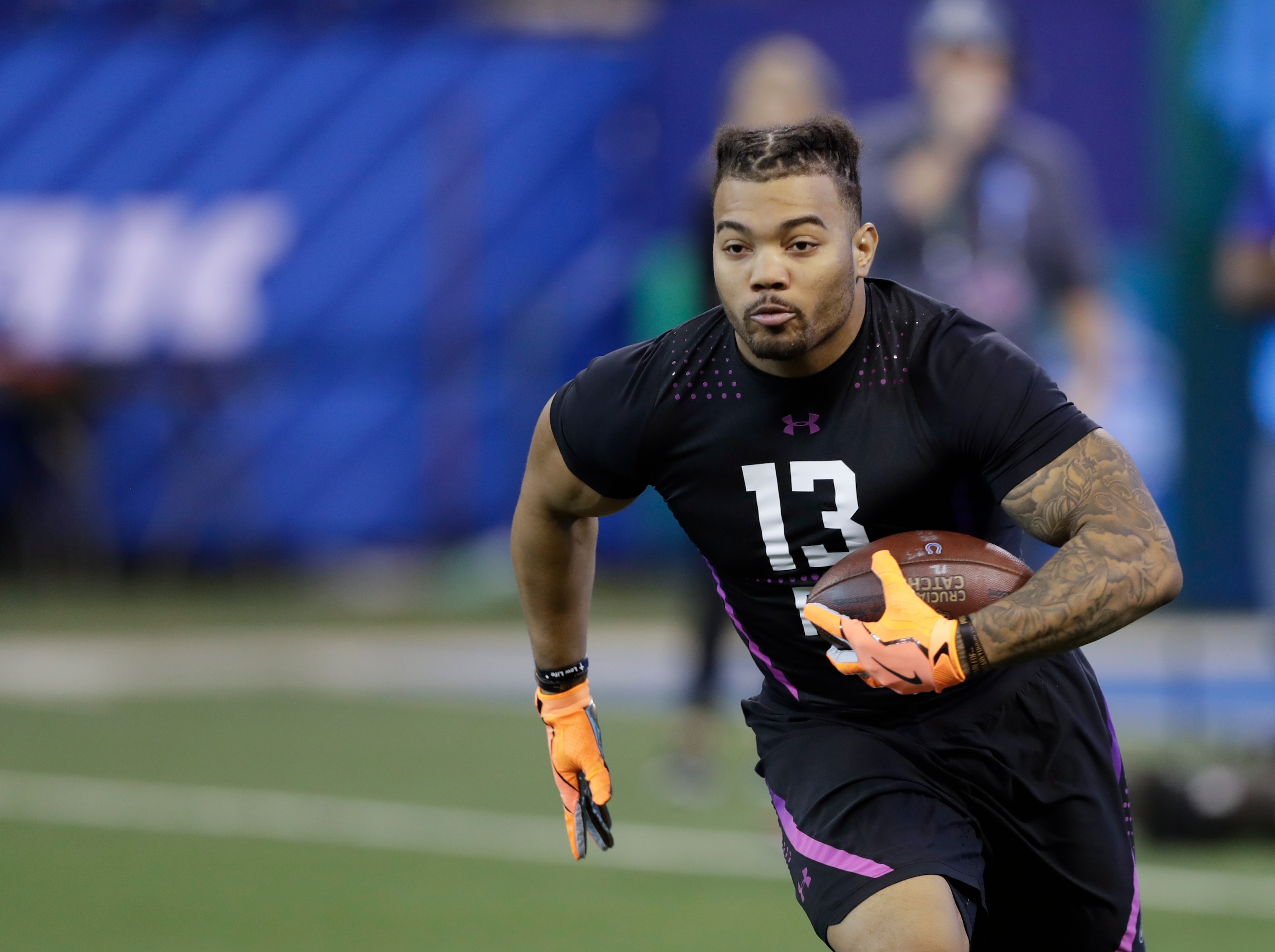
POSITIVES
—A powerful, angry runner with legit 4.49 speed to pull away from defenders.
—Has thick, tree-trunk legs and will run through contact with the balance and burst to escape tacklers.
—A dynamic inside runner with the vision and power to push the pile.
—Runs pissed off and is rarely brought down by a single tackler.
—Is a patient, smart runner with the physical tools and vision to excel in the NFL.
NEGATIVES
—Injured in 2017 and limited in all but a few games.
—Runs with reckless abandon that could lead to injuries in the pros.
—Limited on third downs by the LSU scheme and needs reps in pass protection.
—Questions from scouts about his football IQ.
OVERALL
Guice is a natural runner with a physical, bruising style of play and the athleticism to back it up. He’s powerful, fast and persistent as a runner. Teams that want a power run game will fall in love with Guice’s skills.
GRADE: 6.99 (Round 2)
PRO COMPARISON: Marshawn Lynch, Oakland Raiders
1. Saquon Barkley, Penn State
36 of 36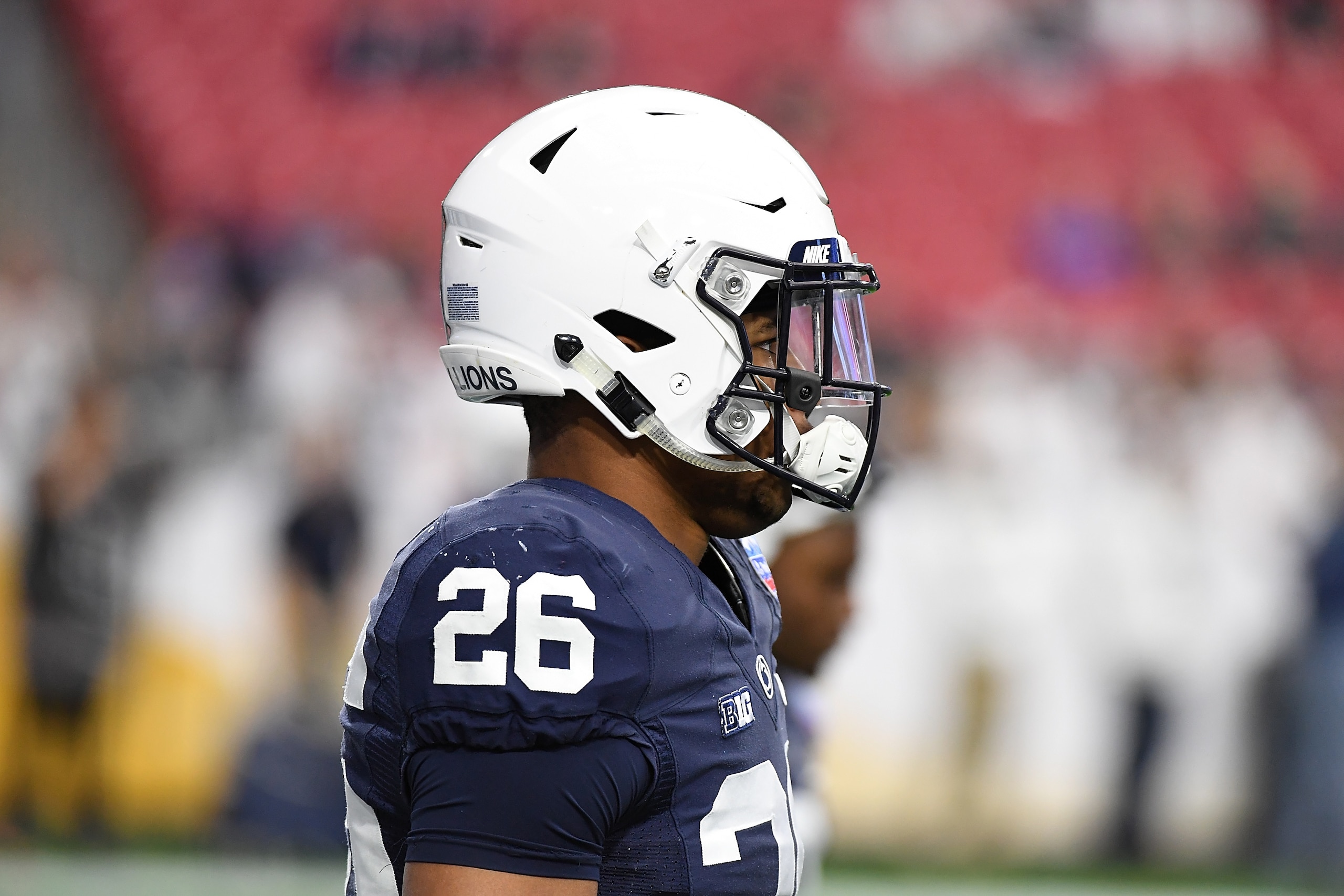
POSITIVES
—A rare athlete with excellent size, speed, vision and hands. A true three-down back.
—Runs with 4.40 speed and has rare start-stop burst and balance. Can beat defenders to daylight.
—Has the best hands of any back in the class and is a clean, natural pass-catcher.
—Had touchdowns as a runner, receiver, returner and passer at Penn State.
—Is a seamless fit into any offensive system with generational tools.
—Barkley is the type of back teams can plug in and ride to wins. Has All-Pro tools.
NEGATIVES
—Barkley doesn't always run to his size and won't run through contact.
—Bypasses inside holes for the outside and looks to bounce plays often.
OVERALL
Barkley is one of the easiest evaluations in the NFL draft. He's a natural athlete with special skills and is clean off the field with great football and personal character. Barkley is the clear top prospect in this draft.
GRADE: 9.00 (Top Overall Player)
PRO COMPARISON: Marshall Faulk, retired