

Chin up, disappointed, brokenhearted and/or aggrieved fan of soon-to-be NBA lottery team. Better days are right around the corner.
OK, actually, that might be a lie. Not every lottery-bound squad is power-walking its way toward a glowing future.
Some are in the infancy of full-scale rebuilds and gearing up for drawn-out treks back toward relevance. Others have spent, drafted and traded themselves into impossible positions. A select few are organically stuck or have yet to give us the faintest idea of—or hope in—what they're doing.
Everything will be on the table when assessing the big pictures of this season's playoff non-participants. Lottery positioning, draft-pick obligations, incumbent talent, current performance, salary-cap outlooks, contract situations, health bills, front-office track records—everything.
As a PSA for supporters of the Denver Nuggets and Los Angeles Clippers, these selections were not made haphazardly. FiveThirtyEight's playoff odds were used to determine which two Western Conference teams would be left out in the cold. Your peeps lost.
Brace yourselves, everyone. This will be an achingly cruel gut punch for some.
14 to 11
1 of 11
14. Charlotte Hornets
No imminent cap space. No high-ceiling prospects. No desirable trade chips not named Kemba Walker.
Unless you're into stanning for Malik Monk or excited about the prospect of overpaying a 29-year-old Walker in 2019, the Hornets' future is not for you.
13. Memphis Grizzlies
Feel free to present arguments in heavier favor of the Grizzlies' trajectory. They're not completely unwarranted.
Memphis is losing its way to top-three lottery odds and has resisted trying to bust up the Mike Conley-Marc Gasol tandem. Adding a rookie ticketed for stardom to a pair of incumbent standouts has its advantages—particularly if Tyreke Evans doesn't abandon ship in free agency.
But this doesn't change the Grizzlies' cap situation. Failing an epic salary dump, they won't have meaningful room until 2020. And more than that, they have no assurances a Conley-Gasol foundation gets them back to the playoffs in 2018-19. Gasol will be entering his age-34 season, while Conley will be 31 and working off a year lost almost entirely to Achilles issues.
Starting over would brighten up the Grizzlies' future a bit, but not by much. Conley and Gasol aren't commanding primo returns on the trade market, and their draft obligations to the Boston Celtics—top-eight protected in 2019—complicate the process of bottoming out.
12. Orlando Magic
Andrew Sharp painted a not-so-rosy picture for the Magic over at SI.com:
"Most of the long-term hope is built around Jonathan Isaac, and I'll admit, that may not sound super promising. Issac is still learning offense, he doesn't have a clear position, and while he showed some flashes of two-way potential very early in the year, he's been hurt for almost three months. He's like a parody of an anonymous project that draft nerds care too much about. But that's fine, I'm not asking anyone to join me on the Isaac bandwagon."
Board the Isaac bandwagon. Seriously. It's fine. But the Aaron Gordon bandwagon cannot be a thing anymore. He's about to land near-max money as a restricted free agent without ever establishing himself as a tried-and-true No. 1 or even No. 2 option.
Orlando has no choice other than to match whatever offer sheet he signs. That doesn't make keeping him an objectively good decision. The Magic already won't have cap space this summer, and putting him on the ledger for, say, $20 million or more per year doesn't give them light at the end of the tunnel.
Bismack Biyombo is signed through 2019-20 (player option). Evan Fournier is on the docket through 2020-21 (player option). Cap space doesn't mean as much in a market like Orlando, but the flexibility necessary to take on bad salaries in exchange for extra picks and prospects certainly will—especially for a franchise with such a checkered draft-day resume in the post-Dwight Howard era.
11. Detroit Pistons
"I never want to be in a place where I'm not wanted," Blake Griffin told The Undefeated's Marc J. Spears about joining the Pistons. "Coming here made me realize what a franchise looks like.”
Detroit should be eternally grateful for Griffin's low standards.
This team has one of the highest immediate ceilings on here. Give head coach and, for now, team president Stan Van Gundy a full training camp with Griffin, Andre Drummond and Reggie Jackson, and the Pistons could re-enter the Eastern Conference playoff picture by this time next year.
Except, nothing awaits them beyond that annual chase for lower-rung postseason positioning. They have neither the cap space nor trade assets to build around Griffin and Drummond. They also gave up this year's draft pick—now consigned to the lottery—as part of the Griffin trade.
Barring breakouts from Luke Kennard and the extension-eligible Stanley Johnson, the Pistons have, ostensibly, chiseled out a tight window to explore the heights of mediocrity.
10. Los Angeles Clippers
2 of 11
Grab your safety goggles, yard-work gloves and a ridiculously long extension cord. We're about to do some serious hedging.
The Clippers have done a nice job navigating roster turnover and injuries this season, but the jury is still out on whether this feel-good story has peaked or will even last beyond 2017-18.
Will Los Angeles re-sign DeAndre Jordan (player option)? How much will he cost? Will the Clippers retain Avery Bradley? What will Patrick Beverley look like next season?
Is Tobias Harris, at 25, trade bait ahead of 2019 free agency or a long-term fixture? Is this version of Lou Williams here to stay? Will Danilo Gallinari be paid more than $20 million per year to be a ghost?
Based on their roster makeup, it looks like the Clippers will straddle a timeline somewhere between designed demolition and faux contention. That alone isn't enough to anchor this position. But they, unlike the Pistons, will enjoy a ton of cap space in 2019 if they play their cards right.
That'll help a great deal whether they throw it at free agents or use it to absorb less savory contracts.
9. Brooklyn Nets
3 of 11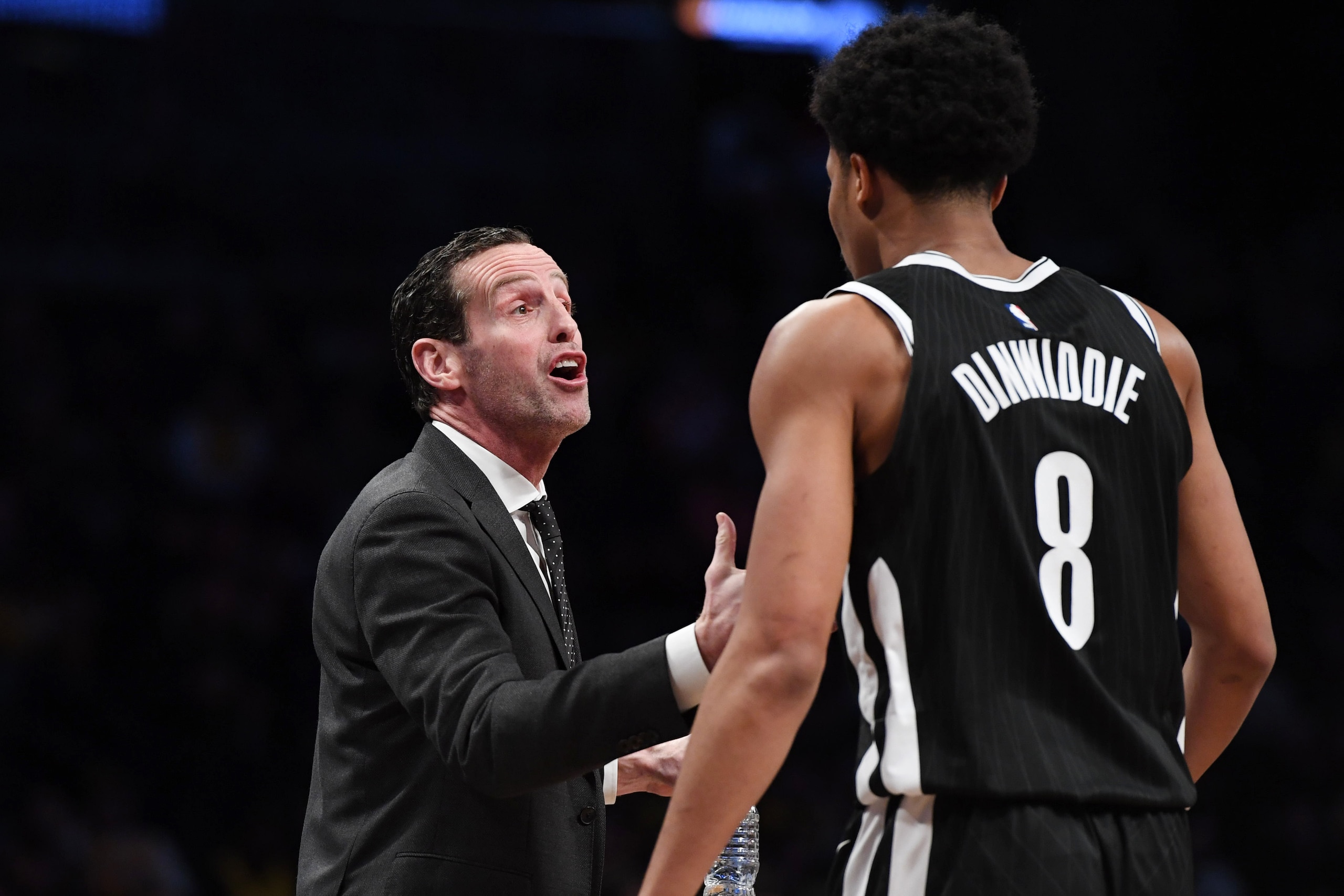
Life is about to get super awkward for the Nets.
Though they've admirably unearthed and stockpiled valuable fliers, they're reaching reinvestment crossroads just as they regain control over all their first-rounders.
Spencer Dinwiddie, Rondae Hollis-Jefferson (restricted) and D'Angelo Russell (restricted) will all be up for raises in 2019. Caris LeVert will be extension-eligible by that time as well. Joe Harris is a free agent this summer.
Should the Nets start shopping some or all of their most recognizable prospects? Can they justify reinvesting in one or more of them when this core hasn't won 30 games?
Does it make sense to chase impact talent with the $15 million—or more—in cap space they'll have this summer? Or would that jeopardize a potential tank? Should they even contemplate a deliberate nosedive after the NBA switches to a more even-keeled lottery system?
These problems will be welcomed by general manager Sean Marks and head coach Kenny Atkinson. They've dealt with far worse over the past few years, and the expiration of their obligations to Boston makes life easier.
Brooklyn still cannot be placed any higher. The precariousness of its contract commitments must outweigh the success its of culture and player development.
8.Sacramento Kings
4 of 11
Prospects. Prospects, everywhere.
The Kings have kids in need of more extensive looks at every position.
De'Aaron Fox. Bogdan Bogdanovic. Frank Mason III. Skal Labissiere. Willie Cauley-Stein. Buddy Hield. Justin Jackson. Harry Giles.
This list can go on if you're vibing Bruno Caboclo or JaKarr Sampson. And the Kings have reason for optimism—subtle victories that give them more big-picture appeal than a handful of others.
Fox has quickly morphed into a crunch-time legend. Sacramento, as a whole, is outperforming expectations in close games by posting a 20-16 record and top-eight point differential per 100 possessions in clutch situations. (No, this is not a joke.) Bogdanovic is already the team's most polished scorer.
Labissiere has recaptured some of his offensive swagger. Jackson is hitting more threes. Hield looks like the ideal second-unit bucket-getter.
These developments may come at an inadvertent price, though. The Kings have played themselves out of the bottom-five-record clique and don't own next year's draft pick. They can open up more than $20 million in cap space, but can they be trusted to use it the right way?
Equally paramount: What good is having so many prospects when only one—Fox—can be considered a star project?
7. New York Knicks
5 of 11
Yes, yes, yes. The Knicks have the most important ingredient to any bright future in place: a superstar cornerstone around whom to build.
Kristaps Porzingis is the real deal. He's gradually learned when to use his size and when to use his speed against frontcourt opponents at the offensive end. His passing out of double-teams needs work, but it has already improved. He's one of the NBA's most effective rim protectors, despite spending so much time out of position at power forward.
He's also working his way back from a torn left ACL.
Injury bugs have bitten Porzingis with uncomfortable frequency since he entered the NBA. This latest setback is different. The Knicks cannot count on him being the same player upon return—no matter what his doctor says.
"Despite the talk, ‘The sky is falling, he'll never be the same,' that's a bunch of horse s–t," Dr. Carlon Colker told the New York Post's Marc Berman. "He'll be better than ever. He's going to blow people away. If you're around people who know what they're doing, it's not the end of the world. It's the end of the world if you have the wrong people around you.”
For argument's sake, let's assume Porzingis is fine when he rejoins the Knicks. Better than ever, even. What then?
New York won't have serious cap space in either of the next two summers. Waiving Joakim Noah via the stretch provision won't change that. Enes Kanter is a virtual lock to pick up his $18.6 million player option for next season, and Porzingis will, presumably, be entering the first year of a max contract in 2019-20.
With Tim Hardaway Jr. under lock and key through 2020-21—when Frank Ntilikina is scheduled to come off his rookie deal—the Knicks will have to lean on the draft more than free agency for talent infusions. That, or they'll have to exhibit shrewd cap and trade management.
Both approaches require patience for which the Knicks aren't exactly known. And given their limited, verging on unjust, use of Ntilikina this season, their stance on player development must come into question as well.
Glossing over some of these potential pitfalls would be a lot easier if Porzingis never tore his ACL. But he did. And the Knicks' outlook is worse off, for now, because of it.
6. Chicago Bulls
6 of 11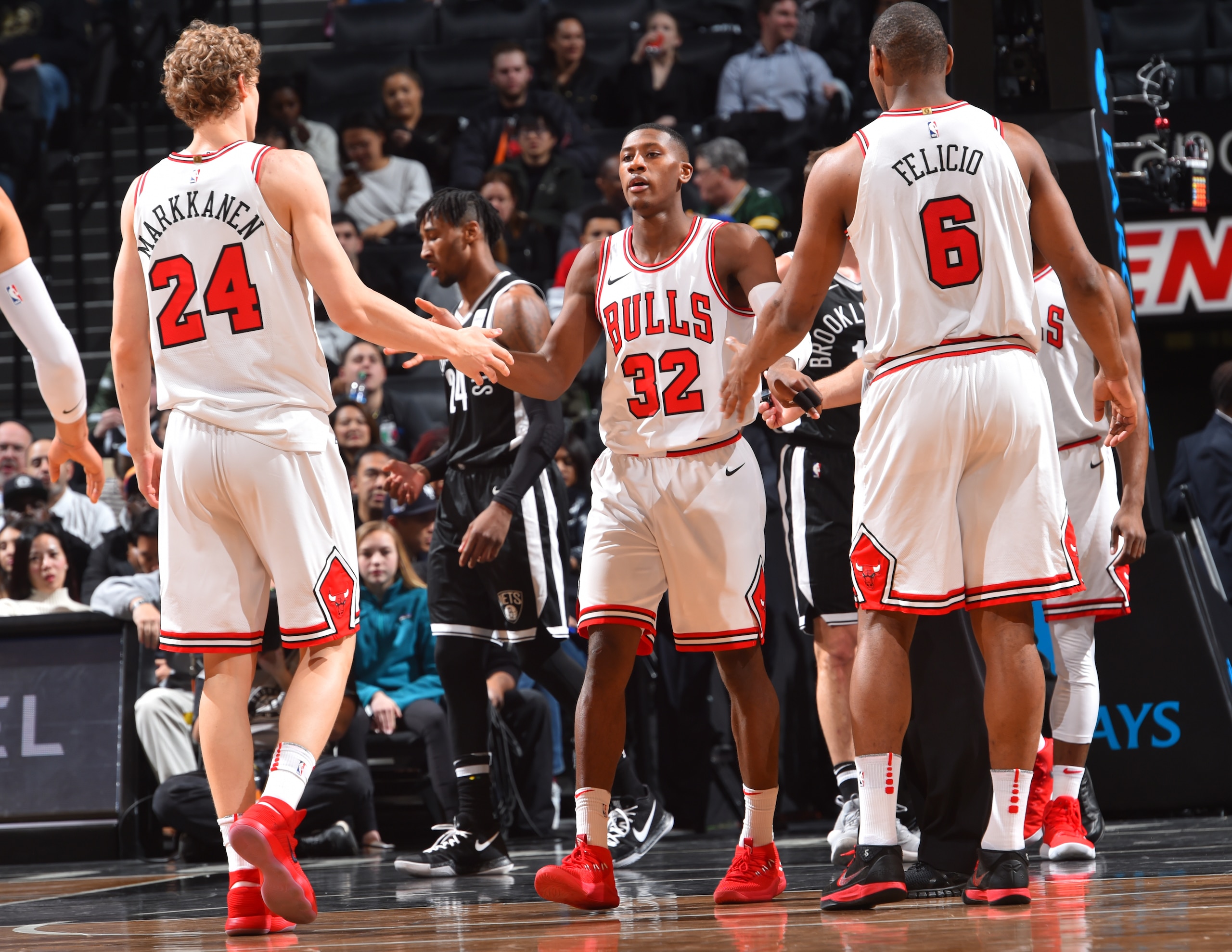
More hedging!
On one side of the fence, we have the Chicago Bulls, peddlers of flexibility and youthful exuberance. Lauri Markkanen is scary talented on offense—and a decent rebounder, too. Kris Dunn is another half-season or so away from achieving unequivocal starter status. David Nwaba (restricted) got game—especially on defense.
Bobby Portis becomes super intriguing if his accuracy outside 16 feet holds true. Denzel Valentine might make Buddy Hield blush. Membership to the Cameron Payne "We Still Believe" fan club has increased by a zillion percent since the end of February.
Zach LaVine is dealing with another knee injury, but he's an offensive spark plug. He should rediscover his touch with time, and his spate of injuries might actually allow the Bulls to re-sign him at a reasonable rate in restricted free agency.
On the other side of the fence, though, we have the Chicago Bulls, masters of making little progress, in the most complicated way imaginable, without actually giving their kiddies enough spin. As The Athletic's Darnell Mayberry wrote:
"At their best, the Bulls have been able to atone for their atrocious defense and keep pace with hot shooting. We saw it against Cleveland inside the United Center last week, when the Bulls made 16 threes and Denzel Valentine erupted for a career-high 34 points. But when the shots aren’t falling, things devolve into one big mess. That’s what we saw Saturday against the Pistons and, unfortunately, likely will be subjected to over the final nine games.
"Injuries, however questionable, haven’t done the Bulls any favors. But the team’s junk lineups in the name of player development deserve equal blame. Saturday’s starting five, for instance, was comprised of Cameron Payne, Justin Holiday, Denzel Valentine, Noah Vonleh and Robin Lopez, a group that had never touched the floor together. Not surprisingly, that unit mustered only 12 points in 10 minutes and got outscored by 13 points during its court time. Defensively, the Bulls’ mishmash lineups don’t stand a chance and they’re doing nothing but serving as a detriment to development. There’s no rhythm or rotations, communication or cohesiveness. Instead, there’s chaos."
The Bulls, in many ways, are a more frustrating version of the Knicks. They didn't steer into the tanking skid until it was too late. But, contrary to the Knicks, they didn't have a patented superstar to prop up a try-hard facade. And now, they'll be lucky to end up with a top-seven selection—a disappointing consolation prize for a team that sported the Association's worst record before Nikola Mirotic's season debut.
Chicago will have a bunch of cap space this summer, which is nice. But the roster needs wings. This year's free-agent pool isn't flush with them. The list of potential options thins out even further when removing players who don't fit the team's rebuilding timeline.
If not for Porzingis' injury, or the fact that LaVine's injury-riddled 2017-18 should ward off over-the-top overtures, the Bulls would find themselves at least one spot lower.
5. Atlanta Hawks
7 of 11
John Collins is the biggest variable in the Atlanta Hawks' long-term outlook.
If he's more than just a spring-loaded dunk artist and electric shot-swatter, they have a case to be higher in this ranking. If he doesn't appreciably expand his offensive repertoire or impact the defense enough away from the rim to serve as its anchor, their depth chart, while full of intriguing talent, has a distinctly hodgepodge feel to it.
A verdict cannot be rendered one way or the other right now. Collins missed significant time with a shoulder injury earlier in the season, and head coach Mike Budenholzer only semi-recently removed his court-time training wheels.
The onset returns are promising overall, though. Atlanta hemorrhages points with Collins at center, according to Cleaning The Glass, but he should continue to get more work in the middle. He has the bounce to snare rebounds ahead of taller and longer opponents, and his timing out of the pick-and-roll continues to get better.
Collins may even turn into a viable screen-and-pop option. He's shooting just 34 percent on mid-range jumpers, but he looks increasingly comfortable making decisions from a standstill position and has, on occasion, flashed straight-line handles a younger Serge Ibaka really could have used.
Taurean Prince has quickly become the second-most-important cog in the Hawks' rebuild. He's their most switchable wing, and they've needed him to fill some playmaking gaps, given their unimpressive well of secondary ball-handlers.
Imagine Jae Crowder with better shot creation. That could be Prince. He's averaging 17.6 points, 4.6 rebounds. 2.7 assists and 1.3 steals over his last 20 games while seeing his usage explode.
Getting too excited beyond Collins and Prince is tough. Dennis Schroder forever profiles as a roller-coaster starter. DeAndre' Bembry doesn't have the brawn to cover bigger wings. Kent Bazemore will age himself out of this rebuild. Dewayne Dedmon is a gem, but he's 28 and unlikely to stick around past next season. He could leave sooner if he declines his player option for 2018-19.
What the Hawks lack in tangible building blocks, though, they make up for in flexibility. They have five first-round picks over the next two drafts, including their own, at least one of which (this year's) is slated to fall in the top three.
Toss in their open-ended access to $20-plus million in cap space for the next few seasons, and they're armed with more turnaround resources than most—even though none of their assets register as sure things.
4. Dallas Mavericks
8 of 11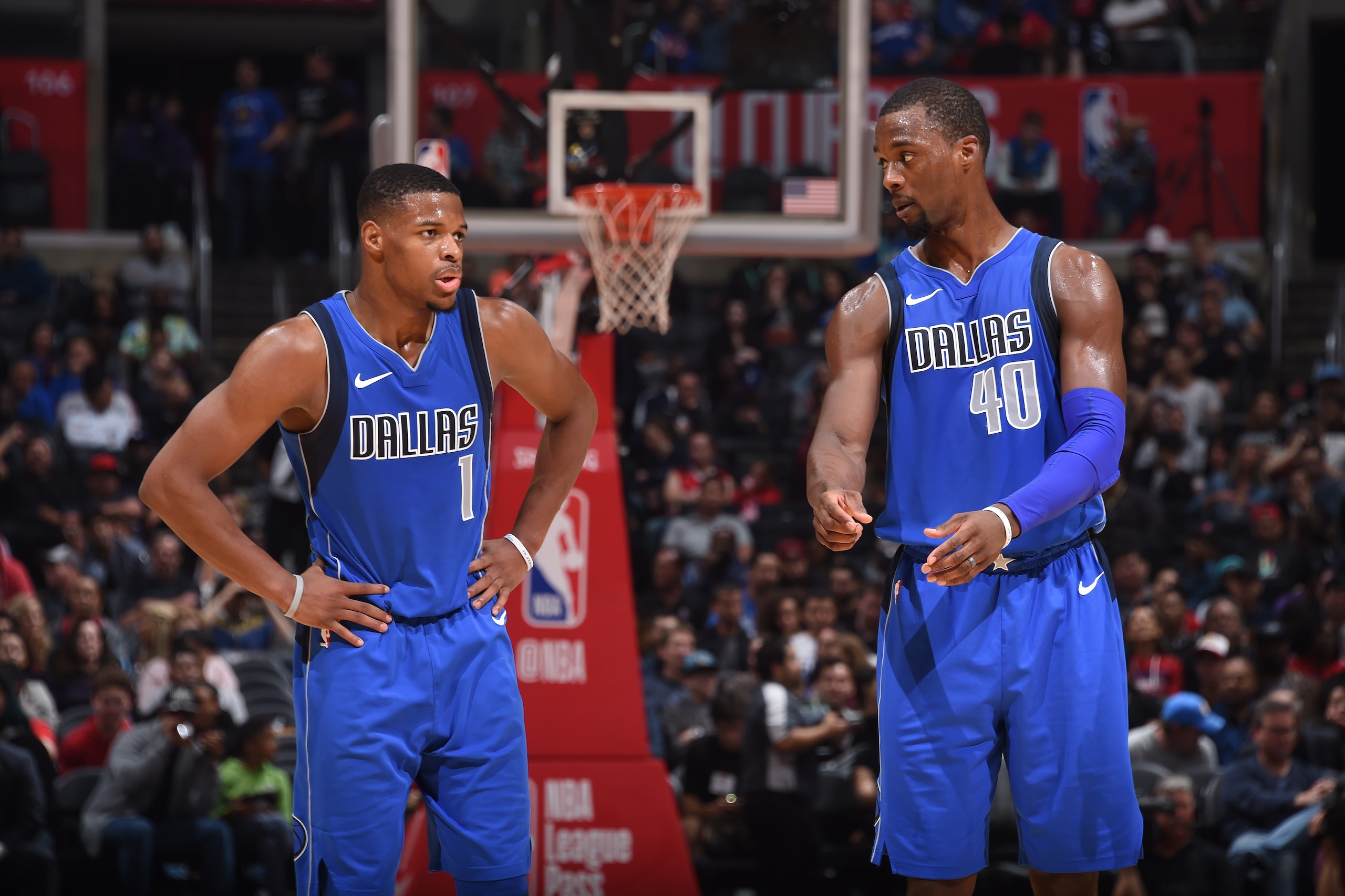
The Dallas Mavericks' future can easily be spun in the opposite direction.
Dennis Smith Jr. is their lone cornerstone prospect. The ceiling on an offense that features Harrison Barnes as its first or second option isn't terribly high. They have a neat collection of peppy projects, but Seth Curry, Yogi Ferrell (restricted), Doug McDermott (restricted) and Nerlens Noel are all up for new deals this summer. And, perhaps most harrowingly, Dirk Nowitzki will not play forever.
This placement leans heavily on the Mavericks' coaching. Because why the heck not? Head honcho Rick Carlisle is a tactical genius, someone willing to futz, fiddle, tinker and experiment to find the best fit.
That brilliance isn't always evident these days. The Mavericks don't want it to be. They're tanking. But off-beat ventures from earlier in the season—like slotting Devin Harris at small forward in a supernova three-guard lineup before he was traded to Denver—serve as a reminder of all Carlisle is unafraid to do.
So, too, does Dallas' defense. No way, no how, should this group be almost average on the less glamorous end. And yet, in non-garbage time, it absolutely is, according to Cleaning The Glass.
Improving Smith's efficiency will play a pivotal role in maximizing the Mavericks' big picture. He isn't a consistent finisher around the rim or a reliable pull-up shooter. Defenses only track him beyond the arc because he has the green light.
But this isn't worth sounding any alarms. Not yet. Smith is posting the eighth-highest usage rate among rookies in NBA history. The enormity of his workload gives way to more demonstrative struggles.
Having him as the only the foundational piece is a problem, but the Mavericks' cupboard isn't bare. They're in line for a top-five pick this June, and they have all their first-rounders moving forward. And maybe they'll get lucky elsewhere.
Dwight Powell could have another level following his career year. Dorian Finney-Smith will only be 25 when next season tips off. Dallas might be able to keep Curry, McDermott and/or Ferrell on the cheap. Noel could let bygones be bygones when he hits the open market again.
Plus, we all know the Mavericks won't sit on the sidelines during free agency. They have a fairly clear path to more than $20 million in spending power this summer and plenty of breathing room next year, when Barea, Nowitzki and Wesley Matthews all come off the books. The wait between now and their next playoff appearance shouldn't be a long one.
3. Phoenix Suns
9 of 11
Little about the Phoenix Suns' 2017-18 campaign suggests they can confidently be stashed in the top three. But as a general rule of thumb in these proceedings, always double-down on teams that have a legitimate-looking star-in-training on their rosters.
Devin Booker remains a point of contentious debate in basketball circles. Is he an empty-calories scorer who doesn't play a lick of defense? Or is he authentic stardom buried six feet under Phoenix's no-progress rebuild?
Tilting toward the latter feels most appropriate. Booker is not a good defender. He makes the occasional, if random, play when stalking pick-and-roll ball-handlers, and there might be something to sticking him on the block, a la James Harden, as he gets stronger. But he rates as the league's seventh-least valuable stopper, one year after finishing as the third-worst, according to NBA Math's defensive points saved.
Phoenix will (probably) always need to grapple with its best player being a liability on one side of the floor. That's fine. Booker is worth the future headaches for his offense alone.
He's upped his scoring and assist totals every season while boosting his efficiency. That he's so at home initiating pick-and-rolls amid the Suns' cramped spacing is a small miracle. He's set to join Tiny Archibald, Walter Davis, LeBron James, Michael Jordan and Jerry West as just the sixth player to ever average at least 26 points and 4.5 assists per 36 minutes before his fourth season.
Booker is not completely on his own, either. The Suns have a handful of other youngsters worth additional exploration. They've already invested four years and $50 million in T.J. Warren. Dragan Bender would make so much more sense on a version of Phoenix that shoots threes. Marquese Chriss should develop enough control to play the part of effective rim-runner.
Elfrid Payton's arrival hasn't gone swimmingly, but having his match rights in restricted free agency is a quaint luxury. Some people remain bullish on Davon Reed. Josh Jackson is averaging 16.8 points, 6.1 rebounds and 2.2 assists over his past 20 games. He'll be a stud if the Suns can ever trust him to shoot threes or line up against power forwards.
Adding what will, in all likelihood, be another top-three prospect to this gaggle creates a good base. Phoenix also owns the Miami Heat's first-round pick this year and in 2021, along with a protected selection from the Milwaukee Bucks that would, as of now, convey in June.
Oh, and on top of all that, the Suns are one of the few teams with easy access to more than $25 million in wiggle room this summer. They have all the requisite pieces needed to leave the NBA's doldrums sooner than later. The biggest question for them: Can they properly flesh out the roster around a soon-to-be-maxed-out Booker?
2. Denver Nuggets
10 of 11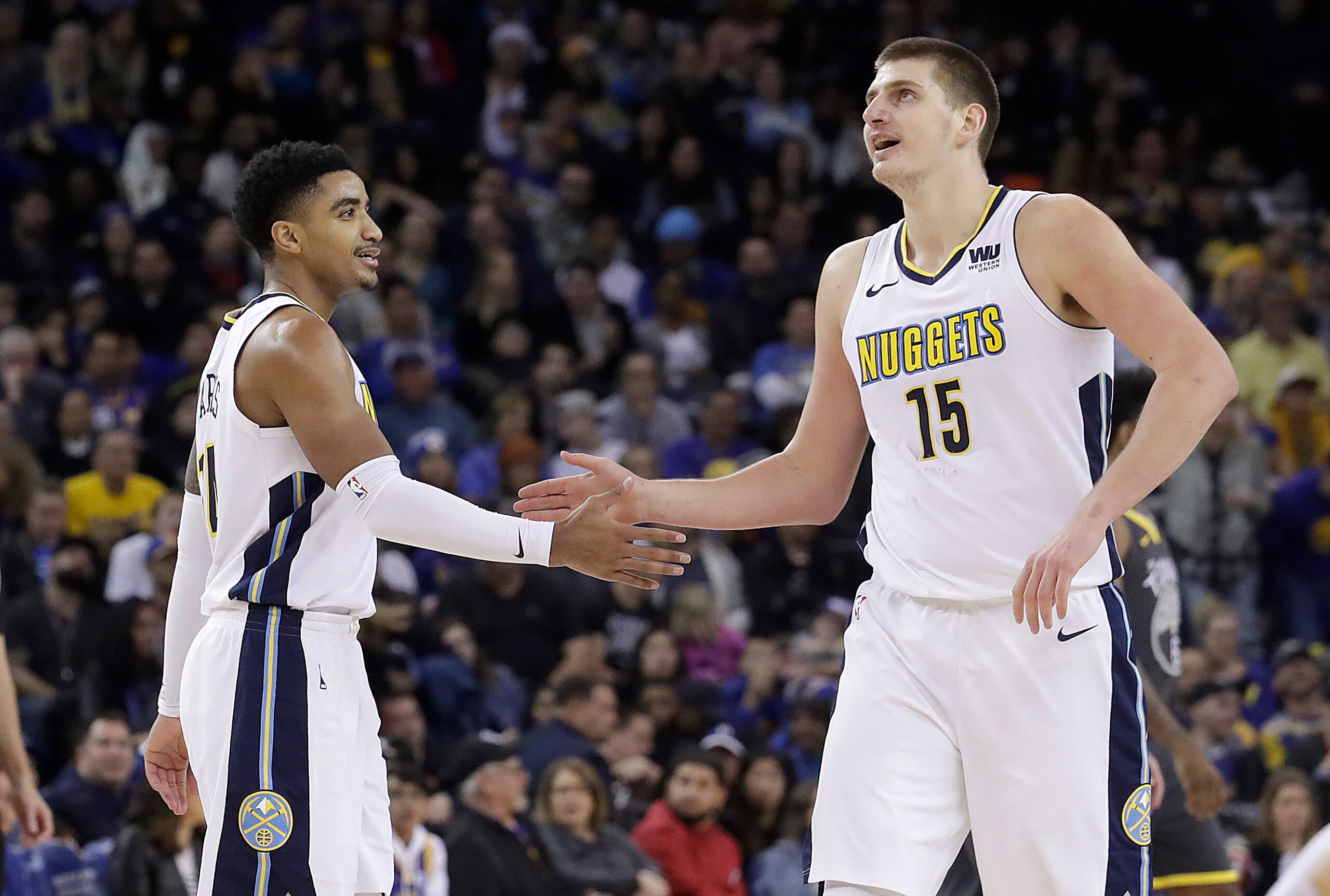
Missing the playoffs is the Nuggets' worst-case scenario. It's also their most likely one.
FiveThirtyEight gives the Nuggets a 16 percent chance at sneaking back into the Western Conference bubble. Just two games separate them in the win column from eighth place, but they'll play the NBA's toughest schedule to close the season, per PlayoffStatus.com—two-thirds of which will unfold on the road, where they're 13-23.
Making the postseason won't even inoculate them against answering some tough questions over the summer. Their season wasn't supposed to come down to 11th-hour urgency and execution.
The Nuggets flexed their muscles to end last year. Signing Paul Millsap was their victory lap. A postseason berth became a formality—almost an earned right. Retreating back into the lottery would be inexcusable.
Heads will roll if they do. Mike Malone's could be among them, since swapping out head coaches is always the easiest form of recourse. But the Nuggets will also be compelled to re-evaluate their personnel and direction, starting with Nikola Jokic.
Kitchen-sink metrics still love Nikola Jokic. He leads all centers in ESPN's Real Plus-Minus, comfortably edging out megastuds Joel Embiid, Rudy Gobert and Karl-Anthony Towns. Jokic is a passing whiz and versatile, albeit reluctant, scorer. His defensive shortcomings are overstated, if only because he's a stout rebounder and effectively ending opponent possessions is a skill. But his peak—and, by extension, the Nuggets' future—appears capped by across-the-board limitations.
"Short guards make it harder to close out and slow bigs make it harder to contain pick-and-roll, but far too often, the Nuggets wind up confused or chasing the play," Denver Stiffs' Adam Mares wrote. "If the Nuggets are on track to make a serious leap defensively, there aren’t many hints of such a leap in the stats or the film."
Surrounding Jokic with longer, switchier wings must top the Nuggets' to-do list. A healthy Millsap isn't enough. The defense is 25th in points allowed per 100 possessions since his return, and it is only a tick better when specifically isolating his minutes on the floor.
Fortunately for the Nuggets, they have the fixings for an imminent leap. They'll enjoy some cap space in 2019, even if they max out Jokic. They can dredge up room this summer by jettisoning expiring deals. They own all their first-round picks and have the cost-controlled assets to party-crash high-profile trade talks—including a fringe-star prospect in Jamal Murray.
Minor tweaks and tugs may be all the Nuggets need, in which case they're sitting even prettier. Their six-man mishmash of Jokic, Millsap, Murray, Will Barton, Wilson Chandler and Gary Harris can be re-arranged for a few different looks, and they have a big-man surplus on the pine. Another wing or two can vault them into consideration for a top-four playoff seed.
1. Los Angeles Lakers
11 of 11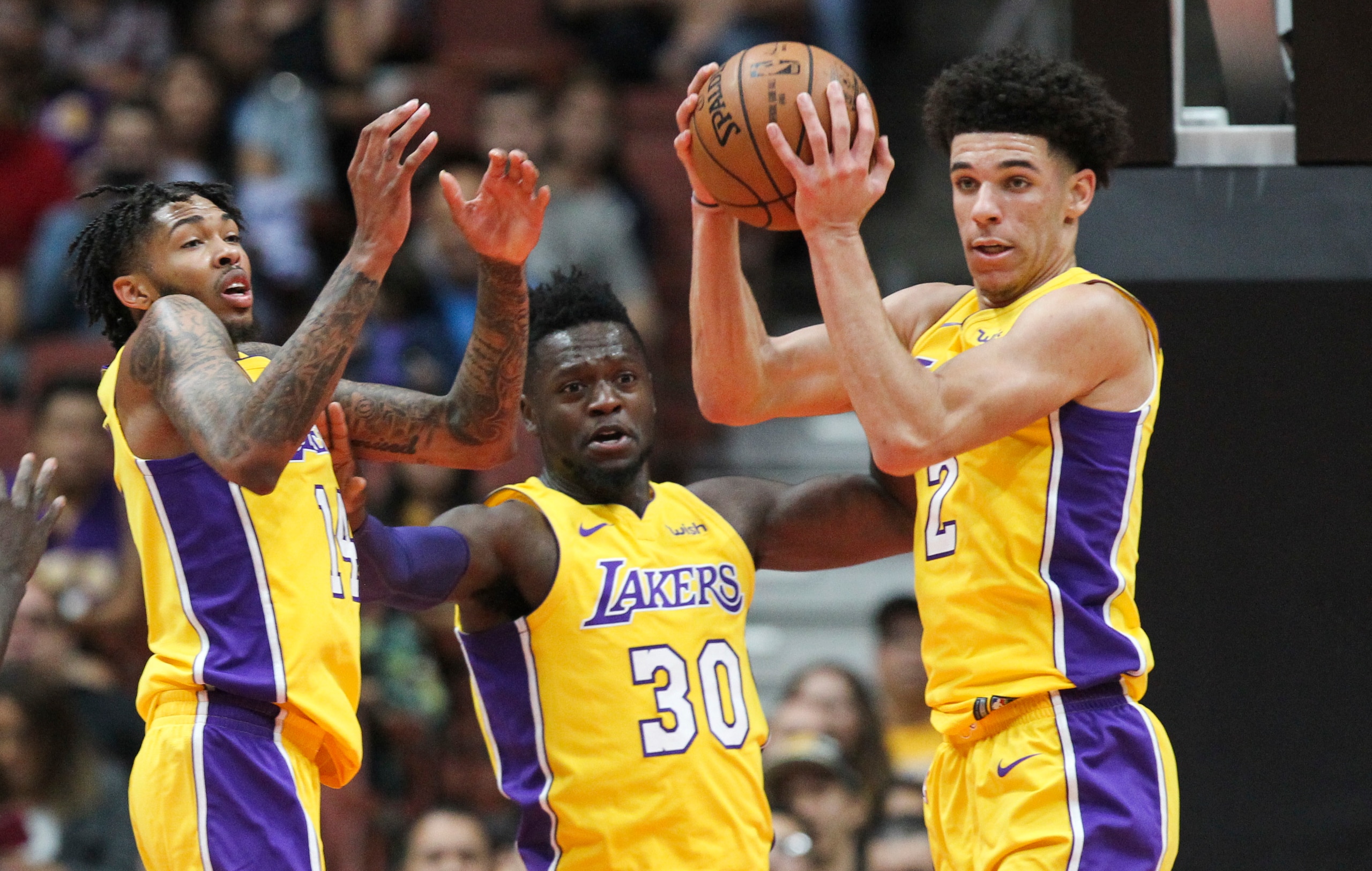
Cap space has a lot do with the Los Angeles Lakers' pole finish. How could it not?
Shipping Jordan Clarkson to the Cleveland Cavaliers left them within arm's length of carving out two max-contract slots. If they sweeten the pot enough to dump the two years and $36.8 million left on Luol Deng's deal, they can, hypothetically speaking, sign both Paul George and LeBron James without renouncing Julius Randle (restricted).
And yet, for a team so wed to free-agency coups, the Lakers' future isn't solely moored to summertime pipe dreams. They've built a nice infrastructure that, even without the rights to their own first-rounder this year, has the upside to develop into something special entirely on its own.
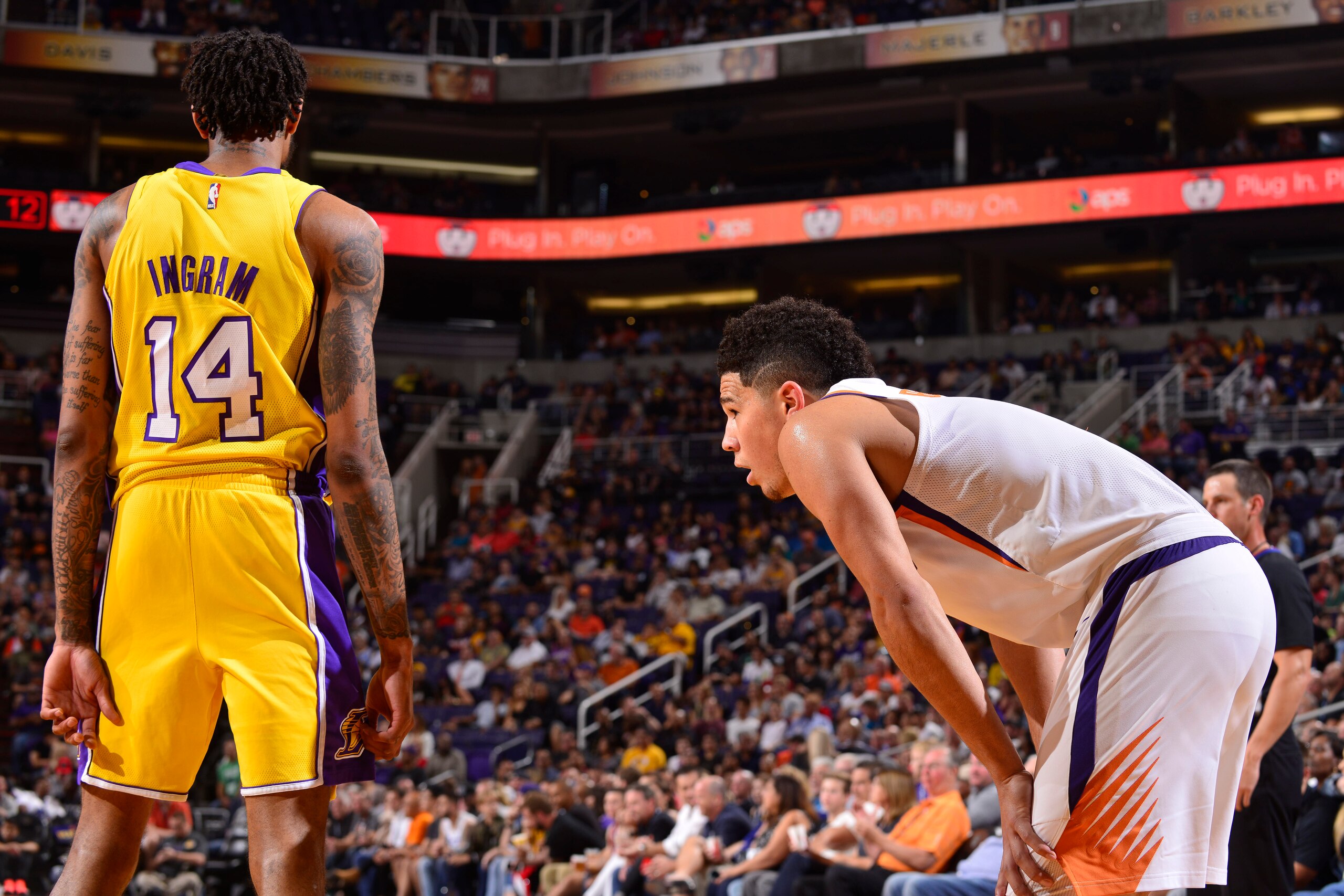
Brandon Ingram is either underrated or overrated, depending on the day and who you're asking. He's probably not the next Kevin Durant. He might not even be Paul George-light. But he's far from a bust.
In the 22 appearances leading up to his hip flexor strain, Ingram averaged 16.8 points, 5.4 rebounds and 4.9 assists while shooting 47 percent from downtown on reasonable volume. The offense was statistically better with him on the floor during this time, and even as he tries to find his niche—can he guard 4s?—he's a key component for one of the league's most surprising defenses.
Lonzo Ball may never be an attack-dog scorer. He doesn't have to be. He's already a transcendent passer and until recently, his outside shot stabilized enough for defenses to respect him. And he's further along than advertised on the grittier end. He does a nice job breaking up plays from behind and has the size to harass some wings. The Lakers are fielding an average defense when he plays beside Isaiah Thomas—which, um, yeah....whoa.
Josh Hart was a revelation before suffering a fracture in his left hand. (Think of an under-control Kentavious Caldwell-Pope with extra rebounding.) Kyle Kuzma still rates in the 93rd percentile of isolation efficiency after hitting his rookie wall. His on-ball defense is an issue, but he has offered more frequent glimpses of being a capable and willing passer.
Randle has gone from inevitable collateral damage to almost indispensable. Joel Embiid is the only other player eclipsing 20 points, three assists and 10 rebounds per 36 minutes, and Randle has upped his defensive profile. He can survive in space and is blitzing bigs well enough set up shop at the 5.
The Lakers are more flexible than desperate. They could stand to dominate the offseason, but they don't need to poach a superstar or two. They have a core worth grooming for the long haul, Cleveland's 2018 selection and all their own first-rounders beginning in 2019.
If the Lakers cannot land George and/or James in July, then so be it. They can keep their books lean and get after it again in 2019—when the league's youngest nucleus will be that much further along.
Unless otherwise noted, stats courtesy of NBA.com or Basketball Reference and accurate leading into games on Monday. Salary and cap hold information via Basketball Insiders and RealGM.
Dan Favale covers the NBA for Bleacher Report. Follow him on Twitter (@danfavale) and listen to his Hardwood Knocks podcast, co-hosted by B/R's Andrew Bailey.
.jpg?w=2560 "Aiyuk Slammed by Ex-Teammates 😬")
.jpg?w=2560 "Grading SmackDown 🔠")
.jpg?w=2560 "Report: Eagles to Sign Cowboys QB")
.jpg?w=2560 "Caleb Reposts Hype Video 🥶")

.jpg?w=2560 "Josh Jacobs Can Play in Week 7")