The story goes that NFL running backs aren't all that important in a passing league.
You can get by with a couple of lesser guys if they do specific things, as long as they do the right things. You don't need a franchise back to carry the rock more than 300 times; it's more important to have a series of backs who can get you 250 carries and 400 overall touches.
True in some cases. The Atlanta Falcons nearly won Super Bowl LI with the tandem of Devonta Freeman and Tevin Coleman, and those two backs work well together, even though the transition from Kyle Shanahan to Steve Sarkisian produced reductive results.
But how do you explain the transformative effect Marshawn Lynch had on Seattle's offense a few years back, or the same effect Leonard Fournette had on Jacksonville's offense in 2017? The Jaguars selected Fournette with the fourth overall pick, and the only reason he was limited to just 268 carries in the regular season is that he struggled with injuries down the stretch.
Clearly, there's more than one way to skin a cat, and the ongoing schism between the Pittsburgh Steelers and Le'Veon Bell over Bell's value is a perfect example of how the modern perception of running back importance is an inflexible and unfair construct.
The Steelers don't want to give Bell the long-term deal he wants at the dollar total he prefers, so they have placed the franchise tag on him for the second straight season. Bell is not only the team's best running back, he's also the team's second-best receiver in any given year. But since he's regarded as a running back alone when it comes to contractual issues, he gets shorted.
Bell's franchise-tag status takes him off this list of the most intriguing running backs who will be open for business when the new league year starts March 14, and he obviously would have been the top guy on that list.
What's left for NFL teams is a grab bag of potential stars, up-and-comers who haven't proved themselves at a major level and veterans who may be on the decline but can still produce. Add it to a stacked running back class in this year's draft, and there isn't an obvious rock star here.
That doesn't mean these players can't be integral parts of their teams' offenses; it's just that they may be paid less than their talents are worth in a comparative sense.
Honorable Mentions
1 of 13
Murray played through a ton of injuries last season and averaged 3.6 yards per carry. He looked tentative to the hole, and it wasn't a surprise when the Titans released him March 8.
Murray recently said he still believes he's a top-flight back when healthy, but he'll likely be asked to prove that on a short-term, incentive-laced deal. The drop-off in 2017 from his previous performances was severe.
Christine Michael
As the Seahawks' second-round pick in 2013, Michael has never lived up to the hype his college tape brought. Though an explosive and versatile runner at Texas A&M, Michael hasn't been able to transfer those attributes to the NFL because of issues with vision and agility.
He's played for Seattle and Green Bay, and injuries stole his entire 2017 season after he signed with the Colts. Some NFL team will take a chance that he can mature into a productive NFL runner on a prove-it deal.
Once one of the better backs in the league, Martin has fallen prey to suspension, injury and a diminishing quality of play over the last couple of seasons. He's averaged 2.9 yards per carry in each of the last two seasons, but his productive past will have teams looking to see if he still has anything left.
The Buccaneers, Martin's only NFL team, released him Feb. 20.
Charles isn't the game-changing speedster he once was, but his lost season in Denver had as much to do with a broken passing game as anything. He carried the ball just 69 times but averaged 4.3 yards per carry in an offense with no capable QB.
Charles can still contribute in a limited sense as a change-of-pace back and receiver.
Charles Sims
More a receiver than a pure runner in Tampa Bay, Sims has the chance to catch on with a team in an era where the "third-down back" is an every-down back in a high-volume passing offense.
Shane Vereen
Vereen is that rare player who didn't fall off the face of the earth when he left the Patriots. He was a hidden factor in the Giants' dysfunctional offense in 2017, but he did catch 44 passes for 253 yards, and he can still get things done as a speed back in certain packages.
12. Alfred Blue
2 of 13
The Texans selected Blue in the sixth round of the 2014 draft, and he rewarded the team with impressive, if under the radar, production over the next few seasons.
His best year was 2015, when he gained 698 yards and scored two touchdowns on 183 carries, adding 15 catches for 109 yards and a touchdown. In 2017, he was buried on the depth chart behind Lamar Miller and D'Onta Foreman but still managed 262 yards on just 71 carries.
He fought through hamstring and ankle issues and a concussion to do that.
Blue is a power back who breaks tackles and gets yards after contact, and he's surprisingly elusive in space, with a decent burst to get to the outside. He blocks well and can extend his talents to screens, swing passes and wheel routes.
Blue isn't going to shake up the league with his talent, but he's an above-average back in a high-rep offense, and those kinds of guys are still necessary in power running games.
11. Rex Burkhead
3 of 13
When Burkhead signed a one-year deal with the Patriots after four seasons with the Bengals, the idea was that New England's coaching staff would use his versatility to great effect in Bill Belichick's offense. Burkhead is a bit of a hybrid running back/receiver, and the Pats are known to maximize the attributes of their players.
Burkhead played in just 10 regular-season games as he dealt with knee and rib issues, gaining 518 yards from scrimmage and scoring eight total touchdowns.
In New England's Super Bowl loss to the Eagles, he gained 18 yards on just three carries and caught one pass for 46 yards: a quick screen where he blasted through Philly's defense with power and speed. He was an asset as a goal-line back and receiver, and he added hidden value as a special teams tackler.
Burkhead is more of a specialist than a generalist—he'll need a team that understands how to use his versatility—but in that space, he can be a valuable asset.
.jpg?w=2560 "Rams Raiders Football")

.jpg?w=2560 "Steelers Saints Football")
10. Jeremy Hill
4 of 13
Three years is a long time in an NFL career, and it's even longer when we're talking about running backs. There are few more obvious examples of this in 2018 than Jeremy Hill.
In 2015, Hill led the league with 11 rushing touchdowns, and that happened the season after he gained 1,124 yards and scored nine touchdowns on just 222 carries. The second-round pick from LSU looked to be the future of Cincinnati's run game, but the last two seasons have told a different story.
Hill hasn't averaged more than 3.8 yards per carry since his rookie season, and he carried the ball just 37 times in seven games for the Bengals last season for a career-low 3.1 yards per carry. He missed the final nine games of the season after he was placed on injured reserve with an ankle injury.
At this point, Hill is a one-cut runner without the explosiveness to speed through gaps. He'll have to make his bones with straight-ahead running, and while he still has decent power and speed to get that done, his body of work over the last couple of seasons makes one wonder if he'll ever get more than a prove-it contract.
9. Jonathan Stewart
5 of 13
Stewart found his productivity and stats decreasing in each of the last three years as he continued to work through an injury-prone career that has now gone a full decade. Though he was relatively healthy in 2017, he lost carries to rookie first-round pick Christian McCaffrey and gained just 3.4 yards per carry—a career low—on his 198 attempts.
The Panthers released him Feb. 28, moving forward with their power-based rushing attack.
Per Mike Garafolo of the NFL Network, Stewart is visiting the Seahawks this week, and this could be a marriage of a team looking for any port in a storm to help its running game and a back who's hoping his career isn't over. Then again, this could just as easily be a rerun of Seattle's disastrous Eddie Lacy signing last season.
Lacy was far over the hill running behind a pitiful offensive line, and when you watch Stewart's tape from 2017, there are times when he really struggles to get going past first contact. There are also times when he'll read the hole well and blast right through or hit the edge of the line for a nice outside run.
Stewart can still be productive, but he's at the stage of his career where he'll need above-average run-blockers to make that happen on a regular basis.
8. Orleans Darkwa
6 of 13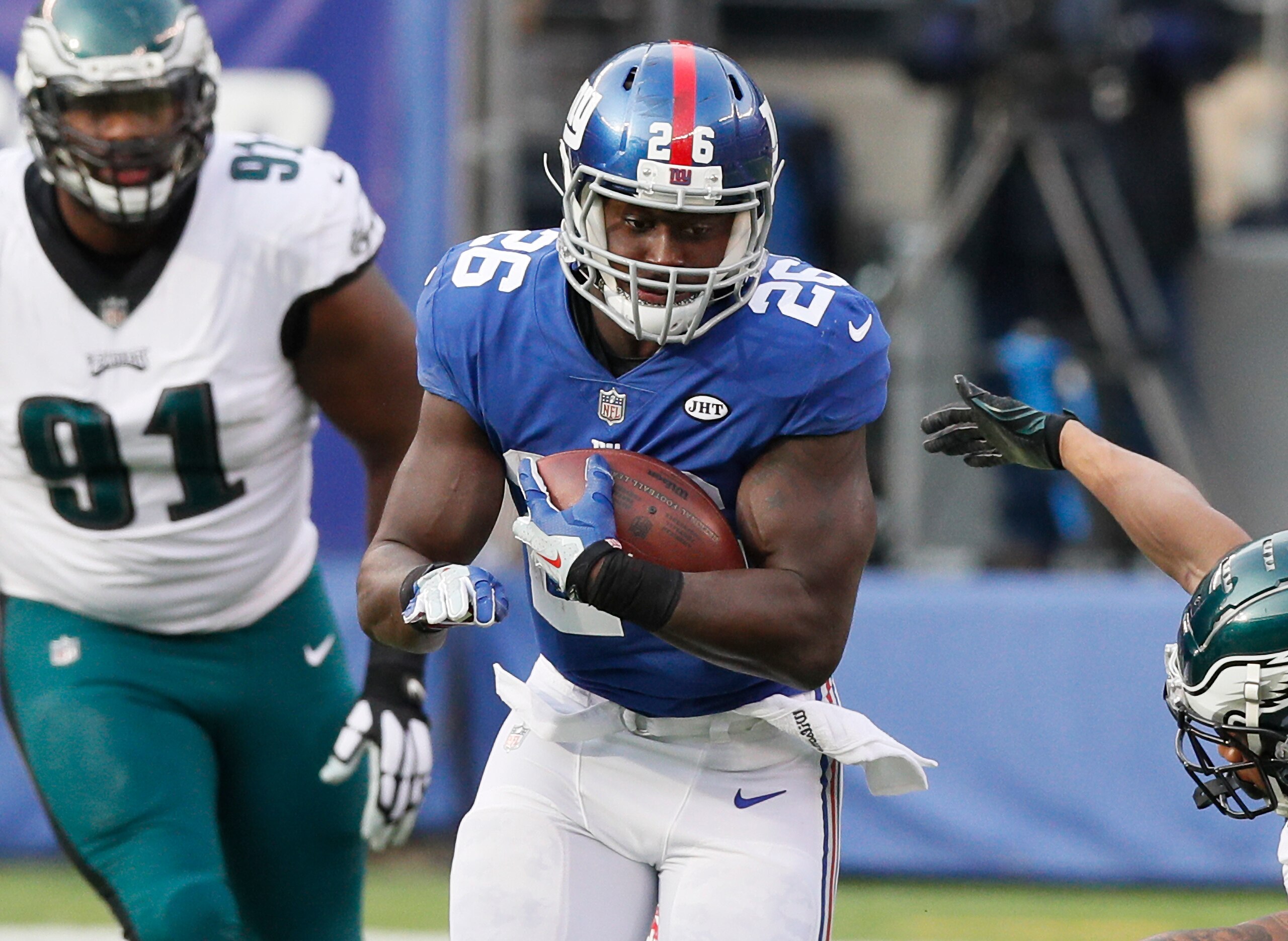
There weren't many things that went right with the Giants offense in 2017, but the emergence of Orleans Darkwa was a nice surprise.
The fifth-year man from Tulane, an undrafted free agent, gained a career-high 751 yards and scored five touchdowns on 171 carries with 19 catches for 116 yards to boot. This despite a regressive offense, a broken passing game and an offensive line gutted by injuries.
Darkwa ranked 40th in NFL1000's season-ending rankings and 17th in Football Outsiders' per-play metrics. He also ranked third behind Alvin Kamara and Dion Lewis in NextGen Stats' efficiency metric, which determines how well a back gains yardage as a pure north-south runner.
Darkwa did all this while facing eight or more defenders in the box on 44.4 percent of his carries, one of the highest percentages in the league. His 75-yard touchdown run against the Redskins in Week 17 was a perfect example of how well Darkwa hits the hole with authority, builds up momentum and blasts through linebackers and defensive backs at the second and third levels.
He may be the most underrated back on this list and, over time, one of the better values in the right system.
7. Alfred Morris
7 of 13
Morris hasn't run for over 1,000 yards in a season since he did so in 2014 with the Redskins; that was the third straight season he'd done so for Washington.
His 2017 season in Dallas was the first season of his career where he didn't see a fairly significant statistical downturn. Morris was a primary back during Ezekiel Elliott's six-game suspension last year, starting five games during that time and gaining 547 yards on just 115 carries for an impressive 4.8 yards per carry.
Those who would suggest that Morris' uptick was merely a product of Dallas' offensive line may not have watched some regression in that front five, especially when left tackle Tyron Smith was hurt. He's had his own battles with injuries over the years, but you could look at his 27-carry, 127-yard game against his old team in Week 12 as one indication that, at least in short bursts, Morris can still play at a starting-caliber level.
He's a solid zone runner with explosion to the line, and if he has a gap, he'll blast through for extra yards. Morris might not have put himself back on the radar as a 200-carry back with his 2017 season, but he re-entered the discussion as a positive contributor for the first time in a few years.
6. Jerick McKinnon
8 of 13
McKinnon's stats don't do his athletic talent justice. When you watch his tape, he appears to be of the LeSean McCoy school, a highly elusive running back with impressive straight-line speed and the ability to juke defenders out of their shorts. Still, he gained just 570 yards on 150 carries in the regular season, adding 74 postseason rushing yards.
If you want McKinnon to be anything approaching a featured back, you may have to redefine your idea of that paradigm. He caught 51 passes for 421 yards last regular season, with 14 receptions for 92 yards in the postseason. He's quick to get to the linebacker level on a swing pass or to flare out for a screen pass.
McKinnon isn't the best back for power after contact, but in the open field he's as much of a big-play threat as you'd like. He would benefit from time with a team that has a high-volume passing game and would feature him as a motioning slot receiver in addition to his more traditional running back receptions.
5. LeGarrette Blount
9 of 13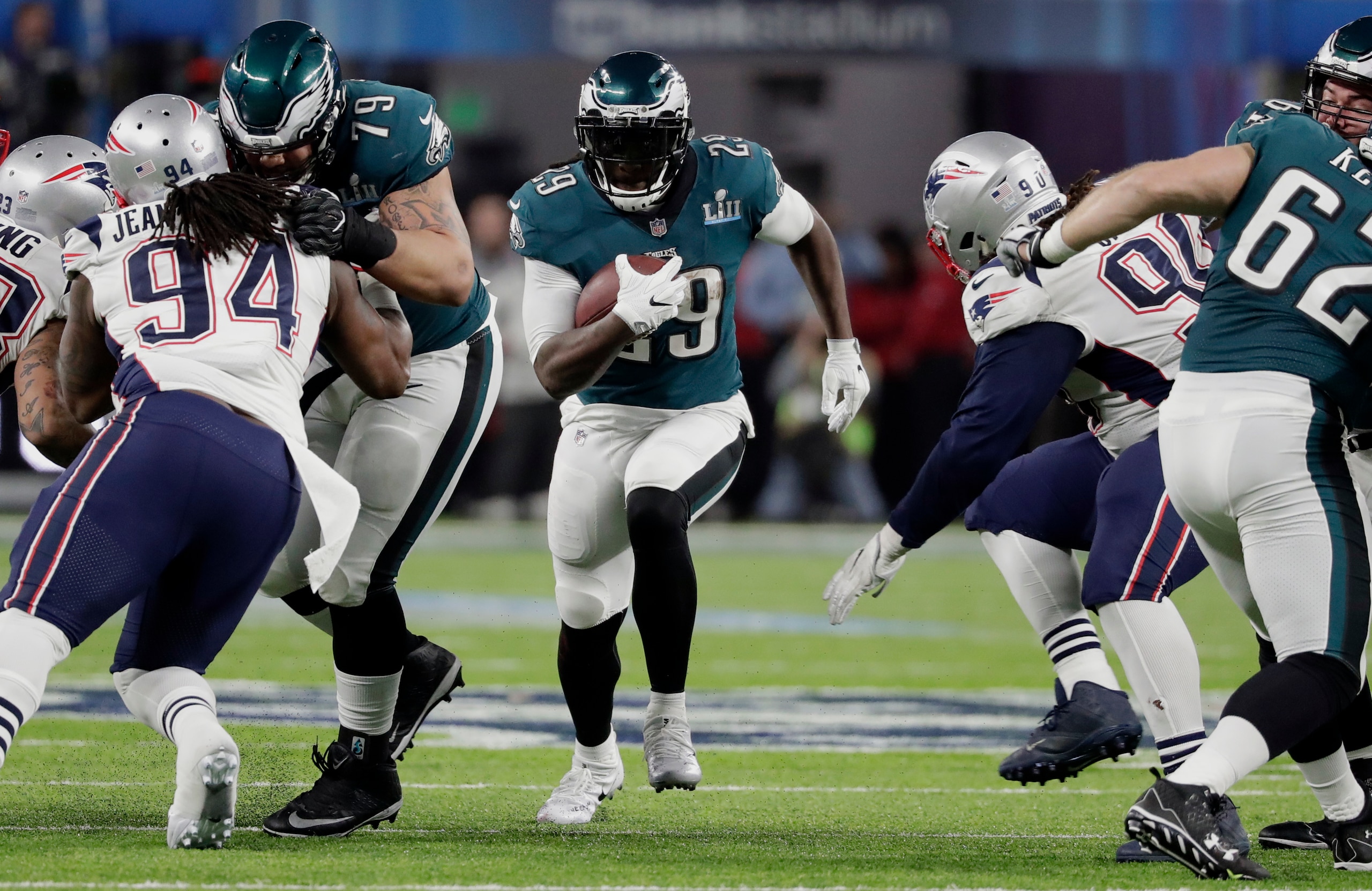
Perhaps the most interesting thing about Blount's 2017 season was that he wasn't much of a factor until the playoffs. After leading the NFL in touchdown runs with the Patriots in 2016 with 18, Blount dropped to just two touchdown scores in the 2017 regular season, adding 766 yards on 173 carries in Philly's loaded backfield.
But when it came time for Super Bowl LII, Blount seemed intent on sending a message to his former team, rumbling for 90 yards and a touchdown on just 14 carries. Blount is nobody's idea of an agile speedster, but he runs angry and with surprising lateral quickness.
His two long runs in Philly's Super Bowl win were classic Blount; he bashed through defenders, fighting for every yard, and accelerated well in the open field. He may be a rotational player at this point in his career, but he seems OK with that—and he's said he wants to return to the Eagles.
"I like it a lot there," he said Feb. 19 on the NFL Network (h/t Rotoworld). "They like me a lot there. I feel like [running backs coach Duce Staley] is one of the best running back coaches, one of the best coaches I've ever had in my entire life."
It would be a perfect fit for player and team, but Blount will be of great benefit to any franchise looking to up its power game.
4. Frank Gore
10 of 13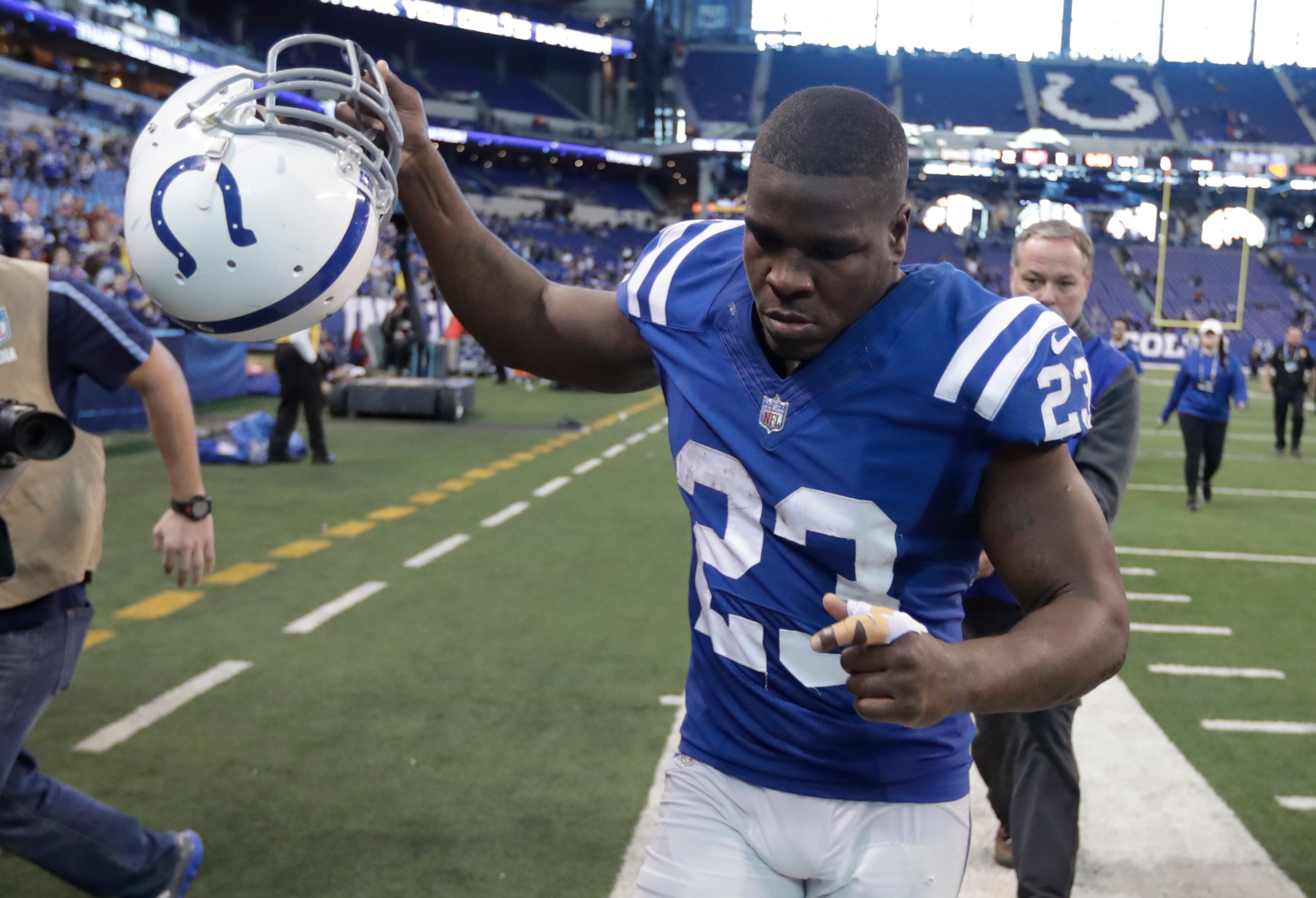
When it comes to Frank Gore's Hall of Fame credentials, it seems silly to argue the point. He ranks fifth all time with 3,226 rushing attempts, fifth in rushing yards with 14,026 and 22nd in rushing touchdowns with 77.
Outside of the brief salad days of the Jim Harbaugh era in San Francisco, Gore has mostly accomplished what he has as the primary point of focus for every opposing defense. He played with the 49ers through their transitional era in the late 2000s, and for the last three seasons he's continued to excel on a Colts team that is suffering from two primary issues: Andrew Luck's injury status and former GM Ryan Grigson's mistakes.
Second-year GM Chris Ballard has espoused the need for a younger roster, which leaves the 34-year-old Gore on the outside looking in. But Gore still has some gas in the tank. Without Luck on the field for the 2017 season, and with an offensive line that could charitably be called subpar, he blasted through blocks that didn't happen and gaps that weren't there for 961 yards and three touchdowns on 261 carries.
At this point in his career, Gore isn't a big-play magnet. But he is a workhorse who will do the things more "glamorous" backs sometimes don't want to do: pound the rock in a losing effort, block for a bad quarterback and mentor a younger player who might be trying to take his reps.
At the scouting combine last week, Ballard spoke to Gore's effect in the locker room. For that reason as much as what he can still do on the field, Gore can make things happen on a loaded team where he's not asked to carry the whole offense.
3. Isaiah Crowell
11 of 13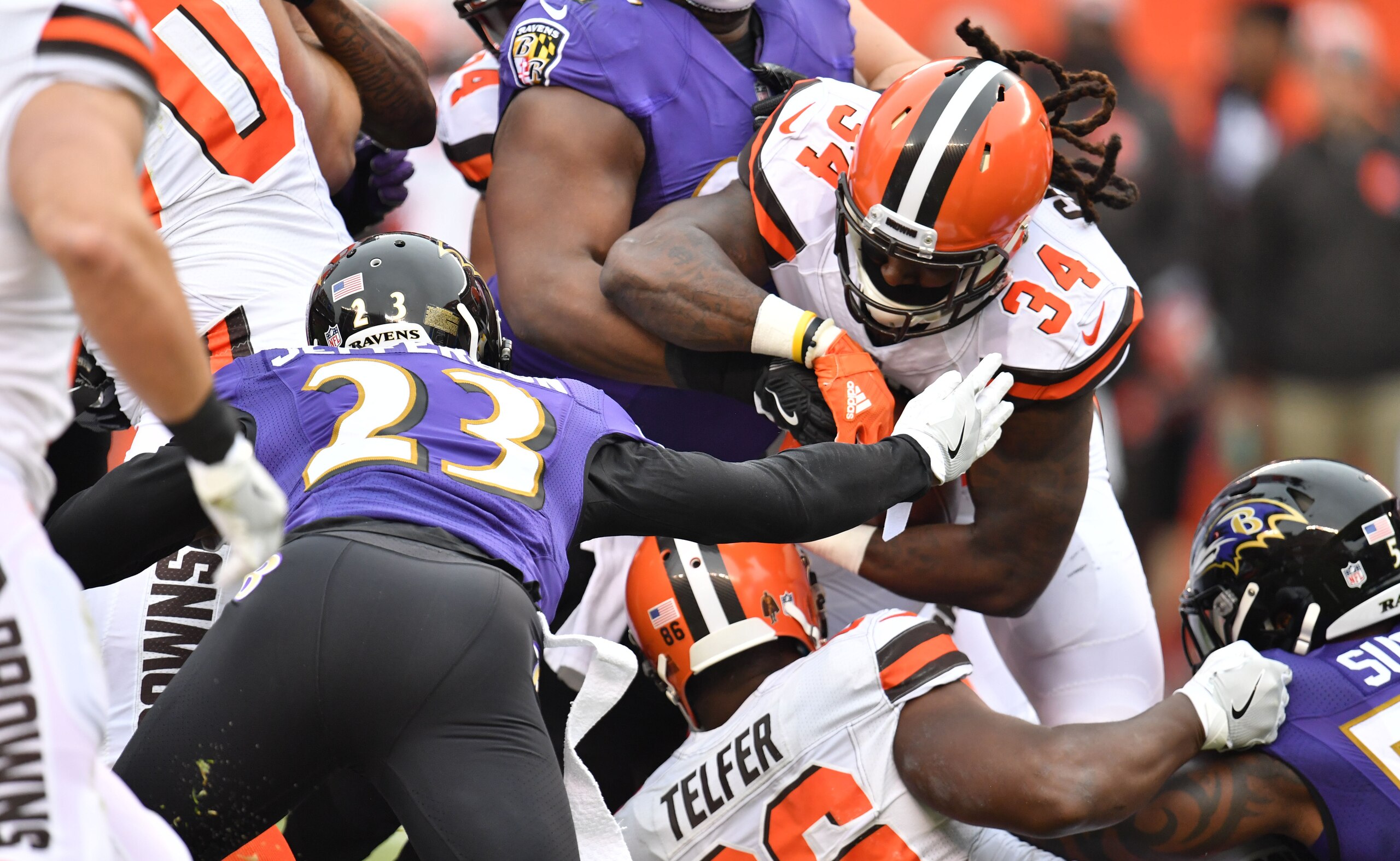
Crowell has been in Cleveland since he came into the NFL in 2014 as an undrafted free agent out of Alabama State. His production with the Browns should be seen in the context of not only his need to sprint up the depth chart but also his ability to transcend a series of broken offenses with bad quarterbacks and questionable coaching.
At 5'11", 225 pounds, he's more of a shifty quick runner than a power back, but he's been effective in that role. He had the longest run in the league in 2016 with an 85-yard scamper in Week 2 against Baltimore's estimable defense, and in 2017 he gained 853 yards and scored two rushing touchdowns with just 206 carries on the second team in NFL history to go 0-16.
Crowell deserves better than this. When you watch his tape, you see a series of big plays on the ground in which he combines his patience to the gaps with seriously explosive speed to the open field and smooth acceleration to get past linebackers and defensive backs.
He's also a fine receiver, catching 96 passes for 770 yards and a touchdown in his four-year career. Any pass-heavy team looking for a home run hitter would be hard-pressed to do any better in this free-agent class.
2. Carlos Hyde
12 of 13
It was a feast-or-famine season for the 49ers' fourth-year back in the first season under new head coach Kyle Shanahan, whose progressive schemes were bottled up behind bad quarterbacks until Jimmy Garoppolo hit the field late in the season.
For his part, Hyde alternated between games in which he looked like a second-stringer against defenses that were loading the box with impunity (11 yards on eight carries against the Colts in Week 5, 25 yards on 16 carries against the Titans in Week 14), and games in which he looked every bit the featured back.
Hyde had just one 100-yard game in his 940-yard season, but had over 20 carries in a game just twice. He improved as a receiver out of necessity as Brian Hoyer and C.J. Beathard struggled to do much more than dump off screen passes to the running back du jour, catching 59 passes on 87 targets for 350 yards. He ranked 21st overall in our NFL1000 running back ratings for the 2017 season.
Hyde isn't a big-play back per se—he's more of a force multiplier in the way he can take the ball on a consistent basis and grind out yardage—but Shanahan's history suggests he prefers more explosive players in his backfield.
That may or may not spell the end of Hyde's time with the 49ers, but wherever he goes he'll be a valuable power runner who can catch the ball and block at a high level.
1. Dion Lewis, New England Patriots
13 of 13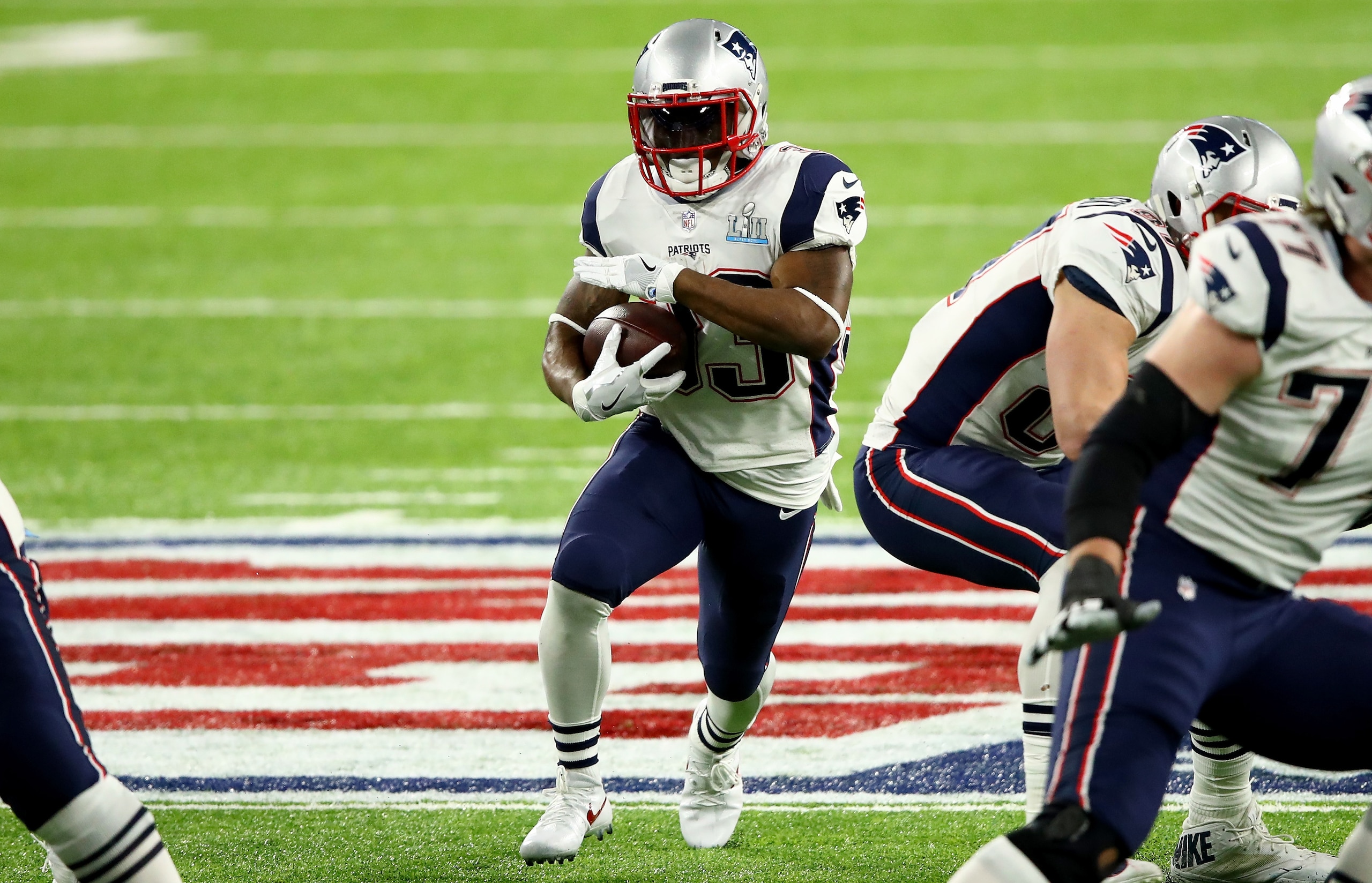
Lewis ran for just 896 yards and six touchdowns on 180 carries in the regular season, adding 32 catches for 214 yards and three touchdowns. He added 246 yards in New England's playoff run. Not spectacular numbers, so why is he the best available free-agent running back in this class?
Lewis did his thing as part of a group of backs in the Patriots offense, and he has just about every attribute you want in a pure starter. He runs well between the tackles after contact, he can block, he runs a complex route tree and he has second-level speed once he's out past the linebackers.
Lewis ranked first among all NFL backs in Football Outsiders' per-snap metrics and second in FO's season-cumulative opponent-adjusted metrics. We ranked him fourth overall in NFL1000's year-end running backs rankings.
He may not look like a "featured back" at 5'8" and 195 pounds, but he sure looked like a featured back from December through the Super Bowl when the Patriots decided he was the one to lead their running game.
Lewis runs low to the ground with outstanding vision, balance and toughness, and if he's given the opportunity, he has proved he can take a lead role at a high level. Is he a 235 carries-per-year power back? Not likely, but if you need a back who can do it all and stay on the field in a functional sense for every down, there's nobody better on the market.
.jpg?w=2560 "Cowboys Packers Football")



.jpg?w=2560 "🚨 Week 8 AP Top 25 Poll")