
2018 NFL Mock Draft: Best Bets for Entire First Round
The NFL draft will be here in under two months. Will your team pick up the slipping star that it builds a defense around? Will the project quarterback your general manager takes to save his job cripple your franchise for years to come?
With fewer and fewer elite free agents hitting the market every year, the draft is truly the key to success (or failure) in the NFL. No wonder the offseason runs on mock drafts.
We'll go pick-by-pick through the first round to project who we believe is the selection at each slot, including a couple of trade-ups for quarterbacks. The NFL combine, free agency and pro days will push, pull and twist draft stocks over the next two months, but these are our educated guesses at how the first 32 picks will most likely play out in late April.
No. 1 Cleveland Browns: Sam Darnold, QB, USC
1 of 32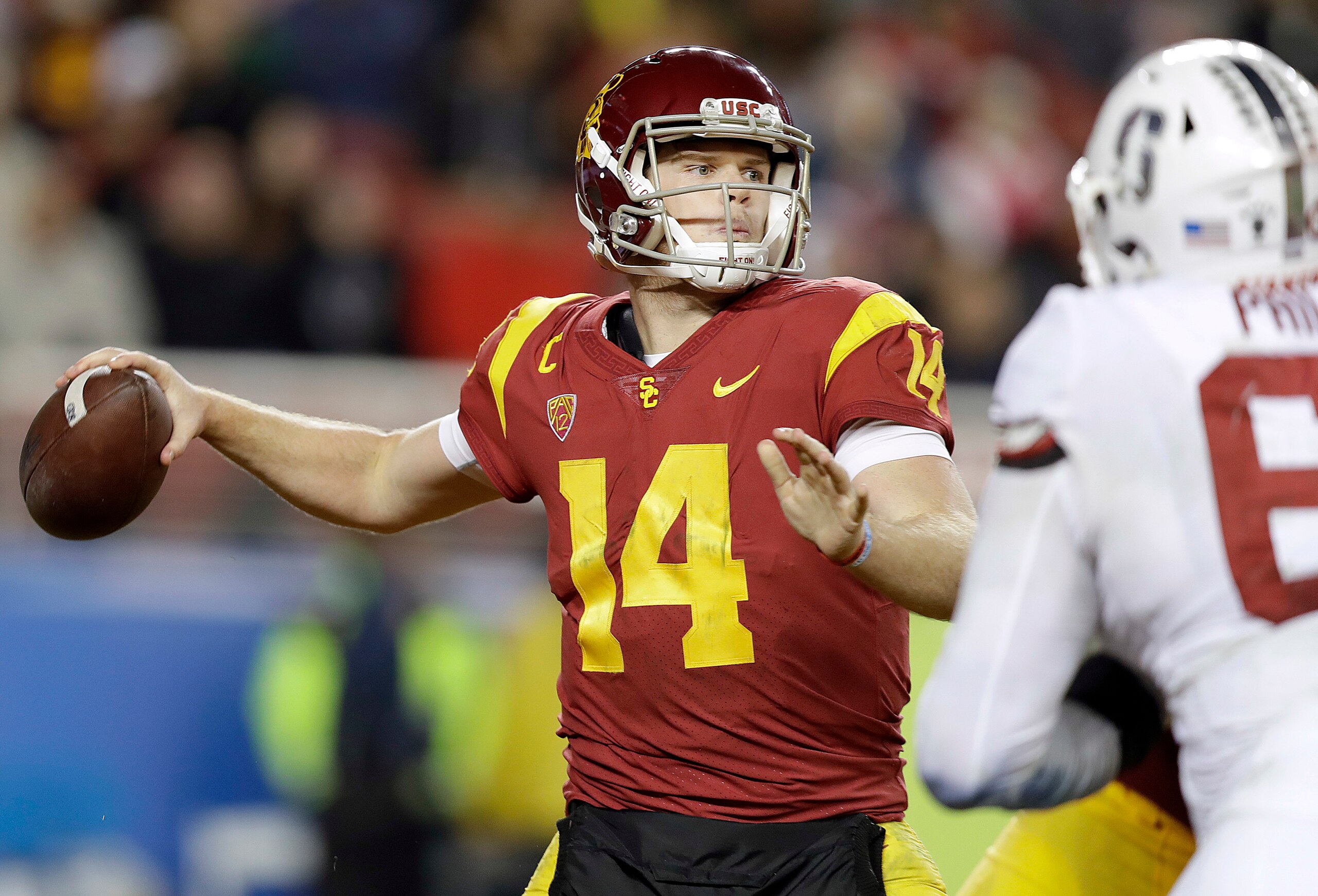
Hue Jackson is 1-31 as the Cleveland Browns head coach. DeShone Kizer threw 11 passing touchdowns and 22 interceptions last season. While we've seen amazing jumps in quarterback play from sophomores recently, notably Los Angeles Ram Jared Goff and Philadelphia Eagle Carson Wentz, the Browns' struggles could lead them to pull the plug on a high-pick quarterback after just one season.
In what some are calling the deepest quarterback class since 1983, the question now is: Which quarterback will Cleveland pick first overall? If the Browns are indeed pivoting from an analytical front office to a traditional one, we could assume the quarterback they will take is the easiest evaluation.
UCLA's Josh Rosen, Oklahoma's Baker Mayfield, Louisville's Lamar Jackson and Wyoming's Josh Allen all have low-concept negatives, ranging from anything from height to off-field questions, that can easily sour an individual evaluator. On the other hand, if you were to make up a quarterback's resume to impress scouts, it would look awfully close to what Sam Darnold has done at the college level.
For those reasons, the quarterback left will likely be USC's Darnold, a 6'4" two-year starter who recorded 57 passing touchdowns in his Trojans career. With Jackson's job security on the line, it's going to be hard for the team to pass on a safe selection like Darnold.
No. 2 Denver Broncos (via New York Giants): Josh Rosen, QB, UCLA
2 of 32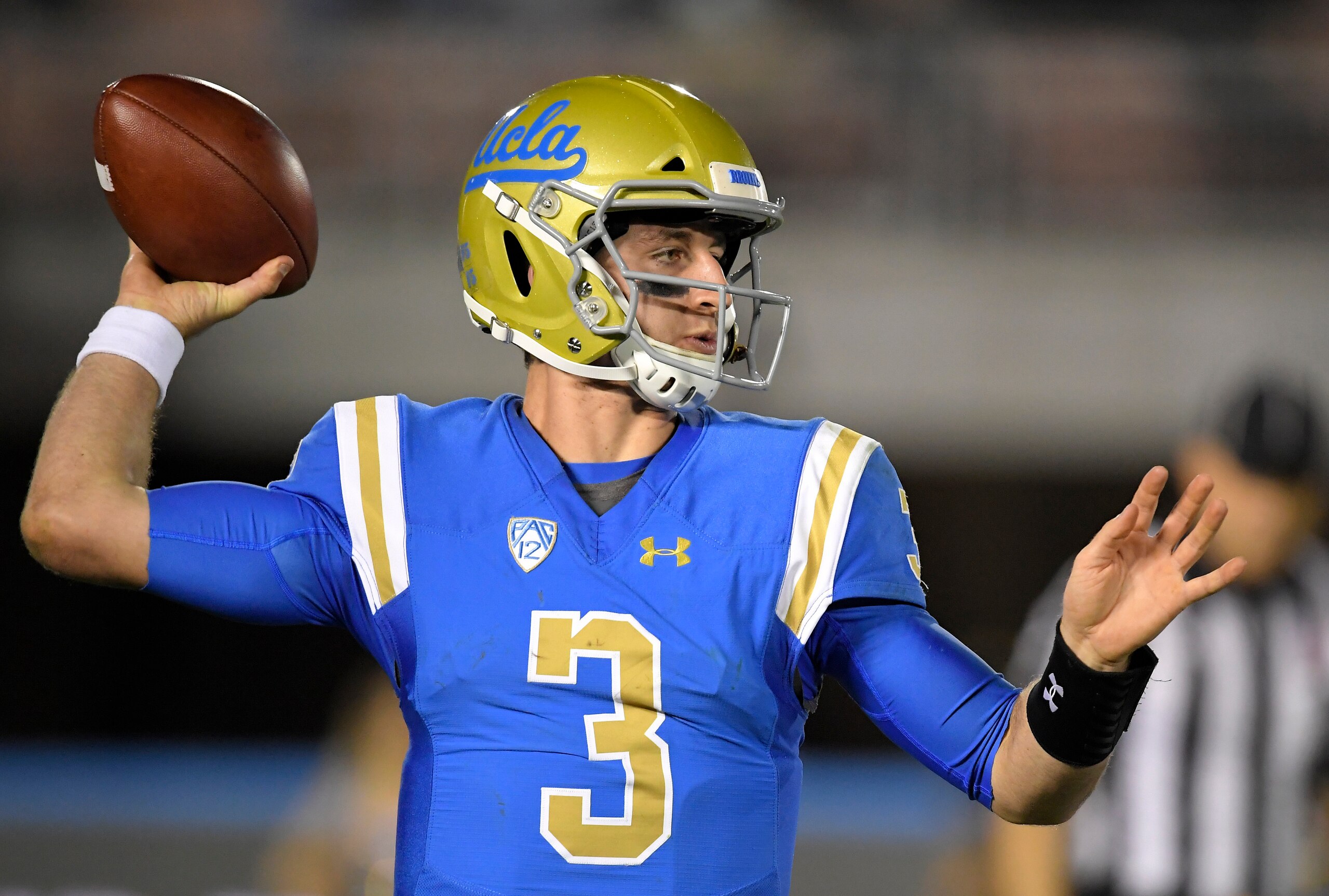
It seems like everyone in the media and in gambling circles believes that the Kirk Cousins free-agency bidding war will come down to two teams: the New York Jets and the Denver Broncos. Last week, Brian Costello of the New York Post reported that the Jets will be willing to give Cousins, the former starting quarterback of the Washington Redskins, $60 million in 2018 alone. If that's true, we've found a leader in the Cousins sweepstakes.
This move would leave the Broncos empty-handed and looking for a quarterback with no true franchise QB left on the free-agency market. Since the 2013 NFL draft, nine of 12 first-round quarterbacks have been drafted with selections that came via trades. The other three quarterbacks (Jameis Winston, Marcus Mariota and Blake Bortles) were all taken with top-three picks.
Even in a deep quarterback class, you can't sit back and wait for your turn to go up to bat. For the most part, if you're drafting a quarterback in the first round, you're trading up to do so. With the New York Giants seemingly willing to build around Eli Manning, flipping the second overall pick to the Broncos for the fifth overall pick and a Day 2 selection, along with ensuring that a quarterback finds his way to the AFC, would be in everyone's favor.
Rosen is mechanically refined. He's an elite passer in the intermediate levels of the field but struggled throwing deep throughout his career. But the deep game is less important in the NFL, so Rosen may have a better career there.
No. 3 Arizona Cardinals (via Indianapolis Colts): Baker Mayfield, QB, Oklahoma
3 of 32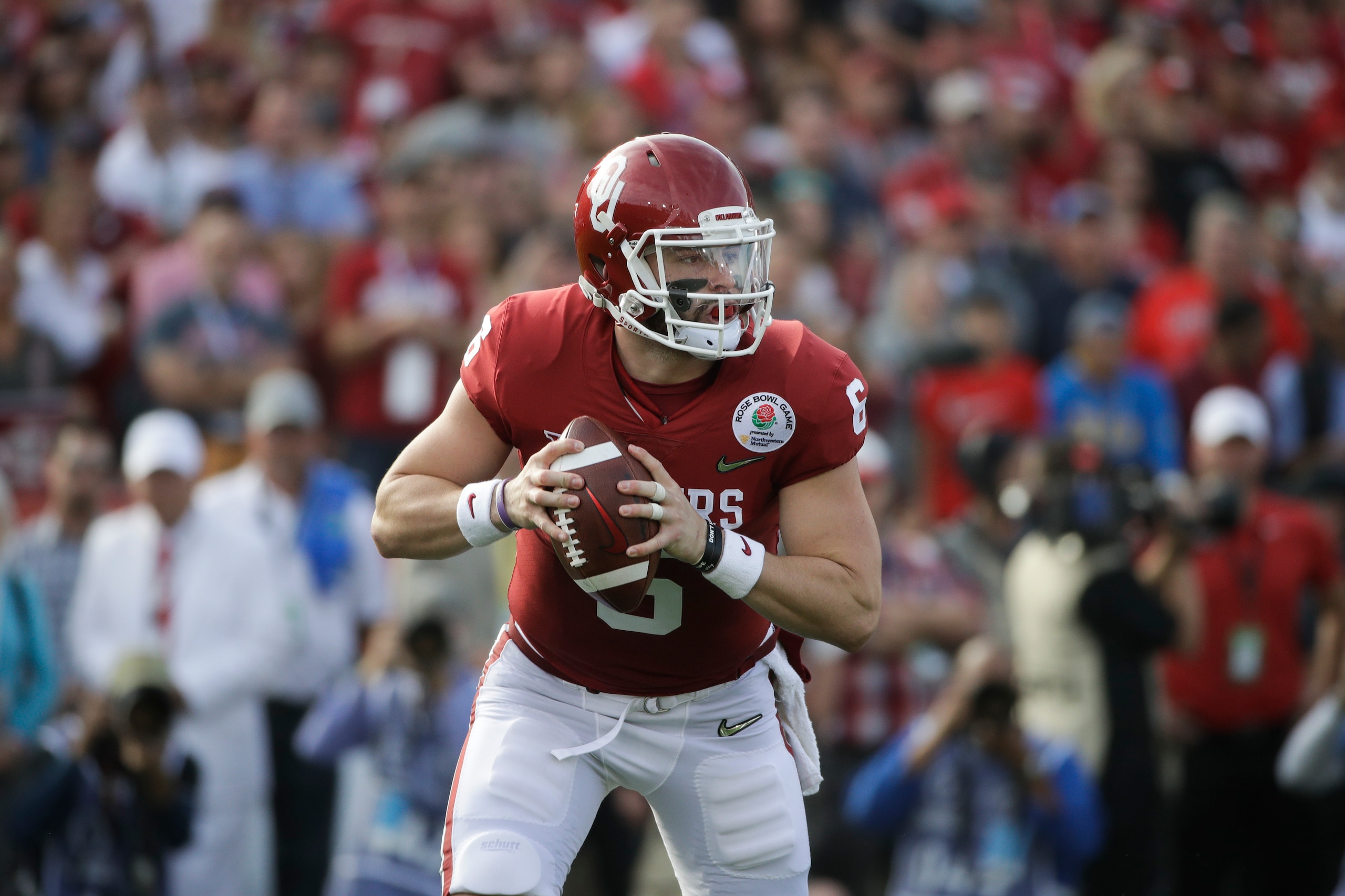
It's within reason to assume that an Arizona Cardinals-Indianapolis Colts trade could happen. Again, first-round quarterbacks are rarely selected without a trade being involved. To get the Colts to move down to the 15th overall pick, it would likely take the Cardinals' 2019 first-round pick, maybe more.
Luckily, Indianapolis general manager Chris Ballard is in good standing, and Frank Reich is in his first year as the Colts head coach. Indy is picking high in a deep quarterback class because of Andrew Luck's injury. With every major decision-maker having job security, this is a perfect storm for an NFC-AFC quarterback trade.
Baker Mayfield could be the QB of Arizona's dreams. After losing both head coach Bruce Arians and Carson Palmer to retirement after the season, the team is left with little identity on offense. While it has consistently posted a great defense, it struggles on the offensive line. Running back David Johnson missed a majority of the 2017 season and receiver Larry Fitzgerald is 34 years old.
Mayfield, a scrambler, could be enough of a playmaker to get the Cardinals into the playoffs in Year 1. In 2016, he broke the FBS passer-rating record with a mark of 196.39. In 2017, he broke his own record again with a 198.90 season, earning him the Heisman Trophy after finishing second for the award the year before.
Behind Mayfield, the Power Five passers with the best passer rating marks in a single season are Russell Wilson, Robert Griffin III, Jameis Winston, Cam Newton and Marcus Mariota, who were all Rookie of the Year candidates.
For Arizona, a team without any quarterback under contract in 2018, the cost of this trade would be worth the reward.
.jpg?w=2560 "Rams Raiders Football")

.jpg?w=2560 "Steelers Saints Football")
No. 4 Cleveland Browns: Minkah Fitzpatrick, DB, Alabama
4 of 32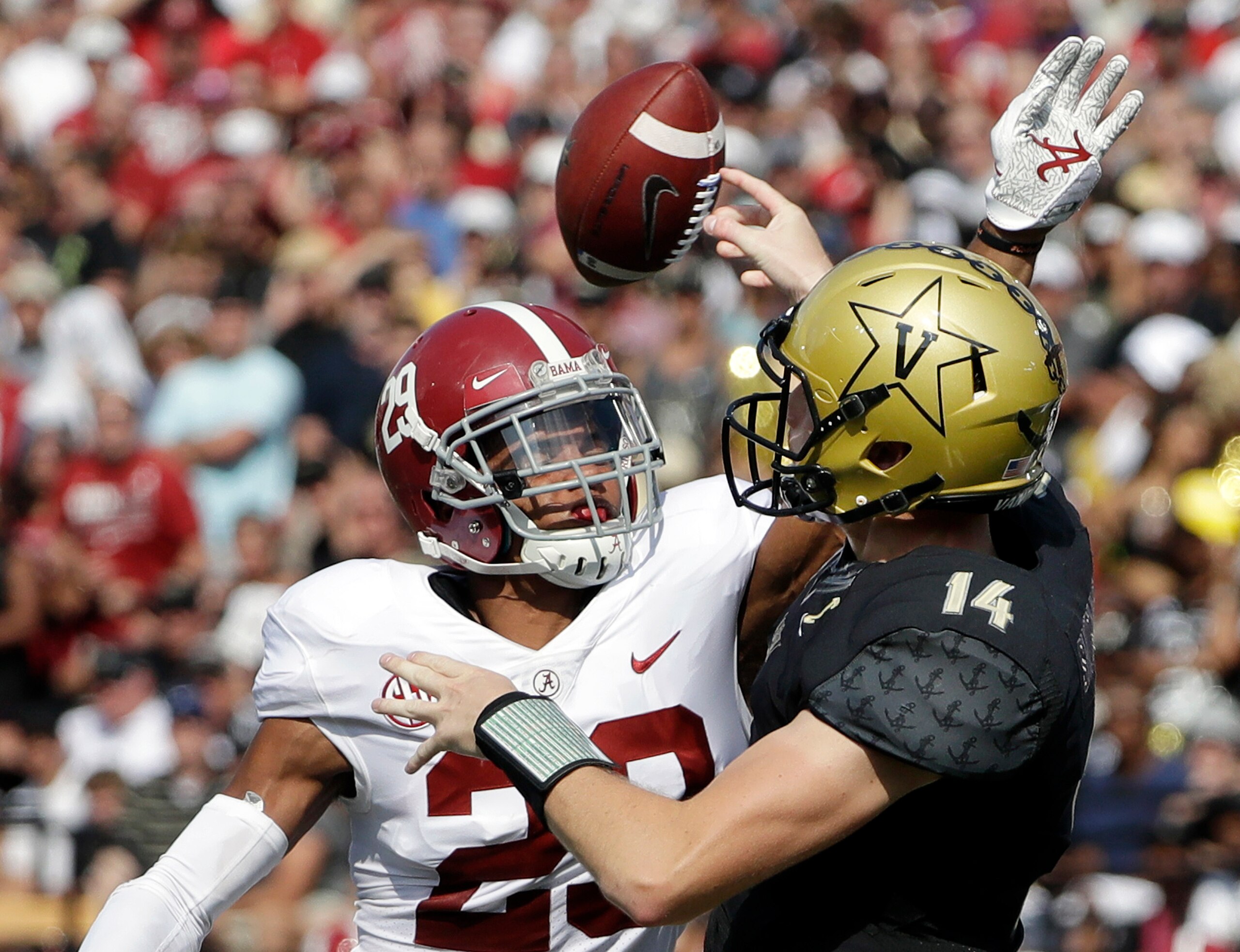
Minkah Fitzpatrick has virtually no experience playing outside cornerback, but he still may be the draft's top prospect there. That's how much talent he flashed at Alabama.
Playing as a high safety, a slot cornerback and a blitzing edge defender, Fitzpatrick earned back-to-back All-American honors in 2016 and 2017 along with the title "Coach Saban's son" from his teammates. He played like Minnesota Vikings safety Harrison Smith, which is about as sturdy of a parachute as you're going to get with a hybrid defensive back.
The Browns don't necessarily have a massive need at any position in the defensive backfield, but they don't have a star there, either. There's plenty of room for improvement. Jabrill Peppers, the team's third first-round pick in 2017, was used almost exclusively as a high safety, which doesn't interfere with Fitzpatrick's potential as a low-zone or outside defensive back.
It's clear at this point that the two best talents in the draft class, relative to their position, are Fitzpatrick and Notre Dame guard Quenton Nelson. After taking a quarterback first overall, the Browns should be focusing on grabbing the best talent on the board.
No. 5 New York Giants: Quenton Nelson, OL, Notre Dame
5 of 32
OK, the New York Giants are going to build around Eli Manning, so now what? Receiver Odell Beckham Jr. returns after missing most of the year with an ankle injury, but Manning is going to need more help from his offensive line.
Bobby Hart, who played 523 snaps for the Giants last year, has already been cut. Center Weston Richburg and guards Justin Pugh and D.J. Fluker are all slated for free agency. Among significant offensive linemen for the Giants in 2017, that leaves just left tackle Ereck Flowers, guard John Jerry and backup center Brett Jones returning for 2018. Flowers, a 2015 first-rounder, has not come close to living up to the hype of a ninth overall pick.
Luckily, the best player left on the board is Quenton Nelson of Notre Dame, a guard whose closest player comparison is Bane.
Let me introduce you to him finding a Georgia blitzer across the field and throat-slamming an LSU linebacker, two highlights you're sure to see a hundred times between now and draft day. Offensive coordinator Pat Shurmur's team had an amazing turnaround last year after investing in the offensive line.
The same can happen in New York with him as a head coach, if the Giants adopt the same mentality.
No. 6 New York Jets: Bradley Chubb, EDGE, North Carolina State
6 of 32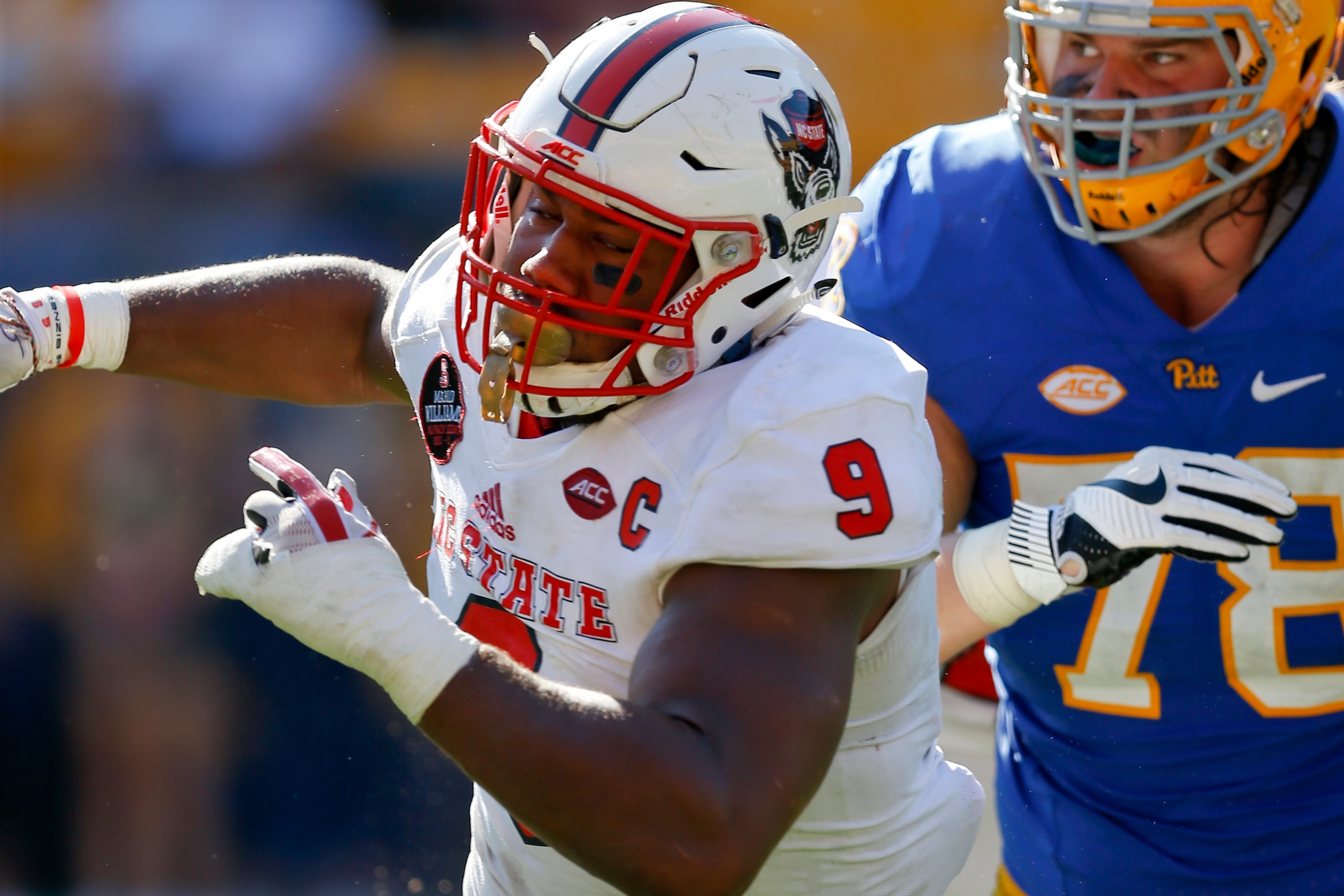
Since John Abraham's 10.5-sack season in 2005, the New York Jets have only had one edge defender record double-digit sacks. That lone season came from a 33-year-old Calvin Pace, who recorded just eight sacks for the remainder of his career after that 2013 season with the Jets.
If North Carolina State's Bradley Chubb lands in New York's lap as a result of a quarterback run, and if New York wins the Kirk Cousins sweepstakes, this is about as ideal of an offseason as you could draw up for Todd Bowles' team. Athletically, Chubb should test similarly to Derek Barnett, who was the 14th overall pick in last year's draft, but he is much more technically refined. Chubb can churn the edge like Barnett could at Tennesse, but he also has the hand usage and strength that Barnett developed in the NFL to cross an offensive tackle's face and put stress on interior rushes.
Jordan Jenkins (three sacks last year), Josh Martin (1.5) and David Bass (3.5) are not going to cut it as a three-man rotation at outside linebacker. Chubb, who recorded 20 sacks and 44 tackles for loss over the last two seasons, would immediately come in as the team's best pass-rusher.
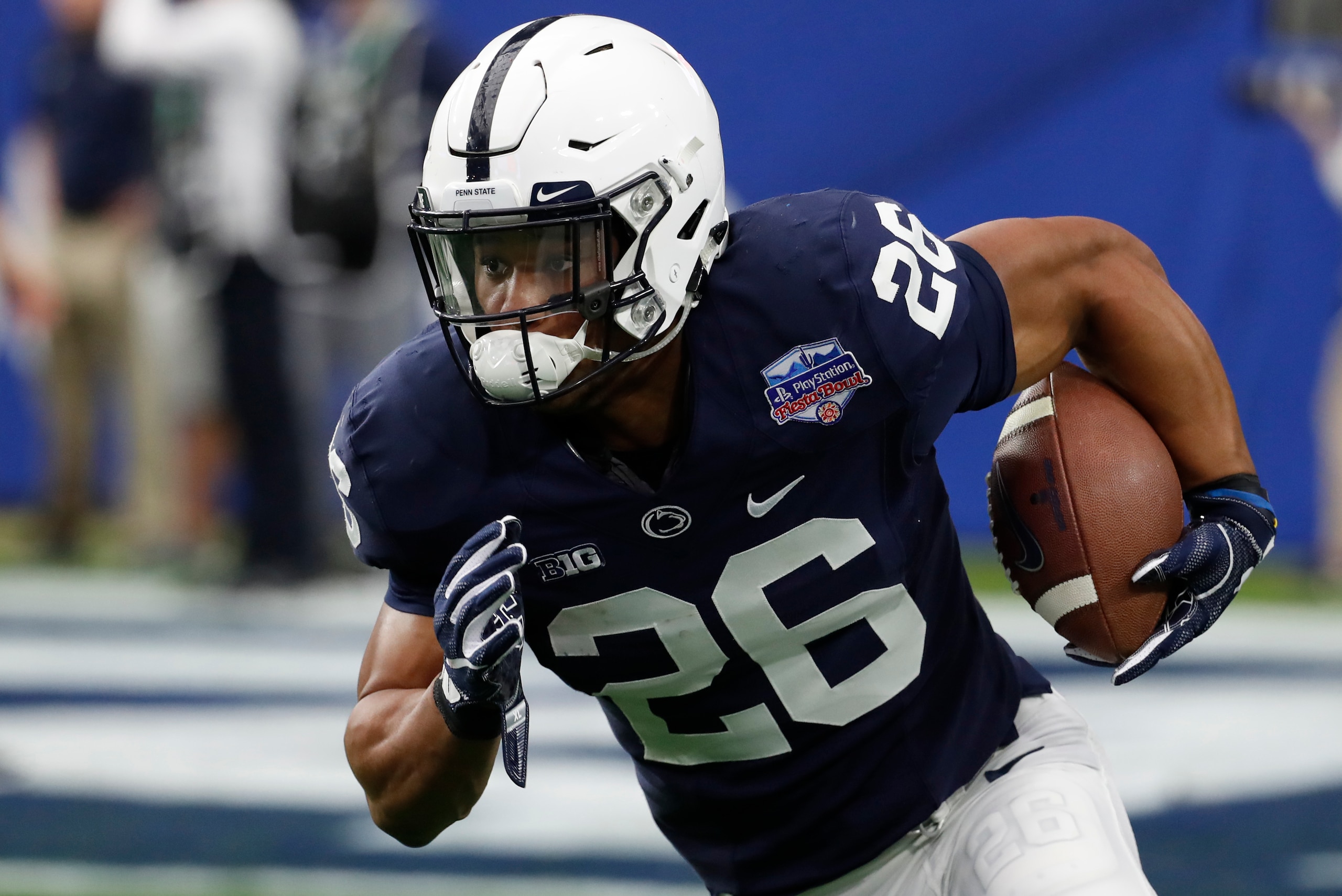
No. 7 Tampa Bay Buccaneers: Saquon Barkley, RB, Penn State
7 of 32
If any team is going to take Saquon Barkley high in the draft, it has to be the Tampa Bay Buccaneers. After releasing Doug Martin this offseason, the running backs left on their roster are Peyton Barber (108 carries, 423 yards and 3.9 yards per carry in 2017), Jacquizz Rodgers (64, 244, 3.8) and Charles Sims (21, 95, 4.5.)
The team has attempted to surround Jameis Winston with offensive talent. In recent years, it has added offensive linemen Donovan Smith and Ali Marpet, receiver DeSean Jackson to pair with 2014 first-round pick Mike Evans, Alabama tight end O.J. Howard and J.R. Sweezy.
The message in Tampa has been consistent for four years now: Winston is the franchise and they're going to build around him. If the team was willing to take a tight end in the first round, they'll likely be willing to take a running back in the first round, too, no matter what the number-crunchers think of the value of backs.
On top of running for 3,843 yards and 43 touchdowns at Penn State, Barkley also caught 102 passes for 1,195 yards and eight touchdowns. Barkley's versatility, ability on third down and in space as a make-you-miss runner on screens and draws are rare for any back.
No. 8 Chicago Bears: Calvin Ridley, WR, Alabama
8 of 32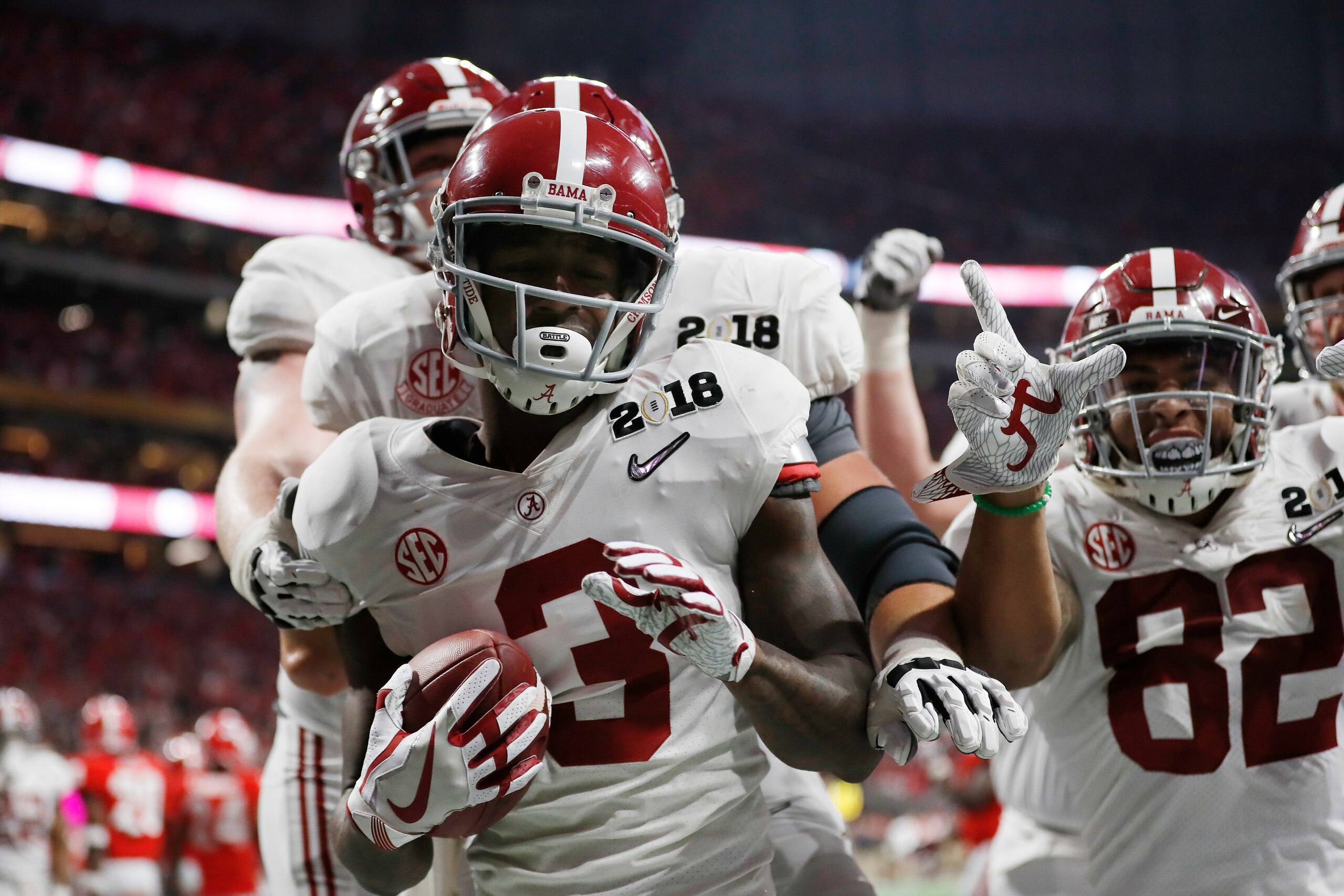
The Chicago Bears' top wide receiver in 2017, in terms of receptions, was Kendall Wright (59 receptions, 614 yards and one touchdown). Wright is currently slated for unrestricted free agency. Their second receiver, Josh Bellamy (24 receptions, 376 yards and one touchdown), recorded 29 fewer receptions than Chicago's change-of-pace back Tarik Cohen. To say the least, they have a need at receiver.
Alabama's Calvin Ridley is most frequently ranked as the top receiver in the class. Ridley was a highly recruited prospect for the Crimson Tide who was famously a 21-year-old freshman. Alabama didn't pass the ball that much in his three years in Tuscaloosa, but it did find him often.
He led Alabama with 1,045 receiving yards as a freshman. In 2017, his 967 receiving yards were 703 more than anyone else on the team, including combine invite Robert Foster (174 yards.) As long as Ridley doesn't hurt himself at the combine, he could sneak into this range of the draft.
No. 9 San Francisco 49ers: Roquan Smith, LB, Georgia
9 of 32
If Georgia linebacker Roquan Smith isn't taken before the ninth overall selection, there's a good chance that the coin flip to decide who holds the pick, between the San Francisco 49ers and the cross-Bay Oakland Raiders, will eventually decide Smith's landing spot.
We gave this pick to San Francisco for no good reason. If you're into predicting who wins coin flips, please get some help.
While the 49ers did draft Reuben Foster of Alabama to be the face of their linebacker unit, they struggled at the position outside of him in 2017. Over the last two years, no team has been run on more or allowed more first downs via rushing than San Francisco. They're also second in rushing touchdowns allowed over the last two years.
Foster, who fell down the draft due to off-field issues and concern over a surgically repaired shoulder, has already been arrested twice this offseason. It might be in San Francisco's best interest to err on the side of caution at linebacker moving forward.
Smith's sideline-to-sideline ability led to his breakout season of 2017, which landed him the Butkus Award, All-American honors and the SEC's Defensive Player of the Year award. That will translate to the NFL no matter if Foster is on the field next to him.
No. 10 Buffalo Bills (via Oakland Raiders): Josh Allen, QB, Wyoming
10 of 32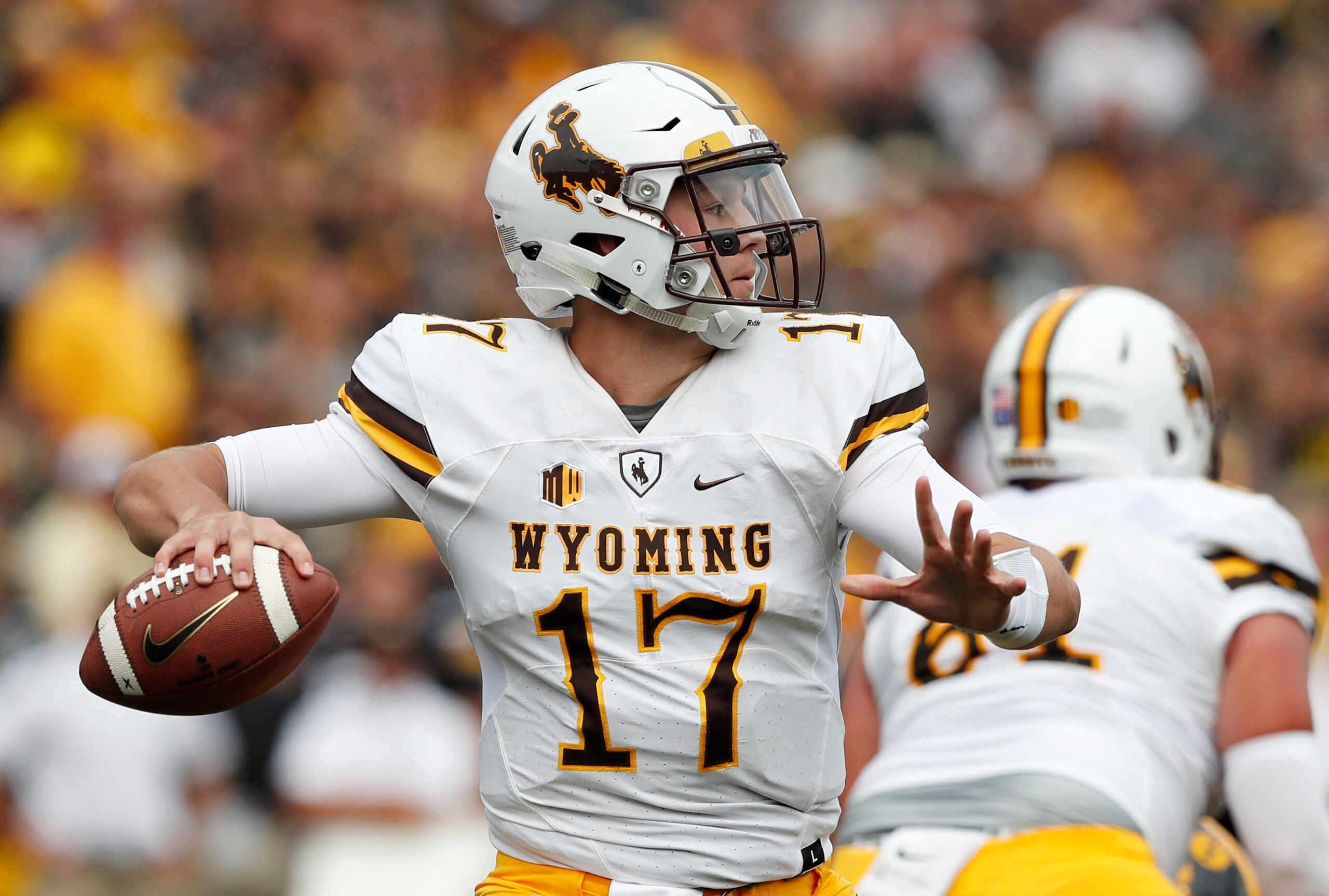
If the Buffalo Bills want in on the quarterback race, they're going to have to trade up at some point. Despite Tyrod Taylor falling under almost anyone's definition of top-25 passer or NFL starter over his run in Buffalo, the Bills have benched him over both of the last two seasons. That gives us a pretty strong signal that they don't want him to be The Guy.
A trade up to the 10th pick makes a lot of sense, as it will skip over teams like the Miami Dolphins, Cincinnati Bengals, Baltimore Ravens and Los Angeles Chargers, who may be looking for a developmental quarterback to replace their current starters in the next two years. Handing the Oakland Raiders the 21st overall pick, their first of two first-rounders, and a 2018 first-round pick should be enough to get head coach Jon Gruden thinking about the long-term benefits of moving back.
Josh Allen of Wyoming is every quarterback buzzword you can think about. He's tall. He's athletic. He has a strong arm. The issue is that he hasn't put it all together yet. According to Football Outsiders' S&P+, Wyoming had the 119th-ranked passing offense. Meanwhile, Sam Darnold's USC ranked 10th, Josh Rosen's UCLA ranked 27th, Baker Mayfield's Oklahoma ranked first and Lamar Jackson's Louisville ranked 11th.
If Buffalo isn't going to settle for Taylor at quarterback, it is going to need a Jim Kelly-like figure to be content. It might as well swing for the fences with Allen if that's going to be the minimum standard for a quarterback.
No. 11 Miami Dolphins: Connor Williams, OL, Texas
11 of 32
The high picks and investments that the Miami Dolphins have put into their offensive line haven't panned out, and there are going to be holes in it no matter what they do.
The team drafted right tackle Ja'Wuan James with the 19th pick in 2014 and tackle Laremy Tunsil 13th in 2016. Somehow, the Dolphins still have below-average bookend play. Center Mike Pouncey is owed $24.2 million over three years, but his talent is diminishing. Guard Jermon Bushrod is a free agent at 33 years old.
If they elect to try to improve their offensive line, Connor Williams of Texas has the highest upside of this draft class. As a sophomore in 2016, Williams played like a top-five pick. Unfortunately, a knee injury kept him out a majority of his junior year.
Tony Pauline of Draft Analyst believes that teams are going to look at Williams as a guard, which is fine since Bushrod is likely going to free up playing time inside for Miami. Williams could ease into a starting tackle role, maybe in 2019 when James' rookie contract is up, just like Tunsil did.
This is a multi-year plan for offensive line play, and it is the forward thinking that the Dolphins need right now.
No. 12 Cincinnati Bengals: Orlando Brown, OL, Oklahoma
12 of 32
An interesting tackle prospect in this class is Oklahoma's Orlando Brown, who is listed at 6'8" and 345 pounds.
The former Freshman All-American and two-time proper All-American is a giant, even for an offensive lineman. You'll hear some project him at guard or right tackle.
No team has regressed in recent years quite like the Cincinnati Bengals. Last offseason, the team lost both left tackle Andrew Whitworth and guard Kevin Zeitler in free agency. Their deals are worth a collective $93.8 million.
The plan was always to replace Whitworth, 36, with either 2015 first-round pick Cedric Ogbuehi or 2015 second-round pick Jake Fisher. Unfortunately, neither of those bookends are starter-quality going into the last years of their rookie deals.
In 2018, tackles are making the closest money to quarterbacks on the offensive side of the ball. At the same time, it's getting even harder to find pro-ready offensive linemen out of college. Brown can start for the Bengals immediately, which might save them north of $60 million relative to what his asking price could be on the open market in five years.
No. 13, Washington Redskins: Derwin James, DB, Florida State
13 of 32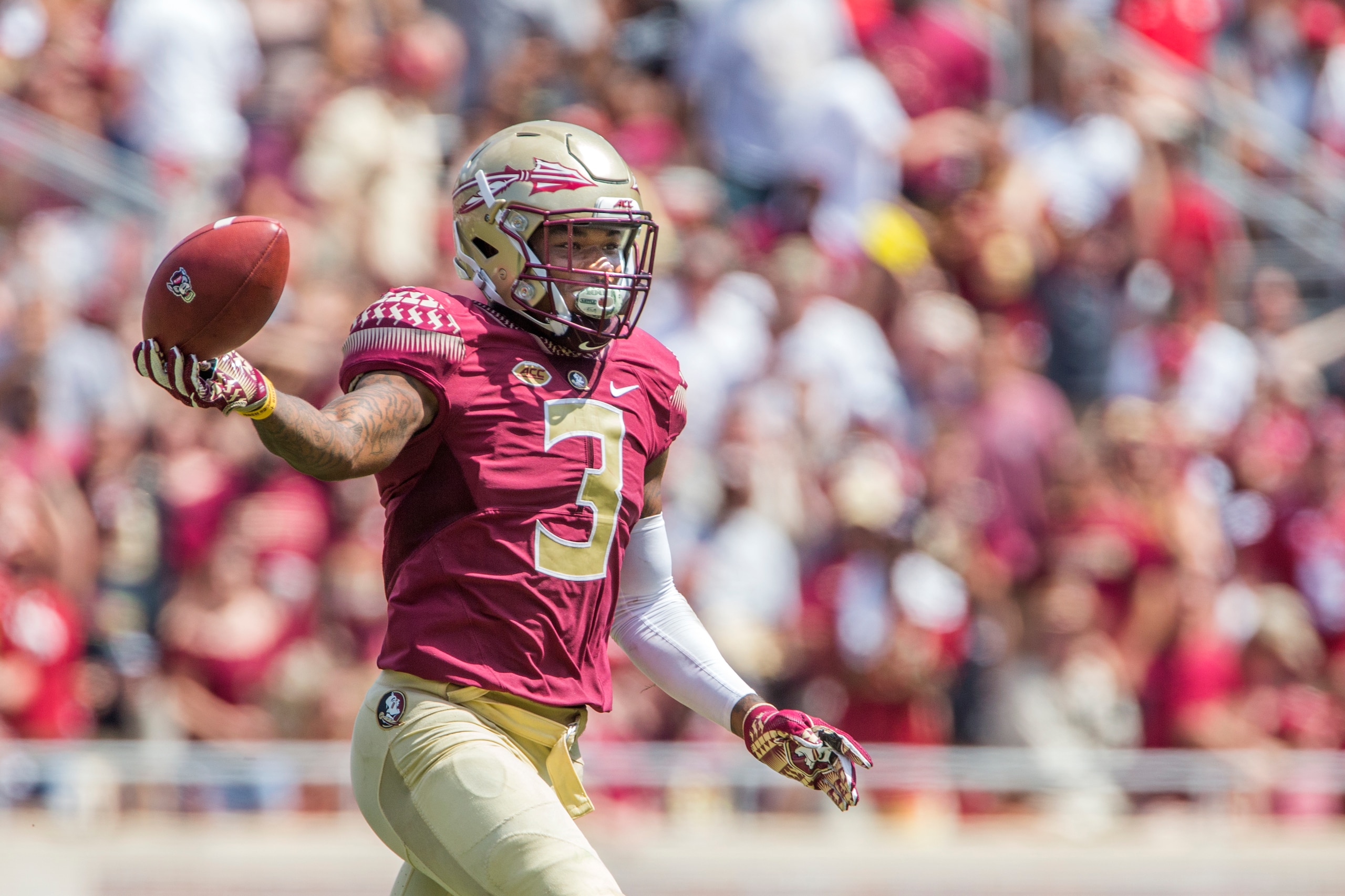
Washington is a bit open-ended right now.
It had one of the best three-man pass-rushing rotations in 2017. The team has one of the best offensive lines in the league. And there isn't a big draft need for offensive skill positions because of running back Chris Thompson, receivers Jamison Crowder and Josh Doctson and tight end Jordan Reed.
The team should go after the best player on the board this year, which in this case is Florida State safety Derwin James, who was a true freshman starter for the Seminoles before a knee injury led to a medical redshirt. As a redshirt sophomore in 2017, he was named an All-American.
While James was a true safety in his college career, the ambiguity of defensive backs in 2018 could lead to him playing other positions. Think Damarious Randall, a first-round pick for the Green Bay Packers, who is a No. 1 cornerback in the NFL, despite playing a true safety position for Arizona State.
With the selection of James and the return of Su'a Cravens, a hybrid safety-linebacker, Washington could build one of the more flexible defenses in the league.
No. 14 Green Bay Packers: Denzel Ward, DB, Ohio State
14 of 32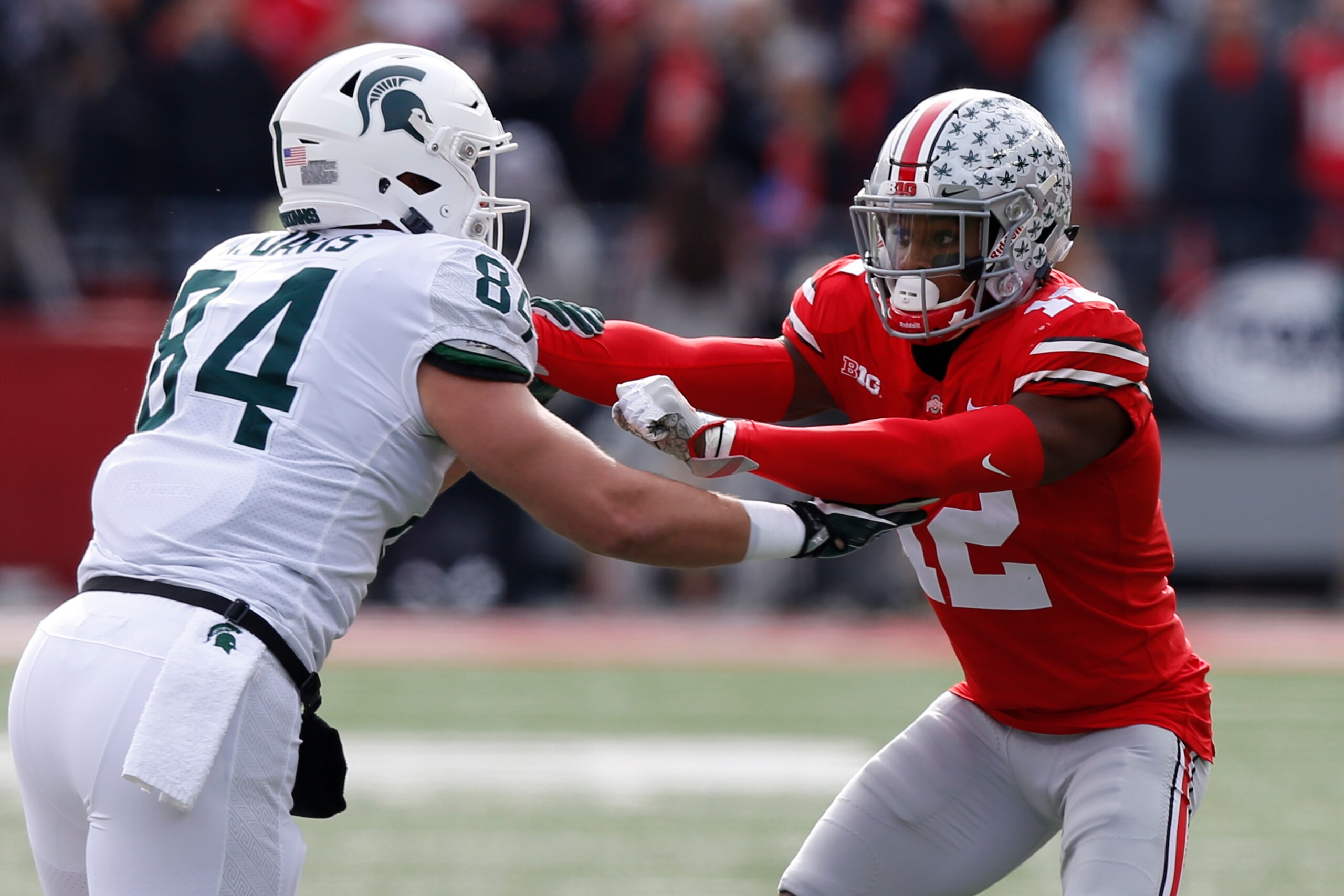
Despite using first- and second-round picks on Ha Ha Clinton-Dix, Damarious Randall, Kevin King, Josh Jones and Quinten Rollins over the last four seasons, the Green Bay Packers defensive backfield is still a major weakness. Safety Morgan Burnett, arguably the team's best defensive back, is likely to hit the open market as a 29-year-old with Jones, a 2017 second-round selection, projected to take over a starting role on the defense.
With a new general manager and defensive coordinator this offseason, the team needs to continue to acquire talented defensive backs.
The most talented cornerback in the class is Denzel Ward of Ohio State, at least if you listen to former longtime NFL scout Dan Shonka. A one-year starter who played behind 2017 Defensive Rookie of the Year Marshon Lattimore, Eli Apple and Gareon Conley in his first two years at Ohio State, Ward was named an All-American last season. His 17 pass deflections were ranked 11th in major college football.
A camp battle between Randall and Ward for who will play in the slot and who will play on the outside seems like the best-case scenario for the Packers defensive backfield in 2018.
No. 15 Indianapolis Colts: Mike McGlinchey, OL, Notre Dame
15 of 32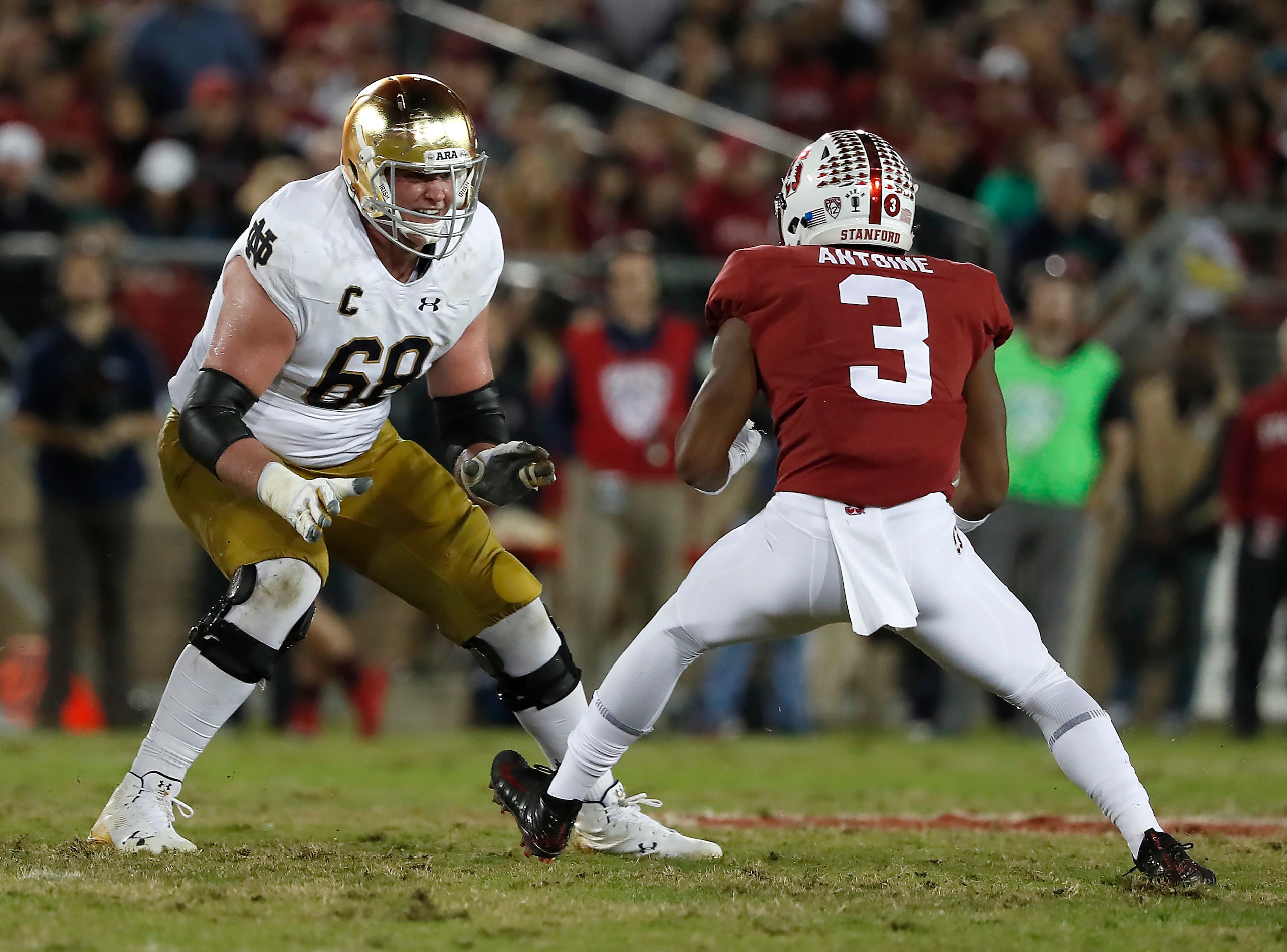
On the offensive line, the only significant veteran contract the Colts have locked down is that of 2011 first-round offensive tackle Anthony Castonzo. In terms of rookie contracts, the only other top-100 picks slated to return in 2018 are Ryan Kelly, a first-round center, and Le'Raven Clark, a third-round guard who has yet to earn a starting job after two years.
For those reasons, Mike McGlinchey, an All-American left tackle in 2017 for Notre Dame, would be a good fit in Indianapolis. The Colts need help at right tackle and guard, and McGlinchey's ability in the ground game easily translates to both positions.
Indy needs to continue to try its hardest to keep Andrew Luck on the field. Every dollar the Colts spend on an offensive lineman should be looked at as Luck insurance.
No. 16 Baltimore Ravens: Isaiah Wynn, OL, Georgia
16 of 32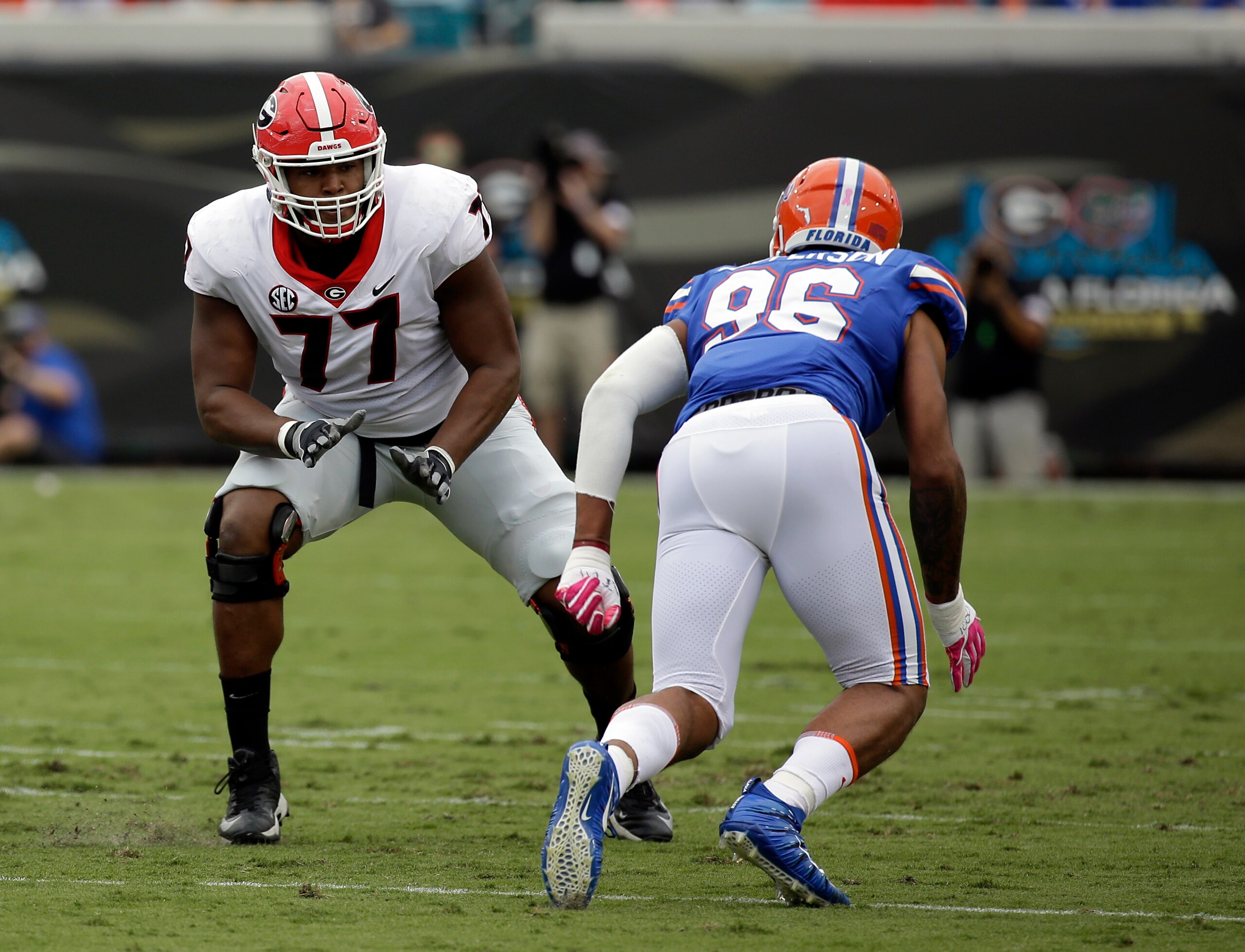
The best offensive player on the board at this point in the draft is Isaiah Wynn, Georgia's All-SEC left tackle who measured in at 6'2" and change at the Senior Bowl. He's likely to be a guard in the NFL, which is where he spent the majority of his time in Mobile practices.
Three Baltimore Ravens offensive linemen who registered at least 20 percent of the team's offensive snaps last year are slated to return in 2018: tackles Ronnie Stanley and Austin Howard and backup swing lineman Matt Skura, who didn't even make the team's 53-man roster to start the season. The return of Marshal Yanda will certainly help, but expecting the best out of a 34-year-old who just missed 14 games in 2017 is hardly a safe bet.
The 2018 offseason should be focused on making sure whoever comes in and replaces quarterback Joe Flacco has a soft landing. This is where Wynn comes in...down the road anyway. Wynn could one day be Baltimore's top interior offensive lineman. Yanda's recovery will decide that in the short term.
If Flacco plays like he has over the last three seasons, and there's no reason to think he will get better as a 33-year-old, there's no point in chasing after a title in 2018. This season should be the first step in a rebuild for Baltimore.
No. 17 Los Angeles Chargers: Lamar Jackson, QB, Louisville
17 of 32
Depending on who you ask, Philip Rivers is a Hall of Fame talent at quarterback. He's also a 36-year-old who has taken 380 sacks in his NFL career.
It might be time for Chargers general manager Tom Telesco to call his shot on a quarterback. At this point in the draft, the last major quarterback left is Lamar Jackson of Louisville, the 2016 Heisman Trophy winner and 2017 Heisman Trophy runner-up. Over his three seasons as a starter under former NFL head coach Bobby Petrino, Jackson recorded 9,043 passing yards, 69 passing touchdowns, 4,132 rushing yards and 50 rushing touchdowns.
Chargers head coach Anthony Lynn saw firsthand what a mobile quarterback can do for an offense during his time in Buffalo as a running backs coach, offensive coordinator, assistant head coach and eventually interim head coach. In his time with the Bills, his team led the NFL with a 5.06 yards-per-carry average. The difference between first-ranked Buffalo and third-ranked Kansas City (4.46 yards per carry) was equal to the difference between third-ranked Kansas City and 27th-ranked Houston (3.86 yards per carry).
Buffalo also led the NFL in rushing first downs and rushing touchdowns over that span. Its running game was in part sprung by dual-threat quarterback Tyrod Taylor, who posted 6,058 passing yards, 37 passing touchdowns, 12 interceptions, 1,184 rushing yards and 10 rushing touchdowns in 2015 and 2016.
Over 2015 and 2016, Taylor also had a league-high 19 3rd- or 4th-and-long conversions with his legs. Only 10 other players even cracked double digits over that time. The most for a running back over those two years was LeSean McCoy, Buffalo's running back, with six.
The Chargers will need a quarterback after Rivers, whose contract only has a dead-cap hit of $7 million in 2019 and will be a free agent in 2020. Jackson is coming into the NFL on a discount, with few teams embracing the option style of play that takes advantage of athletic quarterbacks. Lynn has already proved his running game can mesh with a dual-threat quarterback's passing efficiency while also developing an efficient third-down running game. This is a match made in heaven.
No. 18 Seattle Seahawks: Marcus Davenport, EDGE, UTSA
18 of 32
If the Seattle Seahawks invest in their defensive line with their first-round pick, it should come as no surprise. While many point to Seattle's defensive backs as the face of the defense, the Seahawks' defensive line, which allows for the team to drop seven players into coverage, has long been the most important part of its Cover 3-heavy scheme.
With Sheldon Richardson being a free agent, Cliff Avril potentially retiring, Michael Bennett possibly being cut and 2017 second-round pick Malik McDowell having not played a single snap as a rookie, Seattle's defensive line is on red alert. UTSA's Marcus Davenport may be the long end the Seahawks need on draft day.
Davenport recorded 21.5 sacks and 37.5 tackles for a loss throughout his four-year collegiate career. He had an up-and-down week at the Senior Bowl, though, as he showed up strong in the game but struggled to separate himself from the pack in practice.
If adding another quality pass-rusher keeps the Seahawks' Super Bowl window open, it's worth the risk to take Davenport, who's still a bit of an unknown due to questions over the level of his competition.
No. 19 Dallas Cowboys: Vita Vea, DL, Washington
19 of 32
Throughout his three-year career at Washington, Vita Vea notched only 15 tackles for loss. To put that into perspective, 42 FBS players had that many in 2017 alone. A nose tackle prospect, Vea isn't much of a penetrator as a defensive lineman.
For teams in need of a strong, handsy defensive lineman who can absorb tackles at the line of scrimmage, though, he and Stanford's Harrison Phillips have to be atop their wish list. The Dallas Cowboys could be the team to pull the trigger on that type of a defensive tackle.
Last year, their only quality interior presence was David Irving, a converted defensive end who has a history of suspensions. Off-ball linebacker Anthony Hitchens is also a free agent, which may be a blow to a run defense that can't give up an inch of efficiency next season.
Dallas' offense will steal the show in 2018, but a quality starter like Vea would go a long way on defense. Only six players played at least 60 percent of the Cowboys' defensive snaps last season, all but one of whom was playing on a rookie contract. What the defense lacks in experience and veteran starters, it needs to make up for in young talent.
No. 20 Detroit Lions: Maurice Hurst, DL, Michigan
20 of 32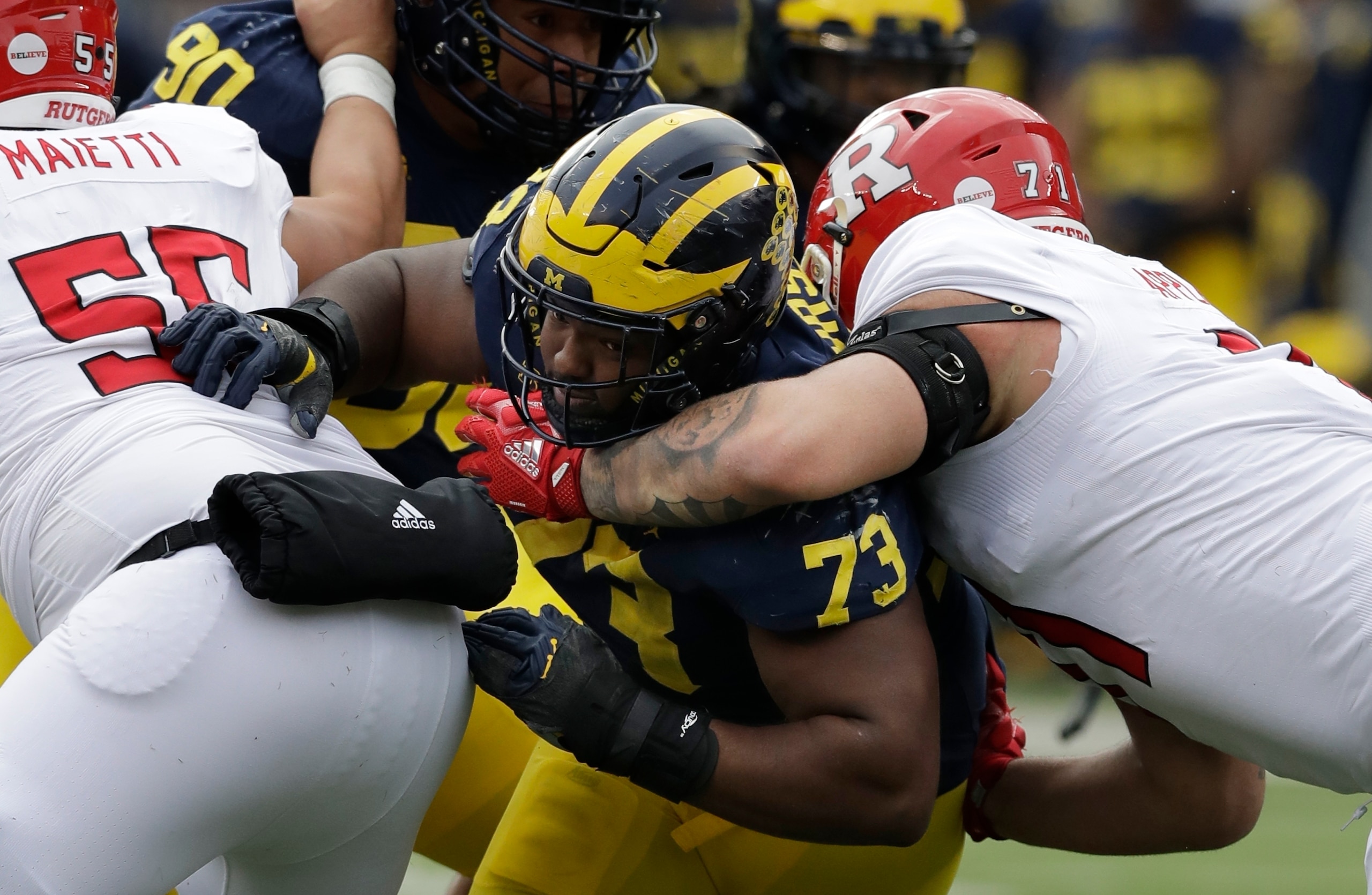
Haloti Ngata is slowing down, but he was still the Detroit Lions' best defensive tackle in 2017. Unfortunately, he was the only quality player in Detroit's interior and is slated to be a free agent.
Even if the Lions do re-sign Ngata and free-agent defensive end Ezekiel Ansah, they need to add talent to their defensive line. Their stars-and-scrubs approach at the position hasn't been cutting it.
Relative to how many passes and runs their defense faced, the Lions made roughly 12 fewer tackles for loss (27th in the NFL) and four fewer sacks (23rd) than the average defense last year, per Setting the Edge. No defense in the league scored worse in the combination of those metrics in 2017.
Meanwhile, in-state tackle Maurice Hurst of Michigan ended his college career with 13.5 sacks and 32 tackles for loss this past season. An undersized penetrator, Hurst is the closest thing in this draft class to an Aaron Donald-type talent.
As long as he doesn't weigh in the 270s at the combine, the All-American should solidify himself as a first-round talent in Indianapolis. If he falls into Detroit's lap, few prospects could come close to making the impact Hurst could create as a 16-game starter at under tackle in 2018.
No. 21 Oakland Raiders (via Buffalo Bills): Tremaine Edmunds, LB, Virginia Tech
21 of 32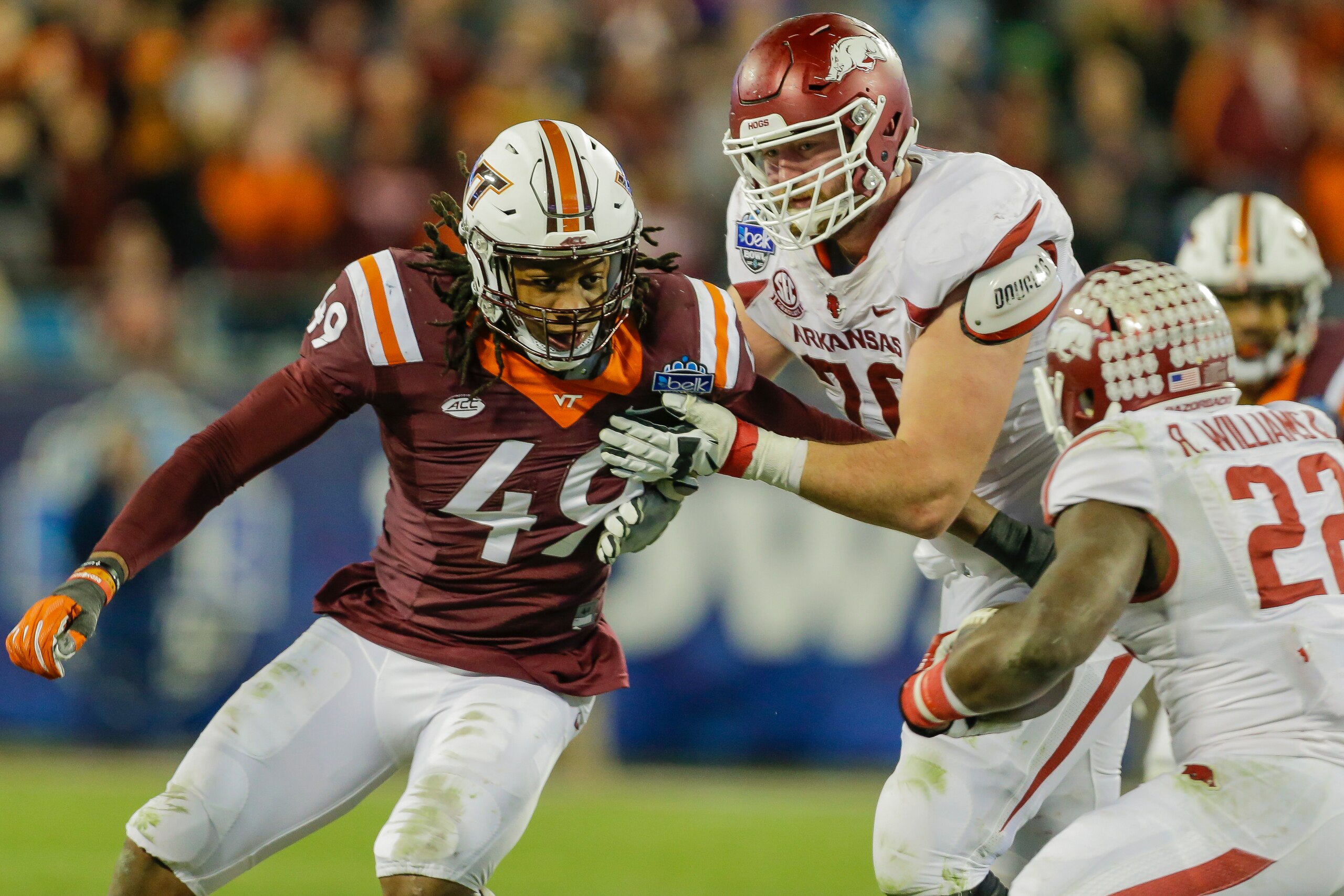
After the Bills moved up for Josh Allen in this mock draft, the Raiders have the 21st pick.
One of the most-hyped players in this draft class is linebacker Tremaine Edmunds of Virginia Tech. It's time for him to come off the board.
The hyper-athletic Edmunds compares similarly to a larger version of the Minnesota Vikings' Eric Kendricks. Kendricks is listed at 6'0" and 232 pounds, while Edmunds is listed at 6'5" and 250 pounds.
In a hybrid NFL, players of his mold are going to be thought of highly, even if they're raw. He's the size of a defensive end but runs like a strong safety. His potential as an off-ball linebacker, drop-down edge-defender and potential coverage-mismatch negator against tight ends and running backs makes him worth a top-15 pick if he hits.
If new head coach Jon Gruden tries to mimic his early-2000s Tampa Bay teams with the Raiders, they're going to be linebacker-heavy. Linebacker Derrick Brooks, strong safety John Lynch and Tampa 2 cornerback Ronde Barber were all significant low-zone defenders during Gruden's peak in Tampa. In today's NFL, with those low zone responsibilities falling more on the shoulders of linebackers, the athletic Edmunds could be valuable.
No. 22 Buffalo Bills (via Kansas City): Billy Price, OL, Ohio State
22 of 32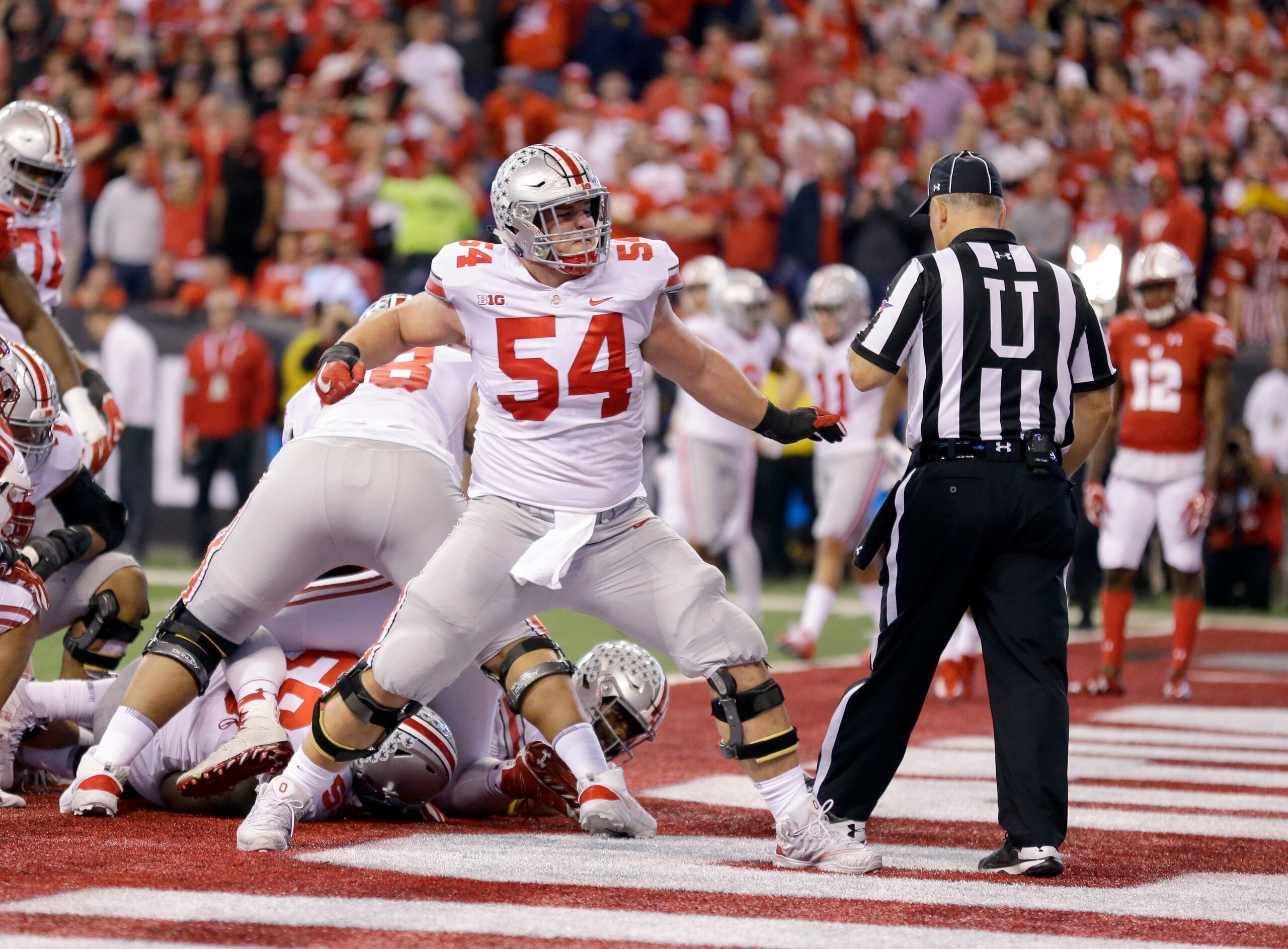
With 31-year-old Pro Bowl center Eric Wood retiring, the Buffalo Bills have a hole in their offensive line. With Josh Allen of Wyoming tabbed as the Bills' quarterback of the future in this mock draft, the center portion of the center-quarterback exchange will be addressed.
In 2016, Pat Elflein of Ohio State converted from a guard to a center. After his one year at center, the Minnesota Vikings selected him with the 70th overall pick, and he was named to the All-Rookie team in 2017.
After earning All-American honors at guard, Billy Price of Ohio State moved to center during his senior season, like Elflein, just to earn All-American honors at a second position. Going from the instability of Wood's retirement to Price, a player who has proved he can compete with college football's best at guard and center, would be an easy way to smooth out the edges for a team in transition.
The Bills do have Ryan Groy under contract, but he may not be starting-caliber. He bounced around on four teams between 2014 and 2015 after going undrafted out of Wisconsin. After Groy started seven games for the Bills in 2016, Buffalo matched a two-year, $5 million offer that the Los Angeles Rams extended to him as a restricted free agent. Groy's cap hit of $2.5 million ranked 103rd among offensive linemen in 2017 and is currently projected to rank 96th for 2018.
Groy played 53 snaps in 2017, the eighth-highest mark among all Bills offensive linemen. To put that into perspective, Wood played a team-high 1,052 snaps for Buffalo in 2017. Groy has played only 843 snaps in his four-year NFL career.
No. 23 Los Angeles Rams: Harold Landry, EDGE, Boston College
23 of 32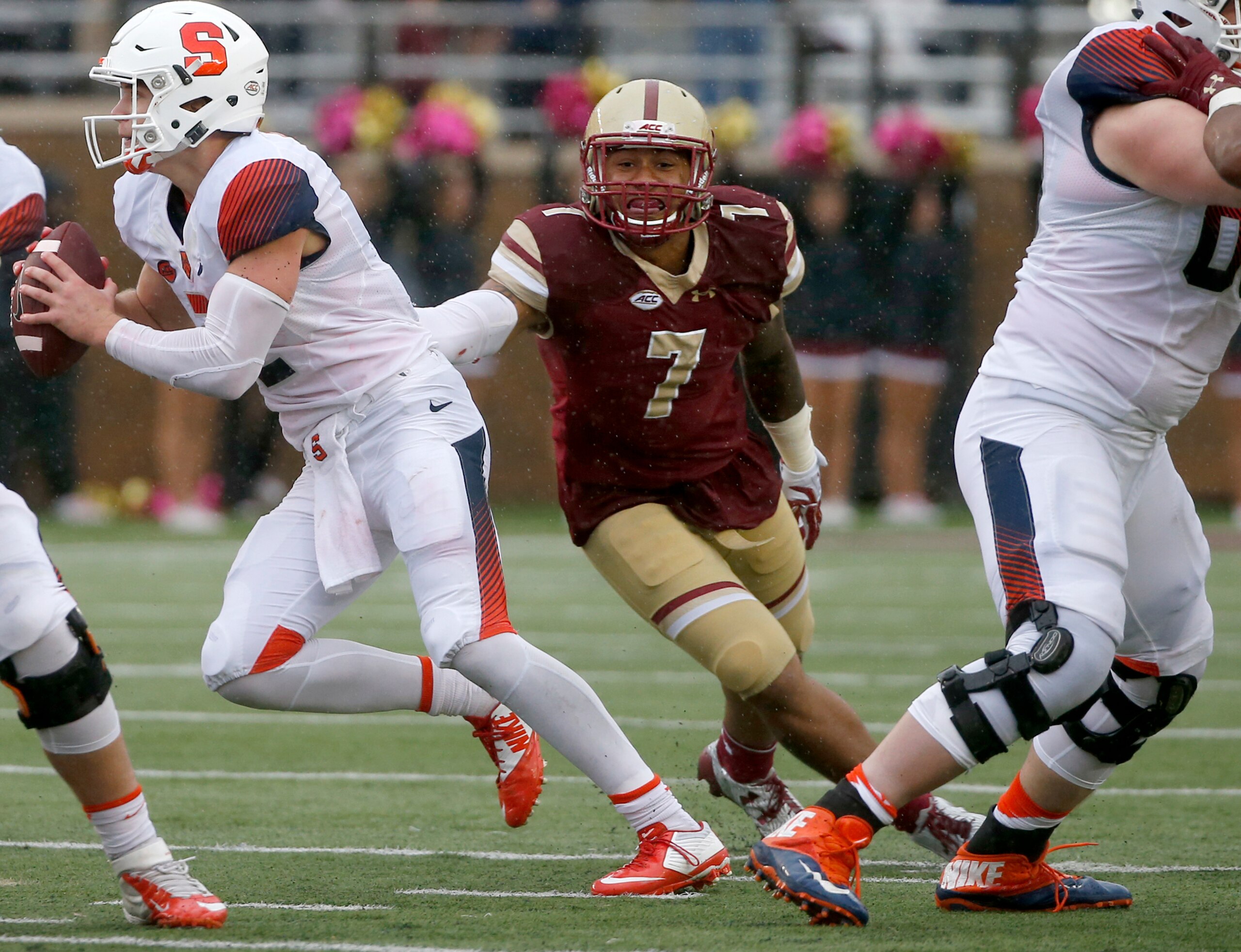
Pro Bowl cornerback Marcus Peters was traded to the Los Angeles Rams from the Kansas City Chiefs after Kansas City acquired Washington Redskins slot cornerback Kendall Fuller in a trade that sent quarterback Alex Smith to Washington. Here's the issue: According to NFL Network's Ian Rapoport, Kansas City was trying to get Los Angeles pass-rusher Robert Quinn before settling on a 2018 fourth-round pick and a 2019 second-round pick instead.
Quinn is slated to make north of $25 million over the next two years and costs less than $1 million in dead cap to move. With new Trumaine Johnson, Sammy Watkins, Lamarcus Joyner and Aaron Donald contracts coming up, along with the likely departure of pass-rusher Connor Barwin, it might be time for the Rams to let Quinn walk for a new, cheaper face at outside linebacker.
When healthy, Boston College's Harold Landry may be the most talented pass-rusher in this draft class. He racked up 16.5 sacks and 22 tackles for loss in 2016, but he may have damaged his draft stock by returning for his senior season. A lingering ankle issue led to Landry playing in only eight games, during which he racked up 5.5 sacks and eight tackles for loss.
Entering the draft with 25 sacks and 48 tackles for a loss, Landry has plenty of film showing he can bend the edge and finish. He must prove to NFL scouts and general managers that he's healthy enough to replicate his 2016 season that led to All-ACC and second-team All-American honors.
No. 24 Carolina Panthers: Josh Jackson, DB, Iowa
24 of 32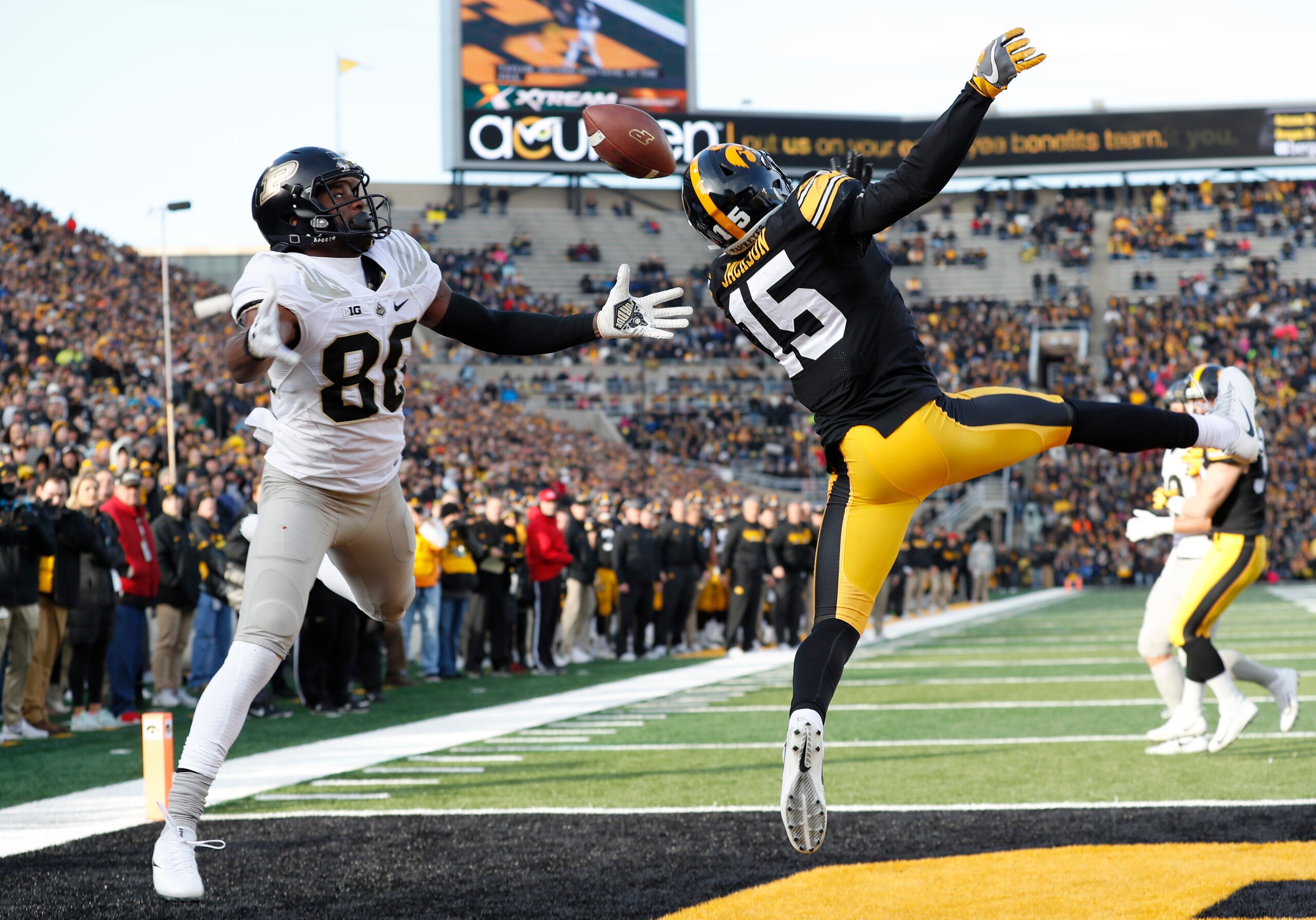
The mid-20s is when the second tier of talent in the NFL draft tends to run out.
While the Carolina Panthers need help on offense, they aren't likely to pursue an offensive tackle since Matt Kalil's contract is locked in and Taylor Moton, their second-round pick in 2017, hasn't had a shot at a starting role yet. Wide receiver could be an option if they consider a non-Calvin Ridley receiver as a top-25 pick.
Instead, we have Carolina taking Josh Jackson of Iowa, a cornerback who averaged two pass breakups and interceptions per game, the best mark of any FBS player last season. After letting cornerback Josh Norman walk in 2016, the Panthers drafted James Bradberry in the second round and Daryl Worley in the third round that year.
Bradberry showed promise in 2016 but had a rough go of it in 2017, while Worley hasn't had the flashes that Bradberry has. Carolina could use help at cornerback, and Jackson's ball skills could make him a steal in this range.
Great defenses in the past—like the 2017 Jacksonville Jaguars, 2016 New York Giants and 2015 Denver Broncos—have gotten the most out of three cornerbacks in today's nickel-base NFL. There's no shame in swinging on cornerbacks over and over again.
No. 25 Tennessee Titans: Arden Key, EDGE, LSU
25 of 32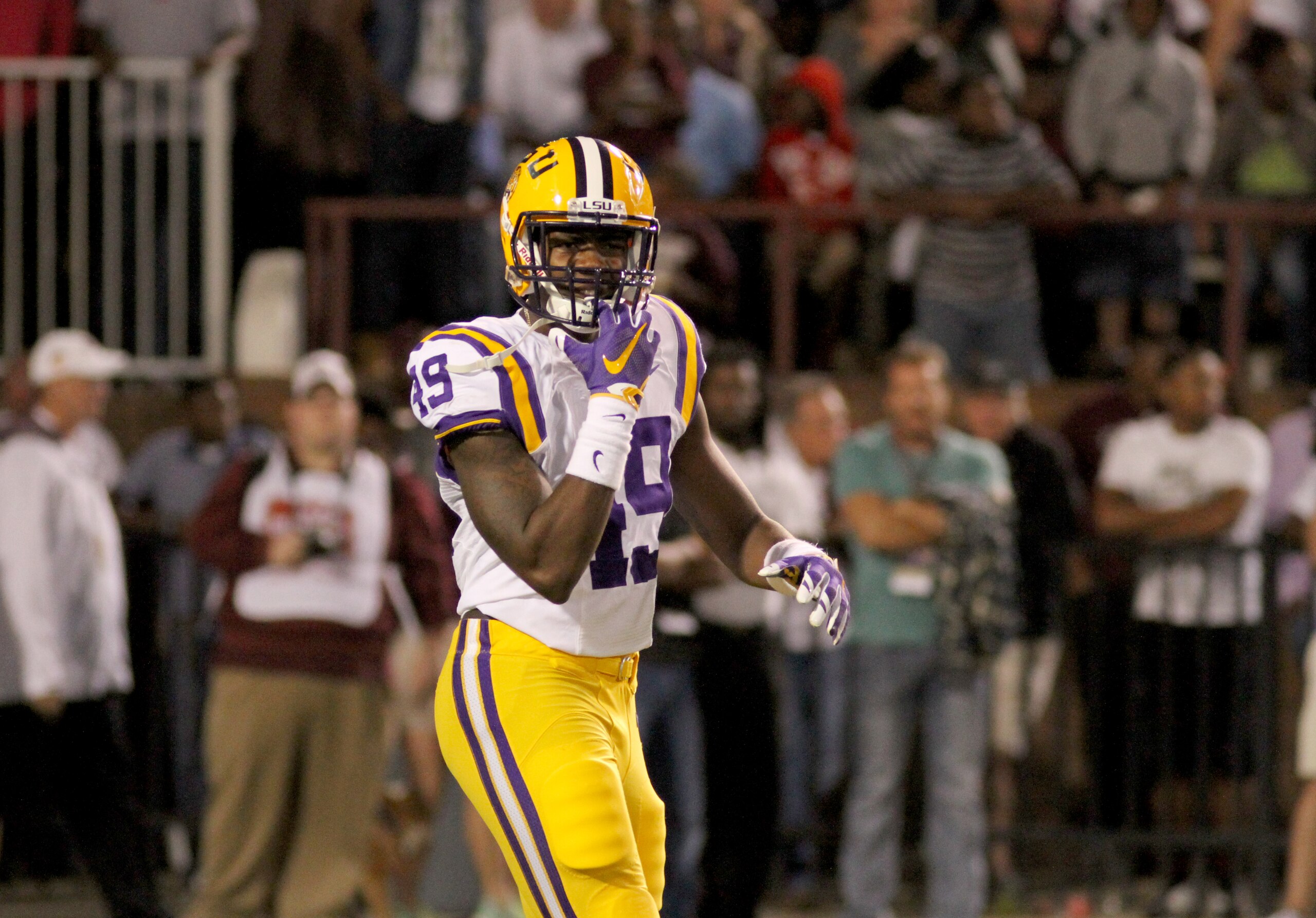
No team needs a third pass-rusher like the Tennessee Titans have in recent years. Their starting 3-4 outside linebackers, Brian Orakpo and Derrick Morgan, are not a liability, though they don't stand out. Tennessee has little to no depth behind those two, however.
Kevin Dodd, the 33rd overall pick in the 2016 draft, has recorded only one sack over 271 snaps in his first two NFL seasons. To put that into perspective, Tennessee third outside linebacker Erik Walden, who signed with the team in late July, played 581 snaps in his first year with the Titans.
It's time for the Titans to admit their mistake on Dodd to move on. A high-upside linebacker like Arden Key of LSU could be right up their alley.
Key was an All-SEC selection during his true sophomore season with the Tigers, but injuries, weight issues and his abandonment of the LSU program marred his final college season. If he can convince the Titans to move past his up-and-down 2017 campaign, they can sell themselves on the talent that notched 11 sacks and 12.5 tackles for loss in 2016.
No. 26 Atlanta Falcons: Will Hernandez, OL, UTEP
26 of 32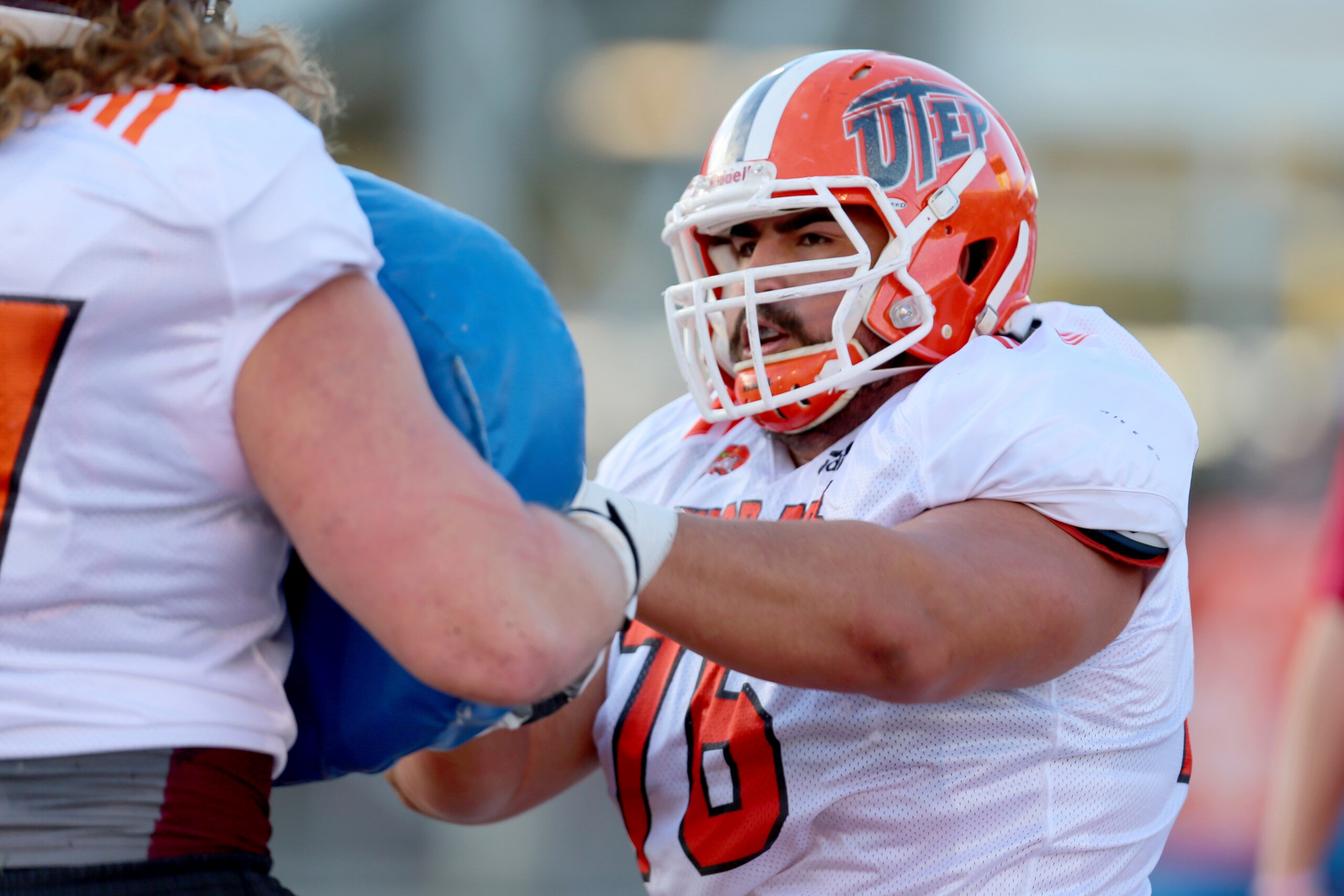
It's hard to find holes on the Atlanta Falcons' roster. The biggest weakness, relatively speaking, would have to be guard opposite of Andy Levitre.
The third guard to go in the first round of this mock, UTEP's Will Hernandez, is likely the Falcons' best option for immediate improvement.
Hernandez is strong, tough and is a finisher, which could help him step in and immediately become a 16-game starter. His head coach at UTEP, Sean Kugler, spent eight years as an offensive line coach in the NFL before his Miners stint, and he's now the Denver Broncos' offensive line coach. It isn't a coincidence that a rose grew through the concrete in El Paso.
An offensive line made up of Jake Matthews, Levitre, Alex Mack, Hernandez and Ryan Schraeder would rival the best in the league. With a two-headed monster in the backfield and the Matt Ryan-Julio Jones connection, you can lock in three more years of Falcons dominance if they continue to invest on the offensive line.
No. 27 New Orleans: Rashaan Evans, LB, Alabama
27 of 32
Rashaan Evans is a linebacker in a pass-rusher's body.
A breakout star in the 2016 postseason, Evans ate up some of the playing time left behind when Reuben Foster, a 2017 first-round pick, left Alabama. As a senior starter, Evans posted career highs of six sacks and 13 tackles for a loss (beating his previous career total of 10.5 in a single year.)
His hybrid projection could benefit New Orleans the most out of any NFL team. The Saints have big questions about their linebacker depth, in part because they traded 2015 first-round pick Stephone Anthony to the Miami Dolphins in September. They don't have much edge-defender depth, either. Cameron Jordan is an all-world talent, but their only other significant pass-rusher is Alex Okafor, who was in the midst of a breakout year before he suffered a season-ending Achilles injury.
Since Nick Saban took over the Alabama program, the team has pumped out five linebackers who have been top-45 selections: Rolando McClain, Dont'a Hightower, C.J. Mosley, Reggie Ragland and Foster. None of them have busted out of the league due to on-field discipline issues. The combination between Saban-safe and edge-athletic should be enough to get New Orleans to pull the trigger.
No. 28 Pittsburgh Steelers: Hercules Mata'afa, EDGE, Washington State
28 of 32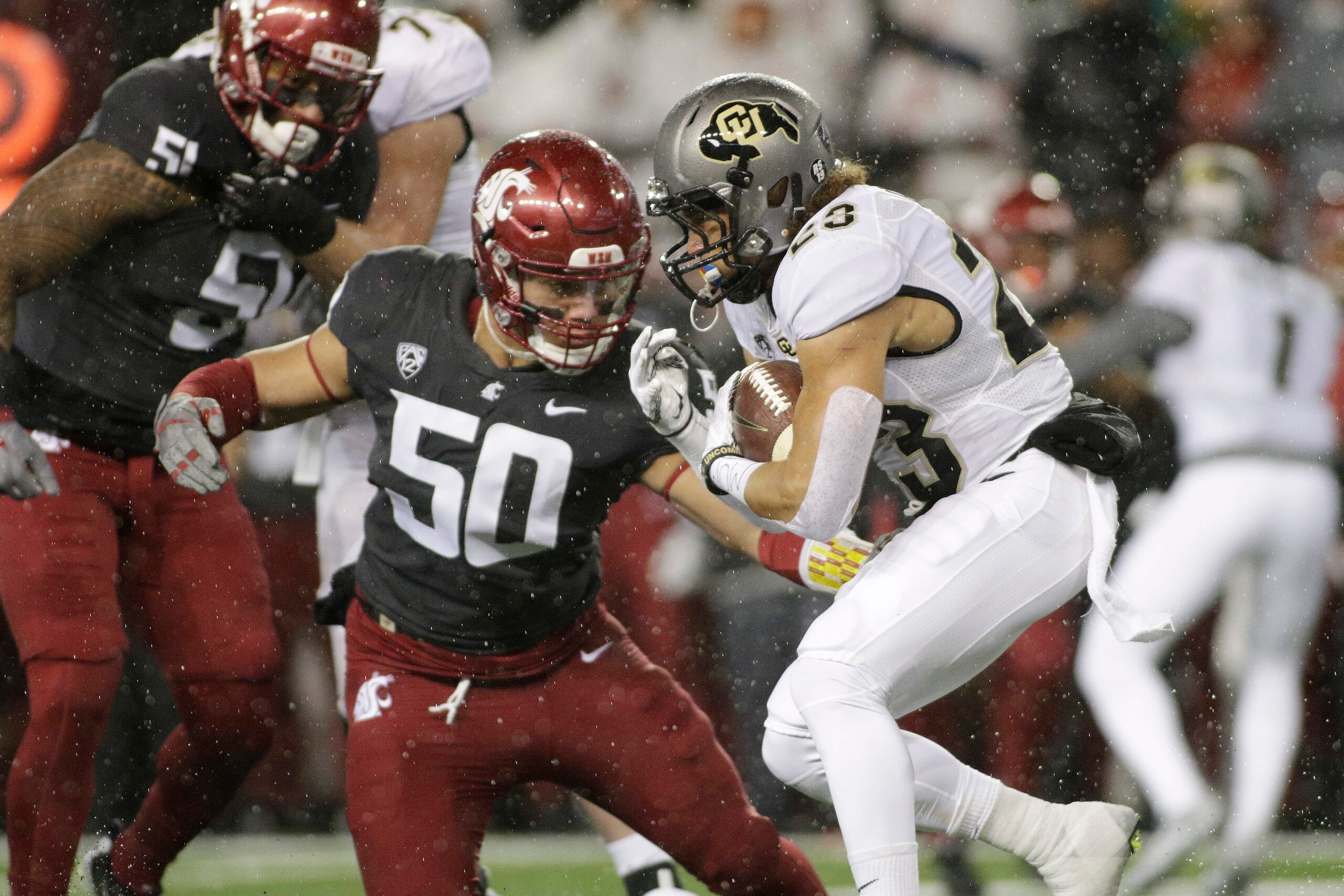
Last year, the Pittsburgh Steelers took Wisconsin pass-rusher T.J. Watt in the first round. It's time to find him some help.
The Bud Dupree experiment isn't working out going into the fourth year of his NFL career. In terms of edge depth, Anthony Chickillo, who played on a one-year, $615,000 contract in 2017, is the only other outside linebacker who played more than 10 percent of the team's snaps last year.
At best, the Steelers need outside linebacker depth. At worst, they need a new starter. This is when a project like Washington State's Hercules Mata'afa comes into play.
In the Cougars' slant-heavy defense, the 250-pound Mata'afa was actually a defensive tackle. In that role, despite playing about 50 pounds lighter than the NFL minimums at the position, Mata'afa recorded 10.5 sacks and 22.5 tackles for a loss in 2017. That effort earned him All-American honors along with the Pac-12 Defensive Player of the Year award.
In many ways, he's similar to San Francisco 49ers defensive end Solomon Thomas, who was the third overall pick last year. Even if Mata'afa has to go from a slanting defensive tackle to a pass-rushing outside linebacker, finding a talent of that caliber is worth the effort.
No. 29 Jacksonville Jaguars: Mark Andrews, TE, Oklahoma
29 of 32
Now that the Jacksonville Jaguars have extended quarterback Blake Bortles through 2020, where should they turn in the first round?
After Nick Foles' Super Bowl triumph, teams with non-top-20 quarterbacks shouldn't sit back and let their talent play out. Teams without a quarterback advantage should start embracing the run-pass options that helped boost smaller programs in college football and made larger programs even more unbeatable.
If the Jaguars want to take that approach with Bortles, they'll need an athletic tight end—one who can play both ends of the run-pass option and is a potential mismatch on smaller slot cornerbacks or heavier linebackers. The name to watch here is Mark Andrews of Oklahoma, the tight end who was Baker Mayfield's go-to target on third down.
Andrews went from posting 318 yards as a freshman and 489 yards as a sophomore to 958 yards as a junior, numbers virtually unheard of in major college football for a tight end. The All-American also left Norman with 22 receiving touchdowns under his belt.
If the Jaguars aren't going to upgrade at quarterback, they need to upgrade Bortles' offensive weaponry. While Marcedes Lewis isn't getting pushed out of a roster spot anytime soon, the 33-year-old is no longer at his athletic peak going into the 13th year of his NFL career. As a tight end or "jumbo slot" target, Andrews could go a long way for a passing offense with some long-term questions.
No. 30 Minnesota Vikings: Tim Settle, DL, Virginia Tech
30 of 32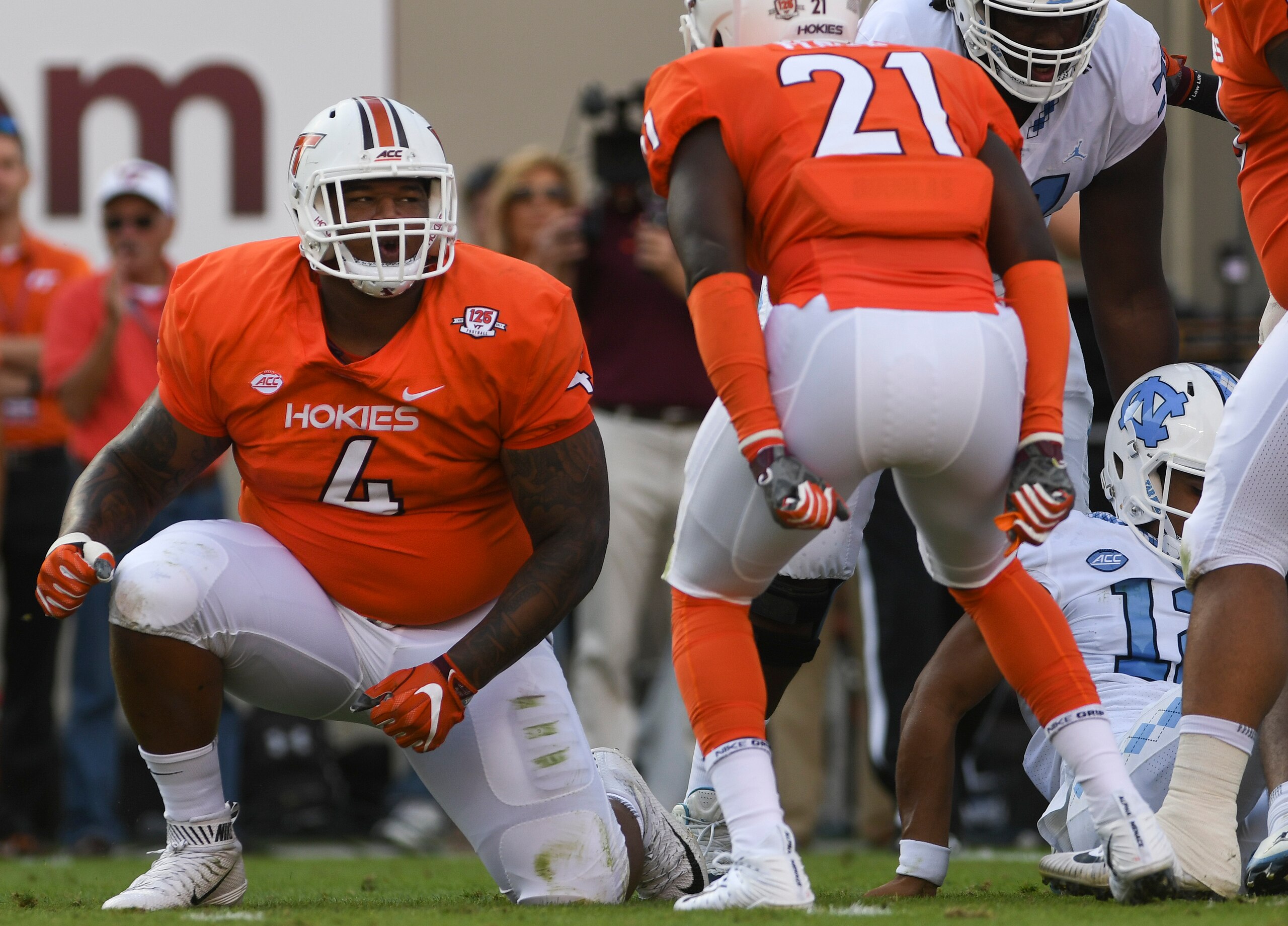
Listed at 6'3" and 335 pounds, it's hard to miss Virginia Tech defensive tackle Tim Settle. Despite being the size of a nose guard, he can get off the ball and make a play in space like a defensive end at times.
Settle is a boom-or-bust player on a down-to-down basis, but the redshirt sophomore doesn't lack talent. In 2016, he recorded only 17 total tackles, 7.0 tackles for loss and zero sacks. The past season, he posted 36 total tackles, 12.5 tackles for loss and four sacks.
The Vikings don't need much immediate help on defense, but they are weakest at defensive tackle next to Linval Joseph, and linebackers Anthony Barr and Eric Kendricks are in contract seasons in 2018. Settle would help Minnesota improve at the line of scrimmage, and he would be a strong insurance policy for the Vikings' runnning game if Barr and/or Kendricks leave in free agency next offseason. This season, Settle would be no more than the sixth-most important player in Minnesota's nickel front, giving him time to develop.
No. 31 New England Patriots: Mason Rudolph, QB, Oklahoma State
31 of 32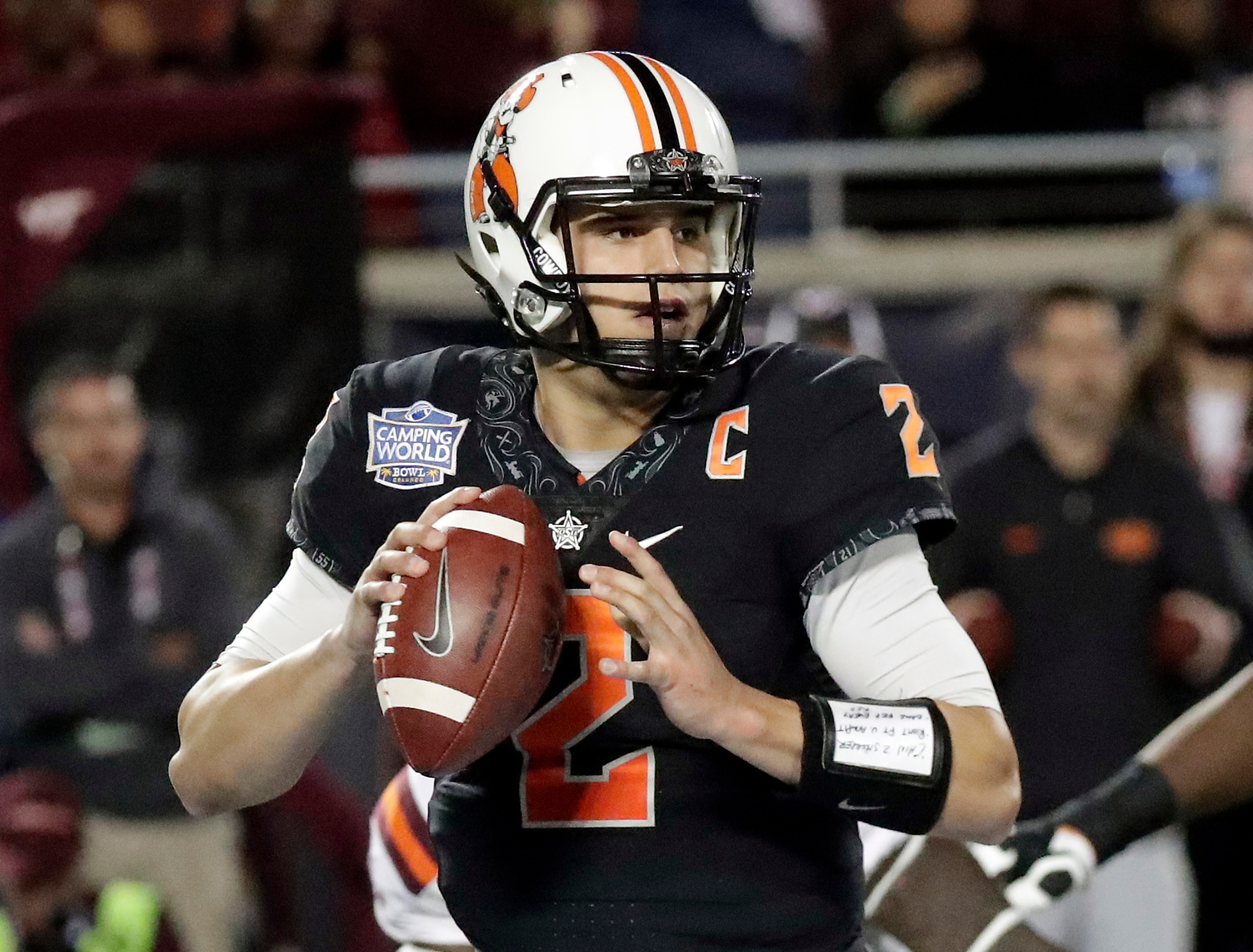
Lost in all of the drama surrounding the New England Patriots over the last few months is this sentence from ESPN.com's Seth Wickersham: "The meeting ended with a clear mandate to Belichick: trade Garoppolo because he would not be in the team's long-term plans, and then, once again, find the best quarterback in the draft and develop him."
If Patriots owner Bob Kraft did deliver that edict to head coach and de facto GM Bill Belichick, New England may decide to spend its first-round pick on a quarterback. Behind the 40-year-old Tom Brady, the Patriots have only one quarterback on their depth chart, Brian Hoyer, after trading both Jimmy Garoppolo and Jacoby Brissett in 2017.
Hoyer, a 32-year-old who played for six different teams over the past six years, likely isn't who Kraft has in mind as Brady's successor. With five quarterbacks already off the board, the Pats would go with Mason Rudolph of Oklahoma State, who put up video game numbers in the Big 12.
Rudolph finished his college career with 13,618 passing yards, 92 passing touchdowns and 26 interceptions, and his numbers could have been even better if he wasn't subbed out of red-zone snaps as a sophomore in 2015. Arm strength is a question with Rudolph, but Brady hasn't built his career off his ability to throw a frozen rope 65 yards downfield, either.
No. 32 Philadelphia Eagles: Martinas Rankin, OL, Mississippi State
32 of 32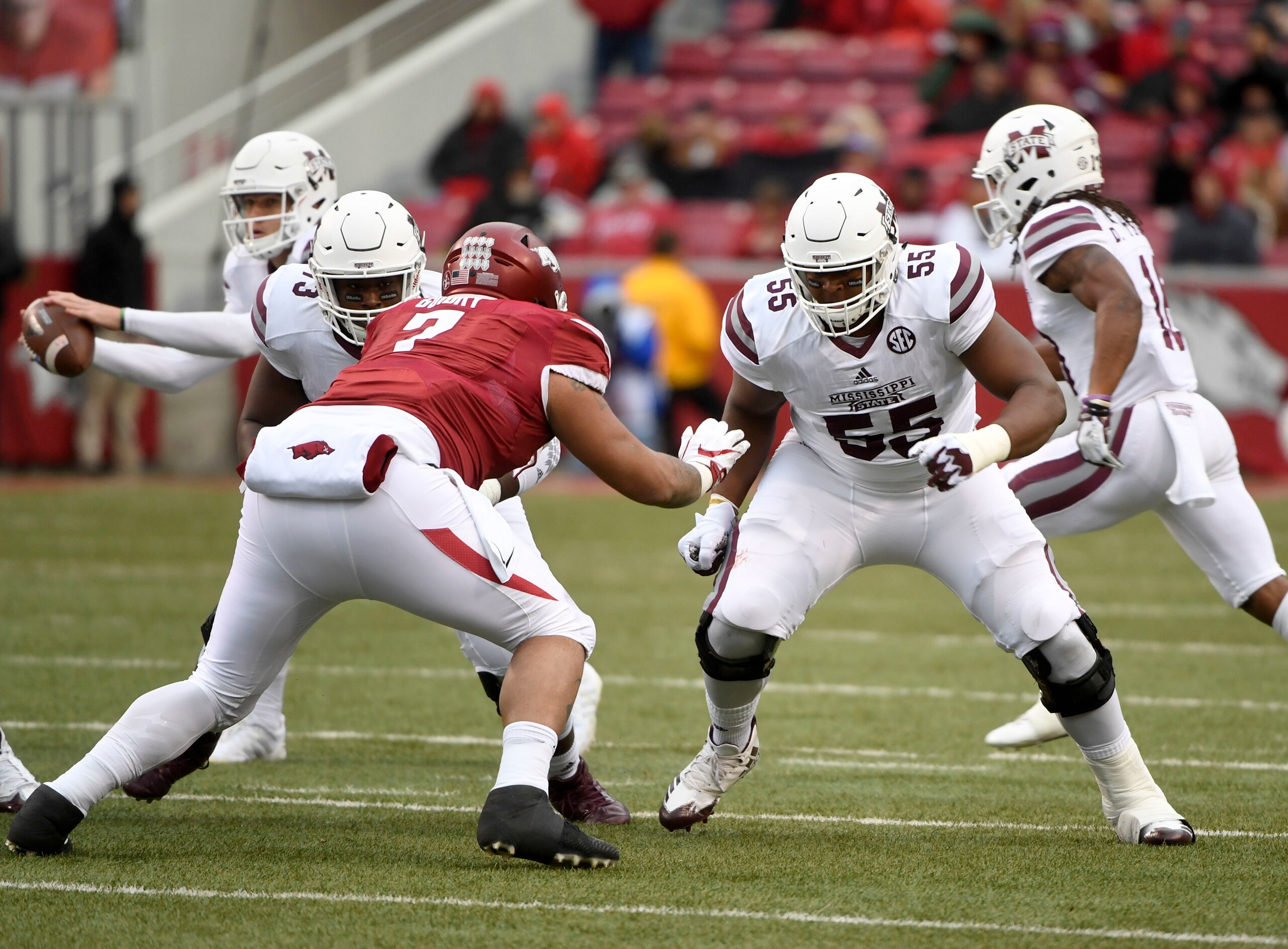
The Philadelphia Eagles just won a Super Bowl with Nick Foles at quarterback, which wouldn't have been possible without talented offensive line play. With that in mind, the Eagles need to find a bookend this offseason.
Future Hall of Fame tackle Jason Peters is 36 years old and tore his ACL and MCL in October. While Halapoulivaati Vaitai was solid enough in Peters' place this past season, he doesn't project as a full-time starter anytime soon.
After the likes of Texas' Connor Williams, Oklahoma's Orlando Brown and Notre Dame's Mike McGlinchey, the next name on the tackle board may be Mississippi State's Martinas Rankin. The former junior college transfer started his last two years for the Bulldogs after a redshirt year and proved himself against over a dozen current or future NFL pass-rushers.
Rankin isn't the strongest defender against big bodies, but he frequently makes highlight plays when he gets to the linebacker level. Between that and his movement skills, the Eagles should consider him an unpolished offensive tackle early on.
.jpg?w=2560 "Cowboys Packers Football")



.jpg?w=2560 "🚨 Week 8 AP Top 25 Poll")