
Grading Top 2018 NBA Draft Prospects in Each Key Category
With March approaching, NBA teams are finalizing their scouting reports on the top draft prospects. With that, time is right to grade each of them in the major categories, including scoring, shooting and defense. We also looked at playmaking for guards and wings and rebounding for bigs.
Slovenia's Luka Doncic, Arizona's Deandre Ayton, Michigan State's Jaren Jackson Jr., Texas' Mohamed Bamba, Oklahoma's Trae Young, Duke's Marvin Bagley III and Missouri's Michael Porter Jr. (not included due to injury) make up our top tier. We then analyzed our next-best center, power forward, wing and guard to round out the group of top prospects.
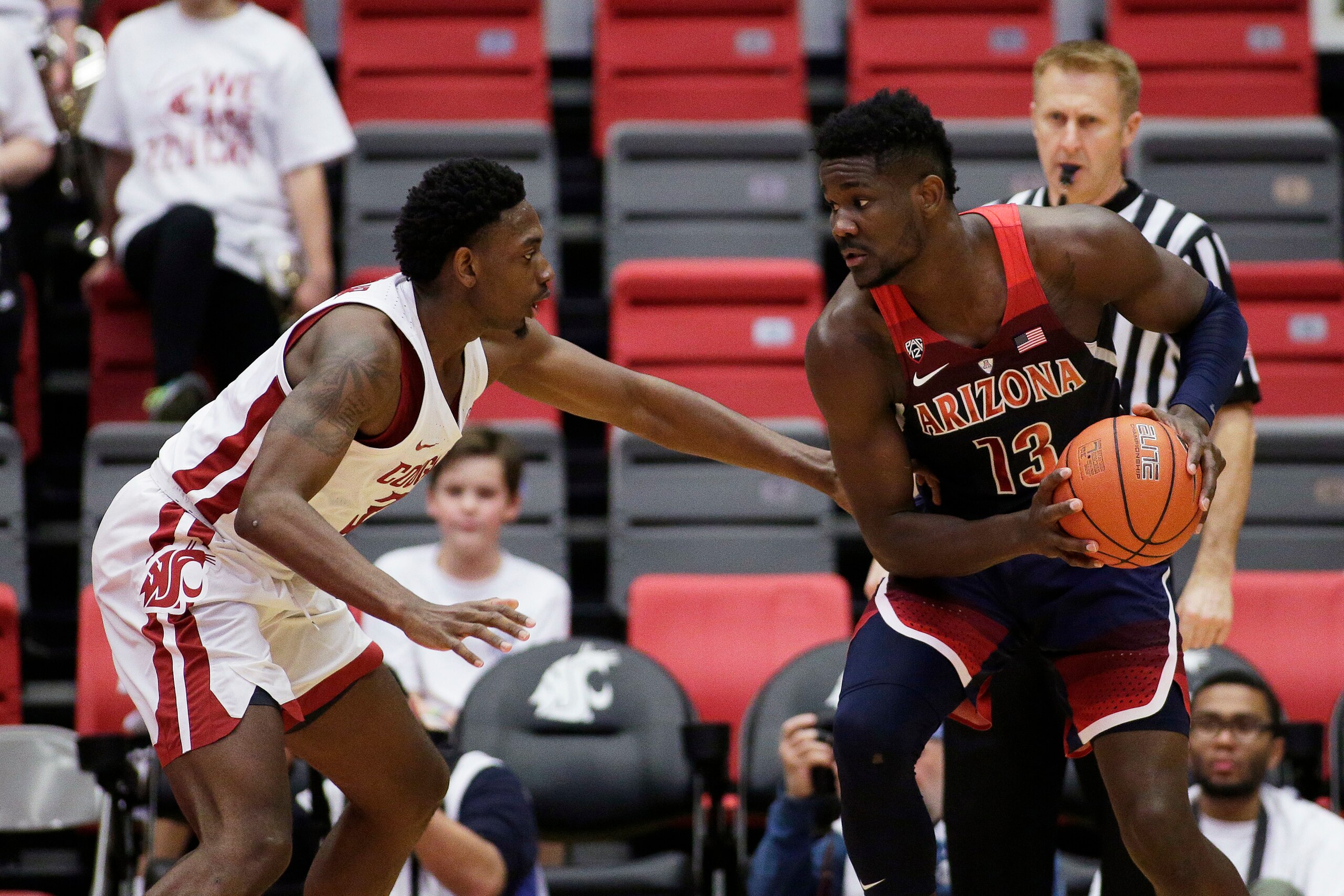
Deandre Ayton (Arizona, C, Freshman)
1 of 10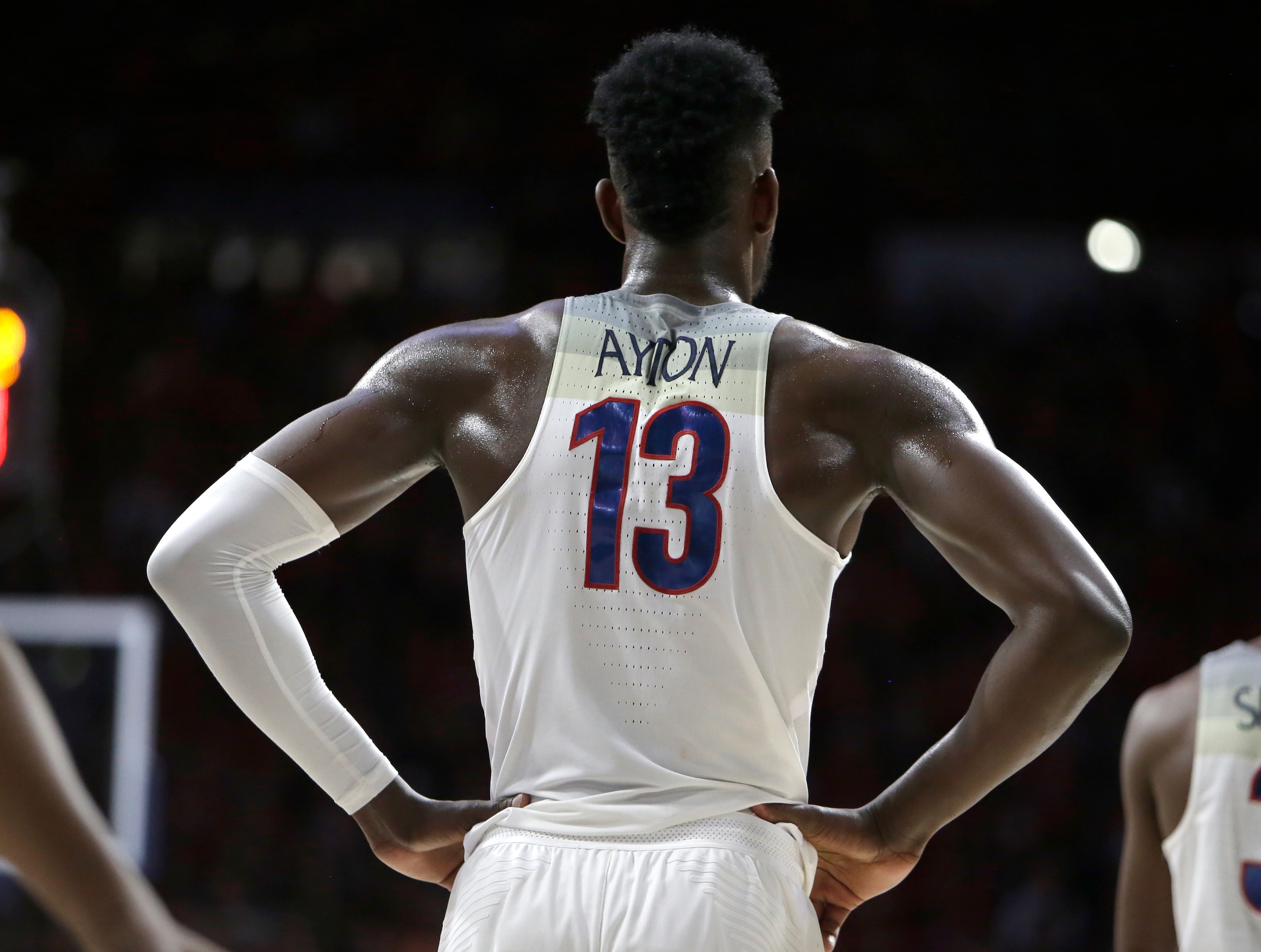
Scoring: A
Key stats: 89th percentile on post-ups, 87th percentile on isolation
Deandre Ayton averages 19.9 points on 61.1 percent shooting, with 30.9 percent of his offense coming on post-ups. Demonstrating both improved footwork and one-handed shot control, he creates quality looks for himself playing back to the basket. Facing it, Ayton doesn't like to put the ball on the floor, but he loves to catch, rise and fire over his man with a jump shot. He also shows poise and recognition against hard double-teams, ranking in the 97th percentile on scoring attempts and 89th percentile on pass outs.
Shooting: B+
Key stats: 41.8 percent on jump shots
Shooting potential is a key selling point for Ayton, who has confidence in his jumper. He's making 52.4 percent of his jump shots from 16 feet and in and 42.9 percent of them from 17 feet to the arc. He still needs to improve his range, but that he's made 10 threes suggests it's a shot he could eventually have in his every-game arsenal.
Rebounding: A-
Key stats: 20.8 rebounding percentage, 88th percentile on putbacks
Ayton doesn't always have textbook box-out technique, and unless it's to chase his own miss, he isn't an active out-of-area rebounder. Regardless, Ayton's strength, length and sticky hands have still led to 13.4 rebounds per 40 minutes and 35 putbacks through 29 games.
Defense: B
Key stats: 14 steals, 57 blocks through 964 minutes
Ayton's advanced defensive stats aren't promising. A 0.8 percent steal rate is scary low, and he doesn't block many shots (6.3 percent) for an athletic, 7'1" center. He lacks great reaction timing and instincts. However, he does play out of position at the 4 alongside Dusan Ristic. And he's exceptionally long, quick and strong, which works well guarding one-on-one and allows him to compensate for weaker fundamentals.
Luka Doncic (Slovenia, PG/SG, 1999)
2 of 10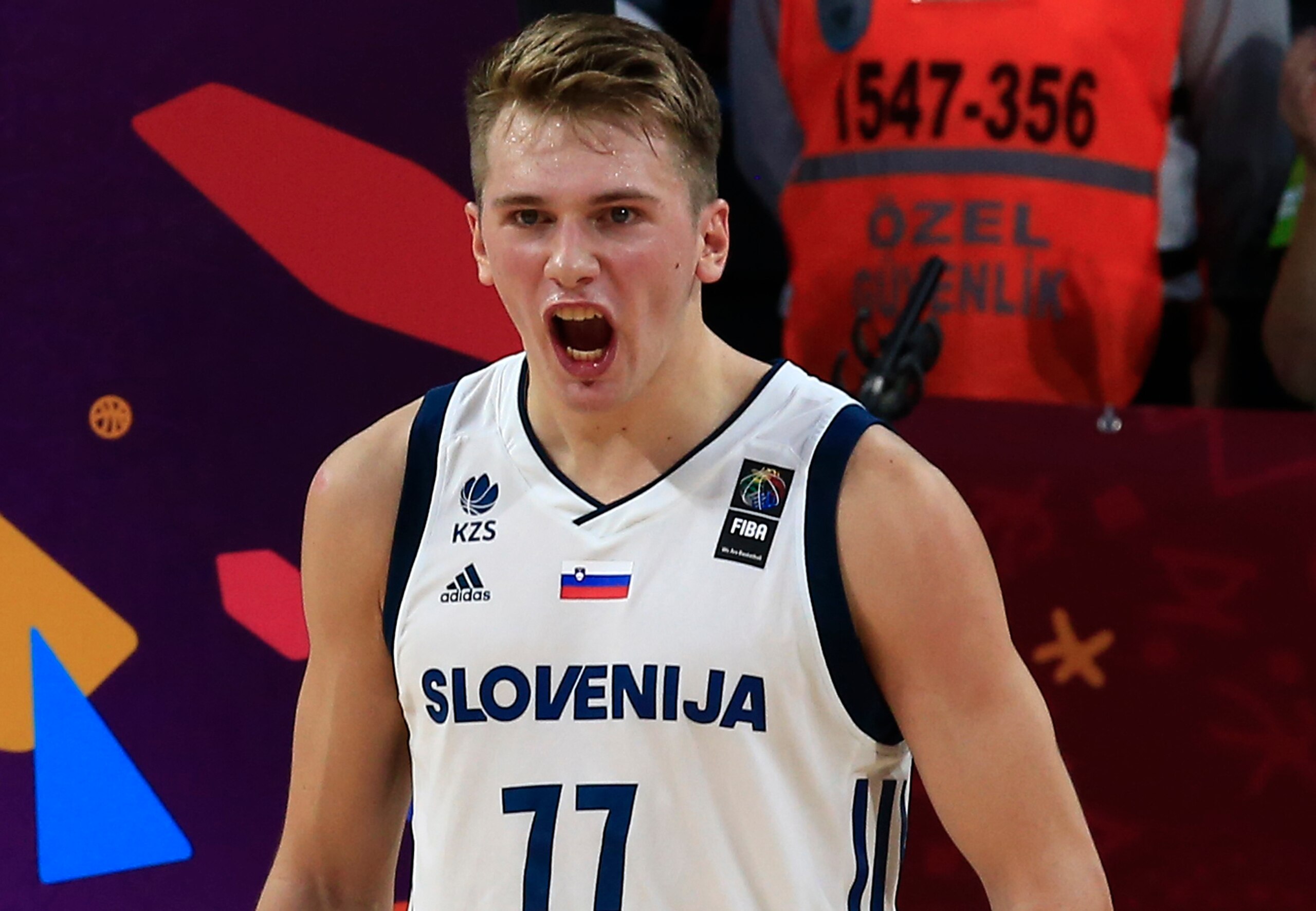
Scoring: A-
Key stats: 17.2 points per game in Euroleague
At 18 years old, Luka Doncic ranks second in scoring in Euroleague, a more competitive setting than college basketball. At 6'8", he handles the ball like a point guard, and he's used the handles to improve as a shot-creator, now showing stronger ability to separate into balanced jumpers with step-back footwork and abrupt pull-ups. He also excels around the lane with improvisation and soft touch on his runners.
Between Euroleague, Spanish ACB and Spanish Cup, Doncic is shooting 58.8 percent inside the arc, a tribute to his skill level, instincts and body control.
Shooting: B
Key stats: 1.6 three-pointers per game
With 70 three-pointers through 45 games, Doncic has a clean stroke out to the arc, which is deeper in Europe. He can connect both off the dribble and the catch. Given his age, it's not surprising to see Doncic go through cold streaks like the one he's currently on (7 of last 36). Despite the inconsistency, his mechanics, makes and confidence remain highly convincing.
Playmaking: B+
Key stats: 4.5 assists, 1.9 turnovers
Sharing playmaking duties with Facundo Campazzo, Doncic averages 4.5 assists playing on and off the ball. He shows pick-and-roll feel as a facilitator and excellent vision on his drives, plus the ability to make difficult, high-level passes with both hands. Doncic isn't labeled a point guard, but NBA teams will likely want him to frequently initiate their offense for his instincts as a setup man.
Defense: C+
Key stats: 2.4 steal percentage
Defense will be a question mark on Doncic's scouting report. He's not overly quick, and most wings and ball-handlers overseas aren't as explosive.
Jaren Jackson Jr. (Michigan State, PF/C, Freshman)
3 of 10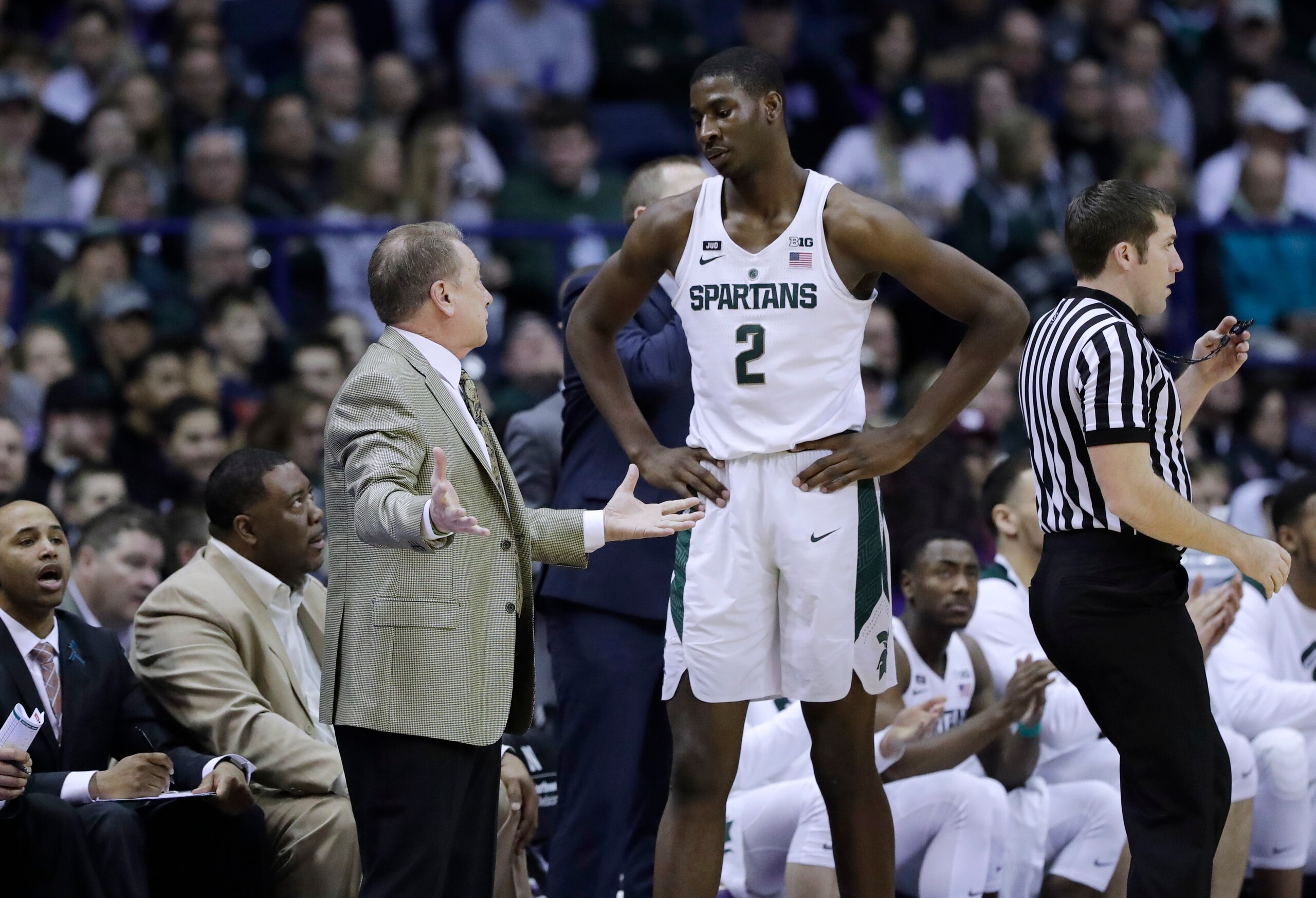
Scoring: B
Key stats: 18-of-22 on post-ups
Jaren Jackson Jr. has made a top-five case without advanced scoring ability. He's still been productive, averaging 20.8 points per 40 minutes, often working as a 4 around the perimeter. 25.8 percent of his offense comes out of spot-up situations. On those possessions, he's mostly a catch-and-shooter, but he's starting to show flashes of being able to attack a closeout and make a play.
Otherwise, Jackson's shot creation will show on simple drop-steps and jump hooks playing back to the basket. He's only missed four shots on post-ups all season. His finishing has been average, however, as he's made just 51.4 percent of his shots at the basket.
Shooting: A
Key stats: 42.2 percent on catch-and-shoot jumpers
Even with an unusual release, Jackson has been accurate, making 36 of 83 threes and 78.5 percent of his free throws. He doesn't shoot off the dribble (0-of-1), but the numbers point to Jackson being able to stretch the floor, assuming he can adjust to the NBA's arc despite his unorthodox mechanics.
Rebounding: B
Key stats: 14.9 rebounding percentage
Jackson has the tools to rebound, though his numbers (10.6 per 40 minutes) are closer to average. It's worth noting Michigan State plays three-big lineups with Jackson, Miles Bridges and Nick Ward. Jackson's uninspiring 8.3 offensive rebounding percentage may also be tied to his time spent playing away from the basket.
Defense: A+
Key stats: 15.1 block percentage
In the discussion for top defensive prospect in the draft, Jackson is blocking 5.9 shots per 40 minutes. His 15.1 block percentage ranks second in the country behind West Virginia's Sagaba Konate, who's over two years older. Jackson also ranks second in the country in defensive box plus-minus, and given his 7'4" wingspan, strong frame and lateral mobility, it's easy to picture his success carrying over.


Mohamed Bamba (Texas, C, Freshman)
4 of 10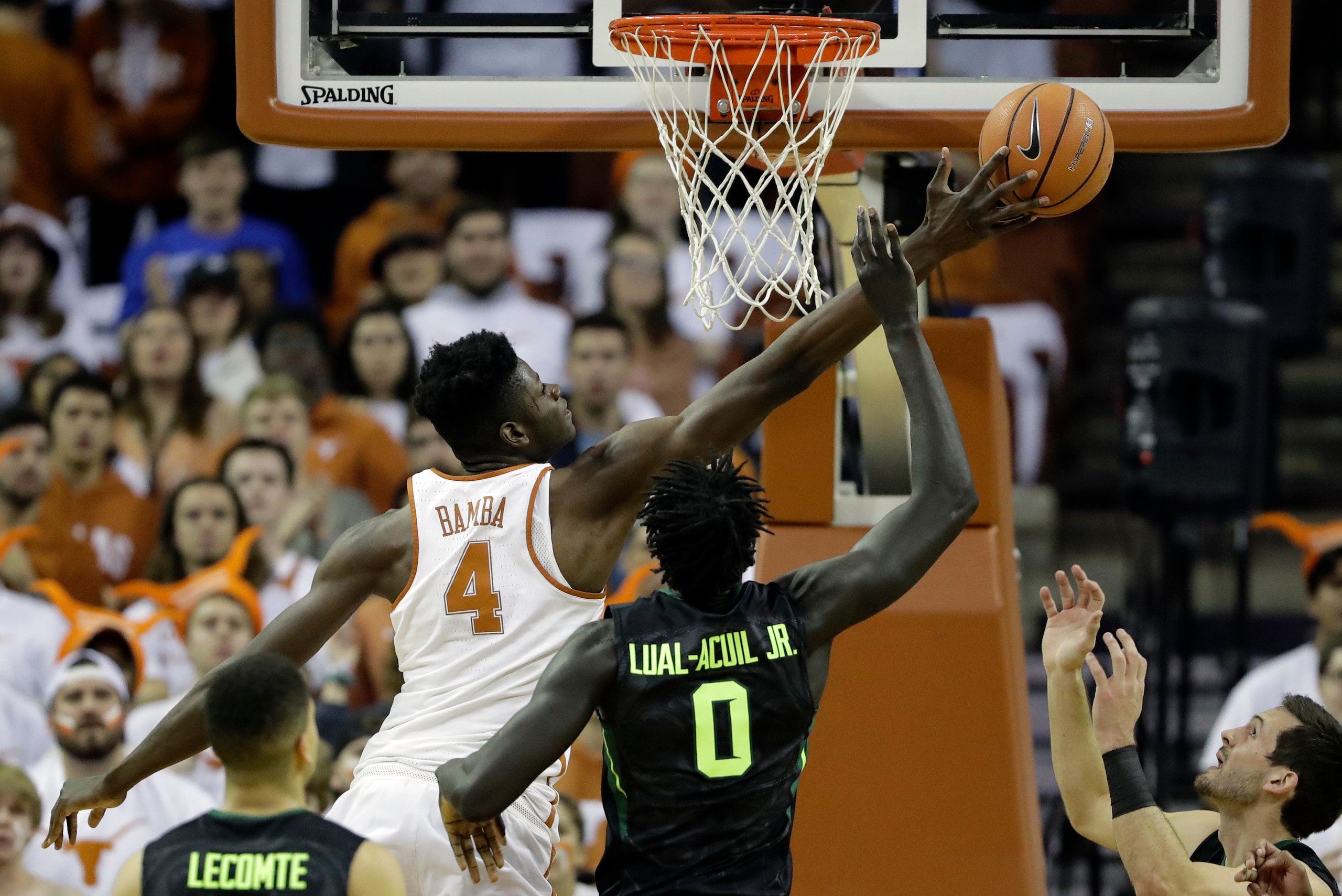
Scoring: B-
Key stats: 96th percentile on finishes at basket
Mohamed Bamba's value on offense stems from his ability to be a high-percentage finishing target. He plays above the rim and makes 74.0 percent of his shots around the basket. He's converting an average of 38.8 percent of his looks in the post, where he has a basic jump-hook game. And despite his size and length, he struggles as a pick-and-roll scorer (18th percentile), though Texas' guards aren't known for their setup passing skills.
Shooting:B
Key stats: 13 three-pointers
Bamba hasn't shot a high percentage on jump shots, but he has promising mechanics and shows the range and confidence to step out and knock down open threes (13-of-49). It may take a few years before Bamba starts hitting them in the pros, but it's a shot he can eventually have in his every-game bag.
Rebounding: A-
Key stats: 19.9 rebounding percentage
Bamba leads the Big 12 in defensive rebounding percentage (27.5). His size and length also translate to second-chance points on the offensive glass (33 made putbacks in 28 games). Even if he doesn't have the strength to move bigs below the rim, Bamba still projects as an effective rebounder thanks to his unique length.
Defense: A
Key stats: 13.1 block percentage
Teams will look at Bamba to strengthen their defensive identity by adding game-changing rim protection. His 3.8 blocks per game rank second in the country. He covers ground and airspace in the paint with fluid mobility and a spectacular 7'9" wingspan. And in flashes, he's shown the ability to get low and slide his feet against smaller, quicker ball-handlers in space.
Trae Young (Oklahoma, PG, Freshman)
5 of 10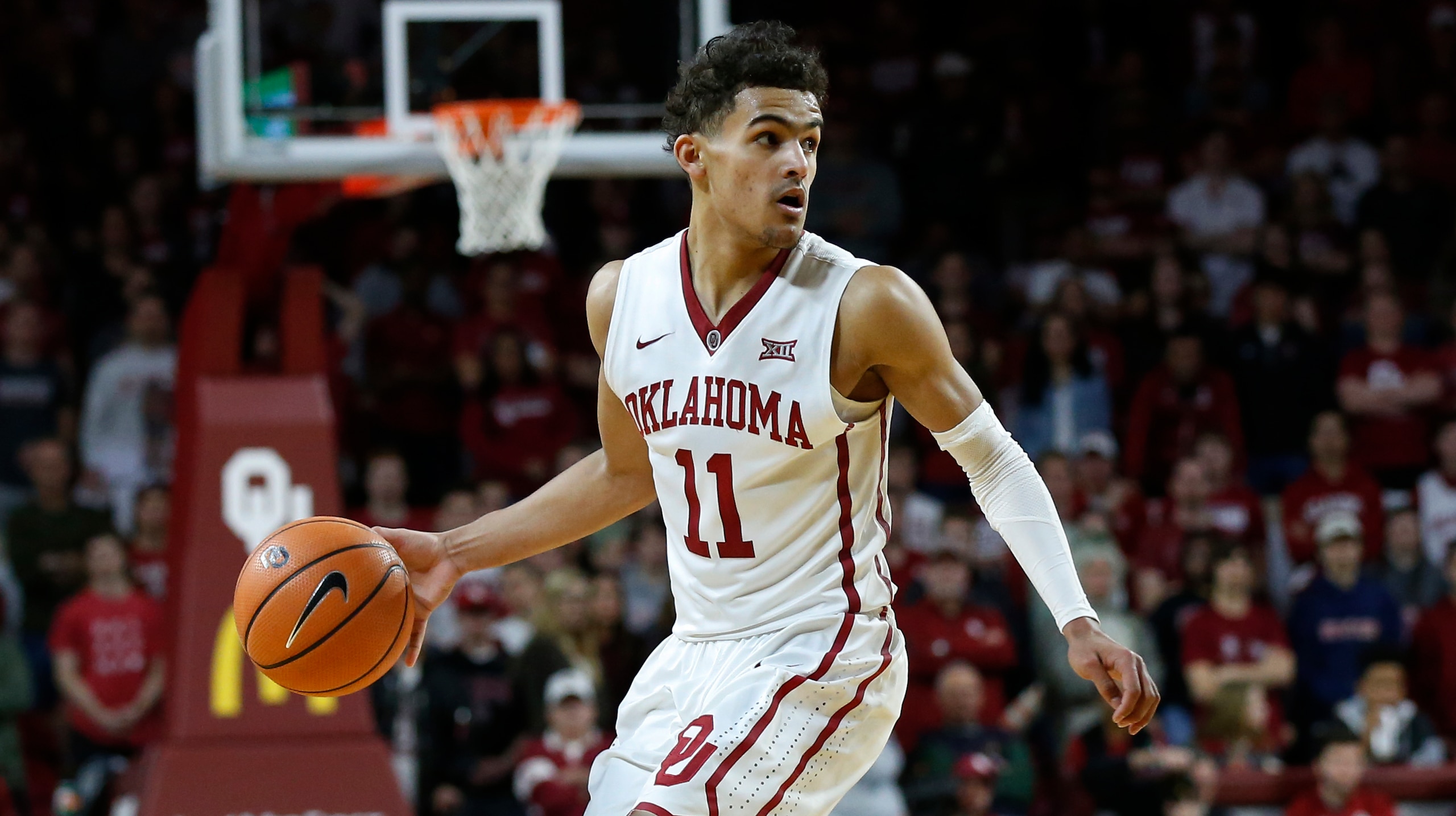
Scoring: A
Key stats: 28.3 points per game
The nation's leading scorer, Trae Young has buried defenses with high-level shot-making and change-of-speed driving. He's averaging 1.10 points per possession out of isolation (90th percentile), shooting 48.4 percent on those possessions that result in takes to the basket or pull-ups. He uses ball screens most, though, generating .88 PPP (74th percentile) as a pick-and-roll scorer.
Young also has an excellent floater (26-of-51), which could be key, given he's just an average finisher around the basket (48.7 percent) without standout strength, length or explosiveness. Young's shot selection and inefficiency (43.2 percent, 19.3 field-goal attempts per game) will also be talking points inside scouting departments.
Shooting: A-
Key stats: 91st percentile on shooting off the dribble
Young's 37.5 percent mark from three isn't spectacular, but the 107 makes through 28 games are. He does have a green light to shoot from anywhere, but he's shown enough range and confidence to pull up from beyond 25 feet and convert contested shots. Young is also making 85.6 percent of his 9.2 free-throw attempts per game.
Playmaking: A
Key stats: 49.9 assist percentage
Young leads the nation in assists, and though there are questions about how his scoring will translate, given his suspect tools, athleticism and shot selection, there is nothing to doubt about his playmaking. He easily breaks down defenses with his ball-handling and shiftiness, leading to collapses and open teammates. Young has impressive vision off the dribble. He's generating 1.21 PPP as a passer out of isolation (74th percentile) and 1.08 PPP as a pick-and-roll passer (72nd percentile).
He also leads the country in turnovers. Young can be nonchalant when pressured. He'll often try for unnecessary hero assists as well.
Defense: C
Key stats: 0.3 DBPM
Young's defense has become a concern. He works so hard on offense that he doesn't always have his legs defensively. Young can be easy to lose with a screen, which he struggles to fight through. He'll have a bull's-eye on his back once he gets to the NBA.
Marvin Bagley III (Duke, PF/C, Freshman)
6 of 10
Scoring (shot creation): B+
Key stats: 21.1 points per game
Averaging 21.1 points on 60.4 percent shooting, Marvin Bagley III has efficiently scored in volume. There are some questions about how well his offense translates, given how much he leans on athleticism and finishing at the basket (49.7 percent of offense), plus the idea he's just an average isolation scorer (42nd percentile) and jump-shooter (49th percentile).
Bagley's effectiveness around the basket (97th percentile) still holds value. He has 44 putbacks in 25 games, and he ranks in the 98th percentile on cuts to the rim. Bagley has also flashed a strong post game (76th percentile), particularly with his running jump hook, and he's a threatening ball-handler in space capable of beating his man and converting on the move.
Shooting: B-
Key stats: 17-of-48 on three-pointers
Bagley is capable from outside and looks comfortable shooting threes, but the small sample size and 62.3 percent free-throw mark raise questions. He doesn't shoot the softest ball. It seems unlikely Bagley will be able to rely on his jumper early in his NBA career.
Rebounding: A
Key stats: 18.6 rebounding percentage
Bagley has a powerful rebounding motor and nose for the ball inside. His 14.0 offensive rebounding percentage is strong. His activity under the boards appears likely to translate, even if his scoring versatility does not.
Defense: C-
Key stats: 26 blocks in 818 minutes
Bagley hasn't been convincing on defense, showing poor awareness and instincts when it comes to reading and making plays. Though quick enough to effectively slide in space, he doesn't do a great job of contesting shots. His 3.1 block percentage is amazingly low for a player with his size and bounce.
Mikal Bridges (Villanova, SF, Junior)
7 of 10
Scoring: B
Key stats: 97th percentile on spot-ups
A big jump in the scoring department has helped Mikal Bridges climb into the top-10 mix on draft boards. He's averaging 21.2 points per 40 minutes, up from 13.1 points a year ago. Bridges works mostly as a spot-up option (31.0 percent of offense), where he'll usually catch-and-shoot, but he also shows he can attack in a straight line.
Bridges has developed into a post option (15-of-29) and capable pick-and-roll ball-handler (84th percentile). However, he still needs to continue improving as a shot-creator and in-between scorer. He's only 5-of-15 out of isolation and doesn't have a floater in the arsenal (0-of-3).
Shooting: A-
Key stats: 41.9 percent on three-pointers
Bridges' shot mechanics are stiff, but he's been successful, averaging 2.4 threes per game. He's making 45.3 percent on catch-and-shoot jumpers and 83.3 percent of his free throws. The next step for Bridges is learning to shoot off the dribble (35.0 percent), something that could propel his scoring development.
Playmaking: C
Key stats: 10.8 percent assist percentage
Bridges isn't creative with the ball, and he's seen his assist percentage fall since last year. His average of 2.6 assists per 40 minutes is low for a perimeter player. Bridges has shown facilitating ability as a pick-and-roll ball-handler (93rd percentile), and he rarely turns the ball over (9.5 turnover percentage). Regardless, NBA teams shouldn't count on him for playmaking early in his career.
Defense: A
Key stats: 2.0 steals, 1.4 blocks per 40 minutes
Bridges covers ground defensively with his playmaking and versatility. He picks up steals and blocks with strong instincts, quickness and length, and he guards ball-handlers, wings and small-ball 4s. Bridges' defensive reputation has always been strong. His three-and-D potential should ultimately be a draw for every NBA team.
Wendell Carter Jr. (Duke, PF/C, Freshman)
8 of 10
Scoring: B+
Key stats: 21.2 points per 40 minutes
Wendell Carter Jr. isn't scoring in volume, but he's been consistent for a team loaded with weapons. He's reached double figures in 19 consecutive games. The post is Carter's office, and though he's only generating an average .77 points per possession there, his footwork and hook shot are fundamentally sharp. Carter also gets himself easy baskets by cutting (90th percentile) and crashing the offensive glass (90th percentile).
He's not a face-up shot-creator, which hints at lower upside and the likelihood he'll play minutes at center in the pros. Carter also isn't used often as a spot-up threat (8.9 percent of offense) or roll man (5.2 percent of offense).
Shooting: B+
Key stats: 18-of-36 on three-pointers
Carter doesn't take many jumpers, but he's making them at a solid rate, having hit 50.0 percent of his 36 three-point attempts. His mechanics are promising. Scouts sound confident in his potential to stretch the floor and become a consistent shooter in time.
Rebounding: A
Key stats: 18.7 rebounding percentage
Carter has good box-out technique and the strength to carve out space. He ranks in the 90th percentile on putbacks and averages 13.9 boards per 40 minutes. Despite lacking bounce, Carter's effort, tools and nose for the ball hint at his rebounding success in college carrying over.
Defense: B
Key stats: 7.9 block percentage
Carter is blocking 3.2 shots per 40 minutes and shows encouraging timing. However, his switchability is limited. Carter isn't particularly smooth or laterally quick guarding around the perimeter. Scouts question how well he'll be able to guard NBA 4s.
Kevin Knox (Kentucky, SF/PF, Freshman)
9 of 10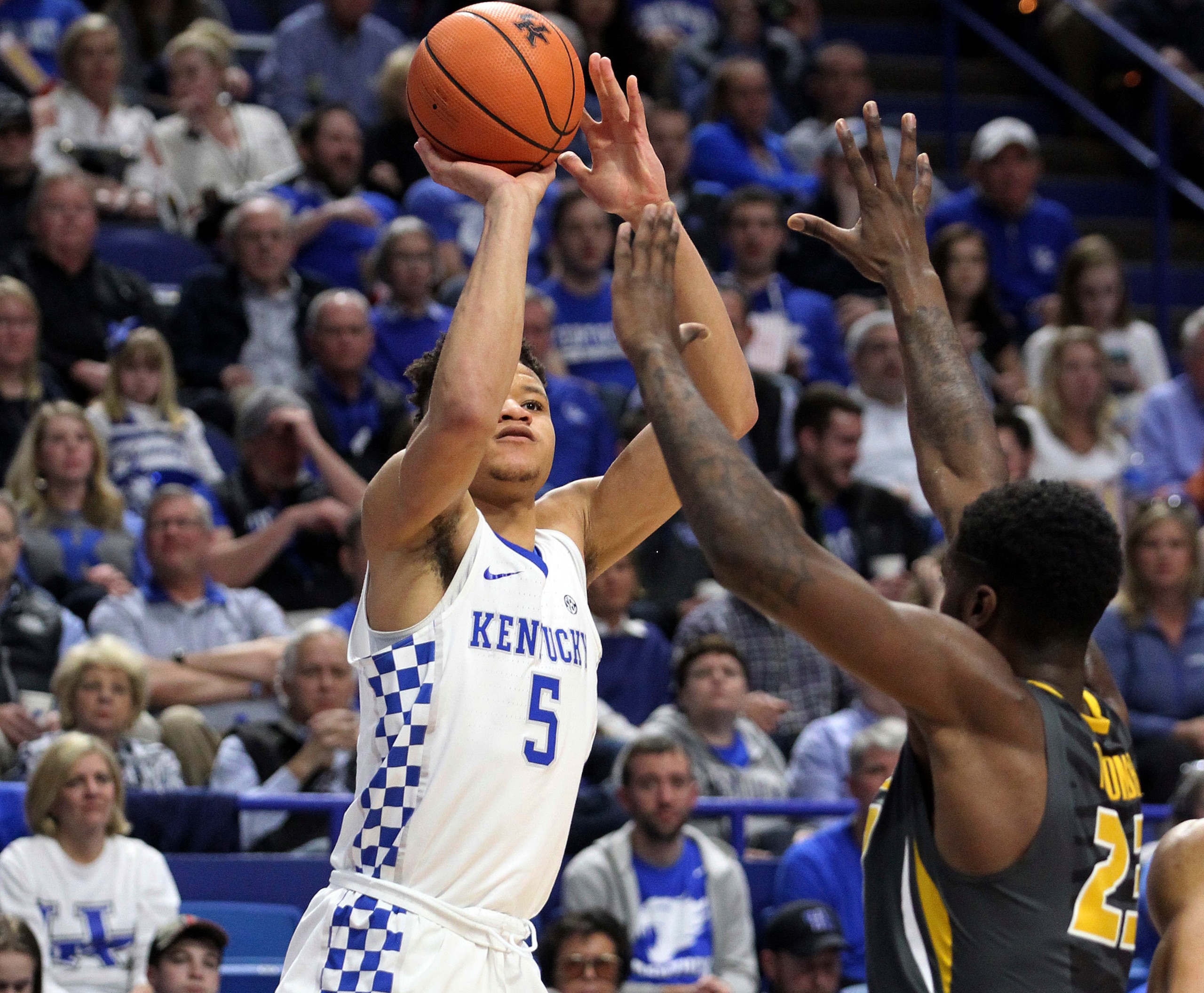
Scoring: B+
Key stats: 86th percentile on runners
Kevin Knox has emerged as Kentucky's top scoring threat (15.6 points per game), despite being just 4-of-17 out of isolation all season. Creating his own shot isn't a strength, but he finds ways to score off the ball and in transition (21.1 percent of his offense). On spot-ups (34.4 percent of offense), he's flashed a pull-up and runner game (combined 15-of-29). And he's making 48.6 percent of his shots coming off screens.
Shooting: B+
Key stats: 1.6 threes per game
Still 18 years old, Knox has unsurprisingly been an inconsistent shooter, but he's still making 1.6 threes at a 35.3 percent clip. He's shooting 39.5 percent on dribble jumpers and 77.7 percent at the free-throw line. Knox is more of a shot-maker than a shooter, but he appears to be on the right track when considering his age, mechanics and 47 three-point makes.
Rebounding: D
Key stats: 9.2 rebounding percentage
NBA coaches will want more rebounding from Knox, who projects as an NBA power forward. He's 6'9", 215 pounds and only brings in 6.7 boards per 40 minutes.
Defense: C-
Key stats: 1.1 steals, 0.3 blocks per 40 minutes
Knox offers minimal playmaking ability at either end of the floor. His 1.6 steal percentage and 0.9 block percentage are concerning. His effort isn't encouraging, either. Knox has a promising mix of size, length and athleticism, but his defensive IQ and intensity aren't up to par. His 1.5 defensive plus-minus is the second-lowest among Kentucky rotation players.
Collin Sexton (Alabama, PG, Freshman)
10 of 10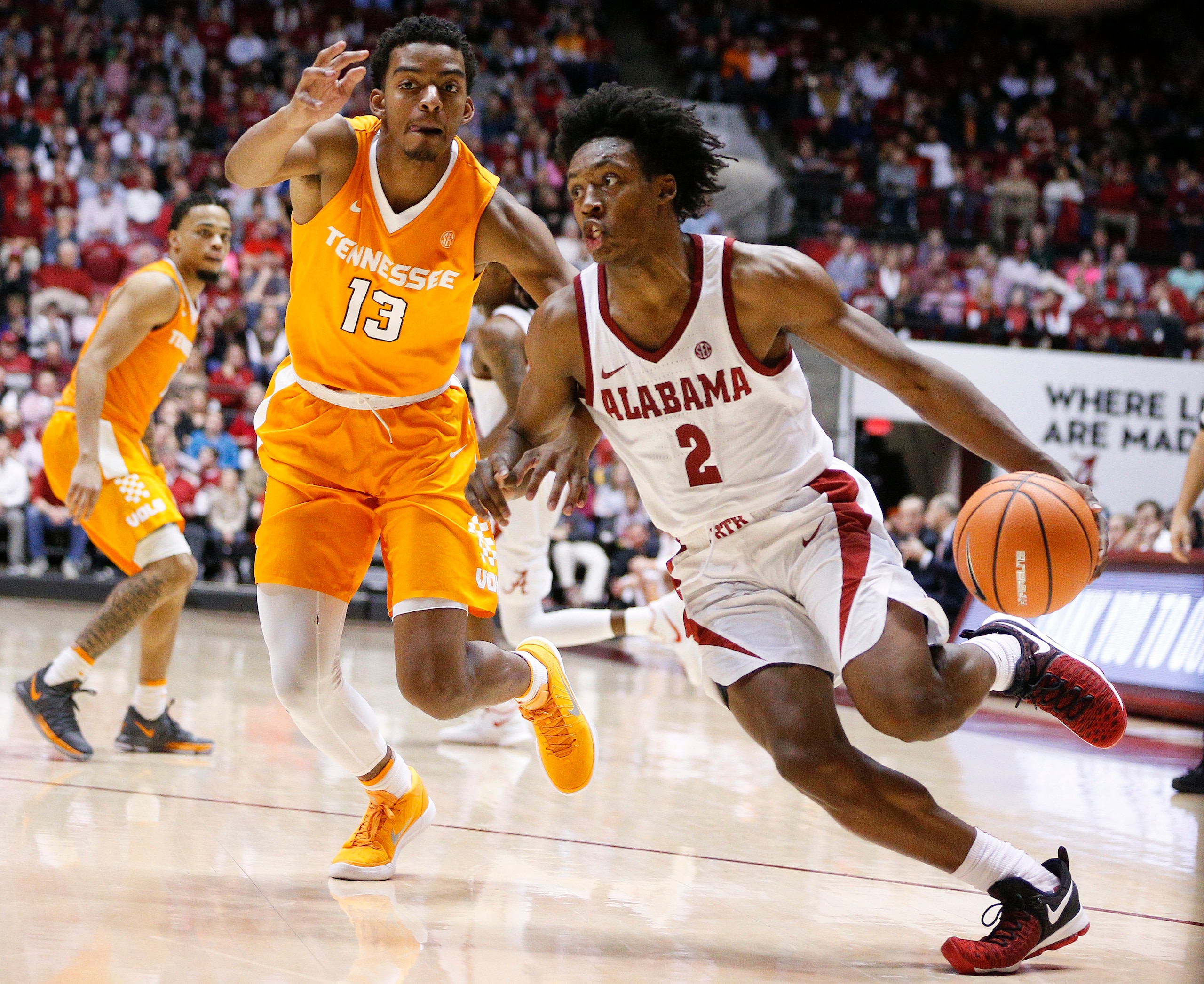
Scoring: A-
Key stats: 74th percentile out of isolation
A scoring point guard, Collin Sexton puts pressure on defenses with his attacking style and mentality. He's averaging 18.2 points, generating .92 PPP (80th percentile) as a pick-and-roll scorer and .94 PPP (74th percentile) as an isolation scorer. Sexton gets to the line 7.3 times per game, but he's just an average finisher around the basket (48.5 percent). And though capable of making shots from all three levels, he's only 6-of-21 on runners and shoots 29.2 percent on long two-point jumpers.
Shooting: B-
Key stats: 1.3 three-pointers per game
Sexton doesn't get great arc on his shot, which looks relatively flat. Since December 19, he's made just 24.3 percent of his threes. He's more effective pulling up off the dribble (35.6) than catching and shooting (23.8 percent), though it's encouraging to see Sexton make 77.4 percent of his free throws.
Playmaking: C
Key stats: 26.6 assist percentage
Sexton hasn't built a convincing case as a playmaker, averaging 3.5 assists to 2.5 turnovers. His .84 PPP on pick-and-roll passes is in the 28th percentile. Sexton's scoring instincts are far ahead of his facilitating instincts. He also passes out of isolation just 18.2 percent of the time.
Defense: B+
Key stats: 1.9 steal percentage
Sexton's defensive numbers aren't exciting (1.0 steal per game), but he plays with intensity and shows the quickness to stay attached one-on-one or recover after being screened. He has the tools and approach to develop into a defensive asset capable of guarding both backcourt positions.
Stats courtesy of Synergy Sports Technology or Sports Reference unless otherwise noted.


.jpg?w=2560 "Viral Rams Coach Vid 🖕")
.jpg?w=2560 "Injury-stricken Seahawks signing veteran RB")
.jpg?w=2560 "Grading WWE Raw 🔠")
.jpg?w=2560 "2 NFL Officials Suspended")
.jpg?w=2560 "Mahomes' Wife Trolls Kubiak 💀")
