

Pyeongchang Winter Olympics 2018: Day 8 Winners and Losers
While the trend of Americans finishing just shy of a medal continued on Day 8 of the 2018 Pyeongchang Games, the biggest storyline happened in Alpine skiing.
Lindsey Vonn made her triumphant return in Super-G, but she and the entire field watched as a snowboarder-by-trade secured perhaps the most unlikely gold medal of the Winter Olympics.
Elsewhere, short-track speedskating looked more like roller derby with crashes all over the place, Team USA had another poor performance, and men's hockey and a woman with a condition that doesn't seem conducive to the skeleton won a gold medal anyway.
Read on for the rest of Day 8's biggest winners and losers.
Winner: History in Men's Figure Skating
1 of 11
They say, "Go big or go home."
Well, Nathan Chen went huge. The 18-year-old set an Olympic record with six quads in his free skate, also breaking his own personal-best score with a 215.08.
He registered the fifth-highest free skate of all time, and the stellar routine vaulted Chen to a total score of 297.35 and into contention for a medal. Efforts don't get much more valiant.
Chen missed the podium, but the man on the highest step deserved every bit of the honor. Japan's Yuzuru Hanyu became the first men's figure skater since USA's Dick Button (1948, 1952) to win gold in consecutive Olympics.
Japan's Shoma Uno and Spain's Javier Fernandez rounded out the medals with silver and bronze, respectively.
Loser: Lindsey Vonn's Debut
2 of 11
For about 90 percent of her run, Lindsey Vonn's first Olympic race in eight years looked so promising.
But on the final turn, just three gates from the finish, she slid off the course. Vonn recovered and posted a time of 1:21.49, but she fell out of medal contention and finished tied for sixth. Without the bobble, Vonn likely would've won the super-G.
"I attacked. I gave it everything I had. I have no regrets," she said on NBC after the race. "I made the mistake on the bottom, but that's what happens in super-G. Disappointed, but I'm not upset because all you can do is give it your best, and that's what I did."
Vonn's best event is downhill—which is scheduled for Tuesday at 9 p.m. ET (Wednesday at 11 a.m. in South Korea)—so she still has a chance to medal.
Winner: Ester Ledecka, Czech Republic
3 of 11
Ester Ledecka is a two-time world champion. That she won a gold medal at the Olympics is not surprising.
But it certainly wasn't expected to happen in super-G, since the 22-year-old is a snowboarder and had never finished above 19th in a World Cup event in the discipline, per Nick Zaccardi of NBC.
Read that again if you need.
Although Ledecka is the favorite in parallel giant slalom, she finished atop the podium in the super-G of Alpine skiing. The versatile Czech edged Austria's Anna Veith by 0.01 for the gold. It was so unexpected that NBC had already crowned Veith the winner.
Ledecka only further proved that it's not over until it's over.


.jpg?w=2560 "Rams Raiders Football")
Loser: Team USA Men's Hockey
4 of 11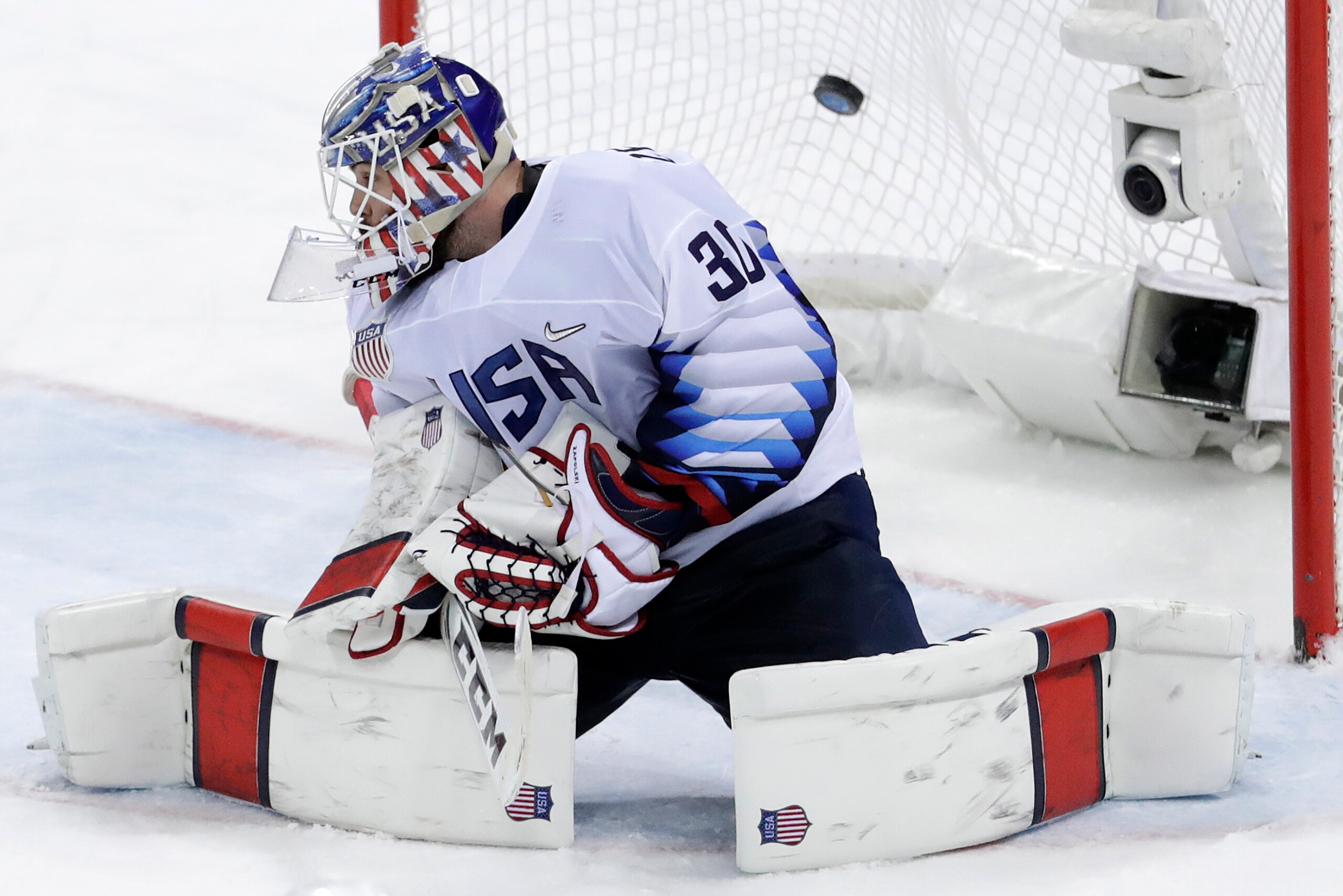
As a reminder, the round-robin portion of the men's ice hockey tournament doesn't really matter. The winners of each group and the highest-scoring runner-up get a bye into the quarterfinals, but all 12 teams advance to the knockout round. Each country's first three games just determine seeding.
That said, Team USA had a horrendous showing against the Olympic Athletes from Russia in what was an opportunity to win Group B and earn either the No. 2 or No. 3 overall seed in the tournament. Instead, the Americans lost 4-0.
Ilya Kovalchuk and Nikolai Prokhorkin led the way for OAR with two goals each. Kovalchuk's goals came just 30 seconds apart, as he found the net with less than two seconds remaining in the second period and did so again just 28 seconds into the third.
Group B was the first to finish, so the Americans will need to wait a couple of days to find out their seed and their draw for the classifications round. Things aren't looking great, though. They lost to Slovenia in the opener and only beat Slovakia 2-1 in the second round-robin game.
Given the draw, the expectation was that USA and OAR would both be 2-0 heading into this game with the loser potentially getting the one runner-up free pass into the quarterfinals. Instead, the Americans finished third in their group and are likely heading for a No. 7 or No. 8 seed.
Winner: Tina Weirather, Liechtenstein
5 of 11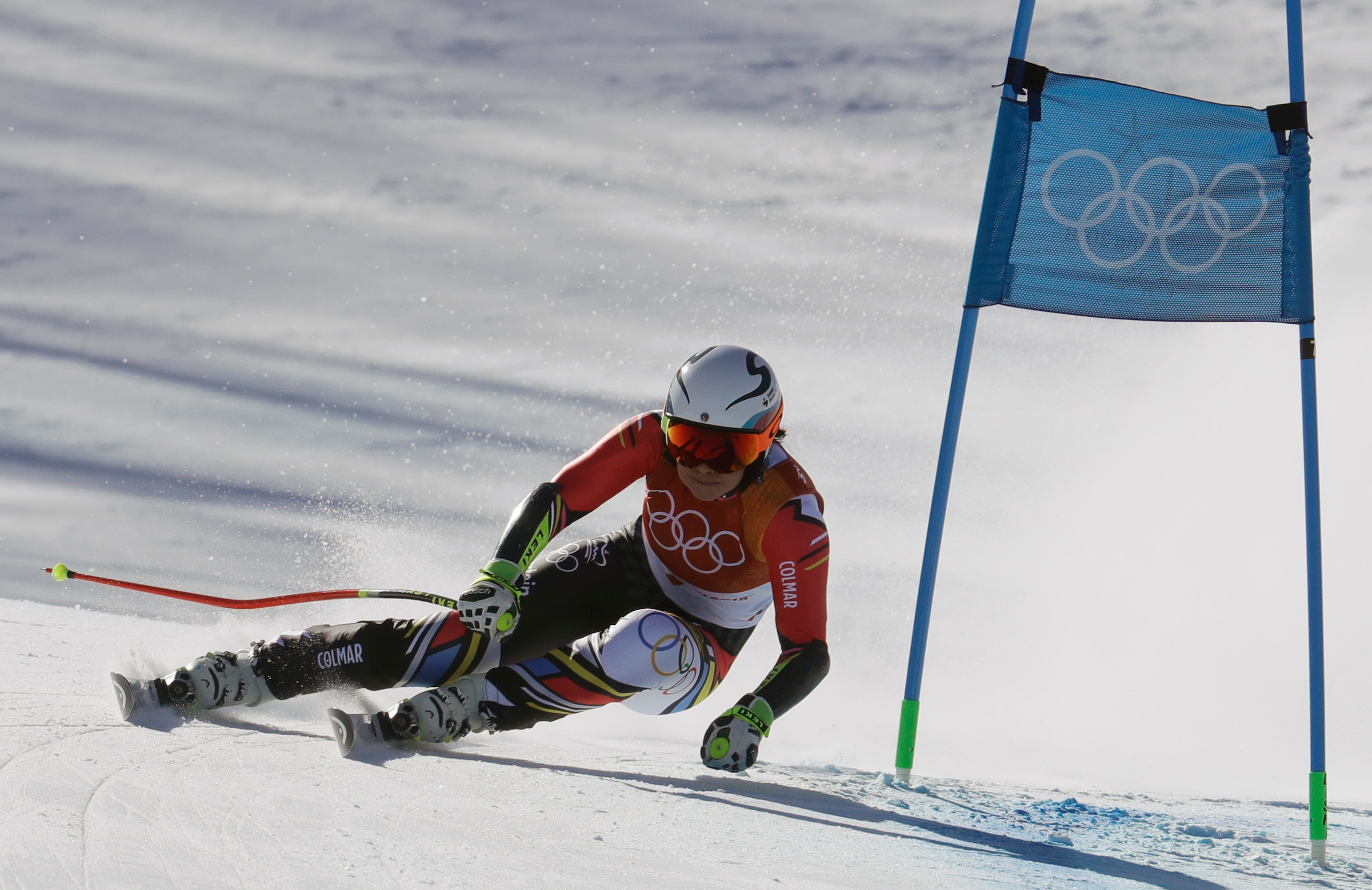
Liechtenstein has a grand total of three representatives in Pyeongchang, but the tiny nation—with a population slightly below 38,000—is leaving South Korea with bronze in the ladies' super-G.
And it's no surprise Tina Weirather earned it.
She's the daughter of four-time Olympic medalist Hanni Wenzel and niece of two-time medalist Andreas Wenzel. That hardware has accounted for six of Liechtenstein's nine all-time medals, and Weirather added a seventh for the family (and a 10th for the country).
As much attention as Vonn has received for her comeback effort, Weirather's story is just as captivating. Though she appeared in the 2006 Turin Games, injuries knocked her out of the last two Olympics. But now, Weirather has etched a place in history.
Loser: Top Qualifiers in Ladies' Ski Slopestyle
6 of 11
In events with qualification rounds on the same day as the finals, the eventual medalists tend to put down the fastest runs or the highest scores in that opener.
In Day 7's ladies' snowboard cross, for example, Eva Samkova and Michela Moioli had the two fastest qualification times before reaching the podium. Similar story on Day 4 with both the men's and women's cross-country sprint events, in which two of the three fastest qualifiers went on to win some hardware.
But in the ladies' ski slopestyle, that generality didn't hold true.
In the first of the two qualifying runs, Sweden's Emma Dahlstrom posted a 91.4. This proved to be the highest score of the entire event, but she was unable to come anywhere close to duplicating it when it mattered in the finals. In fact, even if you add up the scores from all three of her runs in the finals—16.6, 52.4, 15.4—it wasn't even enough to match what she accomplished in her first. Dahlstrom finished in 11th place.
The other top qualifiers didn't fare much better. Norway's Tiril Sjaastad Christiansen and Johanne Killi had the second- and third-highest qualifying scores, only to finish in ninth and fifth place, respectively.
Winner: Choi Minjeong, South Korea
7 of 11
Choi Minjeong was a hard-luck loser in the ladies' 500m short-track speedskate on Day 4 in Pyeongchang.
The hometown favorite twice set the Olympic record at that distance in the opening rounds before crossing the finish line in second place in the final race. However, after a lengthy video review, Choi was disqualified for interference—which many of her fans did not take well, sending Canada's Kim Boutin death threats on social media, per the CBC.
Choi got redemption in the 1,500m. And there was no controversy this time around.
In the final race, she stayed toward the back of the seven-women pack for the first 10 laps, but Choi made her move with three laps remaining. She flew around the outside to take a commanding lead and went on to win by 0.755 seconds, an eternity in short-track speedskating. (The difference between second and fifth place was 0.252 seconds.)
"When she said it was time to go, she just completely left everyone in her wake," play-by-play commentator Ted Robinson said.
Loser: Crashes in Short-Track Speedskating
8 of 11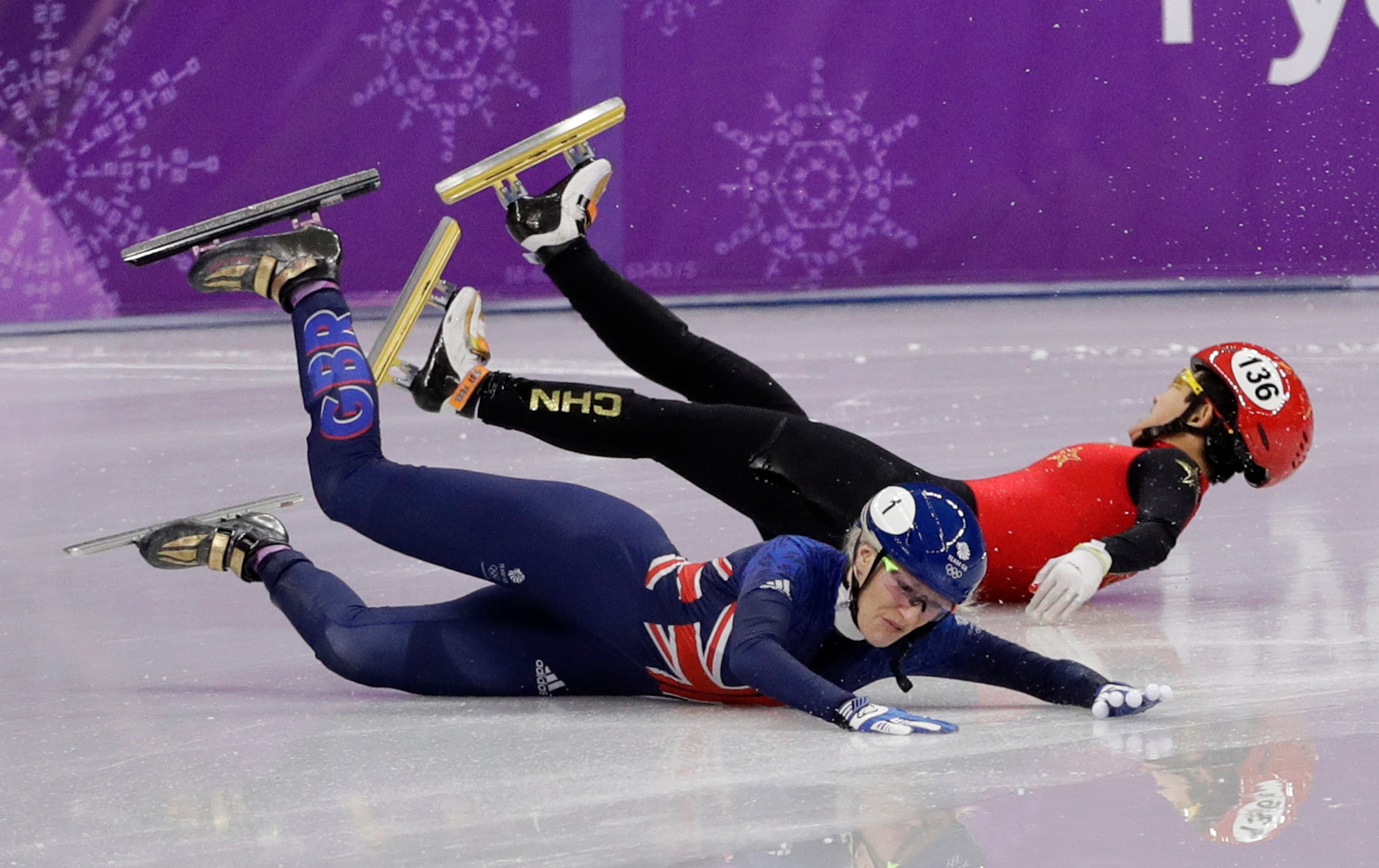
There's not much that can be done to prevent it, but wipeouts in short-track speedskating have been occurring at an alarming rate.
In each of the three semifinals of the ladies' 1,500m, two of the skaters were either penalized for interference or finished more than 25 seconds behind the rest of the field because of a crash. The final race was clean, but it took a lot of chaos and video review to get to that point.
The early rounds of the men's 1,000m event were surprisingly devoid of multi-skater pileups, but they were just saving up for the medal race. With two laps remaining in the finals, Hungary's Shaolin Sandor Liu tried to bypass two South Korean skaters on the inside of the track. Instead, the Hungarian crashed to the ice and took both Koreans with him, leaving just two men racing for gold and silver.
Normally, the crashes are heartbreaking, but they don't actually cause much physical pain. But for Great Britain's Elise Christie, it was a different story. Christie—who also wiped out in the finals of the 500m earlier in the week—got tangled up with China's Li Jinyu near the end of the third semifinal of the 1,500m. She hit the wall hard and awkwardly, injuring her leg. Christie was taken off the ice on a stretcher.
Winner: Anastasiya Kuzmina, Slovakia
9 of 11
There are 56 Olympians competing under the flag of Slovakia, but thus far, Anastasiya Kuzmina has been the one doing all of the winning.
The country has earned three medals in Pyeongchang, each one by Kuzmina. She took silver in the women's 10km pursuit biathlon on Monday, another silver in the 15km individual on Thursday and claimed the gold in Saturday's 12.5km mass start event.
She dominated this one from start to finish, leading at every interval.
The shooting portions of the three previous events are what doomed her. Kuzmina missed three targets in the 7.5km sprint, finishing in 13th place. She also missed four targets in the 10km and two more in the 15km. Without those penalty laps, she would have been even more dominant.
In the mass start, though, Kuzmina hit each of her first 19 targets before finally missing the last one. By that point, though, she had opened up such a commanding lead that it didn't much matter. She still won by more than 18 seconds.
Kuzmina now has six Olympic medals in her career. She won gold in the sprint classic in both 2010 and 2014 and got a silver in the pursuit in 2010.
Loser: Team USA's Medal Count
10 of 11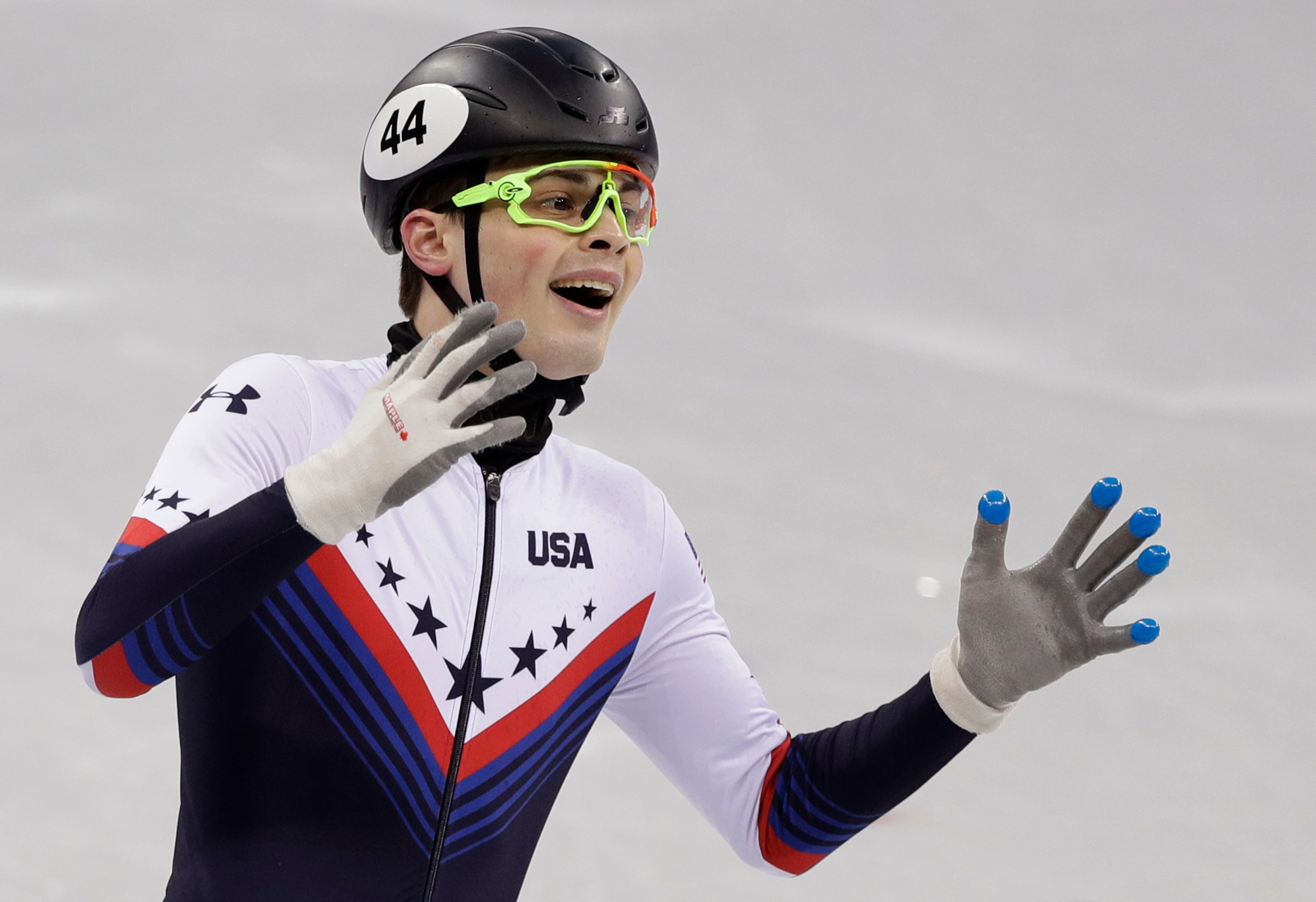
The United States usually finishes near the top of the medal table. In 2002, 2006 and 2014, the Americans finished second in total medals. And in 2010 in Vancouver, the Americans came away with more medals than any other country.
With more than half of the medals having now been awarded in Pyeongchang, it's beginning to look like Team USA won't even finish in the top four this year.
There were nine medal events on Day 8. Shout out to John-Henry Krueger for winning the silver in the men's 1,000m short-track speedskate, but he was the exception to the rule as the only American earning a medal—this after Team USA went 0-of-21 on Day 7.
Meanwhile, Norway (three), Germany (three) and Canada (two) padded their lead on the medal table with multiple Day 8 medals. They are now at 22, 17 and 15, respectively. USA is in a four-way tie for fifth place with Austria, Japan and Olympic Athletes from Russia at just nine medals.
With no more snowboarding medals being awarded until Friday night in America (Saturday morning in South Korea), don't be surprised if the Americans slip a little further down that list in the next few days.
Winner: Lizzy Yarnold, Great Britain
11 of 11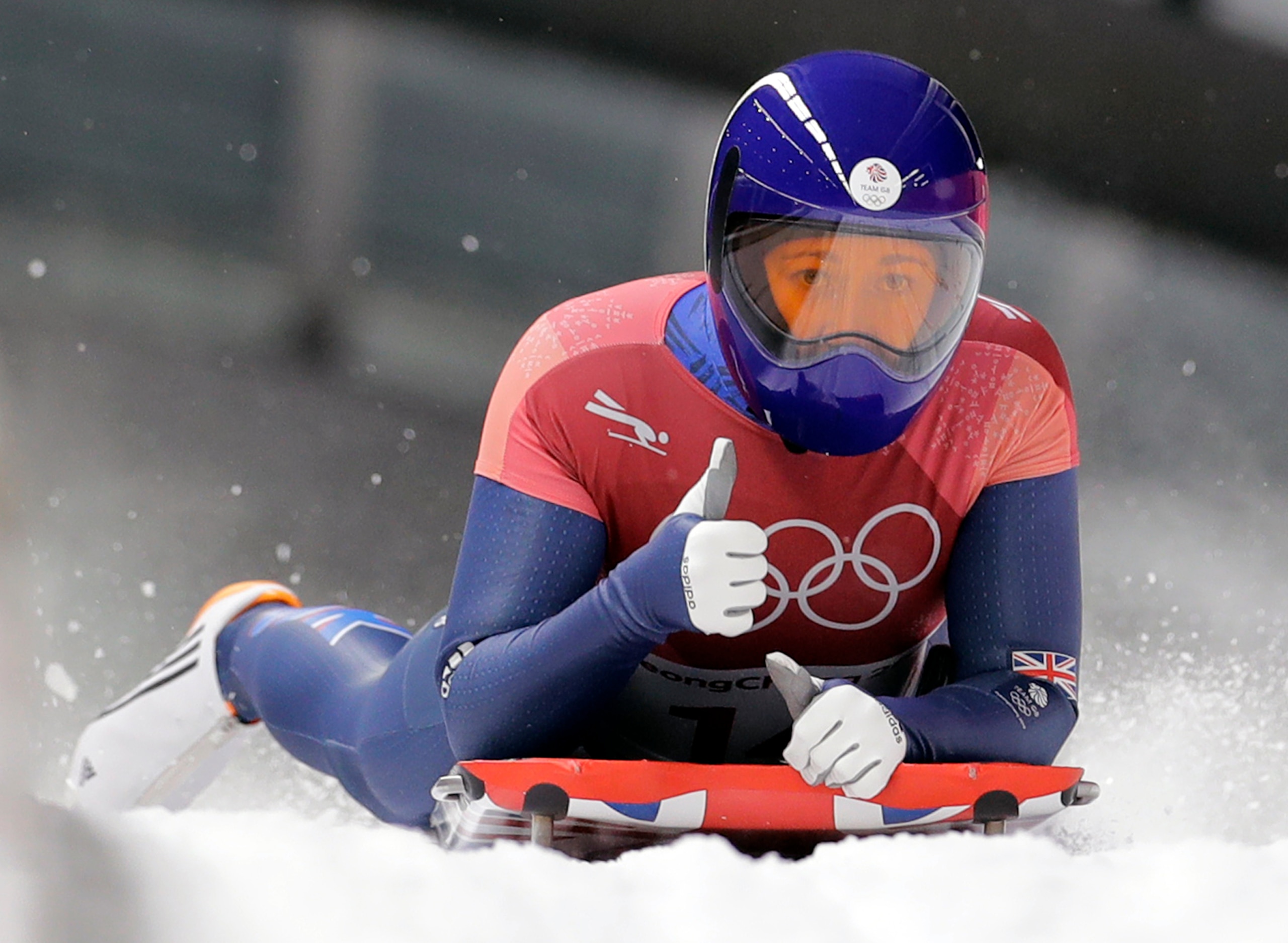
Just the thought of racing face-first down a skeleton track at 90 miles per hour could make anyone feel a little dizzy.
Even gold medalists.
Great Britain's Lizzy Yarnold was diagnosed with a vestibular disorder in September, which has been known to cause vertigo and dizziness, as well as balance and vision problems.
"The condition I have is more like a travel sickness," she told the BBC. "When I'm going down the track, sometimes I can get disorientated."
That appeared to be the case after she completed her second run on Day 7, staggering off the track with some assistance. But she was back for Runs 3 and 4 on Day 8 in hopes of adding a second gold medal to her collection. (Yarnold won the women's skeleton event in 2014.)
She did just that, posting a track-record time of 51.46 seconds in her final run to lock up the top spot on the podium.




.jpg?w=2560 "Rodgers Iced Out on Plane 💎")
.jpg?w=2560 "🚨 Week 8 AP Top 25 Poll")
