
Mikaela Shiffrin's 1st Gold Medal Sets Her Up Perfectly for Historic Olympics
PYEONGCHANG, South Korea — Mikaela Shiffrin did something on Thursday she's normally not able to do. She ate her breakfast. Typically, on race days, the 22-year-old alpine skier struggles to eat much of anything, but on the morning of her long-anticipated debut race at the 2018 Winter Olympics, she completed what’s normally a much taller task.
"I guess it's a good thing," Shiffrin told herself. "Just go with it."
It served as a precursor for later in the day, when Shiffrin did something she’d never done before: come from behind to win a giant slalom event. And what a time to do it, in the mountains of the Yongpyong Alpine Center and with an Olympic gold medal at stake. Shiffrin came into the day considered to be in the mix for the podium, but unlike many events where the American skier is considered a favorite, giant slalom posed a taller task as Shiffrin's "weakest" event, historically speaking.



"Weakest" is, of course, a relative term. Shiffrin is undisputedly the best women's skier in the world right now, and everyone knows it. This is just the beginning of what many expect to be a historic Games for Shiffrin, who's predicted to be adorned with multiple gold medals by the end of proceedings.
The gold came into the conversation after her first run, when she put down the second-best time in the group, clocking in at 1:10.82, providing a strong foundation for the second run, which would come more than four hours later.
She spent some time with her family, her coaches and her boyfriend and took a nap, noise-canceling headphones equipped, music playing to drown out the noise. Windy conditions delayed her ambitious Olympic schedule, but any doubts settled quickly by the end of her second run. Her first gold medal gave her an opportunity to become just the second female skier to win three gold medals at a single Olympics.
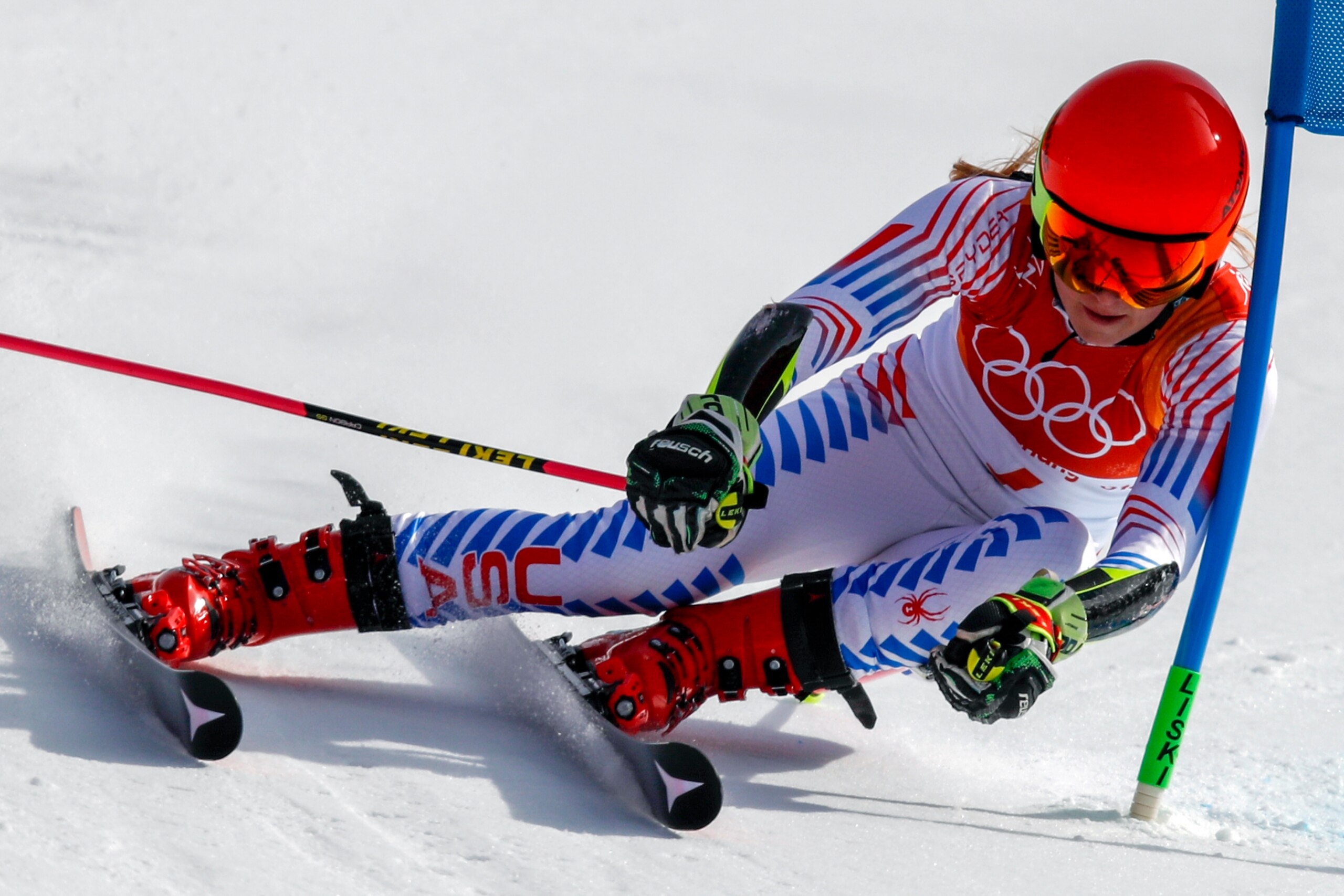
"It's just much more difficult for me to find a good rhythm in giant slalom," Shiffrin said. "I need to train it a lot. I need to be in a good mood. I need to be aggressive and all of these other things. It's been more difficult than slalom for me. I'm starting to find a connection with that this year, and to do that today was amazing."
Shiffrin trailed Italy's Manuela Moellg by 0.2 seconds after the first run, with many of the event's favorites below them in the leaderboard. In order to earn her first gold of the Games, Shiffrin needed to sharpen her focus. She needed to shake off the jitters from earlier in the morning. As others skied aggressively in pursuit of a medal and slipped and crashed in the process, Shiffrin tried to keep her mind straight.
"I was happy with my first run," Shiffrin said. I knew that I could be cleaner and more aggressive. The second run, I loved how the course looked. I had to build on what I did in my first run and on the bottom run, I needed to be as aggressive as I could. I was watching all these girls go down on the second run and attacking. Everyone wants gold. Everyone is skiing to win. It left me with no choice but to do the same thing."
The United States women's ski team head coach, Mike Day, knew Shiffrin could improve on her first run and that the gold was within reach. He'd seen the huge progress she'd made in the giant slalom since her fifth-place finish in Sochi four years ago. She steadily improved in the technical aspects of the event and finished second at last year's world championships.
"Run 1 was a far cry from the skiing she has been doing," Day said. "Getting to watch her ski every day is a huge advantage for me. It makes me look really smart when I come out and say that her performance wasn't super surprising. To do it on demand like that, her giant slalom has been really sharp in the buildup here in Korea. It's been her best skiing of the year, and her command allows her to do that."
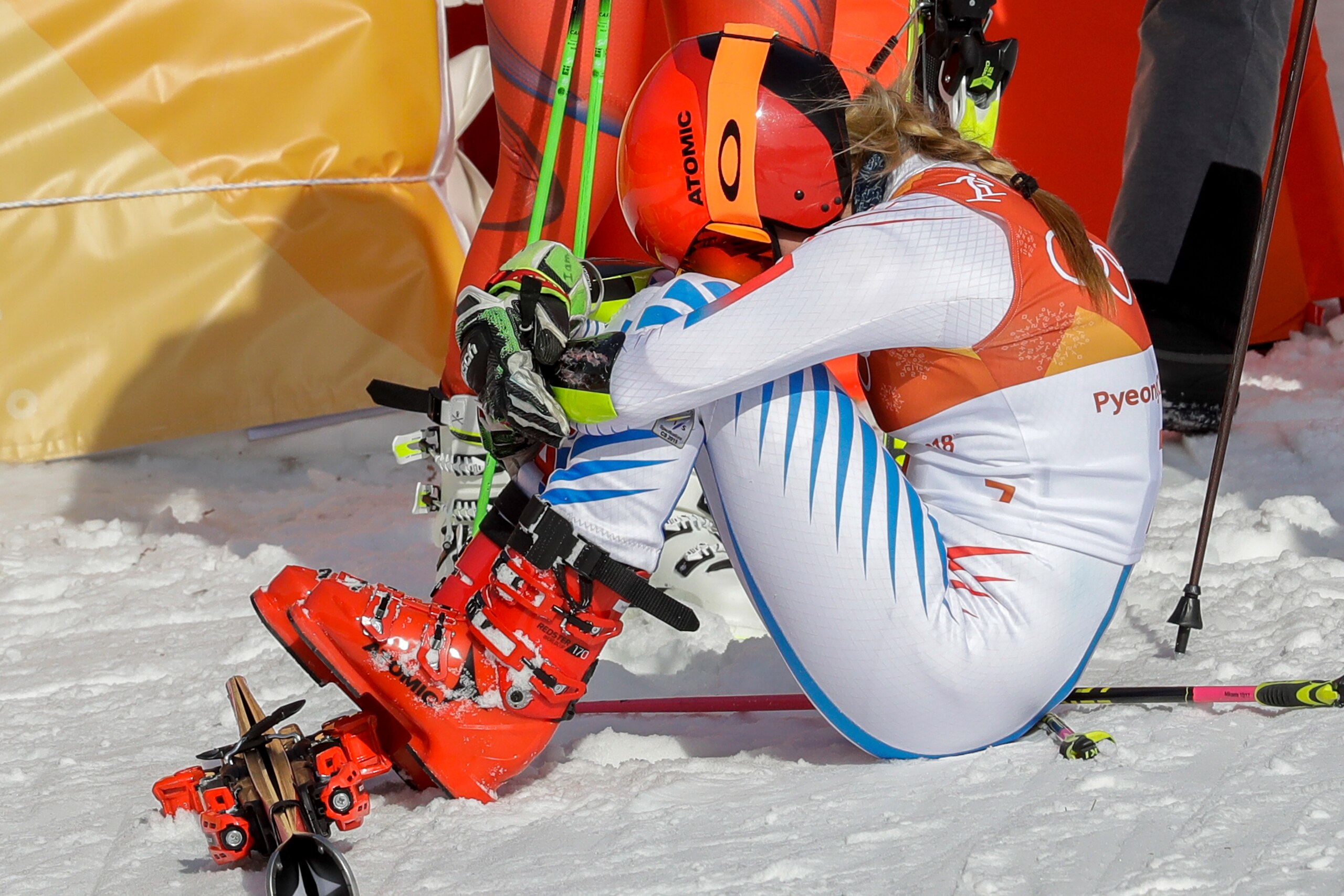
Her debut at these Olympics comes two days after it was first scheduled to happen. The delays and cancellations, admittedly, affected Shiffrin, throwing a wrench into the schedule preparation. (She won’t be competing in the super-G event in order to get more rest.)
"It's definitely been a mental strain thinking we were going to race and then not racing," Shiffrin said. "To finally have the race actually happen, I really hoped that I could do it when the time came. I did. Now we've got the ball rolling and I'm really excited for tomorrow."
While Shiffrin will come out of Pyeongchang with at least one gold medal, the natural follow-up question is how many more? At this point, the question is not about whether she’s the best female skier in the world.
It’s about how much better she is than everyone else in the world.
.jpg?w=2560 "Rams Eagles Football")
.jpg?w=2560 "Texans-Mixon Released Football")
.jpg?w=2560 "2 NFL Officials Suspended")

.jpg?w=2560 "Grading WWE Raw 🔠")
.jpg?w=2560 "Mahomes' Wife Trolls Kubiak 💀")

