Pyeongchang Winter Olympics 2018: Day 1 Winners and Losers
The first five medal events at the 2018 Pyeongchang Games have concluded, and Team USA is still searching for its first trip to the Olympics podium.
Rather, Day 2 was a big one for Netherlands and Scandinavia. The former swept the ladies' 3,000-meter speed-skating event and took silver in men's 1,500-meter short-track speed skating. The latter owned the 15-kilometer ladies' skiathlon event with Sweden, Norway and Finland taking gold, silver and bronze, respectively. Germany also had a huge day, taking gold in both the men's normal hill ski jump and the women's 7.5-kilometer biathlon.
It wasn't all bad news for the Americans, though.
Chris Mazdzer is in the hunt for a medal after two of four runs in the men's singles luge. Redmond Gerard advanced to the finals of the men's snowboard slopestyle. And everyone's favorite ball of energy and joy, Maame Biney, qualified for Tuesday's quarterfinals in ladies' 500-meter short-track speed skating.
Read on for the rest of the biggest winners and losers.
Winner: Teen Slopestyle Phenoms
1 of 8
Marcus Kleveland and Redmond Gerard entered Pyeongchang as top snowboard slopestyle medal contenders, and the youngsters didn't disappoint.
In Heat 1, the 18-year old Kleveland put down a 83.71 to lead the group and reach the final. The Norwegian won gold in slopestyle at the last two Winter X Games.
Gerard, the top American medal hope in the discipline, recorded an 82.55 in Heat 2 to qualify for the 12-man final at age 17.
Canadian star Mark McMorris, the bronze medalist in the 2014 Sochi Games, notched an 86.83 in Heat 2. The 24-year-old veteran, along with teammate and heat winner Max Parrot, will be the biggest competition for Kleveland and Gerard in the final.
Loser: USA Mixed Doubles Curling
2 of 8
Matt and Becca Hamilton opened the mixed doubles tournament with a victory over the Olympic Athletes from Russia, but the siblings have struggled in recent days.
They dropped four straight games, falling to Canada (4-6), losing late to Switzerland (4-9) despite controlling the match, plodding against South Korea (1-9) and coming up short to China (4-6).
The 1-4 record effectively eliminated the Hamiltons' hope of reaching the playoffs and competing for a gold medal. They did bounce back a bit with a 10-3 win over Norway in the sixth round robin session, but Switzerland's simultaneous win over South Korea ended the possibility of a medal for #HamFam.
Fortunately for Matt and Becca, they'll compete in the upcoming men's and women's tournaments. And respect to Matt for embracing the jokes about his hat, red shirt and mustache combo making him look like Nintendo's Mario. He even tweeted a picture of himself with a raccoon tail and a koopa shell for a stone.
Winner: 1st Medal of Pyeongchang
3 of 8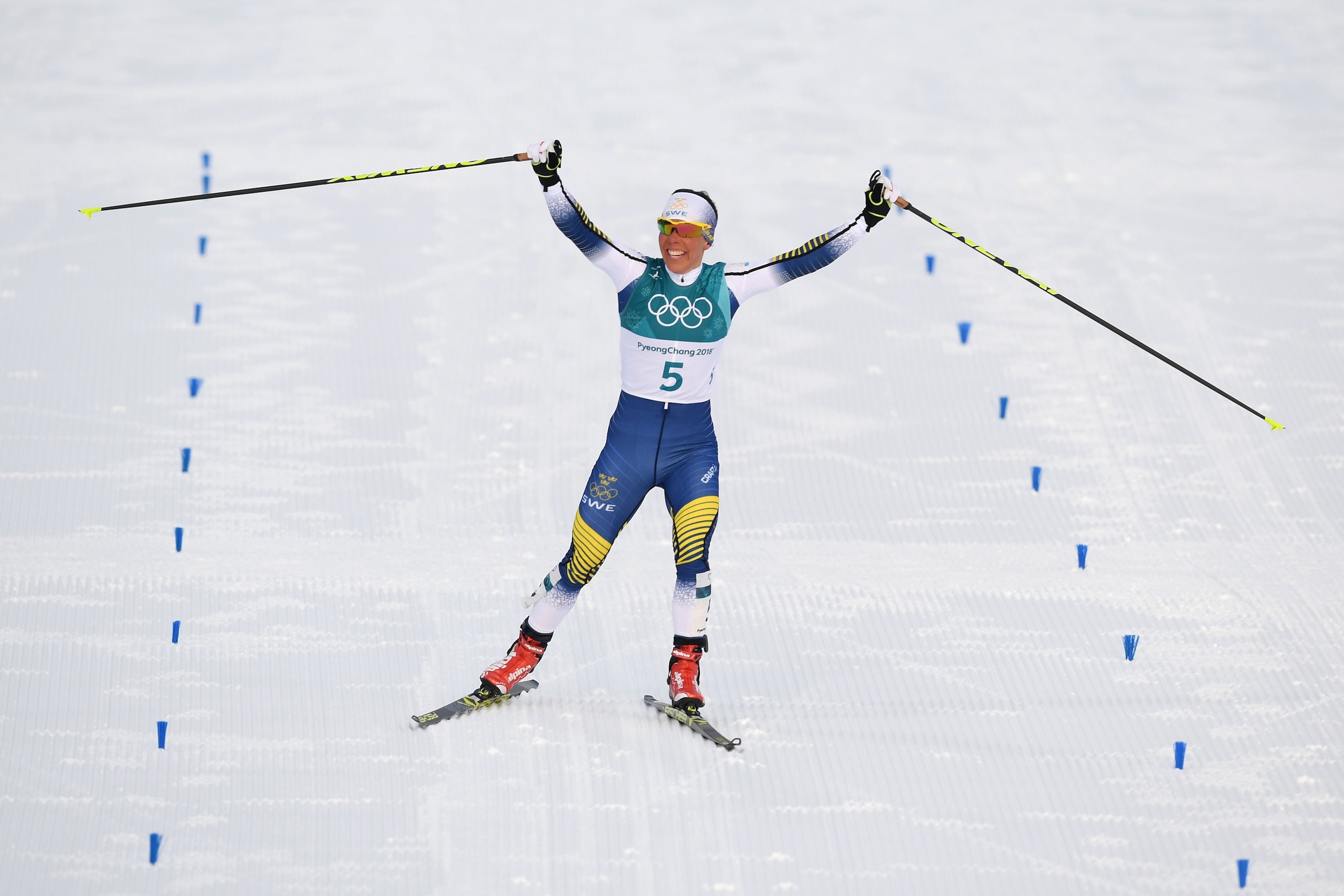
At approximately 2:55 a.m. ET, the women's 15-kilometer skiathlon provided the first set of medals at the Pyeongchang Games.
The honor for initial gold went to Sweden's Charlotte Kalla, who has secured a top podium spot in three straight Olympics.
Marit Bjoergen (Norway) earned silver to set a women's record with 11 career medals. Krista Parmakoski (Finland) took bronze.
Though the USA has never won a medal in women's cross-country skiing, Jessie Diggins has a chance to end that drought. She made a late surge―crossing in fifth (still a U.S. record)―and is a stronger contender in shorter distances.

.jpg?w=2560 "Texans-Mixon Released Football")

Loser: USA Women's Biathletes
4 of 8
Germany's Laura Dahlmeier destroyed the competition in the women's 7.5km sprint biathlon. She was 10-of-10 in the shooting portion of the event; only three of the 87 women did not miss a single target. Dahlmeier finished more than 24 seconds ahead of silver-medalist Marte Olsbu from Norway.
The gap between first and second place was wider than the gap between second and 10th place.
But in what was supposed to be a bit of a breakthrough year for Team USA in this sport, all four of the American women finished outside the top 50.
Emily Dreissigacker had the best showing in 51st place. She missed just one target, but she still finished two minutes and 21 seconds behind Dahlmeier. Clare Egan missed three targets and placed 61st. Susan Dunklee missed five targets in 66th. And Joanne Firesteel Reid missed more targets than any other biathlete (seven), finishing 86th.
Maybe the women will have better luck in the remaining five biathlon events, but it was a dubious start.
Winner: South Korean Women's Speed-Skating Relay Team
5 of 8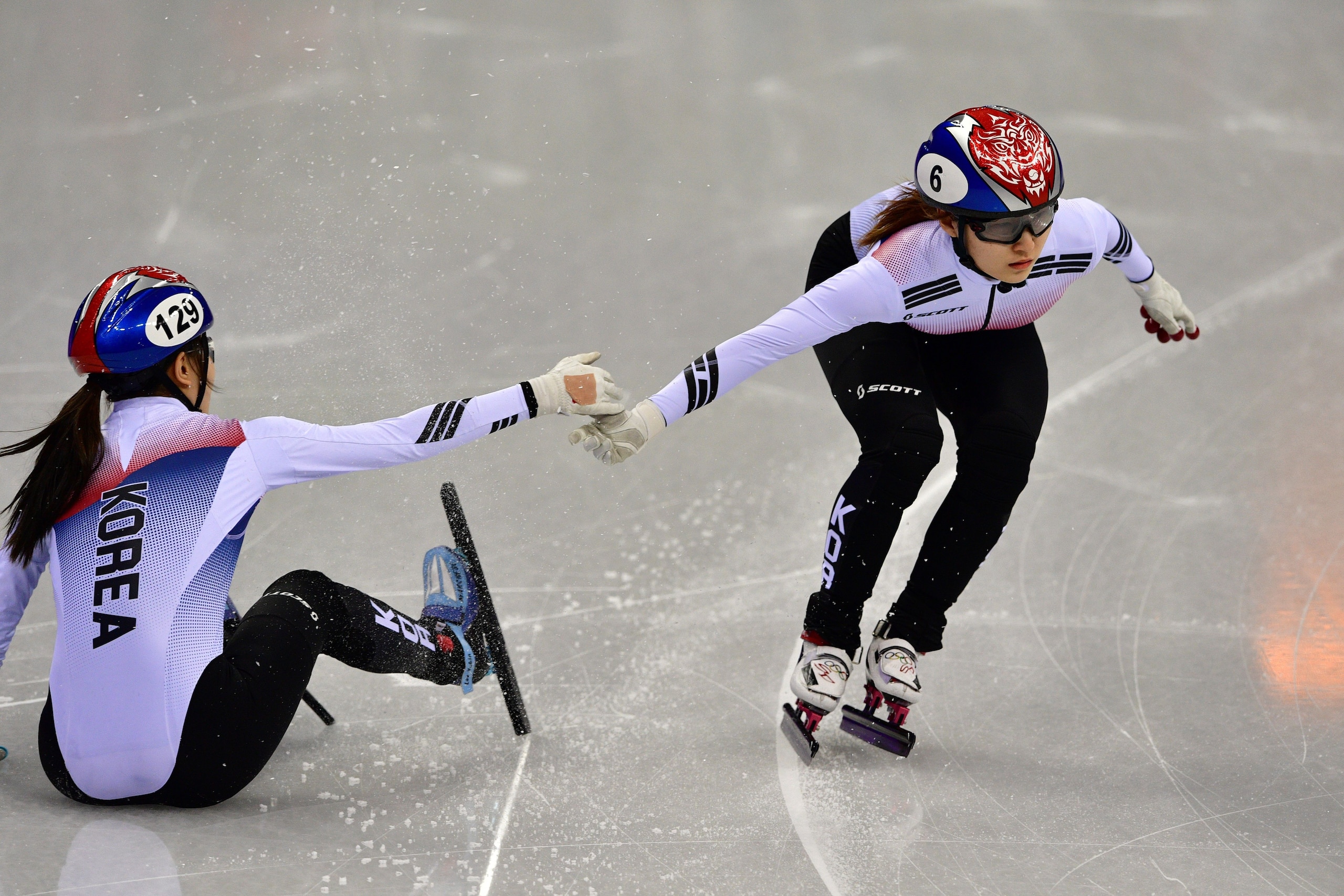
South Korea has won the women's 3,000-meter speed-skating relay in four of the last five Games, including winning by more than a full second four years ago in Sochi. (In 1998, the difference between gold and silver was 0.023 seconds.)
But the quest to defend that title was in serious jeopardy in the semifinals when Lee Yubin hit the skate of one of Hungary's competitors and fell to the ice, slamming into the wall in the fourth of 27 laps.
In most speed-skating events, if you fall, you're done. There's no hope of getting back up, regaining that momentum and catching up to the pack. Since this is a relay, though, Choi Minjeong was able to go tag her fallen teammate and continue on with the race.
At that point, South Korea was about a quarter of a lap behind the other three teams, needing to at least finish in second place to advance to the medal race. Not only did they do that, but they fought all the way back to win and set an Olympic record by two-tenths of a second. They'll race for gold February 20.
Loser: Women's 3,000M Speed Skaters Not from Netherlands
6 of 8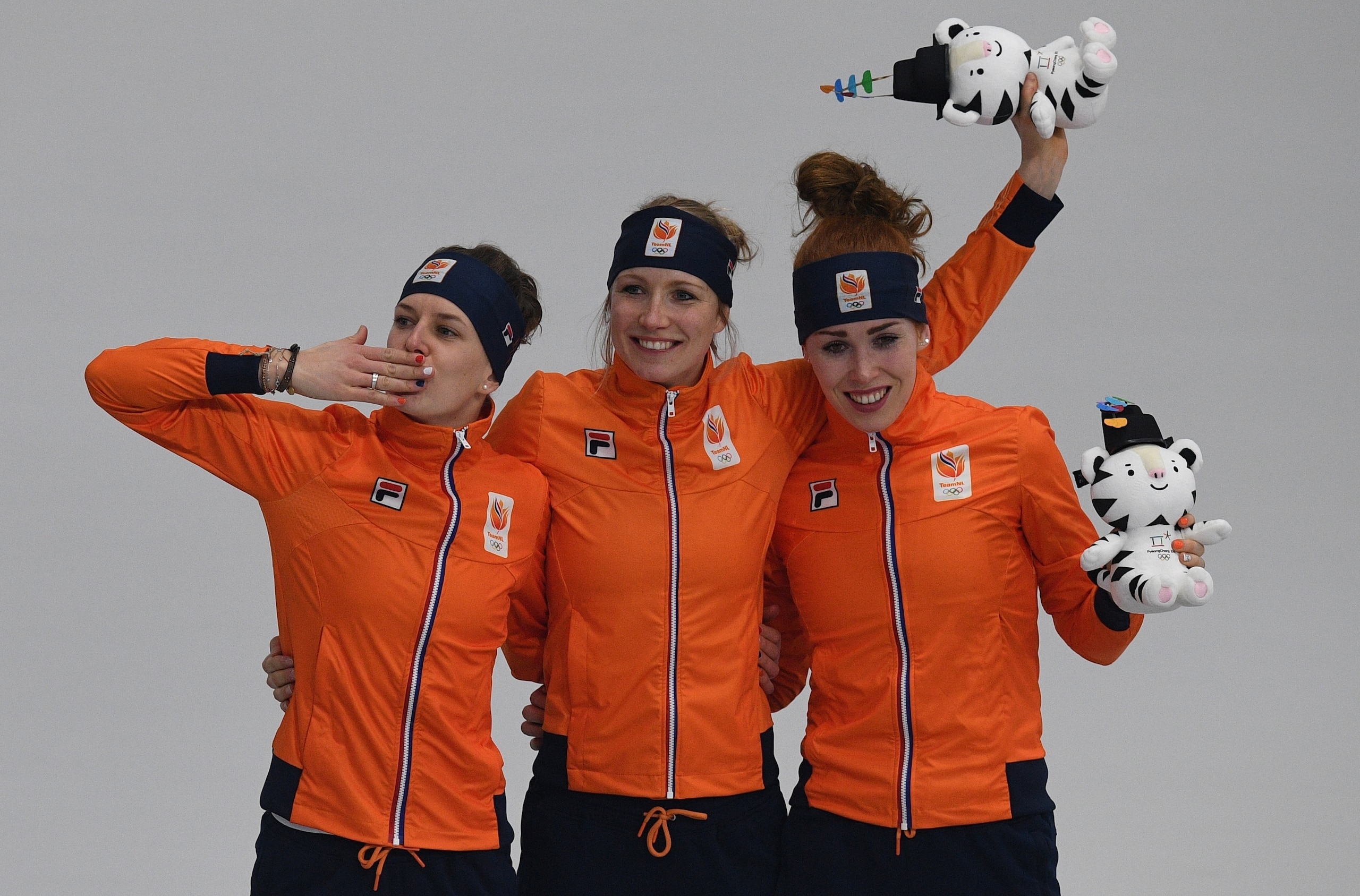
Netherlands is becoming a bit of a superpower in the long-track speed-skating events.
Four years ago, it earned 24 medals in Sochi. All but one was in speed skating, and the exception was in short-track speed skating. There were 12 speed-skating events in 2014, two of which were team events in which a country can only win one medal. With 23 medals, that means the Netherlands won 71.9 percent of all possible medals. The Dutch swept the men's 500-meter, men's 10,000-meter, men's 5,000-meter and women's 1,500-meter events.
After one event in Pyeongchang, it's clear this is still the country to beat—if that's even possible.
In the women's 3,000 meters, Carlijn Achtereekte, Ireen Wust and Antoinette De Jong took gold, silver and bronze, respectively, for the Netherlands, narrowly edging out Martina Sablikova of the Czech Republic. Sablikova—who earned silver in this event in Sochi as well as gold in the 5,000 metres in 2014—was in the final pair and knew what she needed to medal, but she came 0.52 seconds shy of that goal, giving the Netherlands the sweep.
For both Achtereekte and De Jong, it was a first career appearance on an Olympic podium. For Wust, it's old hat. She now has four gold, four silver and one bronze medal in her Olympic career. It should only be a few more days before her collection of Olympic medals reaches double digits.
Winner: Lim Hyojun, South Korea
7 of 8
In the 2014 Games in Sochi, South Korea's men did not earn a single gold medal. In fact, the men only got one medal of any kind: a silver in team pursuit speed skating on the next-to-last day in Russia.
If that drought had continued this year for the host nation, it would have quickly become one of the biggest stories in Pyeongchang.
It didn't take long for Lim Hyojun to make sure that didn't become a talking point this year.
Lim took gold in men's 1,500-meter short-track speed skating, and he dominated from start to finish. He won both his heat and semifinal ahead of a crowded final race.
Nine skaters qualified for a shot at gold, thanks to judges ruling in each of the three semifinals that one additional skater should advance because of a penalty. It's already tough for these guys to avoid crashing into each other with six racers. Nine made at least one crash all but inevitable.
Lim was able to avoid that disaster, taking gold and setting an Olympic record in 2 minutes, 10.485 seconds.
Loser: Wind Conditions for Ski Jumping
8 of 8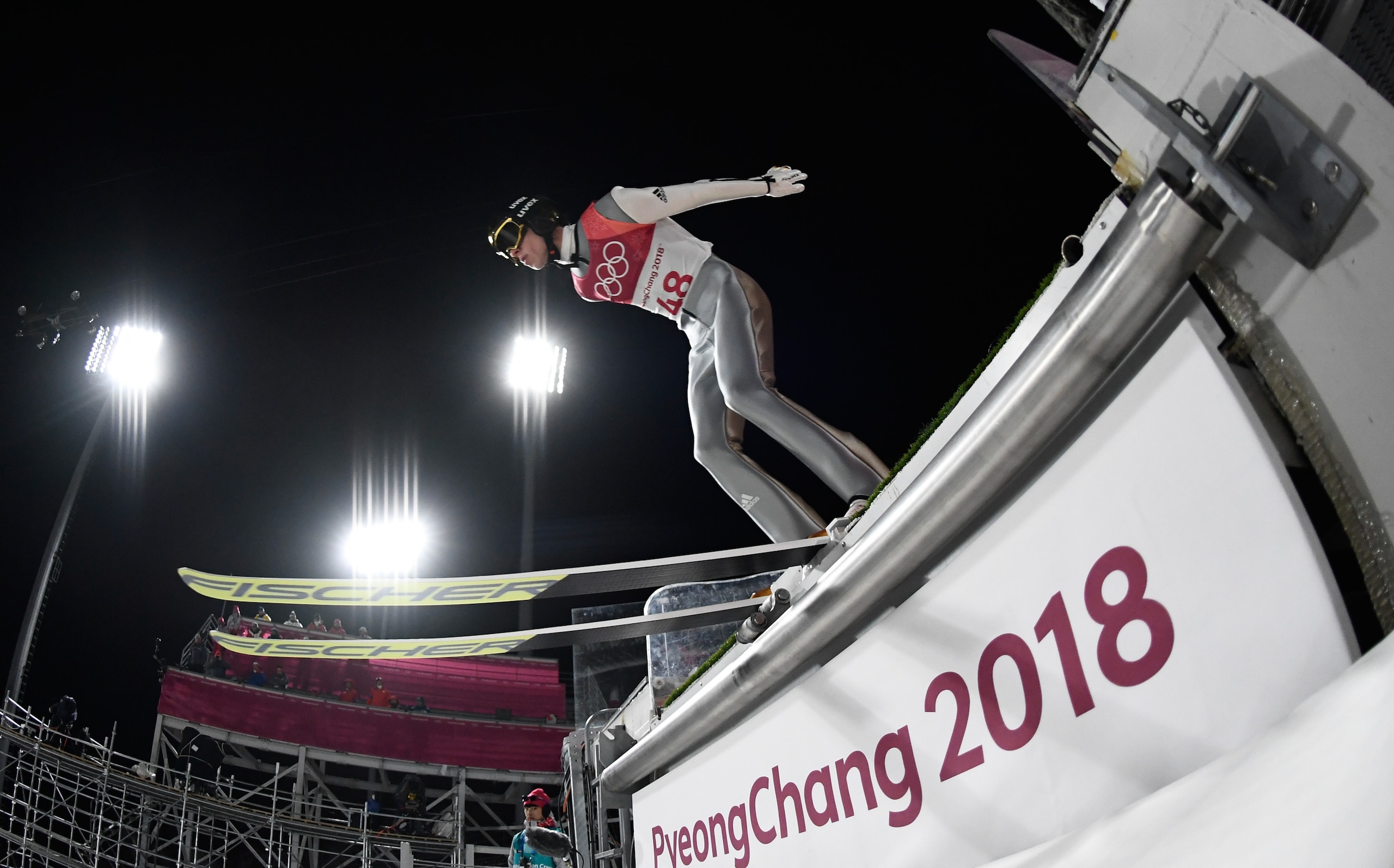
Andreas Wellinger won gold for Germany in the men's normal hill ski jump. He was in fifth place after his first jump, but he had a sensational flight in the finals to win by nearly 10 points.
Gold-favorite Poland was in great shape with Stefan Hula and Kamil Stoch respectively sitting at Nos. 1 and 2 heading into the finals, but they each failed to medal after disappointing runs.
But the big story was the wind.
In 2010 in Vancouver and 2014 in Sochi, it was unseasonably warm, resulting in slushy conditions for the outdoor events. Thus far in Pyeongchang, the opposite seems to be the case. It has been blisteringly cold with wind conditions that make it just plain miserable to be outside.
Wind conditions are factored into ski jump scoring—points are added when facing a headwind, subtracted for a tailwind—but too much wind can be a major problem, and it led to a bunch of delays.
This event finished more than an hour after its scheduled conclusion, which meant the last several athletes were out there until after midnight local time, waiting for the wind to die down enough to attempt a medal-winning jump.
.jpg?w=2560 "Rams Eagles Football")
.jpg?w=2560 "Commanders Eagles Football")


.jpg?w=2560 "Mahomes' Wife Trolls Kubiak 💀")