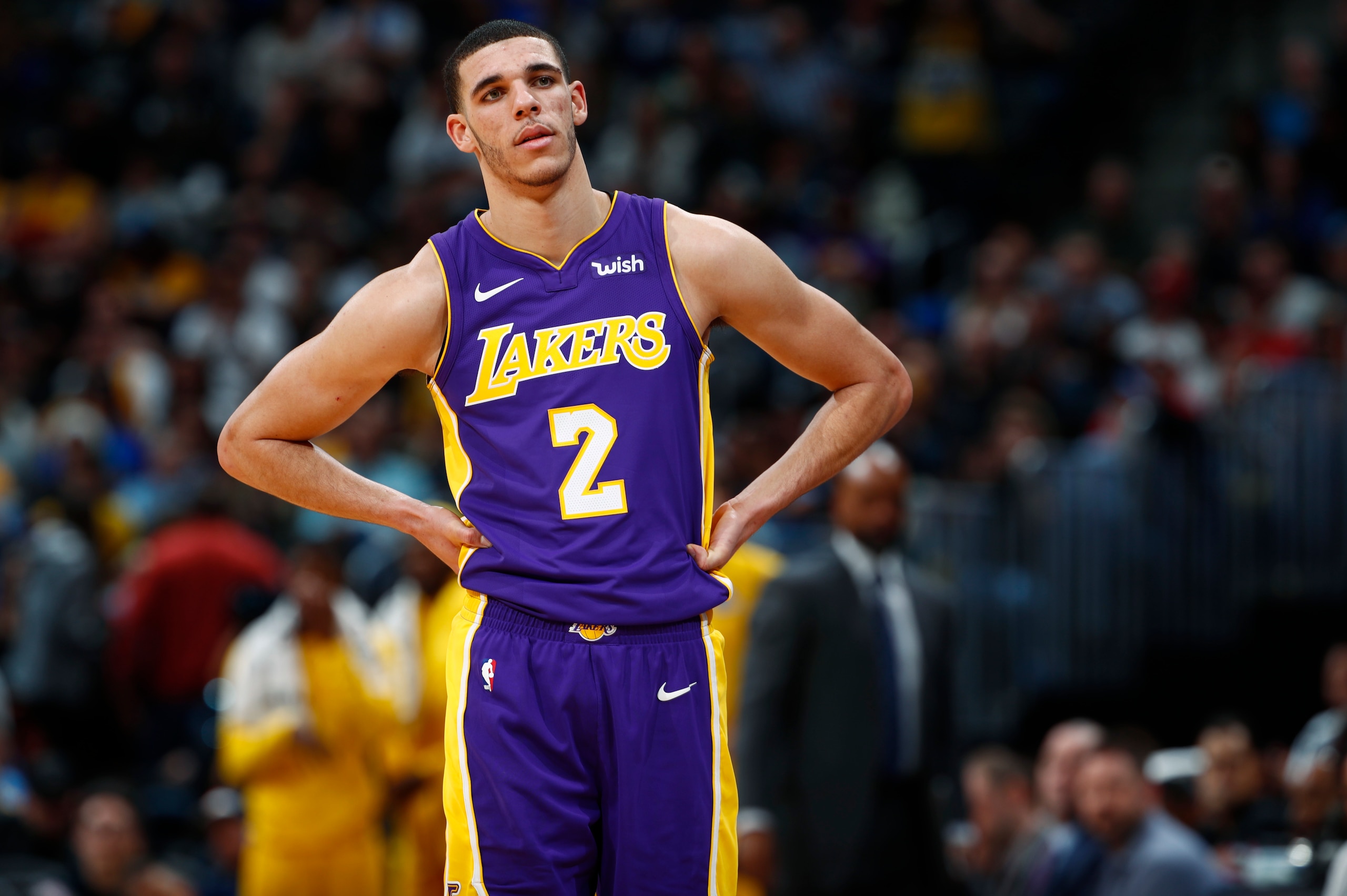

5 New Year's Resolutions Lonzo Ball Should Already Be Thinking About
The actual calendar change occurs during the dog-days portion of the NBA's docket, but there's still an opportunity for players to use it as a fresh start.
In other words, New Year's resolutions can invigorate all the same, which should sound enticing to prized Los Angeles Lakers rookie Lonzo Ball.
This summer's second selection has endured a rocky start to his big league career, and his unrelenting spotlight has magnified both his highs and lows.
His gift for the game is obvious but so too are his shortcomings. His plan for 2018, then, must involve enhancing his strengths and either shoring up his weaknesses or identifying ways to work around them.
While the rest of us make halfhearted promises to spend more time at the gym and less in the junk-food aisle, these are the areas in which Ball should focus his efforts for self-improvement.
Don't Believe the Hype
1 of 5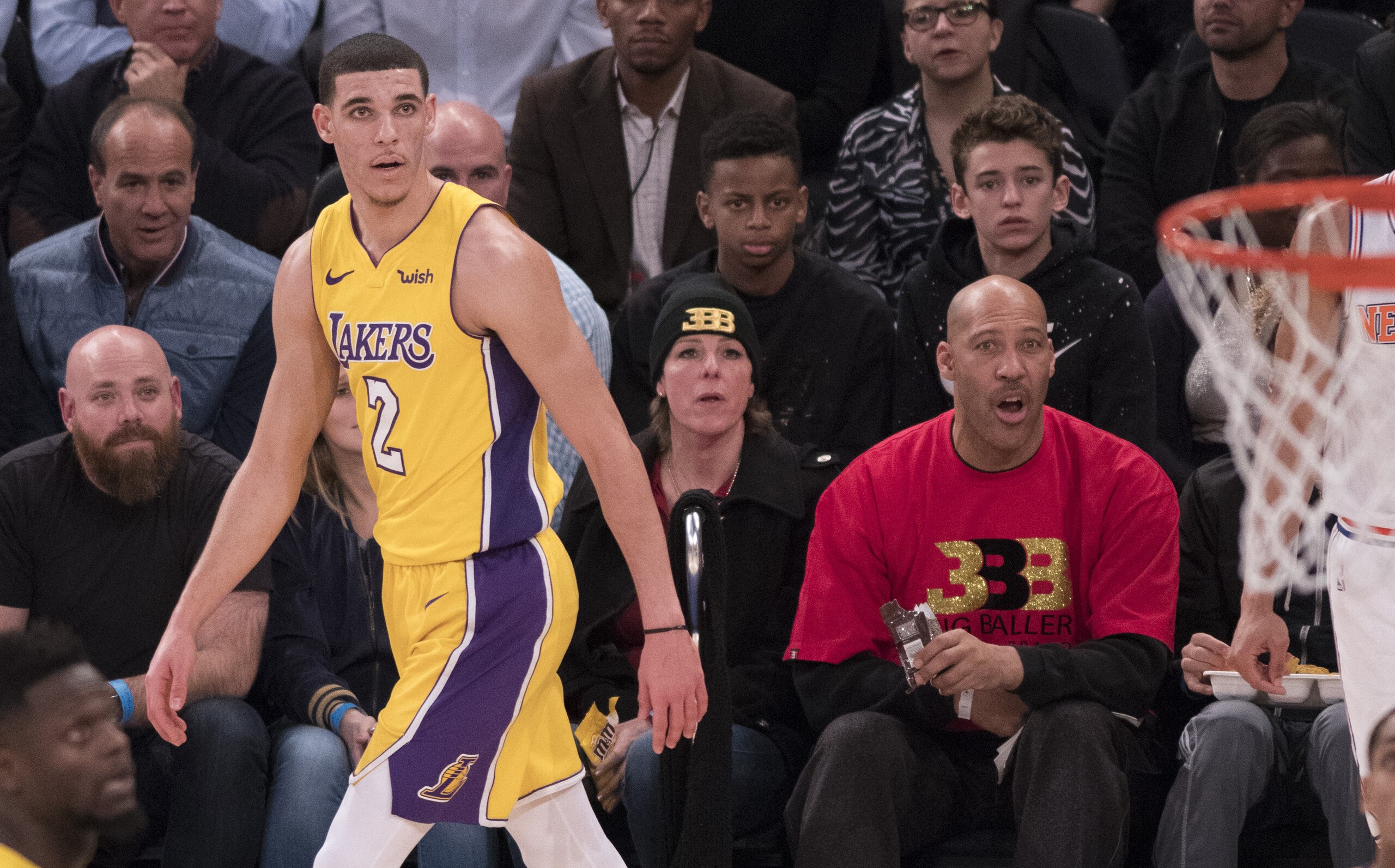
The juxtaposition of LaVar Ball's outspoken nature and Lonzo's ultra-cool demeanor is so striking it almost seems as if the former has no impact on the latter. But it can't be that simple.
Consider, for instance, how long we have heard about how Lonzo is greater than current greats and capable of transforming the Lakers into perennial contenders. Now, imagine how long the fledgling floor general himself has been spoon-fed those astronomic expectations.
Ignoring the hype would be impossible, especially when it's been continued by his employers and widely debated by anyone with internet access and an inherent need to vocalize their hoops musings.
Everyone has a Lonzo take and most are of the piping-hot variety. The opinions are not only deafening, they've become an unfair burden on a 20-year-old already shouldering the towering task of returning his hometown team to its past glory, as the Sporting News' Sean Deveney detailed:
"No other rookie in the current class has gotten anything close to that kind of negative scrutiny on the road, and no rookie has been subjected to such inordinate pressure at home. No matter how Ball claims to ignore it, the results speak for themselves. He is having a hard time making even the easiest of shots, and he admits it is psychological."
While this could prove impossible, Lonzo should enter 2018 with blinders blocking out all the outside chatter. He'll never please everyone anyway, so his focus must narrow to only his internal expectations and the commitment to his club.
Crash the Defensive Glass
2 of 5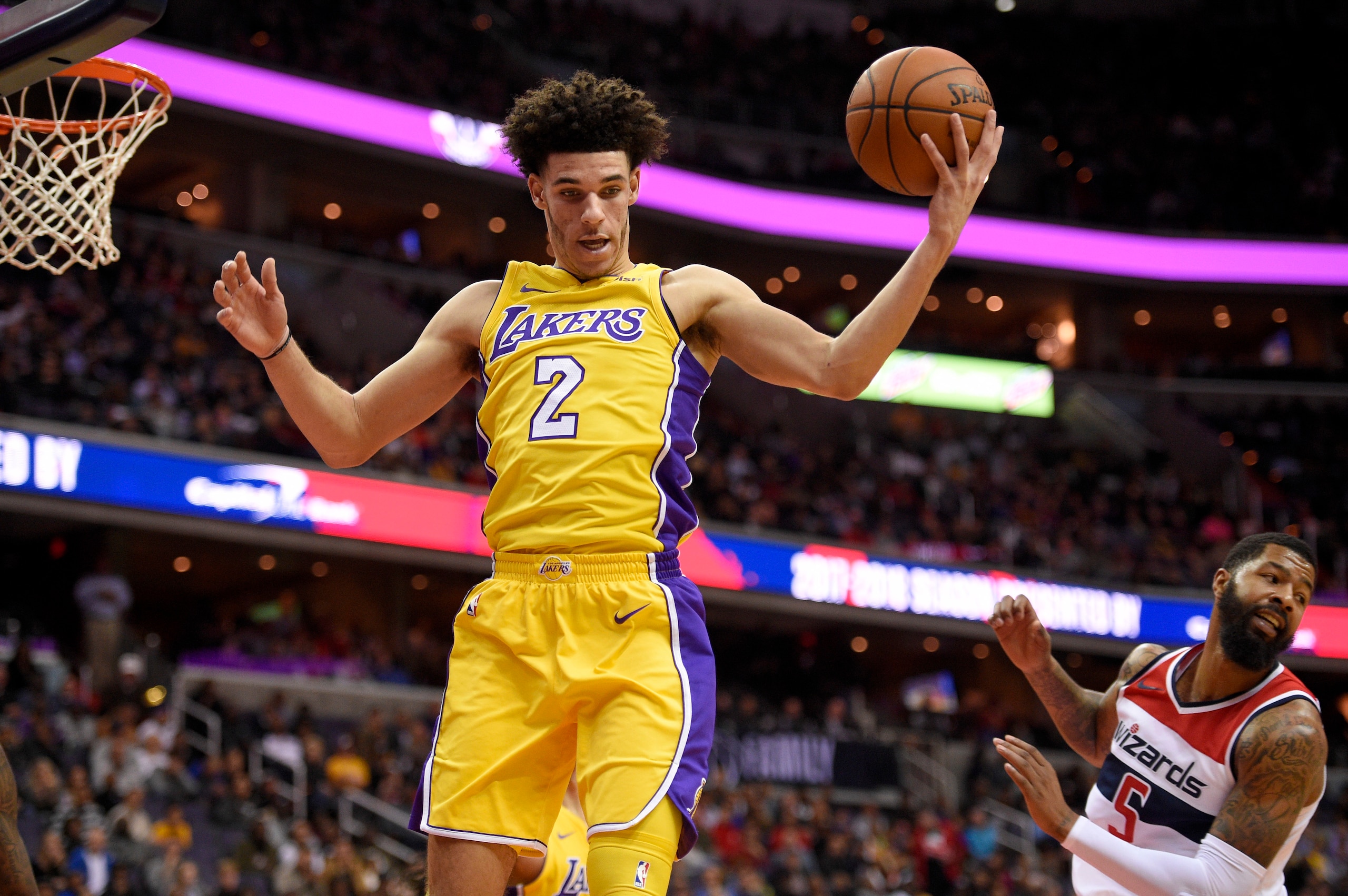
One of the magic elements of Ball's game—and maybe the manner in which he's most Magic-like—is the way he can spear a defensive rebound and spark a fast break in a single sequence.
Given his absurd full-court quarterbacking skills, he can transform defensive boards into buckets faster than some bigs can even spot their outlet receiver.
"It starts the fast break a lot easier," Ball said, per Bill Oram of the Orange County Register. "When I get the ball, don't have to wait for the big men to give me it. Just get it and go."
The primary strategy for a Ball-run offense should be just that—get it and go.
L.A. is already the league's fastest team at 104.62 possessions per 48 minutes. And Ball is already an elite glass-cleaning guard, ranking fourth among all backcourt players with 7.0 rebounds a game.
However, since the team and its (arguably) top prospect both have clear flaws, every effort to maximize their strengths is needed.
The Lakers are second in fast-break scoring (15.7 points per game), but they're also closer to the 18th team than the first (the Golden State Warriors aren't fair). That average needs to grow, since this offense gets clunky in the half court.
L.A. is a bottom-third attack when it comes to isolations (24th), post-ups (24th) and plays finished by the pick-and-roll ball-handler (30th).
Ball, meanwhile, must continue impacting other areas to offset his colossal shooting woes (40.3 effective field-goal percentage, worst among players clearing 500 minutes).
Rebounding at a rate Jason Kidd didn't touch until his sixth NBA season is one way to do that, although Ball is down 0.5 rebounds per game in December (6.8) from October (7.3).
Find a Way Around First Line of Defense
3 of 5
There are valid concerns over whether Ball can star in today's NBA without being a scoring point guard. If you have an evening to kill and a bottle good enough for Gregg Popovich's collection, you could unravel all the layers of that philosophical discussion.
There's a more pressing matter for Ball, though. He must uncover a way to snake around stoppers, collapsing the entire defense and opening passing lanes all around him.
"Ball...is actually quite a subtle player. His way forward lies on that route, less in shot overhauls than in targeted refinement," Sports Illustrated's Rob Mahoney wrote. "Clean up the handle a bit and maybe Ball looks that much more explosive of the dribble. Set up his pick-and-rolls with clever preliminary action and maybe you'll throw the defense off balance."
It's all about creating an advantage that allows Ball to make better use of his preternatural passing.
Right now, he rarely probes deep enough into the defense to manipulate it. Lacking both an explosive first step or dizzying handles, his half-court penetrations don't often reach the paint. He averages just 8.2 drives per game, the same number as three-and-D wing Khris Middleton. It's a shame, too, since Ball has the fourth-highest assist percentage on drives among players who average eight-plus (15.2).


Keep Launching
4 of 5
It was much easier to stomach Ball's funky shooting form when he was striping nearly everything he released during his one-and-done run at UCLA.
While his 67.3 free-throw percentage looks like a warning sign in hindsight, he cashed enough of his other shots—55.1 percent from the field, 41.2 percent outside—that his overall profile painted him as no worse than an adequate spacer.
Once Ball made the NBA jump, though, the results of his shots became as ugly as the side-winding mechanics.
There's time to turn things around, but for now he looks headed to one of the least efficient shooting campaigns the league has seen.
His 40.3 effective field-goal percentage would tie for 10th worst by a player logging 2,000-plus minutes in the three-point era. And that's the good news. He would be third from the bottom in true shooting percentage (41.3) and dead last in field-goal percentage (34.0).
All of that being said, there have been some signs of life.
He's hit 40 percent or better in seven of his last nine outings. If that doesn't sound impressive—it's admittedly a low bar—just know he only reached 40 in five of his first 20 contests. The progress isn't great, but it's present nonetheless. He had a .315/.257/.467 slash line in October and November; he's at .413/.317/.563 through eight December tilts.
"He's definitely shooting with more confidence," Lakers head coach Luke Walton said, per Sports Out West's Bob Garcia. "He is putting in more work. He is more comfortable with the NBA game. I think it's natural that his shooting percentage will go up."
Those aren't just hollow hopes. There are actual numbers at their roots. Ball just needs to continue this trend, so he can go from being the liability we've seen so far to the net-shredding asset Bruins fans remember.
Be More Aggressive
5 of 5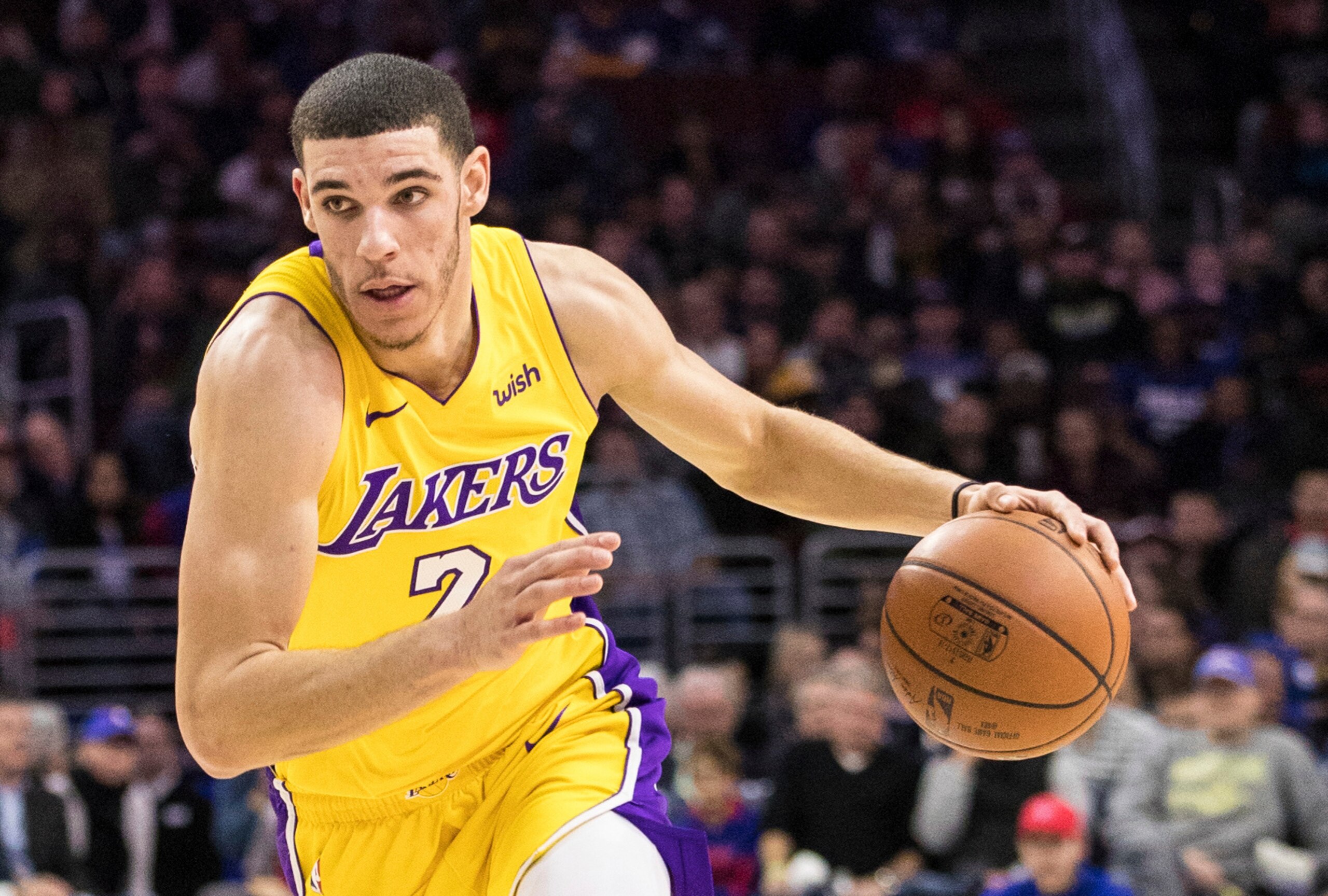
Green-lighting a 34.0 percent shooter for more assertiveness might sound like a way to sabotage your own hoops credibility, but in this particular instance, it works.
The more Ball threatens defenses as a scorer, the easier it becomes for his floor game to shine. When he's hyper-focused on distributing, he actually increases the difficulty of that task. When he doesn't pull up against a sagging defender or use enough of his dribble to make defenses react, he shrinks the floor around him and narrows the passing windows he's trying to exploit.
"I think you can affect the game [in other areas], but in the NBA I've found that you have to score a little bit, just to open it up," Ball told ESPN.com's Kevin Arnovitz.
L.A. wants its offense to follow Ball's lead, but it's as if he's been given the keys to a sports car and is hesitant to shift past first gear.
Only two Lakers average more minutes than his 33.7, and none come close to matching his 81.6 touches per game (Kyle Kuzma is closest at 53.6). Yet, Ball only ranks eighth on the club in usage percentage (17.7) and ninth in field-goal attempts per 36 minutes (11.6).
Even if he has a natural inclination to defer, he'd make the court easier to navigate by pressing down on the gas pedal. The Lakers are 7-3 when he attempts at least 13 shots, while he's fared better than his season averages in assists (7.2 to 7.0) and turnovers (2.2 to 2.7) in those games.
Unless otherwise indicated, all stats are from Basketball Reference or NBA.com.
Zach Buckley covers the NBA for Bleacher Report. Follow him on Twitter: @ZachBuckleyNBA.


.jpg?w=2560 "Grading WWE Raw 🔠")
.jpg?w=2560 "Viral Rams Coach Vid 🖕")
.jpg?w=2560 "Injury-stricken Seahawks signing veteran RB")
.jpg?w=2560 "2 NFL Officials Suspended")

.jpg?w=2560 "Mahomes' Wife Trolls Kubiak 💀")