

Few NFL teams go into a season expecting to be a disaster. Even teams in the midst of full-scale rebuilds can fool themselves into thinking they might hit all of the good luck buttons at the right time, have a good draft, sign a few quality free agents and perhaps surprise everybody.
Then reality comes calling.
For other teams, the implosion is a complete shock. Whether it's due to injuries, poor planning, bad coaching or a combination of all three, teams can go from the penthouse to the outhouse far more quickly than they imagined. Then they're on the outside looking in, wondering what went wrong and preparing their resumes as a group.
The following 10 franchises have all struggled this season for various reasons. None have any glimmer of postseason hope; all are playing out the string and starting to plan for the 2018 league year. When looking at what will turn these franchises around, one or two players will rarely do the trick. Far more often, a change in philosophy is needed, which is why you won't see a lot of "If Team X gets Player Y, everything will be fine!" More often than not, that isn't the case.
A few teams not featured here deserve mention because of their horrid injury luck, namely the Seattle Seahawks, Washington Redskins, Green Bay Packers and Houston Texans. While they all have things to address, reasonably full rosters of healthy players likely would have produced results far less disappointing in 2017.
The following teams a lot of work to do, often from the top of the front office down to the bottom third of the roster. Here's how they can begin building back toward relevance.
Cleveland Browns (0-14)
1 of 10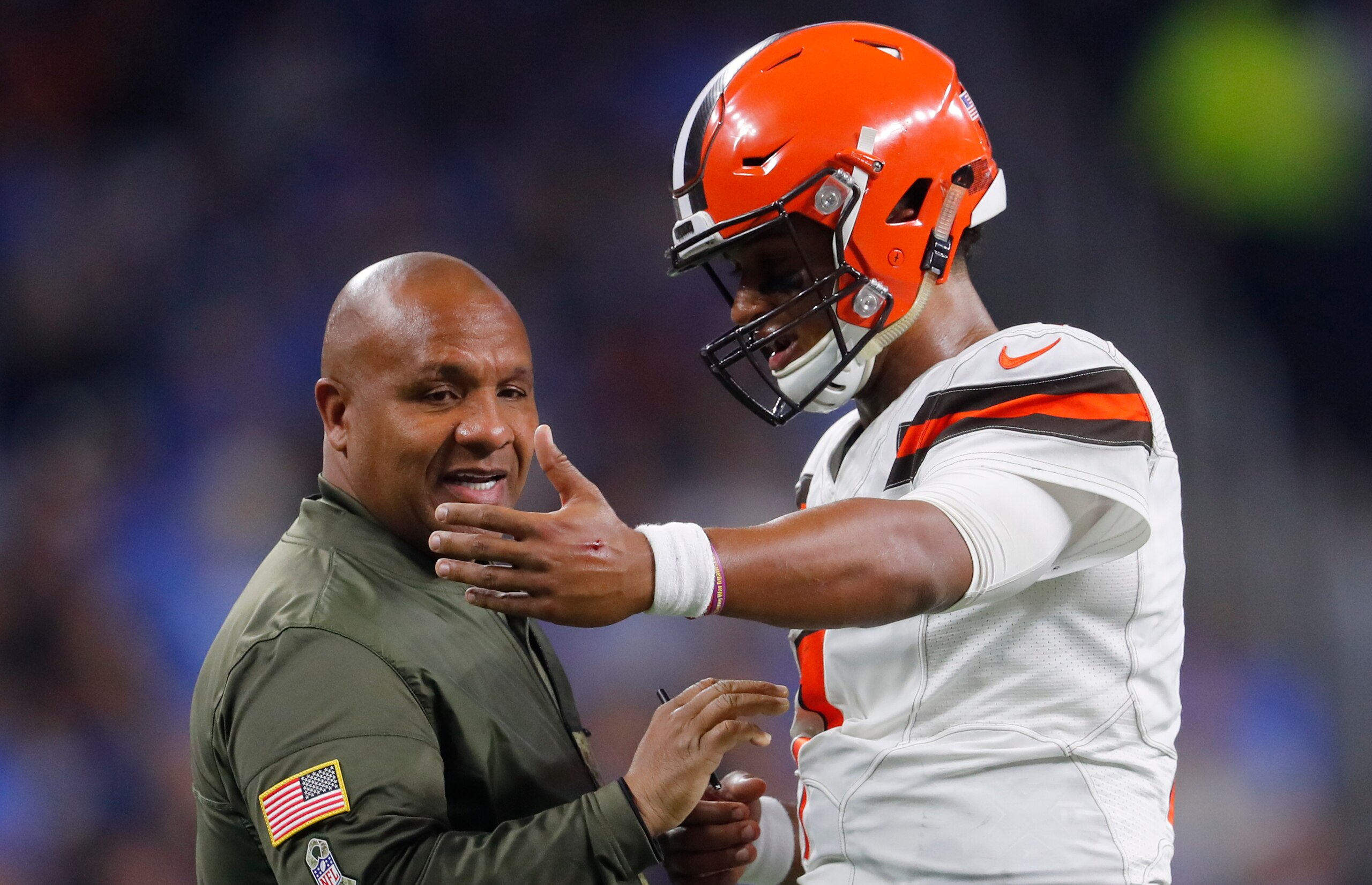
Separate Hue Jackson and DeShone Kizer
Second-round rookie DeShone Kizer has a lot of work to do before he becomes an effective NFL quarterback. He holds the ball too long. He has trouble deciphering defenses and making quick decisions. At times, he makes head-scratchingly bad choices that lead to interceptions, which is why he leads the league with 19 picks to just nine touchdowns.
However, head coach Hue Jackson—long thought to be one of the NFL's better quarterback whisperers—is bordering on malpractice with his handling of Kizer. He's benched the Notre Dame prospect more than once even though some of the issues with Cleveland's offense aren't Kizer's fault. Jackson has also contemplated questioned to the media whether his quarterback would "ever get it," and some who play with Kizer believe his confidence is shot as a result.
This can't stand. Either the Browns need to fire Jackson and get a head coach who will give Kizer time to show what he can do, or they need to ship Kizer out and let Jackson have a quarterback he can deal with.
Remove Gregg Williams from the building
Browns defensive coordinator Gregg Williams has always been controversial—remember Bountygate?—but for the most part, he's been an effective asset to his teams in a schematic sense.
What Williams has done with his players in 2017, however, doesn't match that reputation.
From putting rookie first-round safety Jabrill Peppers so far back in the defensive backfield that he can rarely affect the action to insisting monstrous defensive tackle Danny Shelton could be effective in coverage, Williams has shown little sense for the abilities of his players. This defense has more talent than it's showing on the field. It deserves a coordinator who's going to bring that out.
Let John Dorsey do his thing
When the Browns hired John Dorsey to replace Sashi Brown as their general manager, it was considered to be the end of Cleveland's sabermetric experiment. Dorsey is an old-school football mind, a guy who cut his teeth in the Packers' scouting and personnel departments before he took the job as Kansas City's general manager in 2013. Dorsey had a lot to do with the Chiefs team you see this season, and few question his acumen, though his recent assertion that the previous front office failed to get "real players" likely didn't go over too well in the locker room.
Nonetheless, Dorsey must be given the autonomy to do his job. Owner Jimmy Haslam and chief strategy officer Paul Podesta had a system in place before where a lot of people had loud voices. They must allow Dorsey to be the primary personnel voice and allow him to sink or swim on his own merits.
New York Giants (2-12)
2 of 10
Get an effective offensive play designer
The Giants suffered greatly from former head coach Ben McAdoo's banana-republic style, but they may have suffered more from his unimaginative play designs than anything else. And offensive coordinator Mike Sullivan, who tends to prefer route concepts in which receivers have to fight to get open, doesn't work in an era when the best offenses scheme their guys open.
The Giants have the skill position talent to make things happen when everyone is healthy. It's now up to management to get a head coach and offensive coordinator with the creativity to exploit the team's personnel advantages.
End the Ereck Flowers experiment
When the Giants selected Flowers out of Miami with the ninth overall pick in the 2015 draft, it led to a lot of raised eyebrows from those who had watched his college tape and saw him struggle with edge-rushers to either side.
As his third NFL season comes to a close, Flowers hasn't made the necessary technical adjustments to become even a league-average left tackle.
He's often late in his pass sets, he doesn't use his power consistently and he's a near-constant liability if he's not given help with a tight end to his side. It isn't financially responsible to cut Flowers in 2018, because his dead money is nearly twice his cap charge. Perhaps the Giants can put him on the right side or convert him to guard, but they clearly need a better player to protect their quarterback's blind side.
Don't be too precious with Eli Manning
With apologies to Charlie Conerly, Y.A. Tittle and Phil Simms, Eli Manning is the most important quarterback in Giants history. But that doesn't necessarily mean he should be the team's quarterback moving forward.
If the Giants' new offensive staff believes Manning is worth the $22.2 million cap charge he'd cost in 2018, that's fine, but it should be the staff's decision to make. And after McAdoo treated him so cavalierly, Manning might be ready to move along and join a better team in free agency. That's a right he has more than earned.
At the start of what needs to be a significant rebuild, the Giants can't be too anchored to ancient history.
Indianapolis Colts (3-11)
3 of 10
Let this become Chris Ballard's team
Former Colts general manager Ryan Grigson was one of the worst personnel executives in the league when he ran the team from 2012 through 2016. Outside of Andrew Luck and T.Y. Hilton, Grigson left this team with little in the way of generational talent one could build a team around.
This leaves new GM Chris Ballard with a lot of work to do, and hopefully a few years to get it all done.
If Ballard had any clarity on his quarterback situation (more on that below), the process would be far easier. But he has proved to be a capable executive during his time with the Bears and Chiefs. He wants to build this team through the draft over time, and he has the acumen to do just that.
Start planning for life after Andrew Luck
The Andrew Luck situation is as strange as we've ever seen with any franchise quarterback.
The Colts let Luck play through most of the 2015 and 2016 seasons with a torn labrum, and through the 2017 season, he's sought treatments in various countries to try to get back on the field. While it's too soon to say Luck's career is ruined as a result of this prior malfeasance, the Colts may have to prepare for life without Luck in 2018 and beyond.
Luck's cap situation further complicates matters. He signed a five-year, $122.97 million contract extension in June 2016 that gives him a $24.4 million cap charge in 2018 and a $9.4 million dead-money charge if the team were to release him as a post-June 1 cut. The Colts likely aren't prepared to make that call at this point, but you never know how this story will go.
The Colts now must prepare for life without their franchise quarterback for the foreseeable future. Whether that's through a real investment in the development of Jacoby Brissett or a player not currently on the roster, this team can't expect to ride on Luck's rehab as the key to a successful future.
Revamp the offensive line
Indy's offensive line was one of the most obvious examples of Grigson's lack of team-building ability, and it must improve in 2018. Ballard has had one offseason to correct Grigson's mistakes, and his second season in charge needs to be about rebuilding a line that has two quality players—center Ryan Kelly and left tackle Anthony Castonzo.

.jpg?w=2560 "Steelers Saints Football")
.jpg?w=2560 "Rams Raiders Football")
San Francisco 49ers (4-10)
4 of 10
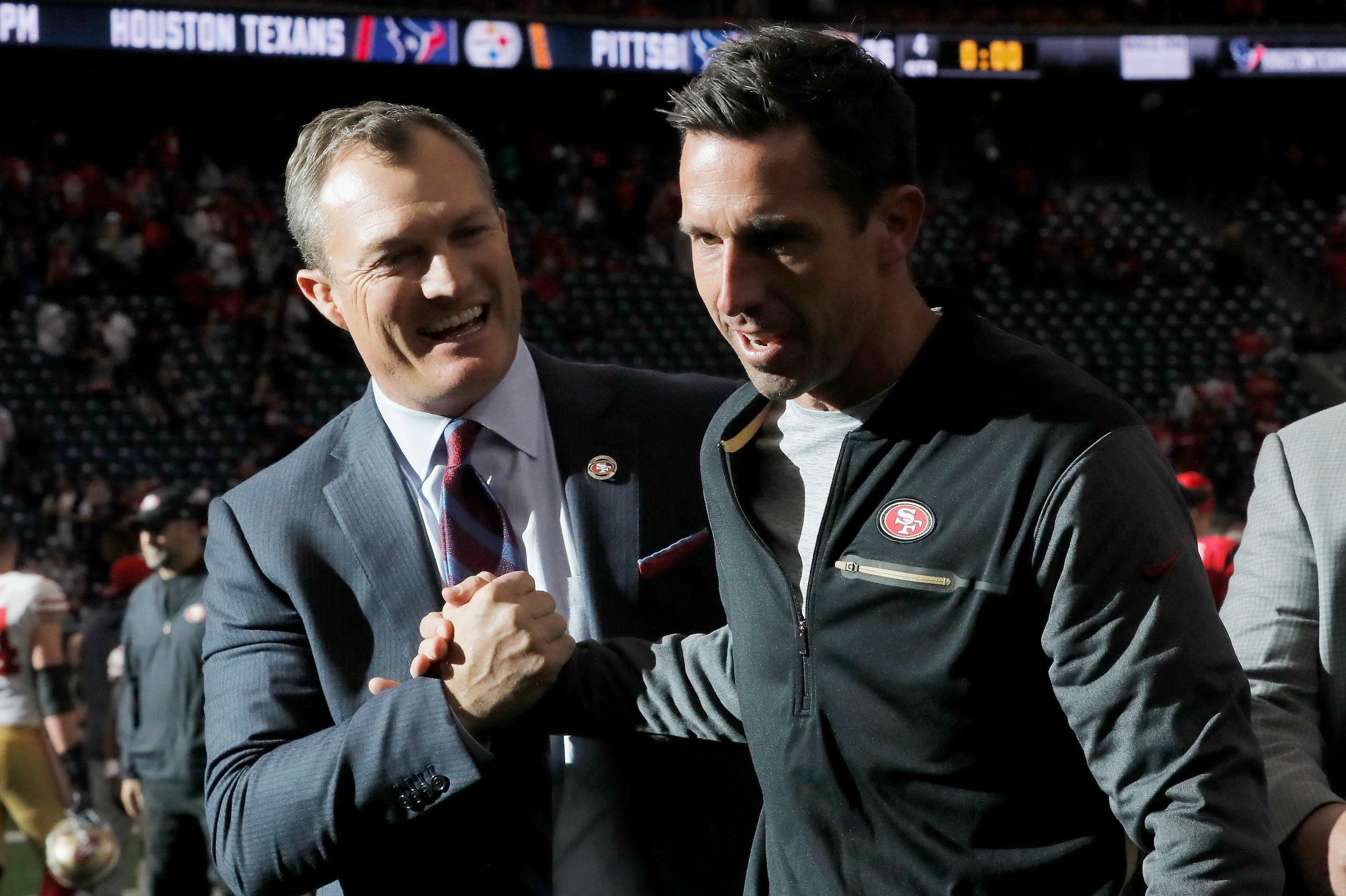
Commit to Jimmy Garoppolo on a multiyear basis
When the 49ers traded for former Patriots backup Jimmy Garoppolo on Oct. 31, they had already tried to tie their fate to Brian Hoyer and C.J. Beathard at the quarterback position. Garoppolo has outpaced both of those guys in just a few weeks, and he's shown the arm, mobility, field vision and leadership one would expect from a franchise quarterback.
The next step in this team's ongoing rebuild is to lock Garoppolo up on a multiyear deal that leaves no doubt regarding the most important position on the field.
The 49ers could place the franchise tag on Garoppolo for the 2018 season, but both head coach Kyle Shanahan and general manager John Lynch are on six-year deals to undo the mistakes made by former GM Trent Baalke. It would be better for them to make a statement that the quarterback the players believe in is the guy for the foreseeable future.
Give Garoppolo more to work with
The 49ers now have a visionary offensive play-designer in Shanahan and a quarterback who can fulfill that vision in Garoppolo. But there's only so much either man can do with the team's current receiver corps.
Marquise Goodwin is an excellent deep threat, but outside of that, there isn't much to mention. The loss of Pierre Garcon to a neck injury in early November hampered that group to a large degree. Beyond Garcon, Lynch and Shanahan must start to stock up in Year 2 with receivers who can get open in multidimensional route concepts and generate yards after the catch.
The Niners should go about that as much in free agency as they do in the draft. After all, most rookie receivers will struggle to get the hang of Shanahan's offense right away.
Revamp the offensive line and cornerbacks
Left tackle Joe Staley is a franchise cornerstone, and right tackle Trent Brown was playing at a high level before the team placed him on injured reserve in mid-December. It might be time to think about Staley's replacement, but that isn't as crucial as getting better interior linemen to run the zone protections and run schemes Shanahan prefers.
As for the cornerbacks? Defensive coordinator Robert Saleh has been coaching with one hand tied behind his back throughout most of the season. The 49ers currently don't have one cornerback who shows next-level traits, and that must quickly change for the defense to live up to the front seven's potential.
Chicago Bears (4-10)
5 of 10
Get a head coach who knows how to develop a quarterback
When the Bears moved up to select Mitchell Trubisky with the second overall pick in the 2017 draft, you assumed they would move heaven and earth to make life as easy and productive as possible for him. Instead, they had already spent far too much money on quarterback Mike Glennon in free agency, which proved to be a disaster.
In the preseason, offensive coordinator Dowell Loggains did a great job of giving Trubisky concepts that married his relative inexperience as a starter and Chicago's lack of talent at receiver. Then the regular season began, and head coach John Fox went into John Fox mode.
He attempted to protect his rookie quarterback by starting Glennon at the beginning of the year. After demoting Glennon, Fox had Trubisky throw as few passes as possible in a limited system, hoping the defense and run game could pick up the slack. This stunted Trubisky's development more than it helped.
Though Trubisky has shown progress in the last few weeks, he needs a head coach who's going to allow him to work though his mistakes and take advantage of his assets. He has all of the physical tools to be an excellent quarterback—all he needs is time and the right coaches.
Get some receivers
Well, that isn't true. Trubisky also needs receivers.
Alshon Jeffery's departure to Philadelphia in free agency and tight end Zach Miller's likely career-ending leg injury didn't help, although the Bears didn't go into this season with much ballast for Trubisky's efforts. Kendall Wright has been decent as the team's leading receiver, but he'd ideally be a second or third guy who can alternate between outside and the slot.
Chicago must procure the services of at least one top receiver who can beat coverage downfield and win contested-catch battles for Trubisky to be at his best. The next coaching staff undoubtedly will be more excited to use the talents of rookie speedster Tarik Cohen than the current staff seems to be, too.
Cameron Meredith should be back in 2018 after he recovers from a torn ACL and slightly torn MCL, but relying on the injury-prone Kevin White, who played in just one game this season before suffering a broken shoulder blade, may be a bridge too far. White has played in just five games over three NFL seasons.
Retain Vic Fangio as defensive coordinator
Despite their passing-game woes, the Bears to have some things to build around. Running back Jordan Howard is one of the best in the game, and Chicago's defense, led by excellent coordinator Vic Fangio, ranks 14th overall in Football Outsiders' opponent-adjusted metrics.
The defense works because Fangio has the type of players who work well in his system. He prefers a base pass-pressure attack in which there is more positional spacing than blitzing, along with disguised coverages that help the linebackers and secondary from the moment the ball is snapped.
Defensive tackle Akiem Hicks is one of the better players at his position in the league, while cornerbacks Kyle Fuller and Bryce Callahan are playing at a high level (Callahan is an outstanding slot defender). Outside of the edge rush, which could use some improvement, this defense has a lot of potential.
Fangio should be given the opportunity to coach that defense in 2018, no matter who the head coach is. Greg Gabriel of Pro Football Weekly recently reported Fangio is not part of the team's future plans; if true, that would be a mistake.
Tampa Bay Buccaneers (4-10)
6 of 10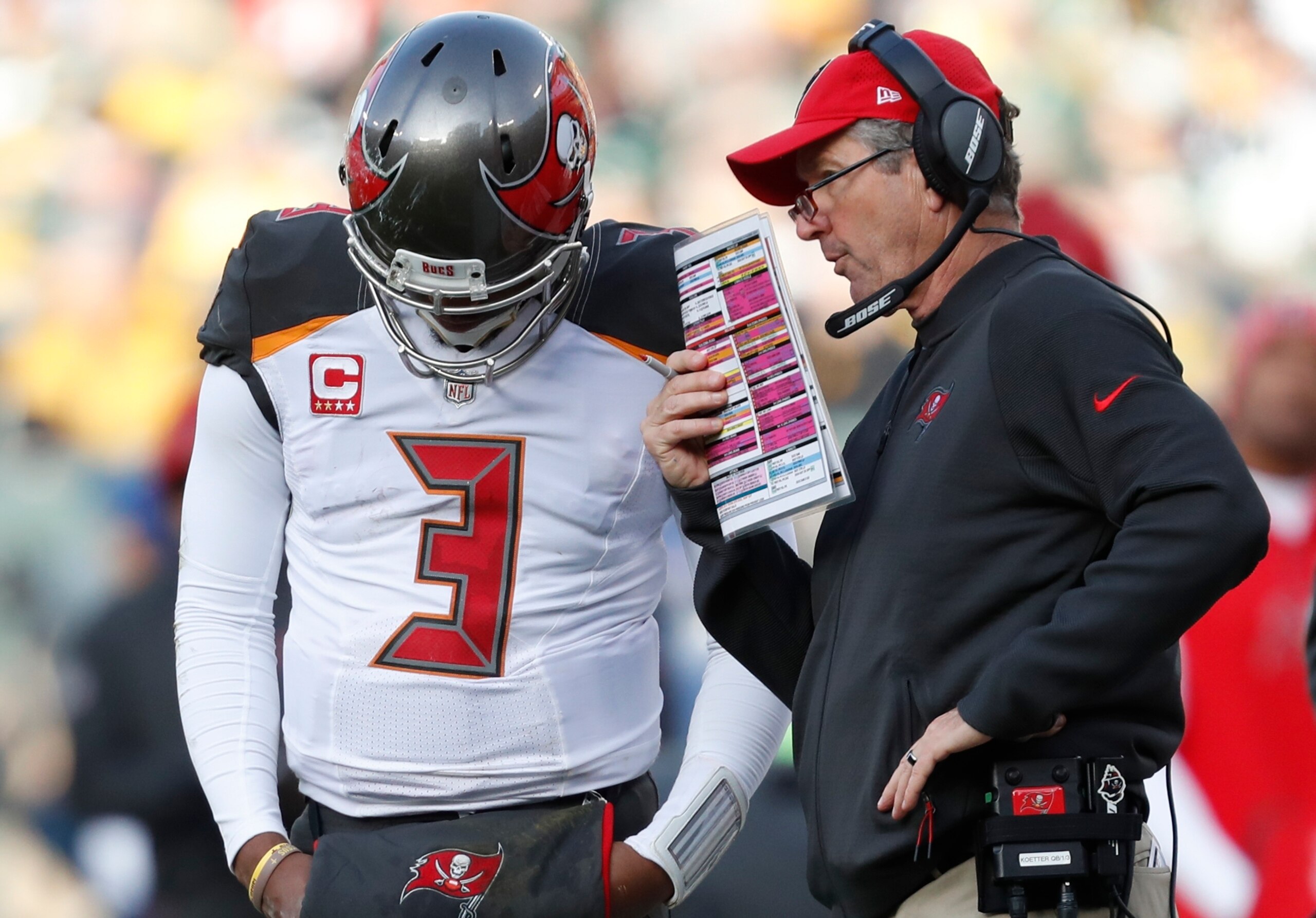
Fix the defense from front to back
While the offense has been a major problem for the Tampa Bay Buccaneers—nobody expected regression after the team signed receiver DeSean Jackson and drafted tight end O.J. Howard—Tampa Bay's defense is a major Achilles' heel.
Outside of defensive tackle Gerald McCoy and a talented linebacker group, the problems are everywhere. Tampa Bay has just 18 sacks, which is the lowest in the NFL. McCoy and fellow defensive tackle Clinton McDonald have nine of those. The Bucs desperately need edge pressure, and they'd better get it soon.
The lack of pressure on opposing QBs is one reason the secondary has played so poorly. Defensive coordinator Mike Smith's frequent preference for playing off-coverages that look like something out of 2005 is another issue. Smith is a big believer in spacing his coverage in zones and handoffs, but his schemes are allowing far too many easy completions. His players don't have the talent to make up for that problem.
Through Week 15, per Pro Football Reference, Smith's defense has allowed the most receptions (202) for the most passing yards (2,635) and the third-most passing touchdowns in the NFL against wide receivers (16). Brent Grimes is the only cornerback on the team who's playing at a high level. Vernon Hargreaves is a better slot guy than an outside man, and safety Chris Conte has been a liability in coverage for years.
This defense is in need of change in every possible way—personnel, scheme and philosophy.
Open up the offense
When the Bucs signed Jackson to a three-year, $33.5 million deal with $20 million guaranteed in March, I thought this passing offense would open up. Jackson would take the top off defenses with his speed, Mike Evans would catch everything underneath, Howard would make hay on seam routes and veteran tight end Cameron Brate would continue his underrated work as a red-zone target.
Little of that has happened. Jackson has struggled with injuries most of the season, but he's also been underutilized as a deep target—he has just one 100-yard game. Evans has become more notable for his offensive pass-interference penalties than for his production. Howard has taken time to learn the offense and was placed on injured reserve with an ankle injury on Wednesday, and while Brate has six touchdowns, the offense has been a tremendous disappointment.
Ian Rapoport of the NFL Network recently reported that there may be some friction between quarterback Jameis Winston and head coach/offensive play-designer Dick Koetter over the conservative nature of the offense. I can see why, but Winston must also take some of the blame, as his rogue tendencies have been magnified this season.
As much as any team on this list, the Bucs are a squad with a great deal of talent whose changes need to be philosophical and schematic.
New York Jets (5-9)
7 of 10
Have a plan for a quarterback that involves no current Jets
Josh McCown was one of the feel-good stories of the season before he broke his non-throwing hand December 10. The 38-year-old career journeyman was having his best season, completing 67.3 percent of his passes for 2,926 yards, 18 touchdowns and nine interceptions for the New York Jets.
But McCown is an impending free agent, and his age will likely prevent him from being part of the team's future.
That leaves Bryce Petty and Christian Hackenberg on the depth chart. Not good. Petty, the 2015 fourth-round pick from Baylor, has a live arm and some mobility but doesn't know how to read the field at a professional level. And Hackenberg, inexplicably selected in the second round of the 2016 draft, still hasn't attempted a pass in the regular season through two years in the league.
Mike Maccagnan was the Jets' general manager for both the Petty and Hackenberg picks, which may leave fans wondering if he's the right man to make any future quarterback decisions. Regardless, whoever's in that chair in 2018 must come up with a better QB plan.
Continue to expand on a promising receiver corps
Most people who looked at the Jets roster before the season thought they'd be the worst team in football. New York has surprised doubters in part through the efforts of receivers Robby Anderson and Jermaine Kearse.
Anderson is an estimable speed receiver, and Kearse is an acrobatic second or third target with some inconsistencies. There's nobody else on the roster who threatens opposing defenses in a physical sense; that potential ended when the Jets released Eric Decker as part of their mammoth 2017 salary dump.
In addition to his future quarterback, Maccagnan needs to come up with a big, physical receiver who can make top cornerbacks focus on him and give Anderson and Kearse even more opportunities.
Overhaul the offensive line
The Jets need help at more than a few positions—outside cornerback, tight end and inside linebacker among them. But the offensive line, where left tackle Kelvin Beachum has been the only standout, needs the most help.
Guards James Carpenter and Brian Winters have seen major drop-offs in play quality, center Wesley Johnson has not been effective and neither has right tackle Brandon Shell. This unit has noticeably regressed since last season, and it's a major source of stress on an offense that overperformed when McCown was the quarterback.
Cincinnati Bengals (5-9)
8 of 10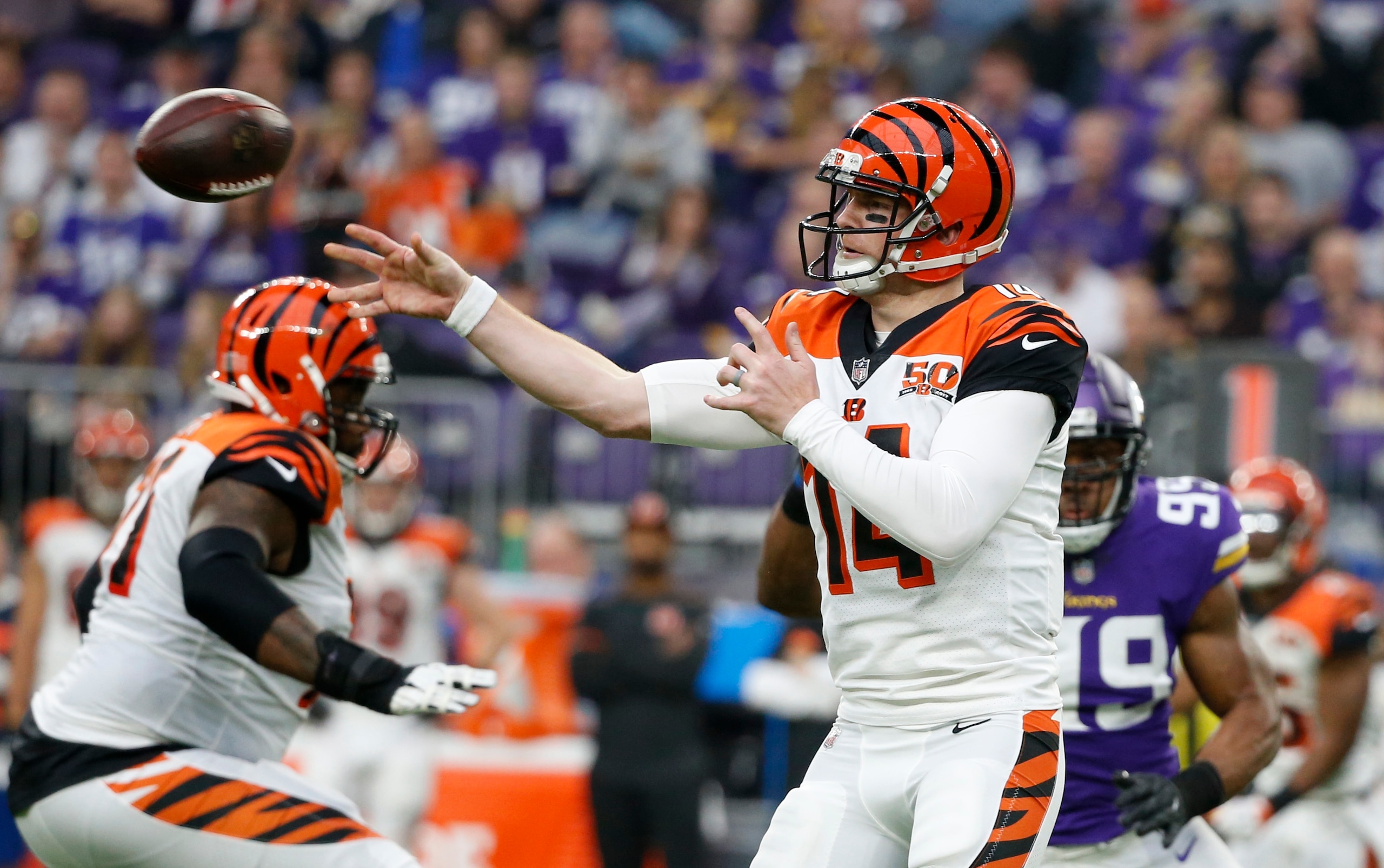
Let Marvin Lewis go
It's not that Marvin Lewis has been a bad head coach—many longtime coaches would be happy with his regular-season mark of 123-112-3. But Lewis' 0-7 playoff record stands out, and given that the Bengals won't sniff the playoffs this season, that regression becomes more profound.
Adam Schefter's December 17 report that Lewis was thinking of leaving the Bengals to explore other opportunities was a surprise, and some might think it's an example of a head coach who's bailing on his team at a weak point. But Lewis has been there since 2003, and he's seen the franchise through a lot.
More likely, Lewis understands what many coaches learn: Though rosters turn over frequently, a coach's message can become stale in the same place if he overstays his welcome.
The Bengals, in need of help at more than one position, should embrace the opportunity for a change in philosophy. And Lewis, one of the best defensive minds in football, most likely will welcome the chance to redefine his own philosophies in a new environment.
Hire an offensive mind who will push Andy Dalton...
…Even if that means Dalton has to be pushed out the door.
Since he became the team's starting quarterback in his rookie season of 2011, Dalton's been good for what I'd call the "Alex Smith corridor." That is, completing passes in the mid-60s percentage-wise and throwing two or three times more touchdowns than interceptions but failing to connect on many game-defining plays. In Smith's case, that's had more to do with limited velocity. For Dalton, it's more about his belief that he's a better deep-thrower than he is.
The Bengals kept Dalton in check this season, which led to a couple of games in which he threw no interceptions but also failed to throw multiple touchdowns. Through 14 games in 2017, he's finished with fewer than 200 passing yards six times.
The Bengals need a strong offensive coaching presence to push Dalton. Perhaps the Bengals can do what the Chiefs have done with Smith: put him in a varied offense where he can thrive. Or, perhaps it's time to find a more imposing quarterback. Either way, the reduced version of Dalton won't get this team anywhere.
Rethink the offensive tackle position
Deeming veteran left tackle Andrew Whitworth expendable was one of the biggest offseason blunders in the NFL. Whitworth signed with the L.A. Rams, and he's been a big part of one of the league's most remarkable offensive turnarounds in recent seasons.
The Bengals replaced Whitworth with third-year man Cedric Ogbuehi, and that's been one of the biggest talent downgrades on any offensive line this season. Add in right tackle Andre Smith's declining performance, and it's clear the Bengals have a problem on both edges. It's unlikely the current players at either position will solve these issues.
Denver Broncos (5-9)
9 of 10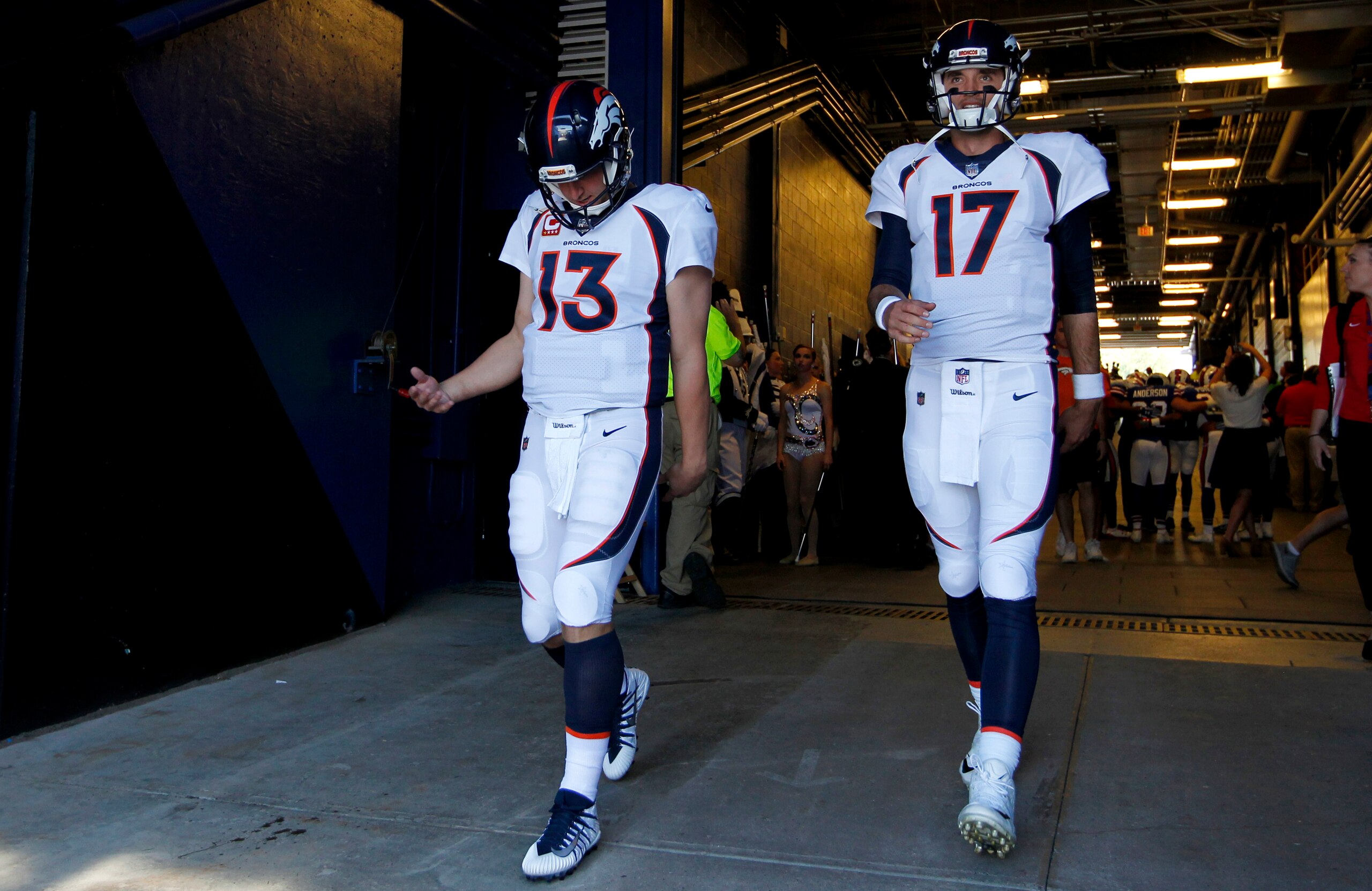
Fix a broken quarterback situation
Denver Broncos executive vice president John Elway has not handled the post-Peyton Manning quarterback situation well, and that's putting it mildly. Of all the NFL executives who refused to sign Colin Kaepernick, Elway was probably the most criticized. Denver's 2017 quarterback stable effectively wasted a good (though not great as in previous years) defense and a decent running game.
The "competition" between Trevor Siemian, Paxton Lynch and Brock Osweiler has led to an offense that has rendered receivers Demaryius Thomas and Emmanuel Sanders invisible. After 14 games, the Broncos have 17 passing touchdowns and 19 interceptions, are averaging 6.5 yards per attempt and the team passer rating of 73.0 is second-worst in the NFL behind the Cleveland Browns' 60.7 mark.
Siemian and Osweiler are limited passers and have repeatedly shown it. In his brief forays on the field in 2017, Lynch hasn't shown he's ready for prime time. Either through the draft or free agency, Elway and his team of evaluators must come up with a better solution.
Upgrade the front seven
Denver's cornerback trio of Aqib Talib, Chris Harris and Bradley Roby is one of the league's best. It's not the reason the Broncos have fallen from first to eighth in Football Outsiders' opponent-adjusted metrics or slipped from first to 15th against the pass. The primary issue, beyond Wade Phillips' absence and his outstanding pressure schemes that went to L.A. with him, is a front seven that doesn't get much pressure.
Von Miller's outstanding efforts aside, the Broncos have just 31 total sacks, and Miller is responsible for 10 of those. Defensive end Shelby Harris (4.5) and linebacker Shaquil Barrett (4.0) are second and third, respectively.
At its best under Phillips, Denver's defense got a ton of interior pressure, but that's not happening anymore. Harris kicks inside once in a while, but there's nobody with the effect of a Malik Jackson (who's in Jacksonville) or Derek Wolfe (who dealt with a neck injury much of the season before going on injured reserve in early December), and that needs to change.
Arizona Cardinals (6-8)
10 of 10
Prepare a long-term solution for life after Carson Palmer
Arizona Cardinals head coach Bruce Arians has tied his fate to Carson Palmer's since he became the main man in the Valley of the Sun in 2013. Until 2017, Palmer proved to be the perfect instrument through which Arians could run his multidimensional vertical passing concepts. But Father Time is undefeated, and in 2017, he hit Palmer hard.
Effectively immobile in the pocket at age 37 and stuck behind an offensive line that did him no favors, Palmer was floundering. His season ended in Week 7 when he suffered a broken arm against the Los Angeles Rams. Palmer has made noise about retirement before, and few would be surprised if he decided to hang 'em up after this year.
The Cardinals have Drew Stanton and Blaine Gabbert as replacements, but neither option is exceptional. Stanton understands Arians' system—the two were together in Indianapolis in 2012—but he doesn't have the arm talent to execute everything the coach wants. Nor does Gabbert.
Between the limitations of his quarterbacks and an offensive line that has seemed to get worse, Arians has been forced to run more quick-passing concepts. Even then, neither Stanton nor Gabbert has been able to run those at a high level.
If Arians wants a new era beyond Palmer, it's time to find the quarterback who can fulfill his offensive vision as Palmer once did.
Retool the offensive line
The losses of running backs David Johnson (wrist) and Adrian Peterson (neck) to injuries were big blows—especially Johnson, who has become the most important Cardinal player on that side of the ball. But even if Johnson had been available, he would have been running behind an offensive line that has degraded in talent and effectiveness, leaving this offense a one-dimensional shell. Changes must be made.
To be fair, injuries to tackle Jared Veldheer (ankle) and guards Mike Iupati (elbow) and Alex Boone (pectoral muscle) have hampered what Arians thought he would have. However, center A.Q. Shipley isn't the answer at center, and highly drafted tackle D.J. Humphries' struggles are well-known. There's a big need for an injection of young talent at many offensive positions for the Cardinals, and it starts with the front five.
.jpg?w=2560 "Chiefs Giants Football")
.jpg?w=2560 "Titans Ravens Football")
.jpg?w=2560 "🚨 Week 8 AP Top 25 Poll")

.jpg?w=2560 "Packers Safety Slams Refs 🤬")