

A form of rebirth occurs ever NFL offseason. No team is ever the same from one season to the next.
Free agency and the draft feed the machine. Hope springs eternal the moment a new player is brought into the fold. After all, a team wouldn't sign or select an individual without an idea about how to maximize his skill set. Or would it?
Not all things go according to plan, and here we are. Players once deemed franchise saviors or stellar acquisitions fell flat and underperformed. It happens every year.
Albert Haynesworth, Alvin Harper and Andre Rison are some of the most infamous free-agent acquisitions of all time. These stars quickly devolved into duds.
Every draft class is defined by its busts as much as its successes. The 2007 draft, for example, is remembered as much for failed quarterback JaMarcus Russell going No. 1 overall to the Oakland Raiders as it is for the three future Hall of Famers selected with the following six picks.
Of course, injuries play a factor. The following 10 disappointments didn't perform close to expectations when they were on the field this season. Did these players fail in 2017 because of their own or schematic limitations?
Dishonorable Mention
1 of 11
Top draft picks and free-agent acquisitions fail. It's all part of the NFL's circle of life. Myriad reasons lead to these situations. The hope is an individual can overcome if provided the right direction. The following five performers—though they didn't make our cut—had massive expectations placed on them only to underwhelm. Why?
- QB DeShone Kizer, Cleveland Browns: The Browns' history of quarterback flops is well-documented. However, the 21-year-old Kizer provided some hope when he was the fourth signal-caller selected in April. After all, he flashed massive potential for the Notre Dame Fighting Irish. Yet his inaccuracy, poor decision-making and league-worst eight red-zone turnovers, per Tom Carter of Pro Football Focus, forced the Browns to reconsider their options at the game's most important position.
- RB Jamaal Charles, Denver Broncos: Once the Kansas City Chiefs released the franchise's all-time leading rusher, Charles needed to show he could still play. The 30-year-old back is averaging 4.3 yards per carry, but his role continues to diminish as the coaching staff relies more on C.J. Anderson and Devontae Booker.
- WR John Ross, Cincinnati Bengals: This year's ninth overall pick experienced both individual and team-related issues. The wide receiver couldn't overcome a pair of injuries that led to an injured-reserve visit. The coaching staff also has no clue how to use him and even contemplated moving him to cornerback.
- LB Jabaal Sheard, Indianapolis Colts: Sheard signed a three-year, $25.5 million contract to become the Colts' primary pass-rusher. Yes, he leads the team with 5.5 sacks, but his overall production is not commensurate with the organization's investment. Sheard is a versatile piece, but he's never been a dominant pass-rusher.
- S Johnathan Cyprien, Tennessee Titans: The Titans spent a large portion of their available cap space on improving their secondary by signing Cyprien and Logan Ryan. Both have missed time due to injury, and Cyprien isn't an ideal fit for a defense in need of better coverage. The safety is comfortable near the line of scrimmage and struggles to work in space.
QB Jay Cutler, Miami Dolphins
2 of 11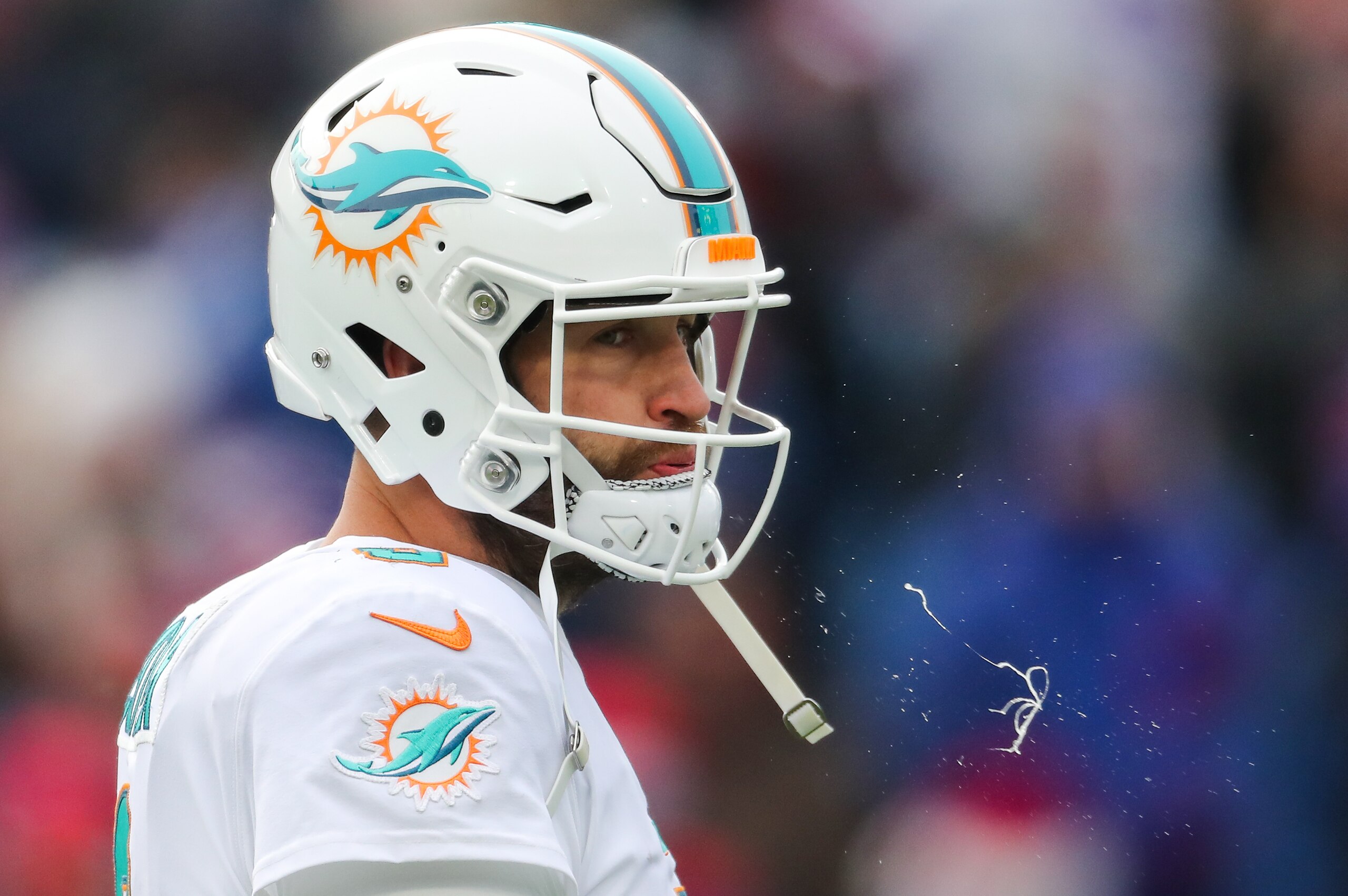
Who's to Blame: Cutler
The Miami Dolphins took a major step back in 2017 after a surprise postseason appearance in head coach Adam Gase's first season. It was due, in large part, to their quarterback.
A major change occurred when Ryan Tannehill suffered a season-ending knee injury in August. In an attempt to salvage the campaign, Gase coaxed Jay Cutler out of retirement. At the time, it seemed to be the right move since the quarterback experienced arguably his best season under Gase's supervision during their time with the Chicago Bears.
Arguments were even made the offense could be better with Cutler. Instead, a declining veteran took the helm, and his play hasn't provided the steadying presence Miami needed. The team is 6-8, and the playoffs are a pipe dream.
Cutler owns a career-worst average of 6.1 yards per attempt, and his 14 interceptions are tied for second-most in the league. Maybe he should have stayed retired and begun his career as a broadcaster, because this level of play is unacceptable considering the weapons the Dolphins feature at wide receiver in Jarvis Landry, Kenny Stills and DeVante Parker.
Despite the quarterback's well-known arm strength, he's struggled to stretch defenses because of his downfield inaccuracy. He completed only one of seven deep passes Sunday against the Buffalo Bills, according to Pro Football Focus.
"The good teams, they figure it out," Cutler said in mid-November, per ESPN.com's James Walker. "They start getting better. They start executing really well, and they find ways to win games, no matter what it takes."
The Dolphins haven't figured it out, and the 12th-year signal-caller hasn't been the answer.
RB Eddie Lacy, Seattle Seahawks
3 of 11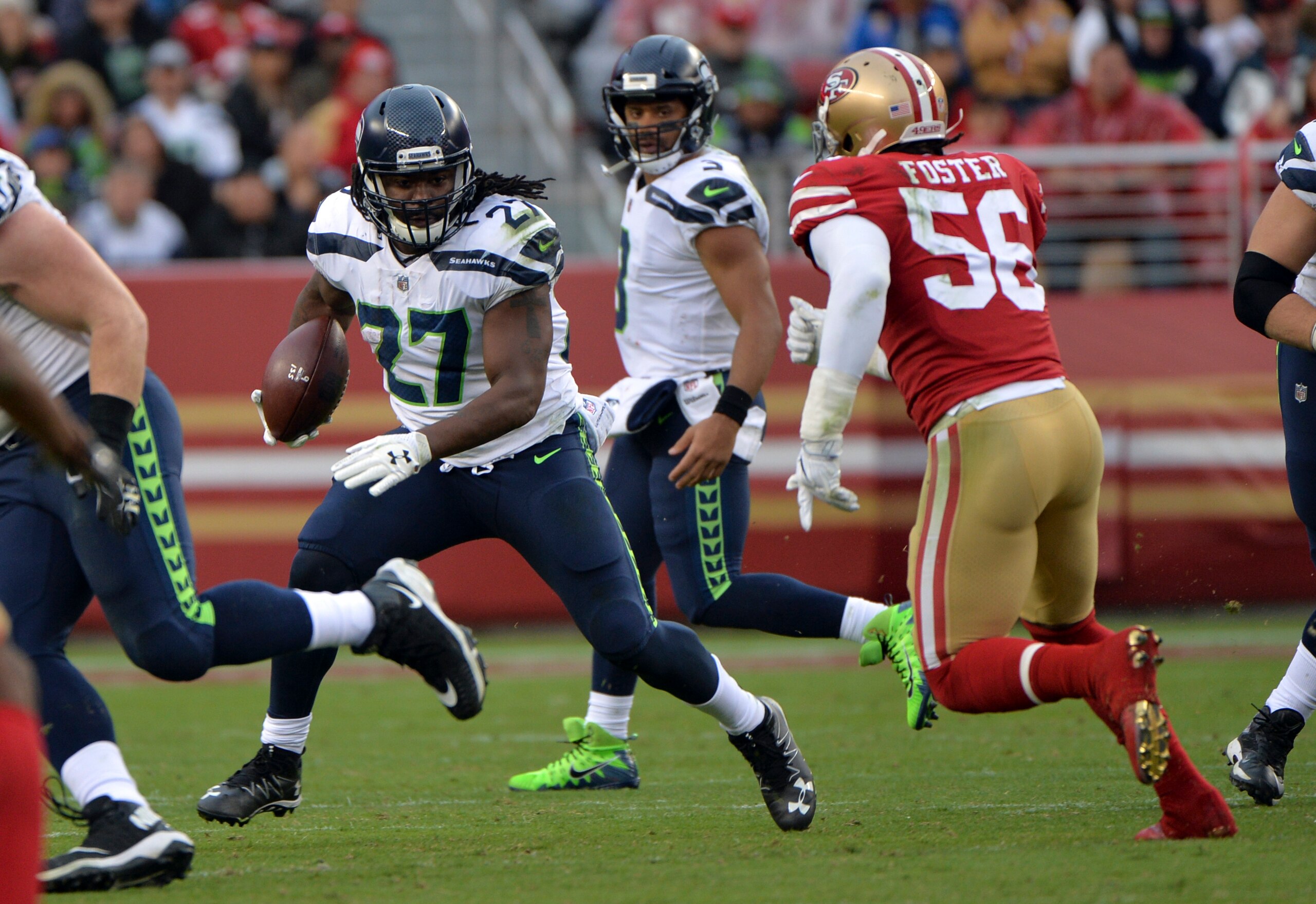
Who's to Blame: Seahawks
The Seattle Seahawks running game is a disaster, and Eddie Lacy's presence hasn't helped. But his performance isn't the sole reason for the team's awful ground game.
Russell Wilson leads the Seahawks with 521 rushing yards. That's bad enough, but none of the team's running backs are even close to catching him.
"It just amazes me that we can't find any consistency with any of our guys [at running back]," head coach Pete Carroll said on 710 ESPN Seattle (via the News Tribune's Gregg Bell).
Lacy managed 179 yards on 69 carries. Only two running backs with 50 or more carries are averaging fewer than 2.8 yards per carry this season. Lacy (2.6) is one; he's joined by teammate Thomas Rawls (2.6).
Their play may be bad, but it points to a much larger problem.
The Seahawks feature the NFL's worst offensive line. If you take Wilson out of the equation, Seattle running backs average 3.3 yards per carry. That would rank dead last in the league. Clearly, the front five isn't winning with any consistency on designed runs.
Lacy's play is disappointing considering he's a two-time 1,100-yard rusher who came to the Seahawks with a career average of 4.4 yards per carry. His physical style was supposed to set a tone akin to the one Marshawn Lynch set. Lynch, however, played behind a much better offensive line, and the Seattle backs simply haven't had enough room to effectively run the football.
.jpg?w=2560 "Rams Raiders Football")

.jpg?w=2560 "Steelers Saints Football")
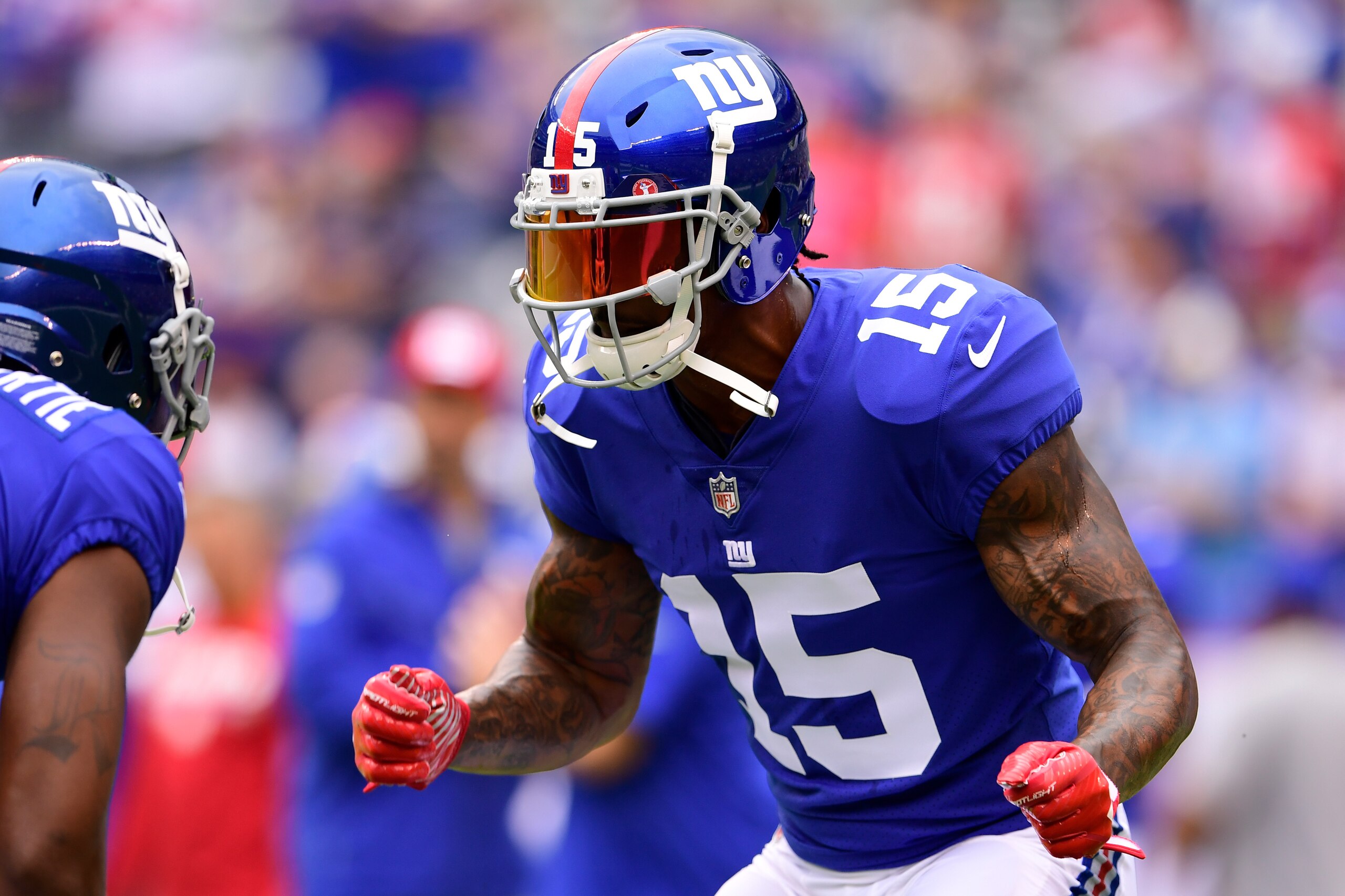
WR Brandon Marshall, New York Giants
4 of 11
Who's to Blame: Giants
Despite the excitement generated by Brandon Marshall's signing, the 6'5" receiver was never a good fit for the New York Giants.
The idea was for an experienced bigger target to complement Odell Beckham Jr. and Sterling Shepard. The plan never came to fruition.
Marshall struggled well before his season-ending ankle injury Oct. 8. The veteran never found a niche in Ben McAdoo's offense and finished the year with 18 receptions for 154 yards in five games.
Still, the blame doesn't lie squarely with the wide receiver. Any time a new piece is added, a play-caller must find ways to best utilize the performer's skill set. McAdoo placed so much emphasis on Beckham (prior to his own season-ending injury Oct. 8) that everyone else became an afterthought. He's since been dismissed as the Giants head coach.
Marshall may not be the same dominant one-on-one target he used to be, but the 33-year-old's size and experience should still make him a valuable third-down and red-zone option. He plans to return next year, too.
"I'm a competitor, and I don't want to go out like that," Marshall told ESPN's Adam Schefter in mid-October. "I'm definitely not going out like that."
Will he stick with New York, though? The organization appears on the verge of a reset. Marshall may want to play, but he wasn't used correctly this year, and the Giants may not want to run it back.
WR DeSean Jackson, Tampa Bay Buccaneers
5 of 11
Who's to Blame: Buccaneers
Multiple high-profile free agents fizzled in Tampa Bay this season, which points toward the Buccaneers not having a plan for any of them.
Both T.J. Ward and Chris Baker expressed frustration in late October, but DeSean Jackson's situation was far more mystifying. Jackson served as the game's premier vertical threat during the previous eight seasons. The wide receiver averaged 18.1 yards per catch from 2009 to 2016.
He's on the verge of setting a career low this season with 13.4 yards per catch.
"[It's] definitely hard, feeling like being a veteran in this league 10 years. ... But I'm not gonna abort ship," Jackson said in early October, per ESPN.com's Jenna Laine. "I'll stay on course, stay on plan. Eventually it will come together. We just gotta continue to go out there and keep beating, beating away and [doing] the things you need to do to get better."
To make matters worse, Jackson suffered an ankle injury Monday against the Atlanta Falcons, and his availability for the last two regular-season games is in question.
The three-time Pro Bowler never established a rapport with his quarterback, and head coach Dirk Koetter, who also serves as the offense's play-caller, didn't build any kind of rhythm to get Jackson involved. The target has caught five or more passes in only four games this season and never in back-to-back contests.
Jackson's speed was supposed to serve as a catalyst to propel a talented young Buccaneers offense into another stratosphere. Instead, Koetter and Co. had no clue how to properly use the dynamic target and wasted his value.
WR Terrelle Pryor Sr., Washington Redskins
6 of 11
Who's to Blame: Pryor
Sometimes, players bet on themselves so they can benefit over the long haul. Terrelle Pryor Sr. did just that when he signed a one-year, $6 million contract with the Washington Redskins—but it backfired.
Pryor thought he would walk into Washington's locker room and be the man because he posted a 1,000-yard season with the Cleveland Browns in 2016. The former quarterback wanted to be the focal point of the offense.
"I'm use to the rock in my hand early n often," Pryor posted on Instagram in late October, per ESPN.com's John Keim. "I have great teammates and understand it's not realistic with the great talent we have. That's something that's tough and a ongoing battle in my own mind. And I'm ready to control that focus and get back to pinning my ears back and playing ferocious how I know how! I'm ready."
He wasn't ready.
Over the next three games, Pryor caught two passes for 17 yards before he ended up on injured reserve with an ankle issue.
Washington made its intentions clear: The coaching staff wanted to see more of 2016 first-round pick Josh Doctson instead of the struggling Pryor.
The result of this imperfect marriage was somewhat shocking. Pryor was arguably the best available free-agent wide receiver. His size-speed combination is off the charts, and he progressed during his time in Cleveland. Expectations never met reality, though, and Pryor failed to match his previous production—or even come close.
TE Martellus Bennett, Green Bay Packers/New England Patriots
7 of 11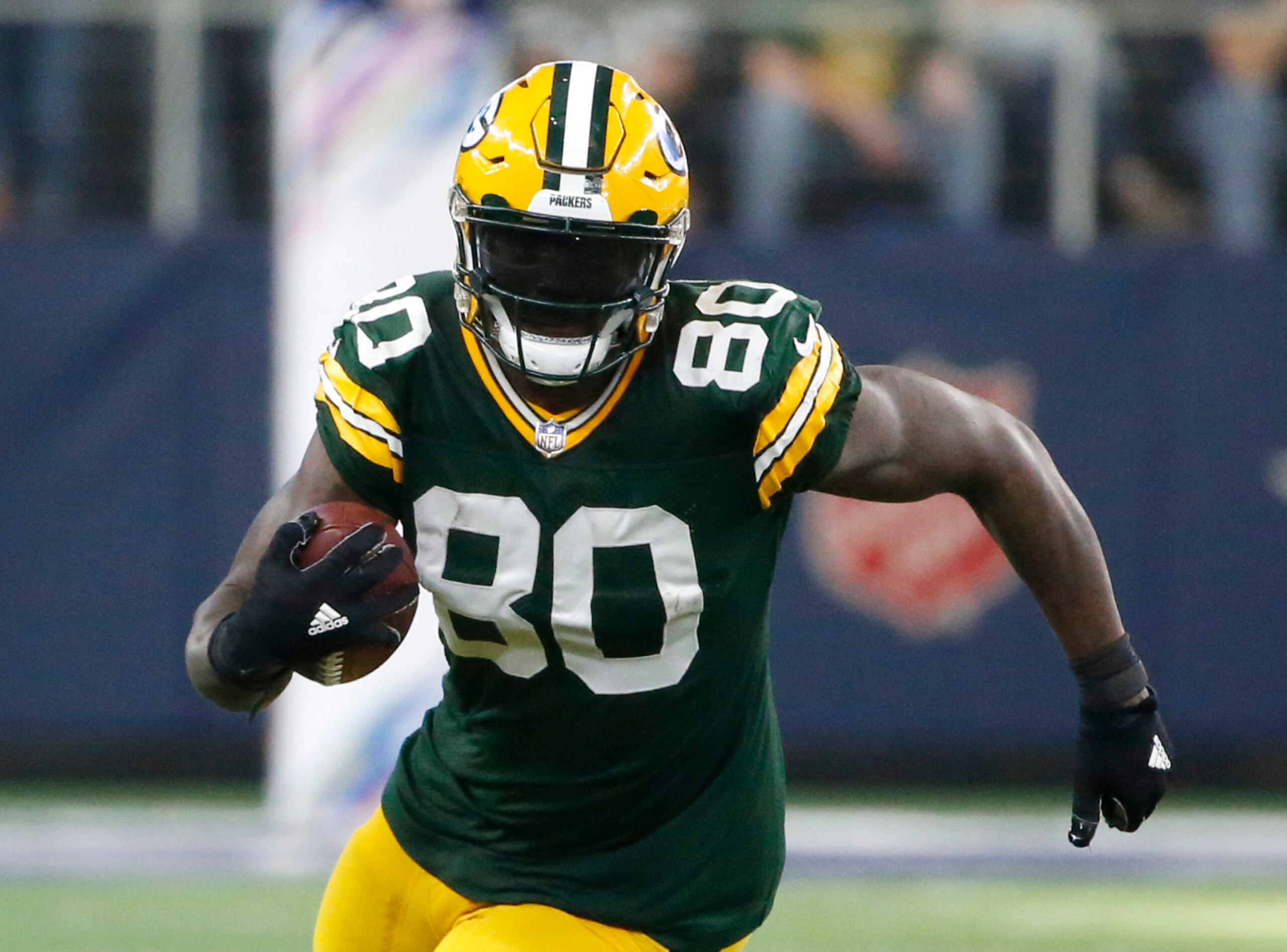
Who's to Blame: Both
Martellus Bennett's time with the Green Bay Packers will go down in infamy.
Bennett signed with the Packers as the top free-agent tight end. His play during the previous season with the New England Patriots portended a bright future alongside quarterback Aaron Rodgers.
Bennett didn't perform well, recording 24 receptions for 233 yards and zero touchdowns in seven games. A lingering shoulder issue seemed to be the culprit.
"The packers examined my shoulder on my visit March 10 and cleared it," the tight end wrong on Instagram in early November, per ESPN.com's Rob Demovsky. "They even gave me an xray as well. It got worse during the season, specifically against the Cowboys so I asked to have it checked out and we checked it. After a few days of contemplating to play with it or get surgery, I chose surgery. Now here we are ..."
Injuries happen, but the contentiousness of this particular situation led to a big fallout.
"They tried to f--- me over," Bennett continued. "Dr. McKenzie trying to cover his own ass. After trying to persuade me to play thru a major injury and choosing to get surgery."
Subsequently, the Packers released Bennett, and he was claimed by the Patriots. The 30-year-old veteran ended up on injured reserve...with a shoulder injury.
Bennett could have been a star in the Green Bay passing attack, but both parties ruined any chance of that happening.
DE Solomon Thomas, San Francisco 49ers
8 of 11
Who's to Blame: 49ers
Talent acquisition is different than team building. While these two approaches often go hand-in-hand, they're not always tied to each other.
The San Francisco 49ers provided an example by selecting three defensive linemen with their top first-round pick in three straight drafts. As the team transitioned schemes under new head coaches, not all those linemen had defined roles. So the talent acquisitions were not aimed toward team building.
What made this even more problematic was that new general manager John Lynch and head coach Kyle Shanahan targeted Solomon Thomas atop the 2017 class. The 49ers traded down from No. 2 to the third overall pick and selected the Stanford product.
Thomas doesn't fit traditional standards as a defensive end or tackle. He's a hybrid player with exceptional athleticism. The 273-pounder excelled in college while playing end on traditional running downs and shifting inside to rush the passer on passing downs. His strength against the run translated, but his quickness to consistently play in the backfield hasn't, and the coaching staff is still trying to find ways to best utilize him.
Too often, he disappears in games and doesn't make any impact plays.
Thomas is tied for 10th among rookie defenders with only two sacks. Top-five draft picks should be more than strong run defenders. They're supposed to be complete packages. Thomas hasn't been disruptive enough against the pass, and he's been outplayed by multiple first-year edge-rushers. He needs to be moved around to create mismatches along the defensive front.
Coordinator Robert Saleh must find a way to maximize the top draft pick's talents. Otherwise, Thomas will be viewed as a bust.
DE Taco Charlton, Dallas Cowboys
9 of 11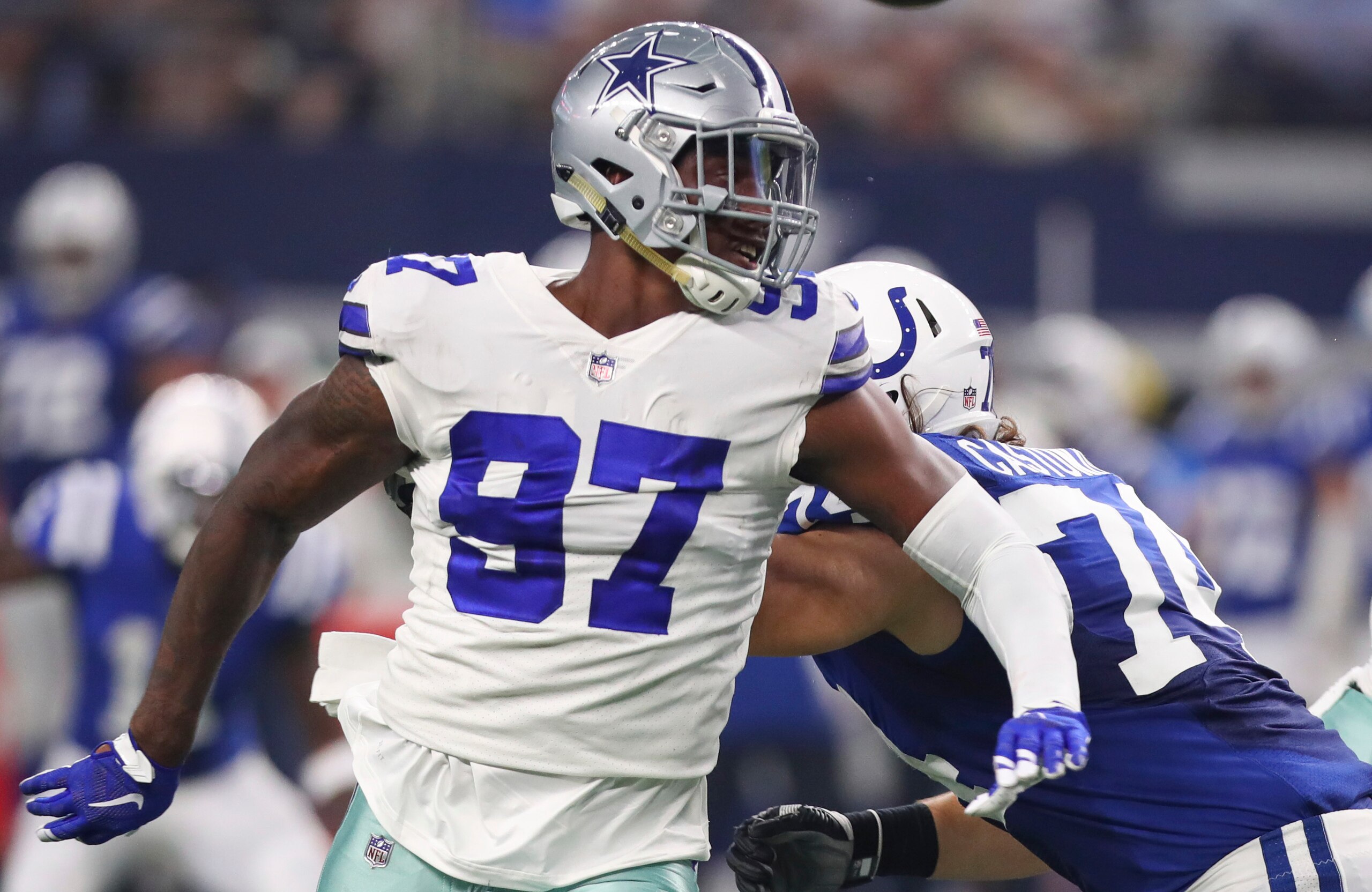
Who's to Blame: Cowboys
NFL teams should self-evaluate more often because they're often trapped by archaic approaches.
The Dallas Cowboys erred in the first round of April's draft by adhering to body type.
"It's very difficult for us to think we can pick a shorter defensive end and have success," director of player personnel Stephen Jones said, per 105.3 The Fan's Jeff Cavanaugh.
Does an ideal exist for every position? Of course. But a player's skill can't be overlooked. The Cowboys decided to select Michigan's Taco Charlton with the 28th pick. Charlton is 6'6" and 273 pounds.
His size and length haven't proved to be a boon for the defense. Instead, nine different rookie defenders have more sacks this season. Five of them—not including Chargers cornerback Desmond King—measure 6'3" or shorter.
Not all these prospects were available to Dallas late in the first round, but the league's leading rookie sack artist, the Bengals' Carl Lawson, was. Lawson has seven sacks in a limited role.
Charlton is still a talented young player. During his collegiate career, he required time to develop and become a consistent edge presence. The same will likely apply to his professional career.
But the Cowboys pass rush could be better right now if their front office had looked at skill sets rather than physical tools.
LB Lorenzo Alexander, Buffalo Bills
10 of 11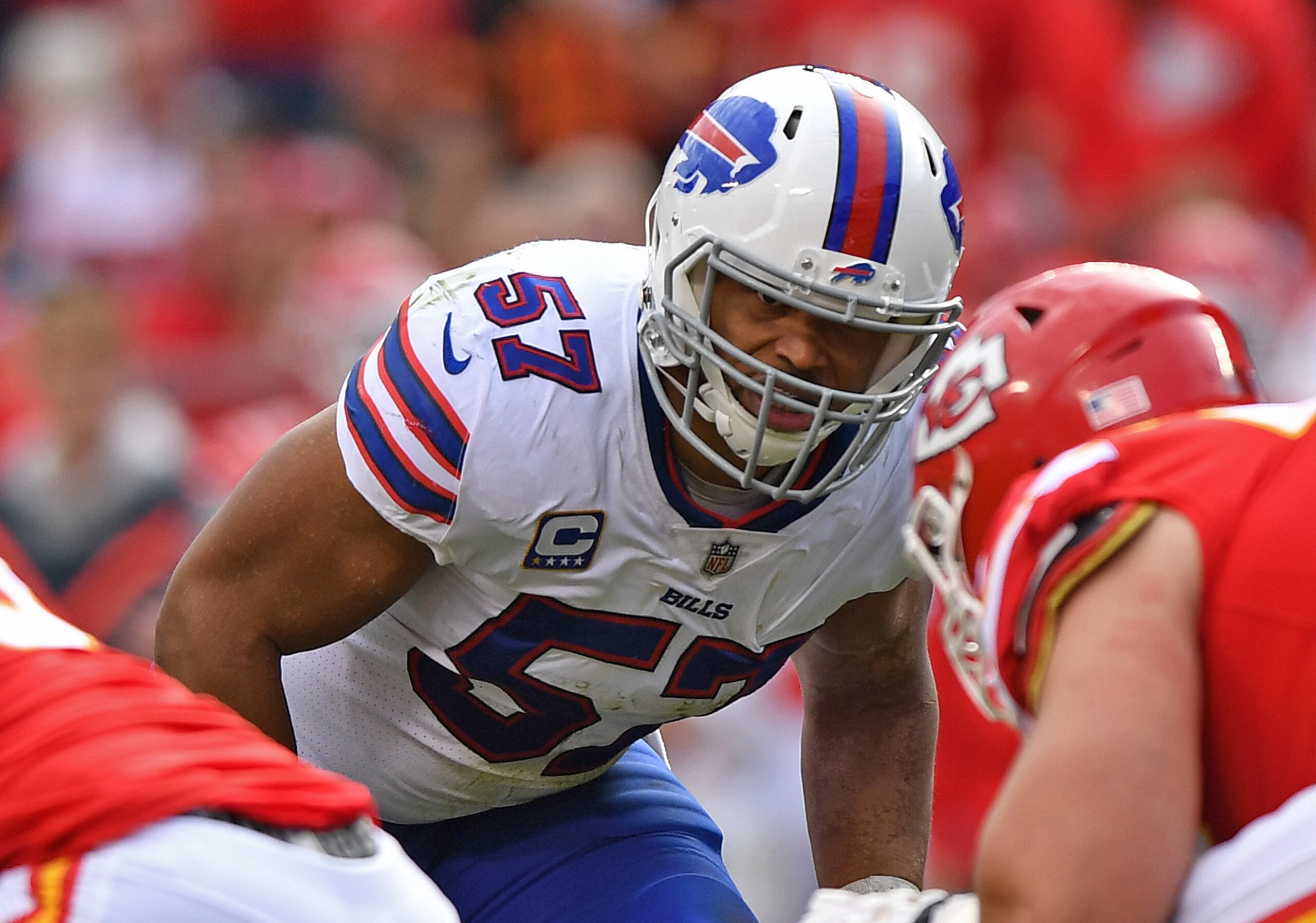
Who's to Blame: Bills
Lorenzo Alexander has gotten better with age. In 2016, he tied for third in the league with 12.5 sacks and earned his first Pro Bowl berth as a position player. He also picked up second-team All-Pro honors.
A year later, the linebacker hasn't been as productive, but it's not his fault. Alexander shifted from being primarily an edge defender with plenty opportunities to rush the passer to an off-the-ball linebacker with limited chances to obtain sacks.
"I'll probably be off-the-ball, playing SAM on under front as I walk up to the line on over front," the 13-year veteran said in March, per NewYorkUpstate.com's Matthew Fairburn. "I'll be stacked up—which I did, actually, last year in several of our games, especially at the end of the season. It was very effective and impactful, still. And then on third down, usually under center—much like how they used Thomas Davis, kind of looking at the way he was used in Carolina."
Alexander has only three sacks this season. He remains a reliable presence in the lineup, but the coaching staff doesn't have him playing to his strengths.
This often happens when a dramatic scheme change occurs. Previous coach Rex Ryan preferred a base 3-4, which allowed Alexander to serve as a pass-rusher on most occasions. In Sean McDermott's 4-3 scheme, the veteran defender is asked to work in space more often—which doesn't play to his strengths.
Alexander isn't Davis, nor should he be asked to do similar things. Instead, the Bills would benefit by putting him on the edge and unleashing him on quarterbacks.
S Jabrill Peppers, Cleveland Browns
11 of 11
Who's to Blame: Browns
No single rookie suffered more this season from being miscast in his role than Cleveland Browns safety Jabrill Peppers.
Defensive coordinator Gregg Williams employs a position he dubbed "angel," in which the free safety lines up 25 to 30 yards from the line of scrimmage. This year, the position—created for the late, great Sean Taylor—provides a glorified safety net to prevent big plays in the passing game.
"If you don't want to get the ball thrown over your head, just make sure that there is somebody deep enough where they don't try to throw it over your head," head coach Hue Jackson said in late September, per ESPN.com's Pat McManamon. "True? That is how that works. That is part of the strategy of our defense."
While the approach does work to a degree, it doesn't play to Peppers' strengths. The Michigan product would be better off if he were used as a Swiss army knife.
During his final season on campus, this year's 25th overall pick played outside linebacker—he was recruited as a cornerback—and registered 13 tackles for loss. He excelled playing in the box, racing after ball-carriers, blitzing quarterbacks, defending the edges and lining up over slot receivers.
Peppers has played so deep this season his skill set has been nullified. Williams should be using him as the ultimate chess piece. Instead, he's too far from the line of scrimmage to make any consequential plays.
.jpg?w=2560 "Cowboys Packers Football")




.jpg?w=2560 "🚨 Week 8 AP Top 25 Poll")