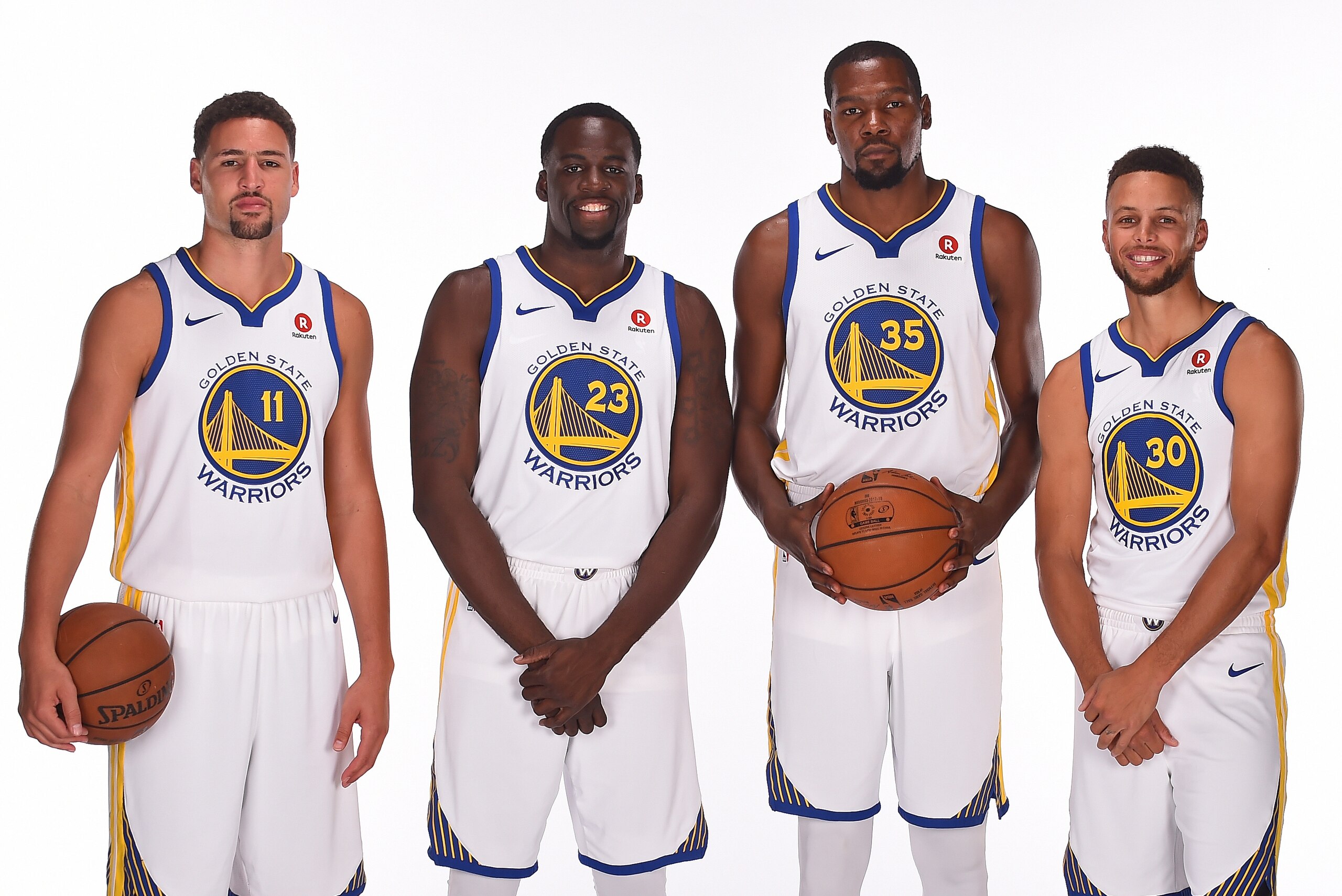


The Golden State Warriors might not have the best record in the NBA or even in the Western Conference, but they remain kings of the basketball castle until proved otherwise.
No one dismantles opponents quite like the Dubs. Case in point—they own the Association's best net rating and are the only team with top-five efficiency marks on both ends of the court.
Golden State is a machine, and as with any apparatus, it relies on each of its individual parts to make the collective work. That's perhaps more evident now than most times given the club's current injury woes, which have not halted its current progress (nine wins in 10 outings).
So, we have examined how the Warriors orchestrate their dominance by analyzing all 17 players under contract. Each has been assigned a letter grade based on how his performance compares to both expectations and execution of his role.
End of Bench
1 of 7
17. Chris Boucher, PF/C
The former Oregon Duck made Warriors history as their first recipient of a two-way contract, but it's too soon to tell if he'll be notable for any other reason. He tore his ACL in March and hasn't appeared in a game since. There are reasons to be intrigued—namely, he sports a 7'4" wingspan and averaged 2.7 blocks and 1.1 three-pointers in two collegiate seasons—but his clock is already ticking with his 25th birthday coming in January.
Grade: Incomplete
16. Damian Jones, C
Had JaVale McGee bolted in free agency, Jones might have been granted a significant role as the new rim-rocking 7-footer. But with McGee staying put and rookie Jordan Bell transitioning smoothly, Jones has yet to find a place in Golden State's rotation. His only appearances so far have come in Santa Cruz, where he's leading the G League outfit in blocks (2.5), rebounds (8.7) and field-goal percentage (69.9).
Grade: Incomplete
15. Quinn Cook, PG
For most of the early going, Cook has proved he's too good for the G League. Before being promoted to help cover Stephen Curry's absence, Cook was pacing the junior varsity Warriors in points (25.1 on 49.7 percent shooting) and plus/minus (plus-12.7). He hasn't had much NBA run yet (67 minutes over six games), but the early returns have been promising: 55.6 percent shooting, 13.8 player efficiency rating.
Grade: B
14. JaVale McGee, C
McGee's second go-round in Golden State hasn't been quite as eventful as the first, with his playing time down to 8.0 minutes and nearly as many DNPs (four) as all of last season (five). He's still feasting on dunks at one end and swatting shots at the other, but he's lost 10 points from his shooting percentage (from 65.2 to 54.7) and isn't rebounding as often. He still adds value but not enough to make him an every-night option.
Grade: C-
13. Kevon Looney, PF/C
Looney looked left for dead when the Dubs declined his fourth-year option, but he's wound up being more involved than ever. He has already played nearly half as many minutes (206) as he received the last two seasons combined (468) and has doubled his rejections per 36 minutes (2.8, up from 1.4). He still lacks an offensive identity, though, and he's never been less effective on the glass (9.6 boards per 36).
Grade: C+
12. Jordan Bell, PF/C
Less than six months after acquiring him for cash considerations on draft night, the Dubs are discovering they can't get enough of Bell. He has appeared in each of the last 10 contests, averaging 14.8 minutes. And with the club's highest on-court net efficiency rating (plus-22.2), he is tightening his grip on a regular role by understanding and embracing what Golden State needs from him.
"He's a young rookie who just does what he's told and listens to the veterans," head coach Steve Kerr told Bleacher Report recently.
Bell's situation is perfect to mask his weaknesses and emphasize his strengths, but he deserves credit for staying within himself. He rarely takes aim outside of the restricted area and as a result boasts an absurd 74.2 field-goal percentage. And he focuses most of his energy on the defensive end, where he's tallying 5.0 combined blocks and steals per 36 minutes and holding opponents to 47.5 percent shooting at the basket.
Grade: A-
11. Patrick McCaw, SG
The stat sheet paints McCaw's campaign as a breakout. His true shooting percentage is up more than six points (from 54.0 to 60.3), he's averaging more assists (1.1 to 1.5) with fewer turnovers (0.5 to 0.4), and his PER has spiked by over 30 percent (8.6 to 11.6). But he's failing to separate in the battle for backcourt minutes, which has limited him to even less floor time than he had as a rookie (15.1 to 13.4).
Grade: B-
Supporting Cast
2 of 7
10. David West, C
West is 37 years old, nine seasons removed from his last All-Star selection and an annual retirement candidate. And yet, he's arguably never been more effective. He only gets 12.5 minutes a night, but he makes the most of every second. His current career highs—yes, plural—include 66.4 percent shooting, a 25.2 PER and per-36-minute marks of 19.7 points, 3.5 blocks and 1.8 steals (ties previous best).
Grade: A-
9. Omri Casspi, SF/PF
Casspi's minimum contract for a veteran seemed like a great bargain at the time, but at this point, it warrants a grand larceny investigation. The sample size might not be the biggest, but his shooting rates are unbelievable—58.5 percent from the field, 61.5 from distance. He's nearly averaging a double-double per 36 minutes (14.6 points and 9.9 rebounds), and his 16.1 PER is the best he's ever had.
"He fits in well with us because he's always in the right place," Andre Iguodala said, per Bay Area News Group's Carl Steward. "High-IQ players excel in our system on both ends of the court. He communicates well, he knows where to be and his skill set as a shooter/slasher/finisher around the rim fits in perfectly with us."
Grade: B+
8. Nick Young, SG
Incorporating Swaggy P into the system has gone almost exactly according to script. He's still a one-dimensional contributor, but he's good enough in that area (18.7 points and 4.2 triples per 36 minutes) to get relatively consistent minutes. Playing in Golden State has predictably pushed his field-goal (45.7) and three-point (41.4) percentages to career levels, but his limitations still leave him with a subpar 14.1 PER.
Grade: C+
7. Zaza Pachulia, C
As a 33-year-old incumbent, Pachulia has been what you'd expect—a slightly less effective version of the player he was last season. His counting categories are down along with his playing time, as is his PER (from 16.1 to 15.5). He's committing more turnovers (3.2 per 36 minutes, up from 2.5) and providing less resistance at the rim (63.5 percent shooting allowed, up from 56.6).
Grade: C
6. Shaun Livingston, PG
Livingston's career-low 15.9 minutes might hint at a decline, but given his age and injury history, the 32-year-old's just being smartly handled with kid gloves. Once the bubble wrap comes off, he's still a matchup nightmare for smaller defenders (93rd percentile on post-ups), a savvy floor general (2.45 assists per turnover) and a multipositional defender. He is dinged a bit by a five-plus point drop in field-goal shooting, though (49.1 from 54.7).
Grade: B-
5. Andre Iguodala, SG/SF
3 of 7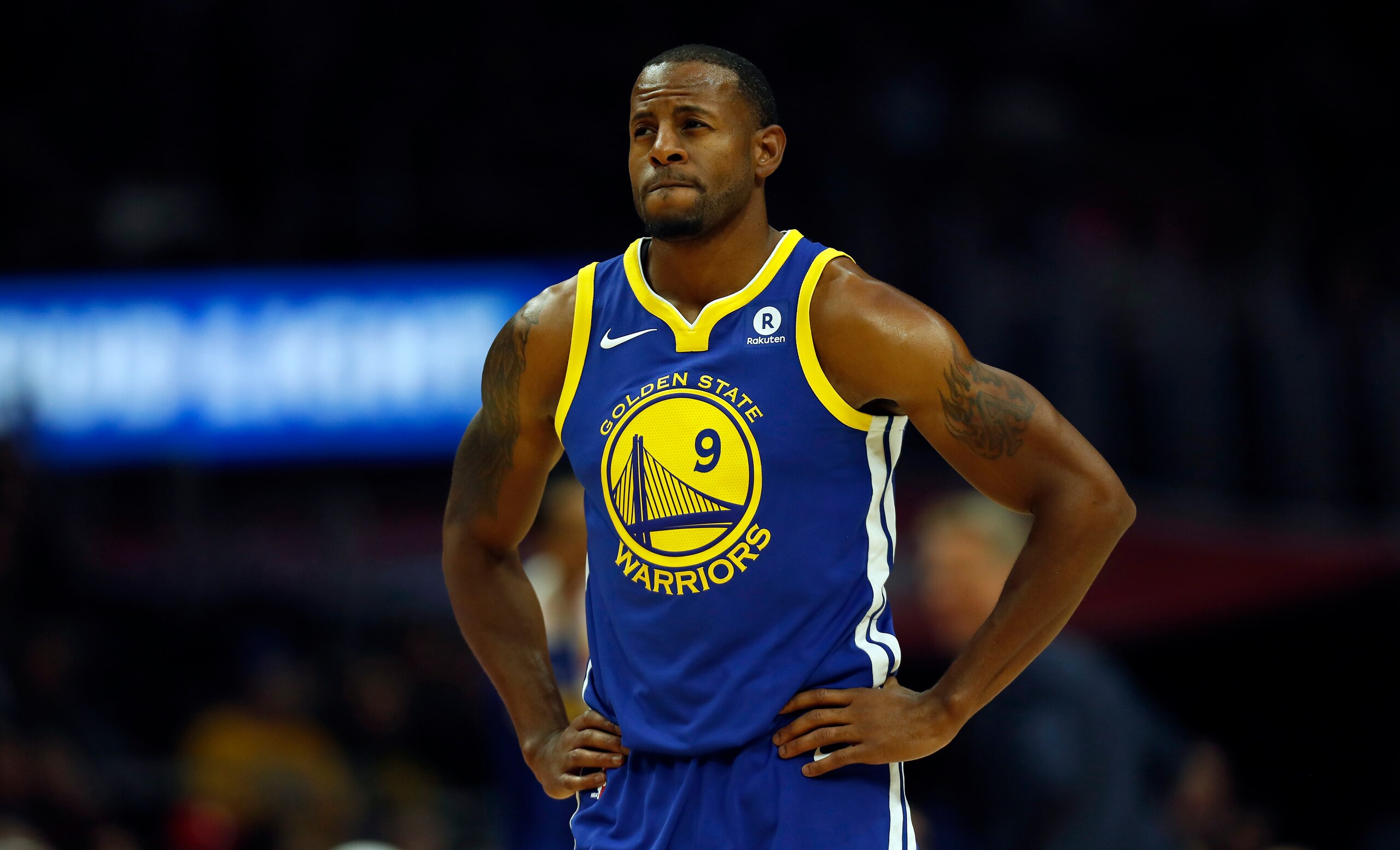
It's fitting that a defensive dynamo like Andre Iguodala wouldn't be easy to read, as so much of his best work occurs away from the stat sheet. But since his fight with Father Time is magnified by his importance to Golden State's championship puzzle, it's tough to tell what constitutes a slow start as opposed to calculated pacing.
Take last season, for instance. Throw out three October outings, and his field-goal percentage improved in all but one of the ensuing months. And by the time that decline happened, he was so close to fully revved that his February accuracy rate lost six points and still checked in at 51.6.
That's why raising any alarms this early in the process feels foolish.
But there's no denying his stats are trending the wrong direction.
His shooting rates have fallen across the board, including his worst field-goal percentage as a Warrior (46.3) and his worst perimeter mark ever (28.9). All-encompassing categories like PER (10.9) and box plus/minus (0.8) paint this as his least efficient NBA campaign.
He's still silencing opposing scorers, though, and slicing 5.3 points off their field-goal percentage. And while he's come back to earth from last season's league-leading 4.50 assists per turnover, he's only fallen to the 15th spot with 2.84.
"Andre's our guy when we need to settle down. When we need to take control of a game, he's going to be out there on the floor," Kerr said, per Bay Area News Group's Logan Murdock.
History says Iguodala will be one of Golden State's five best players when he's needed most. But whether this has any long-term meaning or not, he's been a step or two behind his own standards.
Grade: C-



4. Klay Thompson, SG
4 of 7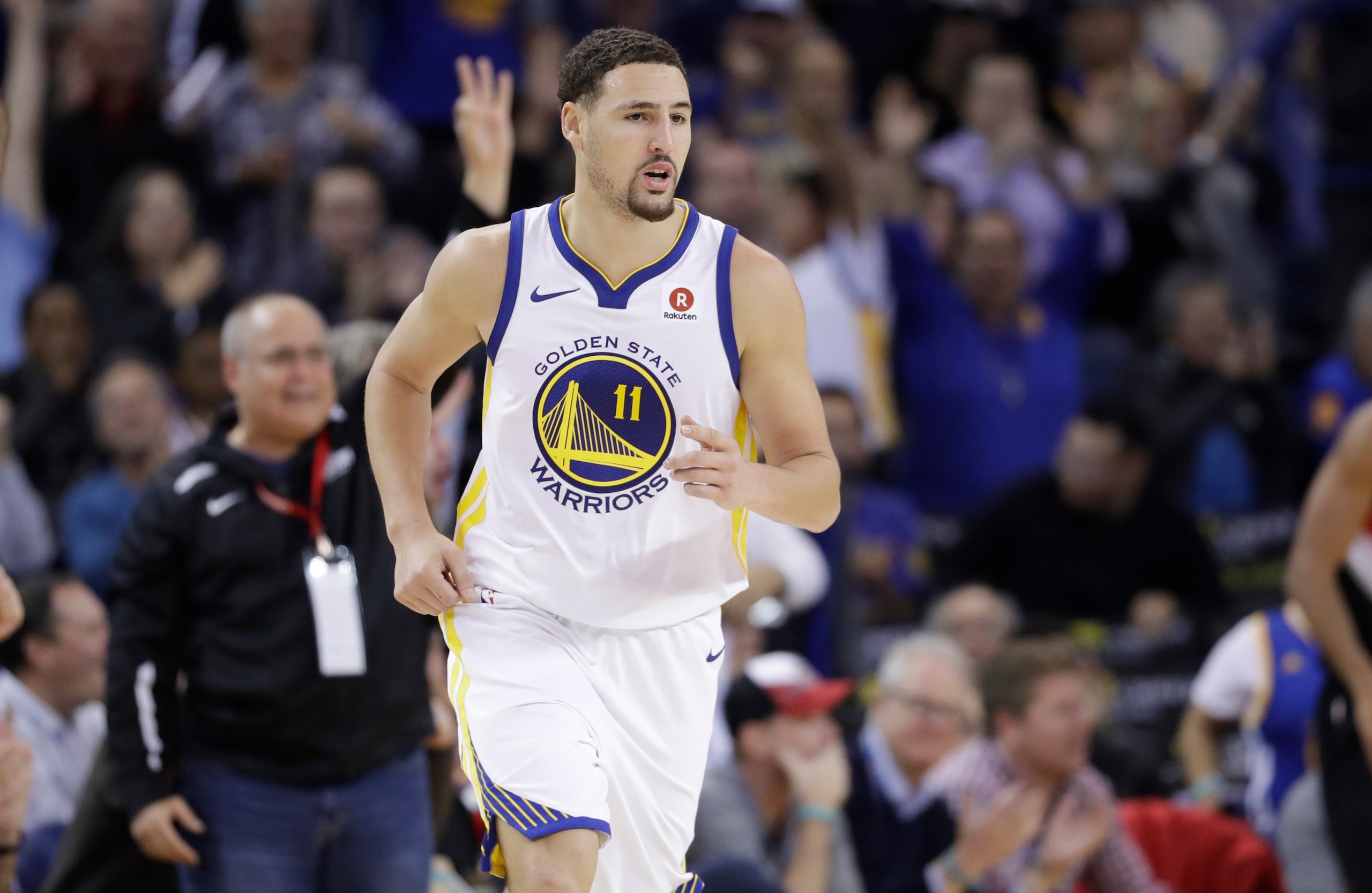
Klay Thompson has three All-Star appearances on his resume. His jewelry collection features two championship rings and an Olympic gold medal. He owns the most single-season triples of any player not named Stephen Curry (276 in 2015-16) and the 11th-best career three-point percentage in NBA history (42.1).
But this season has become a springboard into his prime.
The laid-back sniper has upped his already impressive connection rates to ludicrous levels. If he can boost his free-throw percentage just a tiny bit, he has a chance to not only join the seven-member 50/40/90 club, he could join Curry and Steve Nash in the uber-exclusive 50/45/90 version.
Thompson might not be the most versatile player around, but he doesn't have to be.
While clubs throw megamoney at anyone with remote three-and-D skills, Thompson's might be the best. He's splashing an incredible 45.9 percent of his triples—a rate Curry hasn't even reached—while launching 7.5 per contest. He can take on either guard assignment on the defensive end, where he's holding players 2.4 points off their average.
Thompson isn't much of a playmaker, and he's never grabbed as many rebounds as his 6'7" frame says he should (career-high 4.2 this season). But he is expanding his off-the-dribble arsenal and parlaying his on-point mid-range shooting into a personal-best 50.3 percent shooting, as CBSSports.com's Brad Botkin observed:
"Klay's shots, particularly in the half court, are like clockwork. The threes we know about, but the twos are what is rounding out his game so much. He curls off screens for 15-footers. He continues downhill on dribble hand-offs. He's old school in that he'll pump fake, jump stop, pivot, go off one foot, whatever he needs to do to get just a little bit of space, which is all he needs."
Grade: A-
3. Draymond Green, PF/C
5 of 7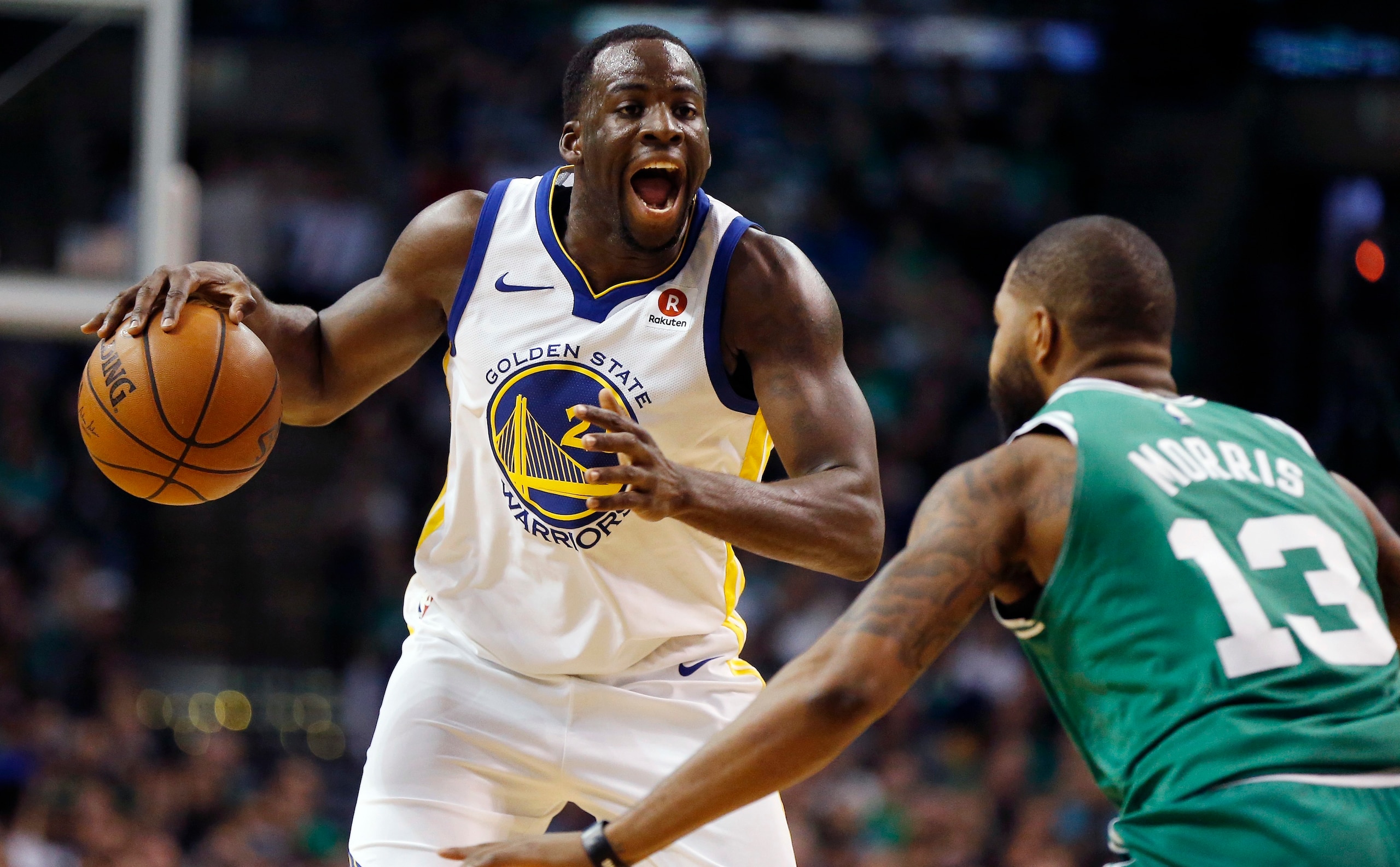
There are glue guys, there are do-everything players and then there's Draymond Green.
Save for consistent scoring and shooting, the two-time All-Star checks off every box inside the lines. And since he suits up for a squad posting top-20 all-time numbers in offensive efficiency (115.4 offensive rating, tied for fifth) and field-goal shooting (51.3 percent, tied for 14th), his shortcomings are easier to mask here than anywhere.
That centers the attention on his strengths, of which there are many. He's the team's top performer in rebounds (7.2) and assists (7.3). He's second on the list in steals (1.6) and blocks (1.4). He's also the fire stoking its internal flames, and while he can overheat—seven technical fouls, second-most in the Association—his intensity is nevertheless invaluable.
"What Draymond does for the minutes he plays is almost unmatched," associate head coach Mike Brown said, per Connor Letourneau of the San Francisco Chronicle. "That's an intangible that's extremely hard to do every time you step on the floor."
The numbers say Green is almost as important as any player on the roster. He's eighth overall in ESPN.com's real plus-minus (plus-5.00) and tied for seventh in traditional plus/minus (plus-8.5).
That said, he has dipped a bit in each category. He finished last season ranked fourth in RPM (plus-7.14) and third in plus/minus (plus-10.8). He's also slightly lagging behind his 2016-17 pace in points, rebounds and steals.
The Dubs fared 10.3 points better per 100 possessions with him than without last season. This year, the split is only 3.7 points, although some of that decline can be attributed to Golden State's upgraded second unit.
He's still a superstar in the way only he can be. But besides having better shooting rates, he's essentially on the same trajectory from the previous campaign.
Grade: B
2. Kevin Durant, SF/PF
6 of 7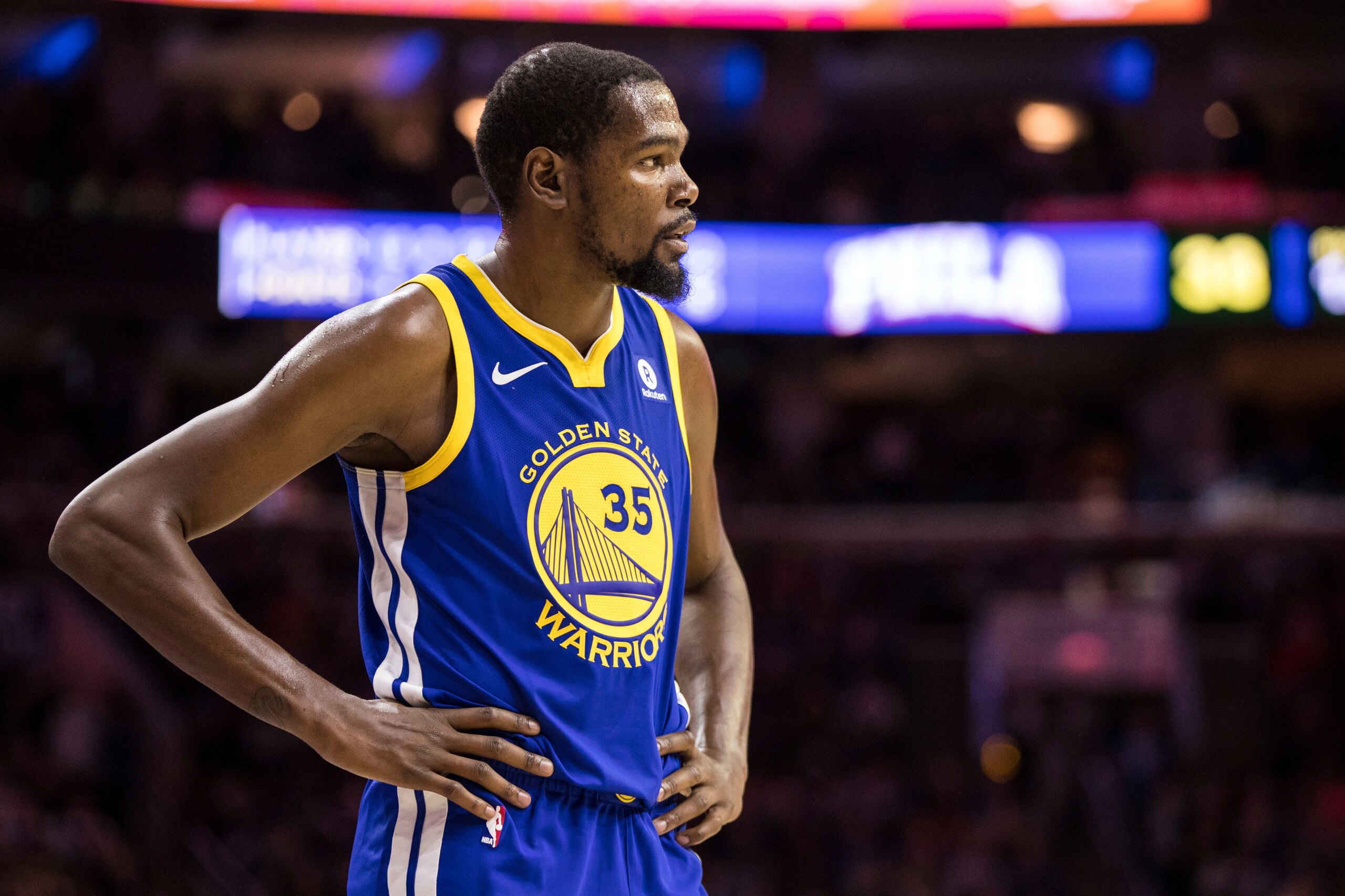
At some point, Kevin Durant will peak. But even though he has an MVP to his name and a fresh Finals MVP in his back pocket, there's evidence suggesting he's still climbing.
His offense was elite before he arrived in the Bay, but he's made it cleaner and more versatile.
The best field-goal shooting years of his career are this season and last, and the same applies to his assists per 36 minutes. He's basically a 7-foot guard, and as hard as that sounds to defend on its own, the challenge is multiplied a dozen times over when he's deployed in a system promoting the movement of players and the ball.
The four-time scoring champ has made his biggest strides at the other end, though. He's always had the physical tools to be a defensive menace, and now he looks more willing and able to fulfill that potential.
Last season, he offered a sampling by swatting a then-career-best 1.6 shots per game. Now, he's up to 2.1, which not only gives him the team lead, it puts him fourth overall—behind two full-time centers and whatever we're calling New York City's unicorn nowadays. Moreover, Durant is holding opponents 7.5 points below their average field-goal percentages and 10.5 points under on shots within 10 feet.
"He is a great defender," Green—the reigning Defensive Player of the Year—said of Durant, per ESPN.com's Chris Haynes. "With his length and athleticism, he can make it tough on anyone and guard just about anyone."
Durant hasn't made across-the-board improvements this season. He's shooting worse from the field than he did during his Dubs' debut while committing more fouls and turnovers. But given where his offensive skill set has been and where his defensive impact is headed, he has somehow found a way to take another step forward.
Grade: A-
1. Stephen Curry, PG
7 of 7
If Stephen Curry cared at all about player rankings, then his unanimous MVP was more curse than gift. Ever since that spell-binding 2015-16 season—highlighted by a scoring title and 50/45/90 club entry—he's been scrutinized with "yeah, but" analysis.
Yeah, he has the league's second-highest RPM, but his three-point percentage is the worst of his career (38.1) and his volume is at a three-year low (3.6 makes per game). Yeah, the stats say he's Golden State's most important star (plus-16.7 with him, plus-7.1 without), but Durant has the most all-around talent.
The second counterpoint is moot, save for keeping talking heads active and sparking social media debates. But the first might be worth monitoring.
Curry isn't taking as many pull-up triples (4.3 per game, down from 5.2 last season) or splashing them at the same rate (34.3 percent from 36.6). And since so much of the Dubs' spacing comes from the threat of his launching at any moment and from any distance, there's some offensive leverage lost when he's not as lights-out from long range.
"When Curry starts hitting those 28-footers and beyond, falling to the floor or striking a nutty pose as the ball glides gently through the net, that's when it really gets ridiculous—simply too much for any team to handle," Bruce Jenkins of the San Francisco Chronicle wrote.
If being concerned about Curry's shooting sounds silly, there's a good chance it probably is. The NBA has never seen a marksman quite like him, and his career 43.5 three-point percentage suggests a bounce-back is more imminent than likely.
Besides, Golden State has a far bigger worry with Curry—the sprain to the same right ankle he's had surgically repaired twice. If he can get through this unscathed, the Warriors won't fret about a few percentage points lost beyond the arc.
Grade: B+
Unless otherwise indicated, all stats are from Basketball Reference or NBA.com.
Zach Buckley covers the NBA for Bleacher Report. Follow him on Twitter: @ZachBuckleyNBA.

.jpg?w=2560 "Raiders Could Start Mendoza")

.jpg?w=2560 "Rodgers Iced Out on Plane 💎")
.jpg?w=2560 "Packers Safety Slams Refs 🤬")
.jpg?w=2560 "🚨 Week 8 AP Top 25 Poll")