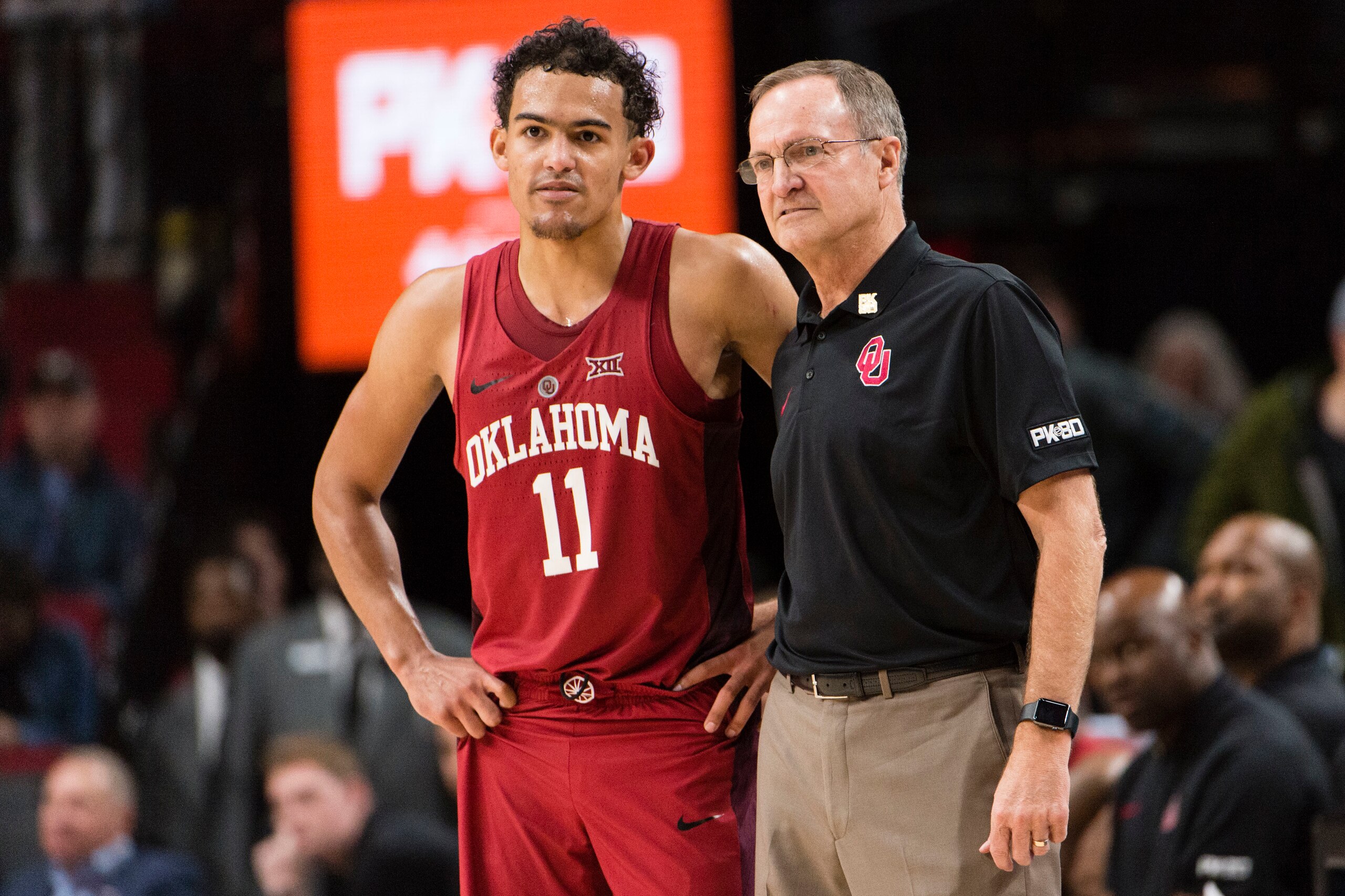


Not only is Oklahoma's Trae Young the runaway favorite for the men's college basketball Freshman of the Year, but he would be the front-runner for the Wooden Award if voting occurred today.
Young was rated as the No. 23 freshman in this year's class, per the 247Sports composite rankings. He wasn't even rated as one of the top three point guards.
But if he keeps up his torrid pace, he's going to go down in college hoops lore as the greatest lead guard to ever play the game. The stakes were much, much different, but even Kemba Walker's 11-game run through the 2011 Big East and NCAA tournaments is statistically inferior to what Young has done through eight games.
Should Young slip at all, though, there are plenty of studs chomping at the bit for the top spot. Though we're ranking the top 10 first-year players, by our count, there are seven legitimate threats to be named National Freshman of the Year. You may disagree with the ranking of Nos. 2 through 7, but that septet as a whole is clearly a cut above the rest of the country.
Unlike our Player of the Year rankings, where team success is crucial, Freshman of the Year rankings rely more heavily on individual contributions. Team success does matter a little bit—enough to keep Howard's RJ Cole out of our top 10—but a player doing ridiculous things for a three-loss bubble team can definitely land above a strong candidate from a one-loss title contender.
Honorable Mentions
1 of 11
Oshae Brissett, Syracuse: He desperately needs to improve his shooting percentages, but Brissett is averaging 13.6 points and 9.2 rebounds per game. He's one of the biggest reasons Syracuse has gotten out to an impressive 8-1 start.
Kevin Knox and Hamidou Diallo, Kentucky: Tough to justify putting either guy in the top 10 right now, but Knox and Diallo have been the leaders of this absurdly young team. They're scoring a combined 29.9 points per game. It isn't often that they both play well in the same contest, but the Wildcats are much tougher to beat when they do.
Trevon Duval, Duke: In spite of the 6.7 assists per game, Duval has been a liability on the offensive end. He can't shoot and opponents aren't afraid to let him, sagging off when he has the ball on the perimeter to guard against lob/entry passes. He can't fix the shot at this point, but Duval needs to improve as a driver to keep defenses honest.
Romello White, Arizona State: This big man has been a bit lost in the shuffle behind everything Tra Holder and Shannon Evans II are doing for the Sun Devils, but White has averaged 16.1 points and 9.0 rebounds per game. And he gets to the free-throw line at a high rate, attempting 71 freebies in just eight games.
Lindell Wigginton, Iowa State: After starting 0-2 with ugly losses to Missouri and Milwaukee, Iowa State has won seven straight. A big reason for that is freshman guard Lindell Wigginton, who is averaging 18.3 points and shooting 51.3 percent from three-point range during the winning streak. The Cyclones have yet to face anyone as good as everyone they will face in Big 12 play, though, so our infatuation with Wigginton is in a holding pattern until the schedule picks up.
Matt Haarms, Purdue: The big man is only playing about 17 minutes per game, but he's doing a lot during them. Haarms has blocked at least one shot in every game this season and is ranked fifth nationally in block percentage.
RJ Cole, Howard: The Bison are 1-10 and legitimately might be the worst team in the country, but Cole has at least 12 points and four assists in every game. He's averaging 18.9 points and 6.4 assists and appears to be on the fast track to becoming Howard's next James Daniel—a guy who leads the nation in scoring for a team with at least 20 losses.
10. Eric Williams Jr., Duquesne
2 of 11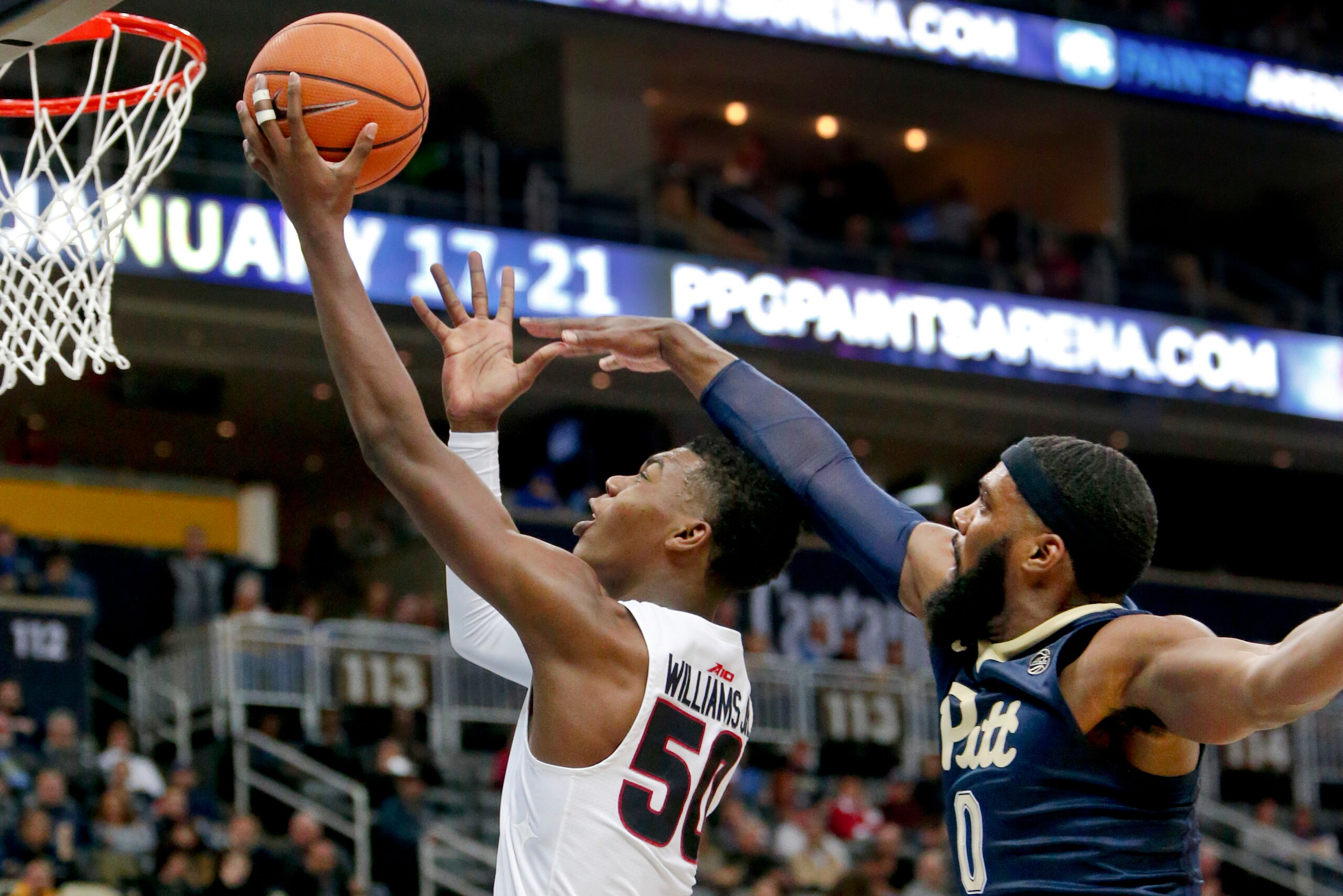
Season Stats: 16.1 PPG, 10.4 RPG, 1.8 SPG, 1.4 APG, 42.2% 3PT
MVP Performance: 24 points, 11 rebounds, three assists vs. Maryland-Eastern Shore (Dec. 4)
I've watched everyone else in the top 10 play at least three or four times in the past month. For some of them, I've seen at least a significant percentage of every game they've played.
But I'm not even going to pretend to be some kind of expert on Eric Williams Jr.
Duquesne has not played anyone worth mentioning—unless you think Pittsburgh qualifies. The Dukes have yet to win a game against a KenPom.com top-300 team. Suffice it to say, there has been no reason for an impartial fan of the game to be keeping tabs on Duquesne.
Williams might be changing that, though.
Regardless of the level of competition, averaging 16 and 10 while shooting better than 42 percent from distance is a noteworthy feat—one that only Caleb Swanigan and Bonzie Colson were able to maintain for an entire season in any of the past three years.
And it's not like the competition is about to get that much stiffer. The Atlantic 10 entered Tuesday's play with a combined record of 64-65 this season.
As one of the only players on this roster even remotely committed to rebounding, there's no good reason to believe Williams won't finish the year averaging a double-double.
9. Wendell Carter Jr., Duke
3 of 11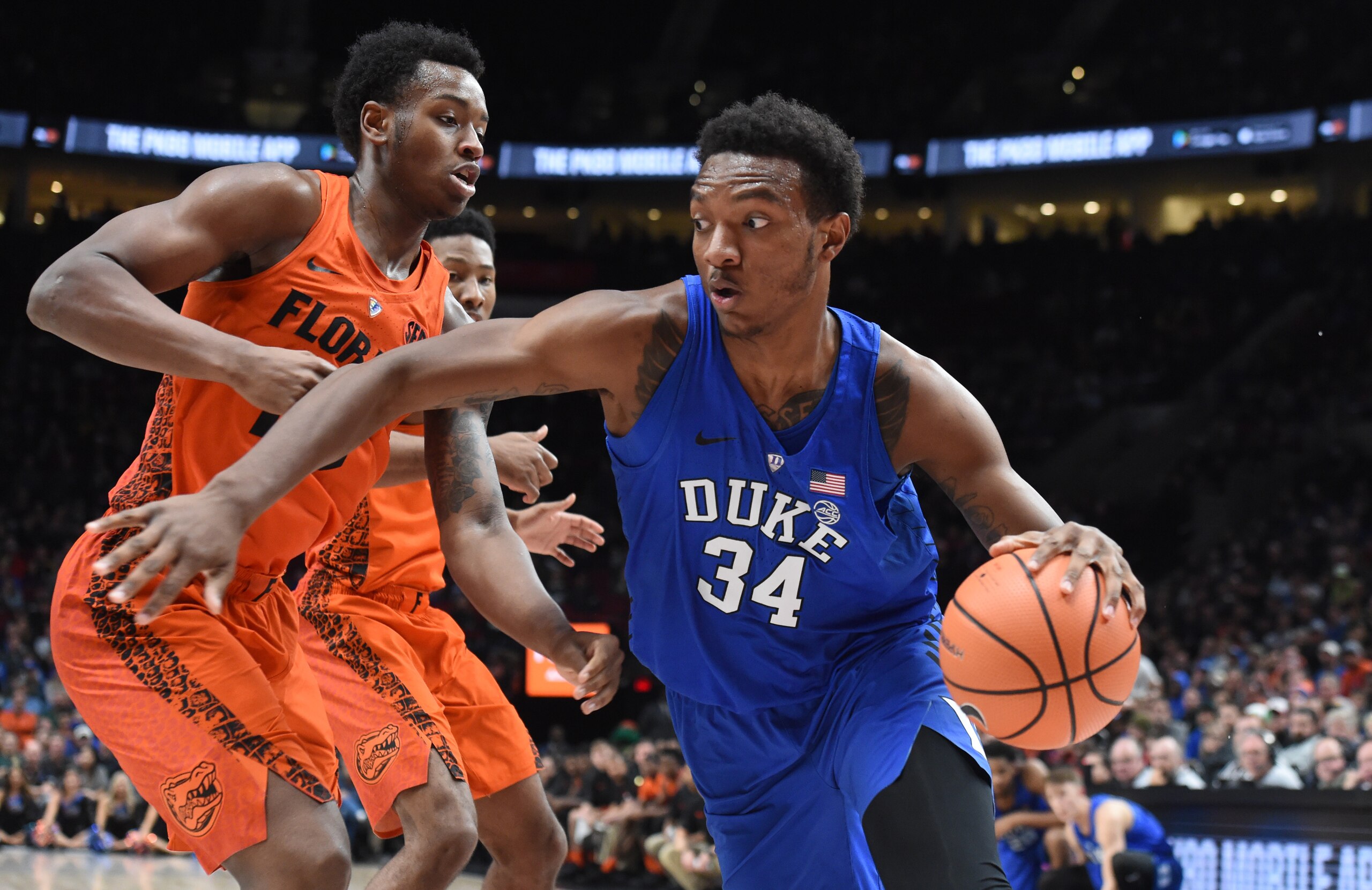
Season Stats: 12.6 PPG, 8.7 RPG, 1.9 BPG, 1.8 APG
MVP Performance: 20 points, 11 rebounds, six blocks, two assists, one steal vs. Southern (Nov. 17)
As many a Kentucky player has learned over the past decade, the risk you take when you're part of a megaclass of talented freshmen is that you'll be overshadowed by a sensational teammate. Granted, Wendell Carter Jr. didn't know Marvin Bagley III was going to be on this roster when he committed to Duke, but the fact remains that Carter has been the forgotten big man for the Blue Devils.
On a per-40 minutes basis, though, Carter actually puts up numbers comparable to Bagley:
- Carter per 40: 20.7 points, 14.2 rebounds, 3.2 blocks, 2.9 assists, 1.0 steals
- Bagley per 40: 27.3 points, 14.4 rebounds, 1.2 blocks, 1.9 assists, 1.0 steals
Carter is clearly the better rim protector, and the biggest reason for the differential in points is that Duke simply doesn't draw up much offense for him. Per KenPom, his percentage of shots taken while on the floor is the lowest among Duke's starting five, despite a 63.3 percent conversion rate on two-point attempts and a three-point stroke that isn't terrible.
Part of the reason we had to compare their per-40 numbers rather than their per-game numbers is because Carter has gotten into early foul trouble a few too many times and has only played 78 percent as many minutes as Bagley has played. But when he's able to stay on the floor, Carter is an excellent rebounder and a more-than-capable shot-blocker.

.jpg?w=2560 "Steelers Saints Football")
.jpg?w=2560 "Rams Raiders Football")
8. Tremont Waters, LSU
4 of 11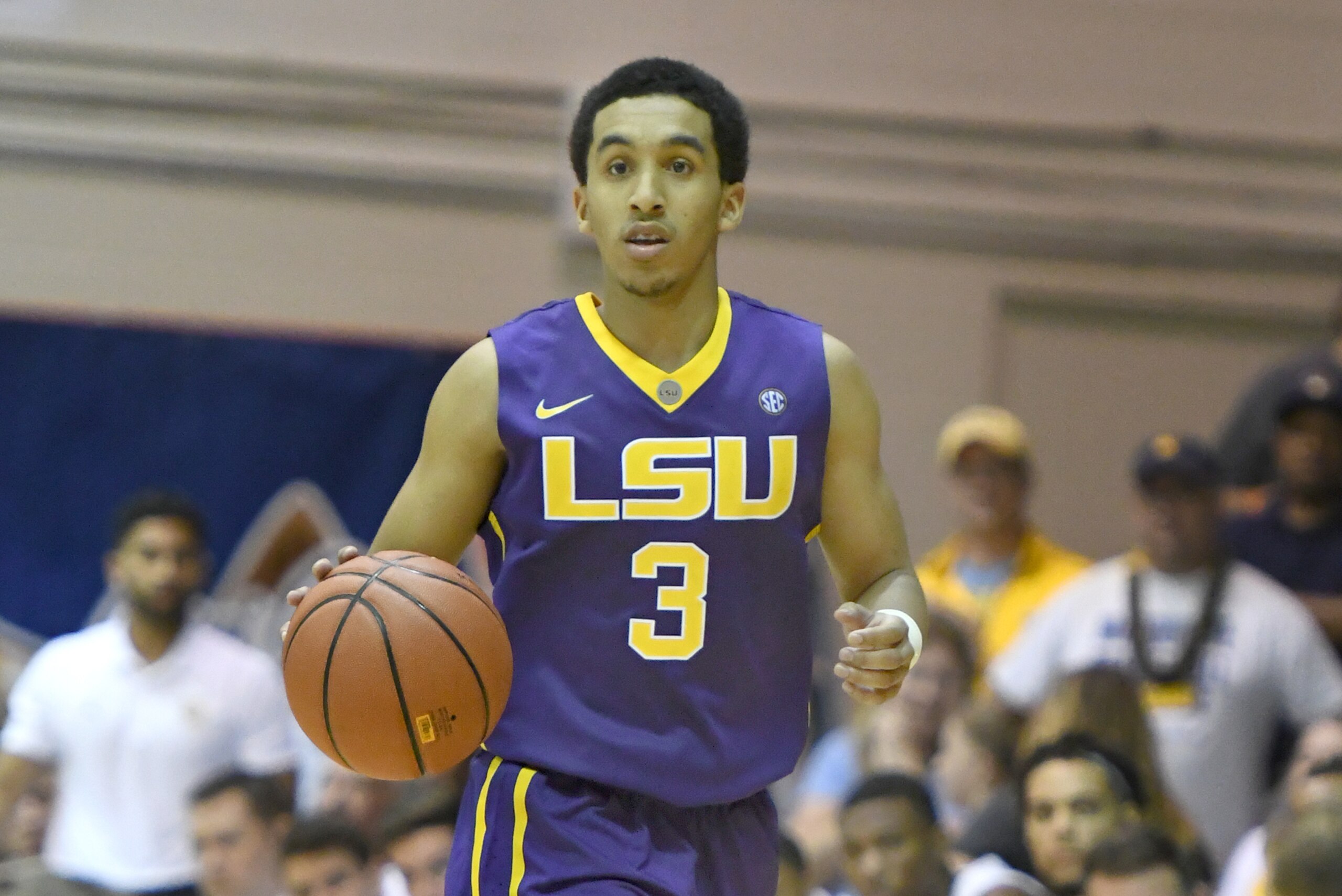
Season Stats: 18.3 PPG, 6.4 APG, 3.6 RPG, 2.3 SPG, 41.5% 3PT
MVP Performance: 39 points, five steals, four assists, two rebounds vs. Marquette (Nov. 22)
LSU was supposed to be the worst team in the SEC this season, and that still might be the case. The Tigers did have a nice neutral-court win over Michigan in the Maui Invitational, but they followed it up with a 92-53 loss to Notre Dame the following day. Too early to say whether this 5-2 team will be relevant in mid-January.
Regardless of LSU's at-large resume, you're going to want to watch its freshman point guard on a regular basis. Tremont Waters is putting on a show for the Bayou Bengals.
His best performance of the season was the 39-point game listed above, but he also had 20 points, 10 assists and nine rebounds in a win over UNC-Wilmington on Sunday. It was his second consecutive game with 10 dimes and the fourth time in seven games that he has scored at least 20 points.
The big question is his consistency.
Yes, Waters has scored 20 points four times but never in back-to-back contests. His chronological scoring log reads: 27, five, 21, eight, 39, eight, 20. He has at least four steals in three games and zero steals in three others. He has committed just one turnover in three games and committed at least five in three others.
If he could just combine the best efforts in those categories for a 20-point, four-steal, one-turnover game every now and then, he'd get much more national attention.
7. Mohamed Bamba, Texas
5 of 11
Season Stats: 10.7 PPG, 10.1 RPG, 4.0 BPG, 1.0 SPG
MVP Performance: 13 points, 13 rebounds, four blocks, one steal vs. VCU (Dec. 5)
This is where it starts to get tough to rank these guys. There's a clear No. 1 freshman, a second tier for Nos. 2 and 3 and then Nos. 4 through 7 could be listed in just about any order.
But Mohamed Bamba is at the bottom of our third tier because he hasn't quite figured it out on offense just yet. He averaged 30.7 minutes per game in Texas' three nights in the PK80 invitational, and he failed to score in double figures in any of those games.
Part of the problem is that Texas doesn't have great shooters, so teams haven't been afraid to pack it in, doing whatever it takes to deny Bamba the opportunity to get touches in the paint.
That's a problem that is only going to get worse with this week's news that Andrew Jones is out indefinitely with a wrist fracture. Jones was the only Longhorn averaging at least one three-pointer per game or shooting at least 37 percent from distance. Somehow, a team that was already 327th nationally in three-point percentage is about to get even worse.
Still, Bamba has a 7'9" wingspan. There's no excuse for him to barely average four buckets per game when lobbing it to him at the rim should practically be a free two points.
Though we wish he'd do some more scoring, Bamba is averaging a double-double. His real value is as a shot-blocker. Bamba has swatted at least four shots in six of seven games and even had two blocks against Duke in his off night on defense.
Even if he doesn't become a dominant post presence on offense, he'll climb in these rankings if he maintains this pace on defense.
6. Jaren Jackson Jr., Michigan State
6 of 11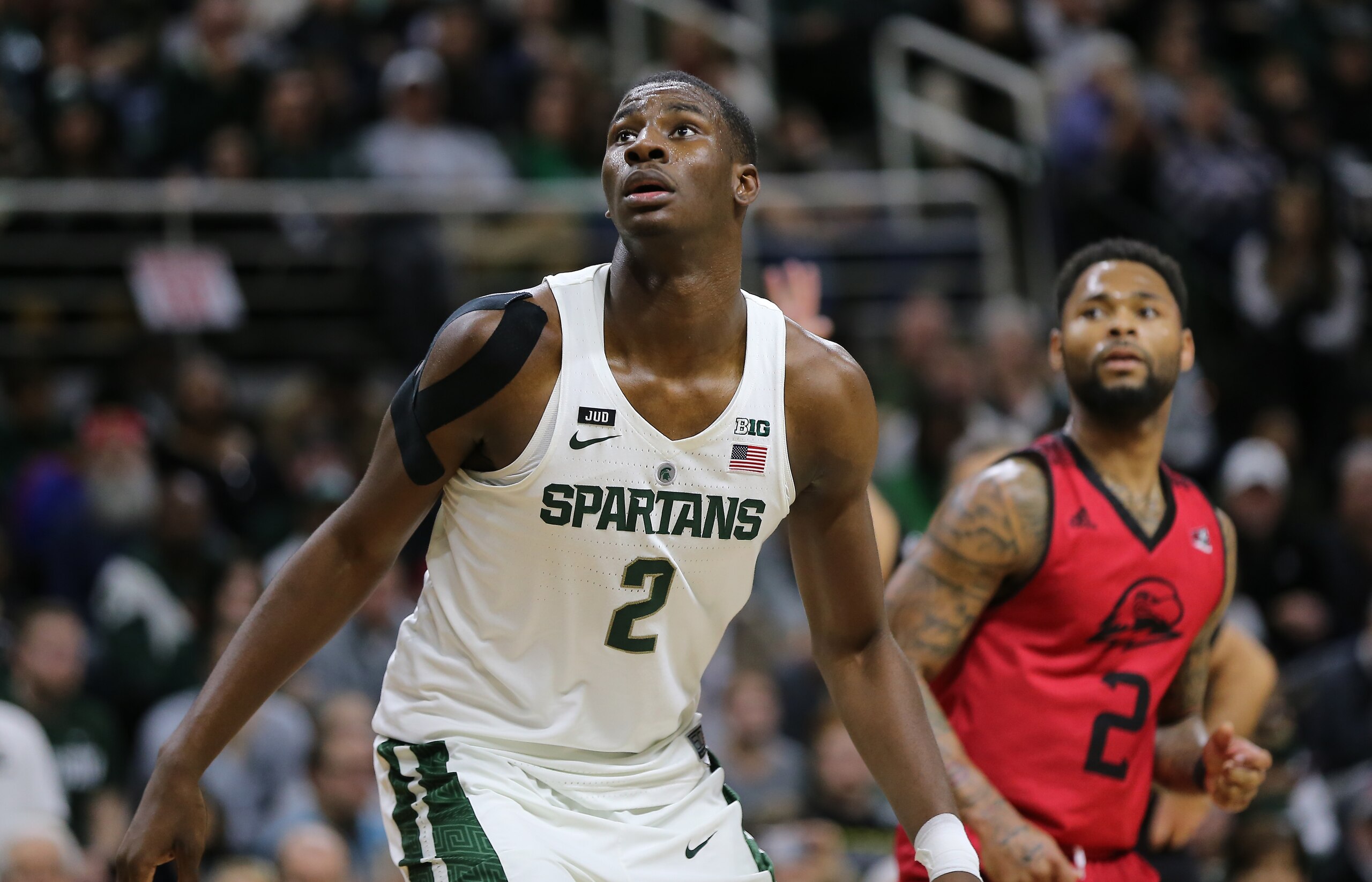
Season Stats: 10.8 PPG, 7.8 RPG, 3.0 BPG, 1.1 APG
MVP Performance: 17 points, 13 rebounds, five blocks, one steal, one assists vs. Southern Utah (Dec. 9)
It's a shame Jaren Jackson Jr. isn't playing more minutes, averaging just 22.4 per night.
Part of it is because of frequent foul trouble. Though he has only fouled out once, Jackson has committed 5.9 fouls per 40 minutes and has been whistled at least four times in 50 percent of games. But even when he isn't in trouble with the referees, Michigan State's absurd amount of frontcourt depth has limited Jackson to just one game with more than 27 minutes played.
The per-game numbers are OK, but he is crushing it on a per-40-minute level, averaging 19.3 points, 13.9 rebounds, 5.4 blocks, 2.0 assists and 1.6 steals. He is also a capable three-point shooter—he made three triples in the Champions Classic against Duke—and is shooting 84.4 percent from the free-throw line.
Long story short, there's not much that this 6'11" stretch 4 can't do.
We just hope he keeps doing it as efficiently as he has been thus far in December.
Though he had three double-doubles, Jackson had his issues in November. Against Stony Brook, he fouled out in 14 minutes, committed three turnovers and didn't score a point. He wasn't much better in Michigan State's marquee wins over North Carolina and Notre Dame, combining for eight points, seven rebounds and seven fouls in those two games.
In three December games, though, Jackson has averaged 14.3 points, 8.7 rebounds and 5.3 blocks. And with remaining games this month against Oakland, Houston Baptist, Long Beach State, Cleveland State and Savannah State, those numbers should only improve.
5. Collin Sexton, Alabama
7 of 11
Season Stats: 21.8 PPG, 3.6 RPG, 3.3 APG, 1.2 SPG, 47.1% 3PT
MVP Performance: 40 points, six rebounds, five assists vs. Minnesota (Nov. 25)
Oklahoma's Trae Young is a better overall point guard, but there might not be a more gifted scorer at lead guard than Collin Sexton. (And, yes, you should start getting your popcorn ready for when Sexton and Young go head-to-head on Jan. 27 as part of the SEC-Big 12 Challenge.)
Sexton was already doggone good in his first four games of the season. He averaged 21.5 points and better than four assists against Lipscomb, Alabama A&M, Texas-Arlington and BYU.
But he dropped an "o" and became a "god" in Alabama's game against Minnesota.
In case you missed the most ridiculous college basketball game of my lifetime, the Crimson Tide had to play three-on-five for the final 10 minutes and 50 seconds of the second half because of ejections following a fight, a John Petty sprained ankle and Dazon Ingram fouling out. Alabama was down by 11 when it became a three-on-five game, but Sexton scored 19 of his 40 points in those final 11 minutes as the Crimson Tide outscored the Golden Gophers 30-24 the rest of the way.
(Though Minnesota did win the game by a five-point margin, it lost the war. This game broke that team. The Gophers started 7-0 but have gone 2-3, including a one-point home win over Drake.)
Two weeks later, Sexton put up 30 points in a near-win at Arizona.
Against both Minnesota and Arizona, Sexton attempted 16 free throws. He is averaging 10 attempts per game, as no team has yet figured out a way to legally guard him.
If Sexton were doling out more assists or playing respectable defense, he would rank even higher on the list. But No. 5 is an impressive spot for a guy who is just scoring at a phenomenal rate.
4. Brandon McCoy, UNLV
8 of 11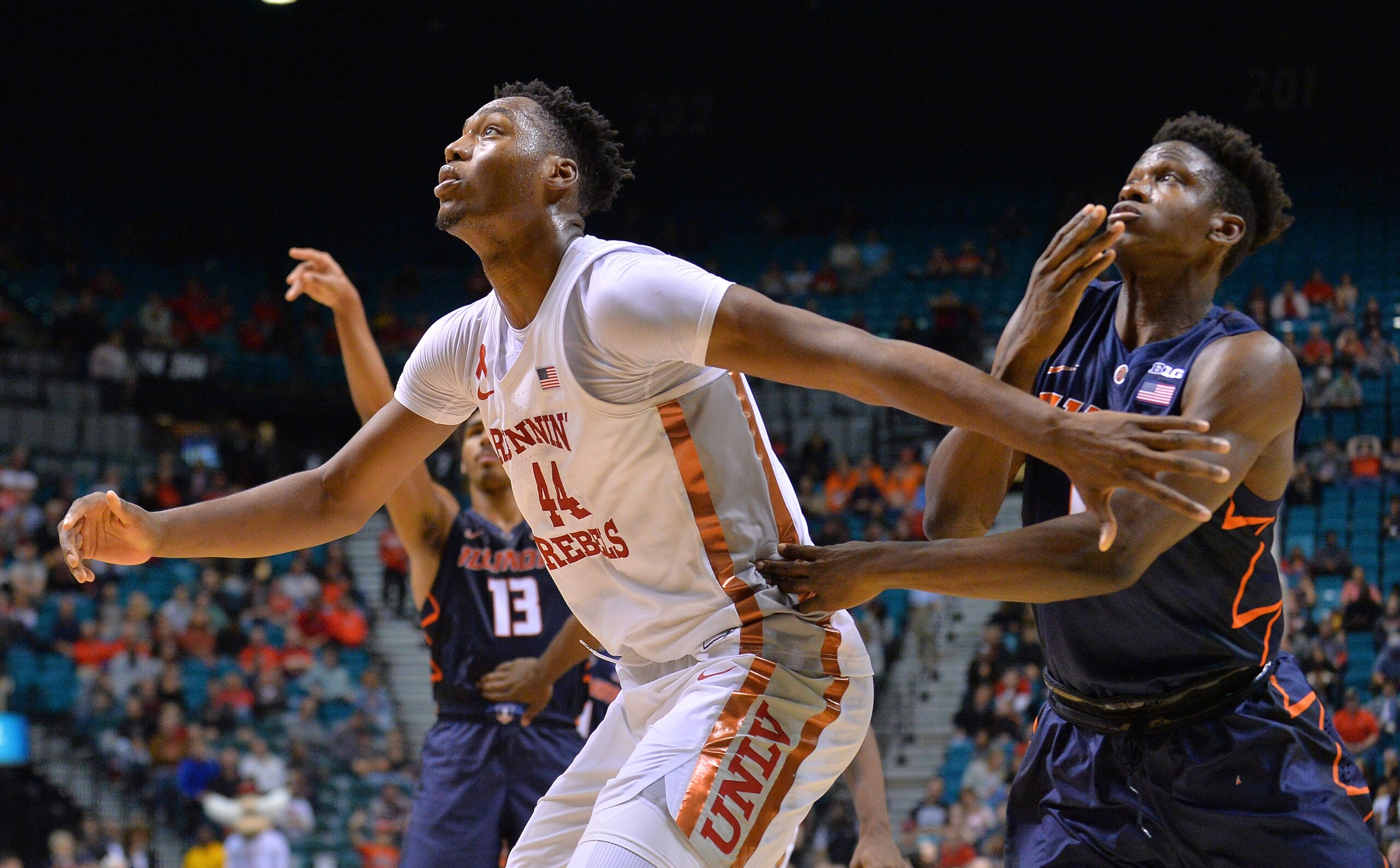
Season Stats: 20.2 PPG, 11.1 RPG, 1.9 BPG
MVP Performance: 26 points, 17 rebounds, one block vs. Utah (Nov. 22)
Brandon McCoy is just a double-double waiting to happen.
He has at least 10 points and 10 rebounds in seven of 10 games this season and has already gone for at least 25 and 17 on two separate occasions. In addition to those two monster performances, he had 33 points and 10 rebounds against Deandre Ayton and Dusan Ristic in an overtime loss to Arizona.
While some guys get their huge early-season numbers by beating up on lesser opponents, McCoy has been bringing his A-game when it matters the most. In three games against major-conference opponents (Arizona, Illinois and Utah), this 7'0" freshman has averaged 27.0 points and 12.3 rebounds, recording a double-double in each of those contests.
Like Jaren Jackson Jr., the most impressive part of McCoy's per-game numbers is that he's doing it in limited minutes (27.7 per game). On a per-40 basis, he's tallying 29.2 points, 16.0 rebounds and 2.7 blocks. The only player in recent memory with comparable per-40 numbers was Wake Forest's John Collins last season (28.8 points, 14.8 rebounds and 2.4 blocks).
There are a lot of reasons that UNLV looks better than last year. Its three-point defense has been incredibly stingy. Milwaukee transfer Jordan Johnson is running the point like a pro. And JUCO transfer Shakur Juiston is putting up great numbers alongside McCoy in the post.
But the biggest reason—both literally and figuratively—for the rise of the Rebels has been McCoy. If he keeps playing this well against Mountain West foes, he just might be a Wooden Award finalist.
3. Marvin Bagley III, Duke
9 of 11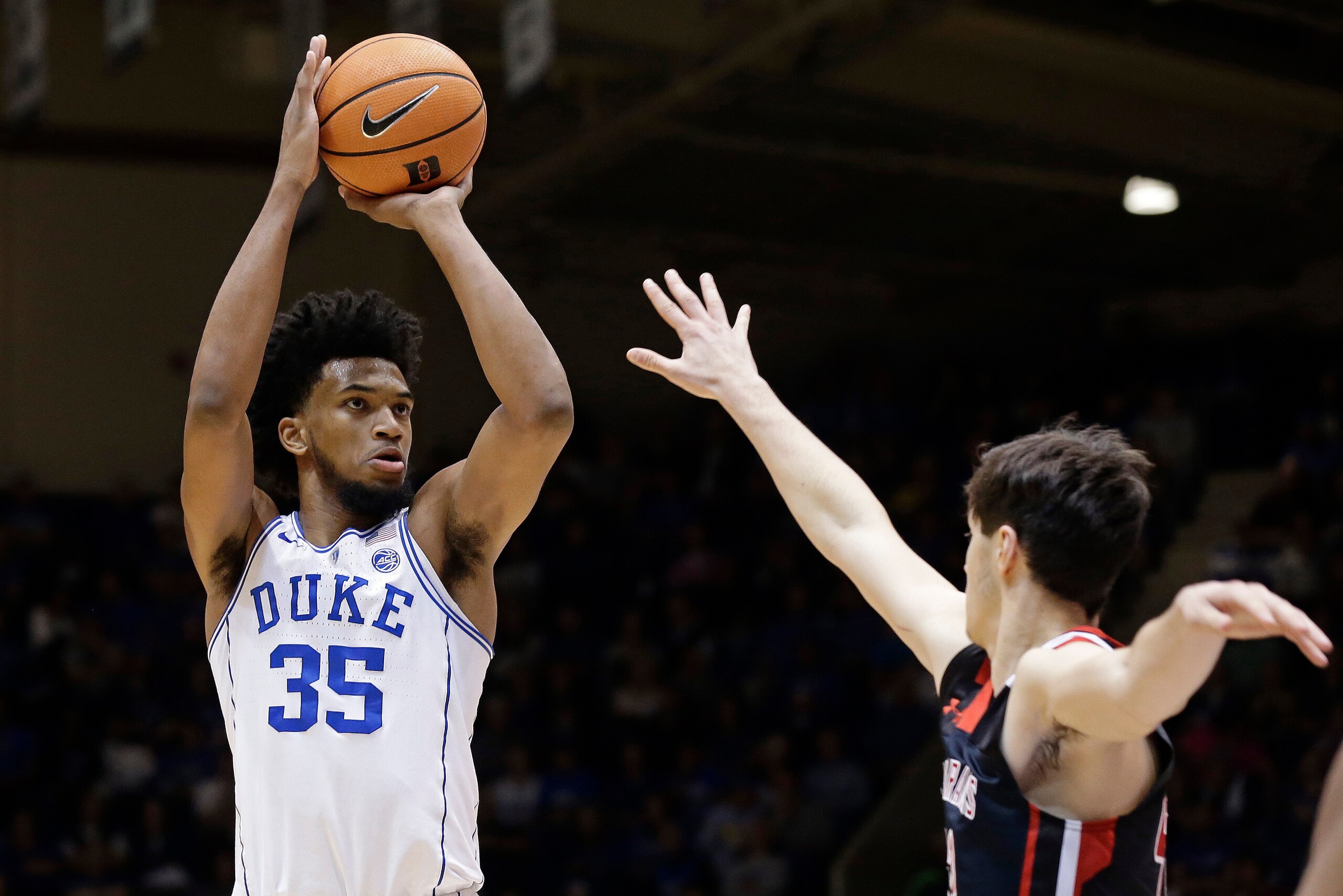
Season Stats: 21.3 PPG, 11.3 RPG, 1.5 APG, 0.9 BPG
MVP Performance: 34 points, 15 rebounds, two assists, one steal vs. Texas (Nov. 24)
It's a tough call between Marvin Bagley III and Deandre Ayton at Nos. 2 and 3. So tough, in fact, that I'd be embarrassed to admit how much time I spent internally agonizing over this decision, flipping back and forth probably nine times in the past 24 hours.
In the end, I opted to let each big man's most recent performance serve as a tiebreaker. Bagley had a lackluster showing (by his standards) in a loss to Boston College just a few hours before Ayton had his best game of the season against Alabama.
The other pseudo-tiebreaker is the fact that Bagley is surrounded by quality scoring options and rarely faces double-teams while Ayton has been putting up nearly identical numbers as one of the only legitimate weapons in Arizona's offense.
Regardless, Bagley is a phenom who has 10 double-doubles in 12 games, including each of his last seven. And for a few days in the PK80, he looked like the most unstoppable force on the planet. He had 15 rebounds in each of those three games against Portland State, Texas and Florida, and he averaged 27.3 points.
Two slight knocks against the guy who should be the No. 1 pick in June:
- He can get to the rim just about whenever he chooses, but he is falling in love with an unreliable three-point stroke. In the second half against Boston College, Bagley only attempted one of his four shots from inside the three-point arc, and even that was a missed jumper rather than a layup or dunk.
- He is not a strong defender, especially when pulled out to the perimeter in ball-screen action. His size and athleticism is supposed to be an advantage, but against a team like Miami, North Carolina or Notre Dame that plays four shooters most of the time, his defense is going to become a bigger problem.
Aside from that, though, this kid is unbelievable. Both of the above notes were legitimate issues against Boston College, and he still went for 15 points and 12 rebounds. Must be nice to be able to do that on an afternoon of exposed weaknesses.
2. Deandre Ayton, Arizona
10 of 11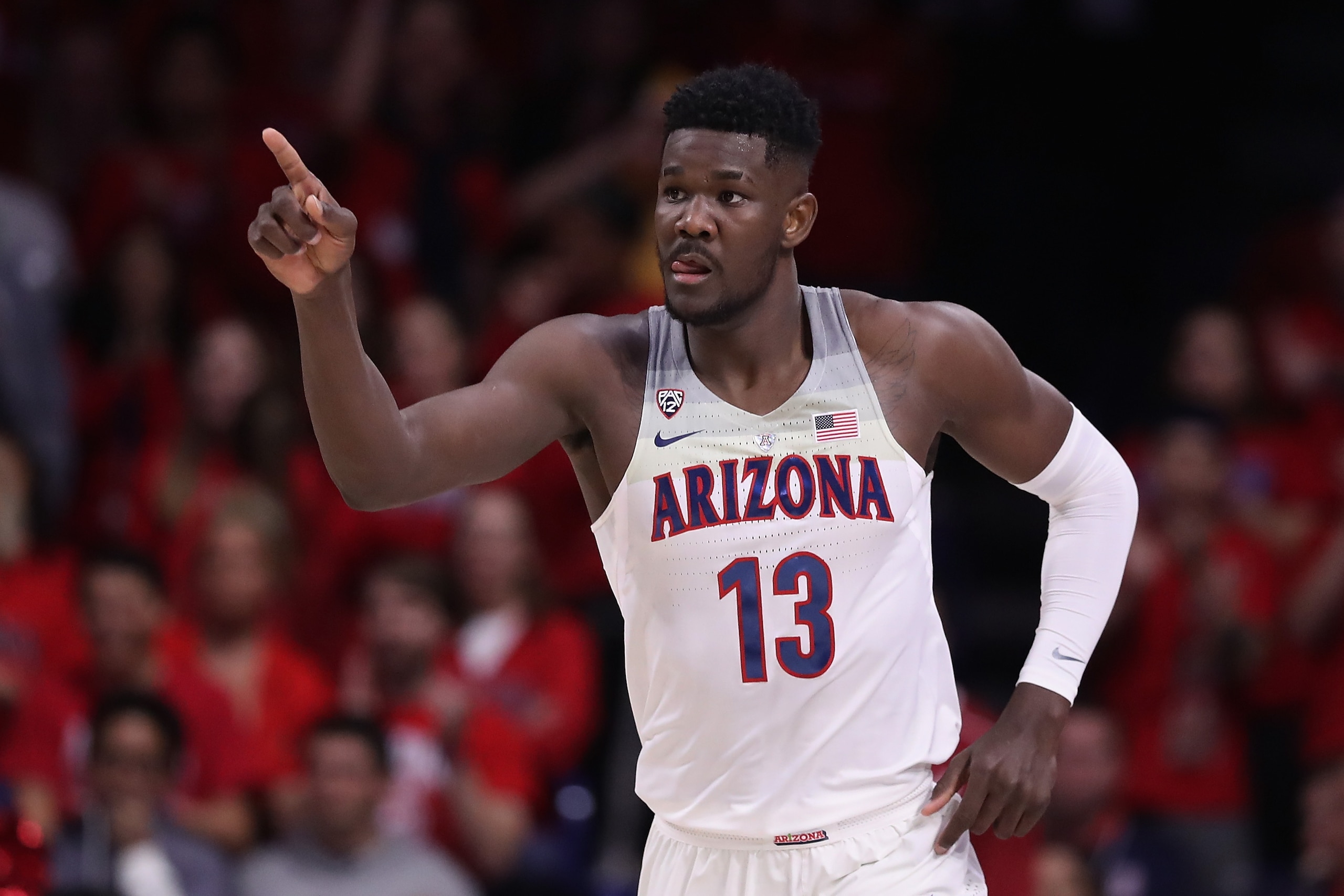
Season Stats: 20.5 PPG, 11.9 RPG, 1.6 APG, 1.3 BPG
MVP Performance: 29 points, 18 rebounds, one block, one assist vs. Alabama (Dec. 9)
Plenty of people have spent much of the past month marveling at the fact that Marvin Bagley III is playing so well, even though he's supposed to still be in high school right now.
But the physical specimen known as Deandre Ayton has been even more impressive from an "advanced beyond his years" perspective. Ayton is so chiseled that he already looks like he could hold his own in the paint in the NBA against a guy like DeMarcus Cousins or Karl-Anthony Towns.
Realistically, he would get embarrassed by them because he isn't nearly as polished as them on either end of the floor. Physically, though, this 7'1" freshman could at least put up a fight, which is not the case for anyone else currently playing college basketball.
In addition to all that muscle, Ayton is averaging 25.6 points and 15.0 rebounds per 40 minutes and has eight double-doubles in 10 games.
Though his team had a horrendous showing in the Battle 4 Atlantis, it certainly isn't Ayton's fault that the Wildcats went 0-3 in that tournament. He averaged 22.0 points and 12.3 rebounds against NC State, SMU and Purdue. And SMU shot just 29.2 percent from inside the arc while struggling to deal with arguably Arizona's best defender.
Better yet, Ayton could be headed for even more impressive play now that Rawle Alkins is back on the floor. In the first game with Alkins, Ayton had 29 points and 18 rebounds. Alkins didn't even play that well, but his ability to drive and dish, or draw the defense's attention out to the perimeter, creates even more space for Ayton to operate.
Between Ayton, Allonzo Trier and a full-strength Alkins, Arizona should have the most unguardable offense in the nation.
1. Trae Young, Oklahoma
11 of 11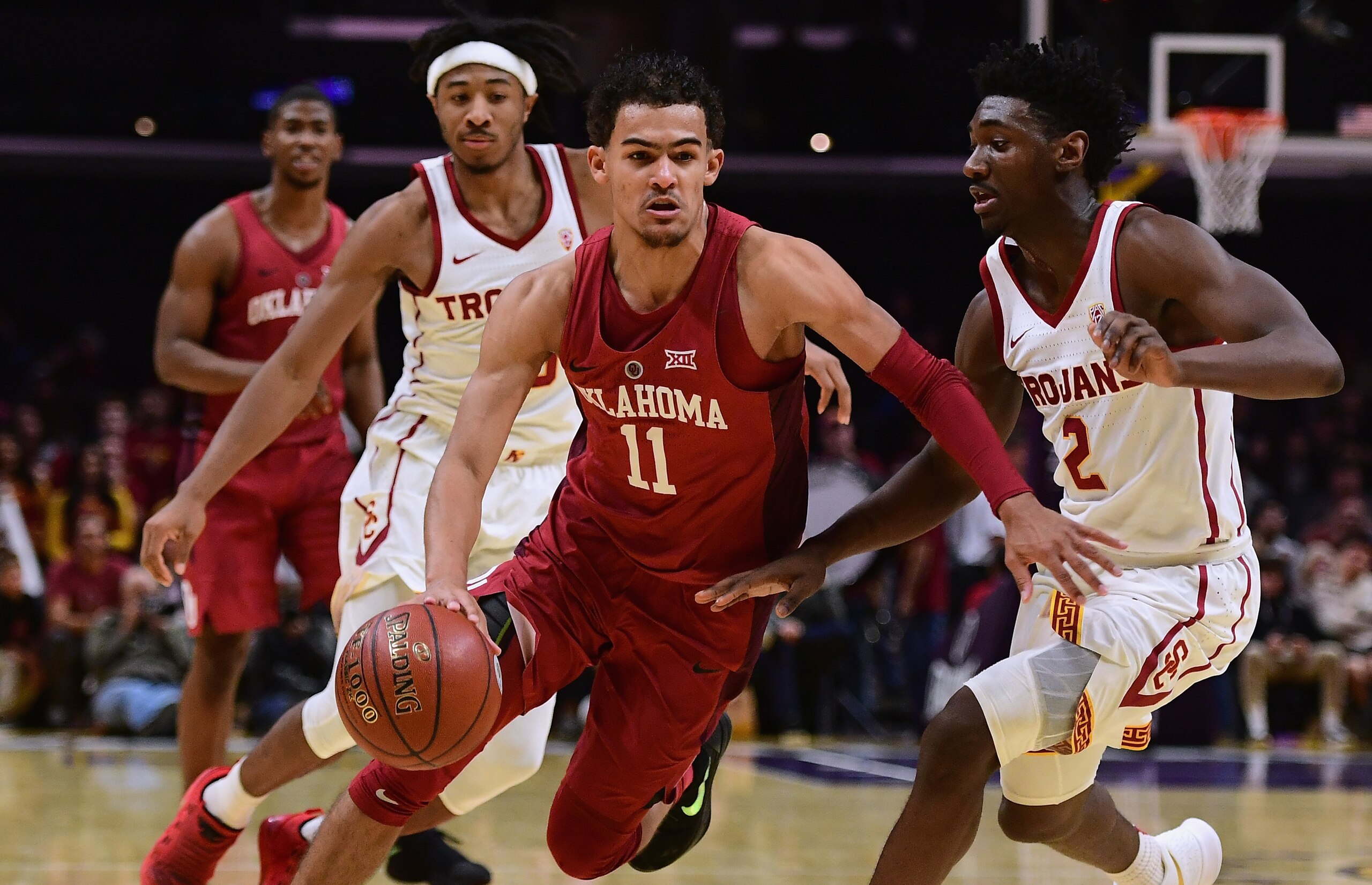
Season Stats: 28.8 PPG, 8.8 APG, 3.5 RPG, 2.3 SPG, 37.7% 3PT
MVP Performance: 43 points, seven assists, four rebounds, two steals vs. Oregon (Nov. 26)
December isn't even halfway over, and we've already nearly exhausted the ways to praise Trae Young's incredible play.
Rob Dauster of NBC Sports had Young at No. 1 on his Tuesday morning rankings of Player of the Year—not just Freshman of the Year—and put together a chart to try to quantify the absurdity of Young's combination of efficiency and volume.
It has only been eight games, but we've never seen anything like this.
When we fell in love with Oklahoma's Buddy Hield two years ago, it was because he was an efficient volume shooter. It's one thing to attempt more than 8.5 three-pointers per game. It's another thing to shoot better than 45 percent from downtown. But to do both is almost unheard of. It's in large part because he had a 121.5 O-rating with a 28.4 percent usage rate that he won the 2016 Wooden Award.
But this Sooner is blowing those numbers out of the water with a 126.3 O-rating and 36.8 usage rate. Even what cross-state rival Jawun Evans did last year for Oklahoma State—116.1 O-rating on 33.4 usage rate—barely even compares to what Young has accomplished.
For a guy who is taking 18 shots per game—not including the unofficial missed field goals on drives that result in a trip to the free-throw line—it doesn't even feel like he's that much of a ball hog.
Sure, there's an ill-advised heat-check three here and there, but it's a small price to pay for someone who seems to catch fire before he even steps on the court. If anything, you come away from Oklahoma games wishing he would have called his own number even more often than he did, since he's so impossible to guard.
If you haven't watched him yet—I'm talking to you, the 45 of 65 AP voters who didn't have Oklahoma on their Top 25 ballots this week—do yourself a colossal favor and make time for Saturday's game against Wichita State. It's on ESPN2 at 4 p.m. ET. Young vs. Landry Shamet should be one of the five most entertaining head-to-head battles of the entire season.
Advanced stats courtesy of KenPom and Sports Reference.
Kerry Miller covers men's basketball and college football for Bleacher Report. You can follow him on Twitter @kerrancejames.

.jpg?w=2560 "AP Poll Top Five Week 9")
.jpg?w=2560 "Packers Safety Slams Refs 🤬")
.jpg?w=2560 "Lamar Being Out Shocked Ravens")
.jpg?w=2560 "Mahomes Told Teammate to Leave Meeting")

