
How Each Top Returning Prospect Can Improve 2018 NBA Draft Stock
Each returning top prospect must follow a certain recipe to maximize his 2018 NBA draft stock.
A few of these players took chances by returning with greater expectations and potentially more to lose than gain. But all of them should start the season as a first-round pick on most radars.
They still have weaknesses that need improving in order to strengthen their case for the draft, whether it's raising their shooting percentage or improving as a shot-creator.
Without youth on most of their sides, compared to the one-and-done freshmen, these prospects need to show scouts they've sharpened or added to their games.
Miles Bridges (Michigan State, SF/PF, Sophomore)
1 of 8
Lumped in with the one-and-done 2017 freshmen, Miles Bridges chose a different path to the pros. It's riskier, but it could lead to a bigger rookie paycheck and strengthen his preparation.
With the bar set higher, he'll have a checklist of priorities to focus on to avoid the same sophomore stock plummet Ivan Rabb suffered last season.
Priority list
No. 1: Validate case as a shooter
Bridges' stock will slip if last year's shooting numbers start looking fluky. The jumper is a big part of his sales pitch. He averaged two three-point makes per game at a solid 38.9 percent clip, but he only shot 68.5 percent from the line—a potential red flag.
Bringing up that free-throw percentage, while maintaining 2017's three-point rate and accuracy, will help to validate Bridges' case as a shooter.
No. 2: Sharpen shot-creation
We saw flashes of one-on-one shot-creation, but Bridges mostly tapped into his quickness and explosiveness (not ball skills) for scoring off transition, drives, lobs and putbacks.
He'll want to look sharper off the dribble in getting into his own shot and putting pressure on the defense in face-up situations. For a player with his power and burst, 3.3 free-throw attempts in 32 minutes per game aren't enough.
Bottom line
Bridges is a National Player of the Year candidate and a threat to average around 20 points per game after averaging 16.9. He'll use this year to clear up his fit as a small-ball 4 and a mismatch due to his strength, quickness, explosiveness and perimeter skills, the latter of which he'll look to polish up.
Draft ceiling: Top five
Robert Williams (Texas A&M, PF/C, Sophomore)
2 of 8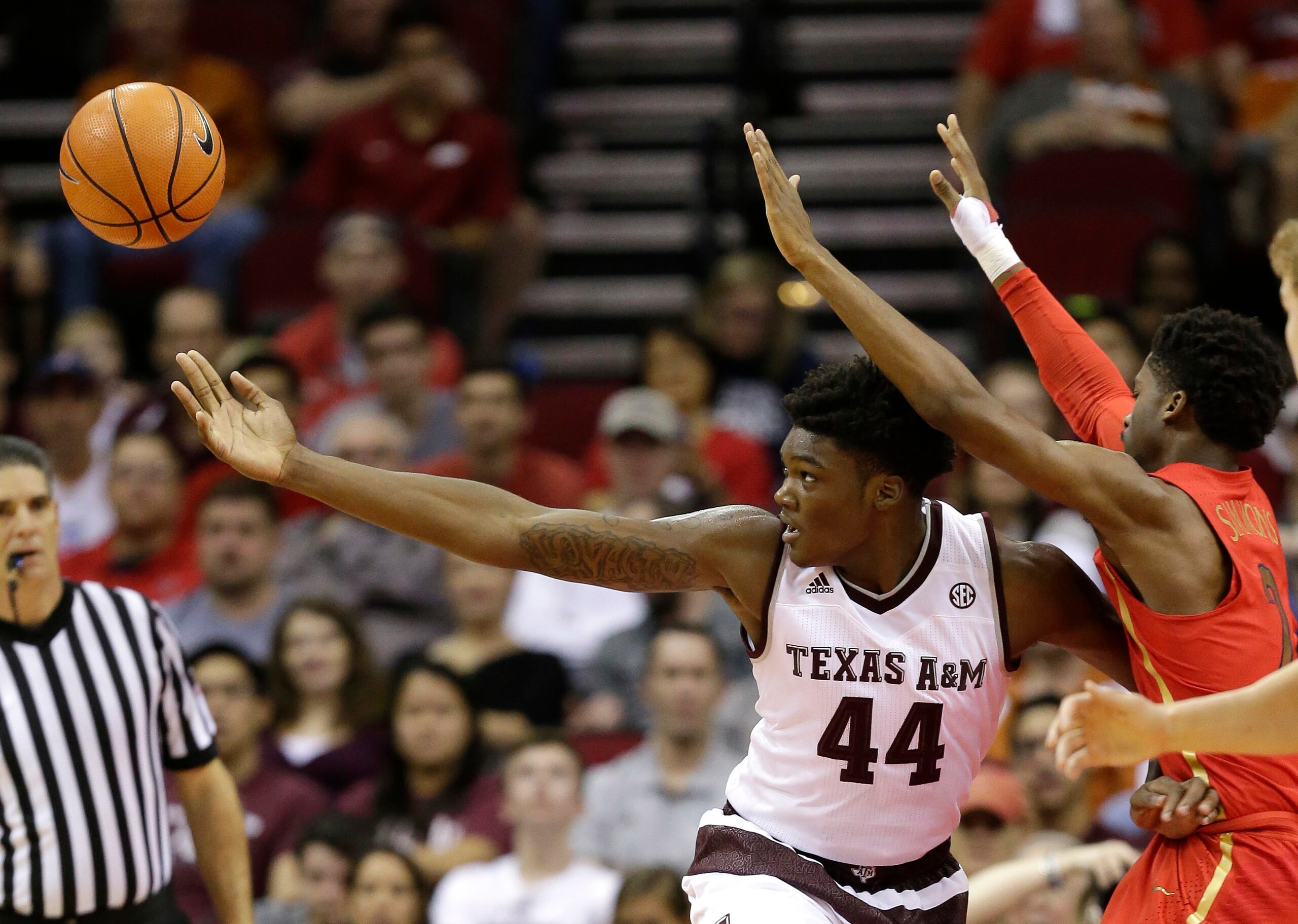
Robert Williams was a hot name during conference play, earning scouts' attention in a limited role with an NBA body and explosive athleticism that led to production and efficiency. Still, 11.8 points and 8.1 rebounds per game didn't scream "sure thing."
Everything came in flashes off Texas A&M's bench. Now as a 6'9", 237-pound sophomore, scouts will want to see more frequent stretches of domination and a sharper offensive skill set.
Priority list
No. 1: Improve post game
Williams was more of an improviser than a go-to scoring option in the post. He used his length to separate over the shoulder, but he needs to showcase polished moves with calculated footwork and specialized shots like fallaways and fluid hooks.
At this stage, he relies mostly on transition, lobs, pick-and-rolls, cuts and putbacks on offense. But his ceiling will only look so high to scouts if he can't show the ability to create his own shot after two years in college.
No. 2: Build case as a shooter
Williams finished his freshman year shooting 2-of-18 from three and 59 percent from the line. His value in the draft (and NBA) takes a hit if teams don't think he can make open jumpers. Williams did look capable within 15 feet, but the sample size wasn't convincing enough.
Not being able to create or shoot would prevent Williams from maximizing his stock and ultimately allow freshmen to leapfrog him on draft boards.
Bottom line
Viewed as a project in 2016-17, Williams has to look closer to reaching his ceiling, which is sky-high thanks to his massive wingspan (7'4"), explosive leaping and room to improve offensively. Otherwise, he's just another athletic big who can't handle or shoot.
Draft ceiling: Top five
Bruce Brown (Miami, SG, Sophomore)
3 of 8
Third in Miami's pecking order behind Davon Reed (No. 32 pick in this year's draft) and Ja'Quan Newton (who's back), Bruce Brown emerged as a project to watch in 2018.
The guard exploded a number of times throughout his freshman season, having gone for 30 points in a win over North Carolina and 25 points in a win against Duke. In what should be a more featured role, Brown now has the opportunity to fly up draft boards by improving in a few key areas.
Priority list
No. 1: Consistency
Despite the sporadic eruptions, Brown finished 13 games with fewer than 10 points. That won't fly with scouts in 2017-18. They'll want to see a similar leap that Donovan Mitchell took last year at Louisville. Brown needs to emerge as Miami's No. 1 weapon every game to make a case for lottery consideration.
No. 2: Shooting
Brown shot 34.7 percent from three and finished without a triple in 12 games. He converted just 3-of-23 pull-ups, per ESPN.com's Mike Schmitz. Entering the draft as a shaky-shooting 21-year-old isn't a great look.
No. 3: Off-the-dribble game
His handle is basic, which limits him as a shot-creator. Tightening it would also help the game slow down for Brown, whose assist-to-turnover ratio isn't flattering.
Bottom line
Brown fits the mold of a combo guard who brings athleticism, pressure on the defense as an attacker, playmaking and defensive versatility. He checks boxes but isn't great in any one area.
Draft ceiling: Top 10


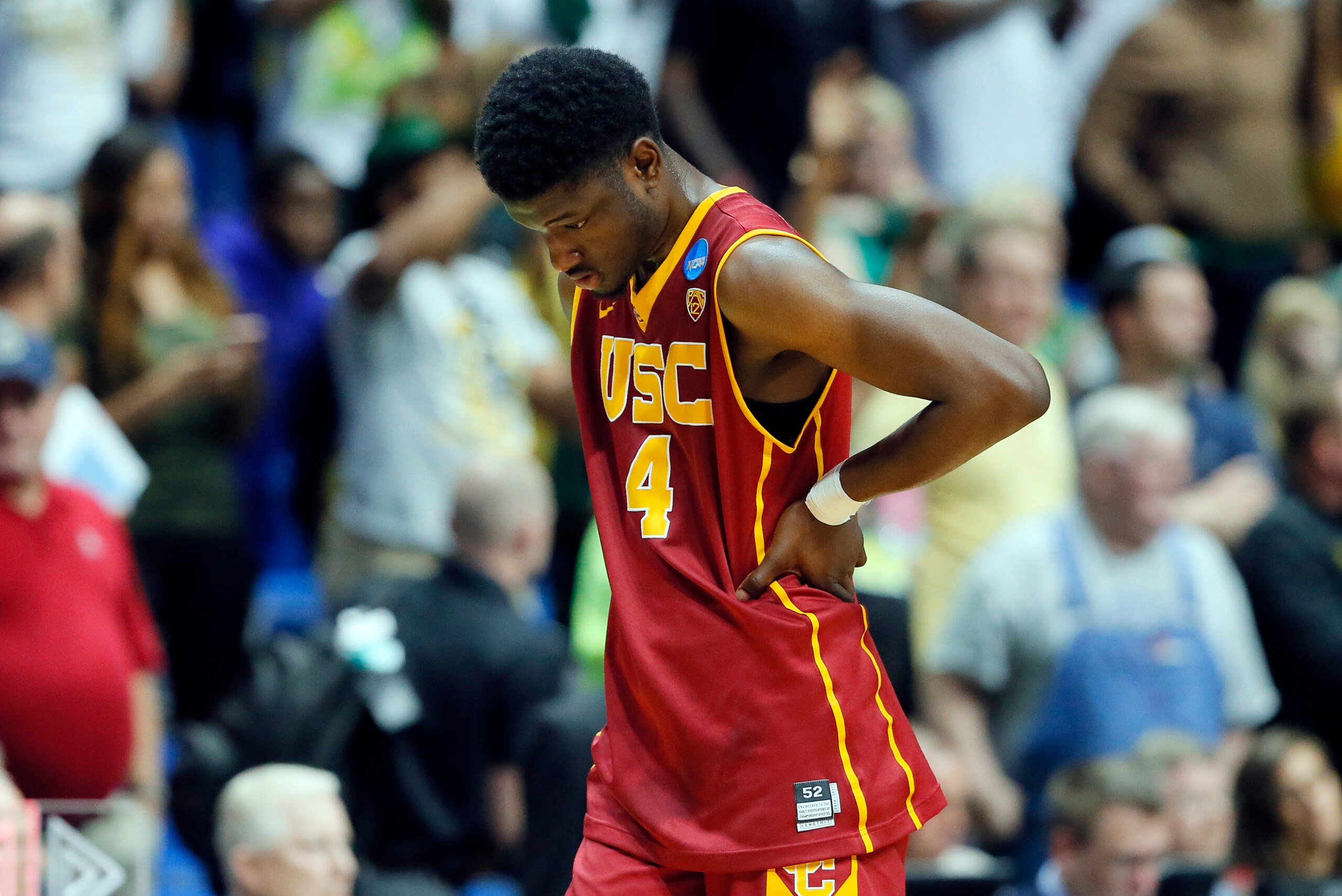
Chimezie Metu (USC, C, Junior)
4 of 8
Scouts have been intrigued by Chimezie Metu but not smitten. He looks the part with 6'11" size, long arms and fluid mobility. And he's flashed an impressive offensive skill set that improved in year two.
He just hasn't fully earned scouts' trust, something he'll have the chance to do in 2018 by focusing on consistency and strengthening his interior presence.
Priority list
No. 1: Consistency/impact
Metu's 14.8-point scoring average wasn't the problem. There were too many games when he wasn't a big enough factor for long stretches. Metu can be frustrating, given how good he looks when he's on with his post moves and mid-range jumper but how often he'd go quiet.
No. 2: Interior presence
Metu's underwhelming rebounding numbers could suggest he lacks NBA strength and physicality. The 6'11", 225-pounder went from grabbing a terribly low 7.8 boards per 40 minutes to grabbing a below-average (for a big) 9.9 as a sophomore.
His shot-blocking rate also dropped from 3.4 per 40 minutes to just 2.0. Metu isn't a perimeter player and needs to show he can be more destructive and disruptive around the basket, especially for a third-year college player with his tools.
Bottom line
Metu is on the right track but can't afford to plateau now. There won't be great interest in a big who struggles under the boards, doesn't stretch the floor from three and fades in and out. He'll have the chance to build a similar case revolving around size and skill that Bobby Portis did in his final year at Arkansas.
Draft ceiling: Late lottery (pick Nos. 11-14)
Mikal Bridges (Villanova, SF, Junior)
5 of 8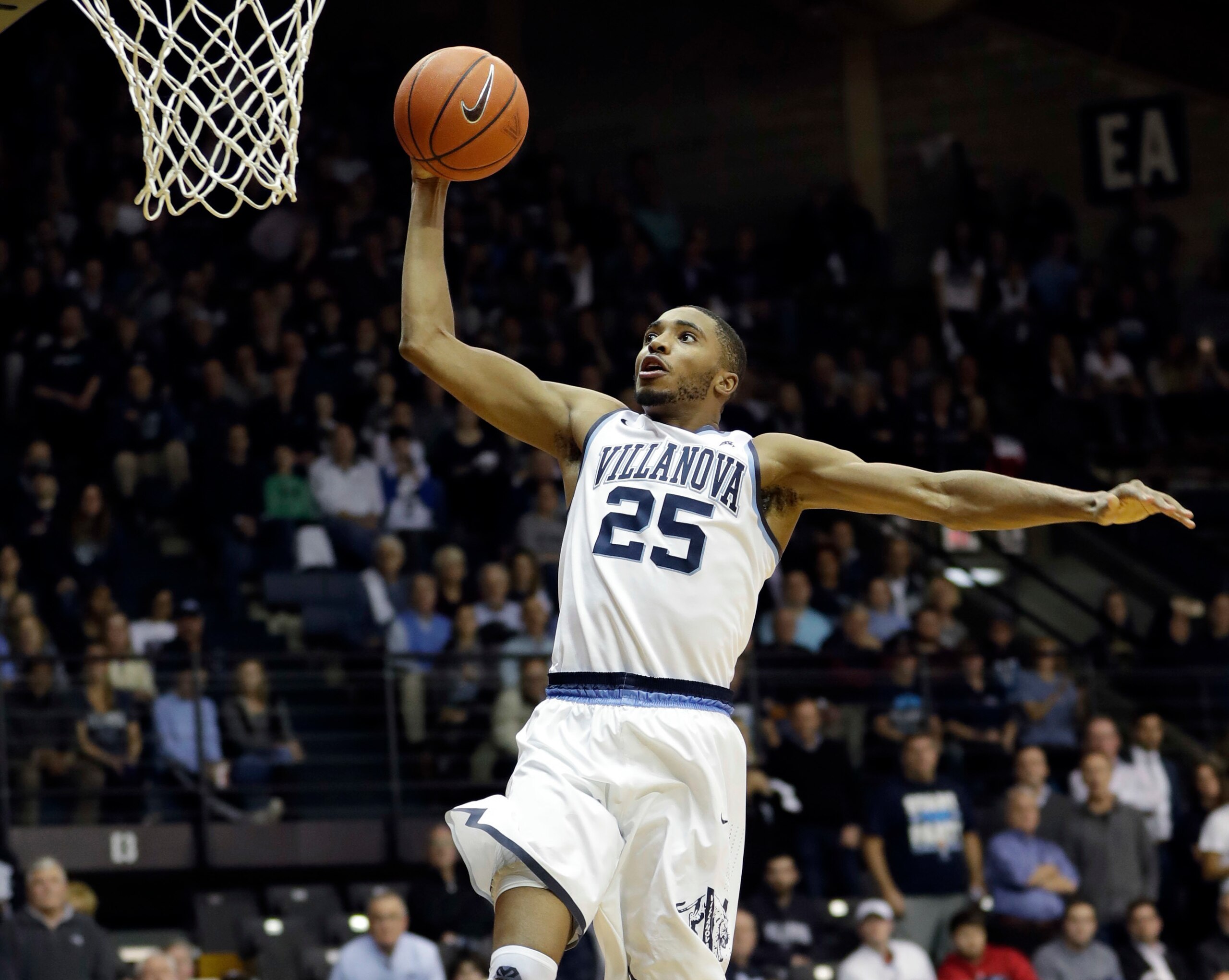
Mikal Bridges didn't make the jump many thought he would after Villanova's title run in 2016. There is still hope that jump is just delayed and coming in 2017-18, when the junior should have more of the ball following Josh Hart's departure.
Bridges passes the NBA eye test and his three-and-D identity remains clear, though there are a number of improvements he can make to strengthen his case for the upcoming draft.
Priority list
No. 1: Creation
Even if teams are looking at Bridges to shoot and defend, it wouldn't hurt to show scouts he's become a bigger threat off the dribble. He averaged just 6.5 shots and 1.6 free-throw attempts in 29.8 minutes per game last season.
Without the ability to create, Bridges must lean heavily on his jumper for offense. Through two years at Villanova, his sample size shooting the three hasn't been convincing enough.
No. 2: Validate case as a shooter
Bridges must hit more than 1.6 threes per 40 minutes. Scouts need to feel confident in his ability to consistently threaten the defense from behind the arc, which stretches the floor and gives the offense an additional shot-maker who doesn't require dribbles.
Unless he transforms into a tougher one-on-one player, he won't have enough to offer in the half court without a reliable three-ball.
Bottom line
Pedestrian stats may mask Bridges' potential, given his projected NBA role. But he comes off as a low-ceiling, role-playing prospect. He'll look more attractive to teams by expanding his creativity and scoring attack.
Draft ceiling: Late lottery
Justin Jackson (Maryland, SF/PF, Sophomore)
6 of 8
Justin Jackson's invite to May's NBA Draft Combine confirms that teams are intrigued. They weren't convinced, though, with presumably none guaranteeing him anything and therefore triggering Jackson's decision to withdraw and return.
There are a number of areas in his game he can clean up or expand upon with one more year at Maryland. After playing behind the ball-dominant Melo Trimble, Jackson will have a better opportunity to showcase his NBA potential as a second-year player.
Priority list
No. 1: Refine two-point scoring
Despite his powerful 6'7", 225-pound frame and athleticism, Jackson somehow shot an ugly 43.8 percent inside the arc. We didn't see any go-to moves he'd repeat or lean on for offense, and he shot just 28.2 percent on two-point jumpers.
No. 2: Become more complete
Given the weaknesses in his scoring attack, which netted just 15.1 points per 40 minutes, Jackson must round out the rest of his game. He finished with 31 total assists in 919 minutes. His 12.3 rebounding percentage was underwhelming. And he didn't come off as a difference-making defender.
No. 3: Repeat three-point success
Jackson needs the jumper to carry his offense. And his 43.8 percent clip on 105 three-point attempts was highly encouraging. But he also finished without a triple in 11 games, a sign of streakiness, and he shot 69.8 percent from the line.
If his shooting numbers fall, his stock will follow, especially if he fails to improve his shot-creating, passing and rebounding.
Bottom line
Jackson's NBA tools, shooting and quickness to guard multiple positions hint at "role player" potential. He's still closer to a blank canvas than finished prospect. He'll need to show more across the board to separate himself as a desirable NBA prospect.
Draft ceiling: Late lottery
Andrew Jones (Texas, PG, Sophomore)
7 of 8
The NBA radar picked up Andrew Jones' 6'4" size and athleticism for a point guard. They helped him earn an invite to last May's combine despite the fact he averaged just 11.4 points and 3.5 assists on 42.5 percent shooting. Scouts will be expecting a sharper Jones in 2017-18 and an improved decision-maker and perimeter scorer.
Priority list
No. 1: Improve playmaking/IQ
Jones' 3.5 assists to 2.5 turnovers per game were a turnoff. He didn't jump out as a capable enough scorer to struggle facilitating at the point. He'll have to show scouts he's improved as a playmaker and decision-maker in reading defenses and making the right pass or play.
No. 2: Improve scoring/shooting
We didn't see a well-rounded scoring attack from Jones, who shot 35.4 percent on two-point jumpers and 32.8 percent from three. He needs to convert more floaters and pull-ups and improve his comfort level shooting from range.
Bottom line
Jones would have been a "potential" pick had he stayed in the draft last year. His tools, speed and athleticism are NBA-caliber. His skills are not. The hope is they continue to get better.
Failing to show adequate improvement as a sophomore, particularly given the strength of the NBA's point guard position, could knock him into "second-round flier" tier.
Draft ceiling: Mid-to-late first round
Grayson Allen (Duke, SG, Senior)
8 of 8
Grayson Allen has something to prove following a down junior year. A suspension and decline in performance hurt his stock. His NBA chances aren't dead yet, though.
Allen still has athleticism and skills the NBA covets. But this will be his final chance to answer the questions that have hung over his head the past two seasons.
Priority list
No. 1: Avoid trouble
Allen is already going to get grilled during interviews about the tripping incidents and meltdowns on Duke's bench. He can't give scouts any more reason to red-flag him, particularly given the emphasis teams now put into character evaluation.
Allen will be a target for opponents, who'll be looking to bait him and get under his skin. He needs to avoid trouble at all costs and prove to NBA scouts that he's matured.
No. 2: Restore efficiency
Allen's field-goal percentage fell to 39.5 percent from 46.6 percent the year prior. He had more turnovers last year than he did as a sophomore, when he played 10 more games and averaged seven more minutes.
He'll want to avoid being labeled a high-usage, low-percentage guard, which would work against his case as a potential supporting NBA role player.
No. 3: Improve mid-range scoring
Allen has shot below 37 percent on two-point jumpers in all three years at Duke. To become a complete scorer, his pull-up and floater have to improve.
No. 4: Improve defensively
Defense has always been one of Allen's weaknesses. Showing a notably higher focus and defensive IQ would make him easier to draft.
Bottom line
Despite the antics, Allen's mix of explosive athleticism and shooting are worth tracking. He could go in the first round for his shot-making and ability to put pressure on defenses. But if Allen can't avoid technical fouls, bad shots or mental lapses, the risk won't be worth the potential reward.
Draft ceiling: Mid-to-late first round
Stats courtesy of Hoop-Math.com and Sports Reference.
.jpg?w=2560 "2 NFL Officials Suspended")


.jpg?w=2560 "Mahomes' Wife Trolls Kubiak 💀")
.jpg?w=2560 "Love's Body Already 'Tired'")
.jpg?w=2560 "Injury-stricken Seahawks signing veteran RB")