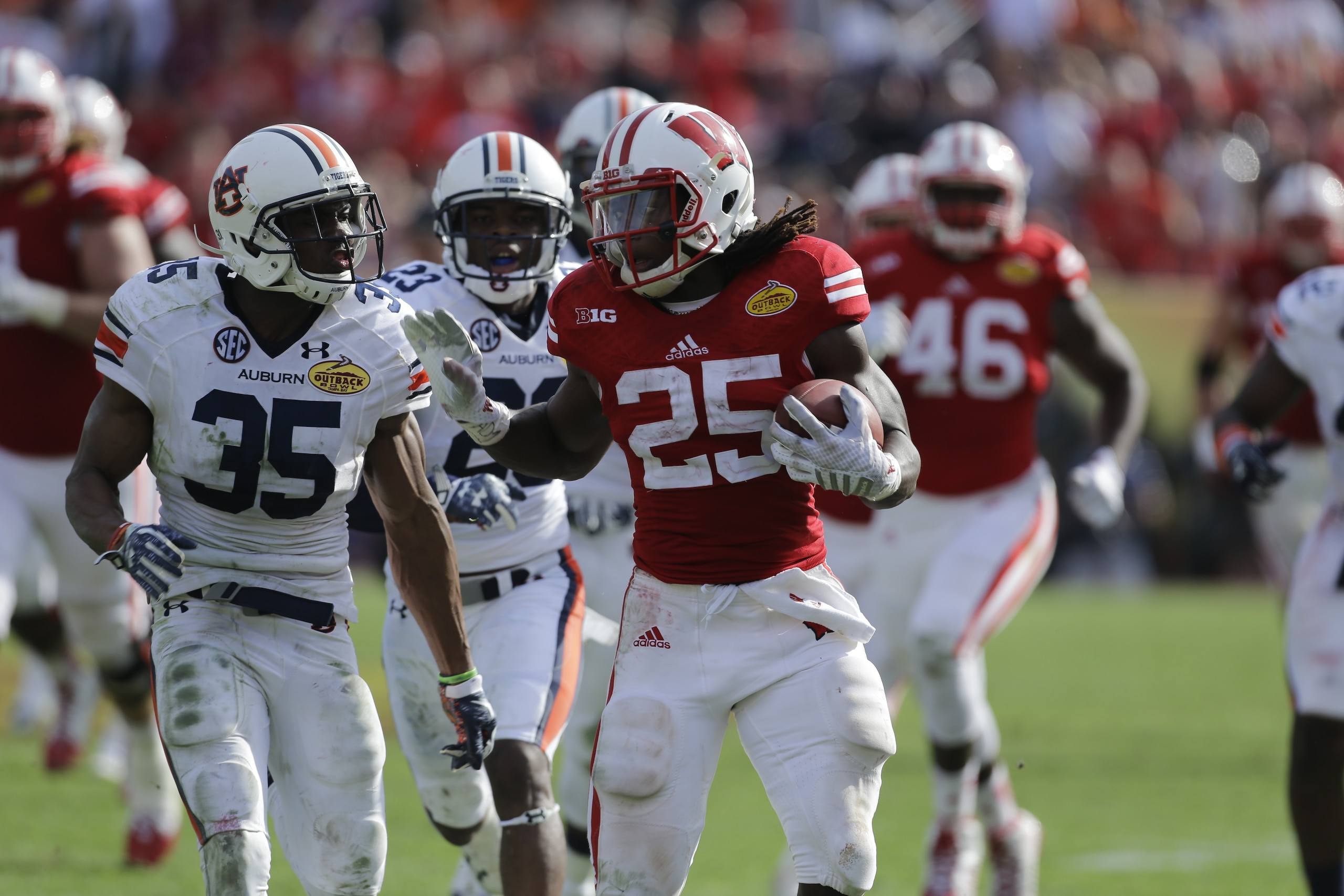

The Best Individual Seasons to Not Win the Heisman Trophy Since 2000
According to its official website, the Heisman Trophy "annually recognizes the outstanding college football player whose performance best exhibits the pursuit of excellence with integrity."
For one of the most publicized and scrutinized awards in sports, that criteria is rather vague and leads to some spirited arguments around its distribution.
Does the Heisman go to the best player in college football—the player who has had the best individual season? Or is it awarded to the player who combines excellent stats with playing for one of the nation's best teams? It's not entirely clear.
Sometimes, some of the best individual seasons go unrewarded for a variety of reasons. We can't undo the voting, but we can recognize some excellent efforts that weren't Heisman-worthy.
Here's a look at the best individual seasons not to win the Heisman Trophy since 2000.
Arkansas RB Darren McFadden
1 of 8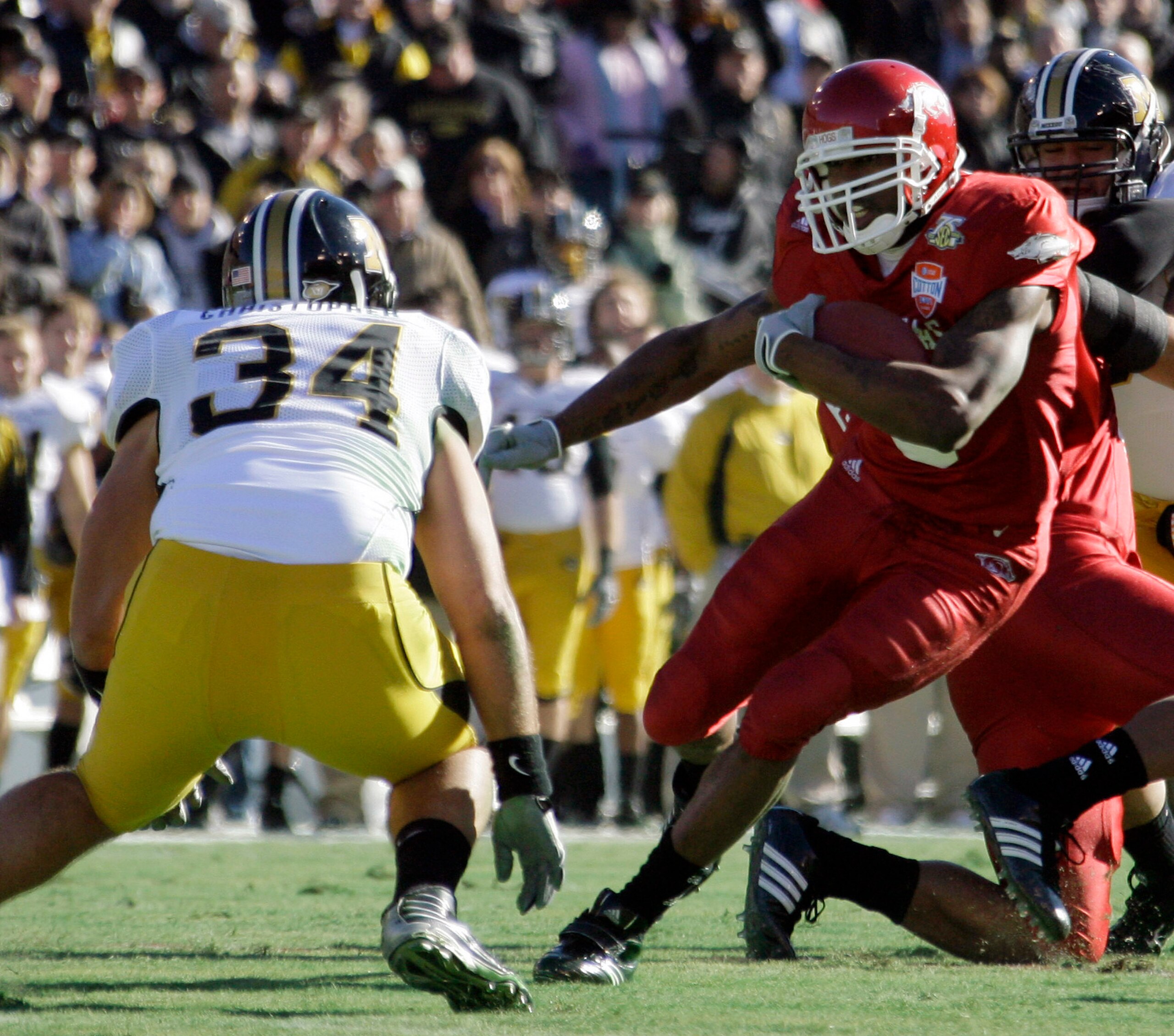
By the numbers
1,830 rushing yards, 16 rushing touchdowns.
Most memorable moment
Arkansas tailback Darren McFadden had a tremendous three-year run with the Razorbacks, but one of his best moments came in his final regular-season game with the Hogs.
Facing rival LSU, McFadden went for 206 yards and three touchdowns (as well as a passing touchdown) in a wild 50-48 triple-overtime win in Baton Rouge. His nine-yard touchdown run in the second overtime kept the game alive for Arkansas to win it one overtime later.
Why he lost
McFadden is part of a rare fraternity; players who have a pair of Heisman runner-up finishes and no trophies to show for it. In fact, when he finished second to Tim Tebow in 2007, he was the first player since 1949 to garner consecutive runner-up showings.
McFadden had great numbers, but it was hard to overcome Tebowmania and Arkansas' status as an SEC West also-ran; the Hogs finished 9-4, 4-4 in SEC play, well out of national-title contention.
Clemson QB Deshaun Watson
2 of 8
By the numbers
4,593 passing yards, 41 touchdowns, 17 interceptions; 629 rushing yards and nine touchdowns on the ground.
Most memorable moment
Deshaun Watson threw the pass that won Clemson its first national title in 35 seasons in 2016, but that came after Heisman Trophy voting was finished.
The Tigers might never have made it that far without a rally for a 37-34 win at Florida State. Watson led a fourth-quarter rally that was capped with a 34-yard catch-and-run touchdown to Jordan Leggett and a two-point conversion with 2:06 left.
He finished with 378 passing yards, two touchdowns and two interceptions as well as 52 rushing yards. It wasn’t his highest passing yardage total of the season, but it was one of his most Heisman-esque moments.
Why he lost
Watson had a steady junior season, but he didn't produce the highlight-reel plays that Louisville's Lamar Jackson did in bunches (albeit largely against inferior competition).
Watson finished the regular season strong, while Jackson slumped in losses to Houston and Kentucky, but his 17 interceptions—including a high-profile pick in Clemson's only loss to Pittsburgh—hurt him.
Watson had the last laugh with a national-title win, while Jackson and Louisville lost the Florida Citrus Bowl to LSU.
Florida QB Tim Tebow
3 of 8
By the numbers
2,746 passing yards, 30 touchdowns, four interceptions; 673 rushing yards and 12 touchdowns on the ground.
Most memorable moment
Florida quarterback Tim Tebow's most memorable moment of 2008 came after a defeat. On September 27, Ole Miss came into Gainesville and stunned Florida in a 31-30 defeat. Tebow had one of his best statistical days of the season, completing 24 of 38 passes for 319 yards and a touchdown and adding two rushing touchdowns.
An emotional Tebow told reporters afterward: "You have never seen any player in the entire country play as hard as I will play the rest of this season and you'll never see someone push the rest of the team as hard as I will push everybody the rest of this season, and you'll never see a team play harder than we will the rest of this season.”
He was right. No team came within 10 points of Florida the rest of the way, as the Gators finished 2008 on a 10-game win streak en route to its second national title in three seasons.
Tebow's speech has become known as "The Promise" and is now immortalized on a plaque outside Florida's practice facility.
Why he lost
Florida had a better overall season in 2008 than 2007, but Tebow's stats did slip a bit from his 2007 Heisman-winning season (which saw him pass for 3,286 yards with 32 touchdowns against six interceptions and 895 rushing yards with 23 rushing touchdowns). But it was still an excellent season.
He finished third behind Oklahoma's Sam Bradford (who threw for 4,720 yards with 50 touchdowns against eight interceptions) and Texas' Colt McCoy. Was Heisman fatigue to blame? Only one player, Ohio State tailback Archie Griffin, has won two Heismans in his career.
Oklahoma RB Adrian Peterson
4 of 8
By the numbers
1,925 rushing yards, 15 touchdowns, 5.7 yards per carry.
Most memorable moment
Facing rival Oklahoma State for the first time, Oklahoma freshman tailback Adrian Peterson turned the Bedlam Series on its ear.
He carried 33 times for 249 yards, including an 80-yard touchdown, breaking Oklahoma's freshman single-season rushing record as the Sooners survived OSU for a 38-35 win.
Why he lost
No true freshman has won the Heisman Trophy, but if anyone was worthy, it would have been Peterson.
He nearly rushed for 2,000 yards in his first collegiate season and rushed for 100-plus yards in 11 of 13 games for an OU team that made the national-title game before falling 55-19 to Southern California.
Peterson finished second to USC quarterback Matt Leinart, who had an excellent season in his own right, passing for 3,322 yards with 33 touchdowns against six interceptions, but also could have been hurt by teammate Jason White, who finished third in the voting (with 171 first-place votes to Peterson's 154).
Peterson finished with 997 total points to Leinart's 1,325, and it's fair to wonder if he could have challenged Leinart had White not siphoned away first-place votes; Leinart had 267 first-place votes.
Stanford RB Christian McCaffrey
5 of 8
By the numbers
2,019 rushing yards, eight rushing touchdowns; 45 catches, 645 yards, five receiving touchdowns.
Most memorable moment
Christian McCaffrey had an awesome all-around 2015 campaign, but one of his best days came on October 15 against UCLA.
The Stanford sophomore had his best rushing day of the season, carrying 25 times for 243 yards and four touchdowns in a 56-35 rout of the Bruins.
Why he lost
McCaffrey set an NCAA single-season record for all-purpose yardage as a sophomore; he was a threat rushing, receiving and returning kicks and punts. He was a truly dynamic player, but he suffered because a number of his games were played at night on the West Coast, well after a significant portion of Heisman voters had tuned out for the evening.
He was defeated by Alabama junior Derrick Henry, who rushed for 2,219 yards and 28 touchdowns in a high-visibility role for the eventual national champions. Henry was a strong player, but he isn’t the versatile threat McCaffrey is. History might not look kindly on this choice.
Texas QB Vince Young
6 of 8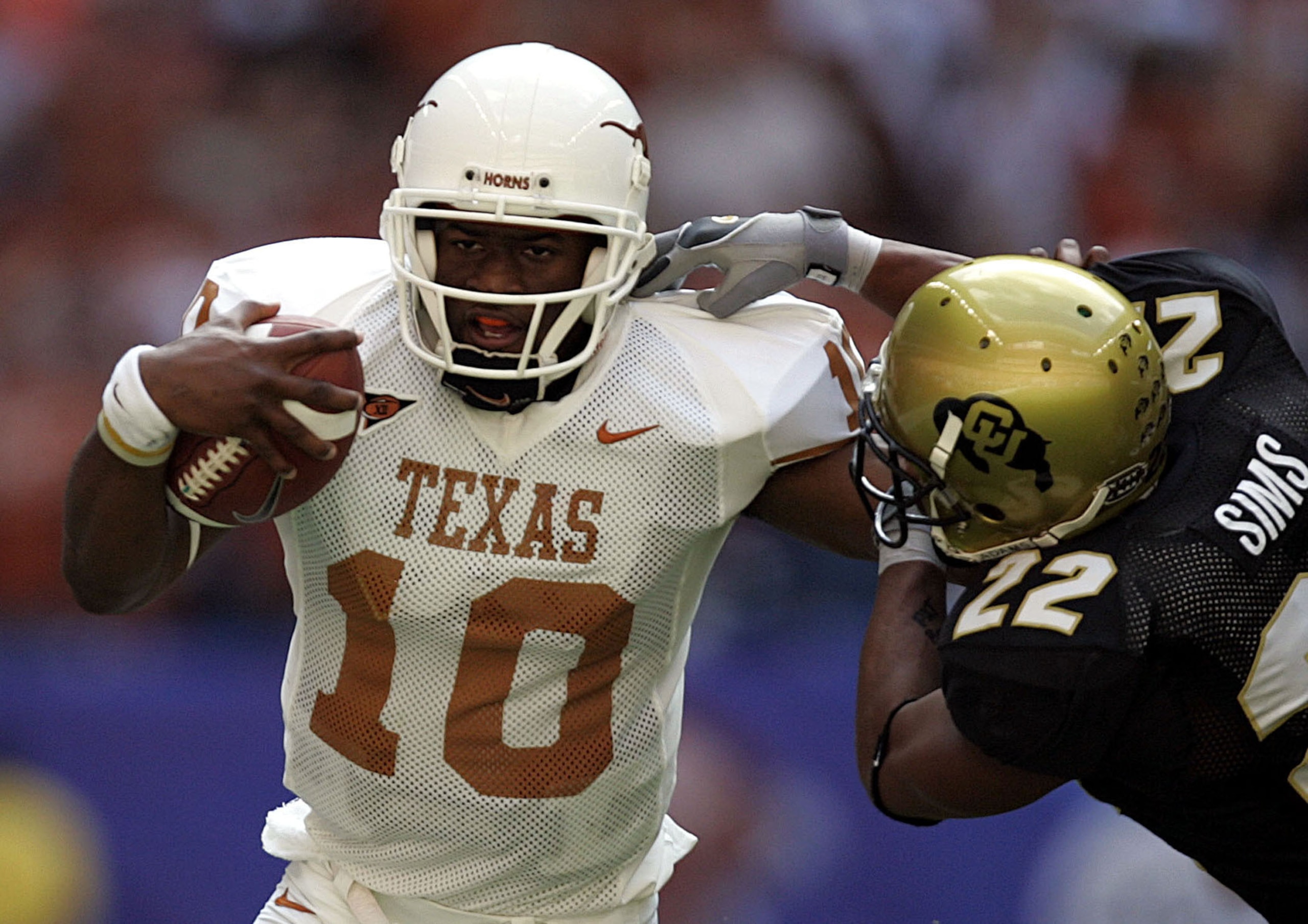
By the numbers
3,036 passing yards with 26 touchdowns and 10 interceptions; 1,050 rushing yards, 12 touchdowns on the ground.
Most memorable moment
Even though it came well after Heisman Trophy voting had closed, it's impossible to ignore how Texas and quarterback Vince Young ended the 2006 Rose Bowl.
Trailing Southern California (and Heisman winner Reggie Bush) 38-26 with under seven minutes to play, Young rallied the Longhorns to a stirring 41-38 victory.
Texas got the ball back trailing 38-33 with 2:09 remaining and drove inside the USC 10 with under 30 seconds to play. On fourth and 5 from the SC 9, Young scrambled down the right sideline for the game-winning score and two-point conversion to hand Texas a national title.
Why he lost
Although Young had a great statistical season, he and the Longhorns spent much of 2005 in the shadow of defending national champion Southern California, the "it" team in college football.
Tailback Bush was a multipurpose threat rushing, receiving and returning kicks, and although Young became the first Texas player to pass for more than 3,000 yards and rush for more than 1,000 (as the Longhorns' leading rusher) he couldn't overcome the national push for Bush, finishing with 79 first-place votes to Bush's 784.
Of course, Young and the Horns got the last laugh, rallying to knock off USC in the national-title game.
Texas Tech QB Graham Harrell
7 of 8
By the numbers
5,705 passing yards, 48 touchdowns against 14 interceptions
Most memorable moment
In 2007, Texas Tech quarterback Graham Harrell did all he could against Oklahoma State in a late-September game. It just wasn't enough.
Harrell threw for 646 yards (then the fourth-best single-game passing total in FBS history) and five touchdowns against no interceptions, but the Red Raiders' defense let him down in a 49-45 defeat. It certainly wasn't Harrell's fault.
Why he lost
Harrell had an eye-popping 2007 season, but it should be noted that his numbers did take place in Mike Leach's pass-first Air Raid offense, which likely hurt his chances with Heisman voters.
The season stands as the second-highest passing yardage total in FBS history (behind another Tech QB, B.J. Symons) but playing for a 9-4 team didn't do him any favors.
It should be noted that voters did pay attention eventually. A year later, Harrell's numbers were down slightly, but the Raiders finished 10-2 and made the Cotton Bowl. Harrell finished fourth in Heisman voting after failing to crack the top 10 in 2007.
Wisconsin RB Melvin Gordon
8 of 8
By the numbers
2,587 rushing yards, 29 rushing touchdowns (32 total touchdowns), 7.5 yards per carry
Most memorable moment
2014 was an amazing season for Melvin Gordon, but the best moment unquestionably came against Nebraska on November 15.
Playing in a key Big Ten West showdown, the Wisconsin senior ran over, around and through the Cornhusker defense. He piled up 408 rushing yards and four touchdowns on 25 carries, setting an FBS single-game rushing yardage record.
It stood for all of one week until Oklahoma freshman Samaje Perine rushed for 427 yards against a hapless Kansas team.
Why he lost
Gordon had a tremendous senior season. Officially, he had the second-best single-season rushing yardage total in FBS history, behind Barry Sanders' mark of 2,628 yards in 1988, although that is misleading because the NCAA doesn't count Sanders' postseason stats.
However, Gordon had the misfortune of sharing a season with Oregon QB Marcus Mariota, who led the Ducks to the College Football Playoff while throwing for 4,454 yards with 42 touchdowns and four interceptions.
Wisconsin didn’t contend for a national title, unlike Oregon, which made it tough to compete with Mariota, who had 788 first-place votes to runner-up Gordon's 37.
Gordon had a special season, but it wasn't enough to overcome Mariota's presence on a nationally prominent team with a great statistical line.


.jpg?w=2560 "Commanders OL HEATED After Tie ▶️")
.jpg?w=2560 "49ers LB Suspended for Headbutt")
.jpg?w=2560 "AD Trolls Bears WR on IG 😂")