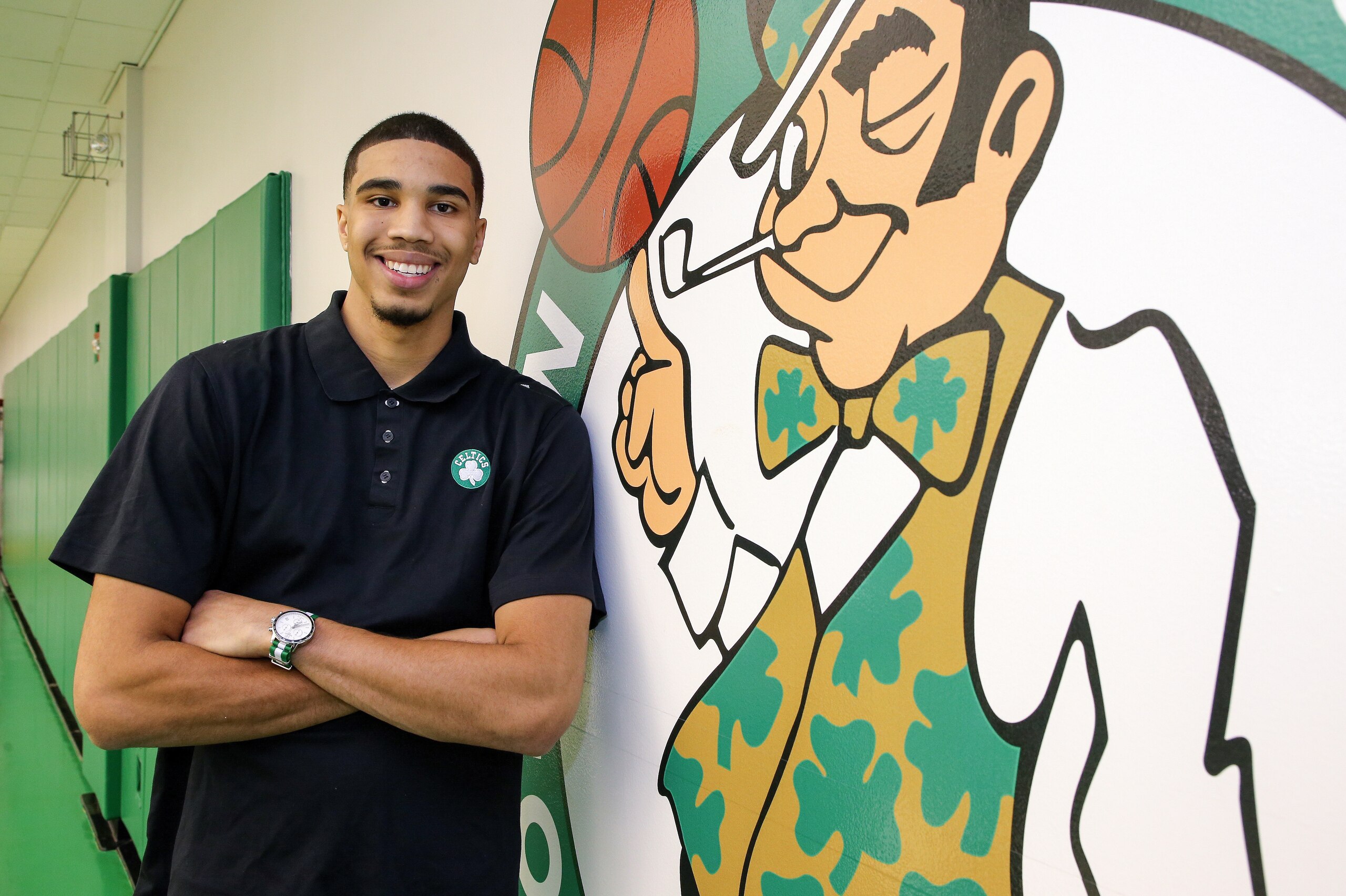

Everything Boston Celtics Fans Need to Know About Jayson Tatum
The Boston Celtics traded the No. 1 overall pick in the NBA draft and moved down two spots for Jayson Tatum.
He gives them another forward behind Jaylen Brown and Jae Crowder, and he's perceived as an NBA-ready rookie based on his tools, skill level and 16.8 points per game at Duke.
Despite playing just one year in college, Tatum has been on the NBA radar for nearly four years.
Compared to Brown and Crowder, he offers a different dimension on offense. And if he winds up reaching his potential, the Celtics could eventually be looking at their No. 2 option alongside Isaiah Thomas.
He's Been a Part of USA Basketball Since 2013
1 of 7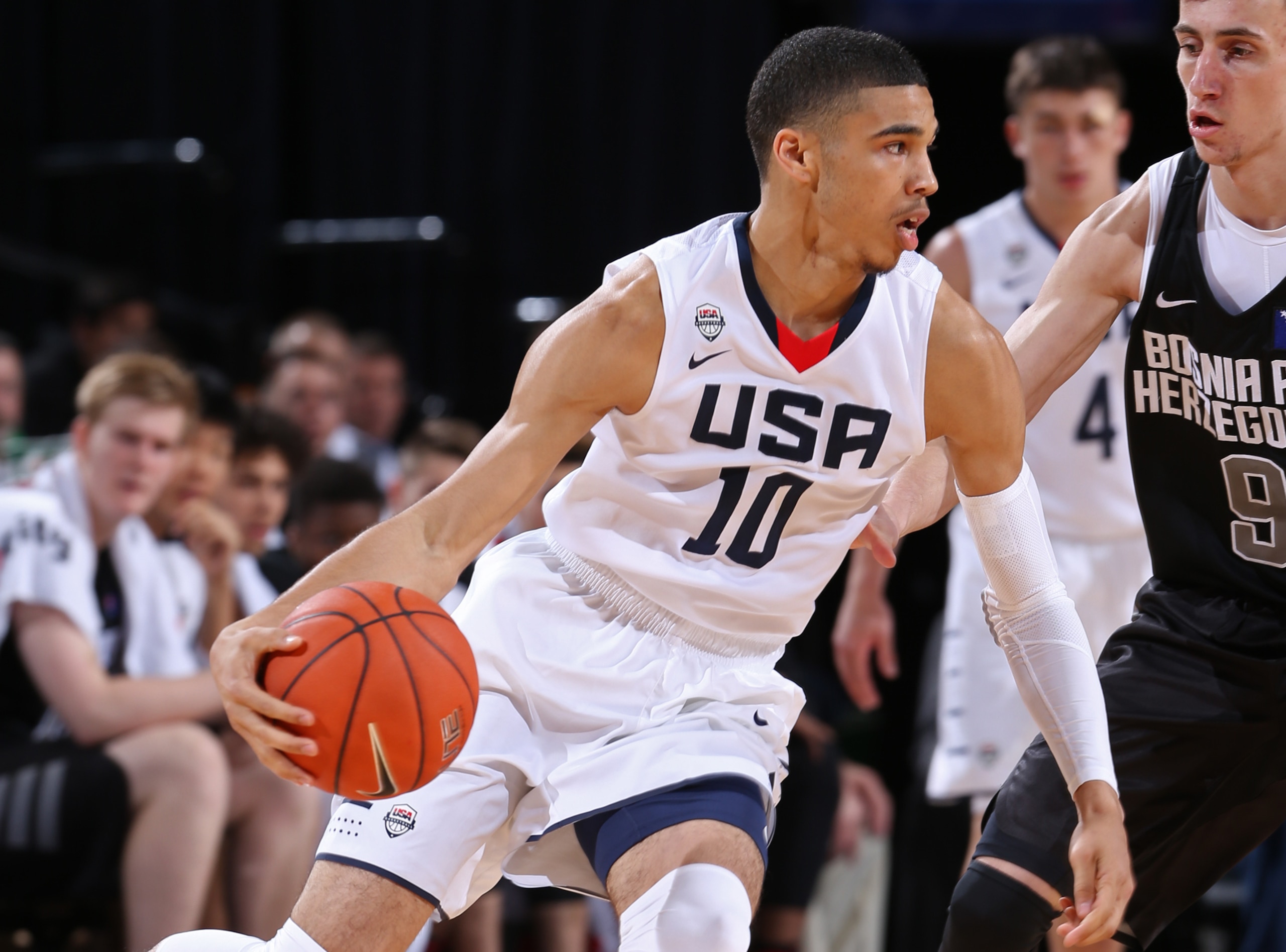
Unlike Markelle Fultz, Jayson Tatum isn't a late bloomer. He's been considered one of the elite players in his class since his early high school years.
Prior to arriving at Duke, he'd already won gold in the U16 Americas Championships, U17 World Championships and U19 World Championships.
It's possible the Boston Celtics and other teams have had eyes on Tatum since he was 15 years old.
His Physical Tools Resemble Paul George's
2 of 7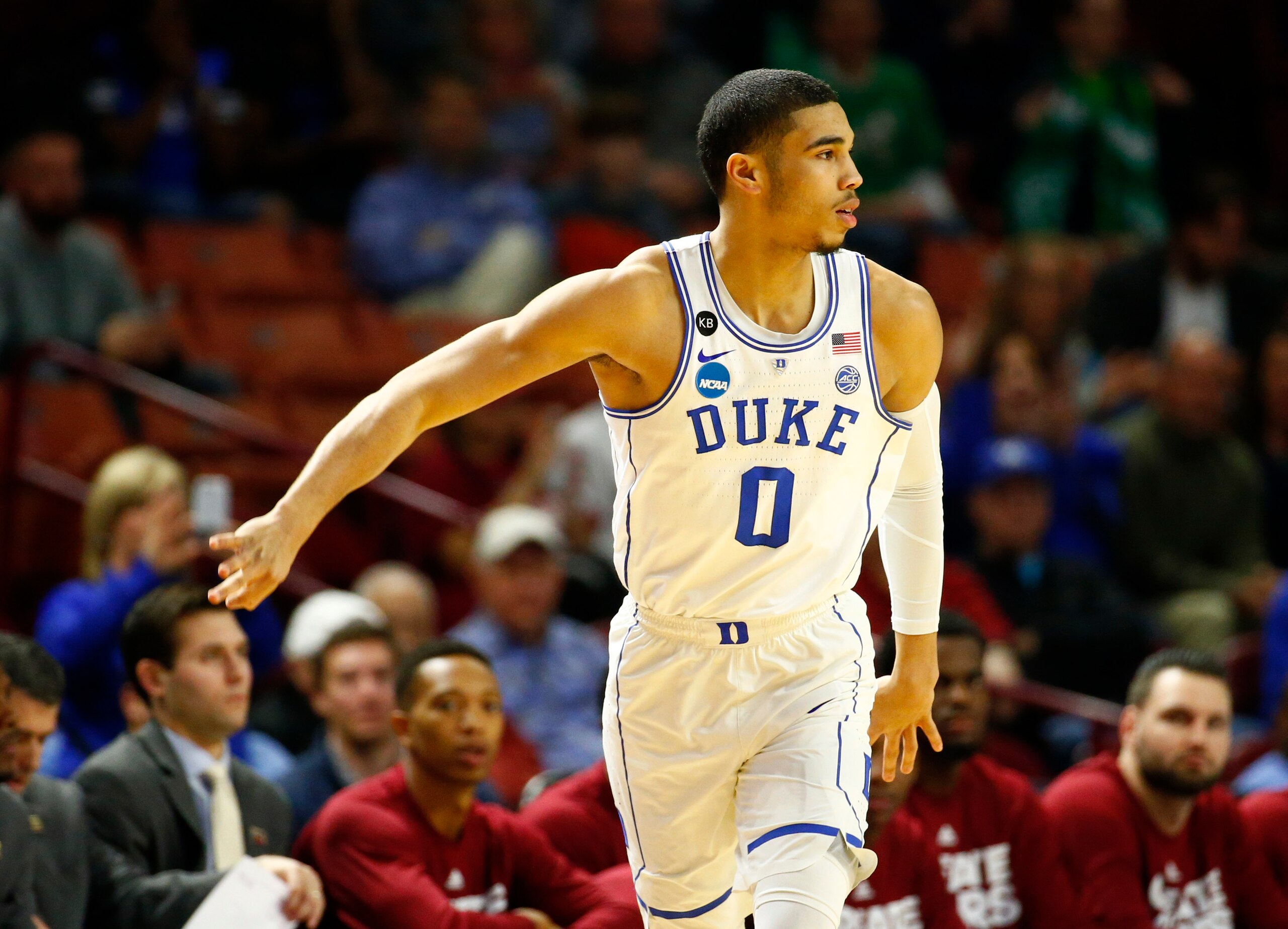
Tatum passes the eye test with size, length and fluidity for a small forward.
His 6'8" height and 6'11" wingspan match Paul George's. Tatum is skinnier at 205 pounds, while George left Fresno State at 214 pounds, though he was a year older during his draft.
Tatum isn't the same caliber of athlete as George, particularly as a leaper around the rim. He isn't explosive, but is highly coordinated. Comparisons to Carmelo Anthony and Paul Pierce stem from his shot selection, skill level and scoring ability, but also the fact that they can bury defenses without flashy athleticism.
He Played Mostly Power Forward at Duke
3 of 7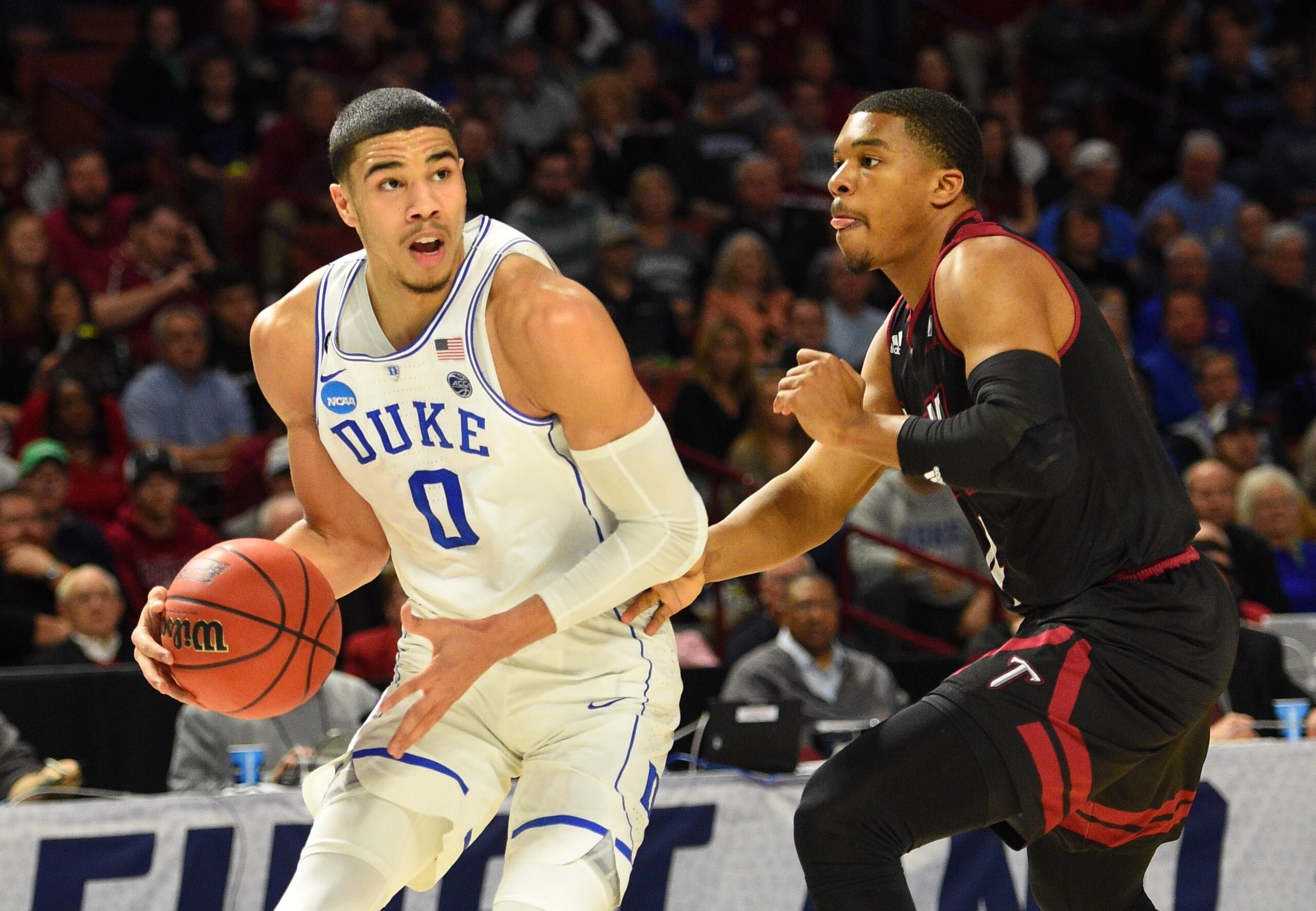
Despite possessing the measurements, shot selection and overall movement of a wing, Tatum played power forward at Duke.
It worked to his advantage at the college level, where most 4s are equally as big but not as quick. Tatum got to exploit his perimeter skills against slower defenders.
The big question moving forward is whether his success playing big can translate in the NBA.
We've already seen coach Brad Stevens use extra-small lineups with four guards and Crowder. It wouldn't be surprising to see stretches with Crowder at the 5 next to Tatum, Isaiah Thomas, Avery Bradley and Marcus Smart.


Most Polished Scoring Forward in the Class
4 of 7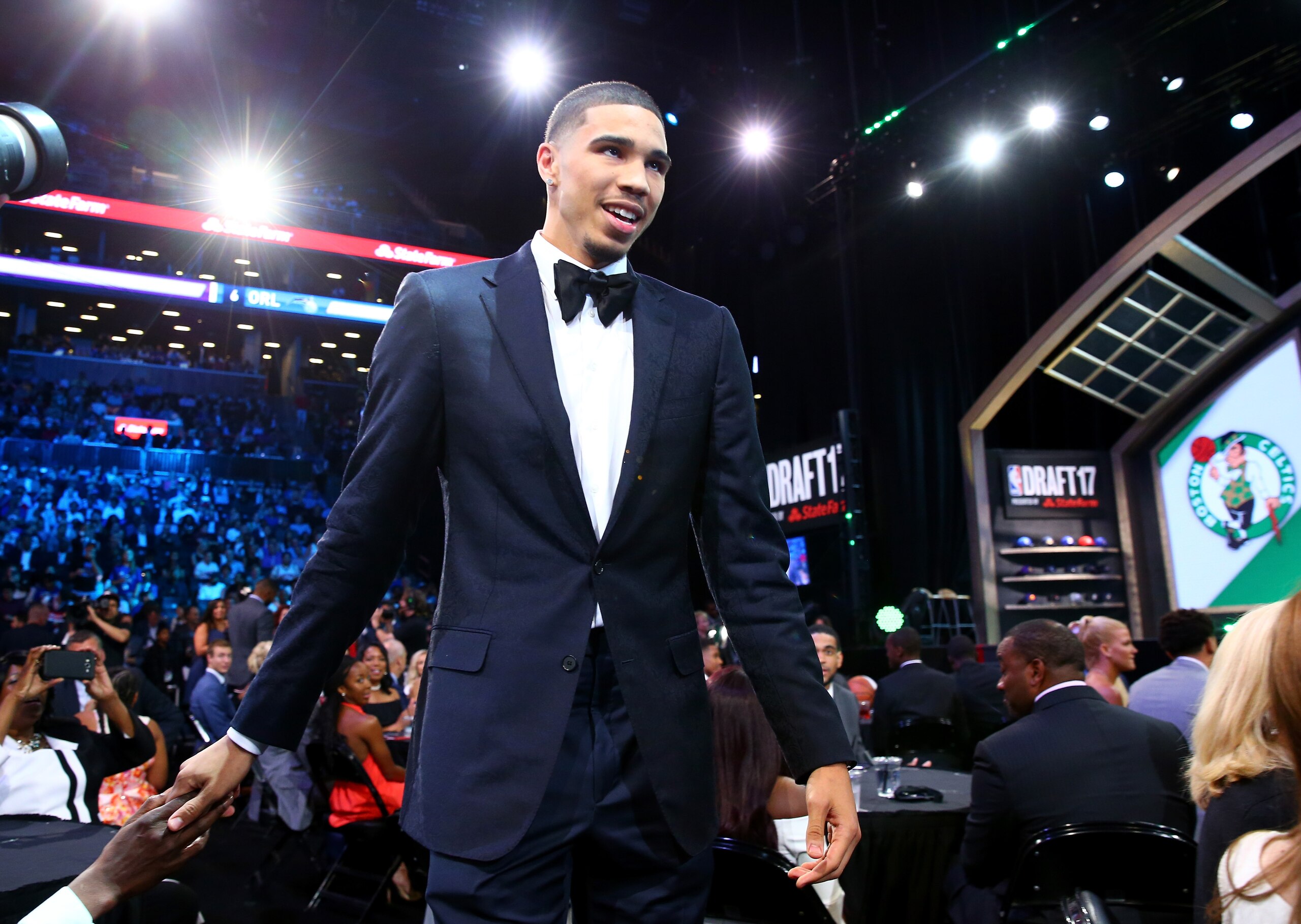
Tatum's skill level separates him from the other forwards in the class. He's a lot further along as a shot-creator than Jaylen Brown was when the Celtics took him No. 3 last year.
Tatum's footwork is advanced. He uses jab steps, pull-ups, step-backs and fallaways to cleanly separate into makeable shots.
He appears to have taken moves from elite two-point scorers like Anthony, Pierce and Kobe Bryant. He'll occasionally settle for lower percentage shots, but he's a tough shotmaker and can also rip through or crossover into a drive that results in a layup or free throws.
Tatum wound up averaging 1.047 points per play in isolation (86th percentile) and 1.087 points per play on post-ups (94th percentile), per Synergy Sports (via DraftExpress' Mike Schmitz). He's going to give Boston a go-to option capable of creating his own offense in the half court.
He Loves the Mid-Range
5 of 7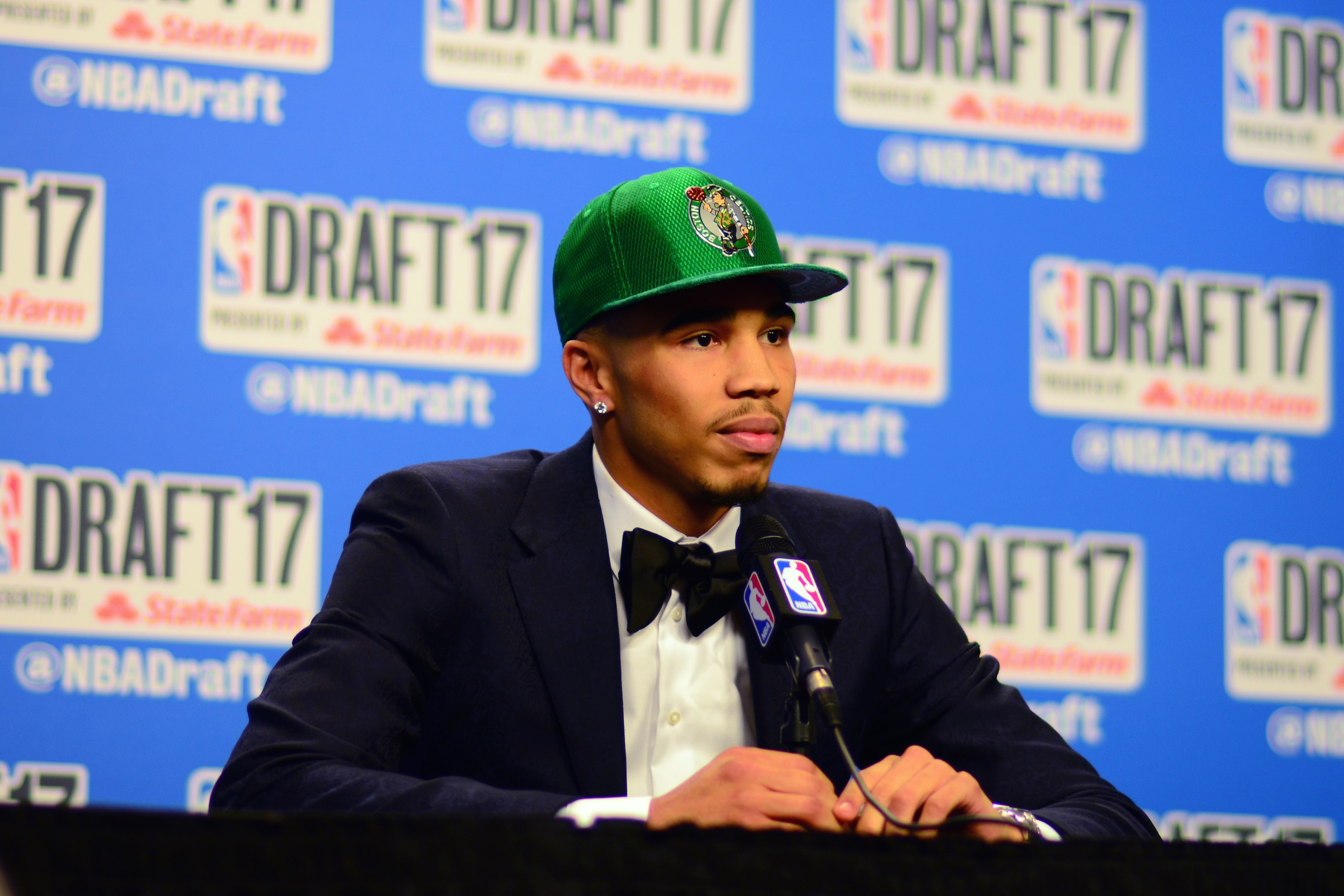
The mid-range is Tatum's office. He's most comfortable operating from the high posts and short corners, where he can face up or play with his back to the basket.
At Duke, he took more two-point jumpers (127) than shots at the rim (121) or three-pointers (117).
Meanwhile, only four teams in the league took fewer shots in the mid-range than the Celtics. Tatum's shot selection clashes with Boston's.
But this isn't anything general manager Danny Ainge didn't know when he drafted Tatum. Stevens will find a way to incorporate his one-on-one scoring ability inside the arc.
Defense Is Up and Down
6 of 7
Tatum has promising defensive tools, specifically quick feet for his size and length. He averaged 1.6 steals and 1.4 blocks per 40 minutes, showing the ability to force turnovers with his hands and make plays on the ball with his timing and coordination.
But Tatum didn't always clamp down. He occasionally looked lazy, showing little urgency to get low, dig in and slide.
Too many opposing ball-handlers were able to turn the corner on Tatum.
In the paint, opposing bigs didn't always have to work hard hard to gain position on the 205-pound forward. Many were able to finish through him at the basket without receiving much of a fight.
Tatum had some encouraging moments defensively, but his effort level was up and down.
He's Always Been Capable from 3, but Never Proficient
7 of 7
Tatum can shoot the three, having hit 40 of them through 29 games at Duke. And when his confidence is up, the rim suddenly expands, like it did against Virginia during his career-high 28-point night off 6-of-7 shooting from three.
His release is nice and high, which helps make up for a relatively slow delivery.
But Tatum has always been considered more of a shotmaker—not necessarily a shooter. He didn't hit any threes during the Nike Hoop Summit, McDonalds All-American Game or Jordan Brand Classic, and he shot a combined 31.4 percent from deep during three FIBA tournaments.
At Duke, he shot 34.2 percent from deep, but if you take away that Virginia game, the numbers would drop to 30.9 percent on the season.
At this point, Tatum possesses long-range shooting potential, but don't count on him entering the league and suddenly torching teams from downtown.

.jpg?w=2560 "Grading WWE Raw 🔠")


.jpg?w=2560 "2 NFL Officials Suspended")
.jpg?w=2560 "Viral Rams Coach Vid 🖕")