When it comes to Chicago Bears contracts as of late, it tends to boil down to an eye-of-the-beholder sort of deal.
Some fans wanted to see general manager Ryan Pace jump-start the rebuild by splurging on major free agents such as Stephon Gilmore. Settling for lesser names for any dollar amount seemed out of the question.
For others, the reality of the situation was plain—a team mired in a significant rebuild wasn't going to land the biggest names. Rather, the front office had to seemingly overpay to bring along respectable players.
The good news? Pace's rebuild has a defined, well, pace. His major signings over the past few years have a common theme—stopgap structure. The biggest names right on down to the little signings eat a big chunk of the cap this year, but offer little in the way of guaranteed money after this season, leaving the front office with a moldable roster and plenty of future cap space to use as they see fit.
Below, let's look at some of the best and worst contracts on Chicago's roster right now, keeping in mind Pace has already axed some of the biggest offenders such as Jay Cutler, Eddie Royal and Tracy Porter.
Best: Kendall Wright
1 of 8
It's easy to overlook what the Bears did in free agency with Kendall Wright given the chaos of the team failing to bring back Alshon Jeffery.
Wright isn't as big a name—but he could have a far better season than Jeffery next year.
The Bears got Wright on a one-year deal worth $2 million, per Spotrac. That's a bargain for a 27-year-old player coming off a down year who can start immediately in the slot and put up big numbers with steady quarterback play.
There's an underlying bonus here—Wright played his best ball under current Bears offensive coordinator Dowell Loggains in Tennessee, going for 1,079 yards and two scores in 2013. He's on a prove-it deal looking for a big long-term commitment, hence his picking Chicago and Loggains in the first place.
In other words, the Bears might've landed a borderline No. 1 wideout at a steal of a price who could want to stick in town for the long term with coaches who know how to use him.
Worst: Marcus Cooper
2 of 8
Yes, on one hand, the intro mentioned the Bears needed to overpay to get stopgap solutions at positions of need.
But it's hard to defend throwing $16 million at cornerback Marcus Cooper, even if only half of it is guaranteed and most comes off the books after this year.
Cooper might only be 27 years old, but he rated as the 106th cornerback at Pro Football Focus last year on a list grading 119 players. While he got picked on and peppered with targets as quarterbacks avoided Patrick Peterson and others, a better slotting would've been nice.
There's a chance Cooper turns around and plays the best ball of his career as a natural press presence on the boundary under the guidance of defensive coordinator Vic Fangio. Either way, it would've been nice to see Cooper land something like the one-year deal given to fellow cornerback Prince Amukamara.
Guaranteed or not, three years for wishful upside is a big investment.
Best: Kyle Long
3 of 8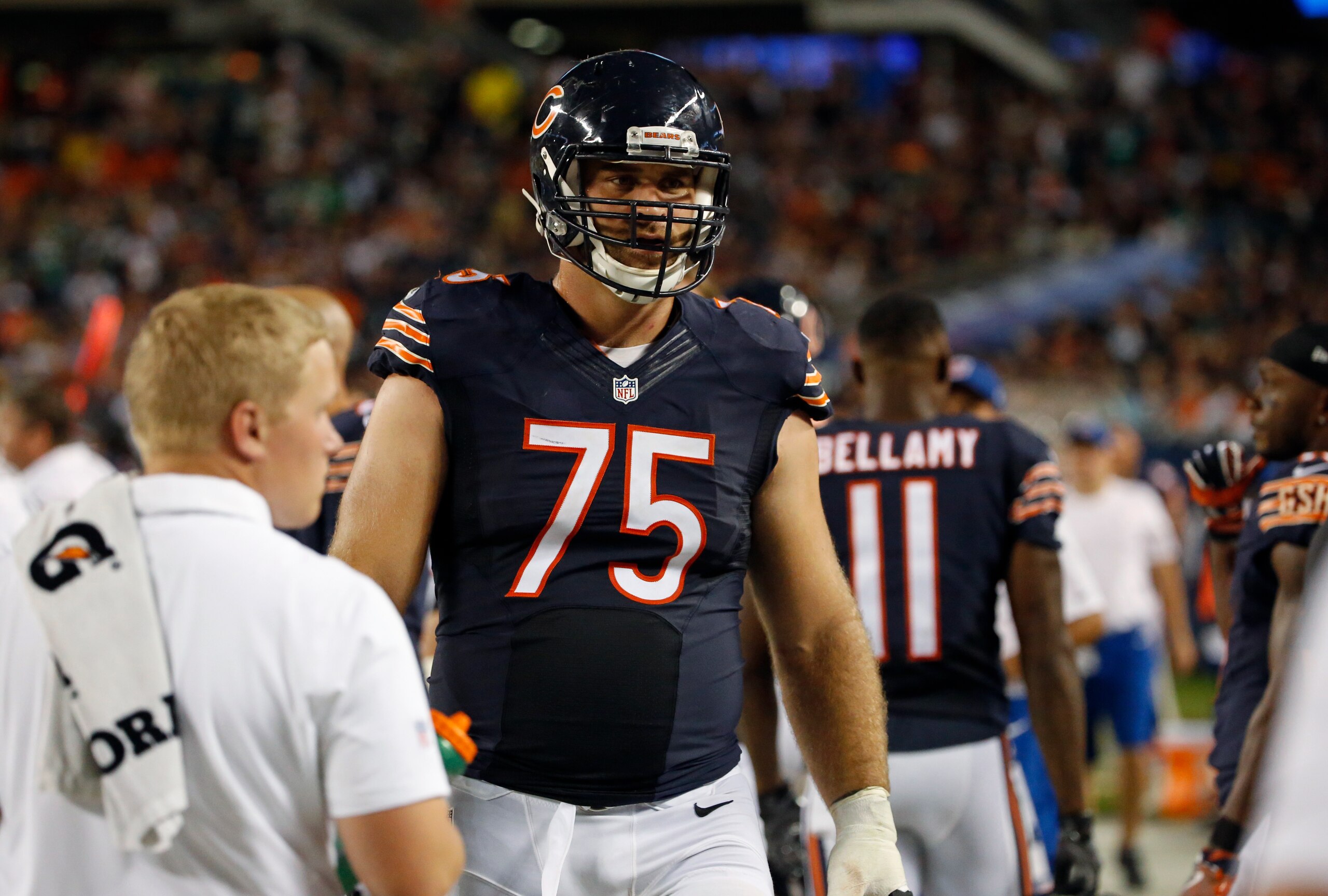
It doesn't get much better than this.
Kyle Long is the second-highest-paid player on the Bears this year—as he should be.
Long is one of the best in the business at what he does, yet he has a base salary of just $6.25 million this year. Given big investments on guards like Kevin Zeitler this offseason, it's remarkable to see Long hardly crack the top 30 contracts given to offensive linemen in 2017.
Did anyone mention the Bears likely have Long under contract through the 2021 season?
Getting a player of Long's caliber under contract at an affordable cost while the price continues to rise around the league is a big win for a rebuilding team like the Bears.
.jpg?w=2560 "Chiefs Giants Football")
.jpg?w=2560 "Steelers Buccaneers Football")
.jpg?w=2560 "Titans Colts Football")
Worst: Zach Miller
4 of 8
What more is there to say about Zach Miller at this point?
Miller, now 32 years old, ranks among the top-20 cap hits on the Bears this year thanks to a total cap hit of $2.3 million in the final year of his deal.
This normally wouldn't be a problem for a 6'5", 243-pound veteran who can line up and create mismatches against smaller defenders.
As Bears fans are acutely aware, though, Miller hasn't been able to stay on the field. He's missed seven games over the past two seasons combined in Chicago and before that hadn't played since 2011, where he only appeared in four games.
The Bears aren't hurting for cash and might not do much else with the space they'd create by cutting Miller loose. But with the team addressing the need in the draft and free agency, he certainly fits the bill here.
Best: Jerrell Freeman
5 of 8
In certain schemes, interior linebackers are going the way of the dinosaur and often come off the field during passing situations.
Chicago, though, found quite the gem in free agency back in 2016 with Jerrell Freeman.
Pace hit Freeman with all of $12 million over three years. The 31-year-old veteran turned right around and gave Pace a team-leading 110 tackles over just 12 games. If he hadn't been given a four-game suspension for violating the league's performance-enhancing drugs policy, Freeman might have an argument for an upgrade in pay.
Alas, the Bears have Freeman under contract through 2018 with neither cap hit rising above $4.25 million, and it's hard to imagine he doesn't lead the team in notable areas yet again.
Not a bad price for a guy who has turned out to be the heart and soul of the defense.
Worst: Bobby Massie
6 of 8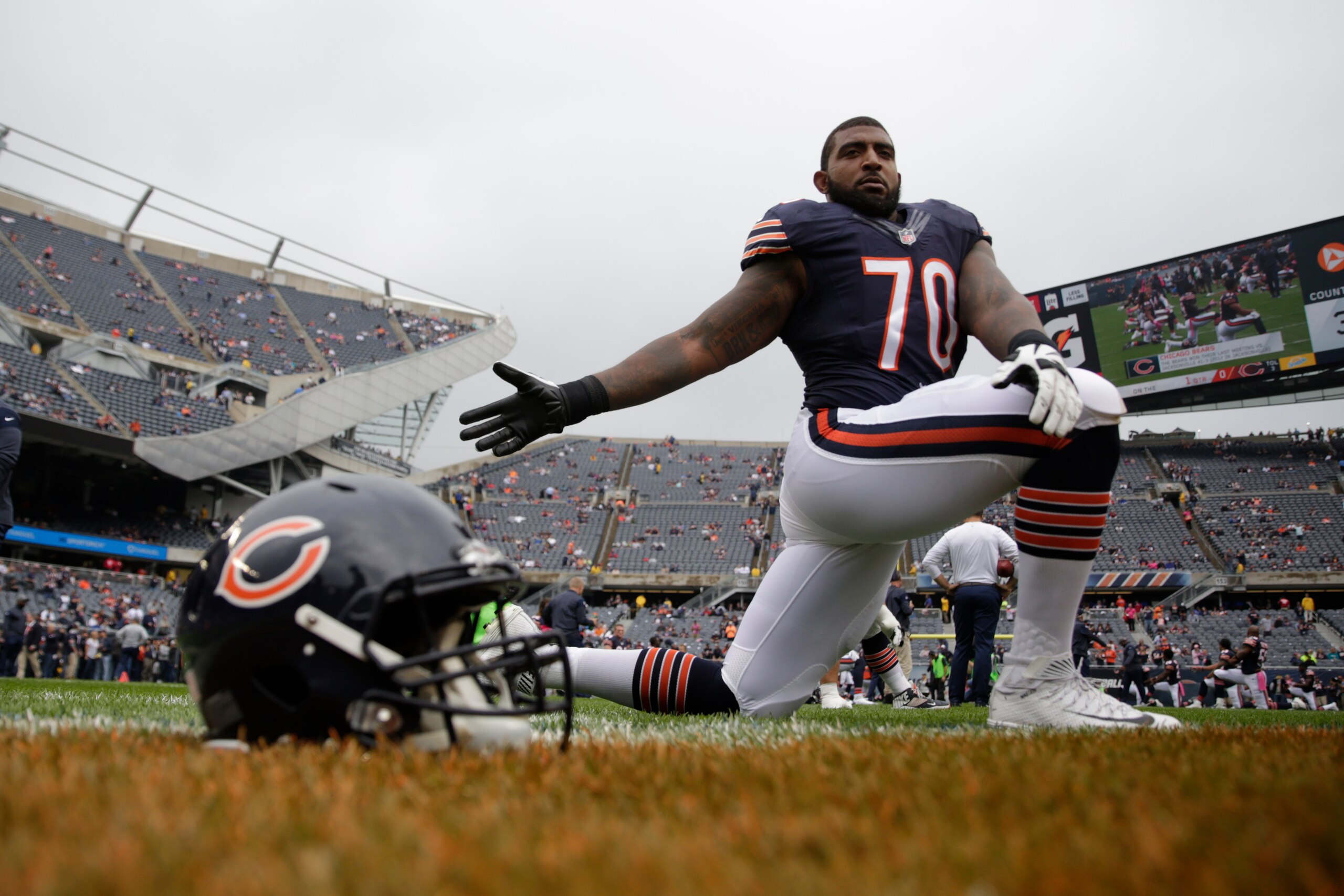
The Bears overpaid for Bobby Massie in 2016.
It's simple, really. The Bears had a major need at the spot and wanted to make sure they grabbed at least a passable player, which they did—Massie had ranked as the 49th offensive tackle in football at PFF over 14 games with the Arizona Cardinals in 2015.
Fast forward a year and Massie checked in at 49th over 15 games with the Bears. There seems to be a weird narrative out there that Massie improved with the Bears as the year went on, and while true his only three positive grades of the year happened in Week 12 and after, he finished the year with back-to-back negative grades.
Now look at the numbers—the Bears gave Massie $18 million over three years, and it's not a front-loaded deal as his cap hit was $5.8 million in 2016 and climbs to $6.0 and $6.1 million over the next two seasons.
Massie is who he will always be at this point in his career. and his contract stands out as one of the worst on the roster. Necessary? Maybe. But it's not a great look.
Best: Mike Glennon
7 of 8
Talk about a polarizing contract.
Nationally, the Bears inking Mike Glennon to a three-year deal worth $45 million got panned. That reaction was a combination of lazy and justified seeing as Glennon has only attempted 11 passes dating back to 2014.
But step back and really look at this contract. We're talking about a front-loaded deal where the guaranteed cash mostly comes off the board in the first year—and these Bears weren't going to spend that cash anywhere else.
Chicago clearly liked Glennon enough to throw some major first-year cash his way. He's 27 and showed some flashes with the Tampa Bay Buccaneers before Jameis Winston's arrival, which, given the state of the roster around him at the time, was rather impressive. Remember—Pace wanted Marcus Mariota, so if he chases down a quarterback he really wanted, it's worthwhile to at least keep the fingers crossed and see what happens.
Few would argue against the notion quarterback is the most important position in the NFL. The Bears went out and took a shot at a franchise player on a front-loaded deal. If it works, the Bears have the best possible problem to have in sports thanks to the presence of rookie Mitchell Trubisky. If not, the Bears lost cap space from 2017. Big deal.
Like the drafting of Trubisky, Pace went out and did whatever it took to get his guy. Glennon's contract doesn't hamper the Bears in the long term and offers some serious upside. Tuning out the national overreactions for a moment, what's truly not to like about it?
Worst: Lamarr Houston
8 of 8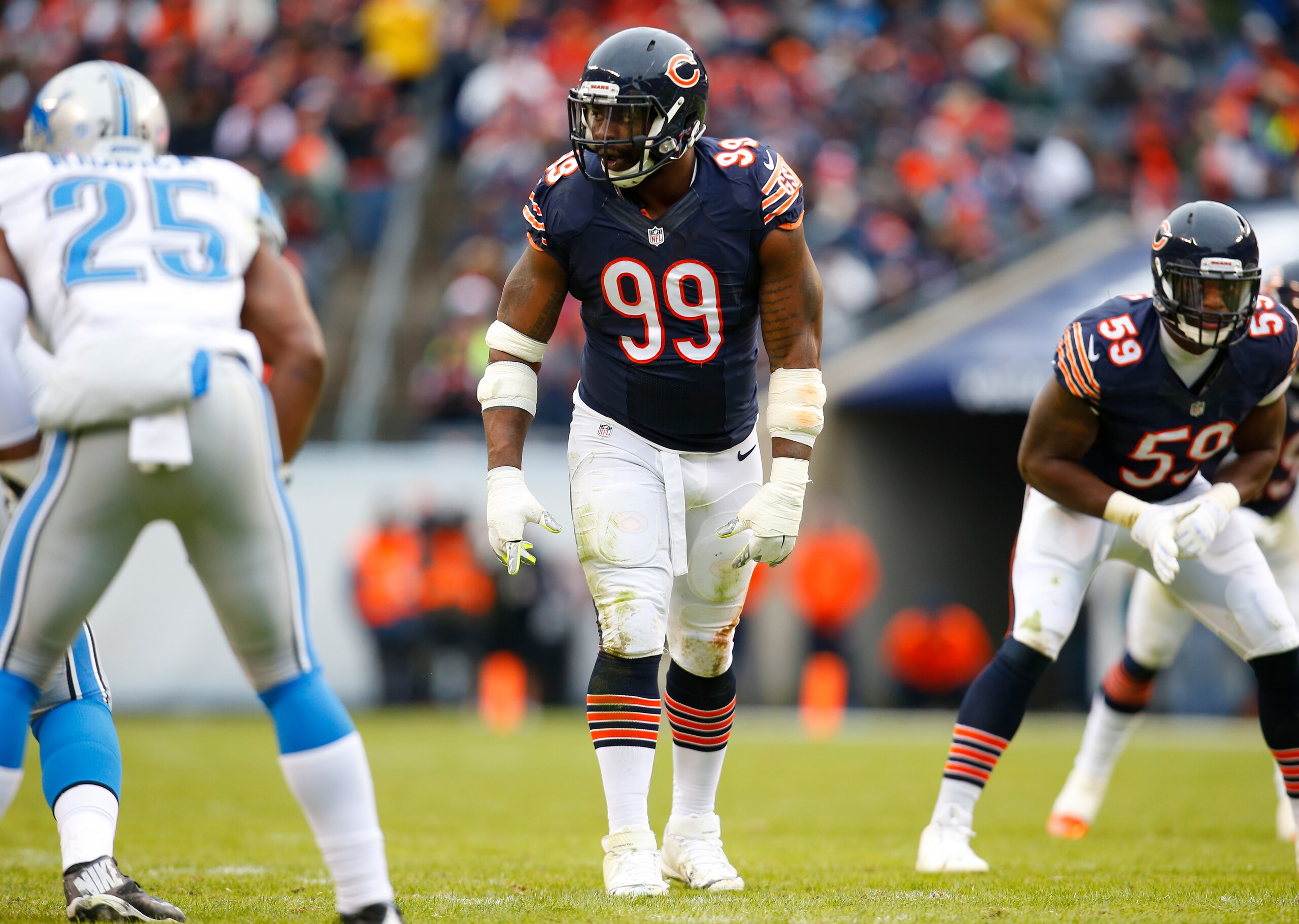
Lamarr Houston has the fifth-highest cap hit for the Bears in 2017, yet he is a combination of the problems plaguing the Massie and Miller contracts.
Houston has a $6.9 million cap hit in 2017, which escalates to $8.9 million in 2018 as part of a big five-year deal worth $35 million the Bears dished out in 2014.
Like Massie, this is a deal that only gets worse as it goes on. And like Miller, Houston simply hasn't been able to stay on the field. He only took the field for eight games in 2014 and appeared in two last season. The 2015 campaign was a flash of why the Bears paid him as much as they did since he posted eight sacks over 16 appearances, but it's a high price to pay for one year of production so far.
Houston could be a nice redemption story if he can bounce back from a pair of serious knee issues to help form a potent rush with Leonard Floyd and others. And, no, the Bears wouldn't do anything else with the cap space if they decided to up and cut him.
But it doesn't change the fact the contract has been a disaster thus far. Houston has a chance to change the narrative, yet it's hard to feel he isn't one of the bigger cut candidates this summer because of the bloated numbers over the rest of his deal.
All contract information courtesy of Spotrac unless otherwise specified. Stats courtesy of NFL.com. All advanced metrics courtesy of Pro Football Focus.
.jpg?w=2560 "Eagles Jaguars Football")
.jpg?w=2560 "Steelers Saints Football")
.jpg?w=2560 "🚨 Week 8 AP Top 25 Poll")