

B/R Exclusive: Klitschko Aims 'To Be the Offender' in 1st Fight Since Rare Loss
Wladimir Klitschko hasn't always been a good loser. It's not his fault. He's just never had to become accustomed to it.
In 2004, when the heavyweight stalwart suffered just the third loss of his career—a knockout upset at the hands of a man his trainer still calls "Little Lamon Brewster"—he demanded a government investigation. The idea that a man like Klitschko, 78 inches of Olympic-quality muscle going by the nom de plume "Dr. Steelhammer," could lose to a Lamon Brewster of the world was so ludicrous the fighter himself could barely fathom it.
That was more than a decade ago. In the time since, many things have changed, starting with Klitschko himself. Two years ago, he once again found himself the victim of an opponent most expected him to outclass, losing a close decision to the enigmatic Tyson Fury. After 22 consecutive victories and a decade on top of the sport, his long reign of terror was finally over.
TOP NEWS
Emanuel Navarrete vs. O'Shaquie Foster

Unranked CFB teams cause chaos in Week 8

Brown with an all-time summary of relationship with Tatum
And, surprisingly, he seemed perfectly OK with it. Entering his bout with the 27-year-old Anthony Joshua on Saturday at Wembley Stadium (Showtime broadcast begins at 4:15 p.m. Eastern), his first since the rare defeat, the 41-year-old Klitschko is in an unfamiliar role—that of the challenger—but there has been no crisis of faith since his latest loss, according to those close to him.
There has been no desperate search for someone to blame. This time, Klitschko found the culprit right where he knew he would—in the mirror.
"When you lose, you try to find the person in your boxing family who is responsible. But the person responsible for the loss was me," Klitschko told Bleacher Report in an exclusive interview. "The worst enemy that I've ever faced is me. That's the one guy, when you fight him, you're always going to lose.
"My team was perfect. We were successful for a reason and for a very long time. Not a single person got replaced. And together we will bounce back. We are fighting for a legacy—not just mine, but every single team member. When things are going well and you are winning for years, it's easy. When you fall, that's when it becomes difficult. And coming back from that—that's what makes you proud of yourself."
| Height | 6'6" |
| Weight | 245 lbs |
| Reach | 81" |
| Record | 64-4 (53 KO) |
| Professional Debut | 11/16/1996 |
| Heavyweight Title Fights | 28 |
Talking with Klitschko, you can't help but notice a renewed vigor, a spring in his proverbial step. Before the Fury fight, he seemed worn down by the weight of it all: the endless line of challengers, the comparisons to the ghosts of heavyweight lore and the feeling that he was battling history as much as he was the other man standing across the ring.
"For so long, I was defending, defending, defending. Every fight, there were the same questions, about whether I was going to break Joe Louis' record as the longest champion.
— Wladimir Klitschko
"
"I really was on a hamster wheel," Klitschko said. "I know it was my quote, but I must say, that's a pretty damn good quote. For so long, I was defending, defending, defending. Every fight, there were the same questions, about whether I was going to break Joe Louis' record as the longest champion.
"There was all this pressure to defend what was mine. Now I have a totally different attitude. To be a defender is static. To be a challenger is to be the offender. You have to go and get something that you want. And I truly love it.
"Losing let me off that wheel and gave me a chance to look around. I'd never had this time. I was able to get off the wheel. I was looking at myself, looking at others and looking at my wheel and the way it was turning. ... I definitely feel reloaded. Completely. My motivation is different."
With the end of his Hall of Fame career in sight, Klitschko has become a bit of a philosopher. In his mind, the loss to Fury was temporary—his status as one of the giants of the sport permanent, an edifice built over time that can't be demolished with a single setback.
"In 68 fights, I have had four failures," he said. "I compare it to Mount Everest. People talk about the fights that I lost. OK. They are right. I have had four failures. It's like Mount Everest. You can only climb it and get back alive if you are lucky. For maybe two weeks in the whole year.
"Did you conquer Mount Everest? You climbed it once, but the mountain is still there and is going to be there forever. I was defeated. But I wasn't conquered. I'm still here. And I'm going to do my job."
The job in question is a professional prize fight against Joshua, in many ways his mirror image. Both men were Olympic gold medalists (Klitschko in 1996, Joshua in 2012). Both appear to be sculpted from marble, perfect expressions of the human form. And both have left a trail of bodies in their wake.
More than 82 percent of Klitschko's wins have ended with his opponent unable to continue. Joshua has won all of his 18 fights by knockout. The resulting promise of carnage has made this one of the biggest fights in recent boxing history.
"Anthony Joshua and I are like copies of each other," Klitschko agreed. "Different colors, but pretty much the same physically. But our styles are completely different. And styles make fights."
After selling 80,000 tickets for the match with ease, Joshua's promoter, Eddie Hearn, received permission from London Mayor Sadiq Khan to stuff 10,000 more souls into the venue.
"Wladimir, for most of his career, has had to carry the whole promotion," Klitschko's promoter, Tom Loeffler, said. "And he was selling out soccer stadiums in Germany based on his marketability. That's what carried ticket sales and TV ratings all over Europe and in over 100 countries worldwide.
"Now, with a very marketable opponent standing across the ring, it shows the level he can reach. Eddie has done a great job building Anthony Joshua in just 18 professional fights. He's selling out arenas. When you have two marketable guys in the same ring, this is the result."
Interest isn't limited to Europe and Britain, where boxing is in a bit of a golden age. Rival American broadcasters HBO and Showtime were so intrigued by the bout that they entered into an unprecedented agreement to both air the fight on the same day.
"It's been a long and sometimes torturous process," Showtime Sports President Stephen Espinoza said. "We were faced with the conundrum of one fighter being aligned with Showtime and another contractually obligated to HBO. Each network had a right of last refusal—something that's impossible with just one event. The normal bidding process for a fight wasn't really going to work, so we knew we'd need to come up with something more creative.
"After the Mayweather-Pacquaio experience, I never expected to do a collaboration with another network again. And it came about so quickly. But this fight is compelling, one of those classic matchups that is universal across sports.
"It's the wily veteran against the strong, young upstart. Youth versus experience. We knew this would be a monster event, arguably the biggest heavyweight championship fight since Mike Tyson versus Lennox Lewis. It was something we knew we had to be involved in."
Espinoza, while acknowledging that this fight may be coming early in Joshua's career, expects the Showtime fighter to launch what will become a legendary career using Klitschko as the springboard he needs to gain momentum.
"The potential of Anthony Joshua is limitless," he said. "He's incredibly charismatic and has unbelievable personal and commercial appeal. He's had five consecutive sellouts of Britain's largest venues, from Wembley to the O2 to Manchester Arena. And he's not even close to being mature in his sport. He's one of those rare athletes who has all the qualities. He has an Olympic pedigree, he's charming and articulate, and he's a monster in the ring.
"For all the elements to come together so Joshua could have this crossroads fight, in Wembley Stadium, against a willing Wladimir Klitschko at a point in their careers where it makes sense for both of them, is a rare opportunity. It's not exaggeration to say that this could be a career-defining fight."
Many fans are also expecting youth to prevail and for Joshua to sit on the throne that has been Klitschko's for so long. For the first time since his fight with Samuel Peter in 2005, Klitschko will not be the betting favorite heading into a title bout.
Although it's been more than a decade, Klitschko has been here before. After the Brewster loss, many wrote him off. He had fallen three times, each by knockout, and questions about his chin abounded. According to boxing writer Thomas Hauser, there were whispers that Klitschko was "the white Michael Grant," an unkind reference to a fighter more famous for his athleticism than his fighting spirit.
Even in victory, like the one over Peter, he was knocked down on multiple occasions. He wasn't, in the eyes of many, even the best Klitschko brother. That honor went to his brother Vitali, who retired from the sport in 2013 to become the mayor of Kiev, Ukraine.
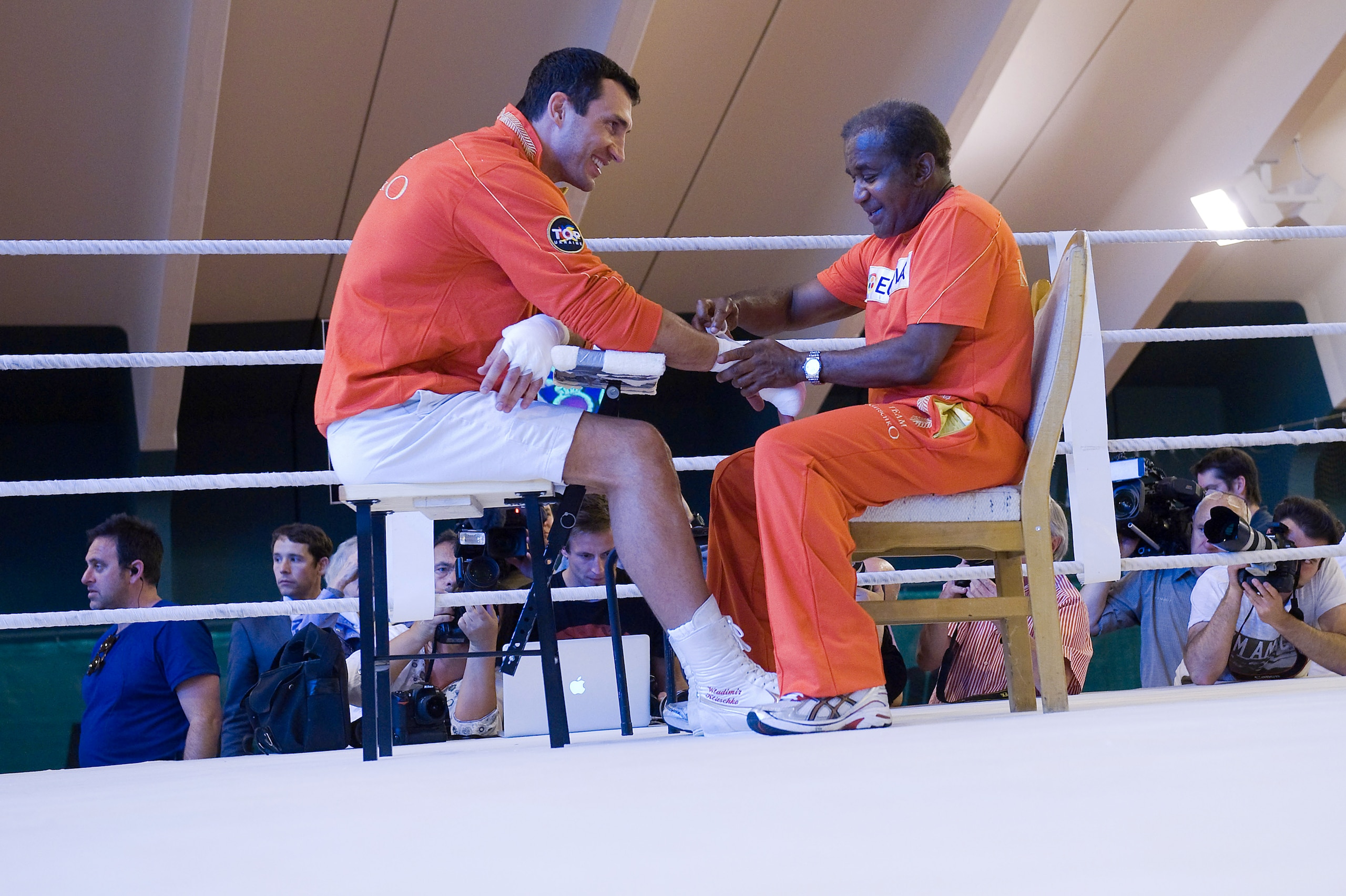
One man, however, believed in Wladimir's potential, not just to recover his career but to write his name into history: The late Emanuel Steward, proprietor of the famous Kronk Gym in Detroit, where fighters used to chant "fresh meat" whenever a newcomer dared walk down the stairs into their grimy sweatbox. Steward had trained more than two dozen world champions from around the globe. In Klitschko, he saw a fighter who could achieve greatness.
"Emanuel was the type of guy, he doesn't see the fighter as he is. He sees what's inside the fighter," Klitschko's current trainer and fellow Steward disciple Johnathon Banks said. "What kind of talent does the fighter have that he might be able to draw out of him? And he told me, 'I see the talent in the guy. If he can get back up from this, I can see him being a reigning, defending champion.' We started working with him, and it was amazing to watch. He had a vision, and Wladimir was able to recreate it in the ring."
Team Klitschko also sees this as a signature fight—though they fully expect a different result. Joshua, like most top heavyweights once a Klitschko sparring partner, has never known adversity inside the ring. He's faced Wladimir before, sparring more than 20 rounds with the champion as he prepared for a 2014 bout. And though sparring is not fighting, Joshua did well enough to give him and his team the confidence to take this fight.
"Given the fact of who Anthony Joshua is, what he is, I kind of think he will come at Wladimir aggressively," Banks said. "He has no reason not to. He's young. He's strong. He's knocked everyone out who he's faced. He's an Olympic gold medalist. I can't think of one reason, in his mind, he doesn't think he's going to go right through him. I don't see why he wouldn't come at him aggressively."
Though most opponents have either desperately charged toward Klitschko to get inside his thudding jab or spent most of the fight trying to avoid him altogether, Banks said he'll be ready for Joshua attempting to engage him on an even playing field.
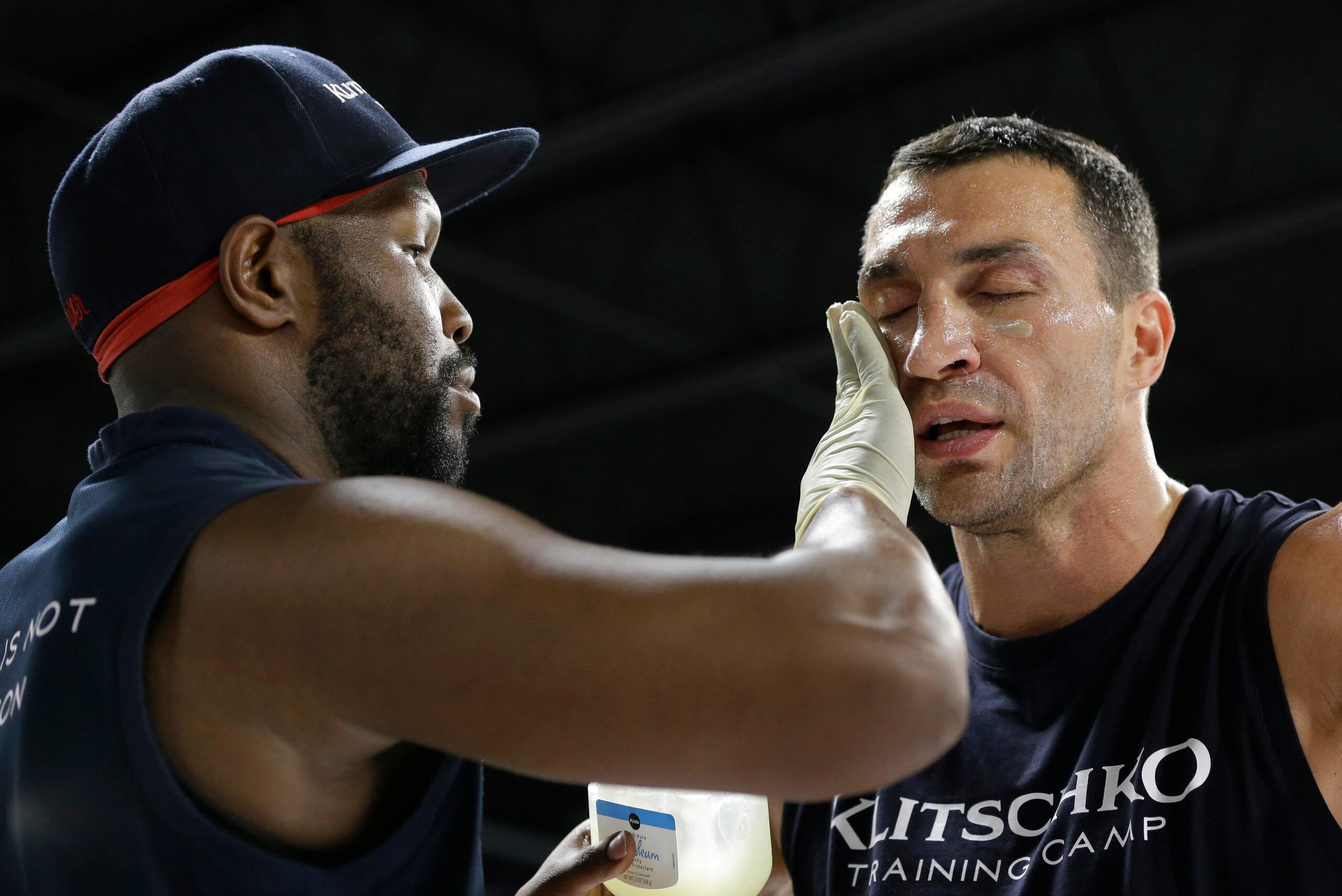
"Fighting is like going to war," Banks said. "You must have the proper game plan, and it has to change for each opponent. That's the key in fighting. Every little detail is key. Wladimir loves that part of it because he's a really intellectual person."
"They think I'm the old guy that he's going to run right over. I love it. I look forward to this challenge. I look forward to Anthony showing me his strength and his desire to beat me.
— Wladimir Klitschko
"
As champion, he was cautious in the ring, sometimes to the extreme—avoiding dramatic exchanges in favor of a carefully crafted, occasionally dull approach focused on winning more than pleasing the crowd. After so many fights defending what was his, Klitschko feels losing the heavyweight championship has actually relieved him of a burden. Now he's ready to take risks he hasn't in a generation, and he's excited to see where it leads.
"I'm going to be the underdog. I prefer it," Klitschko said. "I feel comfortable with it. They think I'm the old guy that he's going to run right over. I love it. I look forward to this challenge. I look forward to Anthony showing me his strength and his desire to beat me. ... This is the biggest challenge and biggest fight I've ever had. There is a lot on the line."
Jonathan Snowden covers combat sports for Bleacher Report.


.jpg?w=2560 "Mahomes Asked OT to Leave Meeting")
.jpg?w=2560 "Jonathan Taylor Landing Spots 📍")

.jpg?w=2560 "Five Teams Eyeing Taylor")

