


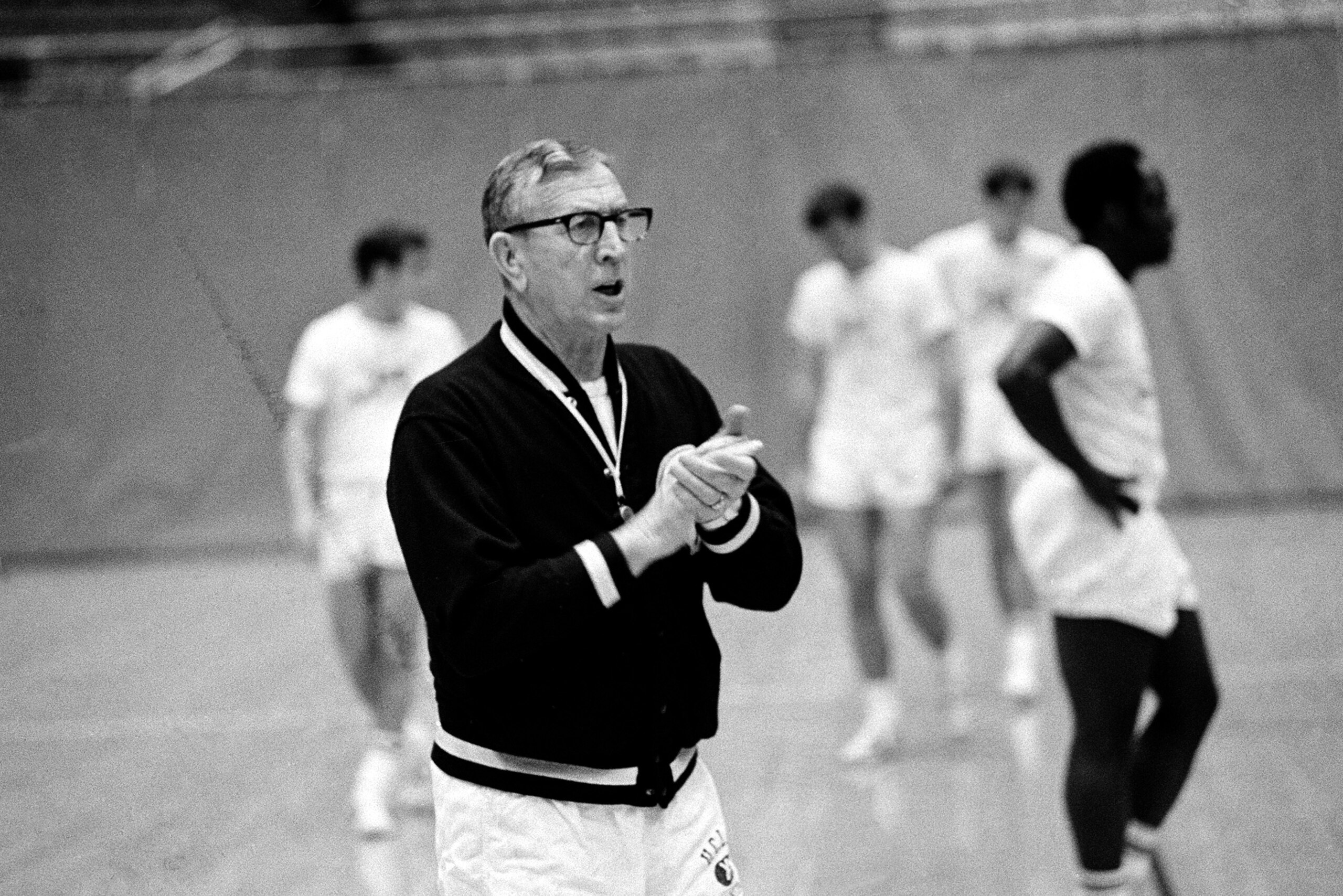
Ten national titles. Seven in a row (1966-73). A 205-5 mark over that span. Three consecutive undefeated seasons, coming in at 88 wins. Four perfect seasons. National coach of the year six times.
Impressive numbers. Legendary. But if you asked John Wooden (1910-2010), they're just that: numbers.
Wooden, for all his unmatched dominance while coaching at UCLA and elsewhere over 29 years, stressed more than just a game to his players. After leaving the game, Wooden continued his important work away from the hardwood.
TOP NEWS

J-Dub Suffers Gruesome Injury
Contenders starting to separate themselves after Week 7
.jpg?w=2560 "Rams Raiders Football")
Raiders Could Start Mendoza
"It did not signify an end to his lifelong commitment to teaching, merely a new beginning," Bill Walton, a former Wooden understudy, said after the coach retired, according to David Wharton of the Los Angeles Times. "He was just getting started."
Indeed, Wooden's important work surges forward today, applicable in all arenas and walks of life. Here's a look at some of our favorite quotes, courtesy of CoachWooden.com.
'Perform at your best when your best is required. Your best is required each day.'
Wooden didn't just teach X's and O's to his players but important life matters. How to treat others and, just as importantly, yourself.
This was a daily mantra for the legendary coach, one that extends beyond the hardwood and covers anything at anytime. It worked on the hardwood as well given the numbers, but this motivational piece is something to live by, sentiments Wooden echoed consistently.
'Ability may get you to the top, but character keeps you there: mental, moral and physical.'

In today's year-round draft cycles in all sports, ability is the most cited piece of evidence for forming draft boards and for teams to roster players.
Character mostly goes unchecked.
Sure, some guys will have "character concerns," yet the degree these matter varies. But the guys winning championships—Russell Wilson, Peyton Manning, LeBron James, Stephen Curry, to name a few—often ride the perfect combination.
'Constantly be aware and observing. Always seek to improve yourself and the team.'
It seems there are two types of players after games: ones who engage in what we like to call coachspeak and those who truly mean it.
The guy who ticks off cliches for the media often isn't as sharp on the court or field as the guy who believes it when he tips the hat to the opposition—win or lose—and tries to learn from the experience.
Wooden's demand that his players applied this every day clearly worked, and it's advice to live by.
'Have utmost concern for what's right rather than who's right.'
This one doesn't always apply to on the court, which is why technical fouls exist.
Kidding aside, this is more off-court advice from Wooden than anything. It's hard to argue most anything on this list is more important. The who part of right doesn't matter, but what is right absolutely does.
Seeking credit or looking to win gets lost in a hurry if what's right isn't at the forefront of the mind.
'Stay the course. When thwarted try again: harder, smarter. Persevere relentlessly.'
Perseverance is another one of those common media cliches athletes chirp about after games.
That doesn't make the theme insignificant.
Ask the Chicago Cubs how working relentlessly worked out. Or the Cleveland Cavaliers. Or any of the other many examples of teams and players persevering. It certainly works outside of the sporting realm too.
'Make a decision! Failure to act is often the biggest failure of all.'
It's easy to grill sporting figures.
Yeah, the Seattle Seahawks probably should have ran the ball, and yeah, the Atlanta Falcons should have smartened up and rode the ground game.
But at least the folks in charge made decisions.
Inaction is just that. It goes nowhere and produces nothing. Failure, at least as mentioned above, is something one can observe and learn from.
'If you're not making mistakes, then you're not doing anything. I'm positive that a doer makes mistakes.'
As hinted, action will inevitably lead to mistakes.
But it's something.
One who possesses the character to learn from mistakes makes it leaps and bounds further than those who shrug off the inevitable without much of a care.
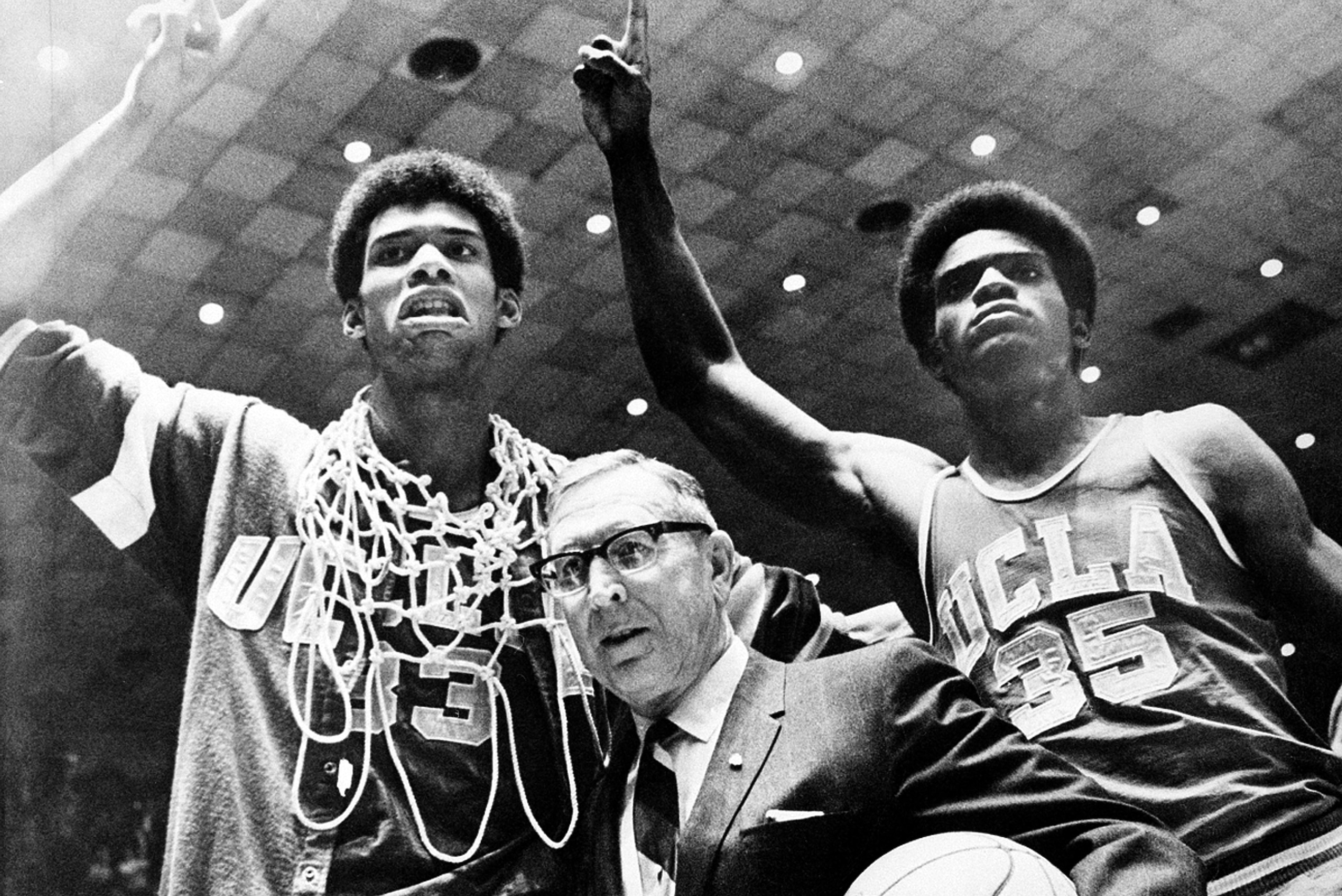
'The star of the team is the team. "We" supersedes "me."'
Over the years, a thought like this has undergone some slight alterations simply because of how sports have evolved.
For instance, the NBA is a star-driven league because of its structure. Quarterback is the most important position in football.
Yet the Miami Heat didn't win all those titles without a strong supporting cast. The New England Patriots didn't win the Lombardi Trophy without guys like James White. Even Wooden's UCLA teams needed selfless rosters.
'Success is a peace of mind which is a direct result of self-satisfaction in knowing you made the effort to become the best of which you are capable.'
The world of sports—and sometimes society itself—sets the bar too high.
This always-online world often flaunts the high-point moments of a person's life and nothing more. But Wooden was well ahead of his time with this one, as it serves as an important check and balance—succeeding is being the best you.
Cheesy? Maybe. But a critical point to remember when browsing the internet.
'Be more concerned with your character than your reputation, because your character is what you really are, while your reputation is merely what others think you are.'
Fans might get affronted when a player like the Golden State Warriors' Kevin Durant walks to the microphone and says something along the lines of "I don't care what anyone thinks about me."
But he's on to something.
A stand-up person is a stand-up person regardless of the reputation someone else paints. Often, the reputation eventually reflects the character under the weight of overwhelming evidence.
'You can't let praise or criticism get to you. It's a weakness to get caught up in either one.'
Even professional athletes let their guard down under the weight of praise or crumble under criticism.
Too much praise, then boom! Down goes a Manny Pacquiao or Ronda Rousey. Criticism, the examples are many.
Life is about striking a balance in many ways. Tipping too far to either side, as Wooden suggested, is a weakness capable of spreading quickly.
'Winning takes talent; to repeat takes character.'
Wooden's UCLA teams reflect the ideas behind this one well. Over a tumultuous period, his guys were of the highest character, which bred a consistency few will ever match.
It goes hand in hand with the above, right? The character to brush off the praise and get back to being the best they can be is what defines those who have hoisted multiple championships.
Or rather, multiple accomplishments in everyday life. The character to win each day with the best effort possible summarizes Wooden's approach well.
'Failure is not fatal, but failure to change might be.'
Mistakes happen. Failure happens.
Failure, as a rule, has too much of a negative connotation attached to it—a failure means an opportunity to learn and get better.
A lack thereof is a critical misstep.
'Talent is God-given. Be humble. Fame is man-given. Be grateful. Conceit is self-given. Be careful.'
Many of Wooden's quotes are more thought-provoking than cheesy, with this perhaps floating higher than all others as the best example.
Talent is something to appreciate, and a natural causation stemming from it is fame. The pitfall one must walk across on a tightrope is the praise, which is a fast lane to conceit.
Conceit, unlike failure, deserves the negative connotation. The climb back out of the pit isn't as easy as Hollywood would make it seem.
'What you are as a person is far more important than what you are as a basketball player.'
It's no secret that Wooden wasn't big on the idea of basketball being more important than everyday life.
Fans and those involved with the sports themselves alike often blow their importance out of proportion, especially as the gap between the parties continues to shrink.
The reality, though, is simple: sports are games. Not meaningless—not by a long shot. But they don't define a human being's worth, either. As Wooden said in an aforementioned quote: "Be careful."



.jpg?w=2560 "Rodgers Iced Out on Plane 💎")

.jpg?w=2560 "🚨 Week 8 AP Top 25 Poll")