
Up in Smoke: 5 Fighters Who Were Never the Same After Losing for the 1st Time
November 5 is a notable date in the British calendar.
On that date back in 1605, a gang attempted to kill King James I by blowing up the House of Lords during the State Opening of Parliament.
The plan failed to go off (pun intended), as one of the plotters, Guy Fawkes, was caught guarding the explosives the group had smuggled underneath the famous building.
Poor Guy was tortured to give up the names of his co-conspirators, then convicted of high treason and sentenced to execution. He died from a broken neck before being hung—but his body was still quartered anyway!
In modern times, his name is synonymous with big bonfires, warm food and firework displays.
How is this all connected to boxing? Well, a firework is fun while it lasts. They rise rapidly after being launched from the ground, are enjoyed by many at their peak and then, once they've fizzled out, fall quickly back down to earth as a shell of their former selves.
There are plenty of boxers who have experienced the same in their careers.
To celebrate Bonfire Night, Bleacher Report has picked out five fighters who, having shone brightly at one stage, were never quite the same again after losing for the first time.
There are no honourable mentions in this slideshow because, well, there are too many to mention. Instead, feel free to offer up your own suggestions via the comments section.
Donald Curry
1 of 5
In 1986, before running into Lloyd Honeyghan, Donald Curry had plans. Grand plans.
Already the undisputed welterweight champion after 25 straight victories, the Lone Star Cobra had lined up a lucrative showdown with middleweight king Marvin Hagler.
Before the superfight, however, Curry just needed to see off the challenge of Honeyghan, a Jamaican-born boxer who was raised in England from the age of nine.
The Ragamuffin Man was a 5'8"-sized spanner thrown into the works.
Curry's struggles at the weight came back to haunt him, as Honeyghan hit the jackpot in Atlantic City, New Jersey.
The huge underdog battered the IBF, WBA and WBC champion to the point that a weight-drained Curry, who had a nasty cut above his left eye as well as a broken nose, failed to get off his stool for Round 7.
"I didn't care if anyone thought I would win," Honeyghan later told Ben Dirs of BBC Sport. "I just wanted to punch this geezer's face in. The worst mistake Don Curry ever made was signing the contract for that fight."
Curry went on to suffer defeats to Mike McCallum and Terry Norris at super welterweight, while an attempt to win a world title at middleweight saw him knocked out by IBF champion Michael Nunn (who could easily have been included in this list too).
After retiring in 1991, the Texan made a brief comeback in 1997. His final outing was against Emmett Linton, a fighter he had previously trained and managed. He was stopped in Round 7.
Naseem Hamed
2 of 5
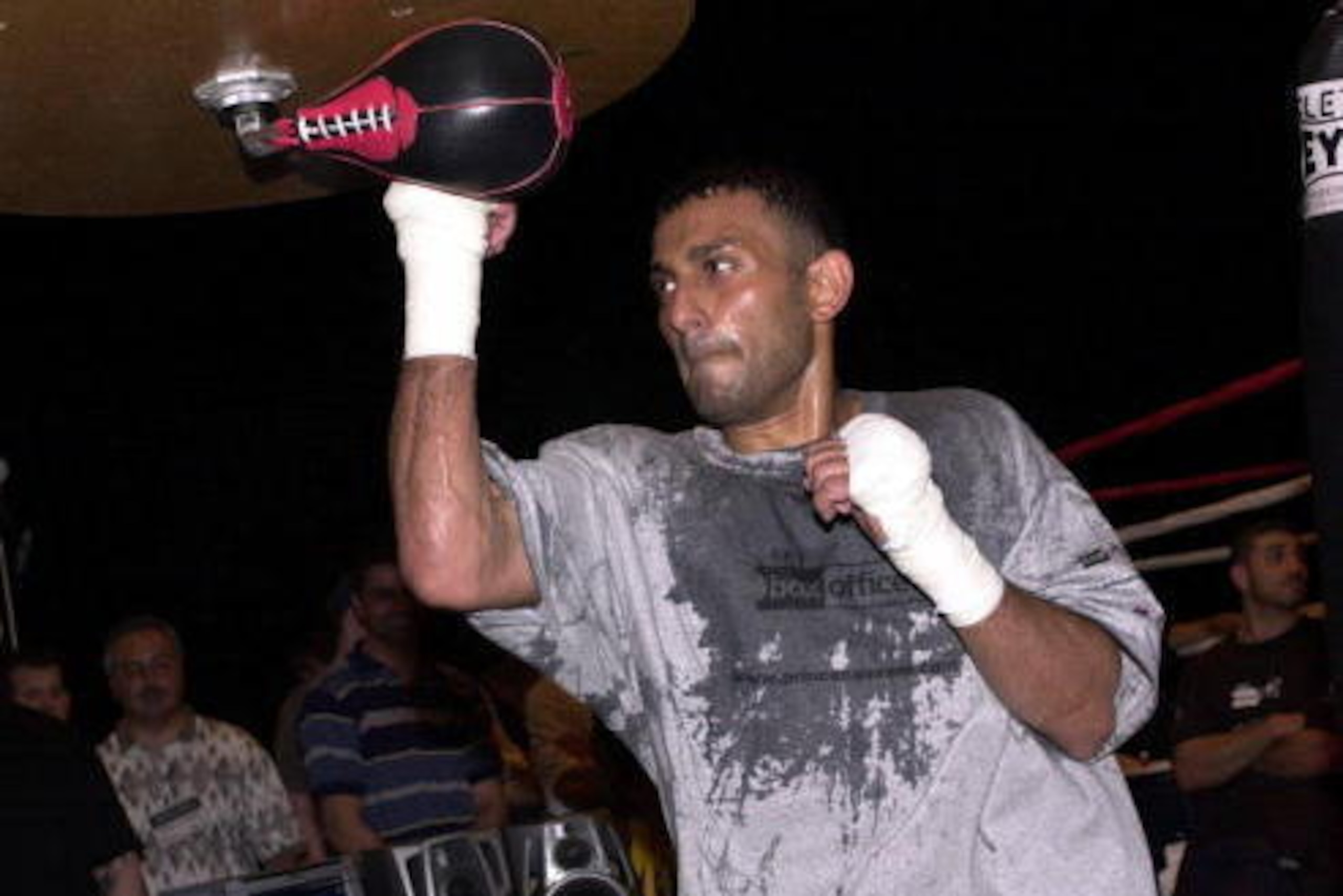
Prince Naseem Hamed had the potential to rule the world.
The slick southpaw from Sheffield, England, may have fought in the featherweight division, but he was blessed with lightning fast reactions and serious power in both hands.
He won 35 fights in a row as a pro, enjoying stints as IBF, WBC and WBO champion. But, as his reputation grew, so did his ego.
By the time his fight against Marco Antonio Barrera came around in 2001, Hamed had split from longtime trainer Brendan Ingle, and his unbeaten record was on borrowed time.
Poorly prepared, he was beaten on points at the MGM Grand Garden Arena in Las Vegas.
Bob Mee wrote in his report for the Telegraph how Hamed's "technical limitations, for so long masked by his formidably powerful punching, were exposed horribly as Barrera dominated an intense fight."
The Mexican, who had stepped up from super bantamweight to take the bout, was simply too sharp and too strong in Las Vegas. He could even afford to have a point deducted in Round 12 for slamming his opponent's head into a turnbuckle.
Hamed suggested in the immediate aftermath he would capitalise on a rematch clause in the fight contract. However, the second meeting never materialised.
Instead, with his crown well and truly knocked off, the Prince fought Manuel Calvo 13 months later and then, just like that, his once promising career was over.
Michael Grant
3 of 5
Tall (6'7", to be precise) and physically impressive, Michael Grant looked a heavyweight prospect at one stage in his career.
Despite not being serious about boxing until he was 20, Big made up for lost time with a string of eye-catching victories in the paid ranks.
After seeing his fighter dismantle Jorge Luis Gonzalez inside a round, Don Turner, Grant's trainer, said, per Graham Houston of ESPN.com: "I've always said from Day 1 that Michael will develop into the best heavyweight who ever lived."
Grant won 31 bouts on the spin, earning him a shot at undisputed heavyweight champion Lennox Lewis in April 2000.
Yet the highly anticipated fight turned out to be a one-sided beatdown.
After putting his opponent down three times in Round 1 at Madison Square Garden in New York, Lewis finished him off in the second. Grant's grand plan to win the IBF and WBC titles was over in a hurry.
His next outing ended even sooner, after 43 seconds in fact, as Grant was dropped by the first punch Jameel McCline landed. In the process of going down, he suffered an ankle injury.
Working with trainer Teddy Atlas, he rebuilt his confidence with a string of wins, only for Dominick Guinn to put paid to any hope of fighting for a major belt again.
Grant lost three of his final five fights to finish with a career record of 48-6 (36 KOs).
.jpg?w=2560 "Titans Giants Football")

Jeff Lacy
4 of 5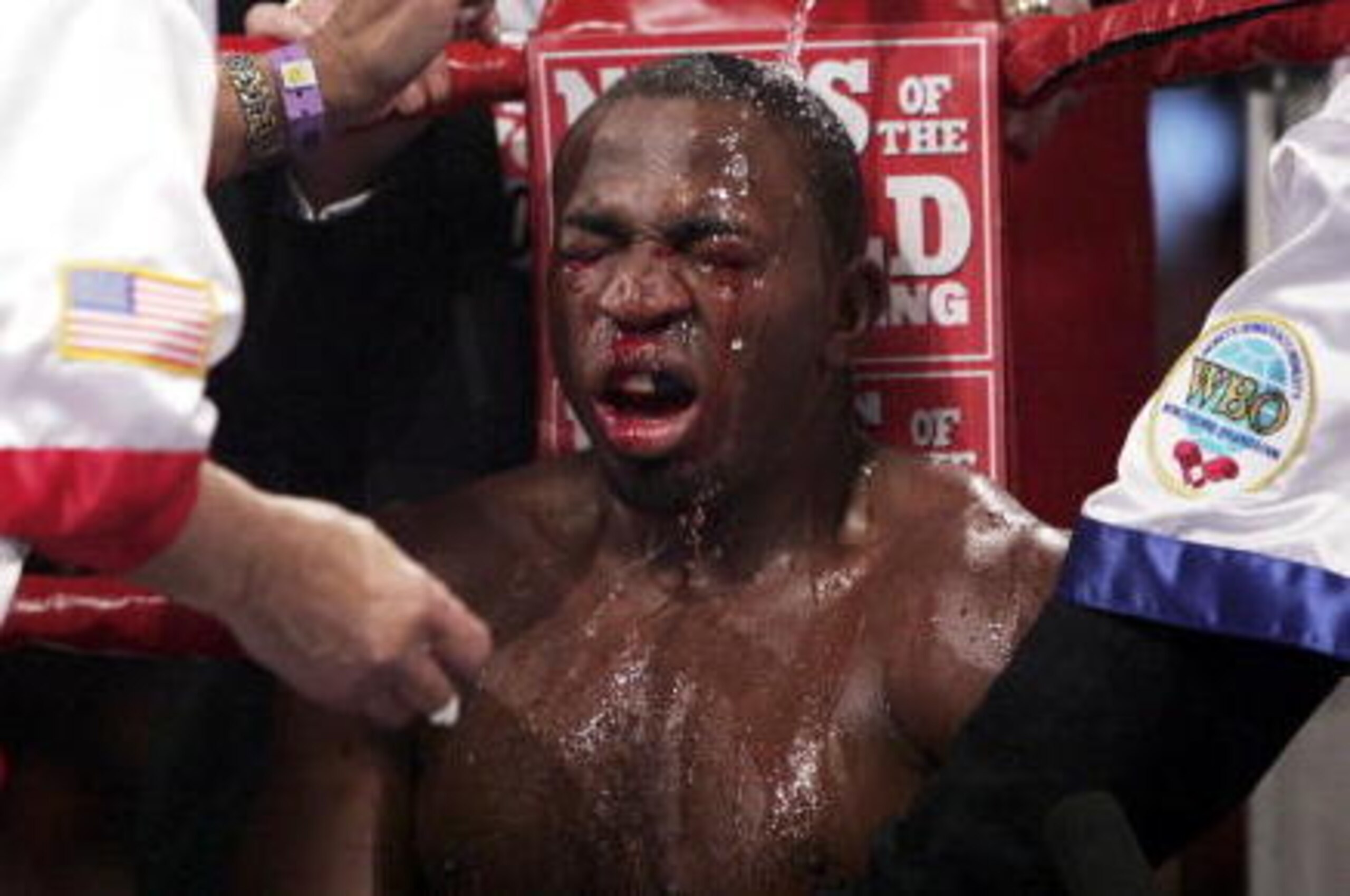
When American Jeff Lacy flew to England to take on Joe Calzaghe in March 2006, he was an undefeated world champion favoured to add the WBO title to the IBF belt already in his possession.
When Lacy returned home to Florida, it was with his tail between his legs after receiving a boxing lesson from the Welshman.
Calzaghe schooled Left Hook in the unification contest in Manchester, England. Well, contest is the wrong word—that would suggest both parties stood a chance of winning.
According to CompuBox (h/t Bob Canobbio of BoxingScene.com), Lacy landed just 116 punches in total. He took plenty in reply, though, and he was decked in Round 12 but impressively lasted through to the final bell.
Promoter Gary Shaw told Michael Woods of the Sweet Science: "I don't know if he [Lacy] got exposed. But his curve didn’t curve, his fastball wasn’t fast and his slider didn’t slide."
Shaw's ace pitcher turned out to be a busted flush.
While the result made Calzaghe famous across the other side of the Atlantic Ocean, Lacy had been badly shown up against top-class opposition.
After three morale-boosting wins, Jermain Taylor dashed his hopes of winning another world title in 2008. Lacy went on to lose to Roy Jones Jr. at light heavyweight too.
Last seen losing to Sullivan Barrera in 2015, Lacy's professional record stands at 27-6 (18 KOs).
Audley Harrison
5 of 5
Kevin Mitchell of the Guardian summed up Audley Harrison perfectly: "What Audley has, paradoxically, is a talent to box without the instincts to fight—and that is a dangerous mix in the professional business. You can just about get away with it in the amateurs, which is where Audley should have stayed."
After striking gold at the 2000 Olympic Games in Sydney, Australia, Harrison was treated like a hero on his return to Britain.
By the end of his pro career, A-Force was a Z-list celebrity perhaps best remembered for his inability to walk the walk after constantly talking the talk.
Harrison turned pro in 2001, signing a lucrative 10-fight deal with the BBC. The early signs were promising, but easy wins were only masking the real issue: He didn't like getting hit, which is a bit of an issue for a pro boxer.
The southpaw struggled to a points triumph over late stand-in Julius Francis in 2004, although the bubble was burst by Danny Williams in a 2005 bout for the vacant Commonwealth belt.
Although Harrison avenged the split-decision points loss by knocking out Williams a year later, he will always be better known for the heavy losses than the notable triumphs.
He did get a world title shot in November 2010—and managed to throw one solitary punch before being stopped by WBC champion David Haye in Round 3.
Despite losing inside a round against David Price and Deontay Wilder, Harrison refused to believe his career was over.
In the end, only concerns about his long-term health forced him to quit. He hung up his gloves with a 31-7 (23 KOs) record and a ruined reputation after his Olympic success.

.jpg?w=2560 "Rap: Lions, LaPorta End Contract Talks")

.jpg?w=2560 "Report: Baker May Miss Up to 6 Weeks")