Best Big-Game Athletes of the Past 20 Years
Athletes are most revered when they are able to come through in pressure situations, which is why the best big-game athletes of the past 20 years will never have to buy drinks in the cities where they helped to bring championships.
What makes sports so revelatory is that fans are never more critical of a superstar than when that star fails to match the call of destiny.
Rather than sympathizing with an athlete who caves to the mental weight of too much pressure, us "bleacher bums" usually fault that star for being too weak to be granted the elite status given only to those who have marched into the eye of the storm and returned with a gleam in their eye and the hardware of champions.
What a tough gig it is to play professional sports and keep the masses happy.
But it's not all sturm und drang, as there are always a handful of sports studs whose veins thrum with dry ice instead of blood and who are able to stand tall in the biggest moments of a sporting contest and emerge unscathed.
Those who made this list were able to deliver victory in the most pressure-packed games or situations in sports and did it on more than one occasion, because let's face it, anyone can get lucky and hit one championship-altering shot or do well in one pulse-pounding event.
But can that athlete do it twice?
Of such fortitude are the best big-game athletes of the past 20 years made.
A final reminder: Only athletes who won championships or medals are included in this list, and they had to have achieved that goal within the past 20 years.
Honorable Mention
1 of 10
Michael Jordan
Great big-game player, but most of his best performances exceed the 20-year timeline.
Reggie Miller
Excelled in big games, but didn’t win a title, so couldn't get to the biggest of games.
Kobe Bryant
Fewer game-winning shots in do-or-die games than his one-time teammate Robert Horry.
Eli Manning
2 of 10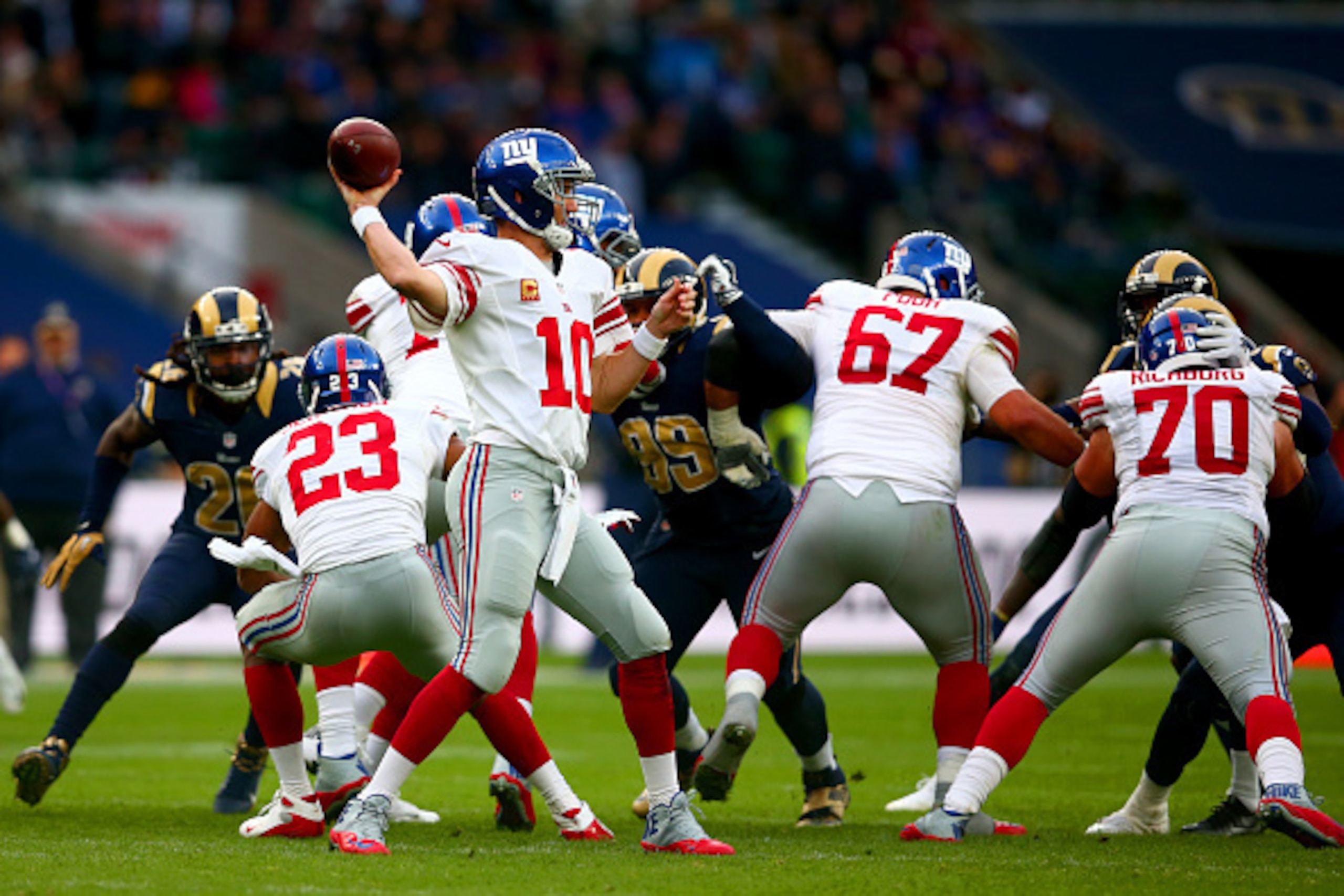
Despite playing second fiddle to older brother Peyton for much of his career, Eli Manning holds a decided edge over his sibling when it comes to clutch performances in the biggest games.
If the eye test in the two Super Bowls Manning has won doesn't convince you, then perhaps a cursory glance at the stats will do the trick.
None other than the reliable Nate Silver of FiveThirtyEight ranks Manning as the most clutch postseason quarterback in NFL history.
Silver ranked quarterbacks who had played in at least 10 playoff games and, through a complex series of simulations that factored in actual postseason records and projected records, ranked Manning first among an august group of signal-callers that included Joe Montana, Terry Bradshaw and Troy Aikman.
Of the 11 playoff games Manning has played, he has won eight, including two Super Bowls against juggernaut New England Patriots teams that were heavily favored.
What separates Manning from his big brother is a fearlessness that defies negative probabilities such as interceptions. He simply doesn't mind failing, which has always made him rise to the occasion when everything is on the line.
Manning lacks the cerebral brilliance of his brother Peyton, but he more than makes up for it with an ice-in-his-veins calm when the pressure is strong enough to burst pipes.
In Super Bowl XLII, he outplayed Tom Brady, who was coming off a record-breaking season in which he threw 50 touchdowns. Manning somehow escaped a sack in the waning moments of that game to make the iconic throw to David Tyree that set up Plaxico Burress' winning touchdown catch.
Then in the rematch in Super Bowl XLVI, with the Giants down 17-15 late in the fourth quarter, Manning methodically drove his team 88 yards down the field, which was capped by a six-yard Ahmad Bradshaw run that put the Giants up 22-17 with 57 seconds remaining.
After Brady was unable to conjure a comeback, Manning had once again bested the first-ballot Hall of Fame quarterback, against whom his own candidacy for Canton will likely be judged.
And twice, on the biggest stage in the NFL, Manning has stood tall, forever cementing his legacy as one of the best big-game players in football history.
Robert Horry
3 of 10
Robert Horry owns seven championship rings from three different teams.
Does that fact make him a better player than say, Charles Barkley, who never got his chip?
Even a casual sports fan would answer "no" to that question, but that doesn't mean Horry isn't one of the best big-game players in NBA history, better by far than Barkley in that regard.
There's a reason why one of Horry's nicknames was "Big Shot Rob," an appellation he earned by hitting huge shots in the 2002 and 2005 NBA playoffs.
It's no stretch to say that without Horry, neither the 2002 Los Angeles Lakers nor the 2005 San Antonio Spurs would have won a title, an assertion supported by J.A. Adande of ESPN, when he accurately wrote that though Horry may not have been responsible for getting his teams to the finals, he was one of the main reasons they were able to win a title.
Sacramento Kings fans still remember the way Horry stabbed their hearts with his dagger three-pointer in Game 4 of the 2002 Western Conference Finals, knotting that contentious series at 2-2, instead of the near-insurmountable 3-1 lead the Kings were seconds away from claiming on the Lakers' home court.
But without that shot, it's entirely possible the Lakers dynasty would have fallen apart after two championships, perhaps hastening Shaquille O'Neal's departure and upending the trajectory of the NBA's most storied franchise.
Instead, Los Angeles went on to win that series 4-3, outlasting the Kings in a thrilling Game 7 that went into overtime.
And in Game 5 of the 2005 NBA Finals, when the Spurs were on fumes and the Detroit Pistons were charging toward a decisive 3-2 series lead, Horry once again came to the rescue, scoring 21 points and nailing the game-winning three that secured a 96-95 victory.
The Spurs went on to win the finals in seven games, but without Horry's heroics, it's very likely the Pistons would have won that series.

.jpg?w=2560)

Adam Vinatieri
4 of 10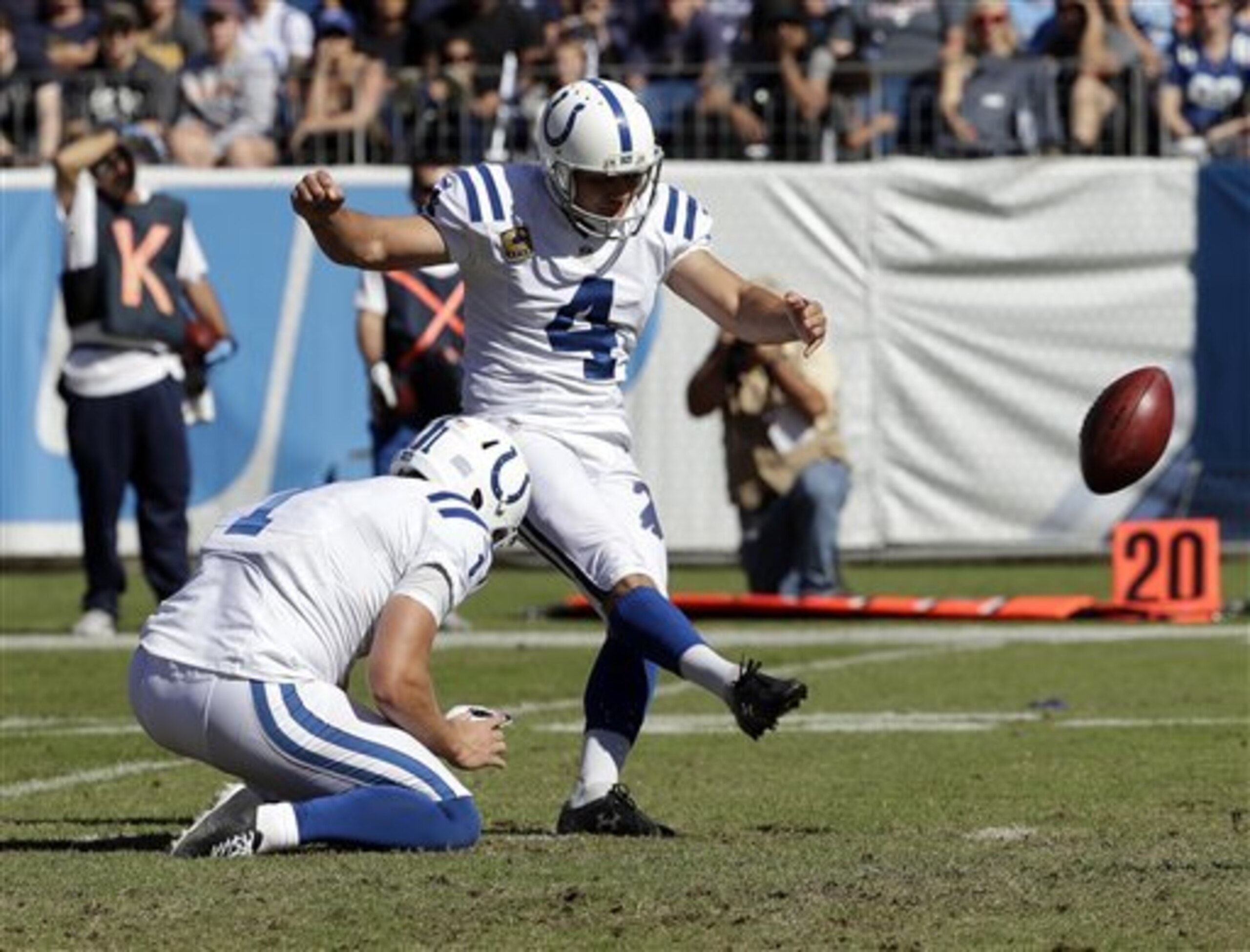
With Super Bowl XXXVI on the line against the powerhouse St. Louis Rams, New England Patriots field-goal kicker Adam Vinatieri was given his chance at history with seven seconds left.
Forty-eight yards.
That was the distance between him and immortality.
But even in a regular-season game, a 48-yard field goal is no gimme, and this was no ordinary game.
Or no ordinary kicker.
Vinatieri booted the Patriots into the team's first Super Bowl championship in franchise history, and two years later at Super Bowl XXXVIII against the Carolina Panthers, history came knocking again.
New England quarterback Tom Brady had driven his team into Panthers territory, and with nine ticks of the clock remaining, the Patriots had a chance to win the Super Bowl with a 41-yard field goal.
Again, this was no easy feat in any game situation, but it was especially difficult with a dynasty on the line. Showing no hints of anxiety or trepidation, Vinatieri hit the kick dead center, and New England had won its second Super Bowl in three seasons.
All told, Vinatieri won three Super Bowls with the Patriots and earned another trophy with the Indianapolis Colts. And he recently broke the record for the most consecutive field goals in NFL history, adding to his considerable legacy.
Citing his ranking as third all-time in scoring in NFL history and his big-game heroics, Vinnie Iyer of Sporting News argued Pro Football Hall of Fame voters should elect Vinatieri on the first ballot.
David Ortiz
5 of 10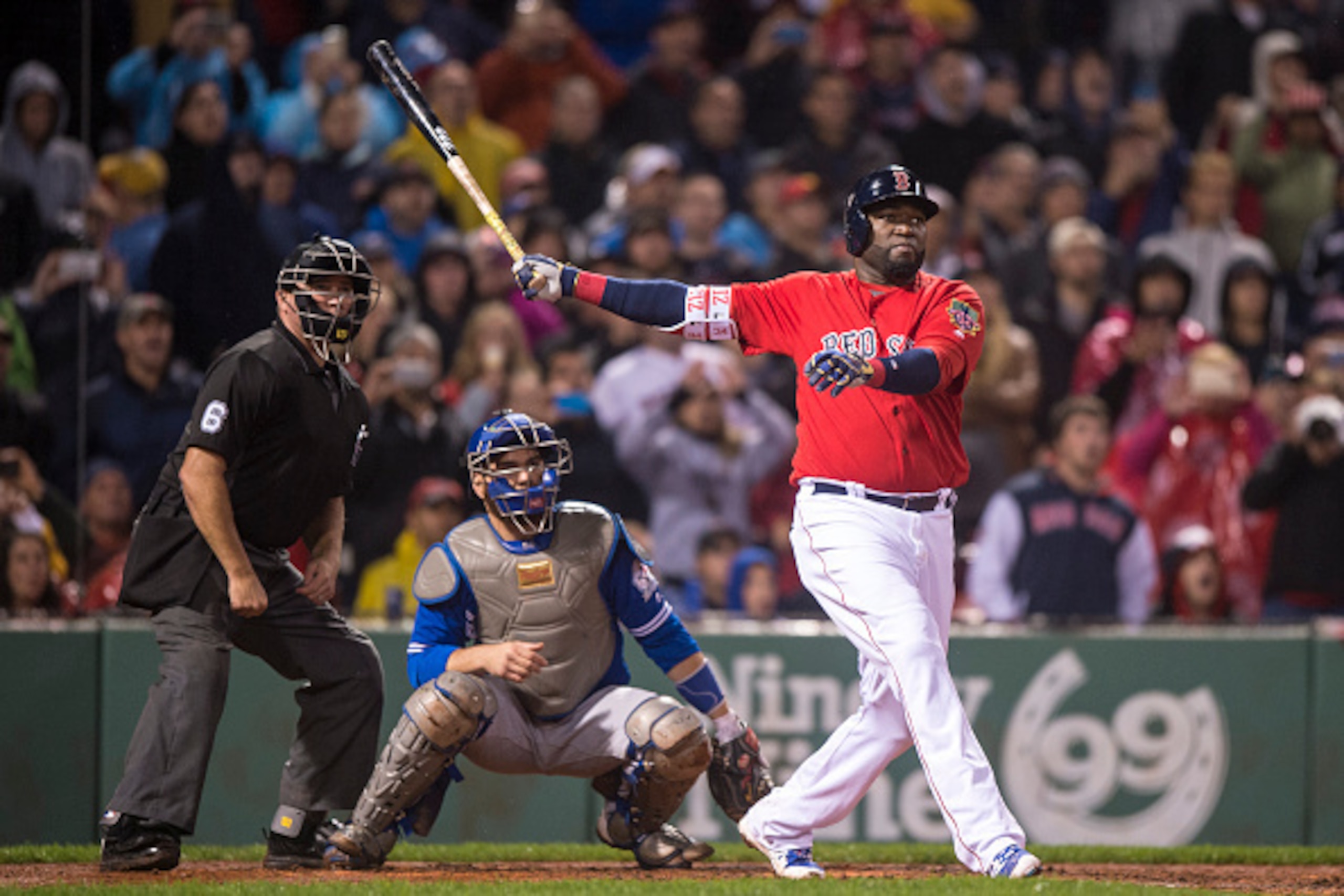
Big Papi took a season-long bow in the 2015-16 MLB season, and he deserved it.
This is a man who will remain a folk hero in the New England area for many years to come and, despite a cloud of steroid allegations, has a real shot at first-ballot Hall of Fame induction.
But without his multiple October heroics, David Ortiz would not have achieved the kind of fame and adulation he enjoys in Boston.
Where do we start?
Should we talk about Game 4 of the 2003 American League Division Series, in which the Red Sox played the Oakland Athletics?
Trailing 4-3 in the game, and 2-1 in the series, Ortiz came up to bat in the bottom of the ninth, with two outs and two men on base. He crushed a double into right field to win the game, and the Red Sox closed out the A’s in Oakland, after trailing 2-0 in the series.
Then in Game 3 of the 2004 ALDS, Ortiz’s home run off the Anaheim Angels’ Jarrod Washburn in the bottom of the 10th inning won the game and finished the Angels in a three-game sweep.
Adding to his legend, Ortiz’s bottom-of-the-10th-inning blooper in Game 5 of the 2004 ALCS, in which the Red Sox trailed the New York Yankees three games to one, drove in Johnny Damon for the winning run.
History was made in that ALCS when Boston completed a comeback from a 3-0 deficit in the series and also won the World Series, the only team in MLB history with that distinction. Ortiz banged three homers and drove in 11 runs in that series to stamp his big-game bona fides.
Papi’s penchant for coming up huge in the biggest moments prompted Red Sox owner John Henry to make a plaque that read, “The Greatest Clutch Hitter in the History of the Boston Red Sox, David Ortiz, No. 34.”
Then in the 2013 World Series, Ortiz hit towering home runs in Game 1 and Game 2 that helped propel the Red Sox to a 4-2 series win against the St. Louis Cardinals.
In The Players' Tribune, none other than “Mr. October” himself, Reggie Jackson, ranked Ortiz as one of the greatest clutch hitters of all time.
Jonathan Quick
6 of 10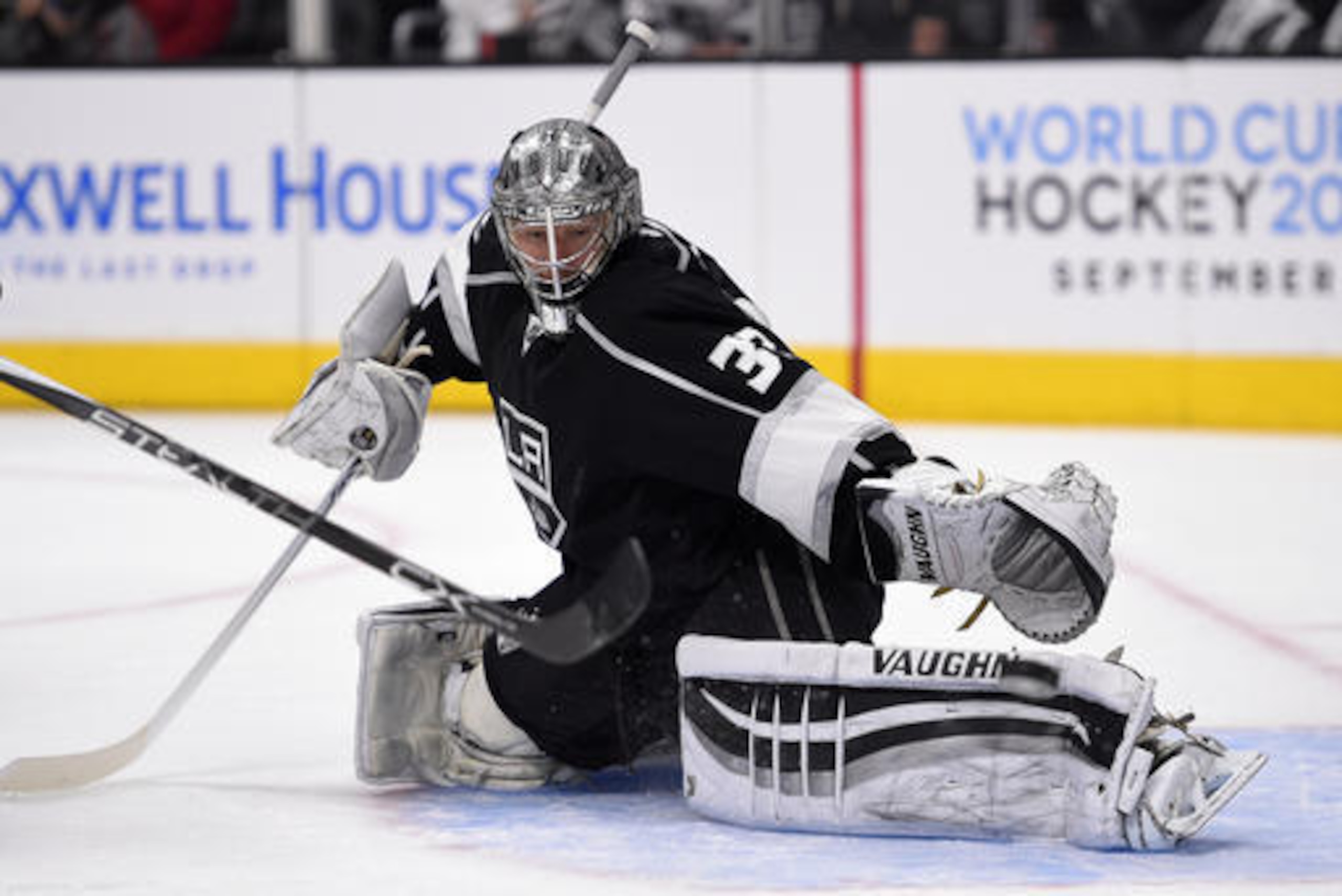
Even though he’s only been in the NHL since 2007, Jonathan Quick’s 2.27 goals-against average (GAA) is already good enough to rank 12th in league history.
Quick’s big-game reputation was established in the 2012 Stanley Cup playoffs, following a season in which he was a Vezina Trophy finalist as the best goaltender in the league. That season, he compiled a league-leading 10 shutouts—a Los Angeles Kings record—and posted a 1.95 GAA, the second lowest in the NHL that season.
In the first round of the playoffs, the Kings were matched with the Vancouver Canucks, who had won the most games in the NHL that season. As an eighth seed, the Kings weren’t expected to provide much resistance to the Canucks, but Quick rose to the occasion, allowing a mere eight goals, including a Game 3 shutout, as Los Angeles won the series 4-1.
In the next round against the second-seeded St. Louis Blues, Quick allowed only six goals en route to a 4-0 series sweep.
During the Western Conference Finals against the Phoenix Coyotes, Quick had 24 saves in Game 2, as the Kings blanked the Coyotes 4-0. Los Angeles won that series 4-1, with Quick only giving up eight goals in five games.
Quick’s big-game performances continued in the Stanley Cup finals against the New Jersey Devils, when he won the first two games of the series, 2-1, with both games going into overtime. In six games, Quick allowed only eight goals, as the Kings claimed their first Stanley Cup, winning the series 4-2.
Quick led all playoff goaltenders with a 1.41 GAA, a .946 save percentage and three shutouts.
In taking up the debate regarding Quick’s ranking among elite goaltenders, Sam Page of SI.com said despite Quick’s career save percentage being lower than that of Nashville’s Pekka Rinne, New York’s Henrik Lundqvist and Boston’s Tuukka Rask, he would take him in a Game 7 over these elite goalies.
The reason?
Quick’s unmatched ability to get into a zone during the playoffs, when the intensity is tripled and every mistake can send you home.
Madison Bumgarner
7 of 10
It’s important to remember Madison Bumgarner’s appearance on this list does not mean he’s the best pitcher in baseball. That debate will continue to rage depending on the fanbase, but in the past 10 years, no pitcher has steeled his will more definitively than Bumgarner has in the postseason.
At 27, the San Francisco Giants pitcher’s playoff stats are nothing short of stunning.
He tossed a complete-game shutout in the 2014 Wild Card matchup versus the Pittsburgh Pirates, and including his most recent shutout of the New York Mets in the 2016 Wild Card game, he has 23 shutout innings in win-or-go-home games.
Want more?
Bumgarner is tied with three other pitchers for the second-most playoff shutouts in MLB history and has a 0.50 ERA in playoff road games. As a starting pitcher in the playoffs, he owns a sterling 2.11 ERA and three World Series championships since 2010.
Jonah Keri of CBSSports.com ranked Bumgarner as one of the best playoff pitchers in MLB history, joining an elite group that includes Bob Gibson, Sandy Koufax, Curt Schilling and Mariano Rivera.
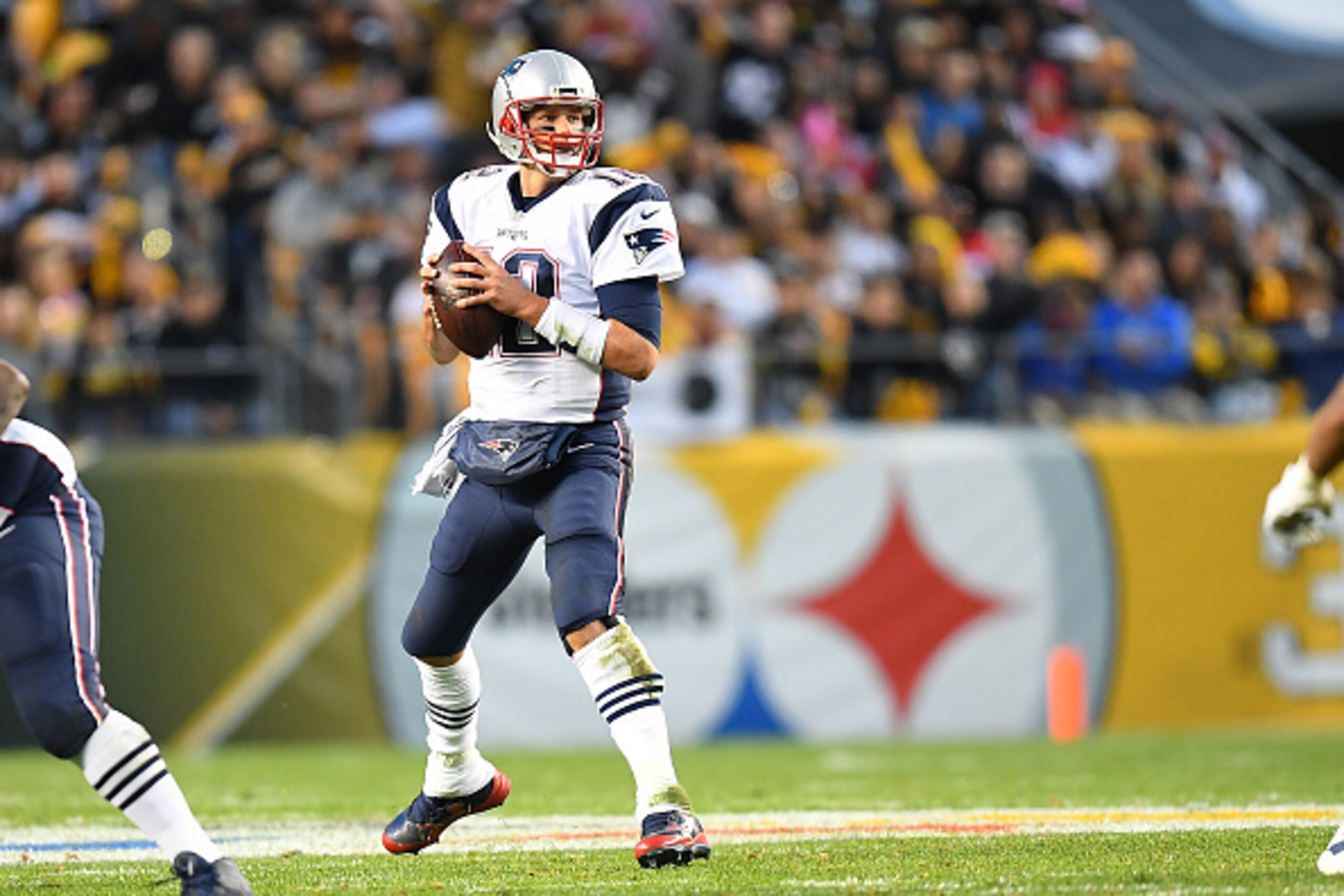
Tom Brady
8 of 10
New England Patriots haters will grit their teeth at Tom Brady’s inclusion on this list, but come on folks, who else would you want with the ball in his hands with two minutes left on the clock and 99 yards to win the game?
Yes, Brady has come up short in big moments, especially in the two Super Bowls his team lost to the New York Giants, but his resume is also filled with coming through in situations that would have turned nearly every other quarterback not named Joe Montana into jelly.
It’s no accident Brady ranked first in a 2014 ESPN.com NFL Nation Confidential anonymous player survey in which NFL players were asked this question: Two-minute warning and the Super Bowl is on the line. Whom do you want at quarterback?
Brady received 40 percent of the votes, besting Peyton Manning, who received 26.9 percent of the vote.
Still not on board?
Entering the 2016-17 NFL season, Brady had 48 game-winning drives, third most in NFL history behind Peyton Manning and Dan Marino.
And of those 48 game-winning drives, nine of them came in the playoffs, which is the most of any quarterback since 1960. But even more importantly, three of those playoff game-winning drives came in the Super Bowl, a clear indication Brady plays best when everything is on the line.
And despite the statistical advantage Manning has over Brady in the regular season, many experts give Brady the edge in terms of who will ultimately be judged as the greater quarterback because of Brady’s superior postseason stats.
Brady has won 22 playoff games as a starting quarterback, most in NFL history. He’s also won six conference titles, which is the most in the Super Bowl era, and he’s played in an NFL-record 31 career playoff games. Brady has also thrown 56 postseason touchdowns, another NFL record, and 11 better than his boyhood idol, Joe Montana.
Case closed.
Michael Phelps
9 of 10
Phelps defines the modern-day athlete who pushes himself to the very limits of endurance to achieve a desired goal.
In the 2008 Beijing Summer Olympics, Michael Phelps was under intense pressure to equal Mark Spitz’s hallowed record of seven gold medals in a single Olympics. And nowhere was Phelps’ ability to come through in big moments more evident than in his record-tying gold medal 100-meter butterfly swim, in which the exhausted Phelps was matched against his biggest rival in the event, Milorad Cavic of Serbia.
In a heart-stopping race in which it appeared Phelps was about to lose, the greatest swimmer in Olympic history touched the wall first in a record time of 50:58, just a hundredth of a second ahead of Cavic.
That was just one example of how Phelps continued to defy expectations in those Olympics, in which he went on to break Spitz’s record, a feat many thought would never be accomplished.
Phelps did it again at the 2016 Rio Summer Olympics, when he faced off against Chad le Clos of South Africa, his biggest rival in the 200-meter butterfly event.
Phelps has lost a close race to Le Clos in the finals of the 200-meter butterfly at the 2012 London Olympics, and in the months prior to the Rio Olympics, Le Clos had boasted he would easily defeat the older Phelps and defend his crown.
The rivalry was so intense that in 200-meter butterfly semifinal event—which pitted Phelps against Le Clos—Le Clos stood very close to Phelps in the call room before the race, trying vainly to intimidate Phelps with physical gestures.
Phelps maintained a grim game face that quickly became a popular meme, and he not only won the semifinal, beating Le Clos, but also defeated his rival in the final, touching the wall a mere 0.04 seconds ahead of Masato Sakai of Japan, the smallest margin of victory in the history of the 200-meter butterfly event.
Seconds after securing victory, Phelps wagged his finger in a gesture that many took as a direct repudiation of Le Clos’ bush-league tactics.
And for all his big talk before the race, Le Clos failed to medal, earning fourth place in the final.
Phelps’ ability to perform best in big moments is even more remarkable when you remember that in many instances, he had less than 30 minutes between swim heats at the Olympics, meaning his body had very little time to recover before he swam another race.
It’s no wonder Luke Kerr-Dineen of USA Today Sports called Phelps the greatest American athlete of the modern era, besting even the legendary Serena Williams.
With 28 Olympic medals—23 of them gold—Phelps has at the very least earned the right to be in that very exclusive conversation.
Derek Jeter
10 of 10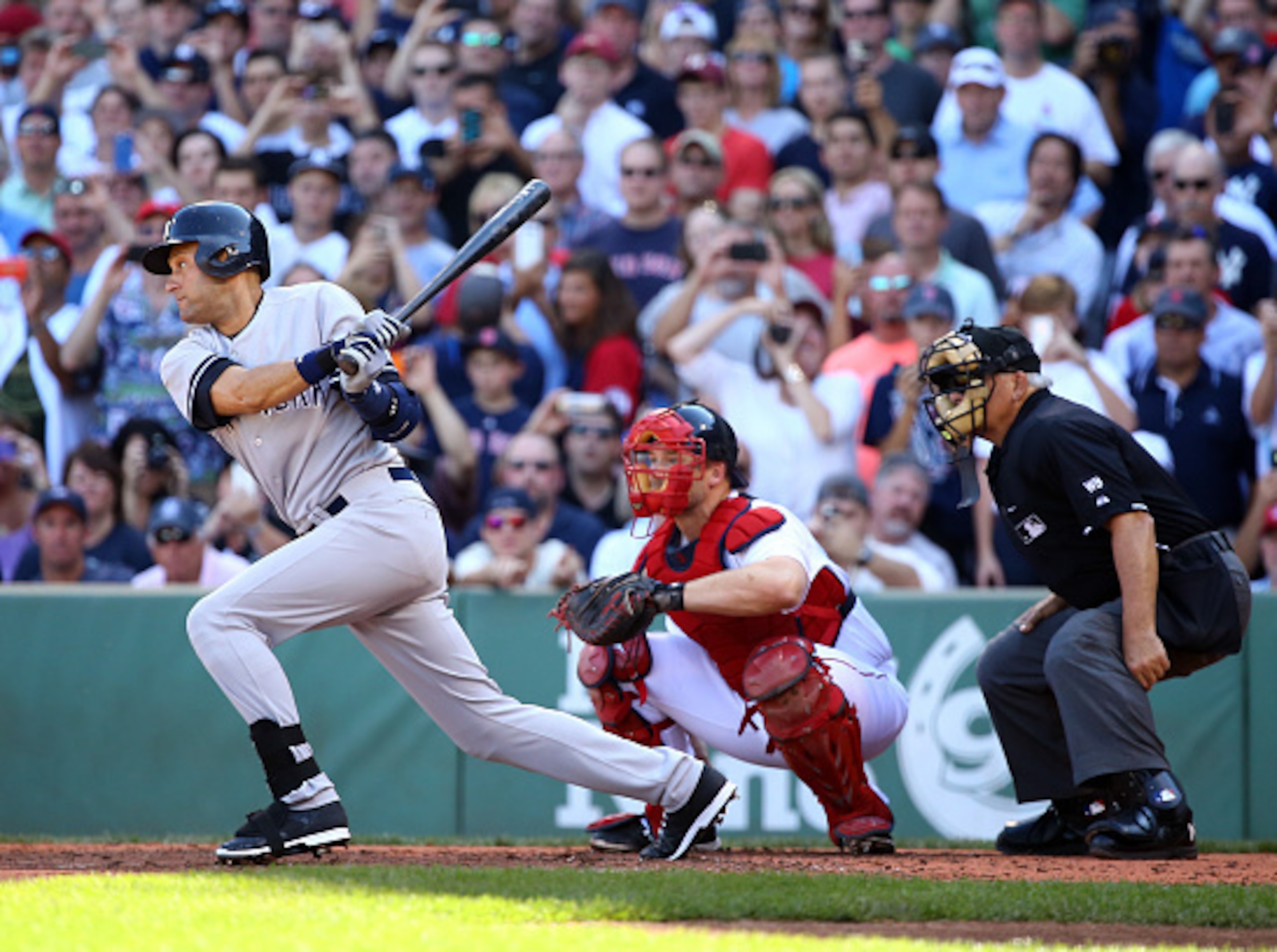
During the first half of his career, Derek Jeter was often compared unfavorably to the Holy Trinity of shortstops that also included Alex Rodriguez and Nomar Garciaparra. But what eventually separated Jeter from that pack was his stellar play during the biggest games of his career.
Consider these numbers.
Jeter ranks first in postseason hits, with 200. He is also first in doubles with 32, is tied for the most triples with five and is third in home runs with 20.
One of Jeter’s most memorable big-game hits came in Game 4 of the 2001 World Series, a series that was impacted by the 9/11 terrorist attacks and a series the New York Yankees lost 4-3 to the Arizona Diamondbacks. But in that game, with New York down 2-1 in the series and the game tied 3-3 going into the bottom of the 10th inning, Jeter hit a home run off Byung-Hyun Kim—on a 3-2 count.
He earned the moniker “Mr. November” after this game-winning home run, as the game went so long that it became the first World Series game in MLB history played in November.
More evidence?
In Game 4 of the 2000 World Series, with the Yankees leading the series 2-1, Jeter batted leadoff and hit a home run on the first pitch, silencing the Shea Stadium crowd and pacing New York to a 3-2 win.
The Yankees closed out the Mets a day later to win their third consecutive World Series, and Jeter was named MVP, becoming the first player in MLB history to earn both the All-Star Game MVP Award and the World Series MVP Award.
Anyone remember the 2001 ALDS against the upstart Oakland Athletics?
With the Yankees down 2-0 in the series and holding a tenuous one-run lead in the seventh inning, Jeter’s flip to home plate to nail a sprinting Jason Giambi was the pivotal play of that entire series. New York won three straight games to eliminate the A’s, and Jeter’s incredible flip was the main reason the Yankees were able to go on to appear in the World Series.
Other great players have paid Jeter compliments, including Cal Ripken Jr., who in an interview with HuffPost Live said Jeter was the greatest clutch hitter in MLB playoff history.



.jpg?w=2560 "Viral Rams Coach Vid 🖕")

.jpg?w=2560 "Injury-stricken Seahawks signing veteran RB")
